
Cook time
-
Duration
4 to 6 hours
Skill level
Intermediate
Season
All Seasons
Wild turkey legs are one of the toughest cuts of wild game I’ve ever cooked. These 20-pound birds spend all day running around looking for food, fighting, and avoiding all types of predators. It’s no wonder their skinny little legs are densely muscled and full of hard tendons.
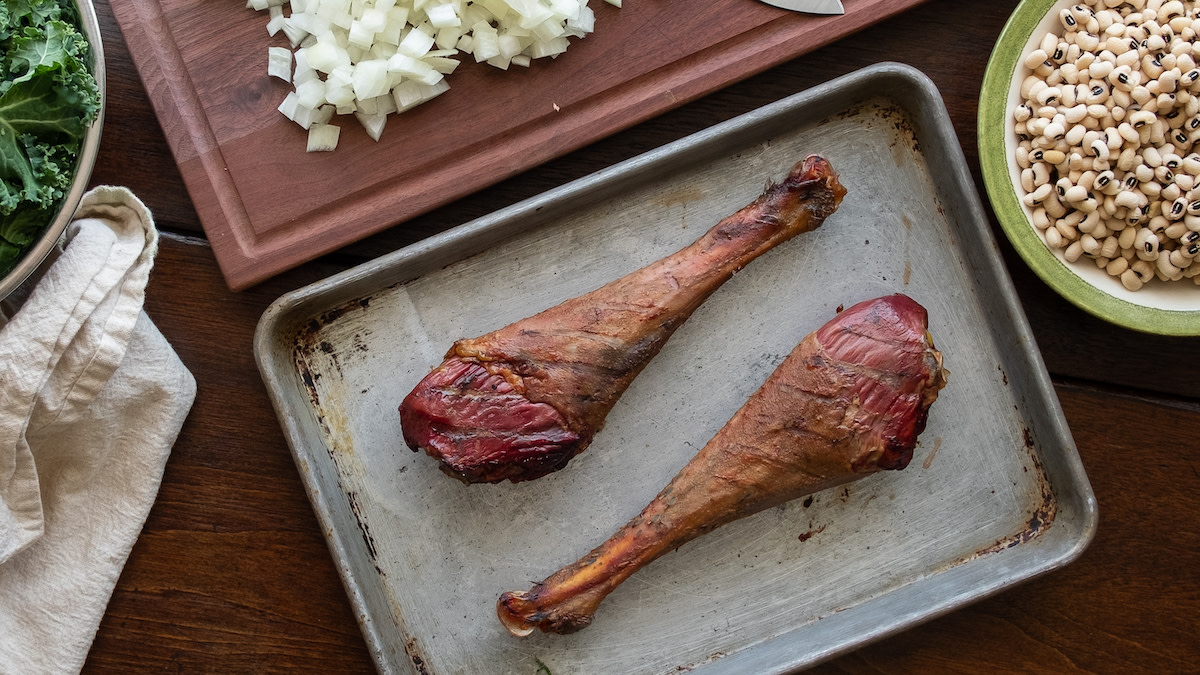
You can braise or confit turkey legs to render the meat tender, or debone and grind them for use in sausage or any ground meat dish. But another great way to utilize these substantial legs is to keep them whole and smoke the heck out of them.
Smoked turkey legs are similar to smoked ham hocks or neck bones. They make a great addition to any stew or braise that needs some salty and smoky flavors. Braised collards, split pea soup, or any bean dish benefits from the addition of this smoky supplement.
The smoked legs add flavor to anything you’re simmering and add body to the final dish. All the tough connective tissue and tendons, which usually make the legs less enjoyable to eat, break down and give a collagen-rich mouthfeel that defines a good pot of braised greens or beans. This slow-and-low cooking also makes the legs themselves tender, so you’ll end up with shreddable bits of smoky turkey in whatever you are cooking.
This recipe is simple to make: brine then smoke. It’s an easy way to make use of an otherwise tough-to-cook piece of meat. This can be done with skin-on or skinless legs. You can also use the wings and neck.
Ingredients
- 2 to 4 turkey legs (and/or wings and neck)
- ½ gal. brine
Also works with
Special equipment
Preparation
- Make a brine. Any brine will do, but I like to keep the flavors fairly neutral because these will go into a variety of dishes. This recipe works well.
- After the brine is done, allow it to cool down completely. Submerge the turkey legs in the brine, cover, and refrigerate for 48 to 72 hours.
- Remove turkey legs from the brine. If using dry brine, rinse off the salt with cold water. Allow the drumsticks to drip dry over a wire rack. You want the surface to dry as much as possible. A dry exterior will absorb a more smoky flavor. Pat dry if you want to speed up the process.
- Preheat the smoker to low heat, 165 to 185°F, and moderate to high smoke.
- Smoke the turkey legs for 4 to 6 hours. You can smoke them even longer if you want a lot of flavor. Just be careful to not completely dry them out.
- Once finished smoking, allow the legs to cool before packaging and storing. Shred into soups, pasta sauces, or whatever else needs a bit of meat and flavor.
Shop
Sign In or Create a Free Account
Related

Recipes
Southwestern Turkey Soup
(2)
Recipes
Turkey Egg Rolls
(0)
Recipes
Smoked Turkey Breast with Cranberry Balsamic Glaze
(0)
The comments section requires Functionality cookies. Please enable Functionality cookies in Cookie Settings to view this content.
Smoked Turkey Legs
Cook time
-
Duration
4 to 6 hours
Skill level
Intermediate
Season
All Seasons
Wild turkey legs are one of the toughest cuts of wild game I’ve ever cooked. These 20-pound birds spend all day running around looking for food, fighting, and avoiding all types of predators. It’s no wonder their skinny little legs are densely muscled and full of hard tendons.
You can braise or confit turkey legs to render the meat tender, or debone and grind them for use in sausage or any ground meat dish. But another great way to utilize these substantial legs is to keep them whole and smoke the heck out of them.
Smoked turkey legs are similar to smoked ham hocks or neck bones. They make a great addition to any stew or braise that needs some salty and smoky flavors. Braised collards, split pea soup, or any bean dish benefits from the addition of this smoky supplement.
The smoked legs add flavor to anything you’re simmering and add body to the final dish. All the tough connective tissue and tendons, which usually make the legs less enjoyable to eat, break down and give a collagen-rich mouthfeel that defines a good pot of braised greens or beans. This slow-and-low cooking also makes the legs themselves tender, so you’ll end up with shreddable bits of smoky turkey in whatever you are cooking.
This recipe is simple to make: brine then smoke. It’s an easy way to make use of an otherwise tough-to-cook piece of meat. This can be done with skin-on or skinless legs. You can also use the wings and neck.
Ingredients
- 2 to 4 turkey legs (and/or wings and neck)
- ½ gal. brine
Also works with
Special equipment
Preparation
- Make a brine. Any brine will do, but I like to keep the flavors fairly neutral because these will go into a variety of dishes. This recipe works well.
- After the brine is done, allow it to cool down completely. Submerge the turkey legs in the brine, cover, and refrigerate for 48 to 72 hours.
- Remove turkey legs from the brine. If using dry brine, rinse off the salt with cold water. Allow the drumsticks to drip dry over a wire rack. You want the surface to dry as much as possible. A dry exterior will absorb a more smoky flavor. Pat dry if you want to speed up the process.
- Preheat the smoker to low heat, 165 to 185°F, and moderate to high smoke.
- Smoke the turkey legs for 4 to 6 hours. You can smoke them even longer if you want a lot of flavor. Just be careful to not completely dry them out.
- Once finished smoking, allow the legs to cool before packaging and storing. Shred into soups, pasta sauces, or whatever else needs a bit of meat and flavor.