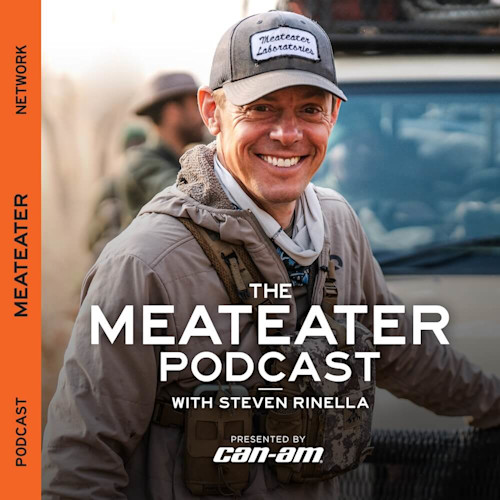
The MeatEater Podcast
Ep. 902: The Pros, Cons, and Complications of Data Centers
Play Episode
1h51m
Steven Rinellatalks with journalist Ann Vaughan about the costs of datacenters on water, energy, and the land.
Connect withSteveandThe MeatEater Podcast Network
00:00:08 Speaker 1: If this is the me Eater podcast coming at you shirtless, severely, bug bitten, and in my case, underwear listeningcast, you can't predict anything brought to you by first Light. When I'm hunting, I need gear that won't quit. First light builds, no compromise, gear that keeps me in the field longer, no shortcuts, just gear that works. Check it out at first light dot com. That's f I R S T L I T E dot com. Okay, folks, here, by popular demand is our show where we dive into data centers from a natural resources perspective. People are always writing in asking about why don't we cover this more? 00:00:53 Speaker 2: We should do it. Part of the. 00:00:55 Speaker 1: Problems I was trying to find the perfect person to do it, because I just want someone that can look at this at the data center debate from an informed perspective, from an even perspective, someone that's not trying to drive a particular narrative or that's in the pocket of a certain set of interests, like someone to take a journalistic look at what is going on with data centers. And she's here and Davis Vaughan and was a longtime Wall Street journal Energy and Finance reporter. Then she became an investment analyst, which is basically where you like do investigative reporting on companies. 00:01:30 Speaker 3: That's right. I was like an investigative reporter for portfolio managers. 00:01:33 Speaker 1: Got it so if they wanted to make an investment, you go dig up the dirt or they. 00:01:37 Speaker 3: Get the best version of the truth you can find. 00:01:39 Speaker 2: Best version of the truth you can find. 00:01:41 Speaker 1: And now Anne has re entered journalism and is writing a book which likely likely will be called Gigawatt, and it is about the AI industrial boom, how it is reshaping the energy industry, the industrial landscape, and the American heartland. She currently writes this is this is where I found Anne. She currently writes a column for the Information So it's information dot Com, the Information dot Com, the Information friends send me, friends would send me your columns. And she writes a column on AI infrastructure for the Information dot Com. That's a publication based out of Silicon Valley. And what I liked about it about your writing when I would read it is it was like it was very refreshing to hear someone looking at the issue that I felt hadn't already arrived at all. The answers I was just asking questions and also taking, as we're going to get into, taking a lot of measurements, measurements of water, measurements of energy, measurements of footprint, and putting those measurements sort of into context and comparing them to things that people might understand. So rather than hearing about some kind of wattage, comparing that to other industrial applications, other things that we're all familiar with, so you start to form a relative picture. So thank you for coming on, and thank you for sharing a bunch of your reporting, especially because you're doing this before your book comes out, which is which is good of you. 00:03:18 Speaker 3: Yeah, well, thank you. I'm excited to be here. I'm excited about your podcast and having come from the Blue Ridge Mountains and love the outdoors. It's a big part of sorting through what's happening today. 00:03:32 Speaker 2: Got it right? 00:03:33 Speaker 1: Can you start out by this kind of a dumb question about this I want, I want to do it. Can you start out by like telling people in twenty twenty six, when they see data center in a headline in the newspaper, Okay, what exactly. 00:03:52 Speaker 2: Are they talking about? 00:03:54 Speaker 1: It's a dumb question of just seting what is a data center today. 00:03:58 Speaker 3: Well, I'll tell you what it is not. It is not clouds in the sky. The data center is referred to as the cloud. It's like the I think it's one of the best marketing decisions tech has ever made for itself is to call data centers a cloud. These are in the cloud. It's in the cloud, and this cloud is really an industrial complex and so it's an industrial scale facility back kind of pre AI when we just thought of it as the cloud that holds our entire digital lives, and that means everything that you know, we waste our time on, and everything that is vital to our society. So you know, how you save your pictures, how you strain your movies, how you listen to your podcasts, how you get money out of the ATM, you know how your payroll gets paid, how you know life saving machines stay on and scan your body and track data. It's all that and the you know, cloud. Data centers have been a pretty big part of the digital landscape since you know, kind of the mid two thousands. A lot of companies used to have basically their own data rooms, computer rooms, and they'd have servers that were in a closet, and eventually some of those got bigger. And of course, since you know, for decades we've had government supercomputers that were far bigger than that. But this idea of a data center that started to grow commercially came with the rise of the Internet. These these buildings, you know, would uh serve a variety of different customers. And the notion of these big tech software companies becoming cloud giants really meant that Google, Microsoft, Amazon began to build buildings with rows, hallways of chips and servers and all the equipment that keeps them at this goldilocks you know, environment and temperature and fiber would go in and out and and data would you know, Uh, it was very important to have data have what is called low latency, so they tended to be in urban centers and the low latency low latency means quick like you know, you know when you when you remember the days when you would try to watch a video and it would say buffering, buffering, Yeah, that's low latency. And so you need instantaneous data for something life saving, like you know, an emergency response system. Traders want instantaneous data. We get upset if we can't you know, if a text doesn't come through right away. There are certain businesses that really are mission critical and that need to be near a city. So a lot of data centers got built in smaller fashion before the AI age, in especially northern Virginia near Washington, d C. And then some big cities like Dallas, Chicago, Phoenix out on you know, the West coast and both the Silicon Valley area and then up in the Pacific Northwest near Seattle. 00:07:28 Speaker 1: Was it was it really that proximity in those days, which is just like yesterday. Yeah, the proximity to you to user groups was important, like physical proximity to big populations of people. 00:07:44 Speaker 3: Yes, because the there's a limit to how quickly data, you know, will travel on fiber. And we're talking, you know, just nanoseconds. We're not talking, you know, we're we're really unwilling to wait for a few seconds for something to come through. So they were built under that, you know premise that giant amounts of fiber got built in the dot com era, there was a whole bunch of it left, you know, didn't get used, and then we kind of built into that in the two thousands and in the twenty tents, and when COVID happened, people started using online digital resources like crazy, and even more continued to be built. And so then when chat, GPT and AI as a new paradigm kind of really came on the scene around twenty twenty two, there began to be the conception of a whole nother kind of scale of data center. So AI data centers are bigger, more power hungry, more resource hungry, really because AI models operate on a scaling phenomenon, and so the idea is that it's not just a building with a whole bunch of different companies siloed computing taking place, but instead it is one big campus where all the chips are connected to all the other chips and they're all talking to each other, and it's like one big brain. And the more powerful models that have been trained have operated on this concept, and so we're building even bigger ones now and that they operate all together big that means bigger footprint for these data centers, more industrial equipment to bring them the electricity and to cool them. And that's why they are basically factories. 00:09:48 Speaker 1: And all the time that we've been like, well, let me reapproach that maybe you can correct me on the timeline, but at what point was it a year ago? 00:09:58 Speaker 2: Was it eighteen months ago? 00:09:59 Speaker 1: At what point was it that all of a sudden this debate about data centers and the environmental impact of data centers exploded. You probably have a different view of it because you follow this and report on it, But try to, like in your mind, think of think of just a normal, concerned citizen who reads a few newspapers in the morning. Like, help me, remember when was it at all sudden? It was just like the issue. 00:10:25 Speaker 3: It was that issue around the end of twenty twenty five and early twenty twenty six. 00:10:30 Speaker 1: Okay, so it was recent, yeah, Because what struck me is where was the argument about data centers prior to that? 00:10:40 Speaker 2: Was there one? 00:10:42 Speaker 3: Yes, there was, And if you go back you will find some pushback from a few years ago. I think that the scale just had not hit people. And so this AI boom has gone through several stages, and you know, at first it was just like, what is this AI thing? What is chat GPT? It's going to change everything? And then there was this stage when I was actually still working as an investment analyst where everyone was saying how much power are we going to need and where is it going to go? And you know, the financial and energy and tech types were mobilizing and everyone was saying, can we really use this much power? Then there was, like maybe in the fall of last year, an absolute panic over whether AI was a bubble and whether we're spending too much because at that stage everyone was really focused on how much the tech guys were going to be spending and you know, every quarter and how they had gone from just being so cash rich to spending you know, a great deal of their cash flow. And so all during that time, the the the you know, wildcatters that were trying to put AI together and find places to put it were going to communities and starting to make plans for data centers and individual communities were having meetings and saying, what do we think about this? But the populace in general is not super engaged on you know, their local community level. There's we've kind of turned polarized and less local news to consume anyway, and the digital age sadly, and and you know, people have, you know, whatever they're concerned about on the national level, and all of a sudden, these campuses started to get constructed and people started to say, wait a minute, like, I didn't know this was happening, and well, you know, some of some of this may have been done just like any kind of industrial real estate project might have been in the past, where people go to the local zoning authorities they say, Hey, we're with this company, we want to buy this land. Can we put this application in? You know, normally the public is not watching every move on that front, but all of a sudden, there was this collective realization that there have been a kind of rush out into the middle of the country because these data centers were on a totally different scale than the cloud data centers, and we're going to need to go places where there was enough land or where there was enough power, where there was some headroom in you know, whether it was water, the grid, and. 00:13:44 Speaker 2: That is. 00:13:45 Speaker 3: It kind of started to reach a fever pitch. I would say, I noticed it on a trip to Wisconsin in early February, where the backlash had grown just exponentially. 00:13:59 Speaker 1: Yeah, I want to do a thing where you give me you can pick, or you can do neither, or we can play a game to figure out who does it. Like, I want to do the positives. Just before we get into some of the details. I want to do the positives and negatives. You can take both of them. I can take one, you can do both. You can sell me on the hysterical view. I don't want to load it too much. You can sell me on like why this is upsetting the people, and you can sell me on why it's exciting to some right, or we can. 00:14:28 Speaker 2: Split the job up to you. 00:14:31 Speaker 3: Well, okay, So the worries are that data centers are going to destroy our environment, They're going to you know, destroy our health, That they'll drain Lake Michigan, they'll you know, raise the temperature above the buildings and into our neighborhoods so poison the water supply. They'll spike our power bills, they'll only take subsidies and not give anything back to you know, local communities, and and that it's all happening in secret. So I think that's part of the that's the. 00:15:05 Speaker 1: That's the vibe I get. That's the vibe I get of the panic. 00:15:07 Speaker 3: Yeah, yeah, yeah. And and not to even mention that it's existential to humanity and it could destroy humanity. Not a small concern either. 00:15:16 Speaker 1: Yeah, because that's a certain thing, is it'd be in looking at water consumption, energy consumption footprint, there's also just it's fueled by a general apprehension. 00:15:28 Speaker 2: And it'd be like, so that it can take my job. 00:15:31 Speaker 1: Yeah, right, I got to give up all that, I got to give up clean water, I got to give up all this stuff. I got to accept this I sore into my community so that then this can take my friend's. 00:15:41 Speaker 3: Jobs, that's right, and my future, my children's future jobs. 00:15:47 Speaker 2: Yeah. 00:15:48 Speaker 3: And I don't think that the tech industry has done itself any favors by you know, carrying out a narrative that is you know, potentially quite exaggerated in that view, but you know, candidly, we all have a lot to learn as time unfolds. So so yeah, I mean you ask like, how do you separate or or figure out what is truth and what is what is crazy? And what what is rational to worry about? And I guess I I would start with what what is rational to worry about? It is very rational to worry about, you know, to fear change and uncertainty. And we are facing an incredible, uh turning point. We're in the early days of the Ai Revolution, and there's incredible fear and uncertainty, and that's rational. And I think it's rational to love your community and to love the character of your community. And you know, especially if you've you know, uh, even if there's been some economic decline, you've kind of made peace with that, or you you kind of love where you're from and you kind of enjoy a little bit of the piece that has come with some of the economic decline in your region and the natural beauty instead making you know, like coming to grips with it looking completely different. Is I think that's very rational. Like some of the scale of what I'm talking about in rural communities we are talking about in the end, a campus that I sometimes think of it as like, you know, five pentagons, like landing in the field across from your house. These are huge campuses, some of them. Yeah, like uh, well, uh, it's many more than Walmart super campuses. Like a Meta campus in Louisiana is five miles long and one mile wide, are you kidding? And so I've driven the perimeters of concrete not a concrete it's many buildings. So it's many buildings with land in between. And when they're finished, they will have some grass and they will have some parking lots, and they will. 00:18:10 Speaker 1: The footprint of that thing is five miles by a mile. Yeah, that particularly it's the footprint. It's it's the footprint of a large municipal airport. 00:18:19 Speaker 3: Yes, it's not dissimilar from an airport. And so it is rational to say, wait, this scale is truly it feels nuts to me, and and and and you know the truth is that the landscape has changed through many years of other industrial revolutions. Railroads have you know, crisscrossed and and you know, maybe maybe some thought at the time scarred the landscape and we got used to those we have area. 00:18:52 Speaker 1: Someone n like today was proposedly the railroad infrastructure as a new concept. 00:18:58 Speaker 2: You'd never get it done. 00:18:59 Speaker 3: You'd never get it on today. 00:19:00 Speaker 2: Like, hey, I got an idea I never run. 00:19:02 Speaker 1: You know, we're going to run these continuous lines all across the country and eminent domain everything. 00:19:07 Speaker 2: You'd never get it through. 00:19:08 Speaker 3: I'm going to put poles up with wires all over every single street. 00:19:12 Speaker 2: Polled wires and people would be like, no, what you're not doing that? 00:19:15 Speaker 3: Yeah, So I mean I think it's it's it's rational to you know, uh, and it's it's it's understandable too that people see technology and these they see data centers as see embodiment of how tech has changed our lives and you know, for the worse perhaps, and they sort of see it for the worse, and of course tech has also changed our lives for the better. And so I guess I would say what is not rational is to not look at and do this with some common sense and put context around it. So you know, one piece of context, right, like, well, look we now have airports that are these giant pieces of land that we all depend on. The truth is we do all depend on day centers every single day. Our lives are you know, as dependent on energy as they are in digital and now AI and energy are completely intertwined and they pull in all kinds of other resources and we're grappling with that and in real time in a hurry. The tech industry is in a big hurry. And that's another part of people's unease is how fast fast. 00:20:30 Speaker 1: Let's talk about some of the specifics, some of the specific impacts. Is we start with water, Okay, what amount of water? What amount of water are we talking about? I mean, let's look at it. You know, there's another question I got prior to that, because it just kind of sets this whole thing up. When we talk about what's going to happen, what is a comfortable timeline ten years? We have no idea, right so there's sort of like what's proposed right now, what's in process right now? So if I say to you how much water our data center is going to use? At what date are we looking at? 00:21:15 Speaker 2: Like? 00:21:16 Speaker 1: What date is it fair to look at? Is it like right now? Is it two years from now? 00:21:19 Speaker 3: People use twenty thirty as the. 00:21:22 Speaker 1: Guidepost, Okay, so when we're talking about it's just for people to reminder here we're in twenty twenty six. When we're talking about how much water, how much footprint, we're sort of looking at reasonable projections about four years from now. 00:21:40 Speaker 2: Is that cool? Okay? So when I read articles. 00:21:47 Speaker 1: Talking about data centers and resistance to data centers and things, one of the big issues that comes up is where is all this water coming from? And that winds up being like relevant. It's relevant to all Americans because we all rely on abundant clean water. It's relevant to agriculture obviously because food, and then in a sort of niche way, it's very relevant to like me as a fisherman and an outdoorsman, you know, like like the fact that our country, as wealthy as it is and as populous as it is, still has this like abundance of clean water full of fish relative to other places around the world. That's like a tremendous value. So when I hear something that might threaten that, I get anxious. You know, how do we look at the water issue here? 00:22:37 Speaker 3: Yeah, so I think so I just a couple of caveats that I'm not a water scientist, and and I'm also in the process as I work on this book of interrogating this topic from every angle that I can, and you know, striving to figure out the best version of the truth so that you know, we can all talk apples to apples. And so I've attempted recently did a column on water for the Information and have attempted to do that for the book as well, sort of saying what how much water, you know, does this industry really consume? And has that changed? So it has changed. Actually the data centers are getting bigger, but they're getting more water efficient. So let's put kind of water broadly speaking in perspective, so that this is this is kind of a rough exercise. And again, like you know, there are many resources that folks who have like helped me think through this are drawing from. Okay, but so we don't get alarmed by contextless numbers. You hear something like billions of gallons of water being used a year, and that sounds astonishingly large, sure, but in fact, big industries, including agriculture, are using trillions of gallons a year. 00:24:08 Speaker 2: So the other thing you hear, and is kind of glib, is you'll do it. 00:24:12 Speaker 1: You'll do a search, right, you do like a thing on chat GPT, and then people be like, well, there goes a gallon of water. Yeah, yeah, you hear it, but you don't really no one knows what I should say, No one. 00:24:24 Speaker 2: Most people don't really know what they're saying. 00:24:26 Speaker 3: Yeah, okay, so let's start big and we kind of telescope you know, out and then go go in a little bit. So there's like, you know, if you maybe you can keep a number in your head of like fresh water consumption in the US and the like thirty trillion gallons a year range, and. 00:24:45 Speaker 2: Well that's what that's what we're using. 00:24:47 Speaker 3: Yeah, and you know, and and thirty gallons thirty trillion gallons a year, and single crops in the United States use as much as three trillion gallons a year. Okay, so corn or alfalfa like for for livestock, and a third of the corn, uh, you know harvest is going to ethanol. So so this these are just single crops, and so agriculture. Irrigation for agriculture does consume something like you know, the like seventy percent of our fresh water, So we're already using a lot of our fresh water for irrigated crops. And so corn like three trillion gallons a year California almonds one point two to one point eight trillion gallons. 00:25:44 Speaker 1: Seriously, seriously see corned alfalfa. 00:25:47 Speaker 2: I get it because like. 00:25:50 Speaker 3: You're not an almond lover. 00:25:51 Speaker 2: Well no, no almond now man. 00:25:53 Speaker 1: But you know, the country's not going to without alfalfa and be able to feed cattle, right, It's not going to happen. 00:26:00 Speaker 3: Yeah, we might get along with that on. 00:26:02 Speaker 1: For ethanol and livestock feed and other things. It's not going to happen. But it's like, I don't mean to hack on the almond people like I like almond joy as much as the next gap, and I'm just saying, like the almond thing seems uh, I don't know, I don't want to hack. 00:26:16 Speaker 3: You know, we don't need to pick on them because there's there's plenty of examples of the dairy farming. Dairy farming is enormously water consumpted, and about an estimated like ninety three percent of the water footprint of dairy farming is actually just to feed cows or you know, basic. 00:26:36 Speaker 1: Blow dairy's got to blow almonds out of the water as like a not quite a pun. 00:26:40 Speaker 3: But yeah, I you know, I think it's it's it's way up there. I guess it's like the statistic that I came to armed with is that a gallon of milk, and this is from the US airy industry, like Sustainability reports, a gallon of milk takes one hundred and forty four gallons of water to produce, really, and a pound of cheese takes one hundred and sixty four gallons of water. 00:27:03 Speaker 1: When you take a sip, like when I put a little half and half in my coffee, no one goes like, well, there goes three gallons of water. 00:27:11 Speaker 3: I think that we have normalized We love our farms. We love our food, well farm we you know, we love field blowing in the breeze and we having. 00:27:23 Speaker 2: A farm field across the road. Yes, that's a selling point. 00:27:26 Speaker 3: You know. And a lot of people will say and I had a farmer say this to me who sold a very large chunk of lant to Meta. You know, I hear over and over nobody can eat a data center. He's like, well, these are you know, his words, not mine. But he's like, don't tell that to me when you know we have seven million acres of sorry, when we're using you know, yeah, seven million acres in just in Illinois or thirty thirty million acres of corn that is harvested is going to ethanol. So we're not eating ethanol. We shouldn't be eating ethanol. 00:28:02 Speaker 2: Yeah, that's a miss. 00:28:03 Speaker 1: Like on the land used front, I think that that's a little bit of a I don't know how wide spread it is, but I would say with people not adjacent to agriculture, I would say, when you're driving when you're in the in the Upper Midwest and you're driving through corn monocultures, I think that I think that most people, most urban people feel that they are in a food production landscape. Yeah, and they don't view it that they are in a energy they are in a fuel and energy production landscape. And it'd be like, it's like, I don't even want to equate it to an oil field because it's it's soil. It could be repurposed for other things. Right, it's not developed, it's not under concrete and use. You could grow different crops there next year if you wanted to. 00:28:52 Speaker 2: But it's it's energy. Yeah, you're looking at energy production. 00:28:56 Speaker 3: So that's some of the agg let's take like lawn irrigation and golf courses. All lawn irrigation in the United States also equates to about three trillion a year, and golf courses use about a half a trillion gallons of water a year. You get into individuals. 00:29:16 Speaker 1: That the golf course, that you take all the water used by Americans to water their grass or gardens in that and that that's three trillion, and that golf courses are sucking up a half trillion. 00:29:29 Speaker 3: Yeah, So like golf courses, there's a difference between consumptive water use and water that is used return to its sources. 00:29:38 Speaker 1: We can talk about that just I want to tell listeners. Yeah, We'll get into this because, of course, the amount of water on Earth is a constant, so we need to talk about when you say that you're using water, what does it mean. Yeah, Like, just to give one example, at our fish shack, we pull water out of a creek. It runs through our fish shack, but goes back into the creek. Yes, doe, I mean, so it's like we're just detaining it for a minute and putting it right back where it came from at the same temperature in like measured in quartz. But I'm saying it's like, so you'd be like, are we using water? Like when I turn the hose on, am I using water? Because that water's flowing right back into where I got it from. So we'll get into that a little bit, like like when the data centers using water, how are they using it? And why can't they put it back where they found it? 00:30:35 Speaker 2: We'll talk about this. 00:30:35 Speaker 3: Well, your fish shack, let's now zoom into a much higher industrial scale, which would be a power plant is doing something similar to your fish shack. It is withdrawing a pretty large amount of water from water sources like lakes and rivers, but approximately ninety five percent of the water gets returned to its source. 00:30:59 Speaker 1: Good now way still gets counted as usage though. 00:31:02 Speaker 3: It's counted as usage but not. But if you really think of consumption, it's not all like you know, maybe water is considered consumed and this is where you want to go to an expert. But like generally speaking, when it evaporates and it doesn't, it's not directly Okay, yeah. 00:31:20 Speaker 1: That's the number. I'm interested in where you've moved it. I don't want to get two in the weeds on this. But like, once you evaporate it and put into cloud cover, you're moving it to different drainages, you're moving it to different basins, and you're like you're redistributing water rather than you're keeping it in a closed circuit system. That's right, but it was keep hitting me with how much the relative unwaters. 00:31:40 Speaker 3: Let's look at the electric sector though, but it's still it uses around forty five trillion gallons annually the power generating electricity too cool thermal power, So thermal power would be like coal plants, natural gas plants and nuclear plants so as a posed to like solar or you know, hydroelectric and the but you know, only about five percent of that is fully consumed and it's returned to its source, and there are regulations around this, but you know, I none of us like to think of warm water going into a pristine ecosystem. So there's regulation around this, and there's ways that it has dealt with. 00:32:25 Speaker 1: From from a fishing perspective, yeah, which is how I look at many things in life. A hot water discharge is a blessing and a curse, you know, because like a hot water discharge could be the best fishing place in the world, it can also be what destroys a body of water, Yeah, by changing the water temperature. So it's like it's a it's a funny you know, like many anglers, especially in the Great Lakes area, you have like a complicated relationship with hot water discharges. 00:32:53 Speaker 2: You know. 00:32:54 Speaker 1: Yeah, fisher like the fish are just there, right, and you're like it's kind of like you're cheating. They're there for the hot water discharge. Then at the time other times year it makes the water too dam warm, you. 00:33:04 Speaker 3: Know, right, Yeah, and it changes to fishing conditions and you can't fish at all. 00:33:07 Speaker 1: Yeah, So people have a there's like in my world, there's a there's like a complicated relationship with those things. Yeah, but yeah, they're putting it back, they're putting it back where they got it from. 00:33:16 Speaker 2: But it's just a lot hotter. 00:33:17 Speaker 3: Yeah. Yeah. So the electric sector that this is where you really want to focus when you're thinking about data centers. So members of the data center industry have made significant strides in changing how they do water out of necessity. So AI runs hotter than traditional computing. It takes a lot more electricity, and it puts it into much denser racks of like you know, tightly tightly networked chips and servers and memory and all this stuff. And so there they've now learned to do what's called closed loop cooling. Literally they'll run a cooling liquid which you know can include water and glycol in, you know, over chips and and in these tiny tubes that get into bigger tubes and you know, eventually also need to go up to a or or out to a big set of equipment that cools that water and then it sends it all back to do it all over again. When today's really advanced AI data centers get built, they get filled up with a pretty small amount of water, like for example, a Microsoft facility in Wisconsin was filled. I think it's a handful of swimming pools worth of water. It's about what a car wash would use in a year, not not too much when you people have forgotten how much water other industrial things, you know, factories, steel mill you know, like any any industrial plant uses water. Right, so chip foundries use a giant amount of water. So on a relative basis, the data center guys will sometimes say we're hardly using any water, but there is a trade off that they you know, I think would be smart to just upfront acknowledge because the closed loop cooling is using a lot of new advanced equipment and existing technologies that we've known about that basically are very energy intensive, and so that means they draw more power to do that, and that means that if they are using the output of a thermal power plant that is up the road, that thermal power plant is using a lot of water to you know, cool as facilities and make the power. And so we're kind of trading one problem for another day. 00:35:42 Speaker 1: Yeah, they're dropping off on water used to pick but then they need energy to cool the water. 00:35:46 Speaker 3: Yeah then they Yeah, then they need energy and that needs to be cool to the power plant. So the much bigger offenders in the water for the digital economy are electric power plants. And actually chip foundries are extremely water intensive and they use ultra pure water and it takes you know, a large, you know, kind of extra amount of water to get it fully pure and to do that, and and some of it is consumptive. And so there are some water treatment and you know, technology companies that have done some really interesting studies. You know, Xylum's done one that I wrote about in my last column, just showing Uh, it's if you kind of if you can visualize like these two layers of giant mountains of water use, and they are semiconductor plants and power plants, and there's kind of a ribbon on the top which is data centers. 00:36:46 Speaker 1: So with all those, hit a couple of those again, like hit me with with the water use of agriculture. Yeah, it's like the total water use. Hit me with the couple and then tell me in twenty thirty where we're looking at cross. 00:36:58 Speaker 3: Single crops, big big crops in the US might be three trillion gallons a year. 00:37:02 Speaker 2: Of water. 00:37:03 Speaker 3: Direct water use of data centers has been estimated at roughly eighteen billion gallons. So remember a billion is one thousand less order of magnitude one thousand less than a trillion, So three trillion for a single crop, US data center use eighteen billion. We're talking way way smaller. 00:37:24 Speaker 1: That's project projection. 00:37:26 Speaker 3: Like a quarter of a percent, And so it's just important to kind of keep some of that in perspective because if even the data center footprint of on site plus the amount consumed in the electric sector, you take how much power they're using, you have to haircut it because not all power is thermal power. And you also have to haircut it because it's not just as we said, all consumed. And it's still like we're talking one percent of fresh one even maybe by twenty thirty, the data centers might be using in a, you know, a more consumptive fashion. 00:38:09 Speaker 1: Is it safe to say that it's the part of the concerns. It's like it's it's it's added mortality on water. 00:38:21 Speaker 2: Meaning we're used to we're. 00:38:24 Speaker 1: Comfortable with how much water we're using for energy, how much water we're using for agriculture, and we've just become numb to it. 00:38:32 Speaker 2: We we just look. 00:38:33 Speaker 1: At it like it's just like how we're to it, and so when someone comes and says, I'm going to draw yeah, blank billion gallons, it is an added stressor for sure. But in the context of the and I know you're not you know, and you know, I know you're not looking at this from from an apologist perspective, But it's just very interesting to hear from a relative sense of other industries what we're talking about, because the impression one would get, the impression one would get is that we're talking about a level of water, like an unprecedented level of water use. 00:39:10 Speaker 3: Yeah, well, then we should also talk about why people are alarmed. And well, first I'll tell you something that's really depressing, which is about it depends on the estimate, but eighteen to thirty percent of municipal water system water is getting wasted completely because of leaks, leaky pipes, old infrastructure. Water utilities are typically like owned by municipalities, They are underfunded, and they didn't have great technology. Today it exists to kind of monitor and figure out where leaks are. And so even as we use more water for industrial purposes, for data centers, we're leaving so much of it, you know, like where we can't access it, Like it's just fallen out of our water system. So that's tough. The other problem is that a lot of digital infrastructure is going to water stressed places and so in individuals, it's a bigger incremental stress on the system. It's a very big incremental What is. 00:40:16 Speaker 1: What is the rational? Well maybe we should do that one. Next is the physical footprint? Well, go on on water, We'll talk about physical footprint next. 00:40:24 Speaker 3: Yeah. So, well, you know, the you've seen a lot of chip plants locate in the Southwest, in the Phoenix area. A lot of data centers are there too. And when when I have been traveling the country looking at the AI boom and where the next generation of digital infrastructure is getting built, it's getting built in the middle of the country effectively, so and some of them are in water stressed areas. So we kind of think of the American West and the sort of more desert landscape as water stress. The Colorado River basin, for sure, is a is an area of significant water stress. The Ogalala Water Aquifer which goes from South Dakota down. 00:41:11 Speaker 2: To Texas basically the American Great Plans. 00:41:15 Speaker 3: And you know, in both cases there have been alarms sounded about water before the AI boom in these regions. But they're they're for a variety of different reasons, good places to build AI data center campuses. 00:41:33 Speaker 1: At this point, like if if if I carry in my mind from just being a concerned citizen, if I carry in my mind an idea that water consumption is a major implication of AI infrastructure. And then someone tells me that that data centers, that people are building data centers and they're they're they're tending toward the Colorado basin, the Galawa aquifer, So like the American planes the Southwest, and I have the water thing in my mind. I'm like, that seems ridiculous. 00:42:07 Speaker 2: But is it? 00:42:09 Speaker 1: Are are they going? Are data centers now going where it makes sense to put a data center or are they going where they're welcome? Like like when they look at when they look at like where should we try? 00:42:21 Speaker 2: Right? 00:42:24 Speaker 1: Is it they won't put up a fuss, Let's go there, water be damned or are they like no, for for all these reasons of infrastructure, this is the place to be. 00:42:33 Speaker 3: Yeah, So water is a factor and where they go, and there are data centers being placed in areas with plentiful water too. 00:42:43 Speaker 2: I just got they don't want it either them. 00:42:45 Speaker 3: But well, you know, water is less, it's less of an of a footprint than the energy that these facilities. But they're going to different spots. So for example, you know, they're going to the Mississippi River delta and sorry, really in Mississippi and Louisiana. 00:43:11 Speaker 2: Okay, why let's take that one for instance. 00:43:13 Speaker 3: Okay, so water availability is a draw to go there, right, And I literally was driving a week and a half ago through Louisiana past you know Bayous where the tree trunks are basically swimming in water. Right. There's water everywhere, and and it's you know, if a farmer said to me that you know, this water, this aquifer will not you know, it does not have a drain drain the you know, the water supply risk. Now, that does not mean that water is not precious everywhere, right, And so Texas is getting an enormous number of these new data centers, and water scarcity is a big issue in Texas. And you know, in like there's a new study out of the University of Texas that looks at both the direct water use, which as I've said, is getting better data centers, and the indirect water use from power, which is getting worse in some ways. It depends on what what we end up putting in as the power source. Right, if we don't build coal plants, you know, that's a whole lot better for the water supply. But the Texas could end up having you know, right now it's only data centers are only point four percent of water use, but growing water needs for a I could bump up just in Texas the water used directly and indirectly from AI to as much as five percent, and that would be you know, that would exceed that of livestock and mining. It would still be well short of irrigated farming. But there are places that are water stressed where you know, it is not trivial that the build up of what we're trying to what the tech industry is intending. 00:45:16 Speaker 1: Yeah, and then their thing in Texas is you have you have an exploding human population. So when when when urban planners are thinking about water consumption into the future, and you're talking about an industry going from point four to five percent, that's like meaningful water. But like, but to that question of when when these entities that build data centers survey the country, why are they picking where they pick. 00:45:42 Speaker 3: Why are they picking it? The very biggest factor is power. So we have an aging power grid. And while we have lost some power users because we have de industrialized, we have a grid that it has not kept up with with the progress of the economy and and now needs both because of extreme weather and uh just general you know, age needs a lot of investment and the you know, power grid just cannot handle gigawatt scale, uh power just anywhere. So what is a gigawatt? Gigawatt is as much power as the whole city of San Francisco or Denver consumes. 00:46:33 Speaker 2: In how much time. 00:46:35 Speaker 3: It's a capacity figure. You can also look at at energy as like you need plants capable of producing this much a gigawatt. 00:46:45 Speaker 1: So so a plant would you're saying, like an AI data center and AI campus data center campus would feasibly use the same amount of power that is being used in Denver. 00:47:02 Speaker 3: Correct or more. 00:47:04 Speaker 1: There are multis and that's like the residents, the businesses, the manufacturing, yeah, the. 00:47:11 Speaker 3: Whole community, and as going to this concentrated place. Yeah, it's a big land mask, but we're talking a few thousand acres where that much power could be going into a single place. So it's it's the scale. 00:47:25 Speaker 1: Of it is selecting areas where there's where there's the possibility of getting and moving that amount of power. 00:47:34 Speaker 3: Yeah, and that has It's not like, you know, just because there are power lines going through a property or just because there's a power plant, a nuclear power plant in the vicinity that is available. So then you get to things like power congestion and the ability to pull a large amount of power to a single location. And so it becomes this really complicated matrix of factors that are bringing people places. So it's you know, can the power are there? Are there pockets of power that are accessible? Does the the community or the state make it easy to build? Is there water? This is not the very first concern though, Is there fiber? Fiber is easier to lay, but you know, we also had a glot of fiber that was laid in the you know, in the dot com days, So you know there these are some of the concerns. You know, others are our land value and so you will now see data center developments going up. It's in you know, virtually everywhere, and. 00:48:53 Speaker 1: Like when you factor all this in, they are are they actually looking for land deals like the costs of the land matter to them. 00:49:01 Speaker 3: Yeah, the cost of the land matters. Places where data centers are quite saturated, like northern Virginia, the you know, the land values have approached, you know, the millions of per acre and you can't really even get a campus that's that big. And so you know, AI starts with these big training campuses that are big. But eventually, and not too long from now, where you're going to hear a lot more about how do you fill in the smaller but you know, state of the art data centers to do what is called inference, which is basically the thing that makes money, which is finding the answers to your questions, querrying the model and getting back the answer like which could be, you know, driving your autonomous car through a town. A data center is going to do that for you. It could be you know, figuring out the cure for you know, a rare disease. The data center we'll do that for you. 00:50:04 Speaker 2: Do you have little kids? 00:50:06 Speaker 3: I have three older kids. There are teenagers and once inn or twenty. 00:50:09 Speaker 1: And it weird that you run around yelling at them about leaving the lights on. Yeah, well you should do you should yell at them about not looking stuff up on the internet. Yeah, you should be like, don't look pancake recipes up on the internet. You can look it up in a cookbook. Well, I did also leaveing the lights on in your room. It's inconsequential. It's just it's insane. 00:50:29 Speaker 3: There are calculators that show you asked about, like, just to go back to the water thing for a minute, does a chat stoopetee query really use a bottle of water? 00:50:38 Speaker 2: Yeah, I don't even know. I hear all the numbers, but I don't know what. 00:50:41 Speaker 3: There was a study that said so there are also data points that indicate a far smaller amount, like a teaspoon two teaspoons. And I'm not the expert to fully, you know, parse that out. But the one thing that I could, I could say with some confidence is that computing is getting more efficient, even AI computing every day. It's this, you know, it's this quandary that the industry has. They can't find enough power, water, land, they can't you know, get enough of their computing end at these places. So everybody in the whole value chain is like innovating trying to do it with less, and so I wouldn't be surprised if you know they're there are big advances and and and perhaps these newer estimates of what a chat gypt search does use and water are taking into account some of that efficiency. But you're going to have the problem right now is that there are wildly different estimates and plenty of them are scary numbers that have no context around them. They haven't been compared to anything else. 00:51:51 Speaker 1: Yeah, that's that's the that's the problem you run into. Before we started record, we were having we were talking and you had mentioned you'd mentioned that there's become like a sort of red state blue state divide on data center placement. 00:52:13 Speaker 3: Yeah, well, except this now become bipartisan against. 00:52:17 Speaker 2: It's become bipartisan against. 00:52:18 Speaker 3: Yeah. 00:52:18 Speaker 1: Yeah, Like like, let's talk a little bit about because just on this, on this idea of physical placement, right, there's a there's a big I think that there's generally like a nimby, a not in my backyard component to this, where most of the fights you see about data centers from my perspective, you might have a different perspective. Most of the fights you see about data centers are localized, meaning one's going in near you one's going near you in Wisconsin, one's going in near you in Michigan, one's going in near you in Montana. And all of a sudden it gets real right, and and then you want to talk about what does this mean? Water use is here? What does this mean? Energy use here? What does it mean for just the visual quality of the landscape here. I'm sure there are crusaders on a national sense, but I'm more familiar with the localized fights. Right as you've looked at this, what have you found about the mentalities or like the communities that are wanted the communities that don't like? What sort of differentiates them? Is it? Is it ideology like political ideology? 00:53:27 Speaker 2: What is it? 00:53:27 Speaker 1: You know, a friendly town versus an antagonistic town. 00:53:31 Speaker 3: Well, I it's a combination of how they feel they were treated from the beginning and how you know, their their ability to imagine what the future could be hold for them, possibly economically. So, the northern Virginia has a very heavy concentration of data centers today and it takes twenty five percent of power use in Virginia now goes to data centers, and it's mostly the whole state, and people in northern Virginia have have benefited economically from the tax revenue. Okay, so, uh, data centers don't employ as many people, especially the older data centers. They therefore don't bring a big burden on hospitals, schools, roads, ambulance all that stuff. 00:54:34 Speaker 2: Town once they're built like ghost towns. 00:54:36 Speaker 3: Right the cloud data centers employed, you know, it could be like twenty people, although the bigger AI data centers are going to employ hundreds of people, some of them even say in the four figures. But but the so some of these places have have had a huge influx of tax revenue, they've improved their schools. Northern Virginia fits that even so, so it gets to a certain point where people you know, are living with with these developments right up in their backyard in some cases nice homes and a big data center right behind and and they're starting to say no more. They're starting to worry about backup. Power doesn't run all the time, but it has to test and then if there's a power outage, that's going to burn diesel. Diesel is one of the worst things that you can burn for air pollution and health. 00:55:29 Speaker 1: And so. 00:55:33 Speaker 3: Northern Virginia is an example of a community that welcomed data centers, you know, kind of prospered with them, and is starting to hit a breaking point of. 00:55:42 Speaker 2: The moods starting to sour. 00:55:44 Speaker 3: The mood has started to get much tougher, and there's going to have to be a conversation. Even so, even in northern Virginia, the actual land use of data centers, by just square footage is the campuses themselves are still less than three percent of the land and loud In County, the most data center populated county. And if you and if you just looked at the buildings, it's less than you know, one percent of the land and not a data center capital. But it's like, but that's it's not nothing because we I. 00:56:25 Speaker 1: Know, but that's a weird way to think about landscape. That you're saying a percent of a county, yeah, is under a data center. I think I would want to know what percent of the county is under a house, because. 00:56:40 Speaker 2: I mean, like, I don't even know what to make of that, you know. 00:56:42 Speaker 1: I mean it's like it's like the point you made about that you hear these numbers, but without context, it's hard to understand. Like I don't think that I don't hear that a percent of a county sits underneath the data center. 00:56:53 Speaker 2: I don't hear that and think that's not much. 00:56:55 Speaker 1: Yeah, yeah, but I don't know. 00:56:57 Speaker 2: But again I don't know what percents under. 00:57:01 Speaker 1: Schools. 00:57:01 Speaker 2: I don't know what percent is under homes, you. 00:57:03 Speaker 1: Know, right right, But it feels to me like a ton. 00:57:06 Speaker 3: There are you know, certainly denser urban environments. This becomes a real concern with with you know, so many resources and waterflow and everything, so that the communities that, you know, some communities that have welcome data centers are still experiencing backlash. And I think it's because it's just such a profound change. But there are parts of the country that also have economic synergies. I guess you could say with with this type of an industry, they have factories that can and are producing the equipment that goes inside. They've got a workforce of electrical and mechanical and trades craft workers who have been underemployed for a long time, and and that's our to kind of work together. Like there are there are some several areas in the rost belt that the economic development authorities have you know, either recruited data centers or we're open to data centers coming the workforce, especially like organized unions are very in favor of it. And then other residents who live in the midst of farmland are not in favor of it and don't want it. And so there are some really hard trade offs, you know, because we all need jobs and economic activity in our community and that is actually what ends up funding all of the infrastructure that makes the city livable. 00:58:48 Speaker 2: Yeah, I want to hate you two ideas. 00:58:50 Speaker 1: One is, you had mentioned that it used to be that like blue states or left leaning states or antagonistic data sent just speaking very generally right leaning states were more welcoming to data centers. But you had said that it is it is becoming that that you're finding resistance in right leaning states. We always thought about this state. You familided this like horseshoe deal. We're like the right and left kind of come together, the radical right and the radical left come together at. 00:59:21 Speaker 3: The bottom of them. Yeah, it's these two different sides. 00:59:25 Speaker 1: Yeah, but they like they almost meet, they almost Is that what is the sort of what is the right leaning what is the emerging right leaning argument against data centers? Is it like antagonism to big tech. 00:59:43 Speaker 3: It's partially antagonism to big tech. You know, they're spying on my life. They you know, are driving our young people, you know, the wrong direction. It's partially property rights. I will not have my property, you know, seized for a transmission line that you know sends power to you know, Eline Musk's you know, or Sam Altman's data center, and so they can. 01:00:11 Speaker 2: Get rich off my land or that's. 01:00:13 Speaker 3: Right and it's their way of life. I will tell you that when you go to some of those communities, though, people will acknowledge a mixed feeling because some of them have sold there. You don't even have to have sold a big piece of property inside the data center to possibly have your property value, you know, a potential potential gain, like maybe they want to lay down equipment in a in a yard and you've got a few acres where you could do that that's nearby. Or you decided that you want to run a food truck and you know, go sell to the workers, or you know, there's uh, there're a variety of maybe your your land was used to build worker housing like a man camp. 01:01:00 Speaker 1: So is it generally are data centers generally raising property levels? 01:01:08 Speaker 3: The inverse there's such a land rush right now and once, and these are such big construction projects that I think in many cases the properties near these projects do experience you know, rising property value. 01:01:25 Speaker 1: Yeah, because picture we're talking about that they're putting in a municipal wastewater treatment plant. 01:01:29 Speaker 3: Yeah okay, compared that to like a landfill coming to town. 01:01:32 Speaker 1: Yeah, maybe that's going to be like good for some, but the people around that are going to be like, that's going to tank my home value right right. So with in the data center landscape, when it comes to land ownership and land use in the data center landscape, I could see if they're coming in, they're going to they need this, you know whatever many you know that they need five square miles ten square miles of land. That the impact that the people that own those properties are going to see perhaps a little gold rush. Yeah, But what is the conversation about people that are outside of the footprint. 01:02:10 Speaker 3: Yeah, it's tough. 01:02:11 Speaker 2: I mean what are they seeing? 01:02:12 Speaker 3: They hate the well, everybody hates traffic, artisan rage against the traffic, and that lasts for several years in these big, big projects, Like people bring that up way before global warming, They bring it up way before traffic, you know, traffic, traffic, dust traffic, you know. So, you know, they were giving free car washes out in Wisconsin near the Port Washington data center. No, maybe people appreciated it. It's a it's a pretty small you know, uh, it's a small token of something, but you know, seriously, oh yeah, oh yeah, because it was it's going to be dusty and dirty for a really long time. 01:02:53 Speaker 1: There had been a lot of people that just did not want to accept that free car yeah car wash, my god man. 01:02:59 Speaker 3: But you do go to places where this has been underway for at least a year, and there are hotels being redone, there are new restaurants that have come in, there are and you know, like that's the case in Louisiana, and that's thirty minutes away from the data center site. 01:03:18 Speaker 1: So some revitalization, some investment that's not totally tied to the data center. 01:03:26 Speaker 3: That's right, and the you know, like these are they're criticized as temporary jobs, but often these projects last for a few years, longer than many people hold jobs. And then there they they tend to cluster, like you know, a good you know environment where people think they can get business done, they can build more come. So then it turns out that there are a lot of projects and a lot of people kind of moving from one to the other, and they're supervisors and they're you know, will rent apartments in a lot. 01:04:05 Speaker 1: Of this is just like ephemeral activity. It generates general economic activity. 01:04:11 Speaker 3: Yeah, but you know that there's but I've also knocked on the door of houses that like the guy wasn't home, but he was. He was sitting across from a new RV camp that was gonna and he just had a little ranch house and flat as far as I could see in Texas grappling, and across the street was being placed a three thousand RV camp, you know, with telephone not telephone of contractors poles. They were basically putting in water and power poles on an expansive land that was extremely flat, broad huge imagine three thousand recreational vehicles. So this is where the workers would come. And so all of a sudden, what was in an empty field in front of him was almost looked like, you know, a future airport or something. He wasn't there that day when I knocked on a store, but I'm telling you might have had a really different view and so like, there are some growing pains and some real, real concerns about growth. 01:05:23 Speaker 1: On the power front. Can you tell me again in Northern Virginia that the power increase for data centers. 01:05:31 Speaker 3: Again, well, it's twenty five percent of power in the state those to data centers and probably growing. 01:05:38 Speaker 1: So however they're generating electricity. However they're generating power. It's not like, I mean, to a point you probably go and just turn the dial up right and make more. Yeah, but I imagine when you're talking about a twenty five percent increase in power, you need to start looking at make like it's more than just cranking up what you got going on. Meaning, if you're running hydro electric, you know you got turbines one through thirteen running and you just kick fourteen and fifteen and sixteen on to make up. 01:06:10 Speaker 2: For the heavy use. 01:06:11 Speaker 1: There's a point at which that doesn't work anymore and you need new ways. Yes, you need new power that new power production. 01:06:21 Speaker 3: But I mean one thing that is, you know, a very hot topic of conversation that would be good for everybody is something called grid utilization, which we all as a as a society contribute to shared resources and the power grid is one of those, and we are not utilizing the grid that we've already paid for to the extent that we could be. But technology is only now helping us understand how far up that level of headroom you could really go safely. And so there's all these new technologies and utilities are starting to be open to it to say, hey, yes, we do need to build more power. But turns out the grid is only you know, actually we're only using thirty to fifty percent of the power that we've already built on a given day because we overbuilt it for those days of peak power demands and our ability as a human mind to do the simulations to figure out how far you could push it just didn't go that far. So we just built a lot. We bought a lot of extra. 01:07:33 Speaker 1: Understand Like, let's say you're in a Let's say you're in a town. You live in a coastal community that's a very popular summer destination. 01:07:40 Speaker 2: Yeah, and when it's awful, you. 01:07:42 Speaker 1: Know, I was recently on really hot Yeah, I was recently on an island and there's this little community on this island and someone told me, you know, we people live here here around because there's ten residents year round. 01:07:52 Speaker 2: Yeah, in the summer there are four hundred residents. Yeah. 01:07:54 Speaker 1: Okay, so picture a town like that, and then picture the hottest day in the summer, everyone's electric turning on a c I see your point where it's capable of that, yes, but then come here in February winters right, nobody here. So yeah, presumably there's infrastructure that's not completely utilized. I hadn't really, I never thought. 01:08:17 Speaker 2: Of that before. 01:08:17 Speaker 3: Yeah, and like that, the utility industry really needed somebody to wake it. So wake it up, you know, or to push it, because they are not incentivized to. Utilities have this perverse way of getting paid. It's just it's an incentive that got put in when we created monopoly utilities in the dawn of the electric age, and they make more money by spending more money. Basically, they go to a utility commission and say we need power for reliability purposes. I want to build a new thing, a new power plant, a new line, a new and they get a guaranteed rate of return if it is approved to compensate them for you know, the capital that is needed for that. And so we we all pay that. We all pay the cost of what it was to build plus an added rate of return. And sometimes you could argue that they didn't need to build that brand new thing. They should learn how to use what we've got. And so the tech industry is looking at they're in such a hurry, and they've they've realized there are certain inefficiencies in the way the system is built, and they have the money and the motivation to shake up the system and say, well, hang on, yes, I you know I will if I don't offer to pay my full share on all this new infrastructure. I know I will not have the social license to build and I will be vilified. But at the same time this let me fund you know, these pilot projects, or let me add these sensors to lines, because we could we could be determining how far we could push this. And I'm also willing to spend my own money to put batteries behind the meter and other systems. So when everybody is at that four hundred person seaside resort and that state is, you know, hurting for electricity, I disappear from the grid. So much of this is happening. 01:10:16 Speaker 2: Yeah, that's interesting. 01:10:17 Speaker 1: People don't but why are you seeing art like not you like, why do you see articles where it's that they're going to be building like you know, nuclear plants to power the base of the scale of what. 01:10:31 Speaker 3: We're doing requires all of it, literally. 01:10:34 Speaker 1: So you do expect, like even though you could find there's efficiencies to be found in energy production and we're generating electricity and running it through the grid and it's not being tapped and it just you know, isn't being stored in batteries. Whatever there is going to be in our twenty thirty outlook, there will need to be like net new. 01:10:56 Speaker 2: There will generation. 01:10:57 Speaker 3: And you can ask like, can we stop this from half? And I I'm not sure that we can. I think money finds a way when it's trying to you know, get to a goal. So I think we will uh build quite a bit of additional generation. Utilizing the grid we have right now is just a faster way to do it. 01:11:21 Speaker 1: It's really built. 01:11:23 Speaker 3: So we're we are revitalizing old nuclear plants that have you know, we're built fifty years ago. We are putting in newer, more efficient forms of power generation both you know, solar and batteries as well as you know, newer generations of gas plants, which is uh not necessarily a popular thing, but is uh going to happen. And there's all kinds of other really interesting things happening in the energy industry. We are applying a set of pioneers that came from the oil and gas industry in fracking, are using those techniques to reimagine geothermal power so that you can you don't have to go where there are pockets of steam already in the earth. You can go to a location and inject water, create steam, create the steam that spins the turbine, send that water back down in a closed loop, and again like more water efficient, huh. And the better you get at it, the more you do it, the lower your costs. Aren't There's a company called Fervo that is kind of the darling of new geothermal. 01:12:43 Speaker 2: That's incredible. 01:12:44 Speaker 1: It's it's like that I'm not familiar with that concept, but it's basically you're making a steam engine, but you're using instead of burning coal to heat the water, you're you're using the Earth's thermal. 01:12:54 Speaker 3: That's exactly right, really, and you're using techniques and workers who came from an industry that you know either you know needs the worker needs to be transitioned into a cleaner form, but have the skills, and so that's been a popular thing. And that's you know, here we are in Montana. Some of the interesting projects on that are near you. There's work being done in Utah and in Nevada and I and there's work on this you know, enhanced geo thermal in Texas. There's there's a lot going on in that. So you have to get the cost down. But they're actually making great progress getting the cost down. 01:13:31 Speaker 1: Wouldn't it be interesting if it'd be interesting if unexpected upside amid all the downsides, an unexpected upside is just like this this sort of like American ideal that you know need driving innovation. 01:13:51 Speaker 3: Yeah. I mean that's a big theme in the book. 01:13:53 Speaker 1: That you're going to get these certain like you're gonna like for a while you had this certain these certain types of brain chasing renewables, right, but now you have like a whole different class and category of. 01:14:09 Speaker 2: Humans, right that are like looking at energy. 01:14:12 Speaker 1: Right, Just like it'd be kind of an it'd be like a weird irony if if that sector, if that sector figured out maximizing renewables. 01:14:25 Speaker 3: That's right, And I think we'll end up. So not to scare you were your viewers here, but I think we're, like I said earlier, we're at the beginning of this more of an industrial revolution that is catalyzed by AI. We think today of energy demand for things like chatbot prompts, but we're going into an era of physical AI where all of this high performance computing is going to be used to guide cars, guide robots in factories, make uh you know, whether you like it or not, weaponry autonomous uh, you know, change the way industrial automation makes things so that we possibly can make factories viable again. A lot of that demand and a lot of that uh you know, just activity to make that happen is just barely beginning. And so we may end up just creating more energy generation to feed more applications of AI than we can imagine today. And so that's where it gets a little scary. You think about the ramp up and how you know, this could change everything. It can bring positives and it can bring negatives. And I think, you know, one of the things that I'm trying to do is look at what each side wishes the other would acknowledge about both the promise and the and the peril of what is facing us? 01:16:14 Speaker 1: How would you put that? Like, like, how would you put those two questions if you had to answer them? You know, if if you imagine the brightest minds, like the brightest most rational minds in the in the anti data center movement, and you say that I and they're saying to the and they're saying to the industry, I wish you would acknowledge, right, And and on the flip side, what is the what is the thing you found? 01:16:40 Speaker 3: Yeah? Well I would say what uh, the energy industry would say, I wish we would all acknowledge is that the modern world runs on energy. And you can draw an uppard line of uh, you know, press arity and energy that that's pretty much aligned. The more energy society consumes, the higher it's quality of life and replacing what we Modern life has become really convenient. So you don't even really see the power plant. You just plug your phone in. Modern life has become so convenient. You don't really understand how we get water. You just turn the faucet on. You just order, you know, stuff from Amazon. You just assume that you know, steel is coming from somewhere to build your buildings. Yeah, you know, it's all industrial. It's it's and we assume these days that solar is just really cheap and batteries are just getting better. They are they and they're improving, but they too have an environmental and industrial footprint. I mean, you've got to you know, you've got to convert raw material to make the products. They need to be recycled eventually too. Modern life is is industrial and so I think that that is what you know, in some ways, the the you know, guys who have been in industry building physical things want everyone to understand and they want people to understand that what we've done so far has made a dent in you to make a greener world and planet has improved. You know, we we've we've improved emissions by introducing green energy, and we need to do a lot more of it. But we also you know, we have a long way to go to uh decarbonize the world, and it's going to take a lot of new technology, new new thinking, some adapt and so I would say that, you know, on the on the energy side, they're saying like the world needs more energy because we prosper with more energy. More energy, you know, is part of just progressive civilization. But we need we need lower emissions, we need cleaner water, we need all those things. 01:19:19 Speaker 1: You feel the industry is asking for lower emissions and cleaner water. I mean, I feel like the industry is largely I mean, you know, I mean right, I mean, the industry is largely given up on the green energy conversation. I mean, like the dry like the main driving factors, like the administer, the administration, big tech. I mean, this isn't a concern of theirs anymore. It's so twenty twenty three. 01:19:46 Speaker 3: It is so twenty twenty three. I think that, uh, it's it could come full circle again with some of the innovation that we're seeing. The the tech companies are still still standing by goals that now look increasingly impossible to meet in terms of zero by twenty thirty. And look at the direction that they're going. 01:20:10 Speaker 1: Yeah, whenever you see like a like a twenty thirty year, everyone come on. 01:20:15 Speaker 3: And so then you know, on the other side, that's where the you know, advocates for climate action, for the environment, for health are saying, you know, you need to acknowledge your full life cycle footprint and communities need to uh hear everything transparently that you are are coming into a community and going to do and there's a lot that there's a lot of dialogue that you know, it's kind of hard to have when the two sides are at odds. But I would say, you know, the environmental groups are saying, look like, don't don't de emphasize, like you know, the truth is, you know, if you're backing up your data center with diesel, you know that creates air pollution for the community. If we're all using shared water and you are adding incremental water demand, this is an issue for the community. If you are removing virgin land and wild places, you know, we ought to have a say on it. And so it is a natural kind of back and forth that is happening right now. And it is concerning that. You know, there's there's a lot of money on the pro development side, and so you know, that's where I'm trying to kind of watch and see, you know, how is this happening. There's a you know, maybe it's a it's a the voice is not as loud, but there are voices within tech companies, within even guys who who have been in the field developing data centers, who say, look, we need to get to a place. Communities have a lot of leverage now to ask for more. They've now realized like, hey, we're you know, we're kind of a unicorn here. We've got a big pot of you know, uh, available power or water or what have you. And maybe our community is open to doing business with you, but you know, we we don't want to give you know, tax incentives that we used to. 01:22:48 Speaker 2: They realized they might have more leverage and more leverage. 01:22:51 Speaker 3: Yeah, you know, we used to give these certain breaks to low margin industrial users that you know, we're trying to afford to build a big car plan. It's a really different community, you know, of potential users of the land that are coming in now. And not only that, they do have technologies that can actually improve the community. So not only can they give money for a new firehouse or fix the you know, give money for schools, they could use high performance computing and help the community figure out, you know, and they are doing this there. You know, there are good partnerships happening with with water where they're saying, if we come in, let us spend tens of millions of dollars in your community to help shore up your leaky water system and in exchange, you know, that will help us replenish more water than we're actually using at our data center. So there there are things like that. There's a there's a guy who was kind of known as the sort of conscience of the data center industry, Christian Ballotti, and I've gotten to know him. He was at Microsoft. He he's basically coined some metrics about how efficient a data center could be. And then the the latter part of his career Microsoft, he did a lot of R and D into community positive data centers. And he's now independent on working, you know, as an advisor in a lot of ways. And you know, he says that his industry needs to think about what would make a community want the data center, he said, and tells and tells his peers. Until you're willing to live next to that data center, then you haven't finished doing your job and you wanted to be like please in my backyard. And there are some some really interesting ways that he's seen infrastructure get developed. Like he he often will cite a like a a plant, a water desalination plant, the difference between one that was done in Australia and one was done in Singapore and the one that was done, you know, more community positive way. You know, it's got like a roof of grass and has you know, all these different ways that it recycles the water that flows in the community. He's gone to places that you know, are farming communities and small simple things like we will plant trees that improve the pollination in your community for your agriculture. Okay, Like this industry is willing to do some of those things if you ask for them. But you know, there's a big difference between a large company that's coming in trying to get permission social license to operate, and then there's a lot of other you know, just private developers that are looking for, you know, something to develop fast and flip quick. 01:26:00 Speaker 1: And yeah, I feel like they've done a poor job like well, I mean it's kind of university, except that they've done a very poor job of, uh, their social. 01:26:15 Speaker 2: Management of the issue, for sure. 01:26:19 Speaker 1: And I think it's because on one hand of like pushing the radical amount of change and then also thinking that they were going to do the data center move in a lot of communities quietly. Yeah, you know, and I understand the approach you're making because I think that a lot of times people. There's an expectation that towns, villages, communities, whatever are gonna sort of like bait the hook to bring them in, and if the tide turns enough, it's going to flip that right. And rather than saying, oh, we'll give you these tax breaks, we'll give you this land, we'll give you all these incentives that you that you'd play that political game enough to the point where it's like, well, why. 01:27:01 Speaker 2: Don't you tell me what you're going to do for me? 01:27:04 Speaker 3: Right? 01:27:05 Speaker 1: And maybe and maybe that switch will you know, maybe that switch will happen and there's so much there's so much need that it'll it'll push, it'll push that negotiating process in a totally different direction. 01:27:17 Speaker 3: I think that that's happening now. I think that there's uh, you know, communities are understanding that the ones like ironically that you know, got started first and are probably going to be the most economically viable because they got started first, you know, they they kind of came into being in a little earlier place where there is real competition between states for big economic projects. And so I've been traveling all over the country a lot of places like literally for a decade, they were looking for a car manufacturing plant and and had assembled a big megaproject site and couldn't. They were like second and third and more than the West, and they lost it again and again and again. And when data centers came along, you know, there's a rival, and they know who their rivals are, and they know, you know, maybe it's Wisconsin versus Indiana, maybe it's Louisiana versus Mississippi, and so they didn't want to lose it, and they they offered incentives which in retrospect maybe they needed them at the time or they certainly, you know, were intending to bring business economic prosperity to their state. But there's a lot of things when we look with hindsight later at this year, maybe we should have done it this way instead. 01:28:50 Speaker 2: Are you seeing that when you talk to people. 01:28:52 Speaker 3: Yeah, I mean I I've talked with with mayors who say, boy, I would have asked for even more had I realized how much leverage I have and the you know, and some things are getting retraded. You know. Microsoft came to a community in Indiana and said, we'd actually like to give you a better financial deal. And it has to do with the way that they've structured taxes, and it gave a lot more money to the school system right away, and they just came back and said, this is more in keeping with what we're doing now. So it's kind of a given and take. But what we're going up to is data center backlash has gotten worse. I think part of it is, you know, people have facts about their town and fears that it's just really hard to separate the truth from the noise. And and sometimes the truth is not good either. And so we're going to have an election cycle where is I just wrote a column about this where you know, I was talking about the political consultant who said, you know, if you are running a governor's race, he was speaking of a specific state, but I think it's broader than that. And you're a Republican or a Democrat, you have to be you can't really be for AI data centers, or you have to be demanding you know, a new uh, a new policy on how how the power gets done or how you know it works. 01:30:25 Speaker 1: Man, that's funny you mentioned that for me, for me to get behind a politician, state level politician, if their if their deal was, if they're sort of if their take on it was I'm going to do everything in my power to bring data centers to our state. 01:30:50 Speaker 2: In my mind, they're out. 01:30:52 Speaker 1: Yeah, it doesn't need to be that they're going to do everything in their power to prevent it. But they would have to like articulate late a level of skepticism and a level of negotiating prowess about how this was going to go down, and then if it happens, it's going to be good for us, Like I would have to hear it, so it doesn't surprise me to hear that just across the country. You have to be like a I don't know what the best word for it. You have to be like maybe at least a data center skeptic, you know, because really the thing that like the thing that makes me pay attention is is And it sounds trite, like I don't want to look at it. 01:31:34 Speaker 2: Yeah, I don't want to look at it. You know. When I look out, I like to see things. 01:31:43 Speaker 1: Like like green, how God made it, wildlife, habitat you know what I mean, Like like I don't like to I don't want to look out and see it. 01:31:50 Speaker 2: And so it would take a lot and there's a sense that like. 01:31:55 Speaker 1: There's a sense that even if there's tons of resistance, I'm not going to see it in my laptop. Yeah, do you follow me? Like there could be like it's never gonna be like I'm gonna I'm never gonna try to use Google, you know, drive right and realize, ah, there's no I just know it'll resolve itself, right. And so the resistance part of it, like the resistance the data center part of it, never feels real to me, like. 01:32:22 Speaker 2: It's going to cost me. 01:32:23 Speaker 1: Yeah, And so maybe that's a paradigm shift that will need to happen where people start seeing like some way that like if we resist this all the time, we're going to lose out on a global scale, or we're gonna lose out on some geopolitical scale. But I think that people would have to see it first, because there's plenty of people that hate data centers that are probably organizing their anti data center activities with cloud computing and. 01:32:46 Speaker 3: Using social media algorithms to elevate I. 01:32:49 Speaker 1: Mean not probably, they definitionally are the anti data center movement is driven by data centers. So, but Americans are comfortable with that kind of Americans are comfortable with that kind of hypocrisy. 01:33:04 Speaker 3: They are, and we we do face you know, some some risks you know, in the as we think about where the world could go. Uh, you know, we're it has become very difficult to build infrastructure in this country, and we're in desperate need of a better power grid. We're depending on which side of the you know, political al you walk down, we're in desperate need of more transmission and we're in desperate need of more natural gas pipelines, both of which are considered quote linear infrastructure. You know, they go through people's land. One is buried, so maybe neither one are easy to get through, okay, And and so we're at a moment where there's maybe some bipartisan discussion about whether we make that easier. Uh. From what I've seen of some polls like it, people do find like the threat of China and h Ai enabled warfare to still be abstract. And you know, if they're like in a community where it was pastoral, maybe it was pastoral because the factories closed and they you know, just became cornfields again. But the if it but they see their community first and don't want it to change with so much else changing. And so the truth is that China has built a grid that's you know, triple our size that they've been powering manufacturing all this time that we've been doing less manufacturing. Right, So their grid is super modern. It is capable of ramping up for whatever it may be economic wartime. They've got a grid that is quite capable, and they've got a burgeon advanced manufacturing sector. You know, we're not talking cheap toys and furniture. We're talking, you know, batteries, automated factories. We're talking you know, all the different elements of green energy that you know require solar panels, but robotics, all of this advanced manufacturing. Now there's an effort to bring it back here. Guess what that uses more energy and that you know, we'll have an additional industrial footprint besides data centers, and they will use data centers to run them. 01:35:39 Speaker 2: That's man. 01:35:39 Speaker 1: That's the thing I always think about is I used to work on this theory and I never got it worked out good. It was kind of like an environmental nationalism, and it's it's full of holes. But this environmental nationalism I envisioned would be that it's as immature as it might sound, would be this idea that our play. Our play would be to harness resources like environmental degradation that other nations are comfortable doing, and that we would reap the benefits of that, but leave our stuff clean in pristine. I never got all the details worked out. 01:36:17 Speaker 2: But I was trying to do that. 01:36:20 Speaker 1: We do do that, we do do that, and it would we do that to quite a degree, and it would be the thing that was brought up all the time when people were I was talking about your heart burning on your kids to turn the lights off and be like all these things in the US around being efficient with energy and clean coal and all this, and you look, but you're like, but there's still India, still China, and be like you can do all this stuff. It doesn't matter because there's these things you can't control that are out there, and so in some way we benefit from it. But I think that if you look at and said, like, sure, man, maybe in China they don't have a movement of people that has the freedom and liberty and autonomy to resist the government, right to resist industry. Industry is king, The government is king. Human like citizens have no voice. They get steamrolled, their stuff all gets turned into data centers right up until the point when you were, like up until the point where we're fighting a war with China, and if we're fighting a war with China, even if it's a proxy war through Taiwan or whatever, we're fighting a war with China. And then we say to ourselves, man, we shouldn't have just let it be that they were doing it all we weren't doing it, because now we're at odds, you know, and it's it's a like, I don't know, it's a tricky one. It's a tricky one when I imagine a you know, a natural, beautiful landscape with clean air, clean water and like healthy wildlife populations and like, you know, just a place you love to be and love to look out. 01:37:59 Speaker 2: Verse is this distant threat. 01:38:03 Speaker 1: That that we're going to get bested by another country in a way that is going to ultimately impede our freedom. And I think that you have to you know, and looking at all this, it's like a it's a really complicated gamble everybody. 01:38:16 Speaker 2: Has to make. 01:38:17 Speaker 3: Yeah, and you ask, well, can you know, is there a way to do that and have fewer regrets? And so, you know, I just wrote about this event I attended where a bunch of Silicon Valley founders had had rushed to Detroit for you know, the sole purpose of discussing and showing how we can reindustrialize America using their technology right making factories, uh, you know, an industrial basis work differently using technology to make critical medical processing cleaner and bringing it here. Because if we're a society that no longer makes things and just a certain of this economy and we're dependent on the powers that do make things, that doesn't leave us in a very good position. And but what you love and what we all love wild America and the the you know scenery just outside of this podcast studio is you know, it is what our country makes. Is what makes our country so majestic. And so what are some attempts to have industry and progress and think more about the natural landscape. And there there are models that are starting to emerge that you know, make better choices. There are AI data centers that are being built in you know, desert prairie and Texas that will primarily be run off the grid on solar and batteries with some natural gas power to kind of firm it when it's not sunny or windy. If there's wind and some of you know, it's using some kind of flexible gas power that uses less water. Does that mean that that's you know, the way you can do it everywhere? No, like you need certain certain regions allow you to reimagine an industrial factory, like a data center, which really is an industrial factory. Other places, you know, you might have water, but you know, don't have the power and maybe people and to build it. You know, you can't put a burden on people. What I found so interesting is like we've got the richest industry in the world trying to take from the power system. And it's also the case that there are people living in dire conditions who can't run their dialysis machine or their asthma machine, and how they can't afford their power bill. Like we're sharing that same you know, uh, Mark Zuckerberg is sharing that system with that human being who who needs you know, very whose very subsistence depends on being able to afford their power bill. So are there some some ways that we can all fit ourselves onto the planet together, like you you would like to hope so, and you know that there will be mistakes along the way. But back to your point about the way the country allows us to be messy and free and you know, do what we want with our property rights. It is a different way to arrive at the answer than to have it be centrally planned from the Chinese Communist Party and so uh and it's the way our countries. This is how it's unfolding. It's it's where we have opposition, we have proponents. They're both trying to make each other more honest. Hopefully they will. That's America, I guess. 01:42:07 Speaker 1: Yeah, yeah, if you had to crystal ball it when you look at it's kind of a closing question for you if you have to crystal ball when we first started time we talk about that twenty thirty projection. Yeah, right, will opposition if you crystal ball that will opposition two data centers block that projection? Or do you think that it's like it's like where there's a will, there's a way, Like it'll happen. It'll happen, and it might move. But but that's going to happen. 01:42:48 Speaker 3: I think it's going to happen more in certain regions of the country than others. 01:42:52 Speaker 2: So we'll shift where it happens, but it will happen. 01:42:55 Speaker 3: We'll shift where it's allowed to happen. There will be some of these projects built where people weren't aren't happy with it, and I think that could make it a less happy outcome. But uh so, I think, you know, for example, you'll end up seeing more of it come to Texas. You're you're already seeing that now, not because Texas is rolling over. Actually Texas is an interesting case because they are they have their own grid, their own grid, sheriffs. You know, they've been very strict saying here's how we want it to happen. And but they've always been more of a pro development state. But I think it's going to take a few years for the mess and the dust of building to clear. And some some places may seem like white elephants, and others we may just get used to them and then start to take them for granted, like we have other aspects of our trial and digital life already or our energy supply already, and it's up to you know, all the innovators to try to do it with a better footprints. 01:44:14 Speaker 1: I oftentimes try to explain to my kids the Y two K phenomenon, the panic that wasn't meaning there's things that like history is full of this American history stols this. There's things like this that come and it's like so shocking. Yeah, and then later people look and later generations in the previous generations have to explain like, no, you don't understand, man, this was like when this happened, this. 01:44:47 Speaker 2: Was a big deal. 01:44:49 Speaker 1: It was a big deal, and they're just say huh right, like all the like picture picture what we're going through in the forties and fifties with nuclear energy, yeah, and nuclear armament. 01:45:03 Speaker 3: Yeah, I'm building the plants in the seventies. 01:45:05 Speaker 1: My kids will like, they will never understand the amount of soul searching and the amount of public debate, right the careers that were won and lost, the books that were written about is this is this the right move? Should we go down this path? They would it'll just be that that's what That's how the world is. 01:45:26 Speaker 3: Yeah. There were debates like that about you know, coal mining and you know the early oil boom. A lot of it was up in Pennsylvania and it definitely changed the landscape and to some degree benefited the cities closer to the coast, but it also you know, created communities that of laborers and points of pride that led to the steel age. 01:45:57 Speaker 1: And I mentioned that that it's a nimbi fight. It almost like accentuates it almost it almost makes it. Why it needs to be a nimbi fight would be that a citizen says, I accept that it's coming. This is all inevitable. The only thing I can really do here as I can make it that it's not right there, Like that's the only you know, If I can do that, if I can make it not across the road from my house, I accept the rest, and that'll be my fight, yeah, you know, and then it'll probably be how this continues to play out. 01:46:34 Speaker 2: So like, I get it, you're all gonna do it, don't do it right there? Right? 01:46:38 Speaker 3: And who will be happier? It's an interesting question. The ones that don't get any of it, the ones that get way too much of it. 01:46:47 Speaker 1: You know. 01:46:47 Speaker 3: It's uh, it comes with trade offs. 01:46:50 Speaker 1: Yeah, that was the thing I was gonna ask you about, but then I thought it'd just be such wild speculation. Is I was going to ask you about do you think that some of these cities, states, whatever that make it prohibitive to build data centers that in ten years, twenty years, they're going to look at it like how Portland when Portland made hard drugs legal and then a while later they were like, my god, can you believe that's the dumbest thing. 01:47:21 Speaker 2: We've ever done? 01:47:22 Speaker 1: Right that down the road, States cities will be like, dude, we shouldn't have driven those people away. Now look at all the prosperity these other these other cities are have and and we like screwed ourselves and now you know, I don't know. 01:47:38 Speaker 3: I think it could be a big contrast between the communities that did and the communities that didn't. And I think you're gonna have different people either feeling regret or satisfaction. Like anyone whose job it is to figure out how you're going to you know, fund a municipal budget, it's going to say, wow, I really could use that tax revenue. Oh yeah, you know, it kicks in. You know, there have been tax breaks, don't get me wrong, but you know, some of those start to uh, you know, expire, and then the property value of these data centers could be enormous. If you listen to tech and what they think they can make off of them, then you realize that the tax based of some of these communities could go up hundreds of percent, you know, by multiples, and that pays for a lot, including helping communities that are struggling. 01:48:38 Speaker 1: Yeah, the human mind doesn't really work that way though. If down the road they're like you're closing a school, no one's gonna say like, damn it, we should have let the data center come. 01:48:47 Speaker 2: You know. 01:48:48 Speaker 1: People's heads don't. 01:48:49 Speaker 2: Work that way. 01:48:50 Speaker 3: Yeah. 01:48:51 Speaker 2: Well uh And Davis Vaughan, thanks for coming on the show. 01:48:55 Speaker 1: People that want to follow this as it plays out, and it's happening so fast, there's so much going on all the time. And does a column at the Information dot Com every two weeks. 01:49:04 Speaker 3: You have a column every two weeks. It's behind a paywall, but it's worth it. 01:49:08 Speaker 2: Yep. I and have really enjoyed your reporting on it. I appreciate you coming down. 01:49:15 Speaker 3: And I posted on LinkedIn so you can always get the gist of what I'm writing. 01:49:18 Speaker 1: Oh perfect, okay, So Ann Davis Vaughan, last name v A U g h N and look forward to. 01:49:26 Speaker 3: Vi A U g h a N. 01:49:27 Speaker 1: What did I just say? Yeah, Oh, I spelled it wrong. 01:49:30 Speaker 2: I'm sorry. Spelled again. 01:49:31 Speaker 3: It's v A U g h a N. 01:49:33 Speaker 2: Oh, I'm sorry. V A U g h a n. 01:49:38 Speaker 1: This is pronounce vaughn though, Okay, I did't screw that up right and looked for the uh look for the book which will hopefully probably be titled Gigawatt and Against, the book about the AI industrial boom and how it is reshaping the energy industry, the industrial landscape in the American heartland. 01:49:55 Speaker 2: Thanks for coming on. 01:49:56 Speaker 3: Thank you so much for having me. 01:49:57 Speaker 1: Stephen Oh Nate Mason's back there flagging me the TRCP deal. 01:50:03 Speaker 2: Just hang titament. This has nothing to do with ai. H. 01:50:06 Speaker 1: Every year we do we do our TRCP O, our tr CP Turkey Hunt giveaway where we raise money for the Theodore Roosevelt Conservation Partnership. Jannis, We've been doing this many years now. Jannis and I take a it's a raffle. We take the winner and a guest and we take them on a turkey hunt. We cover airfare, lodging. Last year we brought in a buddy mine who's a professional chef to cook. We cover all expenses, turkey tag everything. We take you turkey hunt in two days, three nights. We have a great time. We got a super good spot lined up for next spring. We took our guys there this spring. Everybody got their turkeys the first day. It's a great time. If you want to do it, go to trcp dot org look for the summer fundraiser, and again all the expenses are covered, so when you buy raffle tickets, every dime of that raffle ticket goes to t RCP and trcp's slogan is guaranteeing Americans quality places to hunt and fish. 01:51:05 Speaker 2: So support TRCP. 01:51:08 Speaker 1: Enter the raffle for the Turkey Hunt giveaway hosted by me and Janice Putilus the Lavin Eagle. 01:51:15 Speaker 2: Thanks everyone,
Presented By
Featured Gear
While you're listening

Sustainability
The Pros and Cons of GMOs

Sometime around 6,000 B.C., in the far reaches of what is now South America, an early human held a swollen root in their hand. The root was infected by a genus of bacteria called Agrobacterium which replaced a segment of the root’s DNA with its own, causing it to proliferate and grow tumors. As the...
Anna BorgmanNov 29, 2021
Read MorePlay Now
Hunting Gear
The Pros and Cons of Stabilizing Binos

Image stabilizing binoculars have been around for a long time. In January of 2009, the Department of Homeland Security published what amounts to a taxpayer-funded review of some of the most popular stabilizing binos. Some, like the Fujinon Techno-Stabi, the Nikon StabiliEyes, and the Canon L IS WP...
Jordan SillarsJul 23, 2026
Read MorePlay Now
Hunting
Types of Hunting Shotguns: Pros and Cons

There are three main types of shotguns that are used in hunting. These three shotguns are the autoloader, the pump-action, and the break-open shotguns. All of these shotguns are good and in the end it comes down to personal preference, especially when it comes down to the game one is pursuing. Here...
Steven RinellaJan 25, 2018
Read MorePlay NowConversation
Save this episode