Bear Grease
Ep. 21: Bear Grease [Render] - Navy Pilots, Mr. Peabody’s Coal Train, and Why Dirt Matters
Play Episode
1h15m
On this episode of the Bear Grease [Render], we’ve got a slew of new guests. Terrell Spencer from Across the Creek Farm joins the crew to talk about soil. The discussion goes from Navy pilots sunglasses, to parachutes not opening, to solving the world’s problems with dirt. It’s a fun episode and full of laughs, but takes a serious turn. How do we change the system when the current system is likely to fail in the long run? Human life is short but the life of the soil spans across inconceivable time. Civilizations have risen and fallen based upon soil health. At the end of the episode Forest Teeter sings “Paradise” by John Prine.
Clay onInstagram
00:00:00 Speaker 1: Yeah. My name is Clay Nukeleman. This is a production of the bear Grease podcast called the bear Grease Render where we render down, dive deeper, and looked behind the scenes of the actual bear Grease podcast, presented by f HF Gear, American made purpose built hunting and fishing gear that's designed to be as rugged as the places we explore. Guys, We've got an exclusive bear Grease discount code for f h F Gear that's fish Hunt Fight Gear. I've been using their products for the last year and I love carrying my gear in a chest rig or my binos and their bin no harness. It's easier and more accessible than a backpack and it doesn't get in the way when I'm riding my mule. For a limited time, you can head over to f h F gear dot com forward slash bear Grease and listeners to this year podcast get a discount on purchases for your f h F Gear system and you can see how I build my gear system. So go to f h F gear dot com forward slash bear Grease for a special code. If you're buying stuff from f h F Gear, check it out fish Hunt Fight f h F Gear. I don't think that made it to the actual podcast. It didn't actually make sense. You just gotta threw it in there. And hear me say code switching in the gre that I had correctly labeled what we were talking about. Robert more going so nice. Welcome to the Bear Grease Render. My O, ma, do we have an eclectic bunch of people? We do? We do? Yeah? Man, you got, you got, I'm gonna. I'm gonna. We may spend like the whole render just introducing people. That's great, but all all the regulars bailed at the same time. Of course, I guess I might not a regular. No you're I'm just your just I can't stand by here, no no, no, no no so uh so. Gary Nucam is preparing for the Newcomb Family Bear Camp. He's been scouting. Man, It's it's pretty awesome having a dad like I've got. I sent him essentially some white points, like I told him some places and I was like, go see if there's any bear sign there, and so he went and did it, reported back no bear sign. Saved me a little bit of time. So we're preparing for the newcom Family Bear Camp. Okay, like big deal, Like within hours from right now at the time of this recording, me and Isaac will be down there and many others. But I'm gonna get to that. So that's why Gary knew come in here. Josh spill Waker, he is just off somewhere, just unaccounted for. I mean, I'm not even sure his wife knows where he's at. No, he's working over the land, confused. And then Dan Roupe Man. Dan had something to come up that he just couldn't get out of. I was, I was wrecked when I heard Dan couldn't be here. Truly was Brent is meeting this at the at Bear Camp tomorrow and could not He just couldn't come. So anyway, we got a whole cast of characters to my left, Spence Terrell, Spencer Man, it's awesome to have you on the render, It's great to be here. Home run, home run performance on the Bear Grease podcast. Not a hunter but a fan of Soil so yeah one time and a punk rocker. Yeah, you packed a lot in there in five minutes. I've got a can I share a funny story about Spence and Soil Uh. We threw a little shin dig down here one time. We were actually celebrating my brother's graduation, and we cooked a pig in the ground. And somehow in the process, y'all, y'all kind of started nerding out on your crops soil miromial science knowledge. And you guys were working with a third person who had a degree in classical letters whatever that is. And do you remember this, And and you guys were and you said, man, I've always wanted my soil science to come in. Hey, Indian, here it is. And you guys just started, you know, kind of growing out. Yeah, exactly over over both. What we had done is we dug a pit to cook a pig in the girl profile. Yeah, a small soil profile. Y'all know. I was on the University of Arkansas soil judging team. We came in last place. All the Mississippi schools beat us here, But I am a collegic athlete. I consider well. And I mean, I hate to bring it up this quick, but your wife is the Cross County Arkansas Rice Queen former former. I mean this is a big once a Rice Queen's former on that one, the Cumberland Gap. I was gonna so we tried to get Aryl's wife on here, and she okay, so I cryptically a couple of podcasts go talked about someone that I did an interview with a question them about the Cumberland up, and they just nailed it. Just bam, bam bam. Usually I'm trying to interview people that I know won't know. Okay, I'm just gonna tell you now that's not true. I'm just trying to take a sampling of humanity, okay, just random sampling of humanity. So I interviewed Carly and she knocks it out of the park. I mean it was awesome. Yeah, she just told you, told me about it, She told me about it. Yeah, and then it didn't. All we can do is talk about it and revel in the glory. But for Spence, great to have you here, man, fantastic Colby Moore head Ye, Bear Hunting Magazines very own Colby Moore head Man. I mean, I can't talk to you without saying this. Last time I saw you, you were on an altar getting married. True. I mean, I'm not trying to be dramatic here, just telling the truth. Yeah, you were crowding to stay You're real close two weeks ago, twelve days ago, yeah, yeah, eleven. So congratulations man, newly married man here similating to new life. Yeah, good to have you, good to have you. Thank you to your left. Isaac Neil Isaac, first time, first time Bear Grease podcaster. Welcome man, it's me in the flesh. Yeah, I uh, first time on really excited, usually listening and text you things unsolicited. Yes, I think last time was the guy who commented about the cover photo. I took that personally. Yeah, I mean I took that personally. I took that personally. Yeah. The image that is the bear Grease image. That's me and Izzy, my mule. Isaac took that picture. Isaac was a photographer, and the guy said, don't let the cover photo fool you. I stood up. I said, you know, how dare he? I didn't stand up, but I was offended. That was a that's a great picture. Like I saw that picture. That's a great picture. It's mostly clay. I mean to photo half an animal though, that's like a wild card. Well now, so Isaac is a pro photographer. Yeah still still photographer. Yeah yeah. Checked him out on Instagram. I was like, Neil, I'm an aspiring livestock photographer. I just can't get anybody to pay me. For it, so I gotta take Maybe you can take pictures of your chicken. That's where a pretty good photographer on your hands there. Yeah. Yeah, no, Isaac, you just got back from where where were you? We did a road trip. Uh, North Dakota, Montana, and Wyoming grass hunting, grass hunting, yep, yep. So we targeted sharp tales and Hungarian partridge in North Dakota. Uh, sage and sharp tales and Hungarian partridge in Montana, and then blues and sage in Wyoming. Man, you're talking about stuff I just don't have any reference for. To be totally honest with you, I thought there were like two Upland birds into like three or four years ago. And my grandpa's one of the most avid Upland bird hunters I've ever known. But I just thought there were quail and pheasants. Come to find out, pheasants aren't even American. And anyway, just diving into this whole world, it's been incredible. But I thought their tail feathers kind of had like the American flag strips. Yeah. Is there anything more American than stealing someone else's burden making it ours? That's very good, that's maybe unfair co opting. Uh, stealing is harsh anyway, Yeah, I got the call. You said, I need somebody for the render, so I flew in. I ditched my guys on the Upland road trip. Yes, Hungarian partridge. Are those natives like to call things that are American American? Well, I mean, listen, listen the naming institutions of animals, topographic features in this nation are could come from anywhere. Yeah, I mean, for instance, our very unbeloved Cumberland Gap. Like we spent a whole podcast talking about Cumberland Gap was named after the Duke of Cumberland. Who was I mean, you know on that podcast, I called him a what did I call him? No, well, I mean he's a Duke of Cumberland. I called him a derogatory name, like a chump. I believe I called him a chump. And I really evaluated that because I was like, I don't know this guy, but I did some research and he was truly a chump. He was a real chump. Wait, be could you becauld you what are the criteria? What's the criteria for chumping? Well we better not get into that. But he was a real chump. Okay, and a whole massive mountain range is named after him. So I could see somebody coming from Hungary area and being like, I'm naming this bird after me and dad back home, you know. So anyway, it's a cool bird. It's like bigger than a quail, but smaller than a grouse. So now we're using dogs. Yep. Yeah, we had um French Brittany's uh German short haired pointers, drafts, uh vishlas, a couple of labs. You know what this? I think this upland bird stuff is just straight up off the chain. You know, used to feature the south pointers and setters. Yep, okay, And the only thing you talked about was the difference in the colors and your pointerers and setters, whether you have a liver poer or you know, uh black pointer whatever. You know. Yeah, this is getting this is this is almost like uh like specialty coffee, you know, like you're talking about all these dogs and stuff. Now do you ever hear anybody referred to a bird dog as flashy? Is there any comes over that's if you have a liver spotted pointer, is that a flashy pointer? That's a good question. I think flashy is a really good adjective for pretty much anything. Yeah. Yeah, so that's a good question, will start. So yeah, hunting behind dogs it's um, it's something that is truly beautiful. Like those guys, you know, I get done and I want to get in the tent or whatever. Those guys are up for another hour taking care of their dogs at the end of the night. Whatever can get up first, take care of the dogs. Remarkable. Yeah, yeah, still an introductions, I just want to say the Hungarian partridge was introduced for me. Okay, okay, good, nice, nice fact check okay too. To Isaac's left, Misty Nekam, Welcome Misty. Good to be here always. Yeah, man, your night has been showing up a lot on the interviews. Stop that, man, great to have you, fantastic have you. Um, I couldn't do it with that too. Misty's left back from the sky the American sky forest eater above. Generally, Yes, it's good to have you, Forest. It's good to be on here. Have you own since we last saw you? Not for the Navy commercially, yes, right, yeah, yeah. I flew out to Virginia for a buddy's wedding. Okay, that doesn't count that what I was talking about, of course, but no Navy. So just if somebody didn't hear you, you know, I don't know a couple of renters ago you were on. So you're a you're a Navy pilot. Now, okay. I I'm a grown man, and I've known Forest a pretty long time. It took me about four or five years. Uh No, you haven't been the Navy that long. It took me how long you've been the Navy. I've been in three years. It took me three years to realize that he doesn't operate a boat, but he flies a plane for the Navy. Come along, Which I mean, if we're trying to throw our enemies off, if this is like deep military strategy to be like the Navy's coming, We're that is brilliant. Now, when you get on a commercial jet, are you sizing up the pilot? I would be lying if I said I don't turn my head a little bit. Like right as we're about to land, I'm like, I'm like, we're gonna have a nice little flare here. You're gonna we're gonna slam it down. You come in through that front doorway and the stewardess is standing there or that's probably not the term anymore, is it. Anyway, you look in the cabin like, I don't know, maybe I'll take the next one. What are you? What are you looking for in a pilot that you're comfortable with that I'm comfortable with rod shoulders? I mean just in general, when uh, those guys are thoroughly vetted, you know they they've got plenty of experience to make it to a major airline. But I mean, I just want a guy who's a like, honey, you know what, you want a guy that I can stroll up to the cabin and be like, let me in, man, what would take the okay, you be in a pilot? Like if you just made eye contact with a with another human that you were about to entrust your life with thirty thousand feet above the air, Like, what kind of vibes would you want to be getting from? Would you on him in sunglasses? Would you want him to look away once you stared at him? Would you want him to give you kind of like a you know, kind of like an open eye like greeting. I think sunglasses is a prerequisite. It's like you just gotta have it. You got behind so much though, But you're gonna that movie about the I don't have. I don't watch movies. This is not a joke. Literally, like we are issued sunglasses. Like when in Florida when we start our flight training, you go and you get your cool gear and like your flight suits everything. You're like, wow, I'm the best part in the world, even though I've never flown military aircraft, but like I'm gonna be you know, they literally give you, like these sunglasses. They're nice sunglass there, Randolph. I think it's the manufacturer. So it's like that's a prerexis like you're gonna you're gonna have those. You're gonna you're gonna. Well, I think it's kind of it's functional, right, I mean it's not so that you can look like Tom Cruise. It's because I mean sometimes the sun's in your eyes, right, especially I would think it's, yeah, you gotta fly West. But yeah, other than that, with sunglasses off, just someone who's who's cool, laid back, you know, with someone that when things go wrong. Is it true that I take a lot of comfort in this um. Is it true that the commercial airlines are so autopilot ish that there's really a whole not a whole lot of human moving parts inside of flying one. Let me preface this by saying I don't know firsthand, but I have talked to a couple of pilots in my squadron that basically just got their a TP, which their Airline Transport pilot license, so they're like kind of looking to transition into that realm. And even the aircraft that they're flying now, like some of the air busses and stuff like that, almost have an override such that the plane is built for autopilot. Like if you take the yoke and you turn it hard left, the plane is gonna stop you with like thirty or forty five degrees based on whatever speed you're going, so you not even the plane has almost more control in that instance than you. Um So yeah, the planes, again, this is my kind of uninformed opinion. It is my understanding that, yeah, that they're basically built for autopilot. Let's see, unless there's a problem. I mean, I think that that's where you really want. There's probably a lot. It's kind of like me, I'm teaching some of our or at least driving with our kids while they drive right now, and I've got a car that beeps when you yeah, and it does all sorts of fancy things. And I'm trying to get my kids not to use that because I want them to develop the skills of a driver, because if there's a problem, I want them to know how to hit the brakes or to anticipate it before lane assists. And I think that that I wouldn't. I mean, I hear what you're saying. Well, I take comfort in this because, um, to this day, every time I'm in an airplane that uh is this? Does everybody do this? Like when you're in an airplan lane and it lands, you're just like clenching the rails, the handrails on your seat. I mean not worried about it, not really anymore. I mean, if it's been a long make sure I'm sitting straight up so I don't hit my tailbone or something hard. But do you know I've taken off in more airplanes than I've landed in. And you, yeah, you've jumped out of airplane. Yeah. He likes the wind in his hair. It's more of a yeah. So Spence was in the U. S. Military for many years. How many jumps did you make? Man? I did the five to get airborne qualified. Yeah, my last one. My shoot didn't open up all the way? How did that burned in? Well? I came out and in shorter. I mean you tell me, I mean it was crazy. Tell me how you don't die when your shot doesn't work. Well, it's a whole story. But we uh, I jumped out and in the airborne like for the army, which it was really hard to bite my tongue when you're talking about the getting issued sunglasses, because I'm like that he's just issued us some body armor. Ye good, go man. Yeah, so they're like, here's a poncho that weeks um. But yeah, so when you when you jump out, you you kind of just there's a way to exit the plane so you don't hit the side with all your gear and stuff, and you you tumble and you're on a line. It's called a static line. And as you go out, you're flipping around and you reach it into that line and that yankster shoot open. So you're in like the prop wash, the gravity pulling you out of the plane. The line catches. Yeah, it's less gravity as it is stepping out and the planes going however fast it's going. And then there's a big turbines, you know, the propellers and you just go and uh so anyways, that that that did it. But I had a bad exit because I was pushed out, um not because I wasn't ready to go as the first guy, and the jump master was kind of trying to be funny and I was waiting. There's a little green light and when the green light gut goes on, you're supposed to hear go and then you jump and it went green and I looked at him and he didn't say anything, and that he pushed me out, which is like terrible. So I hit the side of the plane and then yeah, and I got when my shoe came open, it's oh yeah, it was like all twisted up. His blood Part two. Clay has seen every Rambo movie was the last movie I watched around yanked open and my shoot was all kind of twisted up. You know, if you've ever played with like a toy parachuet, that's all twisted up. So I was going down and it would kind of inflate, and then I had another guy that was wrapped in my lines because he get jumped out. And then when it and finally I got it up and You're only about eight hundred foot above the ground when he jumped, and so I was like, I got it up, and there's a reserve. Yeah, only eight and there's a reserve you pool, but if you're pulled the reserve, it's like a guaranteed broken leg, like yeah, I mean, it's like it's just gonna keep you from yeah, because you come down like flat on your back because it's on your your belly. And uh So, anyways, I finally got it up about I don't know, I was about halfway down. I got it to deploy a little. You got untangled, came off the side of the plane and you're just like free falling. You got it up in the air, but tangle up, and so I was able to get it, I don't It all happened very quickly, as you can imagine. And then another guy kept getting tangled up and he would run on top of my my shoot, like he was coming down faster, and so like he would go pump pump, pump pump, and it would collapse my shoot. And and so we're at this point, we're about two d foot above the ground and and it's all trees and running out. Yeah. So then I just essentially just hit the ground. I hit the trees, hit the ground, So you didn't pull your emergency shot. So the shoot must have been opened enough that it slowed me down. Yeah, and I got it. I got to flare right for I hit. But I still it's about the equivalent of falling off like a three story building. And I went hit some trees and went head first in the ground. So are you serious you were shorter? Yeah? Really? Oh yeah, where I don't know, somewhere in Georgia. What's the time frame on something like that, Like from the time you you jump out to the time it's it's about probably fifteen twenty seconds if I remember correctly, because it's fast enough that you have a good chance. I think they want like no more than a fifth of the people to be hurt. So it's fast enough that but it's also but it's slow enough to keep you from everybody getting hurt, but fast enough that it's hard to shoot you when you're going through there. Okay, so there's a practicality, there's some practical force. When they gave you your sun jacket, did you have to like do anything dangerous? Well, we did do our parachute training, which was of course us on a zip line doing the completely non dangerous version of this. So we did the parachute train is like, hey man, if you ever eject, it's like what feet together, needs together, and you kind of just try to like do the worm onto the ground to kind of absorb the impact. We didn't have to actually jump out of planes if you have to. Yeah, army guys had to jump out of planes pilots, sunglasses and top gun jacket. Did you go to dance school to learn the worm first? No, they just we did karaoke training how to sing uh you lost that love and feeling I like it? I like it? And to kind of tie it up. Having made that fifth jump, I got this little merit badge and then in military parlance, I was called a five jump chump. Bringing it back to the Cumberland. Everything back in the club. Um. So there was just this week, just this week, the Missouri Department of Conservation, it says public CORRP cooperation leads to multiple arrests for gross over limit of squirrels. Yeah, sures. A group of sixteen had been hunting for two days and harvested four hundred and seventy one squirrels. Okay, aside from like just the many things that probably were happening here. If you if you put me in and Michael Lanier and like the best squirrel hunters I know and gave us, you know how many days a couple of days, two days to kill squirrels, we'd be we'd be scrapping. So these boys are some squirrel hunters. Now, there's many questions like where do you get you and fifteen year closest friends who all want to go squirrel hunting? Yeah, no doubt I can. I can barely find one or two. Yeah, there's a lot of unanswered questions. And the picture of the squirrels, they're all like charred, burned rats. That's what it looks like. Yeah, you know when I saw it because I actually saw it on the Mediator Instagram page, and I had a lot of initial questions about what was happening here and why, But I thought, you know, these could just be because this is Missouri, there's some major cities and there these could just be some suburban guys who got squirrels in their attic and got upset. I mean, I think I've had one squirrel in our attic and I could understand how they would drive you to that level. Probably there was a there was a clue inside of here is that they were non resident squirrel hunters. Okay, so they have dogs, they were out of staters. They're out of staters, they have dogs. Well, I'm wondering if he doesn't say, I don't think so an urban nighte uh person experienced this squirrel in the attic and then it drove them to the woods. I'm going to take out this aggression. That's exactly what I thought. And it made sense to me how how a squirrel could do that to how it could become a personal thing man, you know. And I got to get these guys on the podcast. Hey not cool, guys, is poaching, But tell us your secrets. Yeah, how many squirrels in like an eastern deciduous forest, a healthy forest in public land? How many squirrels per like what's the density of a squirrel? I really don't have a scientific answer for that, but I know that these guys were Probably they were in some real good squirrel country, or they were covering a lot of ground because there is not I mean, we have a hard time in the Ozarks killing the limited squirrels, which is that they're per person, so it would be three twenty so they were a hundred and sixty over so other than my theory of just personal aggression. Yeah, why would someone the squirrel cook Off? Yeah? Yeah, they're getting ready for the Arkansas Yeah canceled. Yeah, especially to be this weekend. That's right, dude, you might be onto, man, you might really be honest, buddy. Joe Wilson up in Bentonville, Arkansas, puts on the World Championship Squirrel cook Off. Um, there's a podcast did about Yeah, yeah, we did. We did a podcast with it. It's really a cool event where they could call these squirrels there. There are some cultures outside of Southern people that deeply value squirrel mate, and I would assume that these people were some of those kinds. So there's some squirrel mate, So they intended it to eat it, were gonna they weren't. Just about the fact that they burned the hair off of them tells you that they were probably gonna use the skin in some way. Yeah, I mean, because typically we would skin a squirrel. Yeah, you know, the hide would just be refuse, you know, So they were gonna cook those suckers whole. So you know, so really you're talking like they killed an extra five squirrels a person over two days negative, way more than five per day. So that's half your daily limit over over, so it would be fifteen person a day. They weren't good with math, pretty complex maths. Well that's a good thing. That defense. What's that I'm not good with math? Is that the defense? That's a good that's a good reason that like I don't have to worry about like getting over my limit of squirrels. Yeah, just not that good at squirrel Yeah, just send you off on a mule and say, remember the same out as your fingers. You'll get them you like a like a lanyard off of each hand. Well, we're about to start doing some scroll hunting here soon. It's it's about Tom. Let me know. Yeah, for sure, I got a mule. It needs to be written. Yes you do, Yeah you do. I'm taking your mule with me today. I don't cool. Yeah I am. Yeah, I'm taking two. I'm taking Easy and Ace to uh to bait our back country bear bait over there. He's a pretty solid fellow. So one of the mules that I keep here is Colby's Mule. So yeah, Hey, Soils from the Earth the podcast massive gamble to to have the audacity to think that we could entertain people, because I think people come to podcasts start. People don't come to podcast just to get taught something. I mean, you go to college and listen to someone lecture to get taught something, and you have to pay to be there, and that's the only reason you go. And it's not fun. Like people come to a podcast to kind of be entertained, kind of learned something, but mainly to be entertained. And uh, this Soils podcast, you know, we've kind of had in the hopper for a while. And uh, but the one thing that Soils too is that fits into the bear grease. The idea of Beargrease is that I knew that it would be insightful for people that don't have much knowledge of the soil so because it's it's that's what I do love stuff that when you go into it thinking, thinking you understand something, and then really getting some insight out of it. I mean that was my experience as I studied soils twenty years ago and Dr Miller's class. It was just like, Wow, this is fascinating. What do you think? Actually, Uh, my wife, which is kind of weird to say, uh, with me listening to it, and she's like, man, this is really interesting and she really liked it too. Uh. It was eye opening. I think the part that I liked the most that was dr Woods and just how all the things that he had learned and done just out of his own energy, you know, and to pursue it. And that was really cool to say. Hear like someone that's doing something. And I was whenever the the I didn't read the description or anything, but whenever I started listening to it and heard what was about, I was like, men of hope, Spence is on there forecast that he was gonna be Yeah. Yeah. When I heard his voice, I was like, it feels good to be right, Um, But I didn't just like seeing like what happens to a pasture pre impost Spence bringing his his kid of poultry out there. Uh, it's really cool to see what changes inside of just like on a small scale, inside of that environment, and so that over several years it would be really cool too to see. I mean, even like thinking about owning land, I'm thinking, man, I'd love to be able to try to do something like that and just make it better than when I took it over, you know, uh with like that or like the guys at landing legacy with putting in native species and making a cool environment and just controlling that atmosphere. So I was like, man, soilist is going even deeper than I thought. Uh, you know, because growing up we always fertilized our gardens, tealed it up. It's like what is triplet. It's a mix of stuff chemicals. It's the most common like fertilizer and go to the store. It's got the m p K your nitrogen, phosphorus potassium. Yeah. I thought it was interesting that Um, I wouldn't have known it that chemical fertilizers. Nitrogen fertilizer was developed by Germans. The Germans habor pross Us I think is what it's called. Yeah, so we didn't even have chemical fertilizers until you know, the forties. It's super interesting all the things that we got that are kind of a byproduct of that of world the World War two. Yeah, I mean it's it's so interesting because when you think about processed food, and a lot of that stuff came from that same all that same research that was useful in that context, and then they tried to apply it and make it useful in other contexts. It's created a lot of problems. Most of the like all the insecticides, a lot of them were really disturbingly close to nerve gas that was used in World War Two when the Nazis, and a lot of rebranding there, you know, even getting up to like that's one way to see, you know. And the Dr Wood was Dr Woods, he mentioned that, you know, he's like, it's in agriculture, that's the big thing. Like I was listening to a football program, you know, like for the University of Arkansas, and and one of the sponsors of the program was an herb side company, you know, for rice farmers, you know, and it's just you can't make money to unless you're selling to farmers, and so all these things are there to get sold. Well it's it's you know, it's you can't really talk bad about fertilizer because it's it's such a complex system. And I hope that inside the podcast it didn't feel like an attack on agriculture because and I thought Dr Woods did a good job of saying that, you know, these farmers are fitting inside of a system, just like the chicken farmers are spends. Just like you said, there's there's there's people that grow for these big organizations. And to grow for those organizations, you have to fit inside of the shape of being a chicken farmer. And you know you said that you guys are outside of that system. And I mean, you know, I've got good friends in the delta. We all do, probably in this room. I'm married into a rice and soybean family. Yeah, And I mean, so that's why I said that, really what needs to happen is a reformation. A reformation is not just let's do things different, it's let's change the whole system. And I mean that's a big bite, because there's all these farmers that have their whole lives and their whole everything they do is built inside of a current system that does work for them financially, right, and that that actually came from its own I mean the Green Revolution, Norman Borlog won a nomail peace price because some of like genetically modified wheat so that it could feed more people. The idea behind some of these things was to actually feed hungry a growing population on planet Earth and in places that didn't have up tomal weather conditions, and it has had by products, but I mean originally the motive for some of these things, some of the things inside that system. Yeah, where we're actually humanitating wonderful things. So how do you how do you do that? Like that was really a question that I kind of had even after this research for this is like what do you do when a system is not really sustainable but it fuels everything right now and the present. Because what we're saying when we're looking back at civilizations and the soil is that the current way we're doing things is pretty much guaranteed. You know, at some point in the future the system is going to break. I mean, is that you and I mean if we're talking about ten years, no, But if we're talking about civilizations like Babylonia, Mesopotamia, these guys did stuff for a thousand years and this this baseline kept moving of what was normal, and here we are this extreme namely young nation. I mean, we've been having agriculture for a hundred and fifty years or so in this country. Well, and it depends where you're at, yeah, I mean big Midwest agriculture for sure, you're talking about Yeah, but the I mean in dirt that book that we were talking about, the dirt, The Erosion of Civilizations by David Montgomery, I think is his name. He said he correlates the rise and fall of civilization, is not so succinctly with just erosion, but he said it's you know, we look, major civilization lasts a thousand years and they erode their dirt and about a thousand years, right, and then he brings it up to present and says we're on track to do it in about two d and fifty mm hmm, which starts making you. I mean this. I was thinking about this on the way down here. The idea that we have removed ourselves as a culture from the way we produce food. And this is something I've talked about a lot with hunting, where it's like, I think you should participate. If you're gonna eat meat, you should participate and know what it feels like to kill something because that has a weight and a gravity that will make you cherish this product. It will make you understand everything that went into it. And in the same way agriculture, it's like we're routing eroding soil. When the soil is gone, we don't have food. When we don't have food, we're gone. Like it's a very big problem. But I think what you're looking at, though, it's it's not just agriculture. It's a human problem. It's that we're like blips on I mean, just our lives. Lives are like flashes, and our capacity to radically alter this system that moves on just a completely different time scale, you know, like and whether it's agriculture, whether it's education, whether it's politics, whether it's like the national debt in America. I mean, all these things we know like this isn't sustainable, this isn't sustainable, but we're kind of it's that what the sunk cost fallacy or there's an economic term where we kind of just put so much into it we can't turn around now, and we can't turn around now, you know. And it so I don't think it's just it was interesting to look at it at the lens of agriculture, but I think you're just looking at a human problem. In in uh, you have a book up there on the shelf called The Unsettling of America by Wendel Berry, and he talks about renewable energy, and he he was this book was, by the way, published in nineteen seventy seven, and it feels as relevant today as it I'm sure it did back then. But he talks about renewable energy and him and his friend were having a conversation like his nuclear the way is solar the way, and Wendell's takeaway was like, we'll find a way to kill ourselves with whatever consumption is the issue, Well, it seems to be a consistent problem. You know what you said about a human lifespan is the issue at hand, because we are And I think that's what fascinates me about looking back at history and about seeing all these these old guys and studying them and studying about the earth, is that we are just were. It sounds cliche, but it's true. We will We are here for such a short short time. It's kind of like a grass fire. I think about a think about a grass fire. The grass fire, there's this one small little edge that all the attention is on, and it's moving across the landscape, and everything behind it's burned, and everything in front of it is not burned. And if you were to turn loose people to deal with it, all you could think about would be that edge of the grass fire, you wouldn't be looking ahead. But how do they put out grass fires? A lot of times they go way in front of the grass fire and fix a break up there. But now, this idea of reformation is a word that that we use sometimes just about how the system is broke. And man, that's a hard thing to say, because I mean, I'm thinking of people's faces and names that I know that are farmers, that they're making a good living there, happy inside of the system. That but but it's not it's certainly not the best system. But well I even think of like we it's kind of like not knowing you're sick. Especially with dr woods talked about you know, settlers they when they walked across or when they could ride their horse through the woods and not lose their hat because the trees are so happy because his ears blocked the limbs. But you know, like you think of the chestnuts and that when you hear like what forests look like or the woods two hundred years ago, it's radically different than what I would consider. Oh look at this good stand up hickory and oaks out in this holler. Yeah, you know, you know, and it's like we're trying to preserve things that we don't even know what they were. We we have land on one of the rivers around here, and and there's a huge erosion problem. I've I've got farmland with cut bank and it's cost me thousands of dollars a year. We knew it when we got it. It's just, you know, we're trying to figure out how to deal with that. And my whole viewpoint was radically shifted by this eighty four year old cattle woman who still builds her own barber fence. Were on the other side of the river, and we're talking about the river and the gravel mining that had set all this off, and she's like, oh, well, you know, the river didn't even used to be here, right. She's like, I learned to swim, and she points across the valley where to the other like side of the where the ground goes up, you know, the ridge. She says, I learned to swim there in the forties and that's where that's where there used to be. And then they were digging all this gravel and the river jumped and it's been like that for decades. But there were no like aerial maps back then you know, or the river meandered well a lot, they dug gravel. They were digging gravel next to the river. Yeah, and it just hopped over to where man had been. Yeah, So the river wasn't even there, It wasn't in Like, it's mind boggling to sit there because there's like beavers and there's you know, and it's real pretty and we want to restore it. But the thing is, it's like you're not really restoring it. Yeah, you know. So it's just all these are they're not black and white questions there like even and I thought, and it's good to think about these things that. The other part to that it was just so fascinating to me is that the Ozarks were terraformed by Native Americans before Europeans got here. So this, like even that picture that we were getting back to was like carefully managed by seasonal burns and uh, undergrowth. What you mean about terraformed um shaping the earth. It's so like when the Europeans got here, there had not been uh and Brooks Levin's talks about this in his book, but there wasn't any year round people living in the Ozarks. They were just coming in. But even so they were changing the landscape to aid them in their hunting and they're gathering. Um, if you take out the undergrowth from trees that produce mass c ops, you can graze animals under there. It's just like, so we walk in and I heard somebody describe it as um, we thought we were in an Edenic paradise, but really it was just the hard work of the Native Americans who had come before, and then we extra pated them and then we're like this is perfect, and then everything changed and because which is not. It's not say any of that is bad, it is to be for me. It's like, be cognizant of the good ways that you can steward the land because there was a sustainable system in place that we've I mean, I was just out west and there's wildfires everywhere, but we've sort of chewed the use of uh controlled burns. I don't know. Yeah, it seems like a great tool to mitigate some of that fuel. Yeah, what what made you want to do this podcast over soils? Like you said, had been in the hopper a while. Well, just my initial fascination with soils and Dr Miller's class. Like I said, I came into his soil. I said, I studied soils almost by accident, which was very true. Man, I didn't even want to go to college. Um, I really didn't like my If Gary was here, he could tell the whole story. But I mean, in our family, you went to college. And that was because my grandfather, Lewin Knwcom, was the first Nucomb that ever went to college. And it was a big deal back in the forties to go to go to go to college. You know, these poor rural people in Arkansas going to college. Well, he came out very adamant with his kids about the way you make yourself in this world is go to college. So he just pounded into Gary Knucom's head you got to go to college. And so Gary Knwcomb pounded that into me such that it almost I didn't want to go almost in probably not rebellion. It wasn't straight rebellion, but it was just like, I'm not sure if this is important as you think it is. Well, and then I got married and I decided that it was good for me to go to college. And I went to college, and I never I never really used my degree for anything, because when I got to college, I started working for myself, and I worked for myself until a year ago. I want to start working for me eater um. But that college education was incredible for me, truly was. And I you know, you might get the sense that me and Dr Miller are like best friends. He didn't remember who I was. Like. I walked in his office and he goes, I mean you know I I had emailed him and been like, hey, I'm a former student. You were my advisor. You know, um, I'd like to do this podcast with you, and he was like, sure, come on. And I get in his office and he goes, yeah, I think I remember you, and I stayd out with him. But he was he was influal, not not for soils his engaging style of lecturing. And I remember he was one of the first classes I took, and I liked the way the guy talked, And in years later I would say that I learned how to talk when I was in college just by being around educated people that were using words on purpose, and Dr Miller was the first one of that. I didn't really tell him that. So if he listens to this, Dr Miller, thank you. Um, I didn't. I didn't say that to him. But I didn't want to wear him out too much like you, because I was a good student, got a whole wall at home. He's a cool guy, he really is, but he uh. But when I took his took his class, and you know who picked my degree for me, like literally picked it out of a book. Like I was like, man, I don't know, Missy Nucleam. So I came anybody could have done that. I came home and she said, I think you needed to get a degree in environment crop, soil environmental science. And I said, sounds good to me. They didn't have wildlife biology here. That wasn't an option. It was a miner. By the time I was kicking around it all right, almost had a modern biology. I also was the one that kind of encouragedly to drop out of college the first time. It's like, you don't have to go to college. I mean we met, we were young, and you can take that out as well. So to answer your question, when I went into Dr Miller soils class, I had no idea that I was going to learn something so fundamental to the human experience. I thought, oh, I'm sorry, not all go. I thought it was really interesting how when he was talking about the Roman Empire and uh in Italy where they basically just eroded all the soils way down to rock, and how that literally shaped the culture of what we think of when we think of Italy and Italian food. He was like, all they had left was rock, so they planted what they say, grapes and all of what is Italian food, I mean it's wine, and it's like shaped the culinary history and how we even perceive Italy as a as a country Italian food because that's what they had, That's what they did. At the end of the Roman Empire, it was illegal for a farmer's son to leave the farm to pursue another career because it was so desolate, like nobody was staying on the farm and they couldn't produce any food they had there. Yah, they're like, nope, you've you've got to go even though you're producing like nothing. That's crazy. You think, like in the Middle East talking land flowing with milk and honey and all these areas that we look at that are desolate now, like what do they look like back? You know? And I think, what's what's someone a thousand years from now going to think about, you know, the planes of the US. You know, like I've seen a picture is of from the dust Bowl and it's it's a it's mind boggling. Like I saw this one where there's one like blue stem plant or it's some prairie grass and it's on a three foot pillar of soil and everything else around it has gone and it was the roots system this one holdout. But I mean it's like it's a chest high on a guy that's walking by. But all that, like Dr Miller said, two ft of soil in like a day, that's pretty crazy. I I we actually watched a documentary that there's a Kim Burns documentary on the desk Bowl, and you know, kim Burns spares no detail. They're very in depth documentaries, and it was so so interesting how just a man made disaster. It was pretty wild. And you know, if you're from these parts, then you would know, Like my great grandparents traveled to California for work. They weren't from Oklahoma, they were from from this area. But the lot of people moved moved to Oaky's from Muskogee. That was the It was like a derogatory, a derogatory termament, just such a tragic. There was a whole Arkansas, Oklahoma to California, you know, like just a huge migration of people. And it's Woody Guthrie, Like every other song is about the dust Bowl Merle Haggard's parents. Yeah. The one thing that we did talking about massive amounts of soil erosion like what happened in the dust Bowl, and then talking and bringing it also back to uh DR Woods talking about five tons per year per acre on average flowing off of fields in Iowa. Um, we just didn't have time to get into this, but soil going into water systems is massive, massive levels of environmental degradation. Um. You know, I remember just being shocked. And Dr Miller was the one who talked to me about the the dead, the two square mild dead in the mouth where the Mississippi River flows into the Gulf of Mexico. I mean, I really wonder how many people actually know that and believe it. I mean, like, you know, twenty years ago, there's no such saying as fake news. So when someone told you something that was true, you just were like, Okay, you know he's saying now, you say it now, And people are like, probably that's you know, some political but so just because we didn't get to get into it on the podcast, nutrients and soil get into water systems and become nutrients and water systems that promote algal blooms and other types of plants growing in water that suck away oxygen that kill animals. So essentially, you know, you're you're I want Spence to say what he's gonna say, because I'm interrupting him, But I just wanted to say that real simple thing like nitrogen potassium phosphorus in your water might as well pour diesel fuel in it. And that's interesting that you bring that up, because that's a good example of the synergistic negative effect that human actions have, right of good intentions. So what did we do to the Mississippi? You know, Mark Plain, you know, used to be a steamboat captain all that, and it was a specialized thing when we channelized that more jobs, more people. Look at a map from the thirties of the coast of Louisiana and now go Google Earth and zoom in, and there are lakes like you know how they'll put the name of a lake and it's just like out in the Gulf, like they lose Like I don't. I think it's like a football field a minute or something down there, a wetlands that's been going on that the ocean is overtaking. Well no, that so what happened is that soil that washed down. That's a natural process, and it would go down, but it would all slow down when it hit the delta, and it would you like, it would have the speed of the river and it would like just settle out and then marsh land would grow and that protected like from hurricanes and and just like that. What that's what? Yeah, and Louisiana on their license plate Sportsman's Paradise, you know, that's where all your shrimp, all these industries right well because of the the oil industry, which is huge down there. Um. And that's not a knock on them. I drive a car, I put diesel in my tractor, you know like that. If you look, there's all these channels. They cut all these channels to make things go faster and barges. But what that did is it pretty much made a shotgun effect of all those nutrients and all that soil, so stuff like phosphorus, it's sticky, it's sticks on soil. So when it goes in the water. It's attached to that soil, and so instead of going out and slowing down and you've you've seen it on creeks and that kind of stuff, you know where a fludle happened, and the the smaller stuff is up closer to the bank, and then the bigger stuff. Now, so that would fan out and then you get like all these marsh plants would grow up. Well, we have lie channelize that and turned it into a big shotgun. So where is it used to meander? Now it's straight as an arrow, and it just I mean, it's like a luge out there. Just all that stuff blasts out and it fuels what you're talking about. So instead of getting fuel and plant life and and and doing that, it goes out and it's just bacteria. They eat all oxygen, they grow, they die, they turn toxic, and it kills everything square mile area in the Gulf of Mexico that has no aquatic life. Basically, I just we we just hunted that in January and it's just like you're getting the boat and drive for sixteen miles in a straight line. M it's a river, but instead of being curved down there, it's not. It's not a river anymore. It's just a channel that they have like straightened and engineered. And yeah, I wondered how that happened. That makes sense when you drive into the so we're we're located, we're real close with Oklahoma actually Oklahoma MS reboundaries. And when you drive as a our kids play basketball across state lines a lot. They go to small school and they play smaller school just across the line. And when you drive from Arkansas, our legendary former basketball coaches state state champ. Somehow I knew that. Okay, you don't want coaching against your boys. Go ahead, and Mr, We're gonna have a whole another podcast. All right, see drive across the state line and there's a big sound, really great play called Flippers. Sorry Mrs. It's an inbounds play and Van we scored more points flippers, and coaches would yell at children we got we got a hand signal that we do from the bench, a little little little dolphin flippers and all the boys, I mean it's like we're about to score. Boys, go ahead, and there's a sign could just go right up. No, that isn't really good back. But as you're driving, the kids always ask about this sign. There's a huge poster that says stop Arkansas Farmers Chicken farmers from poisoning Oklahoma waters. And they're talking about that. They're talking about the runoff Illinois River stuff. Yeah, I just id bring it up because I wish they had a son that said welcome instead. You don't have any reviews we're going to get Now if people said, oh wow, they got arks Chicken lobby is going to come down on your man. We're in the heart of the matter here too. Space What I was gonna say, this is kind of moving away from and when Grant Wood said that oranges of the vitamin C they used to have or he started going through less iron than what it contained thirty years that's not even long ago. Like that. Yeah, that's gotta be the difference at the soil. I mean, that's gotta I don't know what else could account for the just the taste difference that you're dealing with their someone's variety and heart. But yeah, it's all it's all true. You know, Like there's this myth that this stuff isn't sustainable. But like when you look at like if you look in the food systems of like in Europe, and like the eighteen fifties, it was all based on horses and mules and transportation because instead of exhaust when you think of like transportation two years ago, what was the byproduct of that transportation manure? So what fueled agriculture manure? When you go to Europe, there's actually like soil types that are because of the newer like you can identify where over centuries the manure editions and so like. It's not that humans can't manage and can't live without being destructive. We can, it's just not the way we're doing it now, you know. And and so there's there's just these qualities of flexibility and change and just being cognizant of what are aware of the impact we have and and a lot of those things you find them in the hunting community. I don't hunt, but I know a lot of the dough. And then and then I was like, I could grow a lot more chicken than what I've spent on being in this dough in the time. So I think it's kind of mean because we've seen it over thousands of years. It's just antithetical to human nature to kind of be conscious of what's going to happen after we die. We just people don't want to do it. And that's and that's what it takes. You know, like you said, people in Europe have you know, had that sustainable that sustainable I guess lifestyle and the way that they operated because of the byproduct of you know, their transportation, things like that. But I mean the things in Iraq from thousands of years, people moving and moving, moving and turning in once the fertile crescent, the cradle of civilization and turning into a waste land. It's just takes a conscious effort from from people. It's not what we're wired to do. I don't think it's too is to think beyond our lifetime. I'm glad you brought it back to death because I thought the green burial was super interesting and I'm considering it and considering getting rid of the coffin from under my bed. I just don't know your kids and your grandkids. Yeah, I'm gonna have to find an Yeah, I just have a hole in my field that pop out of that. And when I shocked, like I shocked Gobble, my domesticated turkeys. And so the big joke with one of my with my daughter is Hey, hey, you know how I make my turkey's gobble? Should be like no, Daddy, don't do it. And I do like a super lives Yeah, I like green barrels. Though I didn't realized it was saying. I was, well, what was so ridiculous about it is that we even thought anything about it? I mean, how do you think they buried people? Yeah, the Egyptians mummy five people, and we've had some kind of embalming thing for like a very short part of human existence. Most humans that have ever been born on this planet died and within twenty four hours that were in the ground, like a lot of sky burials from certain native culture just all very natural. Though. I had a buddy just die unexpectedly recently, and the hoops that his wife had to jump through to not go to a funeral home and stuff like that, like the cemetery wouldn't dig a hole for him because they're like, we're not gonna do it if it's not going through a funeral home. Wow, this is got really deep because they finally found a cemetery and incredibly, uh they dug the hole with his own back ho Uh. It was. It was incredible because if you knew the guy. It was like, this is perfect because the only regret other than him dying was uh that he was not able to tell the story because he was one of the best storytellers in the world. Young guy. Yeah, but uh yeah, his he had loaned his back ho to somebody had broken down. They had just gotten it fixed, found a plot. His buddy built a pine box basically put him in it. Had to rent a U haul truck to get it over there. We had to figure out how to get him in the ground with toast wraps. It was, uh, it was like that weird laugh cry thing where this is ridiculous and somebody's gonna fall in the grave trying to get the box in here. But it was their perfect Yeah. Wow. Yeah, it was just through this like this is no big But it was a cool experience because it was like an alternative to what I had seen modeled. But it was also just kind of remarkable because I mean, it did it happened, I think, you know, thirty six hours after he had passed, so like having to make that happen because he wasn't getting embalmed and all that stuff. But it was kind of weird to think, like to just do it naturally or relatively naturally is a burden. Yeah. Well, and it goes back to Clay. You talked on the Daniel Boone like people just they were comfortable with death. Yea, Like in society now we insulated all like whether it's food. Like one of the big drivers to people not eating meat is thinking that an animal has to be killed. When you put that animal up in the wild and you think, you think me with at the process and plants bad. You should see her at coon, you know, I mean, like yeah, and uh, it's just it's not human. Yeah, you know, I mean, like to there there's something missing from the human experience. And I think that's what I got out of this, Like you did this beautiful reading from hellel who was the author um Out of the Earth and Man when it when it talked about Adam and Eve, and I mean, it's just there's something when you hear that, like in my heart at least, there's something like this is like base level humanity. It's like that that phrase deep calls the deep. I mean when I hear that stuff, you know, and it like when I'm out in my field and I'll just sit down with the birds or the critters are probably when you guys are out hunting. Um, Like I used to quail hunt a lot gambill quail in southeast Arizona growing up, or i'd go fishing with my grandpa, and it's that same thing. It's like to just to just feel that your context. I mean, because like as much as we don't as my just modern life, it's like an illusion. But humanity has been intrically connected and still are absolutely like everything that you we all are soil. You know, it could come in a plastic package, but it started off on the ground and someone tended that thing by hand at some point. Now I think it these things just hit are on basic humanity. That's what. That's why at the end of the podcast, and I hope people listen to the end, but you know, there was no call to action, so to speak. It wasn't like go join this organization or go do this or do that. It was just like, hey, if you're a human, this is stuff all humans ought to know. Number one and then number two. My only called action was next time you're out in a wild place, scratch back the leaves, scratch back the dirt, pick up a handful of soil, look at it, compare the ancientness of that soil to your life, and then know that the very atoms of your body will one day be soil. And just see how that makes you feel when you think about that. You know, because it's true. And there was a real interesting part of um. It was a really interesting part of the interview I did with Dr Miller that I did not put on. There where one of my first soil classes at the university. I vividly remember. I remember who said it, remember where he was, but he said, um, it wasn't Dr Miller. He said that the very carbon atoms that are in our body, which carbon would be in all types of different arrangements in our body. But a carbon atom itself, or any kind of atom that's in the elemental table, would of itself be this building block that could not be altered. But you know, carbon hooks up with all this other stuff to make different stuff. Okay, But the very carbon atoms that are in our body could have been the very carbon atoms that were in t Rex MHM like they would have changed constituency. T Rex died his organ you know, his flesh rotted into soil. Some of them became fossils in the fossil record that but that fossil isn't the carbon atoms that were in him anyway, just a wild thing, the wild understanding that mankind is intricately connected to the soil, and it's a baseline understanding of the civilization's health is how they treat their soils. And to me, that's massively connected to being a woodsman. I mean, I I am not interested in being a soil scientist. That's just the truth. I mean, if I was, I would have been a soil science You may get an honorary degree after this though. No. My my main interest in in life, in terms of passions and things I'm doing outside of family and different things, is is being a woodsman and understanding animals and how those animals live, but also the flora, the the you know, the plants and trees and their cycles and all that's so fascinating, deeply connected to the soil, so you know, to be to me, to be a woodsman is to understand the big picture of what's going on. Not just being able to go out and kill four seventeen squirrels. Man, that was impressive, but should not talk about how that's impressive. But you know, do you guys agree like this overarching picture? I mean, and to me, if you don't value it, just just do a hat tip to soil. Then you ain't no cowboy. What comes back to two like in the Hoods, you ain't no Woods. I'll see where I was going with that. That's what. Yeah, it goes back to the you know, and I I don't know if you covered in the podcast or not, but in the hell Hel book he points out that there's kind of two sides of the coin when it comes to Genesis. In the Book of Genesis, there's this aspect of man like, you know, dominate nature. You know, you're in charge, it's it's for your use. But then there's an aspect of stay of steward and management. And like when I heard Dr Woods talk, I don't know what a hundred and twenty deer rac looks compared to a one seventy. I mean, what's the biggest buck you've ever killed? What would it have and what would that be? Right at? Real close to one seventy and so most Arkansas deer like what not? That not that so, you know, but all it was was it's like there it comes down to management to get the gains that humans want working within the system, right, because he just manages his land and the potential is there to get what he wants were him within the system. That's what I thought was so cool about hearing him talk, is he's just staying within the systems. You know, he can see the boundaries and I'm gonna stay in here. And then then you see this flourishing where the deer go from like what you call him shepherd where they're the size of German shepherds to monster bucks. You know, yeah, yeah, yeah, it's interesting the evaluative tools. There would be a hundred different ways to evaluate an ecosystem, but our interest is in white tailed deer in a lot of ways. And so you know he's he's looking at an ecosystem based upon antler growth. Um, Hey, I'm going to close with one thing, and then I want to hear Mr Forrest Teeter sings the song once you get your get fitted out. Hey, when Forrest was gonna come, like, I just said, you gotta bring a song like it. So this song, I don't even know what it is, I can just trust. Hey, here's one funny thing, did I wonder if anybody picked this up. Dr Miller's talking, and I guess it's because I know Dr Miller that this was funny to me. But he said and then that organic fraction very he just like he just like you could just see his eyes almost rolled the back of his head, and he said, very interesting organic fraction. And I was like, no, it's not, Dr Miller, but you told me it was, And I believe you twenty years ago when I was so impressionable, But yes, it is interesting. Forest. What are you say? Oh man, I'm got the old iPad right here. You didn't You didn't catch that one? Dr Miller kind of Oh yeah, did you? Yeah? I figured that's where he lost lost like half year his total voice change. Look for you, you need the sunless? Yeah? What are you gonna say? Forest? For us? Yeah? This is Anchor's away. No, I'm just kidding. I don't even know that's that's like the Navy song. That's like the Navy anthem. That's like the song of the years, but plays for me but normally, Yeah, this song called Paradise. It was written by uh by John Prine, and there's lots of bluegrass versions that are really good. Um, that I really like, but it's relevant to what we're talking about it. He mentioned Kentucky in passing, which Daniel Boone will throwback, um, but also just uh about this guy wanted to go back and see kind of the promised land where his parents had grown up, and they said it's all gone cold company voted up, took it away. True story. Yeah, but they literally just removed the mountain. This is very very applicable. Yeah, you know, that's why. That's why they pay me, all right, Like I said, got the iPad crutch here since I was I was a short notice performer here. When I was a child, my family and would travel now in the west in Kentucky where my parents were born, there's a backwards old town. It's all been remember so many times that my memories are warm. You know, I'm going, daddy, and won't you ting me back to New Lenburg County down by the Green River where Para dies late. I'm sorry, in my son, but you're too late in asking Mr Peabody's cold Trane's Hall dead away. Sometimes we travel right down the Green River to the band in old prison down by Adrian Hill, where the air smelled like snakes and we shoot with our pistols, but empty pop bottles was all we would kill, Daddy. And won't you ting me back some mule in Burgh County, down by the Green River where Para dies late. I'm rim my son, but you're two lane hasking. Mr Peabody is cold Traine and is haul died away. Then the coal company came with the world's largest shovel and the torture the timber and shrimped all the land they dug for their cold until the land was forsaken. Then they wrote it all down that as the progress and me and Daddy. Won't you take me back to mule Linburgh County, down by the Green River where paradis lay. Well, I'm sorry, my son, but you're two lane asking. Mr Peabody has coal traineau is haul dead away. When I die lit my ashes float down the Green River. Let my soul rolling up to the Rochester dawn. I'll mean halfway into heaven with parent di Sweden, just five miles away from wherever I am. Daddy, won't you take me back to Mulenburg County down by the Green River where parent dies late? Well, I'm sorry, I'm sun but you're two Lane asking Mr Peabody's Cold Trane, It's hauld it away. Awesome, awesome, awesome, awesome. Oh that was a perfect song. Man, it ended up perfect song. Glad excellent. Well, thank all you guys for coming
Presented By
Featured Gear
While you're listening
Butchering & Processing
How to Make Bear Grease

The practice of making bear oil has diminished over the last century. Cheap, grain-based oils and our society’s rapid movement away from field-to-table eating has lessened the value of this wonderful, multipurpose fat. But I think it still can find a place in modern homes. Bear oil has many non...
Clay NewcombMay 20, 2020
Read MorePlay Now
Cooking Techniques
Video: How to Make Bear Grease
I’m really passionate about the correct way to render bear fat. In this video, I’ll show you how to do it. The story of bear oil (or bear grease, as I like to call it) is rich with folklore. Some say it can cure baldness and arthritis. Others say you can use it to forecast the weather. Still more...
Clay NewcombFeb 1, 2021
Read MorePlay Now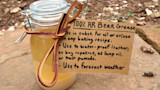
Butchering & Processing
How to Predict Weather with Bear Grease
You can make bear grease by heating the lard off a bear until it liquifies into a usable oil. It’s highly valued because of its stable shelf life at room temperature and numerous applications. I’ve personally cooked, conditioned leather, lubricated metal, and made lye soap with it. Other folks use...
Clay NewcombMay 28, 2021
Read MorePlay NowConversation
Save this episode