Field Care Tips for Hunting Knives
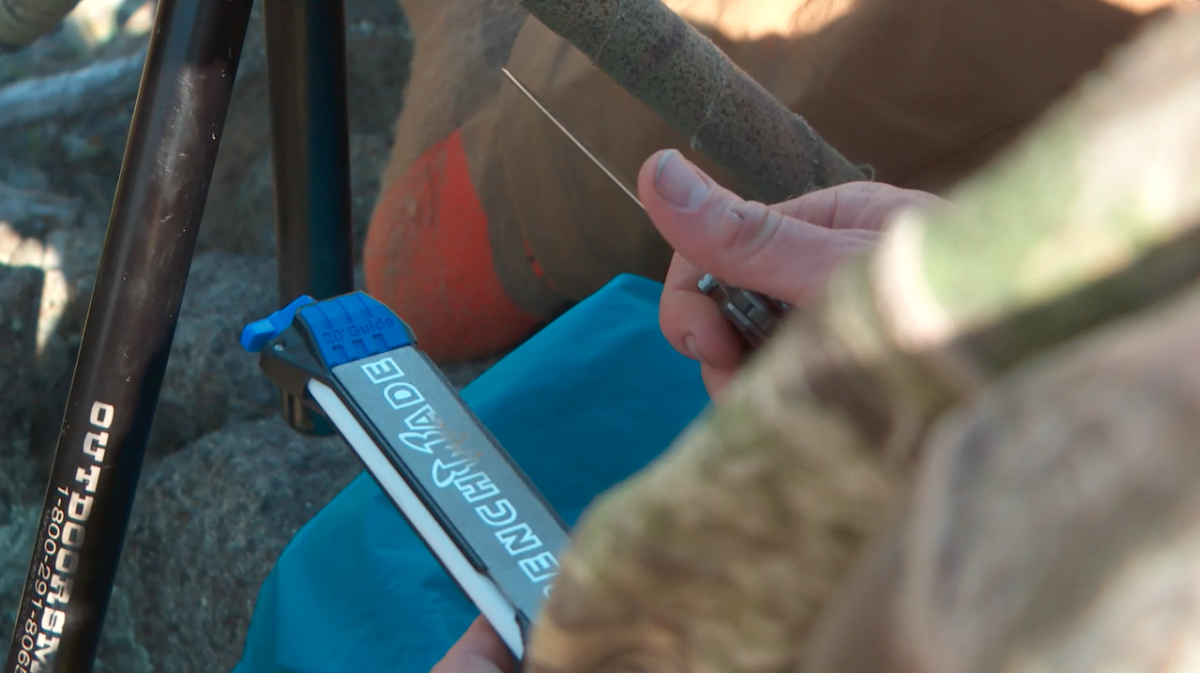

Like most tools, hunting knives require maintenance. If you don’t take care of your blade, you’ll be one of those hunters who struggles through the process of field dressing and butchering and who turns out sloppily processed game meat.
On a recent Montana black bear hunt, Matt Elliott from Benchmade Knife Company walked the MeatEater crew through a handful of do’s and don’ts surrounding knife care in the field. Some of it might seem like common knowledge, but other bits of wisdom caught us by surprise.
The Hunting Knife
For this reason, it’s a good idea to carry a second folding knife or utility knife, that we use for dozens of other tasks, cutting paracord or rope, sharpening stakes, preparing meals, that come up during a typical hunting trip.
As a point of reference, Steve carries a Steep Country in his pack for field butchering but keeps a Griptilian clipped to his pocket for all other uses. But regardless of whether we’re talking about a hunting knife or an everyday carry knife, avoid using any knife for screwdriver-type prying actions which can permanently damage a blade.
How a Knife Dulls
So how do you know when your hunting blade is beginning to dull? Simply put, it’s dull if it’s not cutting cleanly and quickly through hide and flesh with very little effort on the part of the user. You can also test for sharpness by cutting paper. The blade needs sharpening if the paper tears rather than being cleanly sliced. A better test is to see whether the knife can shave a bit of arm hair. If it can’t, it’s dull.
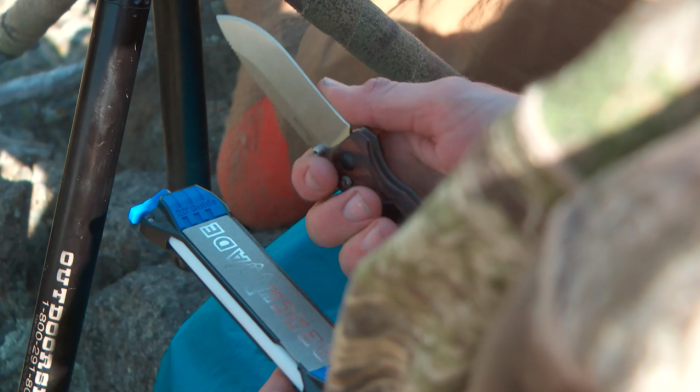
When to Sharpen Your Knife
If need be, you should be taking the time to sharpen your knife periodically throughout the butchering process. It’s simply easier to keep a knife sharp if it never has the chance to get overly dull. As soon as you notice the slightest drop in cutting performance, it is time to sharpen the edge.
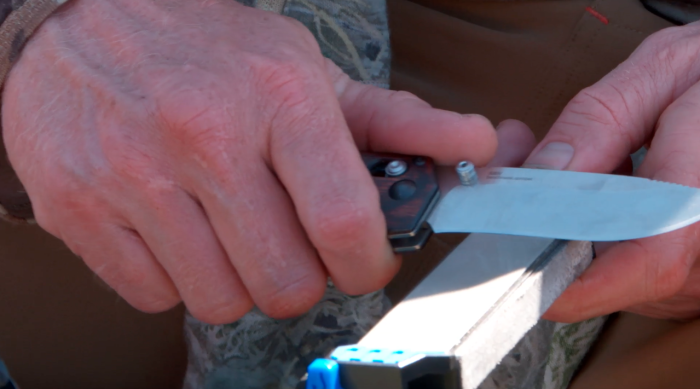
A good all-purpose sharpening tool for field use is the Benchmade’s Guided Field Sharpener. It’s small enough to pack on backcountry hunts and I keep one at home for my butchering and boning knives. Whether you’re dealing with a completely dull blade or fine-tuning an already sharp edge, this tool has an easy step by step process that sets up the user with the ideal 20-degree (per side) sharpening angle. Once a year, I’ll also send my knives in to Benchmade for a free, professional resharpening.
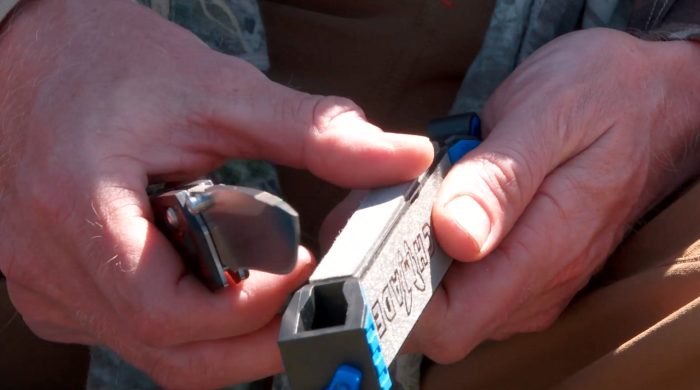
At a minimum, wipe it down with a clump of wet grass and rinse it clean with water or snow. Later, back in camp or at home, you can thoroughly clean it with a mild solvent and then apply a thin coat of oil to the blade. When not in use, keep the knife sheathed to protect the edge for your next big field butchering job.
Stay in the loop with The MeatEater Newsletter
Shop
Related
Caribou
The Ultimate Backcountry Blade: Benchmade’s Altitude
Hunting Gear
Choosing a Hunting Knife
Hunting
Field Care Tips for Hunting Knives
The comments section requires Functionality cookies. Please enable Functionality cookies in Cookie Settings to view this content.