The 5 Hardest Fish to Catch Through the Ice

Almost every outdoor activity has its own upper tier. A black belt level test that outdoorsfolk take up to challenge themselves in hopes of finding out how far they can push their passion. For hikers, it can be a particularly rough or long trail. For hunters, it can be pursuing a difficult species like Dall sheep or harvesting a trophy-sized specimen of their favorite species.
Anglers try to master challenging fishing methods like Spey casting or pursue rare or difficult-to-catch species like permit. In fact, it seems like almost every outdoor pursuit has its own boss level, but there’s probably none harder than in the world of ice fishing.
When it comes down to it, just going ice fishing is challenging enough for most of us. Having to get all the equipment together, find the right spot, and then drill holes through what can be more than a foot of ice, all in brutally cold conditions, can push the average angler to their very limit.
If you’re a true fur hat-wearing, transducer-marking, diehard ice warrior looking for the pinnacle of frosty frustration, there’s no better way to test yourself than by catching one of these five fish species through the ice.
Muskie
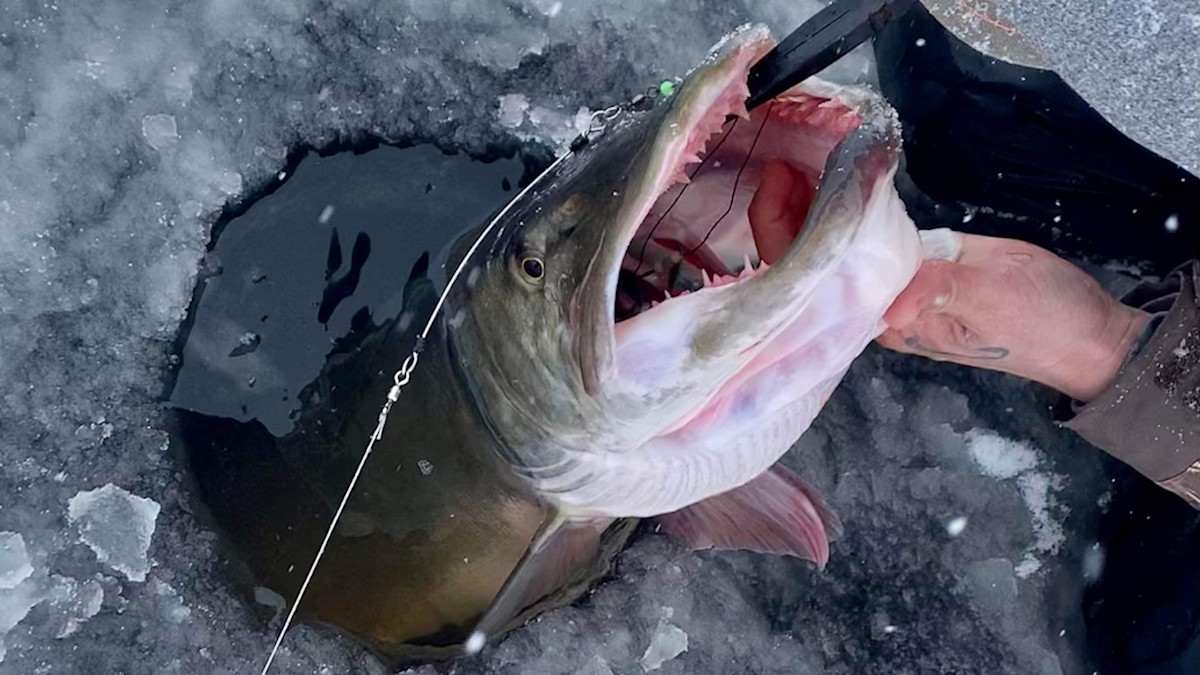
Ice angling for muskie is a whole new level of madness. Known as “the fish of 10,000” casts by gear and fly anglers, trying to get one of these finicky, toothy predators to grab a jig or eat a bait beneath a tip-up without the benefit of being able to cover water is borderline masochistic. But, it can be done.
While it’s extremely limited as muskie are considered a prize game fish with only a few states and Canadian provinces even allowing the pursuit during winter, there are a few dedicated Esox anglers out there that enjoy the challenge of catching muskie through the ice. Relying heavily on electronics that allow them to both find the right structure along the bottom as well as the fish themselves, ice angling for muskie is all about being in the right place at the right time.
Typically, muskie spend the bulk of the winter roving in and out of shallow water as they hunt for prey like suckers and panfish. The fish will hold and rest in the mornings and evenings in deeper, slightly warmer water that’s usually between 10 and 15 feet deep. However, when air temperatures rise in the afternoon, muskie will gradually move into shallower water, between eight and 12 feet deep, especially where there’s growing vegetation and/or other structure like brush piles and sunken logs to attract baitfish.
To catch muskie through the ice, you have to set up in these shallower areas using tip-ups baited with extremely large dead baits or by jigging with heavy-action rods and extremely large lures like Bull Dawgs and Magnum Spoons to tempt the fish. However, with muskie feeding only once or twice a day and roaming over large areas of water as they hunt, success often comes only after hours, and even days, of concentrated, dedicated fishing. This makes those who land muskie through the ice consistently true masters of the art.
Steelhead
Believe it or not, you can catch steelhead through the ice. Though the practice is mostly done on the Great Lakes and not on the West Coast, meaning that many anglers don’t consider the large migratory rainbow trout that ice anglers pursue to be true steelhead. But that doesn’t make catching them any less challenging.
The fact is that the “steelhead” of the Great Lakes are every bit as difficult to catch as their Pacific cousins. The fish are finicky eaters that rarely feed during the winter, relying on fat reserves stored from the summer to get them through the cold season. This means that ice anglers who want to catch them must get creative to be successful.
Ice anglers fishing for steelhead target them on the thicker ice around river mouths where the fish are migrating. Setting up in back harbors and bays, they try to catch the fish both before and after their upstream spawning runs. Most set up in shallower water, between three and 15 feet deep, specifically on sandy flats and rocky shorelines immediately adjacent to the mouth of the river, where steelhead will move into to rest as they prepare or recover from spawning.
Being so close to the moving water of the river can make ice fishing tricky and downright dangerous, as thin spots can be prevalent, so be sure to thoroughly check and test the thickness of the ice anytime you have steelhead in mind.
As the fish rarely, if ever, feed during the winter, ice anglers after steelhead generally won’t have much luck on live bait like minnows. Instead, you’ve got to use lures that incite aggression in the fish, such as flashy jigging spoons like the Swedish Pimple or gaudily colored lures that create a lot of action like the Jigging Rap. Lures like these will both attract the attention of and trigger steelhead to grab. As steelhead and all other salmonids will eat fish eggs out of both hunger and instinctual response, egg sacs and lures that imitate eggs can also be incredibly effective, especially under tip-ups.
Getting a steelhead to strike is often only half the battle, as they are among the hardest-fighting fish in freshwater. Known for their powerful, drag-burning runs, you want to ice fish for steelhead with heavy-duty equipment. Your jigging rods should be at least medium action and equipped with a reel that has a reliable and adjustable drag.
Lines for steelhead should be between 12- and 25-pound test and made of fluorocarbon, which is both low-stretch and nearly invisible beneath the water, doubling your chances at fooling the finicky fish. When you hook a steelhead beneath the ice, every ounce of your fish-fighting skill is sure to be tested, and when it comes down to it, it's all part of both the challenge and the fun.
Catfish
When you think of going catfishing, most of us think of sitting on the bank on warm summer days or muggy, star-filled nights as we soak baits on the bottom of muddy rivers and warm, weedy lakes. What many anglers don’t know is that these same good times can also be had during the winter by going ice fishing for catfish. However, landing these notoriously warm water-loving fish through the ice can be extremely difficult.
During the winter, catfish metabolisms slow down to a complete crawl. In cold water, even normally aggressive species like flatheads become sluggish and uncooperative, locking themselves to the bottom and feeding on only the easiest and most tempting targets. To catch them, you often have to dedicate yourself to a long day on the hardwater without a lot of action, but when you do get a strike from hungry winter catfish, it will usually be a fish large enough to make your patience worth it.
Winter catfish usually congregate in only one or two areas of a lake, pond, or reservoir, making finding them on the ice the first and often hardest part. Electronics can be extremely helpful in finding the bottom-hugging fish. However, if you don’t have any electronic help, you can find fish by fishing in the deepest areas of the shallowest water you can find.
Generally, winter cats won’t hold in water deeper than 40 feet, with the bulk gathering in 15 to 30 feet of water. Using a bathymetric map or a bottom mapping app, try to locate the deepest spot of water in this depth range, paying particular attention to any underwater structure or shelves, and you’re sure to find some cold-water kitties.
While baits for catfish in summer can vary, from cut baits and stink baits to live minnows, the best baits for winter catfish are the oiliest, smelliest things you can find. A winter catfish’s sluggish feeding habits mean that the more scent you can put in the water, the better. So chunks of cut bait from oily fish like roach and suckers, and even store-bought herring or anchovies are at the top of the menu.
Strikes from winter cats can be extremely subtle, so you’ll want to use light-action jigging rods and tip-ups set on a hair trigger to catch the fish. For nothing is worse than spending all that time freezing your butt off trying to find a catfish and then missing your chance when it comes.
Lake Trout
Lake Trout are notoriously difficult to catch through the ice for two reasons. First and foremost is because of their size. Lakers can weigh upwards of 50 pounds, making them quite a tussle on average ice fishing gear. The second is the depth that lakers live in for most of the winter. Though they will occasionally come as shallow as 10 feet, for the most part, lake trout are only found in depths between 25 and 85 feet of water. This makes the fish extremely challenging to both find and catch through the ice, as there can be a lot of fishless water between the ice angler and their bait.
Lake trout are constantly hunting during the winter, moving from shallower to deeper water and vice versa as they look for baitfish. Generally, smaller lake trout will hunt in packs, herding and devouring minnows and even small panfish like perch and bluegill as they cruise to and from shallow water. However, larger lake trout tend to be loners and travel alone or in pairs as they target larger prey, such as burbot and even other trout.
This constant movement in and out of deep water means that you have to target lakers in transition areas within their depth range. Using electronics or a bathymetric map, look for spots with sharp drop-offs where the water rapidly goes from 20 feet to 60 feet or more within 20 to 40 yards. These transition zones are where lakers are most likely to travel as they move from deeper to shallower water and back again, creating ideal pinch points for both jigging and tip-up fishing. Ideally, you’ll want to drill several holes at different depths along these areas in a sort of zig-zag pattern, which will help to ensure that you cover the lakers’ entire transition area.
As lakers are considered to be the apex predator in most waterways they inhabit, your best bet for catching them is by using large, gaudy baits that create a lot of movement and draw a lot of attention. For jig fishing, large spoons can be effective, but often heavy jig hooks tipped with large soft plastic lures like a Hogy or a Octogambo Grub are a better bet.
If you’re fishing with bait, choose something meaty enough to get their attention, such as a large three- to five-inch gold shiner, a six- to seven-inch sucker, or even (where legal) a large eight-inch plus gamefish like a bluegill, trout, or whitefish. Lakers are definitely disciples of the big baits catch big fish rule, so you want to make sure the lake trout you hook into is big enough to make it worth all the effort.
Whitefish
While they may be an odd choice as many anglers consider them to be a trash fish, whitefish are actually one of the finest eating, hardest fighting, and most difficult to catch ice fishing targets out there. Like lake trout, whitefish prefer to hunt and live in extremely deep water between 50 and 80 feet. Unlike lakers, finding whitefish in these depths can be a complete crapshoot, as roving schools of whiteys can be found at any depth. Sometimes they hug the bottom, and other times they suspend themselves 20 to 40 feet above it. This makes them easily one of the most difficult fish to find and catch consistently through the ice.
Electronics like forward-facing sonar and flashers are almost a requirement when you’re ice fishing for whitefish. With no consistent holding pattern and their habit of living and feeding at unpredictable depths, without the aid of electronics to help you see what’s swimming below you, you’re fishing completely blind. Target areas of extremely deep water with flat, featureless bottoms and then drill several prospect holes between 10 and 20 yards apart. Then, using your electronics, start searching the water at five- to 10-foot intervals, working all the way down to the bottom until you start marking fish.
Once you manage to find some whiteys, the next challenge is figuring out how to get them to bite. Living on a diet of tiny invertebrates such as insect nymphs and zooplankton, it’s almost impossible to “match the hatch” for whitefish as there are very few ice fishing baits and lures small enough to tickle their fancy. However, you can get whitefish to strike lures out of curiosity and even aggression, so long as you fish the right lures with the right methods at the right depths.
Using light action to medium action to heavy action jigging rods with heavy braided lines that will sink fast, tipped with long, five- to eight-pound test fluorocarbon leaders that will fool the fish, you have to jig for whitefish according to how they’re behaving. If the fish are suspended off the bottom and not moving around much, you have to jig right in front of their noses and tempt them into striking.
Start by lowering a small but brightly colored lure, such as a Jigging Rap or a Williams Whitefish Spoon, down to the fish’s level. Then, point your rod tip into the hole and lift it vertically, letting it fall back down with controlled slack. This slow, methodical finesse technique will often trigger even inactive whitefish to strike, especially when the fish are suspended off the bottom.
If you find whitefish hugging the bottom, then your best bet to catch them is by “mud pounding.” This involves lowering a small but heavy lure, like a War Eagle Spoon or Clam Drop Jig, down to the bottom. Once it hits the dirt, start rapidly jigging the lure against the bottom, stirring up the mud and simulating a school of feeding whitefish. If they’re holding near the bottom, they’re likely to move in to see what all the commotion is before striking at the lure, hoping to steal a meal.
While both methods of jigging can be hit or miss, and finding the fish can be a major problem, it’s all part of the puzzle of catching whitefish through the ice—one that some ice anglers are determined to solve.
As Hard as Ice
As previously mentioned, ice fishing can be tough enough on its own, even when it’s as simple as going out and drilling a couple of holes to see what you can find. At the same time, there are a lot of master ice anglers out there who find that going out to fill a bucket with panfish, perch, and walleye isn’t worth their time.
These are the ice anglers who want to push themselves to the limit and find out what they’re really made of, and the ones who know that bragging rights and a certain amount of glory can only be found by catching challenging species through a hole in the ice.
Feature image via Andrew Walker.
Stay in the loop with The MeatEater Newsletter
Shop
Shop AllRelated
Ice Fishing
How to Catch Big Walleye Through the Ice

Ice Fishing
The Best Techniques for Catching Trophy Fish Through the Ice