
Course
Main
Duration
30 minutes
Serves
4
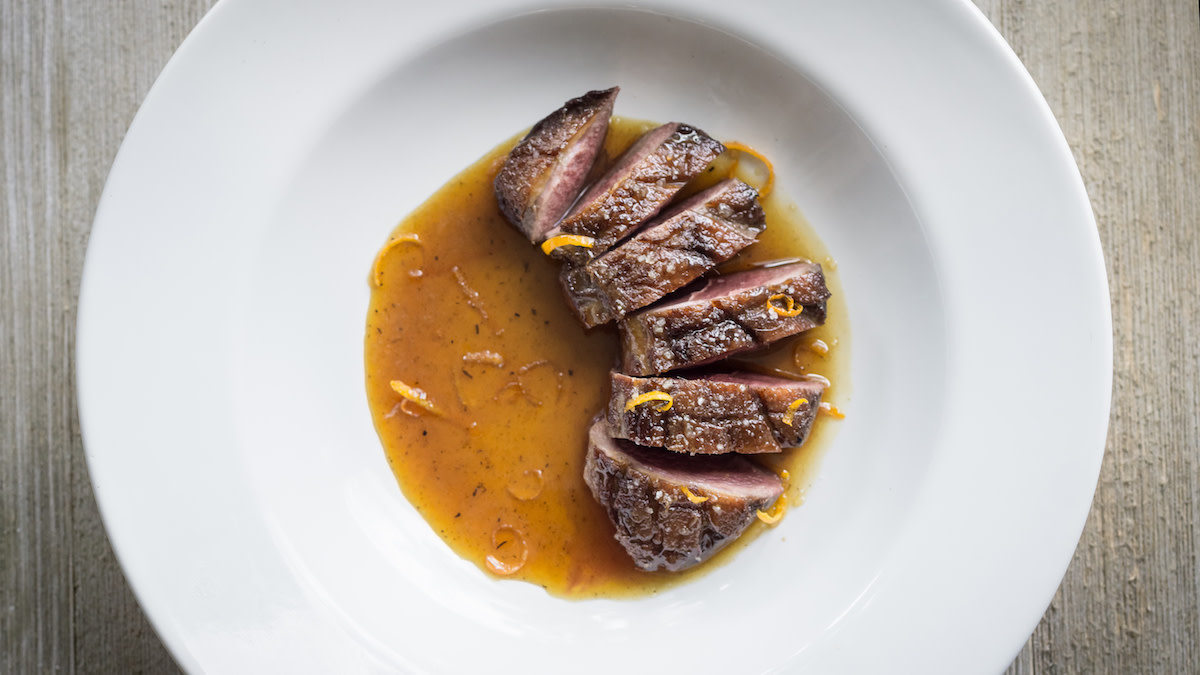
To commemorate the launch of the MeatEater Straight Bourbon Whiskey, I’m sharing a boozy rendition of my favorite waterfowl recipe: duck à l’orange.
Duck à l’orange is an iconic French dish popularized by Julia Child in the ’60s. Despite falling out of fashion, it’s still one of the best ways to celebrate a memorable hunt. The traditional way to prepare duck for this recipe is whole roasting, but I prefer to just use the breasts and reserve the thighs for dishes like confit.
Ingredients
- 1 cup duck, turkey, or chicken stock
- Duck wings, neck, giblets, etc. (optional)
- 4 duck breasts, skin-on (mallard, pintail, wood duck, wigeon, etc.)
- 1 small shallot, sliced
- Salt and pepper
- Oil or duck fat for cooking
- 2 tbsp. MeatEater Straight Bourbon Whiskey
- 2 1/2 tbsp. honey or white sugar
- 1/4 cup fresh orange juice
- Pat of butter (optional)
- Orange zest for serving
Also works with
Special equipment
Preparation
- Pour the stock in the sauce pot and add the sliced shallot. If you have any wings, necks, or giblets saved, add them to the stock. Turn the heat to high and let the stock boil. Reduce to 1/4 cup, then strain the solids. Reserve the reduced stock until needed.
- While the stock is reducing, pat the surface of the duck breasts very dry with a paper towel. Using a sharp knife, score the skin of the ducks into cross-hatch patterns about one inch wide. This allows the fat underneath the skin to render out. Season with salt and pepper just before cooking. If you do this step in advance, be sure to blot any moisture the salt pulls from the skin.
- If you have very fatty ducks, place them skin side down in a cold pan and turn the heat to medium-high. You do not need to add any fat. If the duck breasts have little to no fat under the skin, you will want to pre-heat the pan to medium-high. Add a drizzle of cooking oil or duck fat to the pan and sear the breasts, skin side down first.
- If the duck breasts begin to contract or dome up in the center, press them flat with a spatula. Flip after 2-4 minutes, or once the skin is golden brown and crispy. You will continue to cook on the opposite side until cooked through to medium-rare. A very small duck may only take an additional minute, while a large mallard or specklebelly will take 2-4 minutes longer.
- Transfer the duck to a cutting board to rest. Pour off some of the fat in the pan if there is a substantial amount. Save this for cooking vegetables or potatoes.
- Turn the burner off and pour in the bourbon, scraping up the fond at the bottom. Let the alcohol boil off for a brief moment, then turn the burner back on. If you want to flambé, keep the gas burner on and burn the alcohol using flames instead.
- Add the honey and orange juice. The liquids will come to a boil and the sugars will create big bubbles. Once the sauce darkens and caramelizes into a light brown color, stir in the reserved 1/4 cup of stock. Cook for one more minute, or until the sauce just barely coats the back of the spoon. Swirl in a pat of butter to finish the sauce.
- Remove the sauce from the heat. As it cools it will thicken to a syrup consistency, so be careful not to over-cook. Taste and season with salt and pepper if desired. If the sauce is too sweet, you can add a drop of orange bitters used for cocktails.
- Serve the sauce with the duck breasts and sprinkle with orange zest to garnish.
Note: This makes about 1/3 cup of rich sauce. If you desire more, double the sauce recipe.
Stay in the loop with The MeatEater Newsletter
Shop
Related
Recipes
How To Cook The Perfect Duck Breast
(5)
Recipes
Duck with Blackberry Sauce
(0)
Recipes
Roasted Duck with Mulled Wine Glaze and Poached Pears
(1)The comments section requires Functionality cookies. Please enable Functionality cookies in Cookie Settings to view this content.
Duck à la Bourbon
Course
Main
Duration
30 minutes
Serves
4
To commemorate the launch of the MeatEater Straight Bourbon Whiskey, I’m sharing a boozy rendition of my favorite waterfowl recipe: duck à l’orange.
Duck à l’orange is an iconic French dish popularized by Julia Child in the ’60s. Despite falling out of fashion, it’s still one of the best ways to celebrate a memorable hunt. The traditional way to prepare duck for this recipe is whole roasting, but I prefer to just use the breasts and reserve the thighs for dishes like confit.
Ingredients
- 1 cup duck, turkey, or chicken stock
- Duck wings, neck, giblets, etc. (optional)
- 4 duck breasts, skin-on (mallard, pintail, wood duck, wigeon, etc.)
- 1 small shallot, sliced
- Salt and pepper
- Oil or duck fat for cooking
- 2 tbsp. MeatEater Straight Bourbon Whiskey
- 2 1/2 tbsp. honey or white sugar
- 1/4 cup fresh orange juice
- Pat of butter (optional)
- Orange zest for serving
Also works with
Special equipment
Preparation
- Pour the stock in the sauce pot and add the sliced shallot. If you have any wings, necks, or giblets saved, add them to the stock. Turn the heat to high and let the stock boil. Reduce to 1/4 cup, then strain the solids. Reserve the reduced stock until needed.
- While the stock is reducing, pat the surface of the duck breasts very dry with a paper towel. Using a sharp knife, score the skin of the ducks into cross-hatch patterns about one inch wide. This allows the fat underneath the skin to render out. Season with salt and pepper just before cooking. If you do this step in advance, be sure to blot any moisture the salt pulls from the skin.
- If you have very fatty ducks, place them skin side down in a cold pan and turn the heat to medium-high. You do not need to add any fat. If the duck breasts have little to no fat under the skin, you will want to pre-heat the pan to medium-high. Add a drizzle of cooking oil or duck fat to the pan and sear the breasts, skin side down first.
- If the duck breasts begin to contract or dome up in the center, press them flat with a spatula. Flip after 2-4 minutes, or once the skin is golden brown and crispy. You will continue to cook on the opposite side until cooked through to medium-rare. A very small duck may only take an additional minute, while a large mallard or specklebelly will take 2-4 minutes longer.
- Transfer the duck to a cutting board to rest. Pour off some of the fat in the pan if there is a substantial amount. Save this for cooking vegetables or potatoes.
- Turn the burner off and pour in the bourbon, scraping up the fond at the bottom. Let the alcohol boil off for a brief moment, then turn the burner back on. If you want to flambé, keep the gas burner on and burn the alcohol using flames instead.
- Add the honey and orange juice. The liquids will come to a boil and the sugars will create big bubbles. Once the sauce darkens and caramelizes into a light brown color, stir in the reserved 1/4 cup of stock. Cook for one more minute, or until the sauce just barely coats the back of the spoon. Swirl in a pat of butter to finish the sauce.
- Remove the sauce from the heat. As it cools it will thicken to a syrup consistency, so be careful not to over-cook. Taste and season with salt and pepper if desired. If the sauce is too sweet, you can add a drop of orange bitters used for cocktails.
- Serve the sauce with the duck breasts and sprinkle with orange zest to garnish.
Note: This makes about 1/3 cup of rich sauce. If you desire more, double the sauce recipe.