Why You're Not Getting Early Season Bucks on Trail Camera
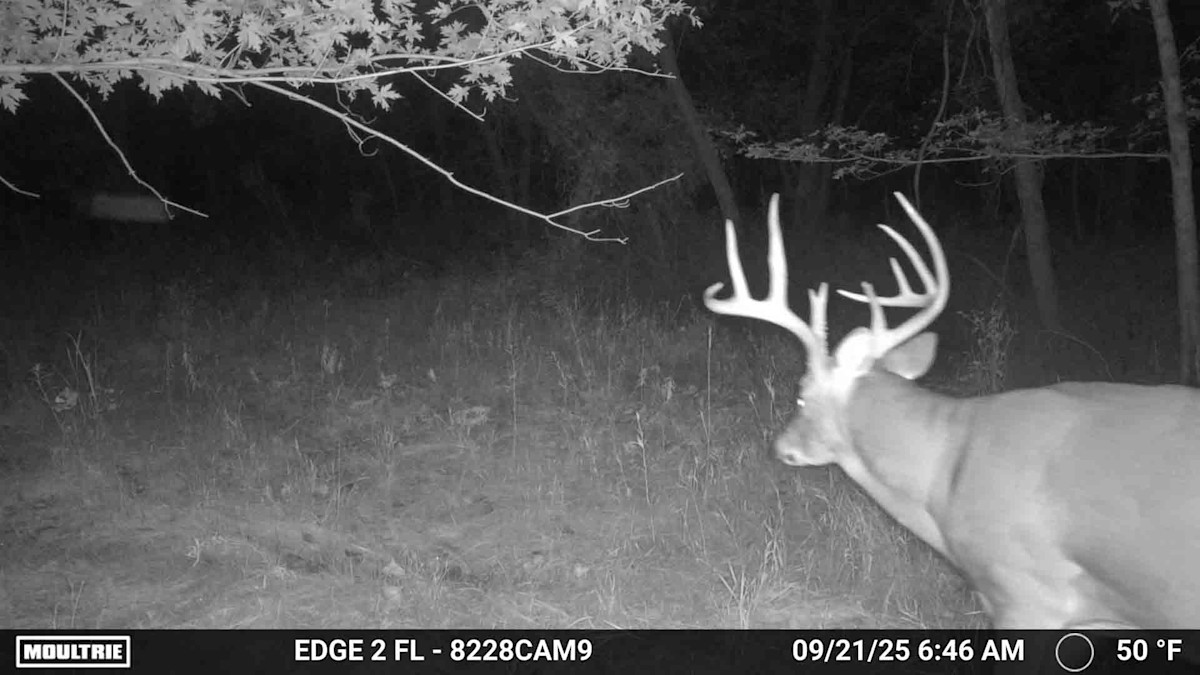

Summer is anunbeatable time of year for trail camerasin the whitetail woods. Deer are calm, movement is consistent, and patterns are easy to find. Unfortunately, the easy living of summer never lasts. Every year, nose-diving camera feeds make hunters across the country question everything in the critical weeks before September openers. As sudden and confusing as the photo drought often seems, the driving forces behind it are well-explained by whitetail science.
Both bucks and their environments become increasingly dynamic as August draws to a close, with nearly every key component of deer movement changing all at once. The most evident, and often most frustrating, istheir diet. If your camera intel happens to go dry, don’t panic. A brief understanding of what’s going on with whitetail food should calm your nerves.
The Mast Effect
Destination food sources are obvious throughout the summer when bucks prioritizehigh-protein forageto supportrapid antler growth. Soybeans, alfalfa fields, and clover plots are great places to catalog resident bachelor groups, but they tend to give hunters a false sense of confidence about their early-fall prospects.
As summer wanes,forage quality drops, and protein needs dry up along with velvet. Fats and carbs take the lead in a whitetail’s fall diet to prepare for the energy demands of the rut and impending winter. Perhaps not coincidentally, this transition almost perfectly aligns with the acorn drop.
Whileoak species and mast-fall timelines varyfrom region to region, the presence of energy-rich acorns in any capacity can have a huge impact on early-season deer feeding patterns. AVirginia study published in 1993found that whitetails dedicated a staggering 50% of their foraging time to acorns during peak mast and were solely responsible for 70% of acorn consumption during that timeframe.
With that monumental level of preference, it’s not surprising that the same study observed collared deer altering their home ranges specifically to incorporatehot oak standsinto their daily rounds. None of that bodes well for aSeptember bean fieldthat looked like deer mecca a month ago. And, to make matters worse for your summertime hotspots, consider thatsugary soft mastslike persimmons and apples can be as big of a draw as acorns and have roughly the same seasonal timing. If your food plot cameras have become purely ornamental, mast is a likely culprit. But it’s not the only one.
Shifting Bedrooms and Growing Neighborhoods
One of the most popular deer hunting strategies is to get between a buck’s preferred feeding andbedding areas. Changing feed and bed patterns make this strategy tricky.
While research has shown thatbedding bucks prioritize thermal coverin close proximity to high-quality forage throughout the summer, their tastes switch with the onset of fall. In addition to forage becoming less of a draw, cooler temperatures mean bucks no longer need to tuck away in scarce microhabitats that offer slightly cooler temperatures and some respite from the bugs. They have more options to spread out and not a moment too soon.
As with diet,shifts in fall beddingare largely tied to physiological changes.Bachelor groupsthat shared a grassy swale in early August are suddenly not so stoked to be roommates by early September, and a camera targeting that swale might go from 100 to zero in a week as the band breaks up. Solitary bedding sites become key in the early season. In the summer, deer bed for comfort. In the fall, they bed for survival.
The abandonment of summer bedding also coincides with range expansion. All of the hormones that lead a buck into his reckless November scramblestart to ramp up in August. That means you’re more likely to have random new bucks show up on early-season trail cameras, but you also might not see resident bucks as often as you did while their antlers were growing.
The whole program has changed in the last couple of weeks. Clinging to dried-up cameras and planning to hunt on summertime memories is a good way to doom yourself to a slow and painful opener. Luckily, it’s not too late to get back on track.
A Little Sign Goes a Long Way
Whitetail hunters have long been conditioned to beultra-cautious with early-season bucks. The overwhelming message is to minimize your presence in the woods to avoid educating deer to your presence ahead of the pre-rut.
The thing is, there are weeks between most archery openers and the pre-rut, and the key to filling tags in that time period is to scout. Scout with trail cameras where you can, but you should also useonX, binoculars, and a good pair of boots. Trail cameras are a convenient method to passively gather intel, which makes it easy to forget that they’re only one piece of the puzzle and an especially fickle one this time of year.
Early-season bucks don’t leave as much sign in the woods as they willaround Halloween, but they’re also not covering nearly as much ground. September marks a unique time whenfresh rubs and scrapescan tell you exactly where to intercept your target. If your trail cameras are dead, pull a few and take a hike.
Combine some old-fashioned grunt work withcutting-edge technology. You’ll find bucks somewhere. And when you do, you better hunt them, because the season of consistency is over. Until next summer, every week will be different in the whitetail woods.
Shop
Sign In or Create a Free Account
Related
Scout
What I Learned about Whitetails from Year-Round Trail Camera Use

Scout
Why You're Not Getting Early Season Bucks on Trail Camera