Understanding a Whitetail’s Diet


Whitetails are one of the most widely spread mammals across North America. Many factors have contributed to their proliferation over the years, but none are as prominent as their ability to digest just about any plant. They possess unique salivary glands that produce enzymes that block some potentially harmful plant compounds, a unique trait among cervids. Nevertheless, there’s still a difference between what a deer can eat and what a deer should eat.
Whitetails are browsers by nature, but they can often be patterned by what their primary food source is at any given time of the year—which is driven by what their body needs for its natural function during a specific season. Moreover, a deer will seek out plants with high amounts of specific nutrients. For example, during the winter months, a mature buck recovering from a harsh rut will focus on carbohydrates before changing its diet to a more protein-based regime in the spring. All of these food categories can be broken down into browse, forbs, mast, and crops. Grasses and lichen/fungus are also part of a deer's diet but on a much less significant scale.
Browse
Most deer’s diet is browse, which consists of woody and stemmy plants such as trees, shrubs, briars, and even vine plants. I say “most” because it’s obviously based on location. A whitetail in northern Minnesota has access to a lot more browse than a deer in western Kansas.
Browse is usually high in fiber and adequately palatable. Some younger buds, leaves, and shoots are higher in nutrients than others, but the varied quality of browse is usually hedged by its consistent nature and abundance.
Forbs
The next most prevalent category is forbs, which include all herbaceous, broad-leaved plants. This is an extremely broad category that contains the largest amount of digestible plants, from clover and thistle to peas.
Forbs are extremely nutritious, with not only high protein content but also high water content. This is important to note because a whitetail gets roughly 60 to 70% of its water intake through its diet and mainly uses water sources to help regulate its body temperature.
Mast
Mast is another major category in a whitetail’s diet but is often seasonal. Mast includes all soft or hard fruit-producing plants. Apples and berries (soft) and acorns and hickory nuts (hard) are some of the most popular examples.
Soft mast is high in starches, sugars, and major vitamins, while hard mast is packed with carbohydrates. Yields of mast-bearing trees and shrubs can vary, but there is almost nothing that beats its ability to draw deer during bumper crop years.
Crops
Not everyone classifies crops as their own category, but I do. Agricultural crops such as barley, corn, soybeans, or alfalfa fall into this category. These plants overlap with other categories, true, but I believe the modern farmer plays a prominent role in the health of our herds.
The two most common crops in the Midwest are soybeans and corn. Soybeans are extremely high in protein and fats, while field corn is one of the best carbohydrates; both are extremely important to a deer's health.
As you’ll notice, a whitetail’s diet isn’t complicated, but it is vast. For hunters, this is actually a good thing because we can hone in on deer activity more accurately by keeping this information in mind. As with most big game, when you find a food source, you’re on the right track. And when it comes to our country’s most popular pursuit, we have plenty of options.
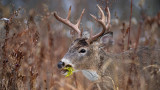
Feature image via Matt Hansen.
Stay in the loop with The Wired to Hunt Newsletter
Related

Manage
Understanding Thermal Cover in Conifers
Manage
Understanding a Whitetail’s Diet

Manage
10 Natural Food Sources Every Deer Hunter Should Know

The comments section requires Functionality cookies. Please enable Functionality cookies in Cookie Settings to view this content.