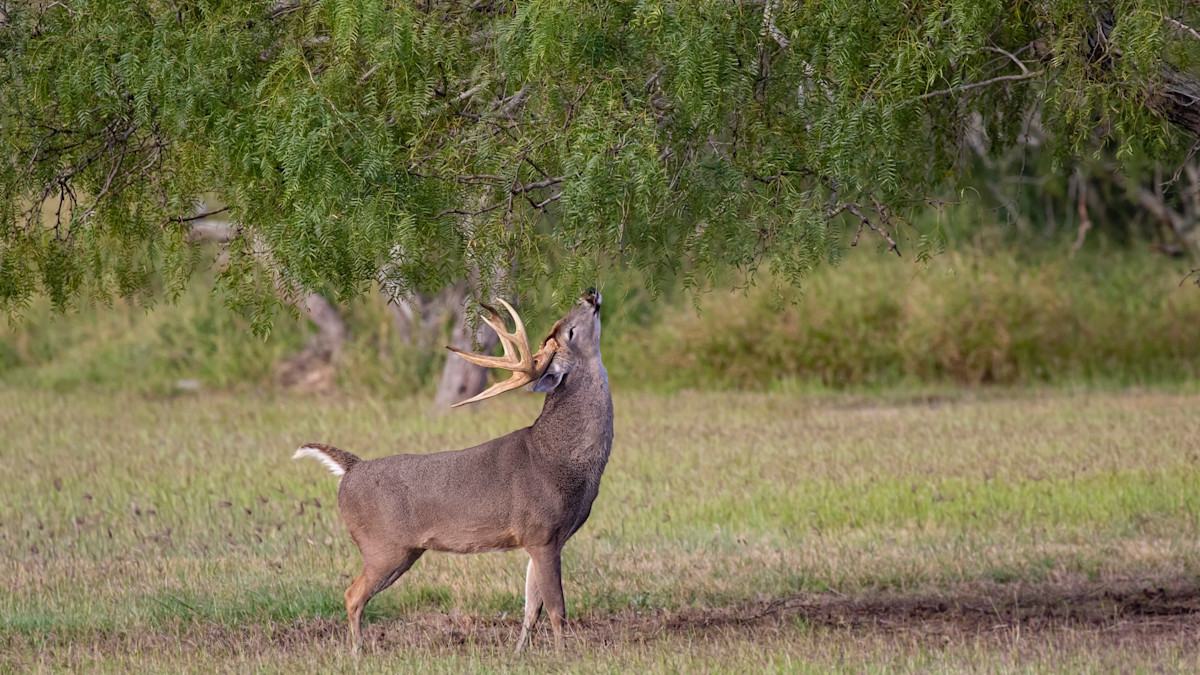

If you’re taking to the Massachusetts woods this season, know that the bottle of real doe pee in your hunting bag could get you in trouble. As of August of this year, Massachusetts prohibits hunters from using or even possessing scent attractants made from actual deer tissues or fluids while hunting. “The use or possession of any scent attractants derived from deer tissues or fluids is prohibited, including urine, scent glands, and bladders,” MassWildlife states.
In doing so, Massachusetts joins a number of other states that have already banned or restricted natural deer urine and other deer-derived attractants over disease concerns.
Synthetic deer scents are still legal, meaning hunters can still freshen up a mock scrape or try to fool a rutting buck, but anything derived from an actual deer can’t come along for the hunt.
So why the sudden restriction? According to MassWildlife, the new regulation is intended to prevent the spread of chronic wasting disease (CWD), a fatal neurological disease affecting deer, elk, moose, and other members of the deer family. The disease is caused by infectious proteins called prions, which can be shed through an infected animal's urine, saliva, and feces. These prions can contaminate the environment and remain infectious for years, raising concerns about the use of deer-derived scent attractants.
However, Massachusetts has never recorded a confirmed case of CWD within its borders. That makes the new regulation a precautionary measure rather than a response to an active outbreak. State wildlife officials hope that eliminating deer-derived attractants will reduce the chances of introducing the disease into Massachusetts, where it has so far remained undetected.
But can a bottle of deer urine really spread CWD?
Research has shown that infected deer can shed infectious prions through their urine, sometimes months before showing any symptoms. Since many commercial deer urine attractants are collected from captive deer, there is concern that contaminated products could introduce the disease into areas where it hasn't been detected.
However, according to a 2025 report from the National Academies of Sciences, Engineering, and Medicine, the role of commercial urine attractants in spreading CWD remains undocumented. While the potential risk exists, researchers have yet to establish how much these products actually contribute to the spread of the disease.
So will this new restriction actually make a difference? When MassWildlife proposed the regulation in June 2025, officials shared results from a survey of Massachusetts hunters showing that 16% reported using deer urine as an attractant. The survey results presented did not specify whether those hunters were using natural deer urine or synthetic alternatives. With such a small percentage of hunters reporting urine use and no documented cases of commercial deer urine spreading CWD, it's difficult to determine how much of an impact the ban will have.
For now, Massachusetts is taking a precautionary approach to keeping CWD out of the state, and only time will tell whether the new restriction makes a measurable difference.
Stay in the loop with The Wired to Hunt Newsletter
Shop
Related

Manage
Could a Bottle of Doe Pee Spread CWD? Massachusetts Isn't Taking the Chance

Manage
What the CWD Bill Means for Deer and Deer Hunters