MeatEater Conservation
Ep. 99: Black Bears, Guns, and Money
Play Episode
30m
This week, Cal heads to Connecticut and meets with all of the acronyms to see where Pittman Robertson excise tax dollars go.
00:00:09 Speaker 1: From Mediators World News Headquarters in Bozeman, Montana. This is Kel's we Can Review with Ryan kel kell An now Here's Kel. A black footed ferret named Elizabeth Ann was born this past December, which in and of itself would be good news. The blackfooted ferret is an endangered species that until forty years ago biologists believed had gone extinct, so any new member of the family is caused for celebration. However, Elizabeth Ann's birth is extremely, extremely big news because she's a clone the exact genetic replica of a blackfooted ferret named Willa who died in Willow's genetic material was extracted and saved in what's known as the Frozen Zoo, a cryogenic preservation facility run by the San Diego Zoo that is currently securing the tissue of eleven hundred different species at a temperature of negative three and twenty degrees fahrenheit. Tickets to this exhibit don't sell very well, probably because the animals are frozen and your eyeballs would be too. I'm really hot. I find it unlikely. The black footed ferret was once abundant in the American West, praying primarily on prairie dogs, but as agriculture spread across the region, the prairie dog was designated as a pest, hunted, trapped, and poisoned extensively. Many predator species, including several kinds of raptor, were hard hit when prairie dog numbers plummeted, but black footed ferrets ferret especially bad, and the scientific consensus was that by the end of the fifties they had been completely wiped out. But then in a dog belonging to a lady named Lucile Hogg dropped a very recently alive black footed ferret at her front door in Matitzi, y Coming, and a small remaining population was uncovered. This group thrived for a few years, but then disease tore through the population, and despite intense efforts to protect them, only seven individuals were able to pass on their genes. All of the blackfooted ferrets alive today come from the offspring of those seven individuals. Thus, lee they are very similar genetically. Real shallow pool, we'd say a lack of genetic diversity means that if one individual is susceptible to a certain virus or pathogen, the entire population would be at risk of being wiped out by that same threat, And that is why elizabeth Ann the cloned ferret is so exciting for conservationists. Willa, the ferret whose genes Elizabeth Ann carries, was outside of the small group of ferrets alive today in the wild, meaning if this distinct genetic material can make it back into the wild population, then the resulting ferrets will be much more resilient and likely to flourish across the landscape. Again, but scientists aren't just going to drop elizabeth Ann into a colony of wild ferrets and hope for the best. First, more cloned individuals will join her than they will, we hope have offspring than those offspring will be bred back with wild ferrets, and then if all of that is successful, the overall blackfooted ferret population will be in much much better shape. All of this ain't cheap. Just for Elizabeth Anne to be born, her genetic material had to be inserted into a domestic ferrets embryo. That embryo had to be just stated in a surrogate ferret, and then Elizabeth Ann was born by a caesarean section by a jim. The private company handling these technical aspects of the operation also run the pet cloning business. If you have a cool fifty thousand bucks lying around, you can get an exact genetic replica of your beloved snort. Much of the funding for cloning comes from a nonprofit organization called Revive and Restore, which also raises private money to pursue even bigger goals, including bringing back populations of fully extinct animals like the wooly mammoth and passenger pigeon. Several extinct species have their genetic materials stored in the frozen zoo. It might seem wild to imagine a living wooly mammoth, but the mammoth isn't significantly distinct from the elephant, and so what scientists have accomplished with black footed ferrets should be possible with mammoths as well. There are, of course, loud arguments about whether all this time, money, and effort would be better spent protecting other species that are still alive. What if we poured these resources into protecting habitat and combat and climate change? Isn't an ounce of prevention worth a pound of cure. The same lack of genetic diversity that afflicts the black footed ferret is also a huge problem for many game species, including the big horn sheep. In theory, we could get a few big horns out on the mountain with a new blend of genetic material that could make them immune or resistant to pneumonia. That would go a long way towards keeping that species alive. And well, we've talked before about the reluctance of some hunters to take deer another game with tracking colors around their necks, So I wonder would people be more or less enthusiastic about bagging a sheep that was the offspring of a clone, possibly the exact replica of you know, maybe your buddy sheep. This week we've got a special deep dive into Pittman robertson funds and how they're used. But first I'm gonna tell you about my week and my week as well as this podcast is, as you know, brought to you by Steel Power Equipment. Spring is darn near sprung. Better make sure you have what you need to keep your yard would lot looking sharp? On top of that, it's only going to be like five months until we started looking up high in the mountains of Montana and thinking, boy, I don't like the looks of those clouds. Do I have enough wood for the winter? Go see your friendly independent steel dealer. For those of you hankering for more in depth information on the Idaho Grizzly. Episode of Cal on the Field, go back and listen to episode sixty three of Cal's weekend review. It's all there. New episode on fisheries, Big money to be had in Rainbow Trout drops Tuesday on the Meat Eater YouTube channel. Check her out and let me only think. All right, that's enough catching up. I did some traveling this week, went to Connecticut on a trip to look at where Pittman robertson dollars go. Listen up. It is no secret that sales of guns and ammunition went up just a bit in let's take a look at those stats. For the calendar year, the FBI conducted thirty nine million, six thousand three fifteen firearm purchase background checks, up a full forty percent from last year. For context, the year two thousand five there were fewer than nine million FBI background checks for total gun purchases. Firearms sales climbed significantly during the Obama administration, but this is by far the biggest year over year jump in history, and according to the National Shooting Sports Foundation, over eight million people bought guns for the first time in No matter how fervent a defender of our Second Amendment rights you may be, you likely have this slight mix of feelings on this. We hope these first time purchasers are having some help in the mechanics and safety areas of gun ownership, is what I mean. Gun sales in were driven by economic and social turmoil, self defense, and to a degree, providing food as in hunting. No matter the purpose or intent of the purchase, Americans arming themselves is great news for protecting wildlife in the here and now. The reason will be familiar to many listeners, but for our new audience, let's recap the cornerstone of the North American model of conservation, the Pittman Robertson Act. In ninety seven, Senator Key Pittman and Congressman Absalom Robertson wrote and passed a bill that applied in eleven percent federal tax on every sporting firearm and box of ammos sold in the United States. More importantly, the bill stipulated that every dollar raised from those taxes had to be applied to wildlife conservation in just two short years, the Act had raised eight nine thousand dollars almost seventeen million dollars in today's money. It's hard to overstate how important this legislation was. At the time the bill was passed, American wildlife was in very, very bad shape. The effects of rampant market hunting and habitat loss meant that seeing a white tail deer, while turkey or black bear was exceededly where anywhere in the US. Biologists and lawmakers worried that without some serious intervention, those animals, as well as all the non game species that coexisted within those habitats, would be gone for good. Since nineteen thirty seven, that eleven percent tax has been used year in, year out to buy or lease land for wildlife habitat, to manage that habitat, to fund scientific studies and surveys that inform conservation decisions, and much more. It is not an exaggeration to say that the thriving state of American wildlife today simply could not have happened without it. You might have noticed earlier when describing the tax I used the term sporting firearm. In the original Act, only long guns designed for hunting were included. In the nineteen seventies, however, Pittman Robertson was expanded to include all handguns and non hunting firearms as well. And it's a darn good thing it was. Although hunters like to brag about how much we do for conservation, at this point, it's really competitive. Hisstol shooters, folks down at the range putting box after box at two two three through their A R s, and people stash an extra AMMO for rainy day, who are really pumping money into protecting wildlife. I think a lot of hunters are very proud of the fact that you know, when they buy a hunting license or or fishing license, that they know that that money is going back into their state, uh, you know, wildlife management programs, and they should be proud of that. Um. But I think a lot of them aren't aware that the tax that's paid through the PIV and Robertson Act is paid by the manufacturers. But before that firearm leaves the factory, it's a ten to eleven percent tax. It's it's on every firearm or every cartridge that's made by fire and buying ammunition manufacturer, So that tax is coming directly from the manufacturer to the U. S. Treasury. It's already it's already marked out for the U S Fish and Wildlife Wildlife Restorations funds. So, uh, it's baked into the price of every time you're buying a gun or you're buying an ammunition, so you are supporting that as an individual hunter. But that tax has been paid by the manufacturer before that fium actually leaves the factory. As soon as that becomes a firearm, that becomes a taxable item. As soon as that cartridge is finished, it becomes a taxable item, So it's paid by that manufacturer before at least the factory doors. That was Mark Oliver from the National Shooting Sports Foundation or n SSF if you need another example, I, as a non competitive shooter, may go through a few hundred rounds of rifle, shotgun and pistol ammunition in a season. An average doing it for fun, trap or skeet shooter can run through one thousand rounds in a weekend. Remember, the tax is applied to the ammo and the weapon, not the pursuit. My AMMO consumption on average, if I'm like really trying to think about it, is about forty five boxes per big game rifle. If I only end up using one caliber for the year, that's one hundred one rounds or so maybe three to four rounds are going to be used on animals. A really big year with no misses or follow up shots is three to four rounds. That's all for bird hunting. Maybe a case or five hundred shotgun shells a year, more like two to three cases if I can get to the range to shoot Clay's. During the great wave of firearm and AMMO sales since two thousand eight, which is only intensified over the past year, some very very serious money has been flowing through Pittman Robertson to fund conservation. The thirteen point six billion dollars that Pittman Robertson has generated since it was past seven over seven point four billion dollars, fully half of the overall sum has come in just the last ten years. This most recent spike in money is coming just in time. Although some states and universities have weathered COVID nineteen fairly well, the majority have been crushed by the pandemic, and as their other funding to disappears, pitt and Robertson money is there to fill the gap. That means that state agencies can continue to do the work of habitat management and state universities can keep their research studies going. Because the law was written requiring states to match one third of the dollars they received from the eleven percent federal tax, states have the incentive to keep as much of their own funds as possible dedicated to conservation. Here is Tom Decker from US Fish and Wildlife explaining how that works. The funds go to the U. S Treasury. States need to pass some legislation that says they will assent to following the rules and regulations regarding this program to become eligible to have the funds come. And then there's a formula for every state depending on the number of hunting licenses sold in the geographic size of the state, and then for some sub programs the population of people in the states. That's an annual allocation. So every state, you know, Arizona, gets an allocation every year based on the seats from the previous year. And so there are eligible activities for restoration, monitoring, inventory, disease management, purchasing land, operating land, conducting hunter education programs, conducting recruitment Retention Reactivation program. So there's all these eligible activities and a few non eligible activities and it's through a grant application that UM. A state would write a grant to collect research information on black bear dens in Connecticut as a as a large project, and they submit those to the Fish and Wildlife Service to make sure they meet all the criteria of eligibility and then their quote awarded the money UM and and right up until they reached their maximum for that year. And those can be a one year grant, a three year grand, five year grant to do this kind of work over time and built in some some regular data collection. So then then it's a reimbursable thing. They have to spend funds and then they're reimbursed for the funds they spent by of any The states have to bring a match to the grants, and that's particularly where sportsman's license dollars come into play. There has to be this non federal portion that the states bring to the table, and that is often their hunting license revenue links up with those excise tax dollars to create a project or a grant. Those matching state funds typically come from hunting license and tags as Tom said, so the recent jump and hunted numbers provides more critically needed cash. That means we're in a bit of a renaissance for conservation funding. Of course, there's also a catch. This funding flows only as long as sales of guns and ammunition stay high, although it seems like that might continue for a while. State wildlife agencies and universities will have to adjust whenever this cycle comes to an end. For an idea of what this money goes to, I went out with the Connecticut Department of Energy Environmental Protection or DEEP to tag along on a winter Black bayard and study, which of course is funded by Pittman Robertson dollars. In this case, the trucks, the tech positions, the equipment, the whole study. I have to stop briefly here and acknowledge the fact that Deep as an acronym is hilarious to me. I'll let you find your own jokes there. It's about to get deep. This black bear is in deep. You know, fun stuff like that. Are we having fun yet? Anyway? I joined through a program called Partner with the Payer, which is something that US Fish and Wildlife came up with to connect payers as in manufacturers with projects that use the taxes they must pay to move firearms and ammunition out the door. Uh, this is why or this is how your dollars are being spent. Type of public relations effort. Mark all of the of the National Shooting Sports Foundation facilitates getting the payers with the partners for this program. N SSF is the national trade organization for firearm manufacturers. Now, if you're wondering why you US Fish and Wildlife is here again represented by Tom Decker. When the black bear is not a threatened or endangered species, listen up. So black bears are a native species in the East and they're under the jurisdiction of state fish and wildlife agencies. So the Fish and Wildlife Service for black bear management in each state doesn't really have the same kind of role if they were a federally listed species. That's where the federal government has that role in its management. We work collaboratively with state Fish and Wildlife agencies through the Pittman Robertson Act and the administration of those Wildlife Frustration Dollars towards um grants that the state agencies like here in Connecticut are using to get the scientific information they need to manage bear populations. Now, don't get this confused with the Idaho Grizzly episode on the Meat eat Or YouTube channel. This is black bears in Connecticut. Plenty of overlap, but this happened this week. You cannot last July. Paul Rigo, the lead biologist, is going to tell you why we're here. The point of the study is visiting these winter dens of black bears trying to determine reproduction and survival. So when we go to the winter dens, we can drug anthetize the bear the sow like we did today, and we can count how many cubs that that's how gave birth to. And then next year we can visit the same bear and determine how many of those cubs survived to one years old as a yearling. So we're getting the reproductive level of the of the bears, where we're getting the survival of the cubs, and we're also determining the survival of the adult females, and all those factors all can go into very simple population growth equations and we're able to project the population growth of our black bear population. And what we have found is that very conservatively our black bear population can grow a ton to fift per year, and that's conservative. Some states have harvested of their bear population and and not caused a decline in the population. The style we captured was in her dam. We knew she was there because she was wearing a radio collar, which the team had previously tracked to this location. She was a big, healthy mom at roughly two pounds, somewhere between eight and ten years of age, and she had four cubs, one for each teat so to speak, The cubs all weighed close to six pounds, three females and one male. The den was located between sixty yards from a hiking trail and within a quarter mile of several houses and a major roadway. Although we typically think of bear dens as caves are hollowed out trees, it seems that the majority of black bears in Connecticut go through their winter and surface dens, which is just a nast This particular style had scraped up a pile of leaf litter located on the edge of where a broad ridge drops into a creek drainage. The area around the nest was scraped clean of leaves, all deposited, and this doughnut shaped nest that was about a foot thick. There was a down tree that partially obscured the nest to the trail side. Other than that, I would call it fairly open. If you're thinking, wow, this is happening close to a lot of people, listen to what Paul says about conflict in Connecticut. As the bear population has grown, we've experienced in Connecticut of a growing level of bare human conflict and UH, it's growing. And the one thing about our bear expansion is bears first moved into the part of the state was relatively low human populations. As the population of bears has expanded, it's now reaching some of our more developed tones and some of our tones with higher human population done cities. So we think there's going to be an acceleration of the human bear conflicts. Those range from people just not being happy with the presence of bears in their neighborhoods and near their schools to very tangible UH conflicts such as bears breaking into houses, bears killing pets and livestock, and damaging crops. So you could call her den site exposed. And this is where she wrote out an abnormally cold Connecticut winner, during which she gave birth to the four cubs. Those cubs were hungry. On approach to the den, you could actually hear the cubs nursing, which was the first for me. Quick side note, this is an excellent example of a question I get all the time. Hey, cal what sleeping bag should I get? My answer is always what ground pad do you have? You can get away with less on top of you if you're properly insulated underneath you. A good ground pad can save you weight a sleeping bag. Keep that in mind. Of course, this is data for those of you who do not intend to go out and give birth. That's not my area of expertise. Much like the grizzlies in Idaho, the team in Connecticut typically uses a jab stick, which is a metal pole with essentially a stout hypodermic needle on the end. They jab that to deliver a sedative to mom. Unlike Idaho, they also had a pair of dart guns, one powered through two rim fire blanks, the other CEO two cartridge. Depending on the age of the sow, how experienced a mother she may be, they'll either hunker deeper into the nest or take off When the biologists approach. It seems the older the bear, the more they tend to stick around. That's what the track guns are used for. I know the thought of the mom taking off out of her dan doesn't sound much like hibernation, but we honestly don't know all there is to know about hibernation. When we approached this bear, she was listening, head up, alert and aware, aware of the fact that she and her brood were not alone. Because of her alert posture, it was determined that the jab stick would be a little too close for comfort. This was the first time I've seen a tranquilizer gun in action. The dart is clearly visible the whole way on its flight path, target area on the bear, or where there is low fat and high muscle density, typically the shoulder. Within twelve minutes, Mom's head was on the ground and she was able to be handled. Here's the really cute part. In order to handle Mom, you have to handle the cubs. They have claws and can stick like velcrow to at least anything I was wearing, but only their milk teeth, which is a set of teeth that are the precursors to the real teeth. And by comparing what the cubs had tooth wise to mom's impressive teeth, this would be the only appropriate time to handle a bear cub. I asked the lead biologist, Paul Rigo, about the risk of habituation. Paul had this to say, I don't think what we did today would lead to a higher probability of those bears being habituated. The female was drugged before we handle her, so one would assume she wouldn't have any memory of what we did, and the cubs are at a very young stage. They didn't really receive any reward by what we we did today. This type of research has been done probably for fifty years, across many many states, and I'm not familiar with any any case where there's any evidence that that this den research really leads to habituation or boldness and the bears. What does habituate bears and lead to them being bold is when they get food rewards near humans. So that can be direct feeding people purposely putting food out for bears trying to attract them, or indirect feeding like bears find bird seed, poorly stored household garbage near homes. And when the bears get food rewards, they learned to overcome their fear of humans, uh, their fear of human activities, the fear of barking dogs near houses, um, their shyness of traffic. And that's another big concern of ours in Connecticut, since we are very populated state that we currently do have many bears that live in very suburban towns and have learned that they can find food near homes, and those bears have become very bold, quite habituated, just ignoring the presence of humans. We've had bears that really don't care that that somebody fires a shotgun into the ground near them. It's pretty dramatic for all the talk on this show about the danger of anthropomorphism, you know, putting our human sensibilities and emotions on animals. Let me tell you when you have to six pound and black bear cubs stuffed into your jacket. They were previously cold and uncomfortable and making loud noises, but now they're piled up on top of each other against your gut, grunting back and forth, seemingly very content. Ah boy, hard to separate feelings from the situation. And it wasn't just me full disclosure here, Mark all of us, a retired Marine gunnery sergeant gunnery sergeants are known to be pretty tough individuals who are supposed to act a certain way. Well, if you've ever seen a doting grandpa bouncing a new grand baby on their shoulder, that was the scene, kind of hopping back and forth holding that little cub tight to his chest. That was one well protected bear cub and possibly the cutest marine you'll ever see. While we were doing this, Mom was wade measured, photographed, DNA was pulled from her and the cubs. Mom got a new collar and was placed back in the nest, her four babies crawling deep into her fur and murmuring contentedly. By the time we left. Here's a side note for you. She had the hairriiest bear paws I have ever seen. And when we used to hunt spring bear all the time, that's something we'd look forward to determine how much traveling these bears have been doing out of the den, how much time they'd spent out of the den. So it was neat to see, like very verified evidence of this bear that was still in the dam. How she had hair that would overlap her paths, whereas when they've been out traveling that hair gets worn down, just like your dog at home. But back to the topic at hand, Yes, there are risks involved with tranquilizing animals. And isn't it interesting that this scene was playing out in the wildlife urban interface, a spot I at least would not consider rural. Connecticut wiped out its bear population sometime in the eighteen seventies and the first bears wandered back into the state about three decades ago. An interesting takeaway from this scenario is this, you cannot hunt black bears in Connecticut, but these so called hunter dollars are being used to fund the research to ensure a healthy population. I'll let Mark Oliver mentioned one more thing. People are not hunting black bear in Connecticut, but this money is being spent to make sure that we have good data on the perpetuation of black bear in this state. Many of us have been able to hunt black bear in other states and then we were fortunate to be able to do that. But to be able to get wildlife to the point where it's going to be sustainable resource and it's going to be a managed resource, and obviously Paul is talking about that. You know, the department here is in favor of using hunting as a as a management tool for for the black bear. And I think it's interest incredibly important and I think it shows the importance of having responsible hunting, and I think that's kind of what we all go back to. And the whole reason that Pitt and Robertson Act was put into place was that you know, a hunter, our conservationists, that hunters have a vested interest in the perpetuation of wildlife not just for us to enjoy today, but for our kids to enjoy it tomorrow and our grandchildren to enjoy from years to now. To make sure that we have that going forward. And it really is iconic of of the North American wildlife system, right that we have such an abundant wildlife across the landscape, and that's that's not the case in every country. And I think that's something that we should never really kind of look our notes, look down our nose on and never take it for granted. I know this is an irregularly scheduled format, but thank you for letting me try this one out on you let me know what you think if you need a very cute visual to go along with this episode. I did a fairly good job of documenting this whole thing. You can find the video on the old Cal four oh six instagram if you'd care to take a look. Also, new episode of Cal in the Field, which is this podcast in video format on the meat Eater YouTube channel every Tuesday. This week Fish Bounties rewarding anglers for eating ish who thought. That's all I've got for you this week. Thank you so much for listening. As for usual, let me know how I'm doing and most importantly, what's going on in your neck of the woods by writing in to a s K C A L. That's ask Cal at the meat eater dot com. Thanks again and I'll talk to you next week.
Presented By
While you're listening
Wildlife Management
The Science of Cinnamon Black Bears

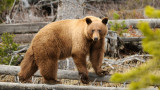
As hunters, we’re well aware that black bears, despite their name, come in many color schemes. Spend much time in the woods, and at some point, you’re almost guaranteed to sit, scratching your head, as you watch a strawberry-blonde sow tote around a gaggle of chocolate-colored cubs. And if you’ve...
Eli Fournier Jan 18, 2023
Read More Play Now 
Firearms
Opinion: The Savage 99 Is the King of Lever Guns

When I started hunting in middle school, I was lucky enough to cut my teeth on classic deer rifles. On Saturday mornings during deer-dog season, my grandfather and dad would load me up, and we’d head to their camp and wait for the dog handlers to show up. I have distinct memories of my grandfather’s...
Adam Moore Aug 1, 2024
Read More Play Now 
Black Bear
Changing Perspective: Hound Hunting for Black Bears

The big, chocolate-colored boar was exactly the type of bear I’d dreamed of for years. This was the third time he’d bayed up on the ground in heavy cover and it was my last chance. Our crew had been after him for eight hours and, with evening approaching, there wasn’t time for another chase. The...
Brody Henderson Jun 5, 2019
Read More Play Now Conversation
Save this episode