MeatEater Conservation
Ep. 397: Baby Tigers, Screwworms, and Make America Beautiful Again
Play Episode
22m
This week, Cal tackles the "Make America Beautiful Again" initiative, unpacks the impeding screwworm invasion, and spills the beans on the latest Tiger King star to be sentenced to federal prison.
To learn more and get involved with any Cal to Action,click here.
MeatEater onInstagram,Facebook,Twitter,Youtube, andYoutube Clips
Subscribe toThe MeatEater Podcast Network on YouTube
00:00:10 Speaker 1: From Meat Eaters World News headquarters in Bozeman, Montana. This is Col's Week in Review with Ryan col Kalahan. Here's Cal, one. 00:00:21 Speaker 2: Of the stars of the hit Netflix show Tiger King, is about to find himself in a cage of his own. Behagavian doc Antl was sentenced last week to one year in prison and fined fifty five thousand dollars for trafficking protected baby animals and money laundering. Doc Antl pled guilty in federal court to a conspiracy to violate the Lacy Act and launder more than five hundred thousand dollars. Doc Antl was to Joe Exotic as Saul Goodman was to Walter White and Breaking Bad. I've heard about him. He's an American hero. He appeared in the first season of Tiger King, and then starred in his own season of the show next year. The show depicted doc Antel as another rival to Joe Exotic in the small world of big cat sanctuaries. For a small fee of hundreds and sometimes thousands of dollars, he would allow visitors to a zoo Myrtle beach safari to hold and take pictures with baby animals. The problem was he obtained many of these critters illegally. The animals trafficked included baby chimpanzees, cheetahs, lions, and tigers, all of which are protected under both the Endangered Species Act and international treaties. He purchased one newborn chimpanzee for two hundred thousand dollars. He tried to hide the purchase of these critters by requiring payments as a quote donation to a zoo, or buying the animals with cash. He got hit with the LACI Act violation for those crimes, but his year in prison is mostly due to laundering five hundred thousand dollars. An informant for the FEDS told Doc he needed to launder the money to sneak people across the Mexico US border, and apparently the so called the conservationist was happy to apply. Like any good entrepreneur, Old Doc Annil was trying to diversify his revenue streams human trafficking, baby animal trafficking. See the crossover. Old Doc will join Joe Exotic in federal prison. Joe was sentenced to twenty one years in the slammer for hiring men to kill another rival zoo keeper Carol Baskin. I shudder at the thought of agreeing with Carole Baskin, who jumped into the Mountain Lion hunting band fight in Colorado, But in this case, as her husband told TMZ, I'm happy, another tiger king star is headed to his own kind of enclosure. I'm never going to financially recover from this. This week, we've got maba, parasites, bear attack, and so much more of it. First, I'm going to tell you about my week, and my week was quite interesting. Flew down to Austin to talk public lance with my old hunting buddy Joe Rogan, which was super fun. Grabbed dinner with Chef Jesse Griffiths as his restaurant died Dewey, which was really hard. We ate like it was our jobs ordered way too much. Everything was amazing. I was so in pain when I was trying to go to bed that took me hours to fall asleep. But the next morning I felt great despite overserving myself, and I think that's a testament to great ingredients. They burned clean. I also forced myself into the stupid hotel gym, which is something that's hard for me to do gang, but that helps. One of the most interesting things actually happened on my way out of Austin. My flight was delayed, so I decided to grab a beer at the airport bar. Of course, my phone rang and I was talking public lands and recounting some of the sell off story from Utah's lawsuit last August. Up until now. This is not an abnormal conversation for me. But when the call ended, the bartender and two other customers said something along the lines of, hey, I heard you talking about public lands and those people selling off our national parks. Well, you know, we navigated what had actually been on the table for sale, not the national parks, and a little bit of where we are now and how we got here. But the point is, I was just amazed that these three folks, who at first glanced just looked like big city airport commuters, had public lands and public lands sales on their radar at all, much less enough interest to easedrop on a conversation and follow up with a stranger. The last fella at the bar, who was holding two glasses of champagne. I noticed a lot of champagne gets drunken airports. I don't know why, anyway, fellas holding two glasses of champagne, and before he walks off, says, so, what side of this are you on? And I said against anti and he just kind of smiled and said great and walked off. Good example of the hunting and angling community being loud enough to make the nation take notice. Lots of groups contributed to shutting down land sales in the House and the Senate, But if it hadn't been for the hunting community raising the stink early and loudly, you just can't convince me that we have seen posts from Billie Eilish and public land sales being talked about in airport bars in Austin, Texas or anywhere else. Duh. Moving on to the Executive Order desk, President Trump hasn't been shy about wielding his pen and his phone to change public land policy, and last week was no different. On July third, the President signed two orders he says are designed to quote make America beautiful again. The first, we'll establish the Make America Beautiful Again Commission. This commission will be responsible for advising the President on a variety of priorities outlined in the executive Order. These include promoting responsible stewardship of natural resources while driving economic growth, expanding access to public land and waters for recreation, encouraging responsible voluntary conservation efforts, cutting bureaucratic delays that hinder effective environmental management, and recovering America's sufficient wildlife populations. Our land management agencies already strive to achieve all of these goals, but this new commission, composed of the heads of various executive departments, will be tasked with putting their heads together and figuring out different ways to accomplish them. The order claims that years of mismanagement, the regulatory overreach, and neglect of routine maintenance have limited outdoor access and threatened conservation funding. This commission will be tasked with finding new ways to expand access to hunters and anglers, protect clean water, recover wildlife populations, and improve conservation efforts. These all sound like good things, and it's a nice change of pace after the last six months of opening up sensitive areas to mineral extraction and the attempt to sell millions of acres of public land. The Washington Post ran an interesting article about how this executive order was in part thanks to the work of a con conservative conservationist named Benji Backer. Backer was a guest on Mark Kenyon's Wired to Hunt podcast not too long ago. Benji is heading up a group called Nature Is Nonpartisan. Nature Is Nonpartisan has only been in existence technically speaking since let's say the inauguration. Their platform ethos angle is it shouldn't be a mind blower to anybody after what we just went through on the public land sales, would be to combine enough parts of the political spectrum under one group, so your liberals and your conservatives to advocate for the right things basically hit the middle of the Venn diagram. Now, when this press release came out, I was kind of like, Okay, this is an executive order to talk about some things. The proof will be in the pudding, and it will, but it's a good start. At the same time, the President is still pushing to open up the Arctic National Wildlife Refuge for drilling, and there's no inkling that there's going to be restored budgets for personnel in the Forest Service or the BLM. Contradiction became especially apparent in the second executive order the President signed on July third. This one was titled Making America Beautiful Again by improving our National parks. Now, you might recall, because you are more than six months old, that the President and his doge team have been systematically slashing staff at the National Park Service. In fact, the National Park Conservation Association announced earlier this month that the staffing crisis has reached a quote breaking point. They say the permanent workforce is down twenty four percent, which has left bare bones crews struggling to keep up with the busy summer season. The understaffing has left visitors frustrated, delayed maintenance, and reduced education programs that park goers depend on. The President's executive order is not reversing any of those previous decisions. Instead, it aims to increase funding for the national parks by charging foreign visitors a higher entrance fee. The order says, quote, it is the policy of my administration to preserve these opportunities for American families and future generations by increasing entry fees for foreign tourists, improving affordability for United States residents, and expanding opportunities to enjoy America's splendid national treasures. Now, I don't mind increased fees, but we have to keep in mind here is the Park Service reports that the deferred maintenance portfolio for our national parks is are about twenty three billion dollars. Only about one hundred of the four hundred national parks charge to any kind of entrance fees. Those fees range from thirty dollars to seventy dollars. Already, about fourteen million foreign visitors visit national parks every year, so increasing their fee by fifty dollars would generate about seven hundred million, which is great, but it's still a long way from putting a dent in the deferred maintenance backlog. Moving on to the parasite desk, wildlife and livestock managers bracing for a new wave of a parasitic worm that could have a massive impact on the hunting and cattle industries. The New World screwworm fly is native to the Americas, but we eradicated the nasty little insects between the fifties and the sixties. The flies lay their eggs on the open wounds of animals, and when those eggs hatch, the maggots feed on the exposed flesh. They burrow or screw their way into the wound, opening it more and more until they reach their adult phase and fly away. But since female flies lay between two hundred and three hundred eggs in a wound, and multiple flies can lay eggs in the same wound, the prospects for the host if left untreated, are not good. The flies need a relatively warm climate to thrive, so animals in the southern US are especially susceptible. Any mammal or bird can become a host, including cattle, humans, dogs, cats, and deer. Whitetail bucks are more susceptible than dose. They often get the parasite during the rut, when they sustain wounds around their antlers. We know this because the already endangered key deer in Florida lost twenty percent of their population during a recent screw worm outbreak in the summer of twenty sixteen. The maggots can be eradicated with treatment, so human and pets almost never die from an infestation, but any animal that lives most of its life without any kind of veterinary care can be killed by screwworms. At this point, you might be asking yourself, if we got rid of New World screwworm flies in the sixties, why are we suddenly worried about them again? Writing for the Wildlife Society author Joshua rapp Learn explains that it's a bit like a car when you take your foot off the gas. It'll roll for a long ways, but eventually it'll slow down. We eradicated screwworms for the US, but they still exist in other parts of the world, including South America. It was always possible that the flies would make their way back here, and that became even more likely when we shut down the fly sterilization facilities in the US. We got rid of screwworm flies by raising male flies in controlled environments and then sterilizing them with radiation. Then we released millions of these little infra dudes into the world, but they were shooting blanks. Their attempts at procreation failed, and over the course of many years, the populations dwindled down to nothing. But we didn't continue releasing these sterol flies because we didn't have to. In recent years, reports of screwworm flies have been slowly making their way north from Mexico. When screwworms were detected in Wahaka and Veracruz, in an area only seven hundred miles from the US border. US Secretary of Agriculture Brook rawlins closed the border to live cattle as well as horse and buy some imports. She since reported those imports under closely monitored conditions and unveiled a multi pronged plan to stop the invasion in its tracks. This includes close collaboration with Mexico, enhanced border protection, and building a new steril fly production facility capable of generating up to three hundred million sterol flies weekly. Hopefully those efforts will be successful. For more on this topic, check out episode three eighty three, where I sit down with Jason Sawyer and James Powell of the East Foundation in South Texas. Over to the roadside assistance Desk. After a hit and around traffic collision in Humboldt County, California last week, a good samaritan approached the scene to offer medical assistance, but was attacked by the accident victim before he could start first aid. In this case, the ungrateful patient had a good excuse for his bad temper. He was, in fact a black bear. The four hundred pound mail bruin was attempting to cross Cheesham Road near Fernwood, California when he was struck. The vehicle fled the scene leaving the injured bear on the roadway. A fifty nine year old passerby stopped, exited his car, moved toward the bear, and, in the words of the highway patrol officer at the scene, quote, attempted to administer care for his trouble. He received several deep bites on his left forearm. Luckily, yet another samaritan, an off duty EMT, was driving by the scene and did not try to come to the aid of the bear. Instead, he applied a tourniquet to the fifty nine year old injured arm and waited for an ambulance to arrive. Unfortunately, but unsurprisingly, the bear died of his injuries shortly thereafter. Wildlife vehicle collisions or wvc's for you folks in the know, involving bears are much less common than those involving deer and other animals, but populations of bears have been booming across the country. Humboldt County in particular, has one of the densest populations of bears in the state of California. Early summer is also the time when bears travel the most, often bring them into harm's way. Juvenile male bears have been kicked out of their dens and have set out to find a new area with stable food sources, shelter, and eventually a mate. Mama bears are also on the move as they seek more and more food to feed their rapidly growing cubs. The adult male bear in our traffic story was very likely commuting between mates. Early summer is primetime on the earth signed dating scene, and the black bears amorous pursuits can actually produce litters with multiple genes present. Each within a litter can actually have a different father, a dynamic called multiple paternity. A female bear typically stays put within a limited range, and her various male suitors will travel to her, often visiting multiple geographically dispersed females over the course of a few weeks. Talk about an urgent reason to hop a guard rail and try to get to the other side of a busy road. California currently has several wildlife crossings under construction in order to assist these furry romeos as well as all the other critters who need to get from point A to point B. Two of these new wildlife crossings are just a few miles northeast and northwest of the cheesem road accident, one in Stone Lagoon and one in Siskiyu County. In case you're interested in learning more about California is existing in future wildlife crossings, go visit the interactive map created by the Wildlands Network over at Wildlandsnetwork dot org. Supporting connectivity. Animal migration is definitely a safer way to help bears than trying to administer mouth to mouth on the side of the road. Over to what goes around comes around. This week, a traditional hunting weapon was revealed to be much much more traditional than previously thought. In nineteen eighty five, a boomerang carved out of a mammoth tusk was discovered in the Obelizawa Cave in southern Poland. This thing is big, more than two feet long, perfectly semi circular, and extremely sleek. Ironically, it looks like a boomerang from the distant future. Although the mammoth ivory itself was too delicate to be sampled for carbon dating, the surrounding artifacts led scientists to place the boomerang at around eighteen thousand years old, but the cave had been occupied over a much longer period, starting way back with the Neanderthals and continuing up through the Middle Ages. Recently, a team of scientists carbon dated a series of human finger bones from the archaeological layer around the boomerang and made a shocking discovery. The bone, and by extension, the boomerang, was in fact, forty thousand years old. News has absolutely rocked the boomerang world. Researchers had theorized that the earliest boomerangs were from only around twenty thousand years ago, based on the dating of rock art from Kimberly, Australia that depicts people wielding the weapons. The earliest example of a boomerang was discovered in nineteen seventy three in the Wiry Swamp of South Australia and danced from about ten thousand years ago. Some headline writers have been using the new date of the oboz A artifact to claim the boomerangs in general are European, not Australian. But that seems pretty beside the point. Now, what you really want to know? Can this forty thousand year old boomerang fly? Glad you asked? In nineteen ninety four, a group of German researchers made a plastic replica of the Obozova specimen and gave it to a professional boomerang thrower to see if it had the right stuff. And yes, apparently there is such a thing as a professional boomerang thrower. Turns out whoever made this thing really knew what they were doing. The replica flew as far as one hundred and sixty five feet at speeds of almost fifty miles per hour. Here's a quote from the throwing study. The average trajectory was nearly ideal from a hunting perspective. Thrown from hip height, the projectile never rose above approximately one and a half meters at the apex of its arc, and consistently dropped to the ground only during the final three meters of its flight. Now, I don't know if I'm going to trade my shotgun anytime soon, but in my opinion, an afternoon going after pheasants with a huge mammoth ivory boomerang seems like time well spent. However, if I won't really want to put meat on the ground, I'd be going after the jack rabbits. Moving on to the skunk desk. Police in Honolulu, Hawaii, rushed to Cacaco Waterfront Park last week after receiving calls that an unwanted intruder had been spotted in the area. Once they arrived, officers called in further backup to make sure the threat was contained. Threat in this case was mafitis mafitis, or a striped skunk. Policeman to trap the skunk under a trash can and three inspectors from the Hawaii Department of Agriculture then took control of the scene and euthanized the threat. You might be a bit surprised by the magnitude of the law enforcement response to Old Pepe Lapu, but their actions had good justification. There are no skunks in Hawaii, and Hawaiians very much want to keep it that way. Skunks stink, of course, but there are also prolific egg eaters, which make them a particular threat to Hawaii's native wildlife, especially its ground nesting birds. Because Hawaii is so geographically isolated, a large number of its species are endemic to Hawaii, meaning the Aloha State is the only place you'll find them. That makes them very vulnerable to invasive species because they often can't keep up with their off island competition. The story of Hawaii wildlife has been the story of abrupt changes due to introduced animals from the roundly unpopular rat and mosquito all the way up to the axis deer and wild pig, which hunters just love to go after. Notably, there are no apex predators in Hawaii like wolves or mountain lions, meaning that those deer and pigs face no existing threats. Adding one more miso predator, a mid sized animal that preys on smaller animals, would be especially bad news in Hawaii or native mammals, birds, bats, reptiles, and insects are all in a precarious position as it is. Skunks are also a common carrier of rabies, a disease which has not yet come to Hawaii. Why is in fact the only state in the nation and one of the few places on Earth that is free of rabies. Again, you really really do not want to introduce rabies in a place that doesn't have it. The virus, transmitted from saliva to blood through a bite or scratch, leads to fever, nausea, vomiting, or aggression, and almost always, once the subject begins to show symptoms death. Rabies used to be called hydrophobia, or if you've seen old, the other the hydrophobia because the dramatic increase in saliva production causes subjects to panic when they try to drink anything. Anyway. Skunks have been spotted in Honolulu in February of twoy eighteen, January of twenty one, July of twenty one, in June of twenty two. All the animals were captured, euthanize it and tested for rabies, and all the tests came back negative. You might be wondering where these stripe skunks are coming from. It turns out Cocaco Waterfront Park is adjacent to Honolulu Harbor and the skunks have been still aways on cargo ships docking in the port. I just can't imagine that's the real reason. But perhaps if you're on a slow boat in the middle of the Pacific Ocean, that skunk smell isn't worth investigating. That's all I got for you this week. Thank you so much for listening. Remember to write in to ask cl that's Ascal at themeeteater dot com. Let me know what's going on in your neck of the woods. You know I appreciate it. Thanks again. I'll talk to you next week.
Presented By
Featured Gear
While you're listening

Public Lands & Waters
President Trump’s Latest Executive Orders Aim to ‘Make America Beautiful Again’

President Trump hasn’t been shy about wielding his pen and his phone to change public land policy, and last week was no different. On July 3rd, the president signed two orders he says are designed to “Make America Beautiful Again.” The first will establish the Make America Beautiful Again Commission...
Ryan CallaghanJul 15, 2025
Read MorePlay Now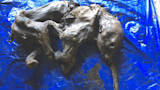
Anthropology
Baby Mammoth is 'Most Complete' Ever Found in North America

A wooly mammoth calf discovered earlier this month in Canada’s Yukon Territory is the first near-complete and best-preserved mummified mammoth remains ever found in North America. The calf, dubbed “Nun cho ga,” was found with skin and hair still attached after being frozen in permafrost over 30,00...
Jordan SillarsJun 29, 2022
Read MorePlay Now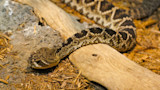
Natural History
Fact Checker: Are Baby Rattlesnakes More Dangerous?

Myths, lies, and old wives’ tales loom large in the outdoor pursuits. Here at MeatEater, we’re dedicated to separating facts from bullsh*t, so we created this series to examine suspect yarns. If there’s a belief, rumor, or long-held assumption you’d like us to fact check, drop us a note at...
Spencer NeuharthOct 3, 2019
Read MorePlay NowConversation
Save this episode