MeatEater Conservation
Ep. 35: On Hunting Grizzlies, Spearfishing in Mexico, Ticks, and How To Protect The Boundary Waters Canoe Area Wilderness
Play Episode
20m
This week,Caltalks about whether hunting grizzlies reduces conflict with humans, spearfishing in Mexico then having an odd run in with the local police, all about ticks, and how you canstop the threatof a new mine inThe Boundary Waters Canoe Area Wilderness.
ShopMeatEater Merch
00:00:09 Speaker 1: From Meat Eaters World News headquarters in Bozeman, Montana. This is Kel's we can review with Ryan kel Kell and now here's kel Hey. Here's a question for you. Would hunting grizzly bears reduce grizzly human conflict? Of course it would, I want to say meat Eater's own Patrick Durkin tackled this complicated question at the mediator dot com. I, for one, would love to have the ability to apply for tags to hunt a well managed population of grizzlies here in my home state of Montana. I've grown up with the grizz I've watched their populations grow and have had many interactions with them. I've listened to stories from the outfitters I worked for who guided some of the very last hunts. Due to the fact that we haven't been able to hunt the animals since the early seventies and their numbers then we're at an all time low. We are now covering new ground in grizzly management, and anecdotal evidence of which I and seemingly everyone else has loads of, just doesn't cut it. The focus of this question is problem bears. The bears that cause conflict. Conflict can range from trash can destruction, to mauling's aggressive behavior, to domestic livestock death. Studies have shown that reducing bar densities in areas with high conflict does lead to less conflict because there's less bears, but it won't be likely that hunters will focus on areas where much of this conflict occurs. Think about it. Hunting a potentially thousand pound bear in the urban interface that place I always speak of where wildlife corridors and urban sprawl meets isn't likely or safe. Catching a problem bear in the act of harassing cattle, for instance, isn't likely either, meaning that if hunting grizzly were legal, the hunters with tags in their pockets won't be targeting the bears causing conflict probably won't be hunting in those areas. The grizzly is an apex predator, the bear at the top of the food chain. I have hunted grizzlies in areas where it is legal to hunt them and has been legal since long before I was alive, and I've had very different experiences. One area in Alaska, seemingly any grizz you ran into I wanted no part of human activity. Another area it seemed like every bear you ran across wanted to size you up and see if you were edible. So that little bit of anecdotal evidence doesn't necessarily say bears are automatically going to be scared of hunters. One question I have if hunters won't be taking on problem bears is when you consider bears have territories. Is it possible that removing bears through hunting in back country situations, assuming these are non problem bears where they are less likely to come into contact with humans, would removing those bears allow some of these problem bears to occupy that territory, create a void in which a front country conflict bear could become a backcountry non conflict bear. I doubt it, but maybe it would prevent a bear from reaching those areas where it is more likely to learn behavior people won't tolerate. Find out more at the meter dot com. Will hunting reduce non hunting conflict? It's a bearer of a question. This podcast, as You Know, is brought to you by Steel Power Equipment. Steel makes an incredible lineup of tools, both powered and non to help you cut, snip, saw and power wash your way through all your domestic and commercial needs. I like to keep a set of their pruning shears in my bird hunting bag this time of year for clipping wings and feet. If you happen to have followed my advice and purchased one of their amazing battery powered saws, or if your family loves you and they got you one for Christmas, my advice, my quick tip for cold weather is, and I'm talking like twenty degrees and under cold weather, keep the battery full charge until you get all your scenes, set up your miss on sam, anything you need cut, you have it right there, and then do all the work at once. My experience is the batteries hold full power super well no matter how cold it gets. But once you tap into one, use it until the job is done. When we cut our way into camp a few weeks ago, the battery we used on the way in still had plenty of power. Then the attempts dropped to below zero for a few days, and that same battery didn't last very long when I tried it again, a couple of cuts maybe, but the fresh battery had packed in that had been subjected to all that cold weather for five six days ran great for cutting firewood that morning and cut my way through blowdown and buck later on that night. So don't do a little and get distracted for a day, is what I'm saying, and then come back and expect the thing to be fully charged. That's just a field tip for you. This week we've got hot tips definitions, limes, disease, rodent behavior, and primary predators. But first I'm gonna tell you about my week. I slipped off to a great, big Baja Peninsula with some friends. The weather was fantastic and it was pretty darned calm people wise, wasn't full blown tourist season yet, which I find ideal. The Baja Peninsula is the second largest peninsula in the world and runs about seven hundred and seventy five miles from top to bottom. If you aren't satisfied with being on the second largest peninsula, you're more of a first largest peninsula type of person, you can check out the Melee Peninsula in Southeast Asia. It's the largest peninsula on the planet. The Pacific Ocean forms the Sea of Cortez, which separates the Baja from mainland Mexico. We were on the Cortez side, and although it took us a few days to get things figured out. We finally struck recreational gold on a beach a few hours from our house. I had brought along all of my spear fishing gear and my buddies had their flag gear. The folks with the flyer odds caught a handful of species after a short wave through the waves and the rocks. I was blown away on the few short dives I made after seeing virtually no life in the three days prior this spot. Oddly enough, I found using on X, which is my you know, hunting location map app of choice works great in Mexico, and all I was looking for I was using the satellite imagery to find steep drop offs and stuff that looked like structure that was near shore. This spot seemed to have it all, and once I got in the water, it was almost an overwhelming amount of life, incredibly cool, lots of big needle fish, several schools of Jack's angel fish, parrot fish, all sorts of bait swimming around. I swear to you, I found a really nice link cod in less than twenty ft of water, more a eel, pargo, puffer fish, rass. That's about all I could identify. I managed to pick up a nice cabrilla which is a grouper, and a smaller parrot fish for the grill. Just an awesome day literally a beach and a reef to ourselves. We decided to pack up early, swing by the Mercado Supera on the way home and pick up groceries and prepare our catch for a celebratory dinner and some beers on the beach at sunset, which is how I would love to tell you the trip ended. On the way home, we got detained by the Policia municipal and things kind of went south from there. Attitude wise, Mostly nothing really happened, but the seriousness of our situation certainly killed the fishing high. We were pulled over, a few of us were asked to step out, licenses examined, and oddly enough, our fish and I'm sure the beer cans from the beach did not go unnoticed. The fish were a big hit with the cops. They had genuinely seemed impressed with our catch. Were then ordered back into the car and instructed to follow them through the town, presumably to the police station. Not fun. Periodically, the cops would pull over a way of us forward, asked more questions than we would get back in the car and proceed. During our two vehicle parade through town, one of our crew, perhaps not consciously, narrated all of his thoughts to the rest of us. Oh, I don't like this turn. Oh good, too many people on the street for him to kill us. Why are we stopping? This isn't good. Oh maybe this is where we get robbed. Hey, everyone's doing great. Everyone's doing great. I didn't find the narration very helpful. Eventually, through this series of stopping and questioning, we ended back up at the ferry dock, where the conversation again turned to fishing. This time, the costs were showing us pictures of their fishing escapades, every other photo being bikini clad women. Being very well versed in talking fishing, our crew didn't find the change in topic comforting, and our heads kind of spun with what the hell is the point all this? Eventually, the uniformed officers asked if we would like to meet the girls in the pictures, They could arrange it. I'll just say we weren't comfortable with uniformed officers pushing prostitutes our way, nor were we interested, and they seemed very confused. As to why we weren't willing to take them up on their offer, so much so that they asked if we were married to each other. Eventually, my friend uttered a all good, toto bien. The officers said, see toto bien, and we went on our separate ways. Like I said, nothing really happened anyway. The food was fantastic, the weather great, everyone else who met was super great, and I can't wait to go back. Moving on to our Cow's weekend review, listener desk friend and listener wrote in with a great question, what is the difference between a keystone species and an indicator species? This is a confusing one because there does appear to be plenty of overlap, and I have, without a doubt seeing keystone and indicator species used interchangeably and broadly. I'm not saying that's correct, but I've seen it. We'll start with keystone, okay. A keystone, like a real keystone, is the stone in the top center of an arch where the two sides come together. It kind of holds it all together while being held at the same time Yeastone species is one that if it were to go away, the legs of the arch would fall. My example that I can think of as krill, that tiny shrimp that makes up the base food for a good jillion fish, birds, mammals like the humpback whale, for instance. If krill were to go away, it is quite likely that the animals that are dependent on krill that make up the legs of the arch in this example would go away as well. The arch could rebuild itself, but it wouldn't be in the same order. An indicator species is just that, a species that indicates the health of an ecosystem or an area, and not so off the shelf. Example could be a canary in a coal mine. The canary isn't a necessary part of this situation, but it's presence when alive, indicates the air quality something in a more natural setting, and a very appropriate example right now would be the freshwater muscle. Freshwater muscles are disappearing from our streams and rivers because we as a species keep dumping things in our streams and rivers that should not go there. Amphibians are another great indicator species. Amphibians are sensitive to changes and show signs of toxicity in their systems almost instantly. For instance, a truck driver in Georgia was just sentenced for deliberately dumping three thousand gallons of fuel out of the fuel truck he was driving. The fuel followed a storm drainage system into an unnamed creek which happens to be a tributary of wait for it, good Water Creek. How's that for bad luck? If you would take a sample of amphibians and good Water Creek, they would have likely revealed or indicated that something was a mess. The truck driver was sentenced just recently. His two thousand eighteen decision to dump the fuel earned him eighteen months in prison. This was not a conscious act of eco terrorism. He had just loaded the wrong fuel in the truck, so instead of returning back to deal with it in an appropriate manner, he literally turned good Water Creek into bad Water Creek. Any Way, that was a great question, and in my opinion, the answer is perfect for conservation, as it's just not entirely straightforward answer all the time. Next, uh, tick removal trick from Jason and Fairfax, Virginia. Something that may work for those bloated tick situations where you cannot get directly to the tick's head with tweezers, So when you go to remove a tick. It's highly recommended that when you go to pull that blood sucker out, you do your best to get the mouth and all the mouth parts out at the same time, as those little parts can cause irritation and infection. Jason suggests you throw an overhand loop of dental floss over the bloated tick, snugging loop around the head parts, and then take your tweezers and gently grab the body of the tick. Then give a gentle pull in tandem with the tweezers and the floss, and you'll get all the parts out. I haven't tried this, but it sounds sound. Says, It works well and you won't have a bloody mess to clean up. Thank you, Jason. Jason's helpful tip would be welcomed by a large group of Facebook, Witter, and Pinterest users who have been distributing a meme about the potential threat of ticks in your Christmas tree. A photo that has been shared hundreds of times this past holiday season says there's a chance you're bringing lime disease into your living room. The post reads, if one female tick lays eggs under the bark of a tree, that tree will be infested with over two thousand eggs, which then hatch. Keep that in mind, all ticks can carry and transmit disease. Our own Spencer new Hearth looked into this clam and shared his findings over at the meteor dot Com in a recent article called fact Checker. Can a Christmas Tree give you Lime Disease? And Summary? No. Lime disease is largely a seasonal issue, with winter being the least likely time to encounter infected ticks. December rarely sees confirmed cases of the disease, accounting for less than two percent of all reported cases based on ten years of CDC data. Lime disease is so rare during this period because the majority of ticks are dormant. Further, only nymphs and adult females can transmit lime disease to humans. Nymphs feed from May through July, which is why late spring to early summer is when lyme disease cases peak. In the fall, the nymphs become adults. At this time, the females will attach themselves to a large mammal mate and die. How's that for a sexual routine. By the time Winner rolls around, almost all disease carrying ticks are gone. Although both Christmas trees and lime disease are found across North America, lime disease has a more limited distribution, with cases coming out of just fourteen states. Most of the states where the disease is prevalent are in the Northeast or Great Lakes region. The top Christmas tree producer is Oregon. Even if you live in a lime disease hotspot, finding a nest of ticks on your Christmas tree is very unlikely. Black legged ticks lay eggs on the ground in May, which hatch by summer. If your tree did somehow come covered in tick eggs, they are in a hazard. Ticks aren't warn with lime disease, but instead get it by feeding on a disease carrying bird or mammal. Simply put tick, larva or pathogen free. There's enough stress during the holiday season, don't let this uninformed meme add to it. The odds of getting lime disease from a Christmas tree are about equal to Santa telling you to hop in the sleigh, take the reins, and then leaning over and saying, hey, kid, don't be afraid to really open her up. Sticking with the tick desk for one more. A recent study provided me by the phenomenal conservation writer Ben Long, published in the journal o Ecatoha, which must be a Fancuis and uh ecology, suggests that prey animals, in this case rodents, modify their behavior according to the risk of predation. In this study, researchers looked at rodent behavior alongside short term and long term predator risk. At first glance, you may be thinking, no kidding, of course they do. But how often do we really think of mice as being conscious of the bigger picture? I would bet for the most part, we just think of them as an ever reproducing animal that continues walking into traps until they are eventually eradicated from the house. Anyway, their primary predator in this study is the red fox and the secondary predator is the coyote. They found that long term red fox activity significantly reduced rodent activity, and cues of red fox presence reduced rodent activity by more than the rodent activity would increase and decrease according to the level of red fox activity. Rodents did not respond to environmental factors or long term coyote activity, indicating that the rodents not only took notice of a predator if it was in the area. But who that predator was? Fox or coyote? Now let's bring this back to ticks. Rodents can carry ticks and things like plague. Having foxes around decreases the rodent activity. This prey predator relationship is neat in itself, but it also leads to the question of how did the rodents learn to respect the fox as a predator more than the coyote. Now, think about this in regards to our first article regarding grizzly bears. Rodents learned somehow that they were prey. The presence and the suggestion of the presence of a primary predator like the red fox sends them scurrying. Can grizzly bears learn that they are not the primary predator? How long would it take to turn a grizzly bear into a mouse? In any case, if you are in a particularly rodent infested area, you may want to lay off the red foxes. Moving over to the update desk, you've probably heard those of us on the Meat Eater crew talk lovingly about one of our favorite places, the Boundary Waters. It's a one point one million acre designated wilderness area in the northeast corner in Minnesota made up a big mountains, dense forests, and thousands upon thousands of amazing walleye pipe, small mouth bass, and Mackinaw filled lakes that you could spend a lifetime portaging between, true land of adventure. If you've heard us talk about the Boundary Waters, you've probably also heard us talk about how to foreign mining companies are trying to dig copper nickel sulfide mines right on the southern border of this protected area, just upstream of the chain of those thousands of Christine Lakes. And you may also know that spills from sulfide ore mines kill everything in their path. Well. On December eighteen, twin Medals, a subsidiary of one of those foreign mining companies, finally submitted their MIND plan to the Minnesota Department of Natural Resources, formally kicking off the permitting process. This is where the rubber meets the road. The federal permit application is expected soon as well. The current leadership of the BLM and the Department of the Interior have signaled strong support for the MIND. The state will soon begin their scoping process, environmental study and comment period to decide whether to allow the MIND, which may be the only hope for stopping it. So if you've ever been to the Boundary Waters Canue area, or ever wanted to, which you should think about making a call or sending an email to Minnesota Governor Tim Waltz's office, or submitting a comment once that period opens, And you don't have to be a Minnesota to do any of that. The Boundary Waters is all federal public land, not to mention them single most visited wilderness area in the country, so every American has a say in its future. That's all I've got for you this week. Thanks for listening. If you are loving Cow's weekend review, be sure to tell your friends and let me know how I'm doing by writing in to ask Cal at the Mediator dot com. That's a s k C A L at the meat Eater dot com. Remember to leave me a review by hitting that furthest right hand star. I'll talk to you next week.
Presented By
Featured Gear
While you're listening
Public Lands & Waters
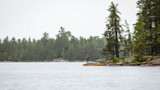
Legislation Would Protect the Boundary Waters from Sulfide Mining

This week, a bipartisan group of lawmakers introduced legislation in the House that would permanently protect the Boundary Waters Canoe Area from sulfide mines proposed to be sited upstream of the famed Northern Minnesota wilderness. If enacted, H.R. 5598, the Boundary Waters Wilderness Protection...
Sam LungrenJan 17, 2020
Read MorePlay Now
Public Lands & Waters
Forest Service Wants Your Input on Mine Adjacent to Boundary Waters
Some casts just feel too picture-perfect to produce—an expectation likely borne of experience with fishing busy waters where everyone hits the obvious, great-looking spots. It was with that skepticism that I landed my big silver spoon in the wash of a tall waterfall clattering down a sheer granite...
Sam LungrenJan 13, 2022
Read MorePlay Now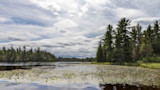
Conservation News
Governor Walz is Trying to Block Mining in the Boundary Waters. Will it Work?

There’s good news for the conservation of the Boundary Waters Canoe Area Wilderness—but will it last? Earlier this week, Minnesota Governor Tim Walz issued an executive order to enhance the protection of the Boundary Waters. The order is particularly concerned with mining leases and permitting in...
Sage MarshallAug 20, 2026
Read MorePlay NowConversation
Save this episode