Bear Grease
Ep. 91: Bear Grease [Render] - Mud and Foggy Newcomb, Elvis and Tecumseh
Play Episode
1h11m
This week on the Bear Grease Render, a very special crew braves the elements to meet up to talk about the famed orator and Shawnee leader of the pan-indian confederacy, Tecumseh. Misty, Clay and Josh are joined this week by first time guests Jessica Jessica Lewallen and Kristie Speilmaker, as well as returning favorite Terrell Spencer. Topics discussed include an AI generated biographic article that struggles with the Newcomb's first names, the APPA rooster calling championship, and the importance of language. I really doubt you're gonna want to miss this one...
Clay onInstagram
00:00:00 Speaker 1: Yeah, my name is Clay and Nukeleman. This is a production of the bear Grease podcast called the Bear Grease Render where we render down, dive deeper, and look behind the scenes of the actual bear Grease podcast, presented by f HF Gear, American made purpose built hunting and fishing gear that's designed to be as rugged as the places we explore. I'm like, you say something announcement Grease Podcast. I think it would be appropriate to describe our external environment today when I walked, when I took the long track from our house and see the World Headquarters or also known as me Either South Um. I it was slick, there was active sleep, ice fawling, and for Arkansas, you know, it takes about well none of that for us to cancel today bright and early, because yeah, because it was misty outside, and I thought it was a good call. It's a misty in here, oh, I think, And so it was. It's just really, really, really bad, bad icy weather. I just came back from Mexico last week and when I got home from Mexico, on the way home, there was like six inches of snow. It was we were at six thousand feet elevation in Mexico, freezing cold. Luckily Clay read like a part of the memo and brought a jacket. Like you know, it's almost one of those deals where it's like I don't need that much clothing, but I did very cold, So I came home to bad weather and life statement for Class six seven, eight days later. It's like very icy right now. So a lot of I've been a lot of places with the Newcombs where some member of their family didn't have a coat jacket. It's yeah, partly why we have such an eclectic group of people. You've heard a few voices that you wouldn't have recognized, and you've not heard some voices that are typically here. Gary the Believer Newcomb, it's a it's about a three hour drive, two and a half hour drive Arkansas, the state of Arkansas. Brent Reeves, we told him not to come, and so we have some some very new folks. Missy Newcombs here, Josh Lambridge, Spillmakers here. Josh introduced your guests. So a very special guest that I'm honored to introduce and honored to have been married to for almost twenty five years, Mrs Christie Spielmaker. Christie it's so great to have you, Christie. Thank you. This is a this is a long time dream of mine. Dad. Christie Spielmaker on The Bargeras Render Podcast. We've tried. Yeah, you wouldn't know it, but we've tried a lot. So very We're so happy you're here, Christie. I'm so happy to be here. Yes, yes, And we've known the Spilmakers for decades, so we've raised our kids side by side with the Spilmmakers, traveled and so I can't wait to hear what you have to say about two Come. So I'm very for those. It's possible that people are new to our podcast, The Bargeras Podcast. We are. We are a documentary style history, anthropology, hillbilly hunting, conservation, musical playing podcast. Um. But every other week we have a group of people that comes together for the Beargreas Render, which is what you're listening then to where we talk about the last week's episodes. We're going to talk about two comes apart. Two so great, Christie. My guest, well, I have two guests here, Misty and I have two guests here. Our first guest is Jessica Uwllen, our dear friend of many decades as well. Jessica. Yeah, hey, I I came. I stayed the night at Jessica's house for the first time when I my sixteenth birthday, I think, yeah, yeah, yeah, seventeenth birthday, that was my first time. Yeah, I still remember sitting in the basement living room chit chat. Yes, I love and I love really she's she's been our kids that were born in the hospital. She was there at the hospital for our daughter's births and was here very shortly after at our house. When tell the world what you do for a living, I'm an architect. Yeah, what kind of stuff do you work? Uh? Commercial? I don't do a lot of houses, but m yeah, I've gotten the Over my twenty plus year career, I've gotten to do a lot of different stuff. But right now work for a firm that does a lot of commercial development. So right now I've got some projects with universities around the state. Um, locally, I've gotten to do a really cool movie theater and some offices and restaurants and things like that, and UM, yeah, I really enjoy my job. It's it changes a lot day to day. You know, some days I and you know, boots and hard hat and some days I'm on a computer. Some days I'm on phone and meetings. Some days I get to color. I mean, like literally color. I was about to ask you if you've ever do you ever draw stuff like on a napkin? Like architects usually have paper and pins these days. You know, I do have a purse. I have an advantage over those guys architects. I'm kind of an architect myself, Jessica, as you know, care do you remember when we built this office, I said that this was going to be a celebration of architecture. Do you remember that it's coming back. This wasn't just going to be a building. It was gonna be a celebration of architecture. But um, so funny story about Jessica that I heard her telling yesterday was that when she was in college, Is okay if I tell this story when she was in college, When she was in college at her house, they hosted a band that came and played a concert in her house and the dude set his symbols on fire. In her house was that same living room that I first hung out with Misty. This house was legendary in Fayetbelle at the time. By the way, and it was not once that we had a band play. It was like it was like a concert video. This is the days before cell phones and smartphones, and in those days, you would chalk the sidewalk. You'd write stuff on the sidewalk. If you want people to show up with chalk and outside your house, well yeah, tell them what we could. You didn't even have to say the address. People knew this house. It was nicknamed the Slacker House when I lived there. We were not slackers people that lived, but the house is known as the slacker house. So we can literally but on the sidewalk Slacker House Friday night, eight p m. In the band name, and people show up and watch bands. So fun. So how did they light their symbols on fire in your living room? Um? Gel that you put on it? If I remember that, you kind of smear on it and then you can light it on fire. Um yeah, you know. I'm kind of big into like sensational ways attention. I'm thinking about burning, like like going on a squirrel hunt and like lighten my saddle on or flaming arrows, flaming flaming arrows. I'm talking just okay, I'll see what I can find out, so you can also just order fajitas at the Mexican. Our final guest and certainly not least guests who's been here before. Yeah, our dear neighbor, also friend for decades, our favorite pastored poultry farmer, Terrell Spencer. Good to have you, man. Yeah, it's like being on the practice squad and everybody gets the flu, so you get to play. Okay, we need it. We need to like say, like Terrell Spencer is a direct replacement of yeah, exactly, so you need to be thinking about und trying to like fill his spot. Christie, you got replacements? Well that those are big shoes to fill. Yeah, they're actually not. It's like a size eight and a half, small feet, big beard, big overall, but no Taryll. So you're I just called you Terrill. I'll never call you Terrell. Spence is your name. We're close enough you can use first name. Well. I remember Spence's last name was Spence, and they looked at me and they said his mom named him Spence. Tell me about the what you're wearing around your neck, this whole thing I forgot to have it on. Whatever. Yeah, it's a Grand Champion Rooster call medal I won a couple of weeks ago to Dallas at the at the American Pastured Poultry Producers Association p Yeah. There. Uh, they had a big conference about three fifty farmers and well, I mean, you gotta let's here. I would I would blow out every microphone on this. Oh it's okay, do it. Yeah, clearly you didn't even move it if you wanted to know. Okay, don't don't full force, yea, turn it up just a little bit. Turn it up just a little bit. My voice is he's got to stand up to get this out. You go, okay, excuse me, Well, okay, we're filming now. I was doing it earlier on top of the holler with my dog scaring vultures. Okay. And he really likes that. Some I've voice is a little blown out. I'm assuming they they they liked loudness over over like there is technical nuance. There's a fellow Christian Alexander. He can turn your mic down just a little bit. There, here's a fellow Christian Alexander. He's a farmer in North California. And he came out and he called and everybody sat down right, and uh, what I did? I couldn't compete with that, but there were multiple you could do multiple calls. So I just did a barrage of mediocre calls and got my score up. So I did like a turkey hen gobble, like the little that turkeys did, you know. I did a poultry predator, an owl and a crow, and there you go, and I got my score up to take them down. Okay, so our suns play basket all together, Spencing and when when when either of the boys score, I will ol hoot from the stand and Spence will crow call. And it's our goal that one day when the boys score on their team, the whole stadium al hoots. I mean, that's my goal. Anyway, it happened. We were in a really rural school district, if you remember, and we we we were making our calls and someone from the other side, I'm just saying, like, I love it. It's wonderful. One of the things that I We are playing for a new team this year, and it's I'm a little concerned that they're embarrassed up. I guess what the kids kids from down here, their dads are probably going crow colle It is what it is, um misty, Why don't you read okay, so I I get, you know, like updates if if someone in our family hits the papers, like I have this this setting where it will send me okay the interwet um. It's a setting on Google, so someone if someone's in the news or something, I'm gonna alert so I can see pictures and stuff like that. Well, I've got Clay's name on there, and so I got an update that Clay Newcombe and Missy Newcombe were in the papers. Um or um, it's on the Internet. I quickly realized that what I was looking at was an AI product, artificial intelligence. And so for people who don't know, there are these new newly created robots, recently created robots who go around and it's clear that what they do is they pull art calls from all over the Internet and they make like summarizations of those articles. But they don't want to plague your eze and so do not plage your eyes. Even though some would say this is still plagiarizing. They just swap out some of the keywords. So basically, it's a full article that has article that was a bio about me and Misty and go ahead and read it. And it starts with and it starts with mud Neucrom grew up and was launched up inside the Washita Mountains as a seventh interval Arkans. And already I'm like, where on nerves did this article stem from? What translation? He's a tracker, Donkey Skinner, naturalist and provincial social spectator. Let's stop right there. In my bio at Meat Eater, it says that I'm a seventh generation ar Kans and born and raised in Arkansas. So it said, and then in that bio I said I am a I'm a contoisseur of rural culture. So what did they say? They said, he's a tracker, a Donkey Skinner, naturalist, and provincial social spectators. Provincial social spectator was a connoisseur of rural Is there a t in that word? We don't. We don't talk about Clay's pronunciation. Fantastic. There's a lot of words that I don't say. Right. He is an essayist, movie producer, and this might be one of my favorites. The host of the Bear Oil webcast webcast. Well, and then Donkey Skinner. Yeah, all right, are you offended that they thought that donkey would be a synonym from mule. Yeah, I mean, come on, a I bought dirt Newcomb has been hitched Earth Dirt Nwcombe has been hitched to his greater half, Cloudy Newcombs for virtually ten years, which that is wrong. Twenty two years Earth Newcomb is important, completely different has been dronfully hitched Jim Mudd and foggy like investing that needs to be airbrushed, mud and foggy. You see what it's it thinks. My name is Newcomb and it thanks. Clay is just a word that can be You can use synonyms of and misty as well. Foggy, mud and foggy like investing energy with their family inside the ozark Heaps Mountain. Okay, I'm not gonna go too much more, but they do at one point call me, uh Foggy Newcomb in And by the end of this my name has changed to Dine four children kind of love A good nickname my name. That should be your new band name. It should be Mudd and foggy. Yeah, it's a great it's a great band name. Mud Dirt Nuwcomb would be great, but our friend friend Smith already has that one taken. Meda your cameraman, great guy, wonderful. He's already dirt, so we're already past that. If you have a race like three wheelers, your name needs to be dirt nukemb Yeah yeah, yeah, three wheelers. I can picture airbreast t shirts too. Yeah. Yeah. With with Christie, can you tell us what you do? Yeah, I am in supply chain, global supply chain, so I work with a supply chain company, mainly in the retail sector, doing important type work. An avid hunter mm hmm, fisher woman. So for years, um, I well, I kind of still think you're in trucking, right right, I did that for months, but it's stuck. Well no, Well, and you really were the trucker for major retailer in the country, that's right, Yes, No, Christie's very important. Christ You have such a great story because you went to college when you were older. I was thirty thirty years old. We had three kids, three kids, two foster kids. We have two foster kids. During When did you graduate college? How old were you? I was thirty four and then now you're like running Planet Earth. Yeah right, exactly. She is a big for real. I mean she is. She's a big shot. And there was a time when she worked for a local retailer that some have heard of. She doesn't anymore. Can I say their? Kay? She used to work for Walmart and every time I would go into Walmart and they wouldn't have something that I wanted to send her pictures so she could fix. I would get that. I also, we have a very close friend. You would call me and be like, I bought this fan and I love it, and I have ten of them and I bought it. I bought them all ten years ago, and I can't find them anymore. Can you figure out what happens? I know for sure cannot figure out what happens. No idea. But don't forget Christie Spielmaker is also a quite the fly fisher woman. So it's nice to have the presence of another fly fisher in the room here to support you. Hm, where do you'all and you'all like to you'll like to go over in central Arkansas and north of here, north of hers pretty go, Jessica. Now your connections to hunting, well, I should probably confess I've never hunted a little bit when I was a kid, but I hooked my brother one time and then no more, no more fishing after that. But I very much enjoy a grow grip and family that dad brothers, and Um, I reaped the benefits of having family and friends that are huntered. Like I was telling some friends at work, um, this morning that in my freezer right now, I have moose meat, I have buffalo meat, I have dear meat, I have chicken. I have all these things that people supply, and I'm very grateful. Yeah, and I being outdoors. The coolest story are a cool story that Jessica's dad has. Who I'm hunted with? Your dad? Yeah? Um, is that he knew Elvis Presley? Yeah, can you tell us about that. I hope I'm getting these right, Dad, hope I'm getting these right. Yeah. Yeah. So I grew up in Central Arkansas. There was a guy who was a singer in the seventies in Central Arkansas, and my dad was learning to do tile, like for bathrooms and kitchens, and he was working on that guy's house and Elvis came to hang out, and Elvis would like just go sit like on the toilet with a little close with Elvis lived in Memphis, yea and hour and a half from where h and so then you know, apparently, uh, this was when my dad was young, probably still in high school, and Elvis and this other guy were probably in their thirties, and they my dad was always in the cool cars. He had a cool car. And then and they convinced my dad to take them cruising downtown so they could drink and wave it girls from the back team. Yeah. Yeah. And then later on my dad was racing boats at a lake in central Arkansas. He did this regularly and it was kind of a big deal back then, and Elvis would be the m C or a special guests or whatever, and he before it started, he'd find my dad and say hi, and then he'd be like, I gotta get out of here, there's too many people and go back to the you know where the cool kids go. I'm big into Elvis now, Josh, when did this happen? It's about two or three weeks ago. Is there going to be a podcast the next series? Yeah, there's. There's actually a great quote by Ted Nugent about Elvis Presto. He said he said, if Elvis had just been bloody up to the elbows about once a year, he'd still be alive. Remember that, because because he wouldn't have needed all the drugs him he had got a natural high. Jessica, I believe it. Elvis. You should hear Clay's Elvis call oh Man, Christie oh I did. I just want to give a shout out because I was on a I was on a business trip last week last week or the week before, and um, I was in the Dallas Fort Worth Airport and I saw a bear grease hat, bear grease hat in the wild yep siding in the wild, and I just thought, well, I'm gonna I'm gonna talk to this gentleman and just see if he'll talk to me. And I was like sweet hat. And he's like, he's like thanks, So where'd you get it? And he was like mediator website like kind of where. I was like, okay, cool, do you listen to the podcast? And he just looked at me. He goes religiously and I said, oh, you listen to the render. Yeah, And I said, well, sir, my husband is Josh Landbridge Speelmaker. I was like exactly exactly, and he was like what And then he wanted to be my best friend. And so that was Dr Blake on his way. He's going to be a doctor at the children's hospital here and he's about to move, and so I just wanted to give a shout out to Dr Blake can repen R. Blake. I have excellent Multiple farmers at the Apple conference come up to me and they'd listen to the Soil. Yeah, the Soil episode. I don't remember any other names, but yeah, you know who you are. Yeah. I think that we should start a new section where we just call out people's names. It's like, that's how every Arkansas event, like all the that's how all the Arkansas like social events. You go to an education conference and they stand up and they just kind of point out all the people in the room. They know. Stop it that. I got an email this week about a guy and all, forgive me, brother for not having your name in front of me, But this guy was at a fur trading. He was at a fur sale in Idaho. This is a thing for sales. Yeah, yeah, they were. They were selling and buying furs, and he was wearing a Burgery's hat in the cellar. He was wanting to Boston first, if I remember right, And the seller saw his Bargery's hat and was like, bro loved the podcast and gave him a discount on the first tell me he was going to use it as currents. That would be good. That would be good. Hey, where are we at our on our coonskin hats, Josh. I've been working diligently. I've got I've got four left to make. They're about one third made, okay, so I just need to finish them up. Okay, we need Yeah, at some point we're gonna we're gonna sell yes, these coonskin genuine Ozark dog treed hats by next render. I will have a completion date for you, okay, and they might even be done, you never know. Yeah, we just gotta forget what we're gonna do with him. Hey. Kind of as an announcement to just to remind everybody, March fourth in Northwest Arkansas, Bentonville is the black Bear Bonanza. It's gonna be big man. There will be a coonskin hat. There'll be one of Josh's coonskins that anyone with a good ol hoo could win. It's gonna be the it's gonna be the prize for the old contest. I'll be one of the judges. And uh, there's gonna be a live Bear Greased Render podcast recorded. There potentially gonna be some live music outs maybe maybe maybe, but it's it really is gonna be a great day. Man. Those guys have done a great job of putting together a really fun event. It's all day. I'll be there all day. Uh, Mr Fog will be there all Day's gonna be there. To James Lawrence that I'm looking forward to. He he messaged me the other day. And when I get a text message from James Lawrence, I feel like like he shouldn't be text messaging, like, um he literally, well he's got a real phone now, he's got a good one now. But when he comes into town he can message. And he messaged me and said, hey, I heard you having a some kind of event and I said yeah, and he said me and he's coming that. I'm looking forward to that. So um to come, sir man. This so as everybody knows, I said on the last render, I've never taken such a long period of time to build a series. It took me over a year, maybe even a year and a half two just put all the pieces together and get the right it was. It mainly had to do with my guests, um, just like lining them all up and then then I've got them and and Rarely do I have this many like great guests on a single podcast. Guests Chief Ben Barnes with a Shawnee, Robert Morgan, New York Times best selling author, who I joke about? And if I am ever on the New York Times bestsellers list, I would like for all of you, my dear friends. Two when you introduced me, introduced me as New York Times bestselling author, and my friend Clay new Compe I've got to write a book first though. And then Peter Cozens, who is uh a fantastic author and historian, and who am I missing? Um? Yeah, Dr Dave Edmonds who has spent his whole career. Dave Edmonds is in his eighties, and it's just a really fun a lot of energy, just so much knowledge. Almost they're like, oh, slow down, slow down. Like when I put the headset on, he just just took off and he and he would he would be like four steps ahead of me, and I'd have to be I'd have to stop him and then be like, hey, let me ask you this little little bitty question. He was great. It such so great, So rarely do you have that much time to invest into one episode. But it's such a. It's such a complex topic. I am quite certain that on when this is done, there will be there will be people on all both sides of this topic that would think that I did it a disservice. I think so because it man I said it at the end of maybe the first episode of the second episode, I was kind of just I kind of at the very end, kind of made a plea for empathy to the listeners to just be like, hey, there's no way that I could get this totally right. And you know, I am telling this this story through the veil of my understanding, which is dim and foggy, foggy view of this. But because it is very sensitive stuff because we're talking about we're talking about American history, we're talking about the people that we're we're a lot of injustice was done to them. But you're also talking about a people who, uh, the Europeans, who in many ways are overlooked for the stresses that they were dealing with as they were trying to move into this land that they would have viewed as almost unoccupied. And so it's not a justification for that, but that's just the truth. I mean, you know, poverty and all these factors we're pushing these people, and and it's so that there's like all these different sides of it. And I think the other aspect of this that's challenging is that you don't have history necessarily, that the history books were written, not by the show. And so one of the big challenges that you have is is you're talking a lot about a different worldview and a different paradigm that they approached. So and we don't have we don't have that worldview clearly documented like we do the Westerners, even people who are trying to present it from the Shawnee perspective, still that's not there. You know, that's not their native language, that's not their native worldview. And so so it's it's just it's tricky. Well, there's a bias in every every angle, and it really would be this way in in any part of history. There's always a bias in the way the story is told from from any angle. And uh, and especially when you're going back into a time period when there was very little documentation anything. I mean even about two comes his life. You know, I got this book that's you know, two inches thick about two Comes to that's got like every possible thing that was ever known about him, and much of it is even the stuff I reported on about two comes as birth and all these things. Man, we're going off of like a thread, right, Like instance two comes his birth and like him being born under a comment that struck like went across the sky in Ohio. Two people told that story. Now those two people were close to Tecumsa. That's really for that deep of history. It's like pretty solid evidence. His his grandson Thomas Wildcat Alfred told that story to somebody, said, my grandfather was born under a comment and his name means this. But closer to Decompsa was his brother, essentially his functional brother, who was a white kid that was kidnapped and brought into the Shawnees raised as his brother that New English. This is stuff we didn't really even get to get into. Um Stephen Riddell, who lived with the Shawnees for seventeen years and then like went back into the white world. He is a big source of information about two Comesa because it comes to died when he was forty five in eighteen thirteen. And so presume I don't know how long Stephen Roddelle lived, but presumably longer than Tikomsa. And so when he died, people started asking about him and Riddell was like, I was his brother and I could speak English. And Riddell told that story. But it's not like there was a video of it or Facebook posts or exactly. Yeah, even at that, you know, one man's you're going off of one man's memory, you know. I mean, I can't tell you how many times I've told the story. And Chris he's like, that's not how it happened, you know, And Josh's a compulsive I'm just kidding. Before we move further, I think I just wanted logged that I wish we had named a kid Wildcat, named a kid mud Dirt Wildcat a lot of great our youngest that she's been a boy. She was going to be a wolf gang because you guys had a bear and we were gonna have a wolf. That would have been so guy for another kid. Yeah, thanks for that. If we do, I'm going to bury an antler with the unbilical cory. Yes. Um, So we'll start off the discussion. So we're talking about part two, but if you want to reference part one, that's okay as well. So Part two was basically it comes to his life from about sevent to eighteen twelve. Okay, it was kind of after he was established. The first podcast established his birth, the context of his birth, and kind of there were no official wars going on to speak of until the War of eighteen twelve. That's like the first like big American war that like we're like, yes, they were fighting, but his whole life was filled with warfare, skirmishes, tribal warfare. You know, that's something that we didn't get into that My dear friend Steve vannella Um called me today and talk to me about um was how much how much inner tribal warfare there was, like the they were a warring people like, uh, I don't want it to sound like they were surprised by they didn't understand warfare. And in this second one, Robert Morgan talked about how the Native Americans viewed warfare differently than the Europeans and it was more ritualistic. And you know, you can paint this romantic picture of like these people and the way they live, but they were they were, they were they were very brutal at times to themselves and a lot of fighting, just fighting was part of it. I think that's even speaks to how much more difficult it probably was for two Comes to bring together all the different tribes, you know, Like it could be easy to think, oh, it's just gathering up people that are all very similar or whatever, but there's a lot of difference between those different tribes exactly. There there was incredible difference, and and a lot of the tribes hated each other just for the sake of hating each other. And and and we're taking land from each other, you know. Um, even though like as as you talked about it, there's like this hedgemon that we've all been exposed to of like what we think a Native American is. And it's like in the plains with the big feather bonnet, you know, and that you don't think about like in the east in the woods, and like marching with the British, and you know, like when you see two Comsa, it's like nothing like what as a boy growing up in the eighties, what are watching westerns? What you think? You know? So it's like that thing has to even get moved before you can even start looking at and thinking about him. That's what I found myself, Like I really don't know anything about this, you know, like it's so foreign to me, and it's such a huge part of our history that's just we're ignorant of, you know. Yeah, yeah, yeah. So the way we'll do this, I'm gonna go to each one of you and ask you what stood out to you, and so maybe by the time we're done, we'll have like talked about lots of different parts of it. Is that Okay, yeah, Christie, can I start out with you what stood out to you in this podcast? Okay? So I think there are probably two parts that stood out to me. The description of the movement of people like being in one location and then spreading out all the way across the earth. And then so couple that with then in the first episode when it was I can't remember who it was, but described that like two kums would have approached people and things from what is similar, not what's different. And so then you start you kind of like start putting it all together, and you're like, this whole movement of people from like one central kind of location out across the earth over many, many years obviously produced different mindsets and thought processes in world views. And it just makes me sit back and wonder, like does the worldview always have to conflict or could there have been you know, when I think about this, could the Western worldview and the Native American worldview have come together to produce something better than what we even have today? Right? Instead, it was conflict and one had to you know, quote unquote win out or whatever. And I sit back and I think about that because in my world, like it's all about like I've got to go build relationships and build rapport and go find common ground. And it's like what if I just approach people and thought, hey, there just is common ground, like you know what I mean, even in my daily life just thinking about how does that apply? So I was impacted by that. I thought that was pretty wild and just interesting to think about. But then even even just what you just described, I mean two comes to I had to go and talk to people who also tribes you had different worldview I don't know about world views, but different views and try to go find common ground. So you know, it's it's it was an interesting kind of like how does it practically play out? So I was impacted by that, and then can I say something to that? And then you get to go again? Because I'm very glad you brought that up, because if that was such a the idea, like taking it all the way back to the human diaspora out of where we started. I was afraid to try to pronounce that. Yeah, well, I'm sure I pronounced it wrong. Pronounced it wrong. I think I think you nailed that one. Actually, well that it's such a wild thought to think that we are the same species, we're the same And two people left and separate, and it's a very simplified version of the human diaspora. Yes, two people left in different directions. They didn't know they were on a round planet, and time separated them for so long that when they met on the American frontier, they were vastly their their thought of what it meant to be a human was vastly different. And and then there was this conflict, and uh yeah, to me, like I could just sit and just think about that and just be like wow, wild. And then you know, I talked about the Tower of Babel and the Bible, where language was the way that God basically stripped people of being able to collaborate together, and how today that is so, I mean, language is everything. But yes, I was just gonna say that the part where you guys talked about language and the way is the Um, the language influenced thought and thought influenced language was really striking to me. Y'all know, I'm a big movie watcher and so many things take me back to movies. Um, but yeah, there's uh, there's a movie called Arrival that was about like aliens landing and this woman trying to communicate with aliens. And that's one of the big ideas in that movie, is like how communication shapes thought and thought shapes communication and back and forth. And I thought that the way that was described was really interesting and captured that idea. And it's true, like the way we the way we talk is a reflection of what we think that it also influences the way we think and back and forth. It's a cyclical thing. And so just being aware just in a practical life. Was this going to be one of your favorite topics for this Yeah, because I want to talk about language. Okay, okay, My second second one. My second one was Logan's Lament. Yeah. I just thought that was pretty I mean, I thought it was beautiful, but but like so sad and just just that side of like, man, he really treated people. One way and was horribly you know, unjustly treated by that same group of people. And I just yeah, so I was I liked how Ben Barnes said, he's your soul, can't help but be moved. After you read that, he said something really striking about how are yeah interesting Jessica ladies first, absolutely okay, impacting impacting thoughts. Yeah, And I was thinking a lot about how how language influences thought, and thought influences language, and how that's the same for everybody. That's a life principle. You know, It's like you got to be conscious of how you talk because it does influence how you think. And you also you can tell a lot about how someone thinks by the way they talk. And um, yeah, I just thought it was really interesting where the decrease from six thousand languages two and fifty was that the statistics and what how what time frame? Remember like in the next seventy years, unbelievable, Every every two every week there is a language crossed off the US that dies like in And we'll talk about this more, I think in the next episode. But he you know, I mean, they're around two and fifty people on planet Earth that speaks Shawnny and what he said to me that really got my gears turnament was he said that mono lingual speakers have a hard time understanding why speaking multiple languages is important. And he said that languages allow us to to to view the world in a different way, and when you really practically think about what that means. This would be an example, as I've thought about it. Imagine that you're walking down a country road and there's a creek gurgling off to the right hand side, and you're just kind of it's peaceful, there's birds, and you're just having like a nice walk, a contemplative walk, and you're thinking about important stuff in your life. And I don't know, how would you describe have that in English. I'm not really asking for an answer, but I'm saying you would probably have to like make a lot of different thoughts and say a lot of different stuff, and take a lot of time to like describe like kind of a complex thing that's happening. Because the creek a creek doesn't really affect like my family, but maybe I'm thinking about my family. Perhaps there is a word in another language that you could say, I went and x x X, and that and you would be like, Oh, you were walking down the road and there was a creek babbling beside you, and you were thinking about your life and contemplating, and do you see what I'm saying. Maybe there's like like there's words that describe stuff that we don't have words. You know, We've always we've always heard that that French is the language of love and and uh, which this is shaking yes or no, but the point being, there's ways that they say they capture parts of life that the English language just doesn't have the ability to capture. And so I thought about that because that's what I try to do as a like, as a storyteller, as a writer. It's like, you're trying to describe this really complex life we live, and there are words and other languages that say stuff that we don't know how to say. I think there's a there's a up in Alaska. There's a uh maybe I don't know who it is, but they have like twenty seven words for snow. Yes, we've got the one. I think about one of the lessons that we go through with our kids um at at school and one of the classes I teach Hardy he gave her a hearty welcome. What do you picture like a loud welcome? Okay? What kind of people? I don't know who's given the hearty welcome? Who do you picture given that? Like? What's friends and family? Okay? What's he wearing? Santa Claus suit? Really interesting? Plaid? Okay? Um, and you would be amazing how many people say plaid our flannel? You would be I mean, like almost ninety percent of people to say that he gave her a cordial greeting. Yeah, bow tie okay, one of those words, one of hearty welcome. When you like trace that phrase, when you take specifically hardy, when you trace that back to its origins, that is a the origins. I think it's a Nordic language that was spoken by peasants. Cordial welcome. I belief stints from French, like if you if you go into that and and so you end up with generations beyond where I I can't even I teach this, I haven't in my notes. Um. But you know, we don't know where those the origin of those words came from, but we still infer the same the same. We don't conscious that it came from that, but we know that Josh Spellmaker would give a hearty welcome. It puts an image in your head as Josh yeah and he wears, But you get those images in your head centuries after those those The language carries a lot of stuff with it that maybe you don't even Yeah, yeah for sure. And so I think I thought that was a super interesting thing. And and if back to your point about about you know, you're trying to give this perspective there, this is a language that is dying or are greatly is like an endangered language, and so we don't know the history because we don't understand what they were saying. We don't understand what was being communicated. And and that's yeah, that's a real valuable part of the bias to to inspect and to understand. And you know alluded to this in the podcast, but it's and I think it's a hard judgment to say that to come so it would have been the greatest orator in American history, Like that's probably a stretch. I had some real winners because we don't have a recording of it. But what I think historians are trying to do is throw the guy bone and say the way that he organized people, like the evidence of strong oration was there so strongly that we can assume and the way people talked about it. But the Shawnee language carried him. And now he would have been speaking some of his stuff in English, but most of his stuff for him to inspire as people, it would have been he would have been speaking Shawnee most likely, and and in other tribes he probably would have spoken some of their life. But you know, just kind of like this language carried this incredible orator, so you know, like what was inside of it? M but interesting, Jessica. Second second thing, Okay, Um, I liked when you guys were talking about um change. You know, UM. In my profession, I'm an architect. I interact with tons of people at different scales of development, you know, city planners and things like that, and change is a big topic, especially in a region like where we live, where like we are on a trajectory of growth and it's not going to stop. And um. Yeah. So one thing that's talked about a lot in design and city planning and architecture is like things are going to change, They're gonna grow, or they're gonna go downhill. And so that the point is we've got to grow in the right way. So I was just thinking about, like, there are ways to keep what's good and still adjust because change is gonna happen, Like yeah, and I would say change is good, but also like we've got to be anchored by things that don't change. And it's it's it's really As I was listening to this, I was listening to uh was it then you were talking to Yeah, And as you all were talking about it, I was thinking, like, you know, going back to my grandparents, there are things that they believe in that they thought that we're not good, not good for them, not good for others. They were restrictions, mindsets that restricted them as individuals and restricted their scope of of experience, and and that we can I mean, uh, go mack even further, think about the change that having like heat has brought us, and the change that good solid medicine has improved, you know. Yeah, And there's some things that I'm not going to go without that I'm a big fan of and I don't want to go without. And I think that we can romanticize the old ways or the traditional ways personally, like I think I I am very much so in the camp of people that could easily do that and and and so it was an interesting take. As I was listening to the two of you talk on the podcast, that was a big thought going through my mind, is like, well, change is good, but also there's some things that shouldn't change, and there's some things that that you don't you don't want to change, and there is just this constant tension. And I think like in our home, we would say migration is a value, something that we value, like the ability to migrate, to hire respectives and and things like that, and that that's actually like a declared value of the system of our home. At the same time, we're very much so deeply anchored to ancient principles and ancient value systems that we tell our kids this isn't gonna change, this is this is what you And so I just I just think it's an interesting tension there, like it's not something and you can see why wars are fought over it. Let me let me do a little clean up that section, because that section was one that potentially somebody could have a hard time with because what David Edmond was doing was he was trying to help He was trying to help us in modern times here in America. Understand at the at a very small level, what was happening to Ta Komsa. He was not because he talked about coal miners losing their losing their their their way of life, and rural America losing our way of life. And the problem with that argument, as you could say, wait a minute, you're saying coal miners not being able to dig col anymore is like, you know, the genocide of the people. You see, That's not what we're saying, and that's not what he was saying. He was trying. He did a good job. I thought of bringing it down to something that we could sort of identify with. It wasn't He wasn't saying this is just like that and um, you know somebody that was just looking for a reason to be mad at us for this podcast. Could Mike could say that, So I just I just want to clean that up because what what it did so powerfully for me here and that is to be like, yeah, it comes to it wasn't like he was fighting for a way of life. Like he loved his people, his land, just like we would love our people in our He was a man and it hurts when that stuff is taken away, and uh, and and so I just want to say, but I think that brings me back to what Christie was saying earlier. Um, like, it doesn't have to be what we have is that one one one side, one over the other side. But there's probably a beautiful connection there somewhere that was missed, that both groups of people could have survived and had healthy balance of holding onto what the old and growing with the new at the same time. It's hard to picture, right because we've grown up in this world that's defined by that, especially in North America. And yeah, but but right, yeah, I think it does survive though, like some of those those Native American tendencies. I see it in my farming, you know, I'm working with nature, you know, I see it in hunting and conservation. But you know, like because that Western way was, you know, we kill all the passenger pigeons or carry whatever, you know, like we extinction extinction. But yet you see like this model of hunting that's arisen. And I'm not a hunter, but I love them, you know. And it's like you see this model that's arisen of preservation and I could kill more, but that would hurt, you know, like so and I and I see that in my farming. I think there's other you see, like some of the rural community stuff of neighboring nous and taking care of your neighbors even though it may not benefit you directly at that moment. Like, I feel like some of that may I don't know, I feel like it it isn't there. You know, it's probably subtle, especially like Ozark culture, because I mean, like that's where it butted up. We're in right next to Oklahoma, you know. Yeah, for real, this part of the world, there was a lot of overlap of Native American and poor white white farmers, a lot of a lot of overlap. But and that goes back to what I talked about in the first one. I think what makes us American? What? Because if it had been all these Europeans that came over here, it just it would have like why are we so different than them today? I think a lot of it had to do with Native Americans, so that culture age, it's hard to put your finger on it. Um Spence impact favorite part of it. Yeah, I think there's a couple like just the the language, Like there was a point in my life where I was almost bilingual, you know, like and Uh, like this caused me to go back and look at that and just realize, you know, like like it was Latin. Like if I wanted to eat, I had to speak in Latin, Okay, you know, like it was pretty hardcore. And and just even going back and like I still read my Bible in Latin and it feels different, like things are transmitted different, and so it's I don't know, it was sad to hear about the languages. Like when you we're in northwest Arkansas, you can drive to Talaqua and I think that's the Cherokee homeland, right, and you see all the like just letters I didn't even know existed. Yeah, yeah, you know it's really cool as they're those are in it. But it's that struggle, you know, to to preserve that heritage. And you just think of like when you hear about all the languages being lost, it's like, man, those are like facets of humanity that are growing dim you know, like we lose something every time one of those goes out. And I don't know that that that part of functional problem though, because you know, it's like when you hear about the Shawnees, You're like, well, I could learn Shawnee and then it's like you probably not really. I mean it's almost it's almost like that language is a way of thinking. Yeah, you know, you have to change the way you think to be able to communicate in in the Shawnee language, I think to Like one thing that I was able to identify with is I've got property on both sides of a river. And I love rivers. Like I did grad school work, I really value Ozark rivers. They're incredibly unique, They're they're they're just so underestimated and just how spectacular they are. There's more species of fish in Arkansas than most countries. Yeah, yeah, you know, like it's take that word, yeah, or like the entire Western the entire Western US, you know, like an order of magnitude. And like I've in one of my properties, like we have there's a neighbor who just kind of like just goes and just digs up in the river and and we have a really good section on our part, and it affects it. And like I feel helpless sometimes because I have valued the doing what they're doing, and yeah, and and and honestly, and those are extremes. What happens down river affects it to and I but he has a right to do it, and I can't stop it. And you know, I'm not even gonna talk to him because I don't think it would be there and and it you know, my it's just there's a little bit of helplessness that you feel. They're seeing something that you value being destroyed callously. But yeah, you know, just so someone can play around or or do the things they want. And and so I wonder like what must that have been, like, you know for the Native Americans, like even like it wasn't during it comes this time, but like when the extermination of the buffalo, like like that your bison herds across you know, like and just being powerless. You know, I don't know, it's just kind of like it's just something that spoke to me. Yeah, what wasn't there a quote in the first podcast about like an insatiable hunger for more, like whether it was land or I just think about what is that You talk to people sometimes today and I think, man, you have a you have a fantastic life. You have good kids, and you know they work really hard and you ask them and they're like, well, I'm just trying to get my kids better, and I think what's wrong with your life? Like better what you know? And I think I think two comes to like maybe I'm over romanticizing this, but like you're starting to preserve way of life also a mentality. It says, we don't have to go grab up, Like what is that in the long term? Look like if you if if his kids and his kids kids and their kids are always trying to feel this need to grab, grab, grab, and that is like that is sad to me, you know, like winds enough enough, you know that really is a dramatic difference. We didn't talk about it in this one. Robert Morgan covers and I read it in his book on Boone, but he talked about how the there's accounts of different tribes believing that the white men were insane for trying to find gold, like just like why what do you after? What you're looking? Like why you came across the ocean? And in in this idea of wealth like story storing up wealth, accumulation of wealth was just like what this bizarre man? You know, we we've got what we need right here, you know, um And and that can be over romanticized and and there was there was a scale of influence of the cultures to like later in in the time period, there was probably some of the tribes that were very influenced by money. I mean, and David Edmonds talked about it, that they were getting money from the government, they were getting supplies, they were they were settling down in farming. Yeah, there were there were more people. And this is what um you gotta say and understand. And again it's so complex. We're talking about Takumsa because he was an actually an outlier. Like a lot of the tribes were wanted to assimilate. They were getting money from the government, they had a good land deal. They you know, a lot of the tribes wanted to assimilate. Like an oversimplification of it would be all the Native Americans were wanting, you know, we're fighting against America. So they were were actually a lot of tribes fighting with America against the French and other Indians. So it's like so, and that's why in a two hour podcast, you just can't cover the whole thing. I told him, I told uh, I told somebody the other day, I said, I'm for sure going to get it wrong in some places. But what I want people that listen to this podcast. To take home is that when they think about this place that we live and think about the Native Americans, is that it is wildly more complex than you could ever imagine. Just you know, when you think about the language, and you think about some of these tribes getting money from the government, and then you have this guy like two Come, so that it is standing against the trend and in some ways probably knew, you know, I wonder if he really thought he could win. I often wonder about that, like if he knew he was going to be a mark. Those guys, those guys had something inside of them and that this was very real that to die was like noble, like his brother, She's a quald that said, I'd rather have the fouls of their dying camp. Yeah, And that's something that was deep inside of them. And so I wonder if it comes to I wonder if he really thought he could win. I think he probably did. I think he probably did. Josh favorite part. So I was also very very impacted by the discussion on language. But I do want to say the other thing that that is, you know, adjacent to two Comes, Two Comes to his history is I was real fascinated by how they talked about the the aspect of community and how you know, as a Shawnee he would have had many fathers and many mothers and many brothers. And I thought, what a what an amazing beautiful thing that that um really, you know, I don't think that two come so it could have been who he was without that and recognizing the fact of the fingerprint of so many people and so many interactions and and relationships that produced who he was and gave him the the ability to see a united Native American front. And so I I just you know, in short, I think that was that really impacted me. And you know, it makes me think about about our lives Christie and I with our kids and how we have we have really you know, raised our family together closely with friends, you know, with you guys and our kids and with other people that we know and and care for dearly, and uh have shared life and shared community together and it's produced these young people who are competent and um responsible and and have really themselves gone against the trend of the age. I just that that really impacted me, seeing that, seeing that thing inside of him, and also the identity right like he tells that story about Boone and just like I think we're a society that doesn't have that, like you're a man now, like a lot of cultures have like you're a man now because you go through this like and like how Boone went through the purification. I think you said, and now you belong to the tribe and there's no question. Yeah, yeah, yeah, you know. And there's very few I think instant institutions like I think maybe baptism would be one, like in Christianity. Um, but where you actually where you have that idea, that clear demarcation of identity, and and that was powerful to me. Yeah, Misty, have you gone not really, I've just commented anothers I think, you know, I just I think the whole I I love hearing what everybody else has said. I could comment really on what Spencer and Josh said, but I I know we're kind of running low one time. I think to me, as I look at this, as I look at the whole podcast, and it kind of goes back to what you said a few minutes ago. It does, and I hope at least it does this for people. It makes you see things to the best of your ability to extract this information and to extract an accurate history from to comes this perspective, and I think, you know, there's kind of a couple of different schools of thought. Are camps that I grew up hearing. One exclusive camp, which was you know that drive that you know Americans have that was very much idealized in the world and in the places I grew up, you know, yeah, the Pioneer And and I'm telling you, I think there's some really good stuff, Like, there's some stuff in that that has been really meaningful even inside my life as an adult, just to um metaphorically, So, I mean, there's some good stuff in that. It's also when I hear these stories and and I do feel some of the influence of of those things still on our culture, and you realize, man, that's also some really good stuff. And I want to understand that guy's perspective as well. And he too, come say is a hero and and it doesn't mean to come say is perfect, and it doesn't mean the Native Americans or perfect or um. Like, I think that you can have these conversations without uh. And and I think you did a good job on that, Like, I actually think that you did present that. Yeah, I think you did a good job on that. Like as I'm as I was listening to it, I thought, yeah, this helps people see because it is a different mindset, like it is. We don't speak that language, we don't we don't have those words, those those symbols, those rites of passages like you just described, and so we need people to help interpret that for us. But I thought what Dave Edmonds did with comparing it not and like you said, it's not not the atrocities that were committed, but just people fighting for their way of life. I thought, as I listened to that section, I thought, yep, I can see exactly what he wanted. I'm sympathetic to it, and I see how he is just as much a hero for fighting for his way as anyone I know. And and so I thought, I thought it was you did a great job for that. And I don't know, like when you're thinking about solutions, Okay, well how do you resolve all this? How do you? And that's where I think it gets really complicated. And but I think I think as far as the value of understanding someone's perspective and understanding, you know, what he was trying to do, I got all sorts of respect for him, all sorts of respect for him. Yeah, you know, it's really interesting for me inside these series with these guys. I you know, these actors that do this, Uh, what's the type of acting when they like pantomime, when they when they become the person method acting method. Okay, I do not do that. I do really feel like connected to these guys. I really do. And it like I'm like when we ended the Boon series, like I really was sad, Like I don't know if you could hear it in my voice at the end of the Boon series, but like I was almost in tears for real in this office bonus. Um. It's the same way with the Comes to Like I'm already like wishing that it was longer because right now in this six week period, like I just I just thinking about him a lot. The other day, I was driving in my truck and again, the biggest challenge with with with time and history is that you hear about somebody from in eight and they they aren't real to you. And two Comes was a human. He was not a he was not a comic book character. He he had major flaws, he had some major good stuff, and I just envisioned like literally two comes to write into my truck with me, just like and being able to communicate with him and just like it's just like the little sliver of thought, just like, this is a real person and it was Yeah, I saw all that to say, I really feel like I kind of dive into these guys and I wish it was longer. Yeah, that's what makes you a great storyteller, Clay. Well, are the love flying around this room? And if you could get two comes to an interview for the podcast, that would be great. Hey, I'm not gonna try to foreshadow any but we will be having an induction. I'm not gonna say who, but we will be having some inductions into the Grease Hall of Fame. It's probably christ will be. There will be two new members very Grease Hall of Fame. Which we don't throw that around lightly. That is serious after this series, can we also, I just think adopt from this podcast series the whole what is it arrow flights? Like distance wise? If Josh's like, hey Christie, where are you and I'm like four arrow flights from the house, yes, I feel like that should become a part of I am so bad with time space estimating the number of people who were at things the size that I mean, that would be very hard for me. I just make up if you went out and shot a couple of arrows and arrow flights pretty I would say it's about two hundred yards, and tundred yards would be about six feet um. Two hundred yards would be how less than a quarter of a mile eight yards and a half mile, So a quarter mile would be like four hundred fifty yards. What are we eight parao flights to Spencer's house? Oh, not that far, probably like three a quarter mile south of okay, of the town. I just thought that was kind of big. Yeah, I thought it was too I thought it was too well. Thank you all so much for coming. Jessica. What an honor to have you here. Yes, Christie, what an honor to have you here, Carol Spencer, what an honor to after the practice squad and here we are. Damon Josh And he didn't even mention the part where you talked about the land bridge. Yeah, you talk about the Bearing land bridge. It probably shared that Josh was an interviewed on that. Another opportunity wasted that on the podcast. Uh, one day, Josh, one day, one day? All right, thank you so much, and there will be one final two Comes to episode titled t Comes to Death. Way to bring it down? Make us cry? I don't know. He might make himself cry. Is there a flaming arrow somewhere in Yeah, there should be. There should be
Presented By
Featured Gear
While you're listening
Butchering & Processing
How to Make Bear Grease

The practice of making bear oil has diminished over the last century. Cheap, grain-based oils and our society’s rapid movement away from field-to-table eating has lessened the value of this wonderful, multipurpose fat. But I think it still can find a place in modern homes. Bear oil has many non...
Clay NewcombMay 20, 2020
Read MorePlay Now
Cooking Techniques
Video: How to Make Bear Grease
I’m really passionate about the correct way to render bear fat. In this video, I’ll show you how to do it. The story of bear oil (or bear grease, as I like to call it) is rich with folklore. Some say it can cure baldness and arthritis. Others say you can use it to forecast the weather. Still more...
Clay NewcombFeb 1, 2021
Read MorePlay Now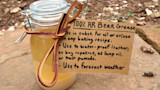
Butchering & Processing
How to Predict Weather with Bear Grease
You can make bear grease by heating the lard off a bear until it liquifies into a usable oil. It’s highly valued because of its stable shelf life at room temperature and numerous applications. I’ve personally cooked, conditioned leather, lubricated metal, and made lye soap with it. Other folks use...
Clay NewcombMay 28, 2021
Read MorePlay NowConversation
Save this episode