Bear Grease
Ep. 282: Bear Grease Time Machine
Play Episode
45m
We step back in time in this episode of the Bear Grease Podcast as host Clay Newcomb highlights some of his most memorable moments in the history of Bear Grease. Relive interviews from Warner Glenn from Arizona, Brit Davis from eastern Tennessee, Stoney Edwards from Arkansas, Donnie Baker from Missouri, and a story from long hunter and author Frederick Gerstäcker on the tragic death of his friend and hunting companion Erskine.
If you have comments on the show, send us a note tobeargrease@themeateater.com
Clay onInstagram
MeatEater onInstagram,Facebook,Twitter,Youtube, andYoutube Clips
00:00:05 Speaker 1: On this episode released on Christmas Day twenty twenty four, We're going back to revisit some iconic moments in the last three and a half years of the Bear Grease podcast. When I thought about what moments stood out to me, I quickly just rattled off five right in a row without really even thinking about it. So today we're gonna hear clips from Arizona cowboy Warner Glenn. We're gonna hear from ninety year old East Tennessee bear hunter Britt Davis. It's number two. We're gonna hear the account of Erskine's death in eighteen forty one from a bear attack. The fourth one, we're gonna hear from Stony Edwards talking about the murder of his great uncle Carl Edwards. And lastly, we're gonna hear a clip from the Donnie Baker episode Donnie's from Missouri, and it's him talking about the moment that he is legally killed a two hundred and nine inch white tail. It's like the Bear Grease time machine. We're gonna go back and it's gonna be a lot of fun. And I really doubt that you're gonna want to miss this one. And while you're listening, I'd like to ask a favor of you. Email us at bear Grease at the Meat Eater dot com and tell us your favorite bear Grease moment. My name is Klay Nukem and this is the bear Grease Podcast, where we'll explore things forgotten but relevant, search for insight and unlikely places, and where we'll tell the story of Americans who live their lives close to the land. Presented by FHF Gear, American made purpose built hunting and fishing gear that's designed to be as rugged as the place that's we explore. Warner Glenn is an eighty nine year old rancher from southeast Arizona who's made his living as a cattleman on his Malpie ranch, of which his southern fence line is the US Mexican border. No kidding. Warner Glenn is also a houndsman and a legendary dry ground mountain lion hunter. Dry ground meaning they're hunting in the desert without snow. That's why I knew him. He's got to be one of the oldest still working line hunters and cowboys left in America, known to put on twenty five hundred plus miles per year on his mule. Even today, Warner is one of the most humble, toughest, and hardest working men that I have ever interfaced with, and you kind of just get that sense when you're around him for a few hours. This clip is from twenty twenty one, when I asked him about a turning point in his life when he got into some trouble with the law. This clip was pulled out of episode twenty two titled American Cowboy in Open Country Warner Glenn Part one. The fruit of success almost always grows from the seed of failure, and sometimes that part of the journey is overlooked. An influential event in mister Warner's life took place in the early nineteen eighties, long before the success of the Malpi Borderlands Group, and I want to see if mister Warner is open to talking about it. You got in a tussle with one of the border agents. 00:03:43 Speaker 2: Yeah, I did. 00:03:45 Speaker 1: Did that change the way you saw that you needed to deal with people? Can you talk to me about that? 00:03:51 Speaker 3: Well? Sure, you bet that did. 00:03:54 Speaker 1: The kind of tell me the story and then tell me how it affects. 00:03:57 Speaker 3: I had a pretty pretty volatile temper when I was younger, and a lot of stuff. But I did them that I wouldn't do that day. I did my butt take down anyway, I. 00:04:09 Speaker 1: Don't know, you still look pretty wiry. 00:04:11 Speaker 3: That fellow was. That fellow was out of line, no doubt about it. He told me what he could do in anywhere he wanted on my feet land and I had. I couldn't do anything about it, and I told him I thought it could, and he said, well, you sure can. So I did. But anyway, it got me in a big trouble. Yet, one thing about it. He was a federal uniformed officer. My docture took him to the ground and rubbed his head in the dirt. 00:04:39 Speaker 1: I mean, it was just a how old were you, mister Warner? 00:04:42 Speaker 3: Probably forty seven, forty eight? Okay, Well I could go on and on about that, but that, of course, that's a felony. Anytime you had touch a federal officer in assault a federal officer, that's a fellay charged. And there's no doubt about it. I did it, There wasn't and I never made any excuse. I just told him why I did it. And I didn't go to prison, but I came that close. And also if you have a fellow in charge, you can't have a fire on him for so many years, and it affects your way of life. So just taught me, big boy, you better be careful what you're doing. And they told me some of the agents. They had an agent that dealt with things like that, and they came and talked to me, and they said, wonder what you should have done is gone to his supervisor and let them take care of it. And I said, well, now I can see that. At the time, I was hot, I was tired, and this guy was telling me one and he was standing on my private land and we were talking about the effect of vehicle traffic over my private land where there was no roads. I just figured that in my way of thinking, right then I had a right to protect my problem too. But he was but he wasn't a federal. I wasn't wrong, no doubt, but so was he. And well, the way it turned out, I didn't go to prison and they shipped him out of here. Yeah, and it was, but it was a thing that I wished I had gone about it well. 00:06:15 Speaker 1: But what I take away from it is that later you became very skillful in dealing with these people, and that that event changed the course of kind of how you were and how you worked with these Absolutely. 00:06:29 Speaker 3: Yeah, And really I respect the law enforcement. I mean, there are some guys in law enforcement that probably don't deserve to be there, but by and large I had backed those guys, and part of that's just I kind of learned. You know, they've got a they've got a job to do, and it's a tough one. I'm not ashamed that that happened, but it taught me a good lesson. 00:06:56 Speaker 1: You know, I deeply value that you can say that, because a lot of times negative things happen to people and it shapes them and makes them bitter and changes their life for the negative. But what I respect about your character is that that you know you can own up to it. But I think it I think it changed you for the better. 00:07:17 Speaker 3: I'll tell you a little. I went and told Daddy because I knew he was gonna he was gonna play out. And he sat there and listen. After I through telling me, he said, I didn't know, as you get a lot to hit one of those best. 00:07:35 Speaker 1: Man, your dad, he was taking your side, wouldn't he. That's all good. Dad's supposed to do. I hope you don't get the wrong idea about Warner. If you listen to the series, you'd see why this was such a wild moment because it was so out of character for him to beat up a federal officer. But it highlights the gritty underbelly of Western ranchers and especially those on the Mexican border. I'll never interview another man like Warner. 00:08:04 Speaker 2: Glenn. 00:08:05 Speaker 1: I was forever impacted by his character, and for that reason, he's in the Bear Grease Hall of Fame. Warner series was episodes twenty two through twenty six. In this next clip, I want to go back to East Tennessee in Cock County, in the heart of the Appalachian Mountains. This was just a short interview. It wasn't even the main interview, but we're speaking with eighty nine year old Britt Davis, who is the father in law Bear Grease Hall of Famer plot hound bear hunter Roy Clark, who you may remember. This is on episode eight. It's way back in the beginning in a podcast titled fifty Years in the Backer Field, where Britt talks about his upbringing and chokes up when he talks about his father's death. Mister Britt, how old are you? 00:08:58 Speaker 2: If I lived the second dead June, i'll. 00:09:00 Speaker 1: Be ninety ninety. What year were you born? 00:09:03 Speaker 2: Thirty one? 00:09:04 Speaker 1: Nineteen thirty one, so you grew up you were? Were you born in this hollow? 00:09:09 Speaker 2: Yeah? Right up a little there, about two miles. 00:09:12 Speaker 1: Now what kind of work did you do your whole life? 00:09:15 Speaker 2: Well? I farmed some, I log some, and I worked about a year on this interstate down here, and then I went to work for the county Road Department and stayed dead, little retard. 00:09:31 Speaker 1: Have you ever have you traveled much out of Appalachia? No, you've stayed right here. 00:09:36 Speaker 2: I went to Texas one time whenever Roy was an army out there, and that's on the trip I ever made. Really, I lived on up in the Gulf up third Well, I'd say we was up for about four or five years. So my daddy got killed up there, and I enjoyed dead up our lord? 00:09:58 Speaker 1: How did your father get killed? 00:10:00 Speaker 2: Of the log? The log rolled over? 00:10:02 Speaker 1: Really? How old were you? 00:10:03 Speaker 2: I was about twelve year old? 00:10:05 Speaker 4: Wow? 00:10:06 Speaker 1: How did that impact your life? 00:10:09 Speaker 2: Well, it made it rough on me for a while. Yeah, it was up there whenever they about the time it started logging it, but he got killed. We left at a long time before the gut loom. 00:10:31 Speaker 1: So did you have to kind of were you the oldest son his illness son, so you kind of had to take care of your family? 00:10:39 Speaker 2: Yeah? 00:10:40 Speaker 1: Really, so was that a lot of responsibility for you then? 00:10:43 Speaker 2: Yeah? We moved back home here up here, and my grandparents hit me with it and I raised a crop of the bicker and boughket a place where I lived. 00:10:56 Speaker 1: M How old were you? 00:11:00 Speaker 2: I'd say I was about thirteen? 00:11:02 Speaker 1: Really, So you you raised a crop of tobacco when you were thirteen? Yeah, and bought a piece of property. 00:11:09 Speaker 4: Wow. 00:11:10 Speaker 1: And that's the property that we went to earlier today up at the head of this holler. 00:11:14 Speaker 2: She gonna pull out here. 00:11:15 Speaker 1: Yeah. 00:11:16 Speaker 2: Yeah, so you. 00:11:17 Speaker 1: Bought that place when you were thirteen. Yeah, I'll be daring. And so you've lived you've lived there your whole life, Yeah, whole life. What What are your earliest memories, mister Britton? 00:11:30 Speaker 2: Oh low, I can I can remember things back then, buttering again now, really, I can remember a carrying me and us is stopping and talking to our neighbors. That was before we moved the good. 00:11:48 Speaker 1: So that was in the nineteen thirties. Did your family have a car that had an automobile? 00:11:52 Speaker 2: No? 00:11:53 Speaker 1: No, what how did you get around? 00:11:56 Speaker 2: Walked? Walked? 00:11:58 Speaker 1: You didn't everything you needed you could walk to get. 00:12:01 Speaker 2: Yeah, this little stores all around here, M three or four. Well of the first I'd say it was in the late thirties of the early forties. Before that, there's there was a car in this country, Is that right? Yeah? The doctor lived right up the older. 00:12:21 Speaker 1: He had to first tell me about how the doctor worked in this community. 00:12:27 Speaker 2: He'd go around in the and he's with his horse and people wanted to be doctored that tie read or a white flag on the mail walks, and. 00:12:38 Speaker 1: Each he'd ride his horse up to your house and knock on the door and say what's wrong. 00:12:43 Speaker 2: And then he finally got a car, and it didn't they do the same thing. 00:12:49 Speaker 1: Do you ever remember being sick and him having to come to your house, the doctor on you? 00:12:53 Speaker 2: Yeah? 00:12:54 Speaker 1: Really, what would you have been sick from? 00:12:57 Speaker 2: Maybe the strip the old or something like. 00:12:59 Speaker 1: That, and he'd come give you some penicillin maybe or something. That's what he doctored with penicillin. 00:13:06 Speaker 2: Wow. 00:13:06 Speaker 1: When did electricity come back in here? 00:13:09 Speaker 2: I'd say it was about fifty two or fifty three before I got it. 00:13:14 Speaker 1: So you were in your twenties before you had electricity. Yeah, do you remember those days? 00:13:20 Speaker 2: Oh? Yeah? 00:13:20 Speaker 1: What would what would you do? Once it got dark? Would you light the house with. 00:13:26 Speaker 2: Lamp? 00:13:26 Speaker 1: Or what kind of lamp? Was the coal burning? And you would what would you do? You would sit around with the family. 00:13:33 Speaker 2: We'd just sit around and go to bed. I guess that's they finally got a radio. 00:13:38 Speaker 1: Mister Britt. Do you remember when John F. Kennedy died President? 00:13:44 Speaker 2: Yeah? 00:13:44 Speaker 1: Do you remember where you were? Was that a significant where I was at where we are we enter. 00:13:51 Speaker 2: I was running the road rider over on Tom's Creek, and I just fardy got a paste an old man's house, and he come out and run up a little behind me and hollered at me and told me about. 00:14:09 Speaker 1: Do you hear what they're saying, mister Britt? They're saying, because because you were the only child, you've been spoiled your whole life. Do you agree with that? 00:14:20 Speaker 2: I wouldn't hardly say that. 00:14:25 Speaker 1: I've never forgotten that. When Britt was thirteen years old, he raised a crop of tobacco and bought a place for him and his mother to live after his father died. Today, mister Britt is ninety two years old and still drives the roads listening to bear races in the fall. I'll never forget that moment. This next clip is a little different. It wasn't an interview, but it's a reading of the first hand account of the German immigrant to America Gershtalker, recounting the death of his hunting partner Erskine in eighteen forty one. It's a wild story from episode four titled Death of a Bear Hunter. There are too many of Gershtalker's incredible stories to tell on this podcast, but I want to tell you one that cut me to the quick when I first read it. It involved a man being killed by a bear in a creek drainage less than twenty miles from where I live. I was shocked and slightly offended that nobody ever told me this story. I want you to hear the first hand account from Gershtoker of the death of his friend Erskine. This is an excerpt from the book Wild Sports, published in eighteen fifty four. This story is taken out of context, so there are some characters you'll need to know well as Gershtalker's older American hunting partner and friend with hair as white as snow. He said, Conwell lived in Arkansas. Wachiga is a Cherokee that became a trusted friend and hunting partner of Gershtalker. And you'll be introduced to young Erskine, who Gershtalker had met some years before in the back country. So we were off again before noon and gain the source of the hurricane. Rode across the Devil's stepping path, a narrow rock with a precipice on each side, left the pilot rock on our left, and came towards evening into the pine forest where we were sure of finding kindlers. Descending the steep side of a mountain, we observed a thin column of blue smoke by the side of the stream, showing that some hunters were in camp there. We went straight towards it and found it to be an Indian camp in our former acquaintance young Erskine. Among them they were Cherokees with three young chop tawls. These two tribes being on good terms like ourselves, They were out bear hunting, but it had better luck. A quantity of bear meat was hanging about the camp and even the dogs would eat no more. Casting ourselves down by the fire, one of the squalls, for there were several women in the camp, immediately cooked for us some bear, which we duly regaled ourselves. Night came on, and soon we were all sunk in deep repose. Early in the morning we began to move, dividing into two parties for the better chance of finding game. Conwell went with some of the Indians, amongst whom he had found an old acquaintance, to make a circuit round the pilot Rock, while Erskine and I, with three Cherokees, proceeded to the sources of the frog Bayou. Knight found us far from our camp, so we made one for ourselves. Where we were on the morning of February first, we had hardly started ere we heard the dogs, which he could, declared instantly that they were his brothers, and disappeared behind the rocks without another word. As we stood listening, the sound seemed to take a different direction. We ascended the mountain as fast as we could to cut off the chase, but found that we must have been mistaken, for in a few minutes all was as silent as a grave. Once we thought we heard a shot, but we couldn't be certain. We ascended to the highest terrace and walked slowly on, looking out for fresh signs, and listening to catch the sound of the dog below. Amongst the broken masses of rock, they might be near without being heard. Along the mountaintops, they are audible at a great distance. It may have been two in the afternoon, and we had seen nothing when bears grease raised his nose in the air, remained for an instant or two in a fixed position, then given a short smothered howl, dashed down the mountain side. Listening attentively, we heard the chase coming down the Hurricane River. Erskine and called out triumphantly, we shall have plenty of bear this evening, and dashed after the dog. I was soon by his side. I must observe by the way that we were both very hungry. Presently, a bear broke through the bushes. A projecting rock stopped him for an instant when Erskine saluted him with a ball. He received mine. As he rushed past and disappeared. The dogs, encouraged to greater efforts by our shots, and the stronger scent followed him out. Bear's grease, who was quite fresh leading the van. Soon they came upon him and stopped him. We rushed to the spot, without waiting to reload, and arriving in time to see the beast, excited to the greatest fury, kill four of our best dogs with as many blows of his paws. But the others threw themselves on him with greater animosity, and if our rifles had been loaded, we could not have used them. Just as a large, powerful brown dog, which had furiously attacked the bear, was knocked over, bleeding and howling, Erskine called out, Oh save the dog, threw down his rifle and rushed on with his knife among the furious group. I followed on the instant. When the bear saws coming, he exerted still more force to beat off the dogs and meet us. Seizing his opportunity, my comrade ran his steel into his side. The bear turned on him like lightning and seized him, and he uttered a shrill, piercing shriek. Driven to desperation by the sight, I plunged my knife three times into the monster's body with all my force, without thinking of jumping back. At the third thrust, the bear turned upon me, seeing as Paul coming. I attempted to evade the blow, felt a sharp pang, and sunk senseless to the ground. When I recovered my senses, bear's grease was licking the blood from my face. On attempting to rise, I felt a severe pain in my left side and was unable to move my left arm. On making a fresh effort, I succeeded in sitting up. The bear was close to me, and less than three feet from him, lay erskine, stiff and cold. I sprang up with a cry of horror and rushed towards him. It was too true. He was bathed in blood, his face torn to pieces, his right shoulder almost wrenched away from his body, and five of the best dogs ripped up with broken limbs, lying beside him. The bear was so covered with blood that his color was hardly discernible. My left arm appeared to be out of socket, but I could feel that no bones were broken. The sun had gone down, and I'd hoped that the other hunters might have heard our shots and the barking and howling of the dogs. It grew dark. 00:21:46 Speaker 4: No one came. 00:21:47 Speaker 1: I roared and shouted like mad, but no one heard me. I tried to light a fire, but my left arm was so swelled that I gave up the attempt. But as it would have been certain death to pass the night under the circums dances without a fire, I tore away part of the back of my hunting shirt, and the fore part, being saturated with blood, sprinkled some powder on it, rubbed it well, and with my right hand I shook a little powder into my rifle. Placing the muzzle on the rag, I fired, blowing it up to a flame. I piled on dry leaves and twigs, and succeeded in making a good fire, though with great pain and trouble. Now it was dark, I went to my dead comrade, who was lying about five yards from the fire. He was already stiff, and it was with great difficulty that I could pull down his arms and lay him straight, Nor could I keep his eyes closed, though I laid small stones on them. The dogs were very hungry, but it was impossible for me to break up the bear, only ripped him up and fed them with his entrols. Bear's grease laid himself down by the corpse, looking steadfastly in his face, and went no more near the bear and hoping of obtaining help, I loaded and fired twice, but nothing moved. The forest appeared one enormous grave. I felt very ill, vomited several times as well as I could. I laid myself down beside the fire and lost all consciousness of my wretched situation. Whether I slept or fainted is more than I can tell, but I know that I dreamed that I was at home in my bed, and my mother brought me some tea and laid her hand on my breast. Such an awakening as I had, was worse than I could wish. To my bitterest enemy, Bear's greased had pressed close to my side, lying his head on my breast. The fire was almost out, and I was shivering with cold, and the wolves were howling fearfully around the dead, keeping at a distance for fear of the living, but by no means disposed to lose their prey. I rose with difficulty and laid more wood on the fire. As it burned up, the face of the corpse seemed to brighten. I started, but found it was only an optical delusion. Louder and fiercer howled the wolves and the dogs, of whom five were alive. Besides bear grease answered them. But the answer was by no means one of defiance, rather a lament for the dead, partly to scare away the wolves, and partly in hope of finding help. I loaded and fired three times. My delight was inexpressible as I heard three shots in return, I loaded and fired until all my powder was expended. As morning broke, I heard two shots not far off, and soon after a third. A shipwrecked mariner hanging to the side of a plank could not raise his voice more lustily to hail a passing ship than I did, and joy upon joy, I heard a human voice and answer. The bark of the dogs announced a stranger, and Wachiga advanced out of the bush wall, he exclaimed. Staring at the shocking spectacle, he felt poor erskine and shook his head mournfully. He turned to me. I showed him my swollen arm, which he examined attentively. Without speaking, Forming a hollow with his two hands and placing into his lips, he gave a loud, piercing shout. The answer came from no great distance, and in a few minutes my old dear friend Conwell and most of the Indians were at my side. I grasped Conwell's hands sorrowfully and told him in few words how it all had happened. The old man scolded and said, it served us right. There's no greater danger in sticking a knife into a bear's paunch when he's falling with the dogs upon him. But if he has been thrown and then catches the sight of his greatest enemy man, he exerts all his force to attack him, and woe to him who comes within reach of his paws. It was all very well talking. He had not been present and seeing one dog after another knocked over, never to rise again, five minutes more and not one would have been saved. And who knows whether the enraged beasts would not have attacked us. Then meanwhile, the Indians had been digging a grave with their tomahawks, wrapping the body in a blanket. They laid him in it and covered him with earth and heavy stones. Conwell cut down some young stems and made a fence around the solitary grave. I could not avoid a shudder at the quiet coolness of the whole proceeding, as the thought struck me that the same persons under the same circumstances would have treated me in the same cool way had I fallen instead of Erskine. Like me, he was a lonely stranger in a foreign land, having left England some years before, and his friends and relations will probably never know what became of him. Thousands perish in this way in America, of whom nothing more is heard, and perhaps in a few months the remembrance of them was entirely passed away. 00:27:00 Speaker 4: To the dead was. 00:27:00 Speaker 1: Quietly laid in the grave. Wachiga came with an elderly Indian to look at my arm. Wachiga moved it while the other looked steadfastly in my face. The pain was enough to drive me mad, but I would not utter a sound. Next, the Indian took hold of my arm, laying his left hand on my shoulder, and while Wachiga suddenly seized me round the body from behind, the other pulled with all his force. The pain at first was so great that I almost feinted, but it gradually diminished. In spite of my resolve to show no signs of it, I could not suppress a shriek. Conwell soon after asked if I could ride on my answering yes, he helped me on a horse, then throwing the bear's skin and some of the meat on his own, we moved slowly homewards. My sufferings on the way were very great, but I uttered no murmur. I only longed for repose. That's one of my favorite stories of all time. I get chills listening to parts of it, and for that reason, Frederick Gershtacker is also in the Beargreas Hall of Fame. We did a series in twenty twenty two that was meaningful to me called Genuine Outlaws. It was about two men from my hometown in western Arkansas named Blue Dell and Charlie Edwards. They both passed on now but were notorious turkey poachers, but also beloved people in our community. As a kid, I was always a little bit confused by this. You know, did we like them or did we not? Were they dangerous or were they friends? But this story explores a bigger question of America's fascination with outlaws through the story of these two brothers. This clip is from episode fifty two and starts with game warden Jimmy Martin, who chased the brothers his whole career, but the story transitions to Stony Edwards, Charlie's son, talking about some deep family history that might have helped tip their tendencies towards outlaw. 00:29:16 Speaker 5: There are old time poachers that grew up in hard times. Most of them did the ones that I ran across, the hardcore matters that used mets and the rivers and on the lakes, the hard time night hunters for deer, you know, the bad turkey poachers, the bad daytime deer hunters. They were all from old times when times was tough, meat was hard to come by, and outlaw and was just a way of life. Most of the old hard, hard, hardcore poachers came from moonshiner families. 00:29:52 Speaker 1: Old time poachers and moonshiners, remember those two things. The first family member that I went to and I got permission with Stony Edwards, the son of Charlie. I drove out to the Big Fort community and found him at the Big Fort Mall, which is a small gas station that he and his wife run. I told him I wanted to tell the whole story his dad and uncle, and he agreed. He began by showing me a story from nineteen twenty six. That's an interesting puzzle piece. Tragedy literally struck the Edwards family. I'm reading from a laminated newspaper clipping bound in a three ring binder. So this is nineteen twenty six and it says officers shoot Carl Edwards in Polk County. Carl Edwards was killed in Montgomery County Sunday afternoon by a bullet fired by some member of a posse that had just arrested two alleged moonshiners and probably were searching for more or for anyone connected with the illicit traffic. Edwards, twenty three year old resident of Heath Valley, which is right in Polk County, was shot and instantly killed as he drove his Ford car homeward from a hunting trip in Montgomery County. A single bullet fired by one of the posse's six officers and said to have wounded Edwards's brother, kill the dog, and then given Carl Edwards a mortal womb as he set at the steering wheel. The tragedy occurred the Government Road between Big Fok and Norman. So who was Carl Edwards? To you? 00:31:26 Speaker 6: He would have been my dad's uncle, Okay, my grandfather's brother. 00:31:31 Speaker 1: So what were they doing? They were trying to get away from No. 00:31:35 Speaker 6: In all actuality, uncle Landy was only I think he was only like ten. They had been coon hunting. They had coon dog in the car and Uncle Landy was in the car and they were coming back and the officers hollered for him to stop, and Carl hollered a will at the bottom of the hill. Car didn't having brakes. But you got to take the previous history into account because they had been trying to catch him for years and hadn't been able to so when he didn't stop on command, they opened fire. And of course this ad came from the newspaper, which I'm gonna say his bias towards law enforcement at the time. It wasn't because those men loaded my uncle up, drove him to my great grandparents' house and dropped him on the porch when he was shot dead. Yeah, they left him dead on the front porch. 00:32:28 Speaker 4: Wow. 00:32:29 Speaker 6: Uncle Andy was shot through the ear. 00:32:31 Speaker 1: He was just a kid. 00:32:32 Speaker 6: He was ten years old. He was shot through the ear, and of course it. 00:32:35 Speaker 1: Killed his dad and his son in the car with a coon dog. 00:32:39 Speaker 6: No, it was two brothers, two brothers. Yeah, they were thirteen years apart. 00:32:43 Speaker 1: Oh, I see, I see. 00:32:44 Speaker 6: And the coon dog in the car and it. 00:32:46 Speaker 1: Was a coon dog. Okay, no, it did say it killed the dog. 00:32:51 Speaker 6: It killed the dog, killed Carl and wounded in So Carl. 00:32:55 Speaker 1: Was a known moonshiner and they'd been trying to catch him. 00:32:58 Speaker 6: Well, you got to consider his His dad went to Levenworth Prison for moonshining. So basically the whole family was in the business. There's no way around it. Yeah, my great grandfather had seven sons. 00:33:12 Speaker 1: And they all lived out here in the valley. 00:33:13 Speaker 6: Yeah, right over there where I live now. We're still on the original Edward's home plush. 00:33:23 Speaker 1: The whole family was quote in the business of moonshining, and the killing of Carl Edwards and his coon dog in nineteen twenty six was a tough pill for the family to swallow, and Uncle Andy, who was just a child at the time, had a partly shot off ears whole life. A week after the shooting. The six officers involved would be charged with murder. Carl Edwards was Louis Dell and Charlie's uncle, though he died before they were ever born. This is another newspaper clipping. Charges of murder have been made against six officers who were the posse that caused the death of Carl Edwards in Montgomery County last Sunday afternoon. The six were Sheriff George how it names all their names. Ruben Edwards, a brother of the man killed, was in Mina Tuesday, and stated that the accused officers had been summoned to court. I just wanted to say this was a murder case, and I mean that in and of itself could lead to a family having some bad taste in their mouth for the law. 00:34:28 Speaker 6: If it hadn't been for Rube at that time, the other brothers would have killed all six officers. Rube stopped it and said that it would go to court. 00:34:37 Speaker 1: And it'd be better off taking them to court than killing them. 00:34:40 Speaker 6: But the brothers would have killed them, and they're lucky that they didn't. 00:34:43 Speaker 1: Later on, lucky is probably a good descriptor, because all six officers would be acquitted of the murder charges they got off. None of them were convicted, nor was there any recompense for the coon dog. This isn't the best way to gain the trust of the government's law men. I'd known Louis Dell and Charlie my whole life but this was the first time I'd heard this story of their families past. Sometimes the reasons why people are the way they are go way back, and I don't view that as an excuse for breaking the law. We've all got things in our past that shape us that we have to overcome. But the redemption in this story that I see today is that the Edwards clan do their best to follow the law Outlaw and has kind of faded into the past for them coming from where they did. I respect that The genuine Outlaw series was episode fifty two through fifty six. My buddy Steve Ranella says that it's his favorite Beargary series. Lastly, I'd like to go back to January to episode one eight, titled the Donnie Baker Story Mayor. It was our most listened to episode in twenty twenty four and many people were struck by Donnie's fourth right and it's about a dark time in his life when he illegally killed a two hundred and nine inch buck on the military base Fort leonard Wood in Central Missouri. Here's Donnie talking about the moment he saw the buck from his truck. 00:36:24 Speaker 7: So as I as I kind of hit my brakes and it spooks him a little bit and he hops down to the timberline. But when he gets to the timberline, in front of him are two really good bucks. It was a massive, huge eight point with a little bitty brow tines and a really nice ten. So I pulled down. There's a running track there in some porta potties. So I pulled down to those porta potties and I thought, right, I thought I could kill it deer right there. 00:36:47 Speaker 4: And like I. 00:36:48 Speaker 7: Said, it was just kind of I don't know if you ever when you was a kid shot at a bird on a setting in a tree or something, just kind of and then when you do kill it, you think, oh, man, that's kind of what I went through there. But I knew it was an on hunting area. So I grabbed my bow and just jeans and boots and well behind the porta potties up this little rise and there was a big old red oak that had died and fell over. And when I got to that red oak, I was considering if I should hunker down there or climb over it. 00:37:15 Speaker 4: And as I'm as I'm contemplating that. 00:37:17 Speaker 1: So I mean, at this point, you've made a decision you're illegally kill this. 00:37:21 Speaker 4: Yeah, and let me ask you this. 00:37:25 Speaker 1: I mean, I think every human has experienced a moral dilemma of being given an opportunity that they know is wrong and them not taking it. 00:37:36 Speaker 4: Yeah. 00:37:36 Speaker 1: But then there's like this this suck, this drawl, that something happens that all of a sudden you cross into a red zone and it's something flips. 00:37:47 Speaker 4: Yeah. 00:37:48 Speaker 7: Well was at this time, Clay I had I had seen I'd had twenty two in my truck multiple times from from squirrel hunting. When I've seen this deer. You know, if if I had set out to poach this deer, I mean, I could have shot it many times. But when I saw that deer for the first time, I said, I've got to kill that deer. I mean, it just felt like that was almost a rite of passage for people who think that I was a good quality bow hunters. 00:38:12 Speaker 4: I was going to have killed this monster deer. 00:38:17 Speaker 1: There's some profoundness in Donnie's honest, simple conclusion of his motivation. He was a twenty six year old man hungry for validation from the world around him, and killing a big deer with his bow was a pathway to gain respect. I get it. I remember when the picture of the first decent deer that I killed hung on the wall at the local bow shop, and I soaked up any validation that I could get from anywhere. Validation for grand feats are important in a young man's life or a young woman's life, but when they're stolen, the system is cheated and it produces the opposite of what it's supposed to. It's supposed to identity and self confidence and a sense of worth, but what it actually creates is insecurity when it's stolen. But let's get back to Donnie. Here's what happened. 00:39:11 Speaker 7: So when I knew where that deer was going to go, I knew it was illegal, but never really give that a consideration. Just the only thing I was saying about is wanting to kill it deer. I needed to kill that deer some reason. I just thought that that's something I had to do. And as they get to that red oak, I'm considered, if I need to climb over to hunker down there, and it's just a few yards off of it's a high line, and it's kind of it's pretty clean. 00:39:38 Speaker 4: There's a little brush there. 00:39:40 Speaker 7: As I'm I'm sure I'm moving around and I look up in that big ten is twenty five yards from me, staring at me. Well, he blows and takes off running, and I thought, gosh, dang, I mean I blew that up, still not thinking, you know, hope nobody's seen me or whatever. And as I watched them cross Army Street, I look back where they were, and a probably thirty five yards behind him, that bucks stand there staring right at me, wide open between he and I. I really believe if he was a National Force wild deer, he'd have been gone. 00:40:11 Speaker 4: To you know. 00:40:12 Speaker 7: I shoot a single pin hha side and I had had an arrow knock. I knocked narrow forore. I set my bow on that red oak, trying to side where I was going to try to get. So I draw my bow back and he's still just standing there. I mean, he's looking right at me. I know that if I can fall it into his front end, high success rate killing him. And I put that pen right underneath his nose, just right about the top of his white patch and turn it blues. 00:40:38 Speaker 1: I wonder how long it took Adam, after sinking his teeth through the skin of the forbidden apple, to regret his decision, the bite initiated a sequence of unretractable consequences. Man's always had a problem with laws, breaking them, that is, But laws are the guideposts of societal security, designed for the well being of us. All the truth is is that everybody wants some form of law in their life to protect them and their interests, even in a time in America where we're talking about liberty and freedom and laws take away all this stuff which I am generally absolutely in agreement with. However, I'm telling you we all love laws, but we like to cherry pick. The ones that we'd like to break are the ones that infringe upon our personal freedom. And it's kind of bizarre. Human life is complex, society's complex. As I'm sitting here with Donnie hearing this story for the first time, I am struck with a palpable sense of remorse as the arrow drifts through the air and hits the buck just below the throat patch. Later we'll learn that as a society, we demand remorse from the people who've cheated the system ahead of myself. The buck has just been shot. 00:42:03 Speaker 7: The first thing I think is I shot him right in the front leg, and that was the first sick feeling I got in bout. I thought, oh my gosh, I just win that monster, dear, and shouldn't he been doing this? And that's still running through my mind when I hear him crash, and then reality starts setting in good and grief. So I set my bow down, ease up to the eye, look around, make sure there's no cars coming down the highway, and there's nobody really in that area at that time. Nobody had to run and trap where I was parking with him, So I instead of blood trailing him, I kind of stay out of sight, and I sneak down there where I thought I heard him crash and he's laying there dead, and to walk up. 00:42:39 Speaker 4: On him and grab his antlers. 00:42:41 Speaker 7: You should feel the most excitement you've ever had in your life, other than like one of your kids being born or something. And I kind of had the opposite feeling, and I immediately I thought, there's no way that I'm going to get away with this. 00:42:55 Speaker 1: The Donnie Baker series is one that you just have to listen to understand. The crescendo of the final episode, number one eighty two left a lot of grown men in tears. How could a poaching story do that. It surprised me too. As I analyze these stories that stood out to me, there's kind of an odd theme at least in three of them, and that is people breaking the law. And I can see how it might be possible to miss the point. I don't claim to be perfect. I was raised by Gary Bilivernukam, who taught me to be a law Biden Feller, and to the best of my ability, I've lived by that code. But really, what I'm interested in these stories is the redemption. All these stories have a heavy dose of redemption. I can't thank you enough for listening to Bear Grease as we close the year. I'm truly grateful for every one of you that listen and support Brent and I on this Bear Grease feet. Every Bear Grease episode feels like it takes shape on its own. It kind of forms up like a cloud as I explore and research something I don't understand, and it honestly feels like it's out of my control. Sometimes people view creating content as something that they can completely control just by the decisions they make and what they do. This doesn't feel like that to me. I couldn't have scripted meeting Warner Glenn, or blindly walking into Donnie Baker's home and watching and hearing that story unfold before me just like it did, y'all. I couldn't have scripted the hair on my neck raising up as I read the one hundred and eighty year old text of Gershtok talking about erskin dying. Can I guarantee compelling stories that give us insight into human nature and our powerful connection to wild places. I don't think I can, because it's not coming from me. I didn't generate it. But I think these stories are fueled by something bigger, and that give me faith that in twenty twenty five, the stories are just going to get better. Thank you again, really truly, thank you so much for listening to Bear Grease and Brent's This Country Life podcast. Hope everyone has a merry Christmas and a happy New Year. Keep the wild places wild, because that's where the bears live.
Presented By
Featured Gear
While you're listening
Butchering & Processing
How to Make Bear Grease

The practice of making bear oil has diminished over the last century. Cheap, grain-based oils and our society’s rapid movement away from field-to-table eating has lessened the value of this wonderful, multipurpose fat. But I think it still can find a place in modern homes. Bear oil has many non...
Clay NewcombMay 20, 2020
Read MorePlay Now
Cooking Techniques
Video: How to Make Bear Grease
I’m really passionate about the correct way to render bear fat. In this video, I’ll show you how to do it. The story of bear oil (or bear grease, as I like to call it) is rich with folklore. Some say it can cure baldness and arthritis. Others say you can use it to forecast the weather. Still more...
Clay NewcombFeb 1, 2021
Read MorePlay Now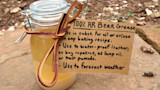
Butchering & Processing
How to Predict Weather with Bear Grease
You can make bear grease by heating the lard off a bear until it liquifies into a usable oil. It’s highly valued because of its stable shelf life at room temperature and numerous applications. I’ve personally cooked, conditioned leather, lubricated metal, and made lye soap with it. Other folks use...
Clay NewcombMay 28, 2021
Read MorePlay NowConversation
Save this episode