Bear Grease
Ep. 184: BEAR GREASE [RENDER] - Final Donnie Baker Discussion
Play Episode
1h26m
Clay Newcomband friends discuss the controversy surrounding theDonnie Baker Story, engage audience criticism around "glamorizing poachers," and call out America's premier bear conservation event–Bentonville, Arkansas' upcomingBlack Bear Bonanzaevent, where Clay and Brent will record an episode of theBear Grease Renderpodcast.
Featuring:Brent Reaves,Joe Wilson(World Championship Squirrel Cook Off),James Brandenburg(Black Bear Bonanza),Terrell Spencer(Across the Creek Farms), and Misty Newcomb.
Clay onInstagram
00:00:14 Speaker 1: My name is Clay Nukeleman. This is a production of the Bear Grease podcast called The Bear Grease Render, where we render down, dive deeper, and look behind the scenes of the actual bear Grease podcast, presented by f h F Gear, American made purpose built hunting and fishing gear that's designed to be as rugged as the place as we explore. So, Hey, we're gonna we're gonna do it a little different this time. I'm gonna introduce everybody. We're doing Spanish, but see we're gonna do it in Spanish. We're gonna we're gonna talk about Donnie Baker first, we're gonna go Usually the sequence of the Bear Grease Render is introduced me Bull with chit chat, with small talk, and and then we like fight off the deep desire to talk about the thing we're all here to talk about. But we're not going to do that today. We're gonna dive right in. I do have a very This is a great crew. This is this is an exciting crew to have multiple everybody's all been here, but it's not the standard crew. I've got to my left Brent Reeves and in the building is whaling the Wonder Dog Whaling, Jennings, Tree and Walker. 00:01:35 Speaker 2: Yes, just got back from Kansas. He was treating Kansas coons. 00:01:40 Speaker 1: Yeah, so Whalon and Brent are here, doctor miss newkom So great to have you. Good to be here, yes, last Yeah, it's long story, but you're here. 00:01:50 Speaker 3: I'm happy I'm here. 00:01:52 Speaker 1: Yes to your to your left, my neighbor, hero and national Pastured Poultry Icon Terrell Spencer, also known as Spence, my neighbor. Good to have your brother. 00:02:08 Speaker 3: Can I just help for a second. It's pastured. 00:02:11 Speaker 4: These are not spiritual ministry to the chickens. 00:02:15 Speaker 3: They're not pastored. 00:02:16 Speaker 1: They are not pastored poultry, past poultry. You know I have. I have a former background in pastured poultry media. 00:02:28 Speaker 5: Chicken feeds the World. 00:02:29 Speaker 1: Okay, we made a film years ago about pastor poultry. Yeah, yeah, American Pastured Poultry Producers. It's a mouthful, it's a mouthful. Spence is also at one time was the National Rooster Calling Champion of the a p p p A. It's recently been the title has been stripped from him, given to Yes. This is a little bit outside the rails of what we're here to talk about today. That's TERRYL. Spencer to TERRYL. Spencer's laft Man. It's like Stack. This is like the Dream Team. This is like nineteen ninety four, Michael Jordan's Magic, Johnson's Bird Keem Elijah Wan. We have Joe Wilson with us. 00:03:18 Speaker 6: I'm here, Joe. 00:03:19 Speaker 1: I've got to introduce you, like if you're in this room, like there's your life is much bigger than this, but there's like one thing that's connected to you. Joe Wilson of the World Championship Squirrel cookoff Man. 00:03:33 Speaker 6: I also live at the Squirrel Dairy. 00:03:35 Speaker 1: Okay, you live at the Squirrel Dairy. 00:03:39 Speaker 6: We got to talk about Donnie Baker. 00:03:40 Speaker 5: Yeah, I got questions squirrel, mostly about technique. 00:03:47 Speaker 6: Coming down the tree. 00:03:49 Speaker 7: Well, you know what. 00:03:50 Speaker 1: They say about Mammelian you can anything. Yep, there you go to your laugh. 00:03:58 Speaker 8: My friend, how can you follow that up? 00:04:02 Speaker 1: James Brandenburg, Arkansas, Yeah, yeah, in Spanish head of Arkansas b h A. And I'm gonna call you, uh just for sake of clarity and simplicity, founder of the Black Bear Bonanza, which isn't entirely true. But you have a great team around you. We have a great team around You're a part of the founding. I'm of the black. 00:04:26 Speaker 8: We'll go with that part of the founding for sure. 00:04:28 Speaker 5: Yeah. 00:04:29 Speaker 1: No, James James has uh he's been on He was on the Old Bear Honting magazine podcast. And Uh, I like to talk at James. That's what James is like a good face. He gives good James is like a high level corporate exec. 00:04:48 Speaker 5: Uh. 00:04:49 Speaker 1: You wouldn't know it by looking at him. You wouldn't know by looking at this humble man. Uh No, I'm kidding, no, but for real, James's high level business exec in the high reps of American industry, industry captain of industry in India next week for real. Uh, great to have you, thank you sir. But I was getting at why I like to talk to James. What I'm learning that's gonna be relevant in next week's podcast is how oh wow, what a rabbit trail. People that are really good in business are are good listeners. 00:05:26 Speaker 8: Some people. 00:05:27 Speaker 1: He's also a good talker. 00:05:29 Speaker 8: Sometimes he's also. 00:05:30 Speaker 1: A good talker. 00:05:31 Speaker 8: Uh. 00:05:31 Speaker 1: And my name's Clay nukem. 00:05:37 Speaker 7: Man. 00:05:37 Speaker 1: So Donnie Baker, we're gonna we're gonna do the order a little bit different. I wanna I just want to jump right into it. YEA almost don't. I don't want to give a spiel, so I'm not. I want to hear your first impressions. 00:05:51 Speaker 6: My impression is as I sent Brent Reeves a message the other day, telling this was your best work. Huh. Everything leading up to this was fantastic, great history, amazing stories. But this story I think went way deeper than a guy shooting at two hundred and four inch buck. And I think it gives guidance to all of us in our life because that buck, as we found out in episode two, it was just one little thing that led up to the story, and you could substitute that buck for all kinds of problems in your life. But yeah, I thought it was fantastic. You did a great job. Donnie Baker could be my friend any day. 00:06:39 Speaker 1: Yeah, that's what's That's what. There's so many parts of this the are so interesting to me. And I learned this story in the same way really that the listener did. Like, this is not a story that I grew up with. I didn't know Donnie. I knew very little about his story before I went to his house to told him before the podcast. I said, Donnie, I don't know if I can use this or not. It was because I didn't know the whole story, and I was trying to evaluate what story was kind of sitting in front of me. I knew it was interesting. I'm interested in big deer, I'm interested in apparently, I'm interested in people that break the law. And I honestly I told him that. I said, Donnie, I'm not sure I can use this, but I want to talk to you. And he was like, that's great, Clay, it'd be I'm glad to tell a story. You do whatever you got to do. If you can use it, use it. If you can't, no problem. 00:07:44 Speaker 8: But it was pretty obvious as you went along though, I mean, I'm sure as you were talking to him, the what was the interesting part about what happened to him? Because it I'm sure as you were talking to him it was you know, you can sit and talk to somebody and hear a story of them killing a big deer and be like, oh, that's cool. But then as you kind of brought us all along in it and kind of I mean, what I appreciated about it. To Joe's point, I thought it was your best work that you've done so far, and you helped us see all the different components of it, like a rope that all kind of braided together to make the story of his life. And they all had to be there to get him where he is today. Yea, And we lose that a lot of times when we hear stories about this or we just see the headline kills man poaches giant deer. Yes, there's way, way, way more to it. 00:08:46 Speaker 1: And see that's a good point. And what's interesting I said it. I didn't say it on the first render. I'll say it on this render. I did less in the interview with Donnie Baker than I ever do with someone. 00:09:00 Speaker 6: I was wondering that if it all fell together, Hey, that. 00:09:02 Speaker 1: Was his story that he put together all on his own. I mean, sometimes you hear someone's story and people are so close to it and an outside eye comes in and you kind of put it together. Yeah, and the person hears it and they're like, yeah, yeah, that's like it's it. That's the way it happened. But maybe there was some conclusions. I don't know, there's some there's some things that you kind of weave together. Donnie Baker told that. I asked Donnie Baker honestly one question, and that was, how where do you think we should start? 00:09:39 Speaker 7: Donnie? 00:09:40 Speaker 1: I intentionally left that in, which I usually would have cut it out. I intentionally left that in because I asked him that, and he started talking, and I was a part of the conversation, like I I, you know, asked him specifically about you know, just questions like what were you thinking? 00:09:56 Speaker 5: Did you? Uh? 00:09:58 Speaker 1: You know, I did ask him questions, But I'm telling you he started talking and he ended, and I talked to him for two hours. So you guys heard I think twenty seven minutes of Donnie. These are things on the editorial side that I see. On the first episode, you heard Donnie talk for twenty seven minutes. The episode was fifty five minutes long, so you heard me talk for as long as you heard Donnie talk story of Missy's life. 00:10:29 Speaker 7: I still pretty good average. 00:10:33 Speaker 1: On the second episode, we only heard Donnie talk for twenty two minutes, so you heard about half of the interview. But that's what made the most sense to me. And even the sequence of it. A lot of times on a story, I have to sequence it, like maybe they tell something that actually chronologically came at the end, but that needs to be in the beginning to make sense. 00:10:56 Speaker 6: It sounded like he was loaded up and ready to fire for a while. Yeah, and you become that broadcast that would air it out to like minded people, and which I think. 00:11:10 Speaker 5: You did well. 00:11:12 Speaker 6: But he needed to get it out there, and maybe it was to get it out there once and for all to show people this is who I was, it's who I am, and maybe you don't need to walk down the same road as I walked down, which I think that's how I took it personally, like he was showing us everybody's got a little outlaw in him, and he used it that day. Found out he didn't want to be an outlaw anymore, you know. 00:11:41 Speaker 8: I think the second he released that arrow, he knew And when he said that in the first episode, Clay that part and I texted you this, the part about I'm sure we've all you know, shot at a bird on a tree limit. Yeah, I mean that was just like that was just like he had cracked from my head and looked inside and like read my life story or something, you know. I remember, uh, you know the first I think the first animal that I ever killed as a little kid, you know, shooting a bb gun. I shouldn't have been shooting in a place I shouldn't have been shooting it, and how I felt, and and it just took me right back to that moment, and I was like, I knew, I know exactly how he felt when he let that arrow go. He he just had walked up to the edge of something to see if he could do it. Yeah, and just in that split second, temptation overcame him and the arrow flew and he instantly, like when Adam took a bite of the apple. 00:12:51 Speaker 1: He knew there was no going back to buy clothes. 00:12:56 Speaker 8: Yeah, dang it. 00:12:57 Speaker 1: Well, in that the analogy of shooting a bird and regretting it immediately probably could be a major literary mechanism in a book to just describe what all of us have felt, whether you've actually killed an animal or not, but just that instantaneous regret, even in the act of something that you know you can't take back. 00:13:24 Speaker 6: I shot that bird. You shoot that bird? 00:13:26 Speaker 7: Yep. 00:13:27 Speaker 6: I remember shooting that bird. And it was so light that it stayed on the leaf. It is just a little yellow bird. And I remember crying at that bird, going in grabbing my mom's gravy spoon, digging a hole, putting that little bird in there, and saying, I ain't ever going to shoot a bird again. And that lasted about an hour. 00:13:50 Speaker 7: Maybe it's yellow bird. 00:13:52 Speaker 6: I just I remember when I heard it, just like you, I knew exactly what shooting that bird mean. 00:13:57 Speaker 2: Anybody a lot of folks could identify with that wouldn't Maybe wasn't even killing the animal. Maybe it was cheating on a test at school and you get home and you make you make a hundred on it, and you get home and your mama's so proud of you, and then you realize, you know, I didn't do that right, She'm proud of me. She's proud of that kid that was sitting beside me that I copied off of, which is me. People can people copied off of me in school? Up, they're in prison now. 00:14:24 Speaker 1: Spence, what do you think just like first impressions. 00:14:27 Speaker 5: Yeah, I just I felt like it was almost cleansing for him, Like I didn't see it so much he was telling everybody. I felt like more like he was doing it for himself. And I've had stuff that I've done that I'm ashamed of, you know, I mean, we all have. And I think there's just you know, I've got a church group and even just a couple of years ago going through stuff that had been hidden, and I've seen other guys share that, Like it's just it's cleansing to get that, to unburden yourself. But and I don't know, I think I I saw it more as Donnie was doing this for Donnie than he was to like clear his name or anything. And that might be me putting my own stuff on it, but yeah, that was just initially what I and I just you know, I just appreciate when people change, you know, like and so often people change for the worst, and it's rare to see a grown man just completely change. And it wasn't just that, it's you know, later he talked about his wife having cancer, and he talked about, you know, he was a knucklehead with as a family. He wasn't leading his family, his horsing around, not taking it serious. But even that, you know, it's like he got popped again in life and instead of shrinking back or collapsing in on himself, he kind of rose up. And it's just really admirable to me, you know, so I admired him for that. 00:15:51 Speaker 1: Yeah, Miss NUKEM. 00:15:53 Speaker 4: Well, you know, I think it's a it's it's really fascinating to me to see the impact that the stories had on people. And I've wondered a lot, like why is this story different? Because I do think that not every story that every poacher tells it's going to be this no endearing, you know, like it's not going to have this impact. And I don't think everyone responds this way. And I don't think that everyone. I think that there's like all these events in Donnie's life, uh, that that kind of shape a person. And and that's what you're The Donnie that we're hearing from in this podcast is a different person than the Donnie that that shot the deer. And there's a whole range of things that happened that produced who's talking on this podcast. And so to me, it's kind of fascinating to watch, honestly, like the power of suffering and whether whether that suffering is directly linked to him shooting this deer or not, Like the wife, his wife's that situation that's not necessarily that's not it's not like that is an outcome of this what he did with the deer, but that it produced something in him and that change just perspective of how he saw that part of his life. And I think that, you know, suffering is a very humbling thing. And he did suffer from what the dear situation, and he did suffer from these other situations. And I think that humility is something that when you see it in people, you can you can you can relinquish a lot of a lot of guilt, a lot of blame, a lot of you can like you can take it away from them, you know you can. It does, And I don't know why, but I think it does produce something in people if they, you know, depending because some people get bitter when they suffer, some people get angry when they suffer. 00:17:44 Speaker 3: But if you if you can let it. 00:17:46 Speaker 4: Shape you, you know, like a like a river in a canyon, then it can actually produce something really good. And and to me, I think that's the the thing that I see inside of this is that suffering produce something in him that people want, people find endearing. It moves people, and uh and you can almost it allows you to look at his life differently than just seeing that that thing that happened. 00:18:16 Speaker 6: I was going to try to say the same thing you were but I'm not a doctor. 00:18:30 Speaker 7: Is there more? 00:18:31 Speaker 4: Well, that's that's all I was I was going to say, is just I think that that's what That's the thing that's actually impacting here is what that produces. 00:18:40 Speaker 1: The theme of human suffering is something that man since the beginning of time, and all cultures and all literature and all movies, in all conversations. It's the theme of mankind. It's suffering. And and it's so ironic because the intent of every warning, every human life. We wake up and we try not to suffer. I mean, we try to do things that are beneficial for our families, that are beneficial for us. We we we try to avoid suffering. But the ironic thing is is that suffering is actually the crucible in which character and all the things that actually matter in life yeah happen. I mean, there's just no way around it. And and and how we respond to that that difficult and suffering could be described is not always like the death of someone really close to you. Suffering is comes in. It's scalable at all levels. Scalable too, you know. 00:19:38 Speaker 7: It's all relative to what what what you're talking about exactly. 00:19:41 Speaker 1: I Mean, there's really big macro suffering of yeah, like the death of a family member or or you have cancer yourself, down to suffering of you know, you don't get to go eat out because you're you're saving money and you're you're you're you're sacrificing for something, and some people could be that as some level of suffering or whatever. But yeah, what what stood out to you, Brent about it? This like the if you could Okay, let me let me say this. I have never gotten in it one single day and probably never will again. The amount of text messages from grown men, some of them in this room, who texted me or messaged me contacted me saying that they cried in their. 00:20:26 Speaker 5: Truck about the walk in the Lows. 00:20:30 Speaker 1: Yeah, it was. 00:20:33 Speaker 5: A little awkward. 00:20:34 Speaker 7: I was in the in the you know what. 00:20:36 Speaker 2: I called you right after I was in the I was still in the driveway and just listened to it. And I was already getting text messages from other people that don't have your phone numbers, like this is the best one I've ever heard. So I when I quit sniveling enough that I could make sense and give you a call. It's such a human story. Yeah, there's no way you can live on this planet to an adulthood and not be able to identify with hardship and levels of it. If the worst thing that ever happened to that guy was him shooting a two hundred and four inch deer and getting. 00:21:19 Speaker 1: Caught being fired one hundred and fourteen dollars, he. 00:21:23 Speaker 7: Would be a happy guy. But that is an insignificant blip. 00:21:27 Speaker 2: It ain't even a ripple in the hardship of life that he had to go through and put. He put all that stuff in perspective, and to me it was I was endearing with his navigation of hardship and keeping his eyes focused on his kids. 00:21:49 Speaker 7: Kids. 00:21:50 Speaker 2: To me, are that's what I have fought for for my whole life, my whole career. I was fighting every day to try to take care of a kid that somebody else wasn't taken care of, and that the focus on that is what really stood out to me. Because he had he didn't have every right. No one ever has or the right to be bitter that they have excuse, they have reasons why they're bitter. 00:22:24 Speaker 7: You, I don't think you have the right to be better. I don't think you earn a right. 00:22:27 Speaker 2: To be bitter and hard and cold, but he had every reason that he could have been that way, but he chose to keep going, fighting through, fighting through it. And I still say, I still hold my gun, you know, I'm I am so. 00:22:47 Speaker 7: For the law enforcement. 00:22:49 Speaker 2: Yes that if you plead not guilty to something and then you get found guilty, they ought to try you again for perjury because obviously you lied. I don't think this guy as a poacher. I think he was he violated the law. I think he's a violator. A poacher to me is somebody that leaves their house with intent to go do it. And I said it on the other render, but that that just kept coming back to me and I just don't. I don't see him that way, and I didn't see it that way at. 00:23:18 Speaker 5: All, And that being a violator makes some human Like every one of us in this room is a violator. Everyone that listened to the to this podcast is a violator. And he broke Chicken, I broke a lot of law. Yeah, it's but there's I don't know, it's just and that's the humanity, right, Like I think the stories that touch us on that deep level. It like some of this reminded me of the Book of Job you know, and you see a guy rise up and it's it's identifiable. You know, a guy that you know you mentioned in Bathsheba or sin crouching at your door. We've all done that, whether it's a test or whether it's something in business, and as soon as the bird whatever, we've all done that. And I think, what it's rare you hear a story that's just so identifiable and it ends up going the right way. And I think for me when I hear heard Donnie's story, it was the reason it touched me is because that's how I would like to think I would react, right. 00:24:31 Speaker 7: Yeah. 00:24:31 Speaker 5: I don't feel like i'd admire him. 00:24:34 Speaker 7: Yeah exactly. 00:24:35 Speaker 2: I don't feel sorry for anything that happened to him. I sympathize and empathize with him, but I admire how you come through it. 00:24:44 Speaker 1: Okay, let me. I'm going to paint a picture for you, and I want to tell you what you guys would do in this scenario. Say, there was a national podcast that told the story of a poacher. In this podcast, the intent of everybody that's ever been and on it was for the benefit of wildlife, wild places, adherence to the law and integrity and actually A big theme inside of the whole podcast was integrity and character. Let's say that guy that had that podcast interviewed a man who had committed an egregious wildlife crime, and at the end of that everyone felt sympathy for the poacher. How do you justify this? 00:25:31 Speaker 6: I got you. 00:25:36 Speaker 1: Do you hear what you're saying? I mean, like if you were an alien from another planet and you looked in my head and you looked at my life. I had never had an outlaw stage like I've broken the law. I never I had a guy tell me the other day. He said he didn't know me, and he said, Clay, you're fascinated with the poachers. Either you're an old poacher or you were so not a poacher that you're peering into this realm with like a lot of curiosity. And I don't want to paint myself like a saint, but I mean I never did stuff on purpose illegally ever, even being exposed at a high level to hunting in rural America when everybody around me was. I say that to say, if you looked inside my an alien could scan my head. 00:26:23 Speaker 6: I'm kind of an alien, okay, And. 00:26:26 Speaker 1: Why so, how can we justify this because the only you know, I've got very little criticism for this public, you know, and how much criticism actually reaches you is hard to evaluate. Like we just have these platforms that people can communicate. But I've had some people say you were glamorizing poaching. 00:26:43 Speaker 6: Let me say, I would like to say that it was a human story, but for a listener, I think we listened to it as a as Americans, and as Americans you've showcased it throughout your entire three season whatever. How that outlaw, the frontiersman, the guy who's going to take a risk, the chance, all of that. That's a very American thing. I'm sure other countries have those kinds of people, but as Americans, we like to see suffering and learn from it. Whether it's in sports, the guy that pushes the extra mile. You know, you look at those marathon guys and maybe they're just struggling to get over the line. We admire those people that struggle. I will be the first one to say I don't believe you find success without suffering. I think that if you don't suffer as a small business person, you're probably not going to have a successful business. It's real hard for us to look at people who are born with wealth and think that they earned something. We want to see them suffer. It gives them some street cred, you know. And so as an alien looking down at Clay, my opinion would be that story taught us how to do things right. We've listened to his whole spiel. We feel like we know this guy. I don't know what he looks like. When I first heard Donnie Baker, I was thinking of the comedian with man Donnie something else. 00:28:27 Speaker 1: But it wouldn't have been awesome if that was Donnie. 00:28:30 Speaker 6: I think Donnie probably looks like all of us, you know. I think his day to day activities are like all of us, and we learned that don't be like Donnie in that one instance. But if you can recover from sacrifice like Donnie did, that's a that's a high price right there. 00:28:52 Speaker 2: Well, if I understand the story right, if I was listening to all the the legal issues part of it. Thing he did was shoot that deer you u yeah, zone in the wrong spot because it was during deer season. 00:29:07 Speaker 7: He did with archery legal archery tackle. 00:29:10 Speaker 1: And yeah, yeah, yeah, he had a right to hunt on the base. 00:29:13 Speaker 7: Right, Yeah, so it was just one spot, so I mean that is just one. 00:29:16 Speaker 1: Well, and then and then illegal falsification of where he killed it, which was big. So there's two major. 00:29:21 Speaker 2: Correct But as far as the act of what he did off shooting that deer, the only thing he did wrong was he was in the wrong spot. 00:29:27 Speaker 7: But he knew it. 00:29:28 Speaker 2: I'm not I'm just saying it wasn't like you talk about intent and all that stuff. And he didn't do it at night. He wasn't with a rifle on top of the building. 00:29:41 Speaker 1: Like there's been a little misk, a little misunderstanding with some people, and I've heard it enough times that it's worth clarifying. People have heard me say Donnie didn't have intent, and they're like, well, yeah he did. He shot a deer with his bow. He didn't just sling an air into the woods and accidentally hit it. It would have been better if I said pre med take it and I and I said, basically, I was saying intent matters, and uh yeah, but there's no, there's no, not even a debate that premeditated intent matters with punishment. In the murder one murder two. We know that's from our nineteen nineties rap days, right, Misty, I thought you're gonna say law and order, Well, law and order, but also following, you know, probably more law and order. 00:30:32 Speaker 5: We got a lot of questions about Clay nukemb. 00:30:34 Speaker 7: Now I'm not versed on the gates. 00:30:37 Speaker 5: It explains the two. 00:30:41 Speaker 1: Murder one murder. 00:30:42 Speaker 8: Too, Clay. 00:30:44 Speaker 7: I thought it was. 00:30:44 Speaker 8: I thought it was some of the criticism that was, like, you're glorifying poaching and law breaking, and I don't. I don't understand that point of view because there was nothing that was glorified about out the illegal thing that Donnie did, right. 00:31:04 Speaker 1: You know, it wasn't like we were saying this is cool exactly. 00:31:08 Speaker 5: It. 00:31:09 Speaker 8: I think we were invited as listeners to have empathy for what he had gone through. We were also invited to put ourselves in his shoes and think about times when we had been tempted and how had we reacted. And it could have been you know, whether you were tempted to poach or tempted to you know, knock a couple of strokes off your score on a certain golf hole, or you know, whatever the case is going to be, right, you're always presented with temptation, and you know the magnitude of the sin, so to speak, or the transgression. Yeah, probably kind of informs how you react and what you do and things like that. But there was nothing glorifying about the conversation at all. And and that's what you know, I think. I think anybody who listens hopefully to this render and had made the decision not to listen to those two podcasts because it was glorifying poaching, yeah, I would just I would just ask them to listen to it from the standpoint of trying to learn something about yourself and about humanity, almost like you're having a mirror held up to yourself, because I think that's what you really did with with these is you kind of held a mirror up to all of us and said, give yourself a look and and think about what you would do in the situation, or remember that time in your life when you were attempted, and did you did you live up to what you what you wanted to do, could you have done better? Are you doing better? I mean, that's this is all stuff that I've kind of ye taken away from it. So it really that that one piece of criticism that I saw, I think that you're talking about of you know, it is glorifying law breaking. I just I don't think that was right. 00:33:16 Speaker 6: I don't want to say too much because tax season is just around the corner. 00:33:21 Speaker 5: Behind it. 00:33:28 Speaker 7: Now. 00:33:28 Speaker 1: I think what people would say, well, what what. 00:33:33 Speaker 5: Is? 00:33:33 Speaker 1: Well, there's kind of a philosophy, and it would be clear is that you know, nobody knew Donnie Baker's name before this and now they do, so that would be glorifying a poacher. But the way, you know, I got to give credit to my buddy Steve Vanella in some ways, not directly for Donnie Baker. He didn't know anything about it before it happened and whatnot. But but years ago I remember asking Steve about some controversial stuff, stuff that I've done that actually made the air. And for instance, in the Warner Glendale I brought up a little bit about the border wall. We were hunting right on the Mexican border. We were like looking at the border wall. We were finding immigration, illegal illegal, evidence of illegals, all just strown over the landscape. And I was like, hey, I shouldn't talk about this, right And he was like, why not? You talked about it we were down there hunting, didn't you. And I was like, yeah, it's like all we talked about, and he was like, talk about it. 00:34:39 Speaker 7: Yeah. 00:34:41 Speaker 1: Several other times. I messaged Ranella one time and said, Hey, is it okay if I play a clip of of Alabama governor that was the lead racist in the world for a while, George Wallace and his infamous speed each about segregation forever, Like I put it in there, and then I was like, holy cow, I'm broadcasting George Wallace's voice. I'm literally a message Renela and said can I put that on there? And he was like, why wouldn't you? It's part of the story. It's building, I mean, and he obviously knew that it was gonna tear that down. That gave me the confidence to stand in a story like this and just be like, hey, this is just the way it happened. 00:35:30 Speaker 8: There's there's too much effort right now in our society to cleanse and strip difficult conversations, difficult things from our past or difficult things from today. We have to be able to sit together and talk about whatever that shue is some bad stuff and it can be whatever. 00:35:56 Speaker 5: I mean. 00:35:57 Speaker 8: You have to be able to be in a place to compare and contrast, to think critically about what's going on. We have to teach our kids how to do this. 00:36:08 Speaker 6: Gott to enjoy liberty exactly. 00:36:10 Speaker 8: That's exactly right, Joe. 00:36:12 Speaker 6: You don't have liberty. You don't have freedom. 00:36:14 Speaker 8: That's right, that's right. 00:36:16 Speaker 6: Your liberty to showcase a story right or wrong, that's liberty, man. 00:36:22 Speaker 7: That's what. 00:36:22 Speaker 6: Yeah, that's that's how we're sitting in this room. 00:36:26 Speaker 1: That's really the philosophy of the guy who was like, you shouldn't have told this story, is like, that's a no, no story and we don't need to talk about it. And in his mind, as you know, and and and honestly, I mean there's some credence to that in the sense of that's in the in the zeitgeist, it's in the atmosphere because I picked it up, like, hey, this is risky. Nobody else is talking about stuff like this, but I talk about it all the time when the MIC's not on. Why wouldn't I talk about it? Now? 00:36:59 Speaker 7: You know? 00:36:59 Speaker 1: And and I'm learning that those are stories that that are usually really impacting and and and profitable if they're told in the right way, you know. 00:37:11 Speaker 8: And personally profitable, like internally profitable, because you. 00:37:15 Speaker 3: Could be economically profitable. 00:37:19 Speaker 8: Your censors over here. 00:37:22 Speaker 5: Thank you, thank you. 00:37:24 Speaker 7: Yeah. 00:37:24 Speaker 5: But also just like if you look at the law as the mechanism for building morality, that that's not how life works, right, it's community. Like the hardest thing he was nothing. It was going and telling his dad. It was telling all those folks that drove around that base he lost his dream job. And hey, I went to basic training, I went to be knock there. I spent a good chunk of my military career at Fort leonard Wood. 00:37:54 Speaker 1: Did you see that book? 00:37:56 Speaker 5: No? But I knew that gas station that but yeah, and uh, you know, it's like he lost his dream job. And if you feel like he kind of got like maybe hosed on that situation like that, that's where like the chemical defense training facility, they got like chemical weapon precursors and not being able to stay out of places you're not supposed to. The MP's had every right. I mean, that's a that's a millet. It's Fort leonard Wood. It's not hunting place leonard Wood. Yeah, it's it's not a no no, and so they you know, but like with community, when my kid, one of my kids was horsing around on a four Wheeler and he went on the County road last year or down on the street and he got hit and it just about killed him. And you know, he was fine. I mean, he was in a lot of pain and he was really really bad hurt, paramedics, police all that around him. And he lost it when I walked up, because he was more scared of me than anything going. And it's because he knew he'd elated my trust in the first It wasn't anything like, you know, I may never use my arm again or all that. It was just I'm sorry, Like that was the first and he was in kind of a life or death situation, like the the community aspect, and and I'm outside of the hunting community, but I have a one of my young men is boldly like eagerly stepping. But that guy, you know, he's in it, and so like outside of the community, what makes your community stronger is talking about this and realizing the shame that comes with it. The the the the worst part is having to go and say I did this, like I cheated? 00:39:51 Speaker 1: Did you hear when he said that he was in the hospital after that broke leg and the nurse recognized him as and the guy that had killed the huge deer, but she thought he killed it. She didn't know he killed it illegally. He's he's got a broke leg in the emergency room, and he tells her, yeah, but I killed it illegally. 00:40:12 Speaker 5: And even that, like he felt that need. 00:40:14 Speaker 1: Like he almost brought it up in the voiceover, almost wanted to go, hey, did y'all hear that? 00:40:19 Speaker 6: Yeah? 00:40:19 Speaker 1: Yeah, he told the nerd, Like he could have just been like, yeah, it was awesome and been a hero. That's what she presented it as, Hey, you're the guy that killed a big buck. 00:40:28 Speaker 5: He's like, yeah, but before you set that leg, I'm actually a fraud. Yeah, you know. It's so there's something there, like the one hundred and forty one dollars. I actually think the way it worked out is more powerful than while they took your guns in your truck. Yeah, it seemed because of the human impact, because then you would feel like, well, he's been through enough, but just that having to go back losing his job in a poverty stricken area. That's not like that's right, I'm poverty stricken. But you know, like if that's a rural area, there's not a lot of good jobs. I get a good job. Yeah, so I think I don't think he got off easy. 00:41:07 Speaker 1: Okay, the the the white mast down in the room, was the one hundred and fourteen dollars? Fine, any any comments on that, Like, do y'all that that probably wouldn't have happened today? I don't think. 00:41:21 Speaker 8: I don't. I kind of disagree, really, because I thought a lot about this over the last couple of days. I think, I mean, after saying everything I've already said, I kind of hesitate to say it this way, but I think that's I don't think they knew exactly what he'd done until he confessed, Okay, Yeah, and so that's all they had. 00:41:45 Speaker 1: Would you thought that if I hadn't said it? 00:41:48 Speaker 8: It took me. I mean I've listened to that second podcast three times and I only thought of this this Morning's. 00:41:54 Speaker 1: Why James is here. Thank you James. So those numbers. 00:41:59 Speaker 8: You're checking the mail? I I think they they knew that buck belonged. I mean, everybody knew that, Bucky, So they knew that. We know you didn't kill that buck over there. He can't figure out anything else. Maybe, And I mean I'm putting words in these guys mouth, right, so I don't know for sure, but I I honestly you asked the question, would he have gotten a bigger fine, not if they would have not, if they would have offered him like, hey, you know you need to plead guilty to this, and this is what the fine is going to be. 00:42:36 Speaker 1: I mean, so if you think they'd have said, they might have r guilty and we're gonna we're gonna find you ten thousand dollars, like they would have known he wouldn't have done it. 00:42:45 Speaker 8: They would have known, they would have had more. I think they would have had more on him. 00:42:49 Speaker 1: They would have had to have had more on it. 00:42:51 Speaker 2: Well that I agree. Yeah, you're the law enforcement guy. One hundred percent agree. And I say that from I'm a standpoint that I don't. I haven't seen that case file. But judging by everything that was said, and that's what that's the story that we have. 00:43:09 Speaker 7: To go with. 00:43:10 Speaker 2: And knowing what I know about law enforcement and interviews and people. 00:43:15 Speaker 1: You said that the first time, the very first you tell you, when I even just told you about the story, Brent. 00:43:21 Speaker 7: Said, yeah, they didn't have him. 00:43:23 Speaker 2: Yeah, and it's not this I'm not saying anything toward the investigators that they didn't do a good job. 00:43:32 Speaker 7: Sometimes you don't have much. 00:43:34 Speaker 8: Well, they had two weeks. They had been working on it for like two weeks. Right, he had been gone somewhere else, right, and then when he came back, they wanted to talk to him. So I'm with Brent, like, it's nothing against them. 00:43:47 Speaker 7: Oh, it's just sometimes you the clues ain't there. 00:43:50 Speaker 6: I know it's probably something more important going on. Yeah, crimes against humans. Yeah, and that that could sound negative to the outdoor world. But that same deer could have tried crossing the road and got run over and no one would have cared about it. Someone would have said, do you see that big old deer dad on the side road? Law enforcement has a lot to do now. I say that with you asked if the one hundred and fourteen dollars was significant. I don't think most of us in the outdoors knows where that money goes. You know, I know where it goes here in the state of Arkansas. If you receive a fine that goes to the school district in the county that you. 00:44:33 Speaker 1: Use while life finds the money goes directly and. 00:44:37 Speaker 6: Which is a phenomenal system, and that system is put into play so that way people don't think that the game ORNs just out to meet a quota and to get them. It's to put a human side to the to the game order that he's protecting wildlife. I think that's a huge deal. I wish we knew where fines went to in all aspects of law and order. 00:45:02 Speaker 7: But I just want to make sure. 00:45:04 Speaker 2: I just want to to be clear when I say, regardless of if they had him or not, I don't personally think they did. But sometimes you have to go with what you have to get a conviction, you know, if when all things are come down and you know, but you don't know as an investigator, when you know, I know Clay did it. I know he did it, but I can't prove that he did it. The rest of that falls on Clay to either fess up and cleanse his soul and try to do right by what he did wrong. And that's what I like about this story, because that guy did it and he didn't have to. I really, I really don't think he did. 00:45:52 Speaker 1: I said it, and I hesitated to bring the Missouri Department of Conservation into it, but in some ways I felt like I owed it to them for sure. And then I also think I owed it to the listener. I reached out to those guys and they were fantastic. I mean, I just glowing praise for the Missouri Department of Conservation. It just wasn't possible to talk to the game wardens that did the case. These guys are still active, still working, they're not retired, and it's just not in their job description to talk to podcasters. 00:46:27 Speaker 5: From another state. 00:46:28 Speaker 1: Yeah, and so it like, I got it. I wanted to talk to those guys. Yeah, for what I was doing, that would have made the most sense to sit down with someone and be like, dude, did you know Donnie did it? And that's just not the way it worked. I was contacted though, by a very high level official in the I mean he called me on my cell phone. He didn't he didn't know about the Burger Ease podcast. He didn't know who I was. 00:46:52 Speaker 5: For real. 00:46:53 Speaker 1: I was just a dude that he was calling that had asked about this crime committed in two thousand and nine. And he called me multiple times and talked to me about Donnie and offered to be a guest on the Beargrease and I it just didn't fit inside like this guy actually like he he was not. He didn't know about the case previously. I mean, you know, not everybody knows every single poaching violations that's happened in their state in the last thirty years. So he didn't know about it. He learned about it by reading about it and by talking to the guys that were part of it. And so I just didn't feel like it would make a whole lot of sense. 00:47:33 Speaker 8: It would have, it would have changed the story. It wouldn't have changed the nature of the story if you if you had had. 00:47:41 Speaker 5: Got a he just offered. 00:47:45 Speaker 1: I just I just had to make an editorial decision to not include it in anyway. I just give so much credit to them, and I I hope they're not I hope they're not upset with me. 00:48:00 Speaker 5: I mean, they had like five guys. I mean, as a as a layman here I did. I left depression and with the impression they're very serious about deer because they have five guys working at When my four wheeler was stolen, I could barely get one county shirt. But deer is a big deal in Missouri. Thought four wheeler theft is not. 00:48:24 Speaker 6: But you know, it's one of the It sounded like Donnie's wife was. She's a She's a big part of the lighter end of this episode and that struggle with cancer, the willingness to go and try and alternate medicine, anything to survive, which I'm a fan of that whole realm as well. But uh, for her to come from a stage four cancer, go and remission, come back and catch it again. You know the people we didn't hear from were those boys, And you think about the sacrifice leads to success. Those boys are gonna be some tough kids. You know. They've went through a whole bunch and they probably idolized their dad. They watched him fail, and it's super important that he succeeds to give those kids a crutch. They obviously the mom was there and responsible for the kids all the time while Donnie was out jacking around. They lost their mom. 00:49:31 Speaker 7: Uh. 00:49:32 Speaker 6: It's it's an amazing story, man. It pulls at every heart string that you could you could pull that. I never knew that you were going to be like the Oprah Winfrey of the outdoors. 00:49:42 Speaker 5: Uh check under your chair. 00:49:50 Speaker 2: Yeah, how about how about the wedding dress and the story that story that that was, and I'm talking about where they tried out this dog they couldn't afford, and she loved it so much that she said that the money that I got saved up from my wedding dress, we'll. 00:50:10 Speaker 7: Buy that dog. And they did. And man, that was that. 00:50:16 Speaker 2: It hit me right in the old fields when I was already getting them punched up pretty good. 00:50:22 Speaker 7: But to me, that is an. 00:50:24 Speaker 2: Absolute demonstration of pure love. That she was giving up something that she had probably dreamed about as a little girl, but something that no one was she going to get, but she was going to share that with her husband. 00:50:40 Speaker 7: Man, that was that was true. 00:50:42 Speaker 1: And how that dog became this thread that their family traveled all over and they brought their bulls. I mean that was such a big part of their boys life. That dog lived fifteen years, just died like last year. I think you said her years ago. 00:50:56 Speaker 7: Yeah, just yeah, recently. 00:51:00 Speaker 2: But that was something to always talk about, tangible things that you can reach out and hold. And they could pick up that dog that their mama had, that their mama loved, that, the that their mama was the reason that thing was in their their home. 00:51:13 Speaker 7: That's gotta be a lot of connections. 00:51:14 Speaker 6: This is This is one of those you know, we all of us in the outdoors, we try to think about how we could bridge a gap to get to those who aren't in the outdoors, and out of all honesty, it takes stories such as this to put kind of the human side to the hunter. 00:51:31 Speaker 7: Yeah, that's right. 00:51:32 Speaker 6: And if you were going to share an episode of bear Grease or a series of bear Grease to someone who's outside of this broad circle, this would be the one to share. And we need little pieces like this to keep the big mission going. 00:51:50 Speaker 1: Yeah, yeah, yeah, Okay, how surprised were you? I looked at the time stamps on this second episode and there was twelve minutes left in a fifty six minute episode before he started talking about Angela's cancer. Did it slip up on you or was it foreshadowed enough? Because I'll tell you going into it, I didn't know Donnie he I think I knew that he was married and that his wife had died, like I just somehow picked that up from maybe maybe even Facebook, looking at his Facebook or something, And so I didn't know that this was going to come up like it wasn't like I came in thinking we're going to talk about his wife. No. I mean I thought I was interviewing a guy about killing the deer, and that's where it went. So I was shocked. I mean, I'm sitting there just like, holy smokes. Is that the way it felt to you guys? I mean, did you see that coming or no? 00:53:02 Speaker 7: No, it looked like that. Yeah. 00:53:05 Speaker 5: If I would have knew that was coming, that's where coming. I was right there, just about to walk in the door. 00:53:18 Speaker 1: I don't know how the flowers before it's like, oh, the prices are high. Yeah, that's an economy. 00:53:32 Speaker 7: You're supposed to be able to talk about true things. 00:53:36 Speaker 1: One the economy is actually pretty good. 00:53:42 Speaker 5: Yeah, and uh. 00:53:45 Speaker 1: Yeah, I just wondered how it because I didn't realize when I look back at the timestamp, like it was the last twelve minutes when it all when it all happened, I. 00:53:54 Speaker 4: Knew it was coming. I was kind of surprised that you hadn't when I actually because you told me how long the podcast was. So I kind of had my mind how And I thought, man, I think I'm almost done with this thing, and I haven't heard I haven't heard about his wife yet. 00:54:05 Speaker 7: Yeah. 00:54:06 Speaker 8: Yeah, I was waiting for that part of the story. 00:54:09 Speaker 1: So now did you know that was coming? 00:54:12 Speaker 7: No? 00:54:12 Speaker 8: I mean I thought you alluded to it in the first episode that. 00:54:17 Speaker 1: Oh I said he was a widower. Yeah, the first episode. That's right, in the beginning, I said he was a widower, but I didn't. Yeah, yeah, yeah, that's right, the foreshadow foreshadow man. 00:54:30 Speaker 8: Yeah, that's a good storytelling though. 00:54:34 Speaker 1: Oh shoot, what was I going to say? The the Oh my goodness, I had something right on the tip of my tongue and I got to thinking about it. You ask him if he liked to eat squirrel? No, he should come to the World Championship. You know, you know who's who says he's probably gonna come. So the black Bear Bonanza, Joe Wilson, Donnie Baker, Oh really. 00:54:58 Speaker 7: Well we might. 00:54:59 Speaker 6: We might need to get done sitting next Sprint Reeves or something like that. 00:55:02 Speaker 4: Judgency, let's not do that to Donny's so you can wear one of thes and come to the other. 00:55:15 Speaker 5: Squirrel. 00:55:15 Speaker 7: Did you eat? Oh my gosh, you was all I could hold. 00:55:21 Speaker 1: Here's what I was gonna say. Here's what I was going to say. The podcast just ends with with I thought it was what I didn't what I didn't include which I was a little bit torn, but but I felt like from a I just felt like that story ended the story. It was just like in kind of people came to their own conclude, Like I didn't need to sum it up with a v O of like these are the conclude I usually would like. I usually would be like, here's what we learned, here's there's you know, I was just kind of like that story told itself, made his own gravy. But what I almost included was about a two minute a minute section where he talked about his life today and he has a really great job and his family's doing well, and it's like things are going going well for Donnie and and and uh and he's actually, yeah, that's all. 00:56:30 Speaker 7: That's all. 00:56:31 Speaker 2: I'm glad you included that in this because that was one thing that I wondered. I wonder how he's doing now, because I hope he's doing well, right, Yeah, And I think that is a lot of closure for the folks that are listening that, uh. 00:56:47 Speaker 6: Because with that hope it gives somebody who did something wrong. 00:56:52 Speaker 7: Yeah, hope maybe maybe I can overcome it. 00:56:55 Speaker 6: Yeah, that I can overcome it. 00:56:57 Speaker 2: Because he the dear thing is inconsequent Yeah, that's the only reason. The only reason that is relevant is because we do an outdoor tem podcast. That's the you were there that all this all came about. I don't think it was coincidence. I don't think it was by chance. I think this story had needed to be told and the only thing that could light the fuse was the deer. Because the deer, to me, is is inconsequential to this story? 00:57:25 Speaker 7: Is anything. 00:57:27 Speaker 1: There's a guy there Instagram that said I've got a fever and the only thing that could cure it is more and that's Saturday night, Like yeah that When he said that, I was like, I laughed. I don't know who it was. Good job Instagram person. Uh but. 00:58:04 Speaker 8: Back to black Beard bananza. 00:58:07 Speaker 1: Back to the Black Bear bananza. 00:58:09 Speaker 8: No. 00:58:09 Speaker 1: I wanted to do this backwards because I wanted us to talk about the Donniebacker episode before we finish off. There is there anything else? I mean, there's so much. Yeah, we could talk about well, we talked about intent, we talked about the fines. The whole fine thing is is important because that that would make if I didn't know this story and you told me a guy killed a big deer and got one hundred and fourteen dollars fine, I would be pounding the table saying injustice, and I believe that I just can't help but believe that today that would have been different. 00:58:50 Speaker 6: Might be. 00:58:50 Speaker 4: But also, I mean to their point, I think it's possible they didn't know that, like the egregious nature that he, you know, hauled it out of there. 00:58:58 Speaker 1: Yeah they did, Okay, Well, I mean I think, I mean, they. 00:59:02 Speaker 3: Knew something wasn't right. 00:59:04 Speaker 4: I think they knew he didn't kill it where he said he did. I don't think they knew he hauled it out. Do you see what I'm saying. I think that makes a little bit of a difference. True, Like I wondered if when they heard the whole story, if they were like, well, shoot, opportunity, we probably should have taken it, you know, Like I wondered if that if it would have been different. 00:59:23 Speaker 3: But they said, this is how we're going to respond. 00:59:33 Speaker 6: I don't know how you come up with what a proper fine is, because when I drive through the state of Missouri through a construction zone, there's a sign that says hit a roadwork or get a ten thousand dollars fine. 00:59:45 Speaker 5: Rush. 00:59:46 Speaker 6: I mean that kind of sounds cheap as well. Yeah, yeah, you know, so coming up with some sort of guideline on what you find somebody is we don't vote on that. Yeah, you know, it's not the people. I don't know who comes. The judicial system comes up with it, I guess, but it sounded love well. 01:00:06 Speaker 1: Today there's these poacher trophy fees, right, which are which just weren't that. I don't know when they started, but fifteen years ago they certainly weren't as popular today. I would say probably every state has higher penalties for killing a bigger animal. 01:00:23 Speaker 6: Do you think that's to separate a guy who's hungry, who say, shot a deer, Yeah, because he needed food or to feed his family. He hits one hundred and fourteen dollars five. A guy that went out and shot a two hundred and four inch deer, he does well. 01:00:39 Speaker 1: I think it's a it's a response to the cultural frenzy and celebration of big animals, and we've valued big animals to such a degree. And I'm not saying it's wrong. I think it's interesting, and I think you could you could if we were standing before aliens who didn't live here. You can make a case that it's crazy, Yeah, but it's equivalent to cultural value because if Donnie Baker had killed he said it himself, I said it. If he'd killed one hundred and ten inch eight point like that, we wouldn't be telling the story. We never would have known about it, and that wouldn't have been that big a deal because the deer was so big, and there's so much cultural value placed on antler size, and with what we've seen the craziness of what people will do to break the law to kill a big deer. I mean, you know, there's a lot of stories. Mister. You said something earlier that I want to touch on before we get to the Black Bear Bonanza on March ninth and bitten Ville, l Arkansas. Is you said that could Basically, you said that Donnie was different from like a standard poaching story, because part of me, if you give me criticism, I have thought about that criticism immensely before it probably ever popped into anyone's mind. I as I told this story, I thought, could I go to any poacher in America and tell an appealing story about their life? 01:02:13 Speaker 6: Probably? 01:02:14 Speaker 1: Okay, well, but that's bad, Joe, I know, but it's the truth. You could well, but but that's where it's like, dude, am I just glorifying spinning a story? I did it with Louis Dell and Charlie. I mean, and again, they're a great effect on all of us. 01:02:34 Speaker 7: What's that not a great effect on all of us? 01:02:36 Speaker 1: Yeah, it didn't like that one. And and again I wasn't spinning the story. I was just telling it the way I saw it, which was these guys I we liked them, but there were also egregious poachers. I listened this week to a podcast that had a poacher on it, and uh, I was like, I couldn't help this guy. Like it made me realize how special Donnie was. I went to another podcast that had a guy that was telling a story and I was like, dude, there's no story there there. Yeah, there's no there there. There wasn't. It just made me feel confident that Donnie's story is pretty unique. 01:03:27 Speaker 6: And you said, Donnie told his own story. You didn't have to coach him or anything. It wasn't like you were a defense attorney. 01:03:36 Speaker 2: Folks to get the idea you said, there's no way you could help that guy. You need to explain that you didn't go up there to help Donno, No, you went up there to let him tell he contacted you, yes about listening to us, and he wanted to he's here's a story. 01:03:51 Speaker 1: Well, I mean it wasn't even like that. He just volunteered that story. Not he wasn't fishing for I think I honestly think the last thing on his that I was going to show up at his door, he just told me that he just gave he gave us a compliment on something we did, and he said, man, I identify I got in trouble years ago. And that's when I said, Hey. 01:04:13 Speaker 2: That's what That's what I want you to just put out there, that that you weren't trying to help him, you were just letting The. 01:04:20 Speaker 1: Point of the whole story was that. I think Donnie's story is very unique. Yeah, you couldn't. You couldn't do that with. 01:04:29 Speaker 5: Most people's crimes don't eat at them like I mean that thing he reached out to you like that is a weird thing. It's because it was eating them up. 01:04:37 Speaker 7: Still. 01:04:38 Speaker 5: Yeah, I mean, there there's a there's there's cleansing and transparency and I think like maybe other people had forgiven him, but he still hadn't forgiven himself. Even hearing that telling that story, you can tell you that's still really a raw subject. 01:04:54 Speaker 8: There's a couple of points when when he and I don't remember what the questions were, but there were a couple of points. It's where he answered a question that you asked him, and I think he was coming to a realization on something. So he was definitely still processing. 01:05:10 Speaker 1: When I said it was ego, yeah, and he said, he said, yeah, I guess it was. 01:05:17 Speaker 5: He's like, I wanted to be everybody know I was a great I killed him because I wanted everybody who didn't think I was like a great white you know, most. 01:05:24 Speaker 1: People wouldn't admit that. No, I mean they we'd all know it, but they wouldn't have the guts to just like say that. 01:05:31 Speaker 5: You know. 01:05:31 Speaker 8: I think he's been thinking about it an awful long time to try to put sense to what he did and the outcomes from it. And and I can identify with that. I mean, there's things that I did when I was, you know, a teenager that I still think about and I'm like, what. 01:05:51 Speaker 5: Do you. 01:06:00 Speaker 1: Confession she'd a golf No, no, no, no, he killed the peregrine falcon with his driver on the button green a sparrow shot Randy Johnson. 01:06:18 Speaker 8: No, I I think that he's been wrestling with that stuff and and his had thought through a lot of it and had a lot of it figured out. But the few there was a few things there that you asked him that he you got him off, not to say off his game because that sounds bad. You made him think about something a little from a little different angle. And that's the point that that last thing that I wanted to say on the whole thing was that the reason why you can tell those stories about poachers or outlaws or you know, whatever it is, is because you don't bring it to us in a way of saying, hey, here's this cool guy. I listen to this cool story. You always bring it to us and you kind of walk us through different ways to think about it, different angles to think about it critically, and you leave it with us to decide how we feel about that particular story, you know. And I think that's a different way of doing it. So instead of you know, hey, Joe Smith, the Poacher's going to be on our podcast next week, you know you'd be sure and listen to it. Blah, blah blah. It's it's not told that way, and that's the refreshing part of what you do. And I'm not saying that so I can earn a spot back here for next week's episode to come back. I just think I'm I mean, I'm just trying to probably speak for those of us who are out there listening and appreciate the way that you do what you do, whether you're talking about going down the Mississippi River, you know, as Brent's cub pilot, or you know, telling somebody's difficult story. You know, I know it's pilot. 01:08:16 Speaker 1: All in the the Donnie Baker conversation with this statement, Donnie the I think the last thing that Donnie would want us all to think about him is that he is a saint even today. Like he didn't like there's a there's a version of the story and reason you tell it and you and you make up this redemption story or not make it up. But but the but the end of it is like I'm different now, I'm I'm so different. I would never do that again, you know, distance me from that. Donnie didn't really have that deep of clarity on the redemption side of it. In a way but when he told it. But when he told his story, we could see it. It's like, yeah, you're way different. And I say that to say, like, it's not. And there were parts of the interview that just weren't as relevant to keep on there like it's it's it's not a fairy tale story of this, like clean transition from this bad guy to good guy. 01:09:23 Speaker 3: You know, I mean very if you're expecting that. 01:09:27 Speaker 1: Yeah, yeah, and Donnie. Donnie would tell me, he said, Clay it, I wouldn't have been able to do this, maybe even like five years after this happened, he said, there was I was bitter. I was mad. I felt like they lied to me about my job. 01:09:42 Speaker 5: You know. 01:09:42 Speaker 1: I was scrambling, like this is fifteen years later, after all this stuff has happened in his life, after a long time of distillation that he's he's come to this conclusion. And the conclusion wasn't was not Clay I'm perfect today. I even tell told you, I said, he's had some what what I consider and somebody could debate me on it, and I'm not even go into the details of it because I might punch them. Is what I would consider minor wildlife violations that could have happened to anybody that's happened to him, since I mean he's not an outdoor media He's not like he's not trying to. He's just a guy that just like loves hunting, very passionate, very skilled bowhunter. And I mean, Kyleie great story. Stuff happens, and so anyway, does that make sense? 01:10:35 Speaker 7: Is that okay? Yeah? 01:10:36 Speaker 5: And I think like for me, just kind of one of the parting things is this episode kind of shook me. It shook how I look at myself because you had a guy and he did this thing that just you know, looking back at it like that split season, you know, like he could have killed that deer many times, but then one day it was there and boom. And I look back at successes that I had in my life that I hold on to, and I'm like, you know, if that went a different way, like things that I'm proud of, you know, I'm like, I might not have done it that way. I could have done it like a dirtball and been a dirt ball like everybody else. And so I think one of the things that did for me is it really took my trust out of myself, like that I would always have that moral thing like you know, like that's not a given in any of our lives, Like you can't rest on your haunches that I'm a great guy like And it goes back to that phrase you started off with David and crouching at the door conscious and it's a warning. And I think that's why this is so powerful, because that you could be you could step into what he stepped at any time if you're not careful. 01:11:46 Speaker 4: I think about, like with your kids. One of the things we talked about when this first came out is you tell your kids don't go to the party, like don't be there, because you could say I'm not going to do this. But if you're where it's happening, you know you're you don't know in the right circumstances what you what you would do and all the regret that that will produce. So stay far away, stay stay in the stay in another building, and then you know, be a mile away from it. And because it's true, you don't And I think on the other on the this side of it, you know we're looking at this. It should produce humility for everybody, not just like you don't know what you would do, but also what you've done. 01:12:31 Speaker 3: You know who you you've We've all done stupid stuff. 01:12:36 Speaker 7: Yesterday. 01:12:40 Speaker 1: This has been a great, great conversation. 01:12:48 Speaker 8: Benville, Arkansas. Where is it that James at the Benton County Fairgrounds this year? So we're moving venues. We outgrew the Quail Barn, so we'll have two indoor settings. Our food trucks will still be outside, but our main show that people would be familiar with will be in one building. We've hired an event production company to help us with sound and video this year, so people will be able to see and hear what's going on much better good. So you know, we'll have you know, cooking demo and a deer butchering demo that you know, will have some video production to help out with so people can really see what's going on on that kind of stuff. And then of course we'll so. 01:13:34 Speaker 1: The the Black Bear Bonanza is the premiere premium bear hunting event in the nation. 01:13:42 Speaker 5: That's what it is. You're saying, it's a big deal, it is, And. 01:13:47 Speaker 1: And how much does it cost to get in? 01:13:48 Speaker 8: Like ten ten dollars for everybody thirteen and over, So twelve and hundred gets in free. 01:13:54 Speaker 1: Kids get in free. 01:13:55 Speaker 8: It's get in free. 01:13:55 Speaker 1: And Brent and I was about to say, Brent Nukleman, I br Brent Reeves and I will be there all day. Yep, just just hanging out and we're going to do a live bear grease render podcast there. There's going to be a the Arkansas bear biologists and other people from the Game and Fish are doing a presentation on Arkansas black bear. 01:14:32 Speaker 7: That's right. 01:14:33 Speaker 1: There's gonna be a lot of vendors there. 01:14:35 Speaker 7: Yep. 01:14:36 Speaker 1: There's gonna be uh snakes there. 01:14:38 Speaker 8: There will be snakes there. There's gonna be all kinds of stuff for kids to see and do and touch and snakes. 01:14:51 Speaker 1: I was going to get to that nations Premiere olt Hooting contest. Let me say that again, the Nation's premiere ol hooting contest. One day we're gonna give away one day this year. One day we're going to give away a major prize. 01:15:08 Speaker 8: Now this year we're we're route, We're okay, So we're working on it. I doubt it's gonna happen this year, but we're working on it. We you know, we've talked about a particular kind of prize and there's a particular uh kind of enterprise out there. 01:15:27 Speaker 1: That could we be any more specific? 01:15:30 Speaker 8: Yeah, I mean, but we all drove here today in trucks. 01:15:37 Speaker 1: I will give away Banjoe Newcomb to the winner of the nineteen No, no, just know you won't. 01:15:45 Speaker 5: Brent. 01:15:46 Speaker 8: So, Brent's gonna MC the world famous Alhot contest that'll be in the middle part of the day. 01:15:51 Speaker 1: A little jealous. 01:15:52 Speaker 5: About that man? Where where would Clay place? Let me ask Brent, you're where would he play? Is he an elite? Is he? 01:16:01 Speaker 7: Oh? He's he's a He's a top tier out of tier. 01:16:04 Speaker 2: Yeah. And the reason that the reason that is because he's practiced. It's like anything, the more you practice, the better you get. Ten percent of the things that come out of this dude's head is an olt at any particular event, but. 01:16:17 Speaker 5: You don't get the real the qualit. The best olhats are in a basketball setting, and basketball, oh yeah, I'm sure on the hardwood that's where he's really at his own. 01:16:27 Speaker 1: Every time or Simon Spencer does a sweet move which happens all the time, which Simon Spencer is Spencer sun Well alhood as loud as I can, and Spence. 01:16:41 Speaker 7: Does his. 01:16:44 Speaker 1: Opposing has no idea, what's happening. 01:16:47 Speaker 5: But we'll go to like real in north central Arkansas and do it and occasionally we get one back. 01:16:53 Speaker 1: Yeah, it's not a joke any every How many games we had this year, Yeah, we had thirty games. I'm out hooted all one hundred times. Yeah, and then we go to some little four times five times per game. 01:17:10 Speaker 4: One of the mons asked me this week on our team, She said, can I put in a request for different animals? 01:17:15 Speaker 6: I was like, but you can put it in. 01:17:16 Speaker 1: I'm not sure that they can more. 01:17:19 Speaker 4: And we said, you know, I hope it doesn't embarrass y'all, you know when we show up to these things, and she said, oh no, it's not embarrassing, and with a totally straight place, she said, it was very surprising the first time, and we are. 01:17:33 Speaker 1: So pumped at the last game. At the last game, we were at the opposing team. We were at a stadium and there was a whole you know, one hundred and something people like, you know, sixty feet from us across the way. They never I never saw a parent get up, like stand up like they would just cloud like reasonable humans. I'm already fired up last time and Spence We're standing the entire game al hooting, yelling, high fiving. 01:18:05 Speaker 5: Gary is pumping. I went to Gary, I went Gary, hit him with the black panther. 01:18:09 Speaker 2: Call and he's like, man, you know the folks on the other side of the gym was like, what WoT. 01:18:19 Speaker 5: You're not doing that the mermaids. 01:18:22 Speaker 1: But it's but it's not the alley, like are we playing the owl? 01:18:27 Speaker 7: Were playing the house. 01:18:29 Speaker 1: My dream is that one day when Shepperd Simeon like do something major, like everyone in the stadium will al hooting crow call my mom. 01:18:39 Speaker 3: I gotta tell this story and then we could do whatever we want. 01:18:42 Speaker 5: But going back to. 01:18:46 Speaker 4: From Jake, we were in a game a couple of weeks ago and it we are intense and shep was actually explaining to Simon. 01:18:53 Speaker 3: He's like, this is my grandma. Can you imagine the pressure that. 01:18:58 Speaker 4: Her watch asked a non conference, non important game, but her watch said are you okay? Because her heart rate was getting so out of control that they were like, whoa boy, what is going on with this? 01:19:14 Speaker 3: This is this is a yeah, this is this is his grandma. 01:19:19 Speaker 5: The best so is when we have we've got this rapidly urbanizing area with a lot of folks coming out of state in some school districts up told you allsway, and so we'll go there. And when we hit it there, the other team's players kind of like freezer. Yeah, they're not quite sure. It's just it's just a little discombobulating to be. 01:19:38 Speaker 1: In their life and here wildlife in the Dams James World Famous Alhoot. 01:19:45 Speaker 8: Famous Alhoot Contest at the Black Bourbonanza March ninth, Bent County Fairgrounds and Bentonville, Arkansas. It's from nine to five. We'd like people to buy tickets in advance. They buy tickets before February fifteenth, we're going to put him in a special drawing for a couple different rap prizes. They can go to www dot blackbear Bonanza dot com. It'll redirect them right to our website where they get the whole rundown on what's going on and they can buy their tickets. We also have added a little bit of camping this year. We got the option of the fair grounds have camping, nothing super fancy, so this is essentially gonna be primitive camping. We'll have Portajohn's on site. We're not gonna have there's some running water out there, and there's a few electric sites. But this is gonna be pretty basic. So don't don't come expecting like a total Woodstock festival HMP ground experience. 01:20:39 Speaker 4: Okay, I'm not you're familiar. 01:20:44 Speaker 5: With deal well, I don't know if you've with this mud we've had lately. 01:20:51 Speaker 8: Yeah, yeah, it could be well and and so I just you know, I don't want people to get too high of expectations. But we've had a request for that in the past, and so we've got that available this year as well. 01:21:01 Speaker 6: I kind of seen a sneak peek at one of the prizes. 01:21:05 Speaker 8: Yeah, yeah, the knife. 01:21:08 Speaker 5: Yeah, I say, you get your own owl. 01:21:10 Speaker 1: Now, I got to chances we could get a live bear there. 01:21:15 Speaker 8: I mean, we need to talk to our bear biologist about that. 01:21:18 Speaker 5: We need a bear. 01:21:19 Speaker 6: Let that one they used to bring a bear to the Big but classic. 01:21:24 Speaker 1: Oh yeah, they sure did. 01:21:26 Speaker 5: Like a live bear. 01:21:28 Speaker 6: Yeah, they used to have one down. 01:21:29 Speaker 5: That would be pretty cool. I'm in. 01:21:31 Speaker 6: So is there music or there will be? 01:21:34 Speaker 8: We're working on a little bit of music in the middle part of the day and then at the end of the day. And last year, Myron. 01:21:43 Speaker 1: The Arkansas bear biologist, incredible guy, fantastic banjo player. We played music. I'm not sure if we're going to play again, but there's gonna be some music, trust me. 01:21:56 Speaker 7: Yeah. 01:21:56 Speaker 8: So so we're working on a little bit of music. Our basic outline. The morning time will be all about our educational stuff, so kids come and see stuff and touch stuff. We're gonna have archery range. Umerax is bringing. They're gonna set up an air gun range for us, so kids can you know, get exposed to some of that kind of stuff. Of course, all the furs and game of fishes coming with their big fish tang So the goat year, I bet we'll have goats. Yeah, I don't know for sure that snake mountain pack goats. I'm pretty sure they'll be there. And so that's kind of the morning time is all that educational stuff. And then over the lunchtime or right around lunchtime, we'll have a little bit of music, and then we'll have the State of the Bears in Arkansas, and then we'll get into the render and and we'll do some of that stuff in the afternoon, and then of course drawing. 01:22:54 Speaker 1: That's great time. 01:22:55 Speaker 5: How many folks like, what are you shooting for? 01:22:58 Speaker 8: We had eight hundred and fifty people last year, and you know, we'd like we'd like to be in that range or maybe a thousand. 01:23:07 Speaker 7: You know what, do you know? 01:23:09 Speaker 8: Just transparently, we're trying to digest moving from one spot to another and kind of make sure we understand how traffic flows and and all that kind of stuff. I say that though, we're already ahead a schedule on ticket sales for this year, so you. 01:23:22 Speaker 6: Could fit a lot of people in a small space. 01:23:24 Speaker 8: Yeah, there'll be room. I mean, we're do everything we can to entertain every single person who comes out. 01:23:31 Speaker 5: Sounds like as a as a non hunter like, yeah, sounds. 01:23:35 Speaker 6: I'll try to I'll try to promote it a little bit too, and get out there. I know there's a lot of people in my circle who want to come to see it. 01:23:42 Speaker 1: Yep, yeah, it's a lot of good man, it's good. Thank you guys so much for coming and uh, thank you. There's no Donnie Baker part three, so moving on. But it's it's it's possible. 01:23:57 Speaker 7: It'd be great. 01:23:58 Speaker 6: One last thing, you go on that audible, get that long hunter. You know, I'm three listens into it. By the fourth or fifth, I'll know what I'll be an expert. The pard that got me was Daniel Benn was forty years old before he ate buffalo. Mm hmm, it was It was an odd deal. I thought that guy'd be eating buffalo every night. 01:24:25 Speaker 1: Yeah, when you started eating buffalo, Brent, let's see, no thanks for thanks for listening to that audiobook. Yeah, I gotta thank everybody for that bought it. A lot of people have bought it, a lot of people have supported supported what we're doing, and that's been awesome. 01:24:43 Speaker 7: It was. 01:24:44 Speaker 1: Yeah, it was number one on Apple audiobooks like nationally, like not in like hunting. 01:24:49 Speaker 5: Books like that's a big deal. 01:24:51 Speaker 1: Oh yeah, like all audiobooks Short time Britney Spears. Yeah, yeah, yeah, there was a time when. 01:24:58 Speaker 3: I'm just saying that was unexpected. In the late nineties when I was. 01:25:02 Speaker 1: There, there was a chart that Misty screenshot that had me and Steve Vanella's name at number one in Britney Spears name it like number six, number nine. 01:25:15 Speaker 8: I'm just saying, was that was that like the second stage of you know, Clay and Missy's marriage goals is step one was too Yes, we got to put this. 01:25:26 Speaker 4: I felt like what Clay said on this podcast. Yeah, when he was like, I thought that. When I listened to it, I thought, wait, is Clay saying that the mission of our marriage is why do bad things happen to good people? 01:25:36 Speaker 8: Because we got married. 01:25:37 Speaker 1: And that was a bad thing. 01:25:39 Speaker 3: Like, that's what it sounded like. 01:25:40 Speaker 5: You were. 01:25:43 Speaker 3: Ya, I probably was a good person. That story funny. 01:25:50 Speaker 1: It was just a random question that we had when we got married. 01:25:53 Speaker 4: We had a lot of funny stuff happened at the beginning of our marriage, and we were like, man, what bad things happen to good people? And it just kind of became the catch race for a while. 01:26:02 Speaker 5: And now he's whooping up on Britain spirit. Yeah that sounds that sounds terrible, but you know, in the in the audiobooks,
Presented By
Featured Gear
While you're listening
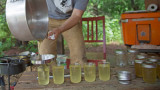
Butchering & Processing
How to Make Bear Grease

The practice of making bear oil has diminished over the last century. Cheap, grain-based oils and our society’s rapid movement away from field-to-table eating has lessened the value of this wonderful, multipurpose fat. But I think it still can find a place in modern homes. Bear oil has many non...
Clay NewcombMay 20, 2020
Read MorePlay Now
Cooking Techniques
Video: How to Make Bear Grease
I’m really passionate about the correct way to render bear fat. In this video, I’ll show you how to do it. The story of bear oil (or bear grease, as I like to call it) is rich with folklore. Some say it can cure baldness and arthritis. Others say you can use it to forecast the weather. Still more...
Clay NewcombFeb 1, 2021
Read MorePlay Now
Butchering & Processing
How to Predict Weather with Bear Grease
You can make bear grease by heating the lard off a bear until it liquifies into a usable oil. It’s highly valued because of its stable shelf life at room temperature and numerous applications. I’ve personally cooked, conditioned leather, lubricated metal, and made lye soap with it. Other folks use...
Clay NewcombMay 28, 2021
Read MorePlay NowConversation
Save this episode