How to Catch Trout in Fall
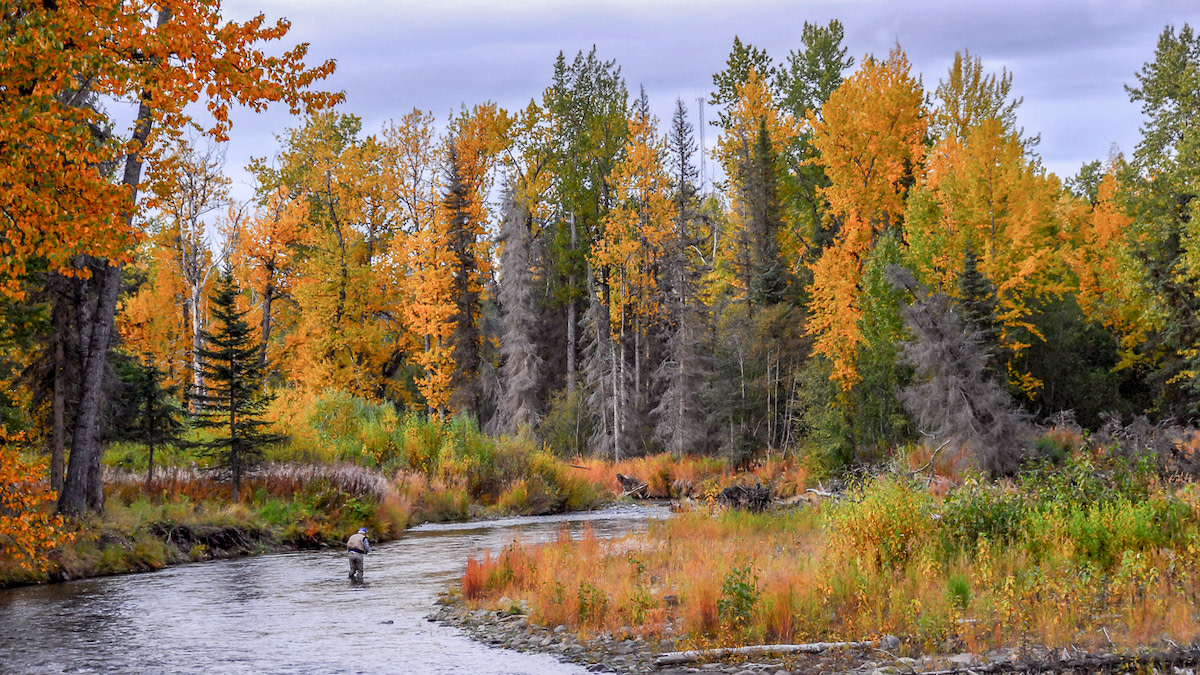

Autumn is a time of transition. A time when the world decelerates from the frantic slathering on of sunblock, cookouts on the riverside, “don’t forget to bring your bathing suit” days of summer, into the cold, crispy days that kickstart the heavy blanket of winter. It’s a time for lighting the first fire in the fireplace, wearing comfy sweaters, watching horror movies, pumpkin spice everything, and most importantly—catching big trout.
Fall fishing is the stuff that dreams are made of if you’re a trout fisherman. The water in fall is low and clear, making fish and potential fishing spots east to find. Brown and brook trout are getting ready to spawn and become extremely aggressive while trout like rainbows and cutthroats are energized by the cold water and less wary of approaching anglers. Best of all, almost every type of trout in the water is feeling the approach of the oncoming winter and will begin to gorge themselves on anything and everything. This makes bait, lure, and fly selection much less of a hassle, but there are still certain techniques that will help make sure you can cash in on the fall trout bonanza.
Dead Drifting Baits
Dead drifting is the most common and probably most effective fishing method for fall trout. It consists of casting a baited line out into the river and letting it drift downstream freely with the current until it’s inhaled by a trout. It’s best done with a centerpin rig, which is a long light action rod partnered with a large drag-free reel, similar to a fly reel. Because the reel has no drag, it can be left to free spin with the current allowing your bait to travel downstream along bank edges or even down the middle of the river, completely unimpeded.
If you don’t have or want to buy a centerpin rig, dead drifting can also be done with your standard spinning reel or even a bait caster. For the spinning reel, simply cast the bait out into the current and then open the bail so that the line can freely unwind from the reel. When a fish hits, drop the rod tip, snap the bail closed, and then set the hook! With a baitcasting reel, set the reel to freespool after casting and let the line run with the current, switching it off and setting the hook when you get a strike.
Setting up your dead drifting rig is a simple thing. First, attach a slip bobber to your mainline by threading the line through the length of the bobber. Then tie on a barrel swivel, which will stop the bobber from sliding too far down the line when you’re casting. Tie a length of light 6- to 10-pound test line to the other end of the barrel swivel. The actual length of this line will vary depending on the depth of water you’re fishing, but it should be long enough so that once you’ve finished rigging, your bait will end up drifting around 3 to 6 inches above the bottom. Next, attach a small split shot directly below the barrel swivel so that the bobber hangs vertically in the water, and add a couple along the line to make sure that the bait hangs above the bottom. Tie on a small size 10 to 8 octopus or bait hook and you’ll be ready to go.
As far as bait for a dead drifting rig, you can use a variety of things. From nightcrawlers, maggots, and mealworms, to small minnows, live or dead smelt or sculpins, they’ll all catch fish. In rivers that have a lot of spawning salmon or trout, fish eggs or egg sacs can also be a good option. On an unfamiliar river, it’s best to bring and use a variety of baits until you find one that really starts getting hammered.
Fishing with Jerkbaits
To this day, the largest brown trout I’ve ever caught came to my net on a jerkbait. It was on a cold October morning, and I only had a few hours to fish when the monster smashed into my lure on my second cast. I’ve been completely obsessed with fishing them during the autumn ever since.
Jerkbaits are great lures for large, baitfish-hungry, fall trout. They’re simple to use, can be fished with a lot of different trout-attracting actions, cover a lot of water, and imitate a variety of different prey that big fall trout love to devour. Now, there are a lot of different types of jerkbaits out there, but your best bets for big fall trout are the Original Rapala, the Husky Jerk, and the X-Rap. All three lures can be cast and ripped along the shore, twitched and paused through the current, or cast out on a tight line and allowed to swing and swim naturally in the current. Fish them with a light- to medium-action spinning rod strung with 6- to 10-pound test line so you’ll be able to feel any little tap or massive arm jerking strike that aggressive fall trout may throw your way.
The best places to fish jerkbaits are in areas of transition. Sharp drop-offs, deep undercut banks, the slow water at the base of rapids, and around large boulders and log jams. Any place where a large hungry fall trout could be laying, waiting for a passing baitfish or smaller trout to line up in their sights.
Casting Streamers and Nymphs
Fly anglers can also get in on the fall fishing action. While there may be some small mayfly or caddis hatches happening during this time though, which can be incredibly fun, your best bet to really get into the trout is by using nymphs and streamers. Both techniques present flies beneath the surface that play on the aggressive nature of fall trout while still giving you plenty of options should the fish be keyed in on something in particular.
Though not the most productive method of fishing, casting streamers in the fall is the best way that you can catch a truly big trout on a fly rod. These fly rods should be heavier than your traditional 5-weight to both easily cast the bigger and heavier flies and to control and land the larger more powerful trout you’ll eventually hook. Your best bet is to use at least a 6- or 7-weight rod strung with a full sink or at least a sink tip line. Fish streamers on these lines with a heavy 2- to 3-foot section of 10- to 15-pound tippet which you’ll be able to set hard and fast into the mouth of a trout—or the rock or log you mistake for one—without losing your fly.
Streamer patterns for fall fish should be large and gaudy, which will work better for attracting large and gaudy fall trout. My favorites include the Drunk and Disorderly, the Sluggo, and the Kill Whitey, in bright and garish colors such as yellow, orange, chartreuse, and white. These large bright flies will trigger a large fall trout and cause them to absolutely smash the streamer. You can also use smaller streamers that imitate baitfish like dace, smelt, and sculpins during the fall. Your best patterns for this include the Clouser Minnow, the Game Changer, the Conehead Muddler, and Lefty’s Deceiver.
Fish your streamers the same way you’d fish jerkbaits by targeting areas of transition. Strip them quickly across the tops of deep pools, drift and twitch them along undercut banks, and slap and jig them down in and around structures like log jams and large sunken boulders: places where big predatory trout like to hide.
Nymphing in fall is best done with a longer 10-foot long 5- or 6-weight rod that will give you more control over the long drifts required for the technique. Use at least a 9-foot long 4X to 2X fluorocarbon leader and tippet that won’t spook any trout in the low clear water of fall. While you can fish your nymphs by simply sinking them and letting them bounce along the bottom, I’ve found it best to also use a strike indicator during fall which will better detect the often subtle strikes. Attach the indicator so that your flies will drift half-again as deep as the water you are fishing (i.e. if you're fishing 6 feet of water, set your indicator at 9 feet) This will keep your flies in the strike zone longer, and although you may get snagged up a time or two it’s the perfect depth for putting your nymphs in front of as many big fall trout as possible.
There are a lot of options when it comes to nymphs for fall trout fishing, but I’ve found that bigger is usually better. Large stonefly patterns like the Girdle Bug and the Copper Back can be especially effective, along with attractor flies like the Copper John and the Frenchie. You can pair these large nymphs with smaller, more realistic patterns as well such as the Pheasant Tail and the Hare’s Ear by attaching them to the shank of the larger flies as droppers, doubling your chances at a hookup. In waters with spawning trout or salmon, egg patterns like the Nuke Egg and the Glo Bug can be great options as well.
The best places to fish nymphs are at the heads and tails of long pools where large fall trout are likely to gather to feed or are preparing to spawn. It’s also a good bet to run your nymphs with a heavy split shot through any fast-moving, deep runs behind shallow gravel bars. This is a favorite place for big fall trout looking to pick up eggs from spawning fish or large nymphs that have gotten caught in the current as they head for deeper water.
‘Tis the Season
Whether it’s bringing in the harvest, filling the freezer, or simply gathering around the table with friends and family, autumn is a time for reflection. A time to look back upon the past year and find value in our efforts before settling in for a long winter. This perhaps is the greatest reason to go trout fishing in the fall.
Whether you use these techniques or not, when you’re standing there in the river casting away, surrounded by the brilliant foliage of the season, reflected in the gently flowing water gliding past you, it’s almost impossible not to look around and appreciate all that you have. When it comes down to it, that's really the best fall trout fishing technique, simply going out to the river and just enjoying your time on the water in the most beautiful of the seasons. Because while trout fishing can be fast and furious during the fall, you’ll soon find you don’t care whether the fish are biting or not.
Stay in the loop with The MeatEater Newsletter
Shop
Shop AllRelated
Fishing
How to Catch Still-Water Trout
Fishing
How to Catch Late Summer Trout
Freshwater
10 Best Streamers for Trout
The comments section requires Functionality cookies. Please enable Functionality cookies in Cookie Settings to view this content.