Identifying Big Woods Bedding in the South
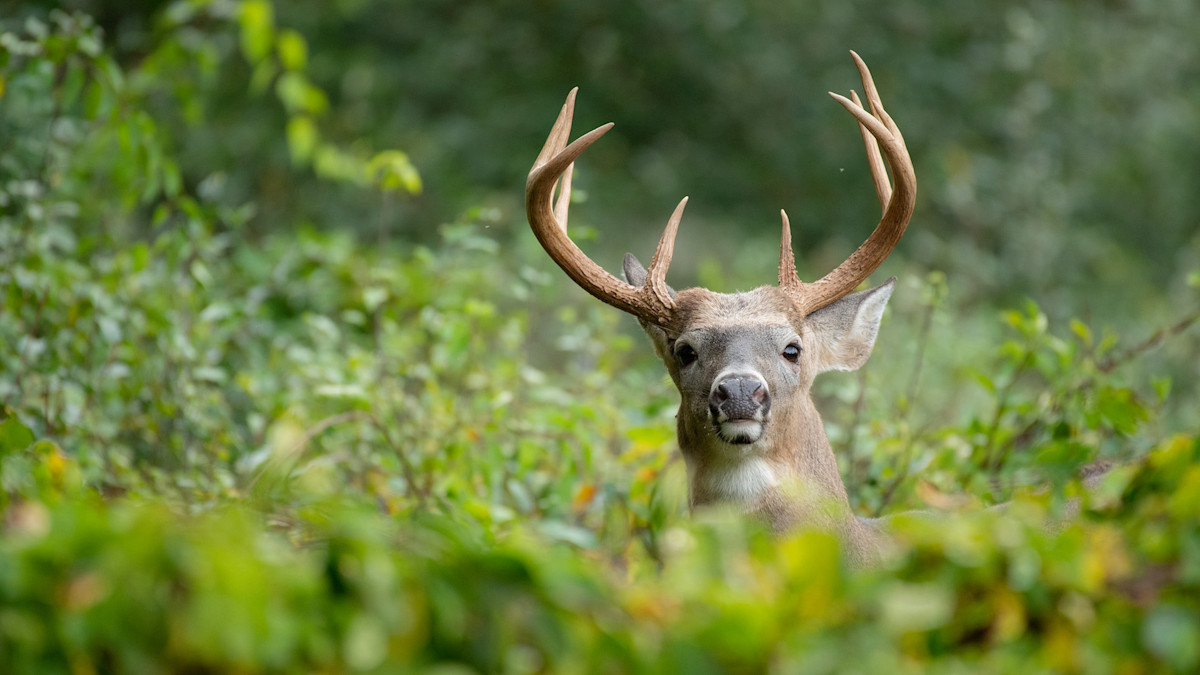

If you live and hunt whitetails in the deep South, you’re familiar with the excess amount of bedding. On one hand, it provides plenty of cover and food for dense deer populations. On the other, it presents a regionally unique set of challenges for chasing whitetails.
It’s a double-edged sword. More cover and food means more deer, but it also means more chances of getting busted and more cover options for big bucks. You can see why access and encountering a mature buck gets a little tricky. This becomes especially true for big woods hunting in the South. And while locating general bedding is a great start, you’ll need to locate the bestbedding areasand specific travel routes going to and from them. Whether you’re a Southerner or a snowbird planning arut hunt down South, here are a few things to know about whitetail bedding areas.
Drop the Assumptions
No matter where you hunt, you’ve likely heard sweeping statements about how deer act. One of the trite but valid critiques about hunting media is that it mainly addresses a very specific type of terrain and region (ahem, midwestern ag country). While tips for hunting in the heartland might not be an exact blueprint for killing a buck in thebig woods down Southor many other places, there are plenty of deer habits that translate no matter where you hunt. In fact, you might imagine the southern big woods as the upside down to midwestern ag country. Instead of sparse bedding and miles of crops, you have smaller tracks of open woods and endless swaths of potential bedding.
For instance, if you’re a southern hunter, you’ve probably heard, “Deer won’t bed there, it’s not thick enough,” or “Yep, there’s a big buck bedded in that thicket.” Both are absolute statements, and they’re far from gospel truth. They might be true sometimes, but not always. The truth is, if a deer feels comfortable bedding in a certain spot, then they will.
The Obvious Spots
In the land of the pines, clearcuts and young pine stands make up most of the general bedding. They provide food, discreet travel, andthermal coverfor whitetails, and they’re easy to spot when you’re scouting digitally. While young clearcuts (2 to 6 years old) offer prime bedding areas, much older stands that haven’t been thinned (10 to 15 years) will hold deer for the same reasons too.
Because large cutovers and pine stands stand out easily, a lot of hunters gravitate toward them. However, it isn’t enough just to find one and set up next to it. You’ll need to locate specific travel routes, rubs, scrapes, etc., around the edges to find the deer movement. You can narrow down your scouting by locating places where these clearcuts or pine stands meet at least three different habitat edges.Observation sitsfrom a distance can also show you how the deer enter or exit these bedding areas.
Privet Patches
Chinese privet is an invasive plant that was introduced as an ornamental shrub in the nineteenth century. Unlike the native savannas prior to European contact, much of the South has sprawling acres of Chinese privet that covers fields, pine stands, and creek or river bottoms. it really thrives anywhere there’s an opening in the canopy. It’s a pain to fight, but it does provide bedding andlate-season foodfor the deer.
This season, I was scouting some new ground when I spotted a small, lone privet thicket on the edge of a creek and bumped a buck out of it. It was the only patch of cover within several hundred yards, and it was just big enough to hold a few deer. On closer inspection, I noticed several fresh and historical rubs in this bed, and of course, this patch was located next to a blowdown that created an opening in the canopy. These spots can be easy to overlook and often require boots on the ground, or bumping deer, in my case.
Ridge Points
These might seem obvious in other regions or hill country, but in the flat, monotonous woods of the South, they seem insignificant to the untrained eye or even digital maps. I even hesitate to call them ridge points. Honestly, they’re more like hilltops or knolls, and you might walk right past them.
If there’s any highpoint that overlooks an open creek bottom, you can bet there’s deer sign on it. These spots can provide bucks with a visual advantage, and they're often overlooked here in the South because of the plethora of thick bedding that’s available. There have been several occasions when I’ve beenscoutingand either found beds or bumped bedded deer from theseterrain features.
Canebrakes
A lot of creek or river bottoms throughout the South have canebrakes, or large or small cane patches, that can provide cover for deer that wind along the edge of waterways. Like Chinese privet, deer don’t need much to feel secure. If you’re scouting or still hunting and come across a cane patch in the middle of a creek bottom, spend some time glassing before blowing right past it. In fact, that’s a good rule of thumb for anything you might suspect to hold deer.
Narrowing down large bedding areas might seem daunting, but all that bedding is good news. Boots on the ground will help you determine where you need to set up, and if you happen to bump a deer, don’t worry, he’s heading to the next patch of cover. In the South, thatain’tvery far.
Feature image via Matt Hansen.
Stay in the loop withThe Wired to Hunt Newsletter
Shop
Related

Scout
How to Hunt Edges in the Big Woods Down South

Scout
Breaking Down the Big Woods