Popular searches
Articles
Series
Topics
Shop
Recipes
This Country Life
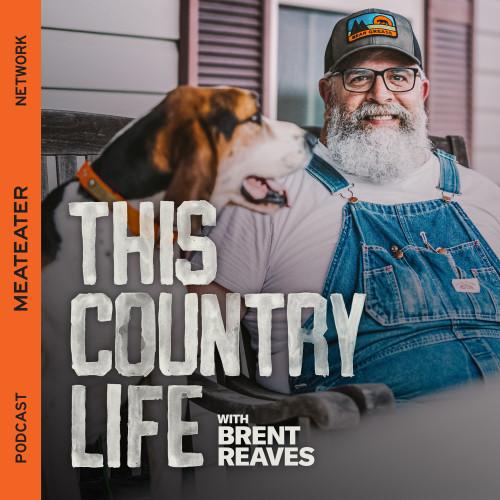
Ep. 167: THIS COUNTRY LIFE - Old School (Part 1)
Play Episode
20m
Brent's going old school this week. We know, big shocker, right? He's a walking example of "old school", but he's got some interesting takes on his definition and some stories that we think you'll enjoy hearing. Stoke the fire and sit a spell, it's time for MeatEater's "This Country Life" podcast.
Shop Bear Grease Merch
00:00:05
Speaker 1: Welcome to this Country Life. I'm your host, Brent Rieves from coon hunting to trot lining and just general country living. I want you to stay a while as I share my stories and the country skills that will help you beat the system. This Country Life is proudly presented as part of Meat Eaters Podcast Network, bringing you the best outdoor podcast the airways have to offer. All right, friends, pull you up a chair or drop that tailgate. I think I got a thing or two. The teaching old school. The term old school usually conjures up antiquated ideas and ways, maybe even clothing from a bygone era that most consider outdated. My wife will tell you quick that rumbingon through my closet is like taking a trip back in time, and according to her, it's a bat trial. But in my opinion, there's lots to be said for those tried and true staples of practicality and function that far surpassed fashion and style. I'm gonna talk about all kinds of old school today, but first I'm going to tell you a story. It was common old school practice where I grew up for folks to occasionally take it upon themselves to burn the woods off. Now back before timber companies put their force into regular burn cycles and management plans other than harvest, the locals would help them out and do it themselves. Now, the old school term for that was burning off the woods. The new, more acceptable and probably accurate term for that is called arson, and it's greatly frowned upon, and for good reason. Control burning has been an important forster to for a long time. During certain times of the year, a good burn helps control the amount of litter build up. And by litter, i'm talking about leaves and limbs, dead timber, anything else that will burn, not trash. But when all that stuff is left to build up over the years, it could burn out of control and to the point of becoming a wildfire where timber damage and property loss or higher risk. By staying ahead of those conditions, you can avoid all those problems. There's plenty more advantages to burning, like regenerating growth, shifting soil nutrients, and removal of undesired plants. That's just to name a few. So with that in mind, let me take you on a journey back in time to what I was just a lad. It was late February and had been unseasonably warm and my Dad and I had slipped down to the Slain River bottoms to see if we could catch a mess of fish. We stopped on a bridge on the lower Potlatch Road to fish. Now, there were two main roads that ran through that area, the Lower and the Upper Road, with the upper road being the major avenue for hauling out timber, as the lower road was closer to the actual river bottoms and could be flooded from the many sloughs and creeks and boughs that criss crossed along the way. Potlatch was a timber coming in South Arkansas that owned a huge portion of the woods that we liked to hunt in, and the roads were built for hauling out harvested timber. When I was a kid, that was the biggest place on earth. To me. That was my Yellowstone, my Bob Marshall Wilderness, and it represented everything that was wild to me. The Yellowstone might as well have been on Jupiter. And I never even heard of the Bob as my friends and Bozeman referred to it. For that matter, I never heard of Bozeman either, But I thought there was no way that they'd ever be able to cut all that timber and we'd have that place to run around in forever. Now, this was way before leasing, and folks honored deer camp claims for deer season, but that was it. Every other cretter that bumped around in the woods when it wasn't deer season was fair game to everyone, and there was no place that was all limits. Now that didn't apply to wild hogs, however, But that's a whole other podcast. But that's the way it had always been, and as far as I knew, that's the way it would always be. I would eventually learn that I was wrong on both accounts. But on this day, all the old school rules still applied, and Dad and I had stopped on the Lake Slough Bridge on the lower Potlatch Road and went fishing. We walked up and down the bank and fishing beside cypress needs and had caught enough fish to fry up a mess for the two of us. We scrouned around the barn and duck some worms to fish with, because no one had crickets yet and we had a bad hankering for some fried fish. The plan was to catch some fish and fry them up wherever we caught them, if it was at our first stop or our last one fish was on the menu, and we didn't take the boat, but we did take a coal bucket, some charcoal, corn meal, a skillet onion, taters, oil, and a jug of sweet tea. We were on a mission to eat fish, not go fishing. The slew was up and running water, and it didn't take long for us to catch them. As a fish. We cleaned them pretty quick, and Dad had me to build in the fire while he cut the taters up and got the fish mealed and ready to fry. Now I was working at a fevered pitch and could taste those fish we were about to cook already. Man, it's going to be good. I'd cleared off a small spot beside the bridge and off the road on a dim logging road, a trail, really, and I'd kicked away the leaves, sitting the coal bucket down and getting the charcoal doused with lighter flood and lid. Dad was sitting on the bank of the slough cutting up to taters when I lit the fluid soaked charcoal that blazed up like a volcano. I backed up and stared at how high it was burning, and I didn't pay attention to the lighter flood that had run out on the vents at the bottom of the bucket and had caught the leaves on fire that I hadn't kicked away. Augusta wind later, and the fire had crossed that old dim trail and was lighting the fuse on a huge cane thicket. For anyone not familiar with switch cane thicket, play on me to pontificate they grow tall and thick, and when they're green, he came't burning with napalm. But when they're dead and dried out like these were, they burned like Daffy Duck in a Buck's Bunny cartoon. Strike a match and poof ashes and smoke, They're gone. I took off my jacket and I commenced a whooping the flames that were burning around that charcoal bucket. When I saw Dad jump up from the bank of the slough and see that cane thicket explode in a wall of flame, his eyes were big and bugging out of his head in horror. I'd only seen him that big once before, when a few years earlier I nearly killed him with a truck. But that's a story for another day. Dad Dad broke off a big pine limb and started thrashing that fire in a feudal attempt to stop it. It was no use, and he and I both knew it. He kicked the coal bucket over toward the area that had already been scorched to bald earth and chunk the bucket in the back of the truck, along with every shred of evidence that we'd been there. The fire had traveled so far away from where it started that you could really feel the heat from it. But man, you could see it and you could hear it. That cane was the head of a huge cane and briar thicket that went on for quite a ways and had grown up that thick as a result of the timber being cut many years before. It's probably five acres or so. And by now it was roaring pretty good, and the dried cane stalks popping with when they built up with gas, and the holi sections like somebody was shooting a gun. It was a pie pole, pile pile. You could just hear it out there. The good thing was, after about thirty acres or so, that fire had nowhere to go. It was surrounded by Lake Slough on one side, which was wider than the road we'd driven in on, and another fork of Lake Slough that joined a quarter of a mile or so in the direction of where the fire was headed. There was nothing we could do but leave, and we did that with the reckless abandon Now that may sound terrible, but my dad knew that far wasn't going anywhere. But he also didn't want his son to be branded an arsonists at such a young age. That's a moniker you should earn on purpose, not on accident. Anyway, we scadadled and went to the house, which wasn't that far away, and I watched that smoke. As we got further and further away, it was like the whole world was on fire. I fretted about that fire, and for good reason. I'd made a mistake, and I was inattentive to everything that I was supposed to be doing. Building a fire was only half of my job. I was also responsible for making sure it didn't burn where it wasn't supposed to. Attention to detail is what wrecks just about everything, or the lack of it, I should say. I kept pestering Dad for us to go check it, and not long after we got home we went back just like every criminal returned to the scene of crime. We did take time to get the charcoal bucket and everything else is out of the truck before we went, just in case we ran into somebody. But it was in the middle of nowhere, and there was no logging going on, and there was no hunting season going on, so the chances of us running into anybody was very remote. The smoke had decreased from what had been an hour ago, and we could see that it was running out of field. Dad said, it'll be on the bank of Lake Slough before long, and that'll be the end of it. You learned a valuable lesson today, son, And it could have been costly, maybe even deadly, but it wasn't, and that's a good lesson to learn. I felt better about it. The main thing I felt better about was my dad wasn't mad at me, and I hadn't destroyed someone's home or hurt anybody. He said, let's go home and eat some fish. Well. Dad pulled down in that old logging trail where it all started, and even the charcoal had burnt to the point of blowing away in the wind. He backed out in the road and stopped abruptly, causing me to turn away from that big flume of smoke and see mister Junior Williams's truck pulling across the lake slow bridge and ride up beside us. Mister Junior was a family friend, and he had some running dogs and would hunt with Dad a lot, and I'd known him all my life. Mister Junior was a good man. Mister Junior raised chickens, and my dad was his serviceman for years. But raising chickens wasn't mister Junior's only job. He was also the Arkansas Forestry Commission's county forest ranger for Cleveland County. In other words, he was the wildfire police. And he was pulling up beside my Dad's truck and rolling down his window. I was going to prison and would never again see the light of day. I would never make it to junior High school, and I would never taste a fried bluegilt brim again. My life was over. Hey, buddy, how are you, Junior. I'm good. Looks like we got a little smoke going. My dad said, yeah, it looks like it. I was mortified. I knew it any minute that our very own Columbo of the Woods was going to slap the cuffs on me and haul me off to comings prison farm, the state penitentiary, where I'd be sentenced to life in the electric chair for burning up thirty five acres of pot lash's cane thicket. I was doomed. Time slowed down to a crawl as I prayed for my dad to take his foot off that clutch and get us out of there. That fire ain't going nowhere, is it, buddy, now Junior? It ought to be about burnt out, but now lake slough goes all the way around it. Yeah, yeah, that's right. Probably a good thing at burnt now, mister Junior said, it's rather than this summer. When lake slough's drying, it could get out. It wouldn't stop until it got to the river. Man, it wouldn't be a camp left down there. When he said that, I wanted to die. It made me sick at my stomach. I knew all the folks that had camps down there, and I had been a guest, and most of them. I glanced back at that smoking. When I looked back, mister Junior was looking at me dead in the eyes, and he said, Brent, did you burn them woods up? Sweet? Jesus, I'm called. I just sat there, looking back at him and waiting for him to pull his pistol on me. Dad turned his head towards me and said, well, answer the man. Now I'm betrayed by my father. I'm going down. I gathered up all the gumption I had and I said, I cannot tell a lie, mister Junior. I did it. He started laughing and hitting his hand on the steering wheel. Dad started laughing, and I wanted to cry, and just about to when mister Junior said, Buddy, that boy is as crazy as you are. Dad said, its sure is, Junior. We're late for dinner. I'll see you, and with that we took off. I barely heard mister Junior say bye before we were making tracks toward the ponderosa. Now I've always thought that he knew we'd done it. After all, I did confess to him. I didn't lie about it. But there was a lesson learned and one I will never forget. And that's just how that happened. Old school. It can describe a lot of things, but the main message I get from it is it's a if it ain't broke, don't fix it kind of vibe. There may be a better way to do things that are better and more time efficient, but time to me these days is measured in joy. I can sit down with a wet rock and a case pocketknife and sharpen it all evening, just slowly back and forth, honing that blade to a razor's edge, and I could use any number of sharpening tools and have it done in a matter of minutes, which is more efficient, but not nearly as satisfying or relaxing. I used to sit and watch my dad sitting in his recliner doing the same thing with the very Arkansas stone that I use. I couldn't wait to learn how to do it, and when I did, it's something I enjoy. There's something therapeutic about it. Maybe it's the sound or the motion that connects me with the past and those memories of watching my dad do it. It's a cheap and harmless pastime and it serves a purpose because a dull knife is more dangerous than a sharp one. I gonna say that again so the folks in the back can hear me. A dull knife is more dangerous than a sharp one. You don't agree, well, hear me out. My brother Tim and I were rabbit hunting one Saturday afternoon when I was fourteen. We were walking up some old ditches and briers tickets on a friend's farm a couple miles from Eys that was covered up in cottontails. We shot two or three when another one busted out on my side of the ditch and I shot him, but I didn't make a killing shot on him. It was in the middle of a soy being filled, and there wasn't a tree or a fence post within a quarter of a mile to knock his head on. So I pulled out my pocket knife and I was gonna quickly give him the old coop of grad to the throat. But my knife was so dull that when I tried to force it into the spot where I needed it to end it quickly, I had to push extra hard, and it slipped from where I had it intended and jobbed it into the palm of my hand that I was holding that wiggling rabbit with, and it sunk into my hand about two inches. I laid my shotgun on the ground, swapped hands, and gave the stock a love tab with that rabbits knogging and ended that portion of the suffering. But I was now bleeding like crazy, and rightfully so, seeing as I had just stabbed myself. It was a common phrase of my mother's every time you or your brother opens a pocket knife, you cut yourself about one more time, and I'm going to hide it from you. She wasn't wrong, although this time I had stabbed myself instead of cutting myself, which could be considered a technicality. Tim said, Mama's gonna be mad at you. Well, we ain't gonna tell mama. I looked across that field and there was Clement's Grocery half a mile away, a country store that friends of our family owned, and where Miss Billy Ruth Clemens would be working. I'd get her the doctor on me and that'd be the end of that. Take me to the store, Tim, Miss Billyruth will fix it up. So that's what we did, and that's what she did. She boiled it out with some proxy. I'd dabbed some kind of ointment on it and bandaged it up with galls and tape. I swore her to secrecy, and we went back hunting and killed some more rabbits. Now here's the lesson. If my knife had been sharp, i'd finished that rabbit off in short order. Never hurt myself, and it was my fault that it had all happened anyway. From the poor shot to the dull knife, two creatures had suffered. Needlessly shoot straight and keep your knife sharp. Some would say that even toting a knife is old school, and I've talked about it before, and y'all know the regular listeners anyway, But for the new folks, I carried two knives, and one of them used to be a loner, for that sad sack that I would run into that asked to borrow a knife instead of being a man to begin with and having one of his own. I wouldn't loan out my case knife because someone that doesn't care enough to tote one ain't gonna use my good one. So I carried a loaner. There was anything but a case Now. I got tired of toting the loaner, so I stopped. Now. I didn't stop carrying two pocket knives. That'd be weird. No, I carry a case knife in both pockets now, and I don't loan either one of them. That's old school and may be a little selfish, but I'm drawing the line in the dirt and it stops right there. What doesn't stop is my affinity for most things old school. And we've just scratched the surface here today. So how about we continue this next week. Well, Brin, I think that's a great idea. Now, this is my favorite time of the year. With the holidays and hunting season and full swing, I'm spending lots of time in the outdoors with folks I'm partial to, and that makes all the difference in the world. Take the opportunity to invite someone who may not normally have the opportunity to get a chance to do something in the wild, and opportunity maybe all that person needs to shine. I promise you'll get more out of it than they will. I thank y'all for listening and would appreciate it if you shared our show with other folks you think might like it to Until next week, this is Brent Reeves signing off. Y'all be careful
Presented By
Featured Gear
While you're listening

Firearms
Smith & Wesson 1854: New Gun, Old School

Smith & Wesson has been around for nearly two centuries, so you might assume that the new Model 1854 is the resurrection of a much older lever gun. In fact, Smith’s new offering is the very first modern lever action rifle the company has ever produced, and it’s only been out for about a year.
“185...
Jordan Sillars
Jul 2, 2025
Read More
Play Now

Waterfowl
Old-School Duck Hunting Hacks That Still Work

The good old days of waterfowling weren’t always good. Anyone who’s waited out a cold rainstorm on the marsh wearing waxed cotton will tell you that. But we have lost a few old-school duck hunting tips and tricks along the way that are still more than relevant in a world of GORE-TEX, spinning wings...
Matthew Every
Oct 7, 2024
Read More
Play Now

Big Game
America’s Worst Hunting Laws: Part 1

A century ago, our wildlife in the United States was in serious trouble. Unregulated market hunting led to near extinction for many popular game animals, from ducks to deer. Fortunately, early wildlife conservation pioneers like Theodore Roosevelt and Aldo Leopold recognized the urgency of the...
Brody Henderson
Aug 30, 2019
Read More
Play Now
Save this episode
Conversation