Bear Grease
Ep. 9: Bear Grease [Render] - Ol' Slew Foot
Play Episode
1h04m
On this episode of the Bear Grease [Render], Clay Newcomb is joined by the regular crew, minus Gary Newcomb -- however, the empty chair is filled by his wife Misty and her banjo.
The crew has fun by playing some live music including a cow bell and bear baculum. They talk about Clay's inaccurate pronunciation of the word "pronunciation" and have a conversation about acorn soup. They give Dr. Daniel Rupp the floor to expound on his contribution to the "Searching for Akerns" podcast and discuss how Clay had to be vetted before he could call Mr. Roy Clark. You'll get a real behind-the-scenes look into Bear Grease and hear some insightful commentary on the two episodes "Searching for Akerns" and "Fifty Years in the 'Baccer Field."
00:00:00 Speaker 1: Yeah, my name is Clay and Nukeleman. This is a production of the bear Grease podcast called the bear Grease Render, where we render down, dive deeper, and looked behind the scenes of the actual bear Grease podcast. This is all pretty new, so I wanted to restate what we're doing. You're listening to the bear Grease podcast, which is a documentary style podcast about people who lived their lives close to the land. Every two weeks we produced such a podcast and it includes multiple interviews stitched together to form a robust story. On the off weeks, we released the bear Grease Render and that's what this episode is. Render is a metaphor for taking solid bear fat and rendering it down into a liquid. This is where myself, along with a group of folks distill and dissect the previous documentary style episodes. It's bear Grease unplugged, So get ready for some fun on this one. All right, welcome to the bear Grease Render. We're singing this song in honor of the Clark family over in East Tennessee. Mr Roy was on fifty years in the Factor Field podcast. This song is called Old slew Foot. We got Missy Nukem on the banjo, Brent Reeves on the washboard, Josh Spellmaker on the guitar, Daniel Ruf on the cowbell baculum, and Mr Melcott Nichols on percussion. High on the mountain top, Tell me what you see, bear tracks, bear tracks looking back at me. You may get your rifles, boss, before it's too late. Bears got a little big, and he's hated for the game. Oh he's being around the middle, and he's grown across the front, running ninety miles an hour, taking thirty feet and jump. He ain't never been caught, he ain't never been tre Some folks say he's a lot like me. WHOA, I thought you're gonna sing with me? Josh Mry saved up for money, and she bought her some bees, started making honey away up in the trees. She cut down and trees. But the honey's all gone. Old slue foot done. Ain't himself at home. Always big around the middle, and he's trought across the front, running ninety miles. Now we're taking thirty feet and jumping. He ain't never been called, he ain't never been treating. Some folks saved he's a lot like me, all right, winners, coming boys winnowers coming at its sporty be low rivers, froze over. So where can he go? We'll rot him up the holler and we'll put him in a well, shoot him in the bottom, just to listen to him here. Everybody always big around the middle. And he's roight across the run, running ninety miles an hour. Take can thirty feet a jump. He ain't never been called, he ain't never been treated, ain't had nobody after him like me? Whoa it's ever been cold? He ain't never been trained, he ain't never been caught. I can't I got can I can do a little Redlyn Hey, Welcome to the Bear Grease Surrender Podcast. The bear Grease Render. This is the second. This is the second Bear Grease Surrender And for those of you who might be new to this, here a little show. The bear Grease Surrender is where we render down and distill the documentary style podcasts that are the bear Grease Podcast. So the bear and because this is new, we gotta explain, don't you think, Dr Dan, I feel good about it. So the every every week the Bargrease Podcast is a documentary style narrative storytelling podcast where we explore culture, where we explore all kinds of interesting fun stuff. Right. The Beargrease Render is where me and my merry group of men and one lady who I will be introducing soon these podcasts. So we've had two podcasts that we're gonna talk about. But before we do that, I've got to give proper introductions. Okay, Um, last time you guys would have met Brent Reeves, who is Uh did you guys know that Brent Reeves was an undercover narcotics agent for many many years. He looks he looks like my man crush on you, just like quadrupled. Brent Reeves is my spirit animal. What that is actually equates to is that he is a professional liar. True. This goes back to my panther story. True story. When I first met Brent, I was like, I wasn't think I was. I was sort of joking, but I was sort of serious. I felt like he may have been working under cover for like the Arkansas Game and Fish Commission to try to infiltrate and bust me. And I was like, dude, I got nothing to hide. That's what everybody says. That's what everybody says. But Now, had you actually thought I was an undercover cop, I would have been really bad at it. Well, see, I thought that was the genius of it. You come in and you're like, man, I used to be an undercover in narcotics agent. And then I would be like, well he just told me a stick. You see what I'm saying, And now I'm a full time Game of Fish agent. And then we have Josh Spillmaker. Welcome Josh. So Josh is just my longtime buddy. UM got lots of funny stories about you, but I couldn't really some of them can't be repeated. But between you, we've also got Dr Daniel Roupe here. Dan is a Highlight guest today because he was on the Acorn podcast. He was the feature academic guest on the podcast Searching for Acorns and uh, man, I thought you did a phenomenal job. And we'll get we'll get into that later. Unpaid. You feel discriminated against because you say acorn? I do do you say acory? I think it's interchangeable, probably the code switching cod switching son of a gun. What you say is a pledge of allegiance interchangeable exactly. No, Hey, did you guys know. Did you guys know Daniel Rupe speaks fluent Mandarin Chennese. Do you know my wife minor Dian Mandarin? I did not, she can't speak all. Damn. Here's my here's my question for you. How do you say bear grease and Mandarin Chinese bear grease would be show ma. That's actually panda Yeah, talking about taking it up a notch clay, and I see one of those mounted in here. I think that's panda oil would be the dynamic equivalent. Wow. Now, just like in like a very short snippet, talk to me about tonal languages. So I was mesmerized in one time at a bear camp around the fire? Are you talking about tony language? Guaranteed to mesmerize everybody. But you can have like the same like m a ma, or like we would say mama, that same word ma, ma ma. They're four different tones, and each one means a totally different thing. So one is horse, one is immediately, one is tumor, one is you know. And the crazy, most frustrating thing is there seems to be very little cooperation in context. If you're talking with a person who's fluent in Chinese and you accidentally use the wrong term tone, which is like me every five seconds and you're you're saying, hey, you know I like that immediately, I'm sorry you have a tumor. Know I wanted immediate. You have a really large I'm not talking about tumors. It's very So they repeat back what she said, like almost to show you that, because it's important to get their language right. Well, it's like there's a different word for everything in that. Well, no tonal language, man, that's like, we don't have tonal like other tonal languages. Yes, there are Arabic tone. I don't know the answer to that. Yeah, we used tone all the time, but it's like to communicate emotion or a question. I kind of at the end of the sentence, you'll go up. But they used tone means meaning, and then hey, speaking of tonal languages. This the most fascinating thing. And I'm not getting ahead of myself. We're still in introductions because there's still two guests yet to introduce. But I want to bring this up. This book Southern Mountain Speech by Cratis williams if in the most intriguing thing about fifty years in the Backer Field with Mr Roy Clark, is his accent, Like I just like hearing the man talk. And this book talks about how mountain people sometimes well they use that well I was going down through there to really emphasize and they elongate the endings of sentences and bring him way up. And Mr Roy does that all the time. Are we talking about the podcast? We're not. We're still in introductions, Josh. I'd like to just say, Eric is not a tonal language. Googled it. Okay, Okay, So we're going to come back to this because I want to. I want to talk about the reasons why the content that is in that podcast is in it. Okay. So to directly to my left, Dr Maliki Nichols, how are your brother? What do you think of that music? It was? It was nice, It's nice live. I don't think I would drive home listening to it. It okay, that's to say it. But you were a part of the band I was, I was representing Percussions. Yes, yes, would I've been invited back next week? I don't know you were able to listen to the podcast. So I know you've got some meati stuff to say. Some media. So some acorn meat, specific acorn meat that was actually a phrase he just showed us. Yet we'll get their introductions. To my to my to my right is our guest of honor. This is my wife, Mr Newcom, who all you guys know, but Misty, Misty is for many reasons qualified to be here. But she's been on the Beargrease podcast. We've said a couple of times the only person that's really not qualified to be here is Josh. He hasn't been on that actual Beargrease podcast, but everybody else has. But Misty was on Death of a Bear Hunter has been one of the probably the most talked about of the podcast to date. Probably my specific contributions, it was Misty went with me at the end. Do you guys remember we were down into where we believe Erskine's grave to be and we've got some commentary. So Missy, how are you? I'm good? Thanks for asking, nice spanned your work. Thank you, you're glad to be here. I'm very glad to be here. Mr Sporting her Farm Boots. Yeah. I want to say too that my dad, Gary Newcomb, was unable to come today. He loves coming up here. And uh a lady that was years old, that was quite influential in his career, passed away in the funeralists today and he couldn't get around that coming, so he went to that funeral. So well, no, it's a celebration, man, celebration. Golly, if you have ninety eight years old and people want to come to your funeral, you probably are doing pretty good. So get But hey, Gary Newcomb, there is like rumor on the internet of like a Gary Newcomb fan club people multiple Panthers. I think it's called the Black Panthers, the Black Panther Believers. Yeah, yeah, no, so uh, there's a couple of things I want to bring up that some some feedback that I got, Okay, and I want you guys to chime in with your commentary, so you know, on the Acorn podcast, and that's what we'll talk about first. Okay, we're gonna get to a point where we don't have multiple episodes to discuss in every Burger Surrender. This one we have to last Burger Surrender. We had a bunch more, but I had some guys hit me pretty hard for the way I think I was one of these people. Well tell me what you were going to say. I have no problem with your use of the whether you choose to to say acorn or acorn makes no difference to me. What I do have a problem with is the way you pronounce pronunciation. I didn't know that was a word. I always thought it was pronunciation like it was spelled. But apparently there's a how do you pronounce? Uh? Okay? Every people, many many people were like Clay great podcast say, pronunciation is totally wrong. I never even you didn't hear it. Pronunciation. Do you realize, yes, you say pronunciation, it's pronunciation. Pronunciation just a few miles south of him and we said pronunciation, I mean said pronunciation. Well, I know it's fair game, Like that's exactly the kind of feedback I need. I think I'm not going to change. Dr Danna Roupe can work with you on you would say pronunciation, I would. I guess I'm wrong. The way that I think about it is I don't I've never pronounced a word, and you know, I've been worried about the way I pronounced a word until now that I have to say pronunciation. Did you say you see where I'm going with us? Yeah? I thought you had a mini stroke because that that was one thing, that was one thing that came up um, hey, the people came out in droves to to leave reviews on iTunes for us, which is awesome and we we we I mean like I don't know, sometimes like you just want to do somebody a favor just for no good reason and uh and it's it's helped us and uh overwhelmingly like positive reviews. A couple, a couple not so positive. Did anybody stand up for me not having been on the Bargaries podcast? Yet nobody was worried about that. We think it's a silent majority. Yeah. Yeah, So to find those bad reviews, you'll have to go through and read all the other reviews. So you're not gonna read on well I thought about given I thinks too much credit to the bad guys, and people are gonna be like, well, let's leave a bad review. What happens if you read one and somebody's like, oh yeah, I never thought let me. So thanks to everybody that's listening that gave us iTunes reviews. That was really great Acron podcast. A guy sent me A guy from Amador, California sent me a private message on Instagram about this first nation tribe called the me Walks m I W O K S and there's this big and I believe it's sandstone. I'm not sure the type of rock that it is, but it's in this area that they used to camp and whatnot. And a lot of the Indians in California they they there's several tribes that milled acrons into flour and made bread. And so there's this rock, this big rock that's about as big as the the building here that we're in. And there were holes divots in the rock where they had ground acron flower for you know, presumably thousands of years. And so he he wanted to show me that. And there's an incredible video that was made in the nineteen thirties about making acron bread and it was you could tell it was like a real deal um Native American lady and it was in California. I'm not sure if she was one of the Mewalks, but there's a there's a video making uh bread from acrons. I think it's on YouTube. But this guy said his friends, one of his friends is a me Walk and he told his me Walk good friend about the acron podcast and he said, hey, this guy made his podcast about acrons. This is what his his friend said to him. He said. He said, well, he said, I told my mewalk buddy about your podcast, and he said, thank god, I don't have to eat my uncle's acorn soup again. I thought that was funny. Do you think it's pretty funny? I mean, acorn podcast searching for Acorns? What do you think, Malo? What do you think? Man? I? First of all, I've never heard you say acorn like acorn. I couldn't even get it out of my mouth. You haven't heard me say acre and you hadn't been listening, man, I've it's it's acorn. I just I was raised on acorn from Texas um and it's always been I've always heard it and pronounced it. Now now they can't even talk acorn. And I just thought it was so you. So you're like listening to that content like this would have been something totally new to you. You didn't even know there was a big issue. Yeah, I had no idea it was a big issue, right. I've was an adult when I realized it was a big issue, and I had actually, you know, and this is a conversation for another day, but I had been a little embarrassed about how my family was treated when they would talk in public up north, and so I had put a lot of effort into changing my accent when I was younger, so that people wentn't like snicker when I spoke. When I met her, she was sixteen years old, and the first conversation I had with her, I said, you're not from around here, really, and she said, yes, I am. And I said, really, where are you from? And she's you know, she told me the town, which is like five miles away. Was like, you're from there, like not, you didn't move there? And it was because code switching, code switching. And I went to drove by the school district with your wife, Christie, Christie Spillmaker, and I said, that's where Clay's mom works. That's Acron school district. And I had put all this effort into changing how I spoke. And she said, what did you just say? And I said akorn and she said, oh, that's funny. I thought that that was like the the thing that grew into oaks. I thought that was how it was spelled. And I said, what are you talking about. I had no idea that there was any I would have attempted to change the way I said it. At that point in my life. And Christie kept saying, are you saying acorn? And I said, yeah, acorn and and it was kind of like when you talk to a kid who thinks they're saying it the right way. Like my niece would say two deets and we would say, you say, she meant cooties. Anyways, we'd go back and forth, but Christine, I went back and forth and we could never figure out that. And it was a shock to me that that you were an adult before you realize And so what was the impact Maliki of like if you didn't know there was this thing going on? Like was it was it? What? What you what? Because you would be in the like so it's you know, yeah, I think you know. My general takeaway is that there's always something deeper, you know, you can't assume. And I think what what's you're getting at is that Southern draw that Southern culture, the way people talk. I talk different, Um, I'm educated, it doesn't matter um. And I think people when you hear me talk or here, certain things that people say, you automatically try to put them in a group. And I think inside of the podcast you you show and and also challenge people to think differently and that don't automatically assume that you know the full picture by just one person said what one person says, but at the same time also agree and also dabble with it being like a signal what people say, because there's there's different sex, there's different you know. I'm in education, so when people say different things, I kind of know their level of understanding. UM. But you have to use it appropriately. And I think inside of inside of the issue of acorn versus acorn, I think it challenges people just don't always assume there's something deeper, um. And usually that thing something deeper is people's history, right how they are raised. I think, you know, listening to your mom talk about Acron school district, it's like, I get where you where, why you say it. That's that's a history that's valuable that that can't you can't shun it off just because it's different than what you do, are different than what you've experience and what's interesting, Dan, I think you might get speak to this. But the the trend inside of a world that's massively communic communicating with each other, is to do kind of what Misty did to try to sound normal. I read about just yesterday saw watch the video on an island off the coast of North Carolina, Oker Cooke. Have you heard of that? And and they they had this like incredible, very distinct dialect that could directly be linked back to England and different things. In eighties, basically that dialect started to be lost because of television and kids moving off and outside influence, and you know it's I guess in some ways you kind of just have to decide, like what what has value? And I mean, like, I don't think anybody's I'm not necessarily I'm not staking my life on whether my kids say a corn or acorn, But I do think it has value. I do, and so I think we can. I think there is value in maintaining some cultural identity, like the pronunciation of that word. Pronunciation of that word has value because identity has value. And so like you say, um, the story of girls soccer, you know, in that story and how it's impacted your life, that has value and so maybe probably has more value than acren or acorn. So you would hope that that would shape your family, uh, and everybody. Essentially we all construct identity and we're all trying to have and maintain a stable I mean, we're all fundamentally insecure, and so we're all trying to accept. For Josh with that mustache. I got something to say about mustaches later. But we're all one a stable identity, and so we're we're always using things, all kinds of things of greater and lesser kind of value and worth, depending on your perspective, to make that identity. And then you in our world where we're so you go up north for the first time as a child, and all of a sudden, it's like, if I talk the way I talk in Hatfield, I get laughed at, and I don't want my family to get laughed at, you know. Or um, there's so many different things and you don't even think of it, you know, consciously you thought of it. But a lot of times as a as a young young child, if we want to fit into our family, then we talk the way they do, you know. Or as agers, if we want to rebel, we do things that our family doesn't do. You know. Yeah, yeah, that's incredible, man. And so in this book Southern Mountain Speech, this this guy was a professor at the university in Boone what is it, Appalachian State University, and he was. It's the first part of the book is his history. He's he's been gone for a while, twenty years or so. Basically he became this He was raised in rural Appalachia, and he noticed that when kids went to public schools that these kids came with like basically this fundamental way of communication that and he makes a case that that fundamental way of communication and grammar and pronounced pronunciation of words had been scripted for the last hundred and fifty years. When they went into public school, they were wrong and they were taught something totally different. And he felt like that it was stripping identity away from these people. And he he he basically was making a case for who's to say what's right or wrong? And he used it was interesting because he actually used the word bear as an example. He gave four different examples of the pronounce I can't pronounce four years old, I can't change, okay, the pronunciation of the word bear, and and I can't even say it the way he described it. But like way up north, they would be like bear. They had a way of sin they had and and then I would say like bear, like an emphasis on the air bear in east Tennessee. They say, bar, I can't replicate it, man, I mean like I feel like I am, like I love Tennessee. I wish I mean like I feel like I'm at home when I'm over there. I can't say it like Roy Clark and those boys bar bar do they say creek or creek over there? Creek is Midwestern, man, Creek is not Southern. He specifically said that. He said people in Appalachians don't say creek at a lot of people right me and say you could have done that on creek and creek and I was like, no, I've never said drink in my life. If you don't even get started on pecan, I'm not particular on that word. Really. Yeah, you put it on the bed at night. It ain't what you eat in the path. A beacon under the bed. Yeah, well, okay, you know what Daniel in that podcast, Daniel talked about community and the trust thing, and you you seek out people that are part of your community that you identify with. While I'm sitting there listening to that, I'm driving back from Oklahoma and I'm listening to that. When I was in basic training in four Still, Oklahoma or something in there with people from all over the United States. We all looked the same, we all got the same haircut. We everything that we have and identify with is just like we're dressed and clothed and outfitted identically identical to the other forty people in this barracks. And the only thing that about midway through, I found myself talking with these three other guys all the time. We were just kind of like we always if there was any downtime, we were always together. Nobody even thought to ask where we were all from. One guy was from Houston, Texas, the other two were from Tennessee, and I was from Arkansas. And we were the only people in there from the South, not one of the person. And we didn't go together because of that. We were drawn together because we all talked the same. And it was I never even though you found yourself just like drifting. I just read um in the last couple of weeks. I can't remember name of the author, but a study has been done like the underlying factors of PTSD and men and women returning from tours of duty, and the psychologists are big beginning to connect PTSD symptoms not too active duty like combat frontlines encounters but two, I was embedded in a community where we shared everything language, culture, We wore the same stuff, we talked the same ways. You're using the same lingo. And for the first time in all of these people's life, they were part of a home, like a social group that had integrity across its kind of members. And then you're removed from that, and all of a sudden, you have all these you're you're depressed, you can't sleep, you're anxious and there, and psychologists are beginning to say, yes, of course, you know, intense combat experience of our Uh, nobody's gonna argue that's gonna mess you up. But we underestimate the deep need that we have for what you experience and how wonderful that was, and we're just drawn to it. We want it. We and successful organizations, successful companies, they use language to create culture. They've got acronyms, they've got lingo, they've got even like your malacho you're talking about. In education, somebody uses certain terms. You can kind of tell what background they're coming from. We do this all the time everywhere. But we and we can, you know, have differences over but we don't realize how deep seated that need is you know what you know, what really when you're talking about that makes me think about you know, there's such a push in society these days for freedom. I want my freedom, I want to be able to do what I feel like I want to do, when in reality, there is actually a lot of safety and stability inside of having boundaries. People thrive inside of boundaries, and when you take away those boundaries, um, they feel unstable and insecure, and uh, it really is, it really is. Uh. In my opinion, it's it's a disservice to people to say you can go do whatever you want, just you got the freedom to do whatever you want. When I don't do that for my own children because I love them, you know, I give them accurate boundaries and I say, here's your boundaries. Inside of those boundaries, knock yourself out, you know, do whatever you want to do, but here's what the safe line is. And that actually those boundaries form their identity. Exact identity isn't just what this is what we do and this is what you can do, but it's also this is who we are not. Identity is formed by both things. And Bingo is the name of that dog. Boundless, boundless, identity is no identity, so there are no bounds on your identity. You have no identity. And of course, as as humans, just depending on kind of languages use it, we're kind of we're totally messed up, and so we do identity and messed up ways, and we take those bounds and they're highly counterproductive. But the answer is not necessarily, well, let's remove all the bounds, because you have no being a parent and being a law enforcement supervisor and supervising multiple officers in the undercover capacity and later on as uniformed officers, and my children, that everybody operates when they know what the parameters are. And I know if you get if you get too far out of the left side, there's repercussions, if you get too far out of the right side, there's repercussions with that. But if they stay in those parameters in there, that's where they operate best, and that's where life is best. You know, it's it's it's more structure. That kind of structure is really good. Here's my biggest takeaway from the exploration of this word, which in all honesty, I didn't know the answers to these questions that I said out to find like this wasn't some like, it wasn't some mastermind. No, I really like, you know, Ronnella made fun of me about saying acorn, and I you know, I've picked up now that that's a word that people kind of q in on, and so I was like, what's the deal. So, like everything I discovered on there, even talking to Dan was a discovery. And this is why I described it to him. It was almost spooky how familiar we were with what you said, Dan, just like like social groups and identification and safety and trust. It's like it's like you were describing to me and operating platform that I would have swore wasn't there because no one taught it to me quote unquote it it was never conscious but highly highly connected the saying everyone there's no escape from it. There there's nobody that doesn't identify in some way. But this is where I feel like the veil gets pulled back because like you talk about like these social groups that we connect to, and I mean, and I have no shame in saying like when I hear somebody say acor, and like I want to give my high five. Now that I'm old and realized there's a different. At first, I just thought normal people said that, um, but the that is an external identifier of people and they have stuff that they identify with that I do not. And by me identifying and having insight and awareness to my own self of what makes me feel comfortable and safe, I think that allows me to look into another person's culture who does something way different than me, and be like, I get it, Like to look into you know, I mean, and I can just say, like the opposite of rural culture would be urban culture, and like sometimes I would it could be confusing for someone in the inner city to look at rural culture and just be like, I don't get it. I just don't get it. I mean, you could take me, for example, like I grew up in a pretty big city, you know, hundred fifty thou um graduating class of seven hundred and coming into Arkansas. It's totally different than what than what I grew up on. And I think what you're describing is being able to see the value of people and being able to look at even though what they're doing is different, there is possibly something I can learn and that I can build and and and bring inside of my life. The only reason that I have a uh hunting license is because I watched you want to be on this podcasts you got your hunting license that just bought against you know, watching Josh and Clay, you know, go hunting with their sons, and you know, I'm never going to be the type of guy that wants to sit in a tree stand all day. That's just not my life. I place in his hand. Yeah that might work. But like watching you all what you do with your kids through hunting, I saw it as an avenue that I can potentially build inside of my life. And so I think it's important that as you interact with people who might say things differently, who might do things differently, you have to look and see, like what can I value from their life? What can I take away that I can build inside of my my own culture, something that I and that that I think that's a beautiful thing. And I think we have to challenge ourself to do that consistently. It's a it's it's a it's a spiritual internal discipline to be able to like the passion with which I say acorn and you know, wear cowboy boots sometimes and have mules and like it kind of have this identity external though, it be like I can look into somebody else that's and be like, man, they're doing the exact same thing as me. There's there's food that they like, there's words that they like, There's there's smells that they like, there's literature that they're like, there's kinds of people that they like, and they're doing the exact same thing as me, and I can respect. I can respect that, you know. So really that so my intent was not that the Acorn podcast would drive us deeper into our social group. You've created intense division. Now you have taken another thing and you or was wrong. You have polarized this nation. Know, my intent is that awareness is going to bring again. Really, man, I've said and I said it again on on the on the fifty Years in the Back of Patch podcast with Mr Roy, is that, like, my intent is not to highlight that culture and say that it's like the l primo culture of anywhere. Man, I I pray that somebody else is. And I know they are are making media about other groups that I don't have insight into that with pure intentions. My intention is not to elevate these guys too. It's just they're they're valuable. Their culture is valuable. How boring would this place be if we were all the same? Yeah, telling about boring boring? Yeah, overall companies would do good. Oh yeah, I have stuck in it. It's the tension. And it's like the tension between I want I want to have my really tight knit social group that are are similar to me and the same as me, but I love different things and I don't want things to be bored, and so like it's this tension and we're not good at living in the tension between two things. We kind of oscillate from one extreme to the other. Well, this is what this is. The truth is that as humans as the most conscious beings on planet Earth. Did you say beings? Beings? I'm sorry, I just wanted to make conscious diverged. Did you say, mam or my the most conscious being on the Earth. We have the right to complexity, like challenge. I challenge myself to be complex Like I love my culture. I do. I love it. I love it. I don't want to be anything other than that. I like it. But there's a complexity that can be built inside of it, a layer that's like, man, I bet if I love my culture, I bet that guy loves his culture, and I bet he's not that much different than me, and I bet he's a good guy. And it's complex, it's it's like it's like a layer, a layer deeper of thinking that I think it's real hard for people, but it's it's not hard. It's not hard. And obviously, I mean, I'm not saying, you know, there there are bad people in the earth. I'm not saying that we glorify them, but I'm saying as it pertains to culture, because our country really is and kind of like culture wars, you know, in a lot of different ways, because people are using these external identifiers, which is what you're talking about. Culture is an external thing. It's it's the things that you can see and hear. They're using these external definers to build silos between and to build draw lines between. And really what we should be what we should really care about, is the internal definers that people used to define themselves and to build their lives. And those are the things that matter the most. And you can talk to a guy from Appalachian, you can talk to a guy from a city, and they have two different external cultures and two different external definitions of identity, but they can also very much so live their lives by the same internal principles and build their homes by those same principles, and that those things are what makeup person. Yeah, you know, a desirable Hey, I wanna, I wanna, I want to. I want to spend the last little bit here talking about um the Appalachian Mountain Culture podcast because we're trying to get tied up. But Dan, I want to give you the floor one more time. Acorn podcast easily the star of the best one. Yeah. No, I I I think maybe like a mark of like a mark of maturity, will be able to know the bounds of your identity but see something that's different and can be able to celebrate. But it's so tricky because there are, like Misty said, highly negative ways of doing identity and going about it. That's a tough place to live this world. Yeah, Okay, fifty years in the Backer Patch backer Field Impressions. So I listened to that podcast twice? Did you the first time I listened to it? I have to say now, mind you, that my I married a woman who whose family heritage goes to southeast Oklahoma, and uh they are rural country folk. My wife's grandmother got married at fourteen. Um. Her first two houses had dirt floors. When we were one night, we spent some time talking with her about about what her life was like when years ago, and we said, what was it like living through the depression and she said, well, we didn't know there was a depression until someone told us it was over. And uh, that was just their way of life and so um. Even having spent a lot of time around my wife's family there, I I did not understand what Roy Clark said until the It was almost like I got fed the the rubery of how to translate it the first time I listened to it, because the second time I listened to it, I understood every word he said. Really, you had a hard time The first time I listened to it, I was and I was doing some work while I was listening to it, But it was like, I'm not sure what that what that whole string of words was. But the second time, it was like I caught every single syllable that he said. So I thought that was very interesting, just that that culture of speak, that dialect almost um, he he has this the most unique dialect that I've heard over there. It's interesting amongst even families. So he's got an accent within that accent, yeah, and I'm not I mean, anybody you talked over there would have a very strong accent to the average year. But Mr Roy's like, I would actually like to get somebody that, like a language specialists to like dissect some of the things he says, because it's just so unique. But now a lot of the things that I left in. Mr Roy talks for about fifteen minutes. He was just talking about his life, I mean, like selling tomatoes and tobacco, and I just wanted I just wanted them to hear him talk. And then he did tell some pretty wild stuff about they had a live bear. That was pretty wild. I gotta tell you guys. So I met Mr Roy through bear hunting, Like I went and I bear hunted with him and for three days and we made a film that's that did really really cool film on YouTube. It's called Best Bear Hunt. I think it's it's on the Bear Hunting Magazine YouTube channel. I think it's titled the Best bear Hunt beare Hound Hunting Film of all Time or something I was trying to do. But it turns out that it was. Oh, it was incredible films. So that's how I met Mr Roy. And man, let me tell you something. You don't just walk into East Tennessee and people just open their doors to you. They're just like anywhere, like there there. They never asked for attention. They didn't invite me to come to them. I when I first met Mr Roy, they wouldn't even give me his phone number. I had to go through somebody to get to Mr Roy. I communicated multiple times someone. So over the years, I've developed a relationship with Mr Roy. And I mean, he he he just has a way about him and it's hard to describe and you can't replicate it. Like you couldn't. I can't watch him and do what he does and me be like this. But he is like when you watch him interact with his family, when you watch him interact with you, you feel like you're the guy's best friend in the world. And here's here's the best example that I've many times. Several times I've stayed with them all day and ended up driving home through the night. So we might have hunted all day, and then once they got dark and we skinned a bear, I was like, fellas, I'm out of here, and had a twelve hour drive home. Mr Royle called me at two in the morning. Why you're doing alright, buddy? Making sure you use a weight. I just woke up. I was thinking about you staying away. I mean, just call me when you get home. I mean, little stuff like that, just normal. But it's like, uh, he makes everybody feel welcome. I can't tell you, like, uh, my mom, my mom is you know, she's known as the Queen of hospitality. And I watched people as a child that would come in contact with our family and the way that my mom would care for people and take care of them and do things that she know they would prefer. And as i've you know, as I was growing up, as I became become an adult, there's something very special inside of a culture that makes people feel valued. I was talking with my daughter the other night, and it's it's more than just making people feel comfortable around you. There is something lacking in the world that makes people at an internal level feel valued. And like Misty was talking about just a minute ago, because I don't care what you do. What you do doesn't define you. Who you are is what defines you. And when when you come in contact with someone who sees the value in you and cares enough to call you in the middle of the night. That's a pretty special thing. I mean, that's something that that's that's unique and rare and and and honestly quite quite beautiful. I mean, it's amazing what that does. And I think I think just just listening to that podcast and here and you talk about their family, it's like something that they've that they have uh cultivated inside of their little clan, and when you were able to come in contact with it, he realized the special thing they have. Yeah, the other thing that I wanted to bring up was what did you think about Britt Davis? Mr Brett Davis? Seven minute that seven minute interview. Pretty amazing he was when he bought his dad died, he was thirteen years old and grew a crop of tobacco and the farm that he lives on to this day. Literally And that's a heck of a mantel to put on a twelve year old kid. Yeah, they didn't. It wasn't like somebody said, hey, Clay asked Mr Britt about how he got his house that, because they would have done that, because they did that about a couple other things. They were like, Hey, asked him about this or that? Well, they told me to ask him about how the doct or. I talked about how the doctor in the community went around they put a white flag on their mailbox, and nobody asked me to It was just it was just normal and what was really neat from a like an interview journalistic standpoint. I did not come there to interview Mr Britt. Mr Britt is always there. He says very little, and I really wasn't sure how he would respond to me, like putting him on the spot, And so I got done interview in Mr Roy. And Roy is constantly trying to bring other people in for real, like if you're hunting with hounds, he's wanting you to put your dog out on the track. And he said, hey, you need to get you need to get bred over here, Brett, come over where, come over where down and they put the headset on Mr Britt. And I wasn't prepared to interview Mr Britt, And I think that's what made it so good because I just asked him. I was just like, what are your first memories? And you know he's and and and he just started talking and and yeah, and that surprised me. That was pretty emotionally listening to it. That surprised me because I ran into you know that his father had died, and I don't know, you just said you just have I did learn something. You have this sense that like a ninety year old man, like you could just ask him outright about his dad. That was my sense, and I hope it didn't come across as brash. I actually take out some of the spaces, like sometimes there's in normal communication will be a pause for emphasis on burgharas because we're trying to make it efficient. I take out a lot of stuff. So it sounded like I just was like, how'd your dad? How did you handle that? But really that was kind of some a little bit more thought in it. But uh but well, I know, as I was listening to it, I didn't want to feel rude the way it came with ross because because I said, how did it affect you when your dad died? And he he didn't say anything for probably four or five seconds. Yeah, yeah, you know, and that was he's ninety, he'll be nine. Well he's ninety now, he said. If I lift out June twod because we recorded it before then seventy eight years ago and he's still you know, I'm the same way and my dad's been gone ten years now, eleven years now. But his reaction to that was just like mine would have been six years ago or right after it happened. It's still, you know, a deep emotional effect that has guided him to where he sat from that day to where he's sitting right now. That was, you know what, one of the things that got him to where he is. So Mr Britt trunted with him every single day this year. Really. He drives a little Suzuki sidekick, a little four wheel drive and he he just rides around listen to the bear. You know, the guys have their trucks and they they the guys that are hunting or you know, it's a hustle. They're trying to cut off dog races, and it's just like it's pretty cool. Mr Britt stays on the radio and knows that country and and you know here he'll hear him say, man, the dogs are headed to cow Pin Pass. Well, he'll get in his Suzuki and head over there, and you get out and listen to the dogs. And he I'm pretty sure he told me he hunted every day with him this year that they hunted. So the Tennessee season has like you know, see three of three different seasons that are you know, however along but pretty pretty unique. Um I thought, so, part two of the podcast is gonna be about moonshine, Nascar, and bear hunting. It was all supposed to be in one podcast, and when I got diving into it, it was just too much. I really want to dive into moons shine because moonshine was it's handled. Listen, I'll forecast to you what's gonna happen on this Like people talk about moonshine hard liquor as if it's like candy. I mean, like even when you're in that country, like you see it on billboards and it's just this like playful thing, like, oh, moonshine. Well, Man, moonshine ruined a lot of families. I had a guy over there who didn't want to be on the podcast. I kind of tried to get him on and he decided he didn't want to be. But you know, he he told me, he said, man moonshine was like the meth dealers of that time. It ruined families. It and and so and that's one, like pretty dramatic extreme. But the other extreme is that that, yeah, moonshine, no big deal. And you heard what Mr Roy said. I gave you just a snippet as he said, I said, what do you think about liquor? And he said, I don't want anything to do with it? And he was real upfront and he wouldn't have said it if he didn't want, you know, he didn't. He just said it because it was true. He said, he said, some of my family stayed drunk their whole life, and I wasn't gonna be that way. That is why I like Mr Roy. I mean, nobody's perfect, but that kind of character was just like I made a decision when I was a kid, ain't gonna be like these guys. I'm not gonna have somebody take you have to take care of me. And then he and that type of character has only found when you go deeper. Right, you think about that region in that country. I think here, you immediately have ideas and thoughts of who they are. And you know, I bet if you pulled if you listen to that podcast up until that point, and you pulled a hundred people and you said, does this guy drink moonshine? Oh yeah, well how many would have said, yes, he does yeah, And then he was like, no, sir, I ain't touching this, very adamant about it. Now I'll confess, who are you drunk? When he was talking about those ferment and peaches in that barrel, yeah, I was thinking, now, how would it be bad to walk by there with a coffee cup kind of maybe take a dip out of that. I thought about that on the way up here, but that did come through your mind. Here's the Here's the cool part is that I go in quite quite a bit of depth with Dr Dan Pierce about moonshine, and when you hear the whole context, it makes a lot of sense. I mean, he talks about the Scots Irish culture. He talks about how they came here before they were laws regarding liquor, and then how the government came in and made laws that basically took the legs out. And basically when you see the whole thing, it kind of makes sense and you kind of get it, and you realize that maybe all these people weren't just bad peep and they certainly were not all drunks. I mean, like there there's there's many ways to look at it, but I feel like in this next podcast, we're gonna get a balanced look at it that doesn't glorify it, but also just just shows why it was there, you know, this artifact of these people being who they were, so it's very interesting. And then uh, Nascar is a big part of that. And then Roy Clark. I mean, like most of what we talked about in the interview was bear hunting, and so we're gonna dive into that a bunch more and there's a couple of other guests, and so part two will be it won't be me, folks, still not Josh, you're an Appalachian expert. Though, Hey, what about the music epic? It was pretty epic. I love how you can hear everybody in the background like, oh, like they're pulling everything together many room. Oh, I don't know. Yeah, yeah, we were the only people that weren't. There was a neighbor, a couple of neighbors they kind of take care of, you know, you get lumped into family. Yeah, there'll be some more music on the next podcast. But what do you think about old a belt Reid? Oh? Wow, that is a that's a treasure but that cool. Yeah, absolutely, I wanted to show her. You know, she like obviously none of us knew her anything, but she was a iconic Appalachian woman and banjo player, songwriter, and I called her a philosopher because she kind of was. Do you know when that recording was from nineteen seventy three, what what I mean? The stuff she was saying was just like how aproposed to today? You know? She was. She was very balanced and she there's quite a bit of recordings of her talking and I loved how she said She's she's not trying to go backwards. In other places in her speech, She's like, I'm not I'm not saying that we need to go back to these times. And that's how I ended the podcast, as I said, I am not. I hope people don't get the idea that like I am like lustfully looking back at the past wanting to go back, because that is not true. The only way to progress is to me, we gotta find ways to be relevant today, and that is my goal. Yeah. I think that that's even part of the bear grease, is that you're acknowledging the good and you're taking the good from these ancient things, but you're combining them together with progression, movement, forward advance. How did you think I ended the podcast? Ms nkem? Would you have done it any different? Always? Mr? Or Gary? This is like I give it a strong I'll give it. I think Gary gave to three right five stars my favorite podcast. No, I uh. I also want to say, as we close here and we're about we are about to close, I'm gonna get out of the South at some point. Like almost all the podcasts have been I know, dance all right, man, All the podcasts have been Southern focused. And honestly that was for No. That wasn't really strategy. I mean people have been like, oh meetings trying to get into the South. I mean, if that was their plan, they didn't tell me, and they and I could have done anything, you know, I mean inside the boundaries of what they asked me to do before they send you abroad or are they gonna are you gonna have some tutorials or workshops on how to an You know, Davis only made one trip out of Appalachia's whole life to see go to Texas. Yeah, that's about like me. You spent a lot of time in Canada, foreign country. Yeah. Um no, I just want to say that for people. I've had a few people be like, oh, you gotta get it, you know, just like is this all this is gonna be? But I tell you what, I've got as much feedback, positive feedback from non Southern people as anything. We are going to get out of get out of the South and do some different things, and all the negative feedback is from people at North. Yeah. It's gonna basically be us critiquing culture. It's gonna be me and Brent going around critiquing everyone else. No sense, what do you think? Uh No, really, thank you guys for coming the Bargary surrender, ton of fun, Thank you guys. Beautiful cowbell, Dan, beautiful percussion, Brent good, good job on the washboard, everything, um, and then leave us, leave us a review on iTunes. Man, I mean, just tell us the true woman. I mean, man, when I say that, I mean when you leave the South. This is this needs to be in the work show. Hey, this is what I was going to end on. And I'm not like, maybe I am trying to bring this up. But Joe Rogan, did you hear the compliment he mustache? Josh I did, and I was like, it was like, I'm so proud. I can't waiting for him to give you credit. That just the way we should ask, though. Joe Rogan is probably an urban dweller. How many mustaches is he exposed to? Hipsters have mustaches? Like crazy? Oh, getting the stink eye from Dan, Yeah, that came out of left field for me. Hey, hey, if if anybody from the Beargrease world doesn't know, check out the uh whatever episode it was on. I was on Joe Rogan. That was pretty cool. Pick it up. Check it up. Everyone in this room is totally unimpressed. They've never heard of Joe Rogan. Probably none of you have. Yeah, there was a lot of confusion in my family. It's kind of a big down when you tell your dad, Hey, dad, I'm gonna be on Joe Rogan and he's like, who she? Well, my son Hunter he was. He was very impressed. He's still impressed. He called me and talked to me about it today. Now that guy's what I thought that Clay was gonna I don't know the chain of events, but thought Clay was gonna do carpool karaoke. We just did that. What happened, Well, Hey, I really liked the live music addition to the Beargrease podcast. You may hear more of this kind of stuff in the future. Take us home, click Hi on the mountaintop. Who all right? Keep the wild places wild, because that's where the bears live and that's where we get beared greasy. High on the mountaintop. Tell me what you see. Bear tracks, bear tracks looking back, Get misty,
Presented By
Featured Gear
While you're listening
Butchering & Processing
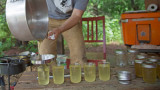
How to Make Bear Grease

The practice of making bear oil has diminished over the last century. Cheap, grain-based oils and our society’s rapid movement away from field-to-table eating has lessened the value of this wonderful, multipurpose fat. But I think it still can find a place in modern homes. Bear oil has many non...
Clay NewcombMay 20, 2020
Read MorePlay Now
Cooking Techniques
Video: How to Make Bear Grease
I’m really passionate about the correct way to render bear fat. In this video, I’ll show you how to do it. The story of bear oil (or bear grease, as I like to call it) is rich with folklore. Some say it can cure baldness and arthritis. Others say you can use it to forecast the weather. Still more...
Clay NewcombFeb 1, 2021
Read MorePlay Now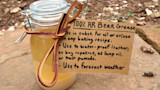
Butchering & Processing
How to Predict Weather with Bear Grease
You can make bear grease by heating the lard off a bear until it liquifies into a usable oil. It’s highly valued because of its stable shelf life at room temperature and numerous applications. I’ve personally cooked, conditioned leather, lubricated metal, and made lye soap with it. Other folks use...
Clay NewcombMay 28, 2021
Read MorePlay NowConversation
Save this episode