Bear Grease
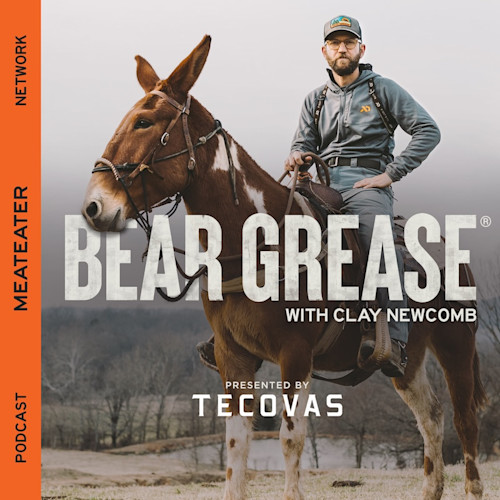
Ep. 51: Bear Grease [Render] - Mustaches, Bear Collars, and Wild Turkey Biologist, Jeremy Wood
Play Episode
1h35m
On this episode Clay is joined by Misty, Josh, Kobly Morehead and Arkansas Game and Fish wild turkey biologist, Jeremy Wood. The crew notes that Misty is the only person without a mustache so Josh brought her a stick-on-stache. Kolby Morehead talks about the Bear Hunting Magazine team in the campaign to raise money for a bear collaring study in Arkansas. Clay jumps on his soap box of picking up stone points on his own land, they discuss some new art he got of Warner Glenn, and a gift from Kolby. They all tell their favorite turkey story from the last Bear Grease Podcast. Then they jump into the issues surrounding wild turkeys in Arkansas with Jeremy. It's an action and information packed episode.
Clay onInstagram
00:00:00 Speaker 1: Yeah, my name is Clay Nukeleman. This is a production of the bear Grease podcast called The bear Grease Render, where we render down, dive deeper, and look behind the scenes of the actual bear Grease podcast, presented by f HF Gear, American made purpose built hunting and fishing gear that's designed to be as rugged as the places we explore. Speaking of big mustaches, if you notice in this room somebody is missing a mustache, and I think we should do something about that. You get to take your pick, so uh yeah, Misty. Misty is usually and today the only one in the room without a mustache. If you would who would make you feel better? If you would make it make you feel better. I've purchased months ago to make you feel welcome, and so you should feel So there's the food Man Chew, the Dolly, the Disco Brave, the lawn art con artist Roland Rowly, Rich Uncle Nickel bags. Yeah, Nickel bags. I'm not sure that food man Chew. I don't think I have a long enough chin. Yeah, I think you looked good in a number of those. So you get to take your pick. So this is a gift, so that I yeah, all right, you know I've always been kind of grateful to to not have ancestors. Welcome to the Beargrease Render Podcast. We have we have a very special guest today for real, like a real special guest. But before we introduced him, I'm going to Uh, I got a few things I want to show you, guys. Okay, Well, Missy's picking out her mustache. So Josh has bought her. Josh went to like a Dollar General or something and online retailer which we will is there official? Okay, so Misty's Uh, Misty's putting on her her stash so she'll feel see. I feel like you've made an excellent choice here. Okay, good, yeah, now, okay, this is gonna be pure chaos. Oh yeah, you look. You look amazing. You've never looked better. Misty as her as her husband. This is approved for this setting you feel about it might be like a waxing deal, you know, like the ladies do where they rip it off. That would be awesome. That would be awesome. So I've got a few things I'd like to I'd like to share with you before I introduce our guests. Now, guests, you feel free to chime in at any time. They're just if they hear your voice, they'll they'll just wonder who you are. I was out on the phone today. Do you know much about air heads, jeremy little bit stone points? I was. I was out today talking on the phone, walking through the mule pasture, and any time we get a big rain, I'm telling you, any time we get a big rain, if you want to walk out there, you'll find flint points. I found actually found two. But this is a broken it's it's half a point. And I really believe that was probably an actual erahead. Most of the points you find that are slightly bigger are adladdle or spirit points. Look good, it's really hard to take you serious. This is uh so, this is what what I have is the is the half and the two corner notches. But that's pretty that's a that's a really nice yeah. And man, I'll tell you what. When I saw this, you know what I did. I picked it up and took it back to my office with me. Yeah. I'm kind of on a little bit of a tangent about people saying don't pick up stone points if you're on public land. You can't. It's a law. And that's like, you can't pick it up. That's okay. If you're on private land or can cannot, cannot pick up artifacts or really anything off of private on publicly, that's okay. But I've had some kind of people say that you shouldn't pick up a stone point, and I I just it just doesn't make any sense to me, because if this were, if this were the fulsome site, if like, if people, if archaeologists here that I'm finding stone points in my front yard and they want to come to my house and do a full excavation, come on, man, we'll make coffee. We'll have you on the podcast. Like, if y'all want to do an archaeological dig in my front yard, you're welcome to. I don't think that's gonna happen because there's about thirty thousand other places that are more likely for this to happen. Are you with me? I'm totally with you, And I don't see the what would be the point of leaving what would be the point of leaving it there? Well, so the only point, and I agree with this, is that by taking something out of you know, they call it n C two when it's found at a point or artifact found just like it lays there's a lot of value inside of that for archaeologist. If you mess around with it, then a lot of the story is lost. But if that stone point is sitting on the surface and the next rain that's going to be in the creek, exactly what's the point of right and the legality of it? Now, if I was on somebody else's land and I didn't have express permission to take a stone point, I wouldn't. In every stone point I've ever found on someone else's land, I have gone and asked them if I could keep it, and that is the truth. Um. But anyway, I have quite the collection up here, Jeremy of stone points. Most of them came from my front yard down here. Do you feel like there's an inordinate number of stone points in that field? I think there's a couple of factors right here that are important. There's a big year round spring about a hundred yards from right here where we sit. Uh. There's also it's the intersection of two creeks on a little low spot down here. I think this valley had a fair bit of Native American camping activity. Um So, just the fact that it's a valley probably means that it had some maybe a little bit more than normal. But like the next valley over, I mean, there's nothing special about this one. Your neighbor found a pretty good sized stump point. Did he show you that which one? Oh? Yes he did? Yeah? Far away from here? Yeah, yeah, not far away from here he found note he founded the place. He didn't found it back in here. Um. But no, I feel like the most respectful thing that I could do for the human that made that was to pick that up and ponder about it. Yeah, absolutely, and show it to people. Yeah. So I just what do you think, Misty? Well, I think sometimes Misty thinks about pick fights. I mean, I just think I don't I don't love that when he gets all snippy like that. It's a soapbox, and everybody have their soapbox. He's got more than one. You know, everyone's entitled there as in you know, anybody can start a podcast. I did get on I did get onto my daughter the other day about being opinionated. Okay, we'll move on past. And I just want to say I I deeply respect the archaeological community, and I do not intend to disturb any kind of major sites. But I mean, like I put up stone points and people pick on me for picking it up, and I'm like, let me just say this. I think one of the Jeremy o our guest here has been has been thrust into I think one of the cool things that Clay does with those points. Though. I will just say this, since our kids were little, he would like show him to him and he would be he would tell him and the last guy that you're laughing because I'm on my stage. It's going to be difficult. Also it is um but he said he would always like hold up the he'd always hold up the points. Who made me like the last guy that held this was you know, sharpen In this for his dinner and he'd like make a little story for him about And I feel like that always gave our kids some appreciation for for the people who came before, and I think that's a value. It makes you feel like a part of the whole story when you do that, because it's a bizarre human experience to not get your food from the killing of an animal with a stone point. For real. You know, there's been it's estimated that like a hundred and eight billion humans have ever lived on planet Earth. Okay, right now, there's about seven point seven something billion people on Earth, So there have been about a hundred billion people that are no longer alive that have been on the earth. We've only been experimenting with this whole agriculture thing for about ten thousand years. For real. It's it's a it's a It could be argued, but it would be a legitimate statement to say the people who live in modern times are absolutely, absolutely experimenting with the way humans should live. Most humans that have ever lived, we're killing their animals with stone points. Great question, follow up, is the experiment working? You have to that's got yeah? Okay. So I hold in my hand a beautiful watercolor painting that's water color. I didn't know it was watercolor. Well, I don't know what it is. She painted this, I mean, come on, just go with it, Okay. I hold my beautiful water beautiful watercolor painting of Warner Glenn with the with the jaguar. So a well known artist by the last name of DeMoss. And I purchased this online. Yeah, and so if you type in uh Warner Glenn jaguar painting, you can get a reprint of this. And I'm going to hang this up in the office and so this image of this jaguar is the actual photo. I mean that that's what the jack, That's what Warner Glenn's photo looked like when he took the picture of the jaguar. But he wasn't but he wasn't, So the the author took some liberty to put Warner Glenn coming up there with his white Walker dogs. But Jeremy, so we we've interviewed and spent quite a bit of time with this old man named Warner Glenn. He's eighties six years old. He lives in southeast Arizona, and he was the first person in modern times to document a live jaguar in the United States. So he these jaguars. Does Arkansas have a jaguar biologist? If it was to be Myron means my Iron means is our jaguar biologist. He's my jaguar biologist. Um not my biologist. Uh So Warner has the original painting of this hanging in his house. Is huge. It is huge. I mean it's like six foot by probably five ft maybe bigger, maybe eight it's huge. But we were right in this country back in early March when we went to Warner Glenn's we made a film. And I mean, I'll go ahead and tell you there's gonna be a film come out about Warner Glenn. No, I really don't, but just gonna be incredible. He's eighty six years old, Jeremy and still rides a mule miles a year, just a bad to the bone, dry ground lion hunter. He really is living legend, Warner Glenn. That being said Kelly Glenn Kimbro his daughter. Uh sent me an email yesterday and Warner Glenn's oldest best dog named Hook died passed away. Hook was twelve years old. So we hunted with Hook. Yeah, yeah, he did, he did. And uh, Hook bade a lion in a bluff on let's see on like in early April, he bade a lion in a bluff and the lion jumped off a big cliff and Hook he didn't jump, but Hook went down after thee and the only dog in the pack. As I understood it, that went down in the in the end, the rock around that area is just incredible. I mean, like you could get in a bind in a hurry, and this line went off and Hooked twelve years old, went off with the lion and got down there and was baying the lion. They end up killing the lion and then it took Hook forty five minutes of just scratching up the rock bluff to get back up, and then later they had he was fine after that, but but later he just he had some not complications for that, but they had to put him down. But anyway, Old Hook, but I wanted to show you all that. What say on the podcast he said this might be his last well he said, he said this might be Hooks last year, and it might be mine, is what he said. Yeah, he said, me and Old Hook might go at the same time. So I don't think that's gonna happen though. Um hey, I wanted to show you all that. And then look at this. Colby made this for me. Before Colby made this for me, So this is a what is that watercolor? It is paint on painting. Cooby had dismayed. So you guys remember the podcast I did about white Tail Secrets, and I talked about this big deer that I've been hunting for several years that we believe is dead. Um, and we named him Jody, And I didn't tell why we named him Jody. There's a song by David Allen Co called Jody like a melody in the song, Oh, I wish we could sing it. I wish we could sing it. We don't need to do it today. But we can't sing that song. Yeah, we can't. But if they like melody, yeah, it's there's like if you listen to the song with the thoughts of a white tailed deer that just comes in and out of your life. Jody, like a melody you play inside my head fill the thought of you is more than I can stand awake and wait for you to come on my technicam and when you tell you know, almost lose my mind. Jodi, like a melody you want. So we named this Dear Jody so Kobe had been out like a white buffalo. It's something that legend. Yeah, all right, enough enough foolishness. We have a very distinguished guest with us today, Jeremy would from the Arkansas Game and Fish Commission. Welcome Jeremy. I told you we were going to cut up a little bit before before we got serious. Yeah. So Jeremy is the wild turkey biologist for State of Arkansas, which is a big deal. Um, so we're gonna I just wanted to introduce him. Do we get to question him later? This is the most this is the most hated man in Arkansas. What did you do? We're gonna he didn't know he's walked into a trap. No, no, no, no, no, we all got great. I mean I want to hear what have to say before that? Let me introduce all my guests. Misty n Newcomb, Misty Mustache Nukem No. Great to have you. Miss y'all know that. But I don't know if I can say this or not. Uh, I'm gonna be on the live podcast and in the Live Mediator podcast. It's next week in Bozeman, Montana, and I'm gonna have a special guest with me on the live podcast. I won't say who, but anyway, that's gonna be a big deal. Um so if it words for shadowing left, Josh Lambridge filmmaker. Great to see you, Josh. And if that special guest can't go, I'd be happy to go with you. All right. Good to see you, Josh. Here to your left a guest who's been on here before, but it's been a while. Colby Moorhead, Good to see you. Mane the bear Tex gonna be back so so Colby For anybody who wouldn't know Colby from my from my world, Colby runs Bear Honey Magazine. Facts. Don't talk to me about Bear Honey Magazine. Talked to Kolby. Yeah, I spend most of my life directing people to Kolbe. Yeah. Bear Honey Magazine For those who wouldn't know much about it. Baronni Magazine has been in print for twenty two years two thousand. Yeah, since two thousand, the only print Bear Hunting magazine in the world. Facts, yep, just the facts. Just take it or leave it. And um, the magazine described the magazine, what what do we have in there? Well, you know, it's just a beautiful collection of stories and information. If that's not a kind of polished no, it's uh, it's just a collection of just people's stories. We take some missions we have freelance writers and they just uh, they'll be tips and tactics and just stories and you really never know what to expect except that it's going to be very well produced and laid out. And then we'll we always try to tell the story visually as well, you know, as just do the written words. So if you're someone that likes to just flip through a magazine, look at the pretty pictures. That's cool. If you want to dive in and just read it cover to cover, that's cool. If you're just into hounds and just want to read that content and look at everything else, like, it really is something that if you're interested in bear hunting or just like to know more about that. You know, there's people that get it and never have intentions of bear hunting. So it's just a good just a good interface. But I would say that as a subscriber, it is some fantastic tactile bathroom reading m good. I don't think we want to know what that means. You can put two and two together. So I always tell people if you want to get into any kind of bear hunting, so Bear Hunting Magazine we've always tried to give the full gamut of North American bear hunting, which is interesting because a lot of times a species will be so isolated to one region, Like if you're hunting elk, I mean, you're pretty much gonna talk about the Rocky Mountain West if you're I mean, there's other species that are widespread, but the bear is the most widely, naturally widely distributed, big game mammal other than the mountain lion in North America. Chew on that, just chew on it. Then think about it. So pre European settlement, the most wide, widely distributed mammal in North America big game mammal was the mountain lion. They were just almost coast to coast from Canada to Mexico. Second second was the black bear. So I say that to say, we hunt black bear in the East and all these different methods, a lot of hounds, a lot of big woods, eastern deciduous forests, spotting stock stuff, driving dry, you know, doing drives in Pennsylvania. But then you get into the West and you have this big spot in stock type hunting. You also have hounds up in Canada in the boreal forest. There's it's so thick. Typically it's uh, you're you're hunting bears over bay. You can go to Alaska and have all kinds of different hunting. Come to Arkansas, you know, you hunt them over bait, spot and stock whatever. There's a lot of different ways to do it. So the magazine tries to reflect that. That's all I wanted to say. But Kalbi, so what we're trying to do. We're there's a there's a thing that Robbi Kroeger at Blood Origins, Yeah, at at Blood Origins tell us about what he's doing. Yeah. So there's a project he's wanting to help support the Arkansas fishing game. Especially it was specifically inside of the black bear research and so they're looking to expand and and really seeing how that's going to affect things. They're just wanting to learn more about the population of black bears in the and it's particularly with the southeastern United States where they United States, Southeast Arkansas where they well, southern the Gulf Coastal Plain of Arkansas was like the southern one third where they are now opening up a season yeah, yeah, further furthering out the previous drawn zones. And uh. Anyways, they're starting a fundraiser. They're trying to raise seventy thou dollars to to give to this project, and so they're having people open up their own fundraising and and help, you know, commit to to trying to reach that goal. And so what we're gonna do is Bare Hunting Magazine is gonna start a fundraising runner inside under Blood Origins that we're gonna be given away two different hunts to people. One is gonna go to the top donor they're gonna be able to pick between the two hunts. And then we're also anyone who donates even a dollar or whatever the minimum would be will be thrown into a hat to uh to get the remaining hunt. And so one hunt is gonna be a coon hunt in Arkansas and the other hunt is going to be a hog hunt in East Texas, and uh, that hunt's gonna be a lot of fun. Were riding around side by side with thermals and and doing some night hunting, could do some day hunting to but just get into uh, just some fun different activities that won't get in the way of your personal hunting season. So we're gonna be very flexible on on dates and we'll we'll be around you know, we're gonna be really uh going around your schedules. And so are you gonna tell who the coon hunts with? The coon hunt is with Mr Velty Smooth voice print reefs Yeah yeah, and then uh yeah, and I'll be at that hunt and so will the uh. David McDaniels, he's East Texas cam on on Instagram. He's going to be hosting the hunt with I think it's Foul Bore Outfitters and in East Texas. So basically what he's saying is that you go to the Blood Origins website and you click on the the Black Bear Fund Arkansas Black Bear Fund, and you're going there and you'll see a bunch of teams and you basically pick which team you want to donate money too. And so Colby saying, magazine Bear Hunting Magazine the the highest donors. So you know you could give ten bucks or a hundred bucks, or a thousand bucks or if you're Elon Musk and you know, billions, um you could buy. I tell you, I'm gonna make it offer Elon Musk right now, Okay, Meat Eater and me will sell him the Bear Greache podcast for one billion dollars. I'm gonna even just go above my pay grade. On sure you're authorized to. I know I'm not, but I think they would be okay with this. So okay, back on track here, So the pers that's only for Elon Musk, so no one else with a billion dollars. Good step, because think of what they would do with it. It could be anything. I'd trust Elon ye so so the person that donates the most gets to pick whether they on a hog hunt or a coon hunt with Brent Reeves. Yeah, and then the second person just entered into or anybody is entered into a draw. Really, they're they're they're raising seventy dollars, which is a pretty noble cause to give to the game and fish to buy tracking collars, to study Arkansas black Bears understand what's going on. Big deal. I love it. That's that's pretty cool. Hats off to them for working hard for that. Hey, before we go much further, I want to talk about the last Bargaras podcast. So it was it was quite different than anything we've ever done. We've never had just a compilation of stories. I think we had eight turkey stories on there, and U I've really enjoyed gathering the stories. I mean it was fun talk. Yeah, so all of you, most of you listen to the podcast, Josh, what was your favorite? What was your favorite one? Okay, so I I have a favorite story and a favorite part of the story. That's my favorite story was honest story. Yeah, because I just love I love that that idea of his wife. First of all, I love it when a dad takes care of his kids, so his wife can go do something. That's an honorable thing. And I found it interesting that the honest wife was gone for like nine hours and he was just like, I want to go to bed, She'll be fine. But but I love the fact that she got so excited about it and she was able to detail to him where the turkey was and then him going and kill it. What a cool thing. I mean, that's a great, great, great story of partnership. But I before before you go to can I can I comment on honest stories. I had somebody go, man, what a chauvinistic move to go kill your wife's turkey. He never made any mention of that, but apparently, you know, they had some agreement or something that you know, he was the one that was gonna hunt the next morning. And since that was recorded, Oh yeah, well, since that was recorded, Janice and his wife went out on their annual turkey hunt and they both killed turkeys like last week. So yeah, I thought that was a good one, okay. And then the favorite part of another Turkey Now, the favorite part of the other Turkey story was Andy Brown telling the story about the guy with the turkey on the other side of the log. And my favorite part of it is when he said, and I just Rich, what a redneck terri stuff underneath? I love it. Yeah, I could tell when he started telling that story. That's something I didn't He didn't tell me what it was about. He just said, he said, I got one more I'd like to tell you. And he had spoken in his like normal voice the whole time, and he said, there was an old boy and you know, he kind of like dove into kind of this character, you know, and uh, and started telling that story. And that reminded me of there's a there's a term it's using the Ozark's probably used in the Appalachians too, um, where words are sometimes uh like the plural of the word is is was warped like Ori Province when I when I interviewed Ori Province, this old mountain man out here, he said he'd clumb a tree, clumb past tense like wretched is past tense of reach. Yeah, past tense, not plural past tense. Yeah, they're applying standard English rules towards that we don't okay, is that what they're doing, Yeah, that's what they're because think about it, reach, Rich drug, what did what did Ori Province say, I clumb clumb clumb, I clumb the tree. Yeah anyway, Yeah, that that was I like that story Doc Robern about in Louisiana. Maybe actually they're they're applying irregular applications. Misty, Hey, that brings up, that brings up something I've been wanting to talk about. And we're not because we're gonna go right to Kobe. Um. But Jerry Clower we did an episode on Jerry Cloud and they constantly used the word that. What they were that which are daughter? They would say until she was like seven, I mean she was pretty old and and she inate Lea. They would say like, rather than saying, um, we're gonna take the car that we used to on Sunday but we're not, they'd say, we're gonna take the car what we used to drive on Sunday but now we don't anymore. That like constantly he used the word what where We would say that. Okay, Kobe moving right along favorite Turkey story, which sounds normal to me. I was like, what are we talking? What are we talking about? Uh? Man? I Like the general theme is it always involved someone else and there was a lot of perseverance inside like, I thought that was really cool. But my hat tip would probably go to Mr. Will. You know, just I could put myself in that story of just like I could. I could visualize that whole thing. It was like I was just there with him inside of it, and uh, it was it the way he told it. It was the way he told it, It was the relationship he had with the landowner. And then it was also like overcoming, like, man, nobody has been able to get this one for years and he's just going there and he's like, you know, I wonder if he just wasn't thinking what if I gotten myself into They didn't name this birden, I can't get to him, and so I was like, man, I'm like to work hard. What do I do? You know? And then just overcoming an obstacle and just you know, I just like the the whole kind of climatic the way that he told the story story. Yeah, and you know of all the Turkey's wills killed, which he's killed hundreds, bro, And you could just hear his humility inside of it. You know. I thought that was cool too. Yeah, he seems like a really humble guy. Cool. Jeremy, what was your favorite story so I got I got to and then but both basically kind of bowls down to one point. You know, I was listening to one of yours and one of Steve's, you know, talking about taking the kids out hunting and thinking about you know how literal you know, kids take a lot of things, so I don't remember it's your daughter or niece that you know, you know, yeah, you know taking out. I don't open your eyes, and like, did you see it? No, I heard all of this unfolding, but I was just like I couldn't do it. And then Steve's you know, thinking about his daughter and like you know, shooting in the head and I can't see the hen and he's telling me to shoot well and I can't talk, and I can't talk. So I got shoot here, and so I was like just trying to like just so call that in thinking, you know, six seven years down the line or more, you know, whenever we feel comfortable enough with our own son and be like, okay, you know, maybe we can try to get out here and try to take one, Like okay, you know, how do you learn from those those kind of mistakes? Yeah, yeah, yeah, you can take literal cues from those stories of what not walking through well? And then Andy Brown talked about his son Scott, who who didn't shoot a walk in Turkey? Remember that? And that was that was the exact I hadn't even put all those three together, but those three stories from Steve's story of his daughter shooting a turkey when when she didn't have a good shot because he had told her not to talk, so she couldn't tell him that he she shouldn't shoot, but he said shoot. So she's just like okay. And then to Mallory closing her eyes and we told her, turkey, you'll see the watch of your eyes. So she's like, solve that problem, closed her eyes. Turkey's come strutting in. And then too Andy Brown telling Scott, don't shoot a walk in Turkey. And so this turkey just just walks right and from anyway, go ahead, Jeremy, I had never connected those three. That's good, Yeah, but no, that that that was really it, you know, just like taking those lessons you know, the heart and like just thinking about me. They're all fun stories to listen to obviously, and then but yeah, just thinking that into my own personal you know, just buying Okay, how how do I how do I wordless you know, down the line when I'm trying to go through those same lessons, you know, be Okay, you need to shoot it in the head, but don't don't just focus like you know, just make sure you focus and you shoot it out the head. But don't if I tell you to shoot, you know, tell me if you can't shoot, or something like that. You see, what's the developmental thing that's going on there with kids when they take you they're concrete thinkers. They haven't developed abstract thought yet. So if you say, don't shoot a turkey walking, your dad really didn't mean that entirely. He just means if you have a choice, and the turkeys, like, yeah, they're taking it concretely. They don't. They're not picturing like they're just applying literal, concrete rules to this. And that's pretty much the way kid should take what their parents say during that period of their life exactly what I say, don't take any liberty of yourself to think on your own sort of Okay, my my my favorite story, I think, and and all of them had a lot of unique dynamics, but I liked most story and part of so there's when I just petition these guys to tell me their favorite turkey story. In my mind, a turkey story was good because of some dynamic hunting component or something like really exciting that was said, but or exciting that happened, like a turkey did something really wild. It was interesting for me to hear all the reasons why because I didn't try to coach him of like what why something would be good or bad? And Jannat and Steve both said, hey, our stories are like they kind of we're like, I hope this is what you're looking for. And I was like, no, you just you get to decide what your favorite again story is. And so it's interesting for Johannese because he's killed a lot of turkeys and had a lot of real exciting hunts and he tells us one story about his wife, you know. And then Steve has killed a lot of turkeys, had a lot of exciting turkey hunts and he tells the story about his daughter. I thought os was interesting. I like that his dad woke him up. And this is when Moe was an adult. His dad woke him up and said you might as well go. And that was a theme I know from talking to Mo that that was the theme of his His dad always used to say, I can't kill him when you're on the couch like that was just just go, let's go. And that's a good If you want to be a successful hunter, you just gotta go. You can't wait for conditions to always be right. His dad said, well, you thought you heard one that's better than all the ones. Yeah, yeah, And it basically two mornings, exact same scenario. Very unlikely. I mean, killing a bird and pouring down rain off the roost. I mean, I would say is a highly unlikely scenario to mourners row, same spot, same story. I mean, that would never line up, That would line up once in a lifetime for something like that to happen. I thought it was pretty cool. One of my favorite quotes from from one of the stories was Will Premost when he said he said it may not have worked any other day, but it worked exactly. That was good. That was good. All right. I hold him my right hand here the Arkansas Turkey Hunting guide Book, and so we're gonna talk. We're gonna talk here to Mr Jeremy. We're going to see if you have this memorize. I once knew a guy This is a true story. I once knew a guy and I can't say his name. He's still alive. I mean, he's not even that old. And he once handed us a book, me and my dad about ornithology, ornithology, birds, study of birds and uh. And he said he just handed it to it. He was trying to show us that he knew a lot. And he said, pick out any page on there and ask me any question. And Dad, I was standing there, that just picks it up, opens it up and says, all right, page one thirty three, you know the speckled belly winged Tarminger And he and he read verbatim like what it said about that. The guy just like a freak genius. And he said, I've memorized that book and he had, he at least convinced us yeah this was let's unless he had it rigged where you opened it up and your fer went to like the same spot. Long story. Okay, so Jeremy back to Jeremy man you are you're not from Arkansas, but tell me a little bit about your career and wildlife biology, like where have you been and how did you get here? Okay? Yeah, so I mean, yeah, transplant not not from Arkansas, from Massachusetts. Originally, UM went to the University of Maine for my undergraduate and wildlife coology and trying to figure out what I want to do in this world. You know, I hadn't figured my place by the time I finished my undergraduate degree, so I jumped around the country. I lived in Wyoming, Louisiana, Florida, you know, working with different state agencies, different federal agencies, universities, really trying to figure out my place in the world, and got into working with wild turkeys under Mike Chamber and their university UM. Early on, one of his grad students took a chance on me. I hadn't had any experience with game birds to that point, and you know, I basically got hooked at that point with turkeys and did that position. Jumped the next year, worked with another graduate student before I ended up getting my own graduate project under Mike back in So I did that for a few years, graduated with my master's from the University of Georgia, and then moved down to Florida, got with their turkey program. I was their assistant wild turkey program coordinator for about a year. When this opportunity came up here in Arkansas, and I took a chance and agency to chance. Uh so what year did you become the wild turkey? About? Just here here late summer? So it's my fourth season, fourth turkey season here in Arkansas, just out of curiosity. When you were in Massachusetts, what got you interested in wildlife? It was, you know, honestly, I grew up fishing. My grandfather hunted his whole life. I shot a little bit when I was growing up with him. Never got into hunting. And I went to undergraduate thinking, you know, I'm gonna go on the wildlife side of things. You know, I like to fish too much. I'm not gonna I'm not gonna do that, you know, and go for fisheries degree or anything like that. I'm gonna go go for wildlife because fishing is what I love to do. I don't want to ruin that by going going to work in wildlife. And next thing, you know, I got into hunting outside of um undergraduate, you know, early twenties. Once I graduated, I got into hunting, and it's you know, been but I love affair basically ever since what was your thesis on with so with Mike? So I looked at the reproductive ecology of female wild turkeys. So they're looking at nesting broodery and relation to small scale prescribed fires during the nesting season. You know, obviously a lot of that. Honestly, you know, very few nests are actually lost the fire. You know, there's at least in that in that system where I was at in southwest Georgia. I mean, they're managing it more for quail um, So they're talking about a lot of smaller burns, um frequent fires, and so they're burning on a two to three year fire returnat well, sometimes sooner it depending on the objectives and what they needed to do within that stand. But you're talking about acreages that may range from you know, fifty acres to a couple of hundred acres in size and a typical burn and they may be doing to three units a day if the conditions were right. We're working in long leaf pine savannah, so really open, kind of flat communities that you know, you let a match and you could get them to roll across that fairly quickly. But you know, in general, most of the stands of those birds were targeting to nest. You know, we're about a year to post fire and they weren't. They were still a year or more out from from having another burn rolled through there. So you know, we didn't lose a single nest in the study to fire. When would they burning? They're burning anywhere from January all the way up into June. Really give us a give us a rundown of the Arkansas turkey situation, because so two podcasts ago, you know, we talked with Mike Chamberlain and we always hear how Arkansas is like the poster child for the Southeast turkey decline. And so give us kind of a timeline of history of the Arkansas turkey population to the best of your knowledge, bringing it up till today. So you know, from from my understanding, basically, you know, if if we go back about a hundred years or so, you know, early nineteen hundreds, populations in the state were you know, hitting there about lowest points. By nineteen thirty, nineteen forties, they're estimated wo be only about seven thousand wild turkeys left in the state. Game Fish Commission was created in around nineteen fifteen, and you know, late teens, early twenties, they're already starting to think about, you know, what they needed to do with wild turkeys started setting seasons justin bag limits, though still incredibly liberal to what you see today. But they also started considering restocking with captive raised wild turkeys, you know, game farm birds, and they put those out for many years and wasn't really successful at all. Those birds didn't have the natural instincts, you know, to actually survive in the wild. They weren't used to predators anything like that. It wasn't until rocket nets were really picked up in popularity and that technique was developed in the late forties early fifties that you know, catching wild wild birds and moving this. That's when they would put out bait for turkeys. Big flock of turkeys would come in and they had rocket propelled nets that would shoot out and catch a whole flock of turkeys and then they take those turkeys transport them somewhere else. So that was in the night, so they were able and they were bringing turkeys in from other states or just other places where we had turkeys some other states. You know, we had some birds coming in from places like Missouri. I think we did get some birds from Pennsylvania at points um both captive reared ones and actual wild stock birds. But the majority of birds in the state actually came from Brandywine Islands, an island over I think it's Mississippi County in the middle of Mississippi River. Really good turkey populations over there, and so they caught a lot of birds there and moved them too different kind of refuges around the state where they were stocked. You know, early on, they let hunting still go and you know, realized that some of those situations wasn't working that well. So they got to the point where they started closing those areas for a period of years to allow those birds to naturally repopulate the area and expand. You know, I think they were estimating that they expand somewhere ten to twenty miles over several years um and kind of fill those those habitats at the time. And so most of that restocking was finished by the the early to mid nineties, though there were still so for fifty years they were really stocking turkeys. Yeah, and the majority of those, you know, they kind of focused in and around the national forest lands and large public lands because you know, early on the idea was that you know, wild turkeys were you know, they needed thick forest, not necessarily thick forest, but large expanses of forest, because that those are the areas that turkeys were left, you know, all these places that were harder to exploit. They hadn't really been harassed to the point that they were extirpated from the area like they were in a lot of other areas where there was there was more people and it was easier access. So you know, those early efforts focused there first and then built upon it. It wasn't until you started getting into the seventies and eighties and maybe the nineties where they started looking at what they considered these more marginal habitats where you had this more of a combination interspersion of kind of open land and forested habitats and realized that that's actually more of an ideal turkey habitats. And that's when populations really exped and and so the Arkansas turkey populations by the late seventies and eighties just skyrocketed. Yeah, they started to jump. I mean, I think there were some periods, you know, even back in the seventies and eighties that you saw these fluctuations where we had good numbers and then there were some bad years, you know, following poor weather events poor hatches, but in general that trend was continuing to to increase all through time, and we hit about the early two thousands, and that's when when things peak, you know, the late late nineties, early two thousands. You know, we ended up The highest harvest year we had was two thousand and three. The state we harvest had just under twenty thousand turkeys that year, and then there was we refer to that time period as the good old days. Yes, yes, that's what I hear off them. So twenty thousand was our biggest number of birds taken, Yes, yes, just under that. Now that that's always been an interesting number to me, because like Missouri, they might kill fifty thousand turkeys, Is that about right? Yeah? I mean in recent years has been a lot less, but I think at their peak, which was in and around that same time, they killed about sixty thousand turkeys up there, that's a lot. And I know you can't it's not comparing apples to apples, to compare to states. I mean, they had a lot of agg land, maybe more agg land than us. I don't know what about Mississippi. What would have there been their peak harvest numbers? I can't remember exactly what their peaks were, but you know, I think typically you see nowadays that they estimate somewhere in the twenty five to thirty thousand range. It was probably somewhat higher and higher than Arkansas that yeah, yeah, I can't remember what those figures were exactly, but it was probably you know, thirty five forty thousand something. Would Oklahoma not have had more birds than us even historically at our peak. Oklahoma gets difficult because you start moving into Rio Grand wild turkeys and the majority of the state and you know, basically your southeastern corner of the states where you're you have true Easterns and then they you know, they talk about this sort of hybrid zone between the two, but the majority of the kind of central and western portion of the states Rio, So it starts getting a little different when you know, it gets to that apples to oranges comparison. To truly say what's going on, I honestly can't couldn't tell you what their harvests look like through time. Yeah, well, it's kind of it's interesting to me when we talk about the turkey situation here in Arkansas, because really it's a pretty i mean, twenty years isn't that long when you're looking at wildlife management and looking at like a broad scale of animal population is going up and down. Um, And and humans including myself and Josh are pretty finicky when it comes to uh, turkey numbers. Um. I mean you can go from a three year period and people might say, oh, man, there's no turkeys anymore, and you know, three years before they were wearing them out, you know, but just to get just so so I can be clear on this, what you're describing is an enormous amount of effort to get turkeys, which was still lower than what are the surrounding states had at our peak. We were still smaller. Yeah, and that and the other states put forth the effort that we did. It's it's hard as far as restocking them. Yeah, so I mean mostly yep, yep, all these all these are this was happening across the country during this entire period. Um. You know, north south Louisiana to Wisconsin east, you know, the Maine in Florida, you know, all those states were experiencing these same declines, you know, in the early nineteen hundreds and then through time through the middle nineteen hundreds really started ramping up that um those efforts in restock, and I think Mississippi was one of those states that was was fairly early in there where they considered things to be successful and kind of complete. We we were right there, probably within a few years of what they would have assumed. And so you can't really, like me, comparing Arkansas Missouri is really not fair. I mean, Missouri might be bigger, I don't know, it just says a different habitats, so that's not really relevant. But I just kind of was trying to get like a bigger picture of because that was my understanding is that Missouri has always killed a bunch more than us. Mississippi is always killed a bunch more than us. What's interested is, you know a lot of people look at those bordering states, but I very rarely hear folks look south of the border. You know that they don't talk about Louisiana often. And you know, that's one of the things that I've tried to do since I got here was kind of take a look at that that landscape context. What are we looking at here in Arkansas? Because you know, people talk about that that twenty thousand birds, and you know there's some some interesting things, you know, in regards to what our regulations were like at that time to where we're at now. That that make it even harder to compare harvest to now to back then. But when you just look at the landscape context, you know, most of Arkansas are a larger proportion of Arkansas looks a lot like Louisiana, and I feel they typically harvest you know, about three to five thousand birds or so on average their estimates, Yeah, between their you know, game check and then their estimates you know on hunter surveys, their estimating right in that ballpark. So we're just a little bit above that. And then you move into Missouri and you know, obviously they're they're killing a ton of different birds. But you know, Arkansas is this unique mix of these different regional landskates all coming together. I mean essentially, yeah, I mean, you've got the Ozarks on the kind of the northern quarter of the state. You're moving down south below the River Valley. You know, that's a whole unique area. Then you get into the Washington Mountains below that, you've got that large pro portion of the states, the Gulf Coastal Plain, you know, primarily pine managed timber and then you move over in the entire eastern about quarter to third of the states that's really developed m agricultural land, bottom land laying around all these major river corridors. So you know that really the only remaining habitat out there is the bottom land tracks along the White Cash River, the Mississippi River, Crowley's Ridge, that formation. But outside of that, you know, it's essentially non habitat. So you know, that really restricts the amount of available habitat. And it's like the eastern third of the state at least, it's like pretty limited turkey habitat. I mean, what he's saying is just along the rivers and stuff. There's there's places for him. Um, okay, I want to I want to ask you. I want to ask you about three things. I want to talk about burning big national forests and specifically the timing of it. I want to talk to you about bag limits, and I want to talk to you about this is kind of like your personal opinion of what's what's going on, because I think there's a lot. So I'm declaring that. So ah, y'all canna help me stay on track, Okay, Oh, we'll help you. Yeah, yeah, yeah, Okay. So, man, I understand like anybody that's paying attention to wild turkey management has heard this statement and can grab onto it pretty easily. Is that burning helps turkeys more than it helps them. Yeah, maybe if fire would burn up and nests as possible, but turkeys can have another nest in the same spring. I'm just giving you the simple version. But what happens when you burn is that's one spring, and then the habitat has improved so much the next however many years that anything you lost during that one spring has gained so much more in previous years. Because Mr nukelem everybody where I grew up, everybody. This week I heard it from a guy. He said, Man, we used to have turkeys in the National Forest. Boy started burning all the timber in in April, burning up at turkey nests. That actually sounds like his accent um. And uh. And I didn't even I mean, I didn't even want to get into it with him. But that was that guy. And then I heard another guy who I deeply respect, who has a wildlife biology degree, who gave a little ramp the other day and he, uh, he said, I know all the benefits of burns, like you don't have to tell me about the benefits of burns and how it helps Turkey habitat. But he says, we're burning so late that we're inevitably burning up nests and inevitably putting birds at in a vulnerable place by having them to lay eggs again and make a second clutch. And basically he was like, yeah, I've heard all that stuff about good habitat, but we're still burning up nests and really compromising the hands ability to nest. Do you understand what I'm talking about, mister? I do. I'm What I don't understand is why I'm the fall guy for the person who doesn't know much in this particular tricky experts. Right, No, No, I don't. I just want to make sure you're following. So do you understand what I'm saying? So what's the truth? Man? So? I mean, you know, no to fires are created equal that you know that's the reality. And you know a lot of people that look at the national forests and you know what's going on there, and you know, you gotta remember that that's only a signy segment of this entire state. So the idea that you know we're burning up all the nests and that's what's causing population to clients in this entire state, you know, is probably a little bit near sided. I mean, they're they're not right there. Before you even get on, because that's a good point. It's like, it's not just on national forests that turkeys are scrambling. Yep, yep, exactly. That's kind of your point. It's like, well, then it must not be the fire. Yeah, not necessarily. I mean there there still is, you know, obviously issues. You know, most of the research that's out there these days suggest that there is really minimal loss due to fire. It's not saying that there's not potentially lost happening, but you know it in the grand scheme of things, with all the other factors that are out there, it's it's relatively small fish, you know, and most people you know, I put this out in a lot of the presentations that I do. You know, you walk up on a turkey nest that's in one of those burns, you see it. You know, it's it's either got a bunch of crushed eggs or it's got a bunch of whole eggs. You don't know the whole story, Ben, what what's actually happened there. So you know, I look back to my master's degree, and we're looking specifically these burns, specifically this time of year. Granted, these are a lot smaller scale than what we're talking about here, you know, on national forests and maybe thousands of acres. But you'd walk up on a nest and you say, okay, well that that burned. But well, now I know that this one has had a GPS transmitter on it. I can go back and I can look and see see what happened and realize, you know, she abandoned the nest two days before this fire ever showed up. Nothing had taken those eggs. You walk in there, you know it's been burned. The eggs are clearly visible. You assume, you know, if you don't have that information, that that that nest was was burned up, and so that that kind of further some of those simple story to say that the fires, but what did it? But but you don't know that whole back story, and and so there's more things to go into it. Why wouldn't they just not burn in April? Yeah? The reality you know here national forest land, I mean, you have so many thousands of acres that you're millions acres that you're attempting to manage for, and they're managing for for multiple uses. It's not just turkey population. I wish, you know, as a as a turkey biologist, that we could manage every you know, acre in the state for wild turkeys. But that's, you know, not the reality. They're they're they're burning for you know, fuels, met again sation, you know, to reduce the risk of catastrophic wildfires, all of these different things. And you've got to kind of get those burns and wildfires in Arkansas. I'm sure there have been at some point, I know in recent years. You know, you look east of us in Tennessee. You know, you had those big fires that occurred. I think it was around Gatlinburg and in that area. I mean, so there is the potential in the east, particularly with some of the fuel loads we have. You think about how overstocked a lot of our timber is these days, and the fuel loads that are in there because they haven't burned. I mean, historically a lot of Arkansas would have been kind of woodlands, savannah type habitats particularly and your your uplands, you know, the top of these hills and stuff like that that you know, fires would have moved through frequently and it would have reduced some of that naturally. But now we have so much you know, over stocked timber, a lot of just dead decame fuel because we spent years and years and years trying to keep those fires at bay. You know, if we did have a wildfire pop up, you try to you know, knock it out, stomp it out as quick as you could, so it didn't burn a lot of acres. In reality, that probably would have been have been better if you could have just let it, let it go burn. So that time period is just kind of when they can burn. Yeah, it's the best time period for burning there. So so what you're saying is if we were managing solely for wild turkeys, we wouldn't burn during that time. Yeah, not necessarily, I mean, and I tell managers this all the time. You know, when we look at game fish on properties in particular, you know, you've got to look holistically, what you're talking about, what the habitats telling you. Um, you know, ideally, you know, we burn in the dormant season, you know, and this is you know a little bit of arbitrary, but you know, January into mid March or something like that, try to finish it up and then you know, now we're starting to shift what we consider growing season fires, which could be anywhere from mid late March, early April all the way and through you know, October November. You know, while those trees are still actively sending nutrients up and down, we can still get a lot of the same benefits of burning you know, April and May, if the conditions were there. We can get those same benefit fits burning August, September, October, if we can get those same weather variables in line, so we can run the fire at that point. So generally we we try to avoid that nesting season as an agency. But you know, if if it comes up, if you know, you've got to stand that's you know, towards the end of its rotation. It needs to be burned, you know. And and we're talking about it's already missed, you know, one window, and you're saying, well, you know, it's turkey season. You know, we we can't burn if if you keep doing that, you know, if you never get anything accomplished because you have so many different seasons. I am, I am, you know, I tell folks all the time. You know, if if that conditions allow, you know, and you've got the burn weather, because you know, not every day is is equal when it comes to the weather for burning. You've got to have certain variables I'll have to line up. So if you hit one of those days, you better take advantage of it, because the idea that if you don't burn that and then you know, you hit later in the fall, you may not be able to burn it then. And now we're talking a year, two years post when you could have burned an Now we're we're outside of the usable space, you know, for a turkey nowt so thick that they don't want to touch it, and it may end up costing you a lot more money to go in there with herbicide or you know, bringing in something to masticate, you know, mulch that that timber to get it back to a point where you could roll a fire through it. And that's gonna be a lot more expensive, and it may take years in the budget to be able to afford to do that and have it have it set aside. So you know, all of a sudden, you went from having something that yeah, you may have lost one nest this year, but now you've instead of burning it, now you have no nests in it for the next handful of years. Or the predation rate on those ones is so much higher that by getting it done, you lose that nest. Yeah, this year, but hopefully you've benefited the same block of woods every single year, right, I mean there, And so that's the other thing to think about. It's like, yeah, maybe the south side of that mountain this year gets burned. So yeah, maybe maybe a turkey loses her nest and maybe she's unsuccessful nest and later worst case scenario, but they're not gonna burn it for another how many years? What's the cycle on some of those, you know, depending here, you know, it could be two to three years down and a lot of this, particularly the Gulf coastal flane and and maybe in some of the washtaws and the pine blue stem. You know, you get up here in the Ozarks, you're probably talking three, four or five years. You get spread out a little bit for four years of greatly improved habitat for them to have great potential nesting with no fires at all. Right, Yeah, since I'm the fall guy for people who who who are unaware of a fire extinguisher here if you need it? All right, So, I guess how long does it take for a turkey to settle into a place? Like? Is four years enough time for a turkey to say? Oh? I like that? I mean that is help? What is it's almost immediate? I mean those birds, I mean, if they typically their home range isn't probably gonna get changed all that much as a fire that's going out, they'll move out. But I'm honestly that they move right back in. I mean a lot of the research that Mike and a lot of other folks have done in the southeastern recent years, I mean, those birds are moving back in there. You. I think it's something like fifty percent of the birds that we've had marked move back into a burned area within forty eight hours and by you know, the end of a week. It's like, I'm surprised you didn't know that. Ye do other states, And I know we can't compare it to not apples to apples. I'm just curious, mainly because I'd like to figure out the turkey situation, because it is the real stress is it's the end of April and we don't have a Turkey in the Newcomes. Miss wakes up all their in Turkey season and it's like, are you gonna go kill a Turkey today? And I usually he's like no, and it really bothers her. It doesn't that why I'm having to provide your family Rainbow Trout. It's true. It's true. Do other states? There are other states seeing a decline like we are for sure? For sure? And are they Burnie, Yes, yes, I mean a lot of a lot of those states. You know this. Missy's gonna have it all figured out. She's gonna tell us like something that Mike Chamberlain and Jeremy never thought of. She's gonna be like, well, why don't you just we don't even know what that X is? Yeah, didn't you listen to the podcast with Mike Chamberlain? You didn't? Did that was two podcasts you weren't on the render. Yeah, so we talked all about the southeast decline of Turkey. Isaac take that out? Uh um, Okay, that's great, Burns got it, got it? Yeah? My, So that's good. Number two, bats bag limits. Is it just a social issue that we don't just say one Turkey? By social you mean like political? I mean, is it. Yes, people, I think there's a lot of people that that look at bag limits like they're the the end all be all, like if if we we do this. You know, here in Arkansas, we've got a relatively conservative bag limit already. We have, you know, it's a two turkey bag limit in the state. Got other states in the southeast that have made some changes recently, but a lot of them have had three, four, even five until recently I think just I think just this year they moved from five down to four. But it's still, you know, relatively high number. And you know, when you start getting up three, four or five birds and your bag limit, you know, you can have potentially a disproportionate amount of your harvest come come from those folks that are harvesting much more than two. But you know, here in Arkansas we've had you know, two bird bag limits for for many years, even three, you know, going back into the seventies, eighties, nine, early nineties, you know around there in portions of the state, um particularly like along the Mississippi River, some areas in the Washingtas and you know the reality is, you know, that was all occurring while populations were rebounding you know, being actively stocked. So we had a higher bag limit earlier when there were a lot less turkey hunters on the landscape, but when those turkeys were you know, just basically becoming kind of whole, you know, coming back around. Um, you know, I look at it now, nine percent of our harvest in Arkansas comes from folks filling just that first tag. Okay, that's a great, Okay, that's that's the kind of reasoning I needed to hear. That makes sense. That's like, not a ton of people are killing two turkeys. Yeah, not not at all. I mean in general. I mean we're talking with the recent years where our harvest has been in the seven eight thousand kind of range. We're looking at seven hundred eight hundred turkeys, you know, out of the entire harvest being somebody's second bird. And you know, there's been interesting. Yeah, there's there's been times in the past, you know, the nineties, particularly Washtas. I looked at this just recently because we do have a proposal out there right now to to move to a one bird limit. It wasn't something that the Turkey program put out there, but it was something that came from some public comment. The agency decided to put it out for public comment during a recent REIG survey. So what I did was I look back at these seven or so counties in the in the Washtas where they went from a three bird bag limit to a two bird bag limit, to a one bird bag limit and then back to a two bird bag of lim whis which we have still through today. And what you see is, you know, populations were declining a bit. You know, reproduction have been kind of poor in general terms. When you look back now, you know the reproduction compared to now to back then it usually yeah pretty good. Uh, you know it's declining. You shall harvest the climb. So the institute a two bird bag limit, population continued to decline or the harvest continue to climb, but you moved to a one bird bag limit. There really wasn't any difference between those two year two bird limit ears and that one bird limit ear because again there's there's not that many more birds getting shot because somebody's killing a second one and in most cases you're probably just seeing other people fill that tag. You know, if you were restricted to one, you didn't get to go, but you know you took your son out Okay, man, that's yeah, that's a great, that's a great. That's a great analogy. Now I can see if you had a five bird bag limit and guys really had some you know, their spots dialed in and had the time, and we're really good turkey hunters, like you could really hurt something. But with a two bird I see how that the possibilities are less for for hurting. And man, I like that. I don't know, you know, I put on that survey that I would be fine with a one bird bag limit, like I just wouldn't be a problem, just thinking, you know, we've got to sacrifice some for the resource. But I'm one of those guys that I mean, to be honest with you, it's been a long time since I've killed two turkeys in Arkansas, and so you know, maybe to me that's not a big deal, but yeah, I mean you think about the opportunity that's lost to that point you go from two to one, you know, Like for me, I was I was successful this year. I went an open to day. I was lucky enough I got a bird. Guy of Shring tied up there for me so I could got to make sure I got a bird. This year, I probably had a live hand decoy. But I mean, now, you know, obviously we've we've kind of limited that harvest in the front end of the season. So when we consider, you know, some of that harvest could be more impactful to to that breeding chronology, we tried to limit that push some of that back a little bit too later in the season when it may be less impactful. So you know, I've got that bird, I'm out of the woods for seven days. There's a new there's a new regulation misty where if you kill a turkey you can't kill another one. If you kill one the first week, any time within the first seven days, you can't go until basically the eight day of the season. So this morning, if I killed one on the first day, which I wasn't even in the country, I couldn't hunted until later in the week because that that kind of takes away a little bit of an opportunity for a second bird. But if you could take somebody else hunting, like if I had some birds dialed in, I mean that second day, I could have taken my son or taken Josh. Josh is just sitting nowhere there. You can't go turkey out. You mustache. I have a stick on breaks up your outline. Turkeys recognized human faith. If you have a big line across the it doesn't work. I don't know. Okay, So that that that clears it up with me on on bag limits. Um, it's like a the whole thing is sort of like all the problems in life. Right now, we assume the simplest you know, you want to make it a really simple it's because of this, but in reality, everything's lot more comment it's a you know, like Chamberlain said, like everybody said, it's death by a thousand cuts, and and like I always go back to, you can't trust the ground nesting bird because they're they're going to create problems for you. There's just so many reasons why ground nesting birds have trouble but also can do really great. But okay, let me ask you this, and this is uh, like, why are our turkeys declining? Like okay, off the record, I'm gonna I'm gonna turn this off. Okay, wink wink. Why what do you what's what is I mean? We already know everything that like everybody said, you know, it's it's just like death by thousand cuts. It's can be bag limits, it can be predation. It's the the forest regime. You know, I don't know why. Why, what's the real reason? Yeah, what's the what are you hiding from us? Jerry? I wish it was as easy to just pulling something out of the bag of tricks. I'm saying, yeah, this is it, you know, that that smoking gun, that silver bullet, that would fix everything. I mean, I think there's a lot of stuff that's going into what's what's gone on here in the state in Arkansas, UM, you know, coming in from that outside perspective, not being from here. You know, I'm thankful that I I didn't experience turkey populations in the early two thousands. You know, I was alive, but I wasn't hunting turkeys at that point. I wasn't hunting turkeys in the South in particular. So you know, I started hunting turkeys in my mid twenties, twenty three, twenty four, somewhere in that ballpark. And I've never had a bad turkey hunt. And I've never had a bad turkey season since I started hunting, mostly public land, but I never had that experience. You know, I hear from most folks that I used to go out to the spot and I'd hear twelve birds gobl on the ridge that I've never had that. I mean, I've had some spots where I've heard three, four or five something like that, but but still all in these recent years. And you know, I kill some, I don't kill some of other chances, but I've heard birds goblin. It's it's great experience. But if some of it you're dealing with that expectation that you know, you've got folks that that started turkey hunting right there when things were perfect, those populations were at their highest point, but it may not have been you know, sustainable, that may not have been the reality. In particularly what I look at here in the state is you know, thinking about the number of turkey hunters that we were on the landscape. You know, you think about you know, if you're around you're hunting in the eighties, maybe even the early nineties. You know, a lot of folks that I talked to the count on one hand, the number of other turkey hunters they even knew, you know, they were hunting in the area that they hunted, and you know, you get into the late nineties, you know, you were talking with Will and the previous podcasts and thinking about the truth and you know, all of that kind of blowing up and people just eating all that information, explosion of turkey hunting knowledge and people wanting to become turkey hunters. Yeah, it's kind of like what they talked about in the waterfowl world, like this duck dynasty bump, you know, and hunter numbers. And I think we saw that at that time when things were peaking. And then you know, when you look back in time, you know, I think Mike brought this up where you know, it was kind of right there under our fingers, but we didn't really recognize what was happening at the time because a couple of bad years in a row wasn't wasn't that big of a deal in the grand scheme of things at that time. But now twenty years later, you know, we can look back and see how long that actually, you know, continue to occur in reproduction kept declining, and you know here in the state, you know, you saw the agency look at how good populations were doing, look at the interests. They started adding more days to the season. So you went from you know, the mid eighties through the early two thousands, you were looking I think we had about twenty three twenty four day long season about where we're at now with the youth hunt, and all of a sudden you started going up into thirty thirty five days, thirty nine days by two thousand three, two thousand and four, And that's an incredible amount of pressure to put on that that population and in a short period of time. So there's a lot of birds, but there's a lot more turkey hunters coming into the fold at that time, so people were really being successful. And but I think what we do was the overshot. You know, at that period of time, it's not likely that you know, I think we we look out there and we say, okay, you know, harvest is estimated at roughly ten percent of your population, and so you extrapolate out from that number what you anticipate your population was. And we would have said, okay, we were nearly two hundred thousand turkeys back around that time. But if we were over harvesting them at that period of time, it's it's unlikely that we were ever truly that that hive of population. We had a better population than we do now, but it's hard to go back and look at that and then compare it to now and say, okay, did we drop sixty to sixty five percent? You know, like a lot of people say, when you're just looking at those harvest numbers, because you know, you're you're looking at the harvest number and that's one static number, but you're not looking at all the things that go go into that, so you're not looking at those seasoned length fluctuations. You're not looking at bag limits like you know, Arkansas, Mississippi only two states out there that restrict jake harvest. Prior to two thousand, nearly forty of our harvest was made up of jake's here in the state. UM it's credible numbers. And then you get from two thousand to two thousand and ten, we restricted that the one jake for every hunter. That dropped that percentage from forty down to about twenty. And then in two thousand eleven we instituted the no jake rule, so only youth hunters had that exception. They could kill one jake. That's dropped that number even further. Now we're down to four percent of our harvest each years made up of jakes. Ten years it has now no jake policy has been successful and at least protecting Jakes and at least protecting Jake's well. The unfortunate reality is we don't know early on what those survival rates looked like. We recently finished up some research here in the last few years that looked at the impact of that regulation. We're looking at survival of adult and juvenile males, and we were seeing about nine survival of those Jake's. You know, very few, if any, were actually even shot during the season. Most of them were just dying a natural mortality, which isn't much. You know, they have pretty good survival, you know, in the absence of hunting pressure, once they get about four weeks older, so I mean, you get past that first month and you know they're fairly golden. But what we're seeing now is that, you know, our two year olds and stuff, we're hammering them about thirty percent survival um once they hit two. Pressure off the Jake's. It's all going to the two years, the two year olds, and then then you start getting the three four plus year old birds, and you jump back up about fifty and you think about it, those birds are they've been through the game a time or two at that point, they're the smarter ones out there there. You know, they don't just come running into your calling like you know a two year old would do. You know, they're hard gobble and you know the hunts that you get really really excited about, and because because I just come in that they act the way you know, most people think that the birds should um. But what we don't know is back prior, you know, back when we could kill two of those birds, you know what those survival rates look like. You know, did we instead of nine survival of Jake? Did we see sixty seventy survival of Jake? But what about those two year olds that that then increased that two year old survival because somebody, somebody shot at Jake and they couldn't kill another one today, So the law young beard that may have been in there with them, you know, survived another day or maybe the season, and so maybe their survival actually went up a little bit. And you know, is that biologically significant to see see those fluctuations, But but we don't know what those those numbers were like, So it's hard to say. It's in the one hand that that regulation has has worked. It generated the idea that we're seeing more of those Jakes survived that first year, but we don't know, you know, how it truly compares to what our earlier regulations were like and whether or not that that's a problem or not. So do you think that, uh, are we ever going to get our turkeys back? I mean, like so if this is part of a cycle, and also part of you know, part of it is just there's not as many places for turkeys to be, but that doesn't fully make sense for like, like if you just took national forest, like we have the same amount of National forest, and there's some interior sections of the National forests that probably aren't really affected by the encroachment of civilization. I'm kind of thinking about this idea that habitat is being lost, but in a lot of places, habitat necessarily wouldn't be lost. It's not being lost, you know outright. You know, like there's still forested landscape, but the condition of that forested landscape is is different than potentially it has been in years past. That's not as as desirable from a Turkey standpoint. You know, we were talking about overstock Tember. I mean just driving up, I was driving the pig trail, you know, all my way way up here, and you know, you're you're driving through National Forest through there, and there's some spots here there that look a little more woodland type condition. You can see a little bit of understory, but most of the area you're driving through there, whether it's pine hardwood, you're looking at a lot of leaf litter, a lot of pine straw, very little understory vegetation. So you know, a turkey can still nest in there, but there's not really it's not quality nesting habitats still gonna be a little more vulnerable to two predators. It's easier for them to see here potentially. But then on top of that, there's there's not really good brooderer and habitat. There's not that that growing lush green vegetation that's you know, just low enough off the ground that it can hide upol the hand can see over it. And there's lots of insects. There's not a lot of that out there. And you know, you see that across the lot of and we had that years ago, I'm guessing, you know, I mean, that's me not being here in the state, but I think twenty thirty forty years ago you saw a different management. You know in some of those areas. You know, I look nowadays at at how a lot of agencies operate, and we we've seen a lot of reductions in field staff and things like that where you know, even particular here you look at a lot of our national forest lands, we've got a lot of conglomerates of ranger districts. You know, in areas that used to have um, three separate ranger districts with three separate staff that all had you know, responsibilities for a much smaller acres. Now you've got all of those in one single district with about a third of the staff that they once had. And there but now they're responsible for three times the acreage that they used to be. And you know, I think that all starts putting challenges on things. That's that's part of that. I just don't understand. It's like, how is the habitat so much different now than it was at the peak you know of Turkey populations that then And I mean I think you answered it is that there's just a thousand different things. I mean, the forests are twenty years older. There's uh, there is differences in management of stuff, and it may not be that significant from from that time period, but you think we were kind of leading up to it. So a lot of the stuff that produced the birds that were on the landscape twenty years ago would have been just a few more years before that. So you know, over time, you know, talking about a forty year fifty year time span, because yeah, maybe what happened forty years ago produced the birds that we had twenty years ago, but then that faded away. Missy if you figured this out yet, well, I do have a question. I know, I'm a little bit more familiar with bear and and how that's by the game in fish and they go in and they like they can tell you how many how many babies they're having? Do you all have? Do you met? Is there any way that you can figure out if turkeys are laying more eggs or less eggs? So I mean, not specifically the number of eggs. We occasionally we do research projects and they have over time. You know, back in the nineties and in the early to mid you know, twenty teens, we had some other research going on where they actually went out cop birds, put transmitters on them, follow them around, and you know, they track the nesting um effort and so they go to nest whether they're successful or not, they can count the eggs, get all that information. To my knowledge, the number of eggs things like that hasn't changed. I'm sure the hat rate hasn't really changed all that much. I think we're still seeing of the ones that are successful, you know, the the number of eggs that hatch is usually relatively high. But what we do do, you know, on a regular basis, and it's been going on since the early eighties, is we do a population survey or a lot of folks called a brood survey. So that's historically from the eighties until just a few years ago when I came on board. That was completed by agency personnel law enforcement officers with an agency um US for service personnel, other you know, agency partners, um fish and Wildlife service folks like that. And what they do is during the summer months June through August, they'd record all of the turkeys that they saw. It didn't matter if it was just a group of gobblers, it was a hand with a group of poults, a few hands all together alone. And what we do is we compile all that information and we calculate out what's known as a pulper hand ratio, and so we look at the number of poults that are observed versus the number of adult females that are observed, and we get that ratio, and you're able to look at the reproductive rate. So basically it's just people's observations. So turkeys are pretty hard to to gauge in terms of study like that. You probably would have known that if you listen to the Mike Chamberlain. We talked extensively about that. Yeah, it's a can you imagine if the game of fish that uh turkey polt trip like they do with the bears, remember the pictures of everybody. Yeah, but if we did, we were Jeremy smiling, just a big cheeky grin holding a little turkey eggs, little photos. That's probably what y'all should do. I don't know about that. I get real words when you start bumping hands off the nests and doing stuff like sneak up on it, tranquil you hold the hand up by the legs. Maybe we should bring the rocket nets back rockets. Yeah, okay, so is this just like, are we just always gonna have turkey numbers like we do right now? Or do you think we're at a low a low point and we're probably gonna bounce back up just a little bit and kind of equalized. I think we have been at a low point. I mean, you look back through time. You know, just prior to my getting here, nineteen were the four of the five lowest reproductive us he said before you. But I mean a lot of this is, you know, just obviously, you know, something that's out of our control. A lot of times, weather and things like that are are impacting those a lot more than everything else. I mean, obviously habitat all those influence too, but overarching weather patterns have been pretty poor. Lot that that period time wet, cold, so I mean, you know poults, you know, in that first couple of weeks of life, they can't thermoregulate, so if they're getting their cold, they're getting wet, they're dying a hypothermia, things like that, and you're losing a ton of birds really really quick. Whereas when you get to some dryer spring weather like we've actually had the last couple of years. I was a little worried in the last couple of that, you know, it was too wet at the wrong time. But it must have hit just right within a lot of our hatching, because we've had a decent hatch in one and so what I look at is that our populations are probably coming up a little bit. We've kind of hit that low point. Twenty didn't help things because you know, everybody was off work, so we kind of hammered them in that year. We we had a higher harvest, but that was probably inflated. You know, we probably should have been going down that year, but we spiked up. So then last year we ended up dropping you know, pretty good amount with our harvest could be probably overshot what kind of surplus we had from the year before, which wouldn't have been a whole heck of a lot of birds. Whereas now, you know, we went from those four to five poor years, had a good year. You know, they suggest in a in a good year reproduction, you can about double your population. You know, you think about two poles per hand. You know, she's replacing herself in another bird. You could be just a couple of years away from numbers being pretty high. Yeah, it really doesn't take much. I mean a lot of the old literature talks about populations, you know, fluctuating upwards of fifty, you know, above and below the long term, you know, kind of average because you have those years working that when you have an animal that has the potential to have like seven or eight you know, maybe you know hand, real successful hand might raise a whole clutch of pols and you've just like doubled your population immediately. I like the I like the hope inside of that. I think I'm going to be a turkey biologist. Now. See like bear populations, man, you want to spike up a bear populations, get ready to sit there and twiddle your thumbs about twenty years because a bear doesn't reach sexual maturity till it's about four years old, only has cubs every other year. Jeremy's in the right business because you could double your population, right, Jeremy, do you right place? Strike up, Jeremy, yep, we're counting on you to double our turkey population. You were. That's it's all on you man on the five bird bag limits. Isn't that funny how it's like Jeremy's here, he's he's in charge of it, and we're like, he saw you man, make turkey hunting great again. When do you feel do you feel the pressure. I mean, like, really, is there is there social pressure on you about turkeys? We're giving you a hard time here. We realize you're just doing your job. No, I mean for sure. I mean, you know, I get constant contacts from folks all the time about have you thought about doing this? Have you thought about doing that? We need to do what this states do and that states doing. And you know, I take a lot of this stuff personally, and especially when I start hearing stuff you know about me or what we're doing, you know what we're thinking about. It's hard not to I mean, I'm passionate about turkeys, and I just me and my wife has had a little boy back in the fall, and you know, I'm thinking about you know, him six seven years down the road when he's able to hunt. You know, I'm trying to manage for him and everybody else's kids that are out there, you know, thinking about the future and not necessarily thinking about you know, today and just tomorrow. You know what what we're hunting. You know, we've got to think about what what do we need to do now that we can set you know, the future up for for success. And you know that may take some some reduction and what we're able to do now for that long term benefit. And so I've been pretty happy and pretty excited that our agency is has been willing to, you know, take that kind of leap of faith at this point in time and and move in that direction and kind of try to put the resource first and foremost, still trying to maintain you know, some some quality opportunity there for for folks. So you still have that, you know, go out and experience and participate in turkey hunting. But that hopefully that sets us up for success, you know here down the line to where we get to a point where we can maintain some sort of you know, it's kind of stable regulations. We don't I don't think we want to get to a point where we're chasing populations Like things are great, you know, now let's let's keep just like dialing up the pressure. Now we're gonna add bag limits, We're gonna add time. Like I think, what you need to do is maintain those consistent regulations, be be a little bit conservative to make up for those potential poor years that you have down the road, and it balances out. You know, you'll have some good years, you'll have some bad years. But that way you don't have some really really really bad years and you're you know, you're trying to pull yourself up out of a hole. So what do we what do you what would you say the major like one or two things that you guys are doing right now that is going to help us get a handle on it. So from the from the regulatory standpoint, you know, obviously you know that's one of the major things that we can control. So you know, pushing the season back to where we did right in and around April nineteenth, and that's gonna vary based on calendar creep because we put it as the third Monday in April um to limit some of that that early pressure because you know, you set it up on Saturday, everybody can go, you end up having a lot more issues, safety issues, hunter interference issues, you know, it's a greater conflict. So we we keep it on a Monday to kind of spread some of that pressure out throughout the week so it's not all just a free for all on the on the opening day because then then a lot of folks just aren't happy with that and we've had a lot of you know, complaints over the years when they did that and moving it back to Monday. But by pushing us back to that kind of April nineteenth time frame, we're allowing more of those hands to be bred. Us to the information I had to work with with some of our research projects, with those population surveys, we could actually you know, we take age estimates on the pulse so we can back date how old we anticipate those, and I usually go pretty conservative. You know, if somebody says they're two weeks old, okay, I'm saying there fourteen days. You know, at that point, I go back from that fourteen days that's when they hatched. I can go back eight days. They usually go twenty eight. Just go on the far far side of things when they're hatching, to say, okay, this is when they first started incubating that nest, and then go back even further when they started laying that about fourteen days before that. So that that's what we're talking about in that April nineteenth time frame, is that's the peak nest initiation or egg laying time period in the state. So there's a bunch of is being done in March. Some of the breeding is being done in March. Most of it's probably ramping up right there in the middle of April. You know, typically some of the old research, and this is looking at captive birds, but basically suggests that you know, those birds are getting bread and going to lay there that start that laying process probably within forty seventy two hours of of when they were bred. So and it's not to say that some of those hands aren't getting bred early. I mean I get reports every year. You know, here's trail camera picture and there's a bird, you know, breeding a hand first of March, seventh of March, something like that. Well, that's that's all occurring, and some of those birds aren't ready to actually lay that nest, so they continue to breed with more times right up until the time that they're they're ready to start that process. And most of that occurs right around now this previous week or so. And so you know where we had had seasons time about the tenth or so of April that fell right within probably that peak breeding period in the States. So that's when most of those times didn't have to gobble as much. You know, they're sitting up there on the limb. They might gobble a few times, but a lot of those hands are right there roosted around them because they're gonna come down, they're gonna breed with them early, and then they're gonna move off and potentially start that that laying sequence pretty shortly thereafter. And so that obviously reduces you know a lot of the um satisfaction with with hunting. You know, Goblin's going down, You're not hearing as much. You know, this week, you know, this first week here, the season wasn't the best, but you know, some of that's been influenced probably more by weather, um spring green up this year was actually probably a little bit delayed for it has been UM. So you know, we may actually be hitting more of that kind of low period right now and some of that may really start to ramp up here in the ladder, you know, two thirds of the season over the next few days. What so, what if you had a message for people about Turkey hunting, what would you say, like just in terms of you being a part of the agency, Like what would you ask of people? I would ask aspects to have have some patience. I mean, obviously, we we didn't get to the point that we're at right now overnight, and we're not going to change that overnight. Um, you know, I mean I thought you were going to double the turkey. Did you say that? Didn't he say that in one year he could double the turkey. I wish it worked that way. I wish it was that easy. But my whole quote, Yeah, my hope is that you know, over time here that we can get some of those those good springs, Like we've had two pretty good hatches. If we get another really good hatch this year, I mean, you think about it. You might have doubled your population two years ago, but you're at a real low point. So then last year, you know, if we about doubled it again. You know, now we're even better and we're really starting to see it. Well now if we get a third year back to back to back, now we really see it, you know, in these future years, because you're gonna have a lot more young birds running around and then maybe potentially you're your gobblin activity is gonna increase. But but the likelihood is will have a poort year. You know, there's no guarantee that we're going to get that back to back to back because we just don't know what that weather is going to do. So I would just say to have patients, you know, to take take some time, you know, maybe kind of recalibrate those expectations. Don't don't look back to the early two thousands and say, Okay, we killed twenty thousand birds. We need to kill kill twenty thousand again, because it's it's unlikely that we're ever going to see our harvest numbers get that high again. Because of the new regulations that we have in place. You know, everything that's changed from back then to now, it's not going to allow those numbers to quite get to that point. You know. I look back to when we had a later season, just a handful of years ago, twelve to sixteen time period, we killed about ten to eleven thousand or so birds in the state that was we were one of the states at that time. We actually saw we had declined a whole bunch and then we started coming up. We actually made this this increase during those years, which is kind of out of the norm for a lot of the other states. Most people were either just kind of staying steady or still declining, and we saw this nice spike. We don't know if that was the regulations. We we know we had good reproduction on the front end of that twelve and thirteen, but we didn't kind of follow through for it those remaining years, So we don't know would we have just continued to go down where we've leveled out, you know, anything about that which is unfortunate. And the hope will be that, you know, we can keep the regulations we have in place now for some time to to watch those those trends and actually get trend data because you know, going back the last thirty forty years, we've made so many regulation changes as an agency and it it's actually you know a lot of folks look at you know, what what is the agency done, and well, they've actually done a lot compared to a lot of other agencies. We've made so many raggs changes. But it makes it impossible to you know, de termineate a sort of trend data because of all those those different kind of interwoven REGs changes that you know, each one has its own different impact on what that harvest is going to be, So it makes trying to compare from one year to the next, you know, almost impossible. Um, So hopefully we can kind of maintain some and see it out and then if we do need to make a change. We make one change at a time and say, okay, how how is this this impact it? Maybe study that and see, okay, we went to this, we didn't see any change. Okay, maybe we can return that and we move one of these other factors, and you know, hopefully in time we'll get to a point where we can actually say, you know, how many how many turkey hunters do we have in the state. I don't know how many we have, and you know, some of our estimates, as do we We don't have any idea how many we don't we We have some estimates based on some kind of deer and key hunter opinion surveys that we're done in fourteen, sixteen, and eighteen that say, okay, maybe about forty percent of our license holders hunt turkeys. Well, depending on which number you use and the exact you know, license holders that you know, I could be anywhere from seven to a hundred and something thousand turkey hunters in the state. So you know, when I look at a year where we have say, say we have seventy thousand we last year we killed seven thousand turkeys. Well, okay, that says, okay, maybe you have about ten percent success. But you know, when I look at some of my counterparts talk to like Georgia, that they estimate they've got fifty to sixty thousand turkey hunters. They're much larger state than us, They've got more birds than us. I'd be kind of hard pressed to expect we have more turkey hunters here in Arkansas than there. So you know, say we have half as much, say we have thirty five forty thousand turkey hunters. Well, now all of a sudden, your success rates and that's actually maybe more in line with a lot of these other states throughout the country. Maybe that's more normal, and we're kind of in the ballpark where we should be. And you know, you're just gonna see those fluctuations depending on what that hatch looks like. And it's gonna be every other year because we don't harvest jake. So you don't see those trends. You know, wherever you see a spike in reproduction, you don't see that spiking harvest, you know, come for two years instead of in a lot of states where since you're able to harvest jakes, you know, it happens that following years, like if this summer, you know you had a good year. In a lot of states, you'd see that spike and harvest next spring, whereas here we'd see it a little two years later. Yeah, well, fascinating stuff. Yeah, that's great man, thanks a ton for coming up here. Really appreciate it. And uh, we'll be We'll give you a couple more years, Jeremy, we'll be patient with you. But you know, by about two years from now, I need like five bird bag limit. No, man, let us know. We'll get Austin to get it for you. That's right, that's right, that's right, that's right. No, no, no, man, we appreciate what you're doing for real. We we know it's not an easy chair to sit in. And uh and Gili man, it's a it's a dynamic and complex system that's constantly changing. I mean with the landscape and the human involvement and weather changing. You know, weather patterns are undoubtedly changing. It's like such a complex system. I mean, all we can do is give it our best and and I know, I mean I have full faith. You know, there's some I mean I have a lot of faith in game agencies just doing the absolute best they can. It's in their best interests. I mean, every state agency wants engagement from people they know. To get that engagement, they've got to have wildlife. I mean, we're all kind of on the same team in terms of these things, and these are the guys that are that have the day to have the research are doing the best that we know how inside of the bounds of science and human relations to make all this stuff work. So yeah, we appreciate the hard work and the you know, considering the habitat of wildlife and the hunters, and I think because do a great job balancing that out right on mm hm
Presented By
Featured Gear
While you're listening
Butchering & Processing
How to Make Bear Grease

The practice of making bear oil has diminished over the last century. Cheap, grain-based oils and our society’s rapid movement away from field-to-table eating has lessened the value of this wonderful, multipurpose fat. But I think it still can find a place in modern homes. Bear oil has many non...
Clay NewcombMay 20, 2020
Read MorePlay Now
Cooking Techniques
Video: How to Make Bear Grease
I’m really passionate about the correct way to render bear fat. In this video, I’ll show you how to do it. The story of bear oil (or bear grease, as I like to call it) is rich with folklore. Some say it can cure baldness and arthritis. Others say you can use it to forecast the weather. Still more...
Clay NewcombFeb 1, 2021
Read MorePlay Now
Cooking Techniques
Video: How to Make Bear Grease Biscuits
The search for the perfect bear grease biscuit recipe ends here, folks. Smash your biscuits together if you don’t want the sides crispy or spread them out if you do. Bake them for 12 minutes if you like them just barely cooked like me, or leave them in a little longer if you like your biscuits well...
Clay NewcombSep 19, 2022
Read MorePlay NowConversation
Save this episode