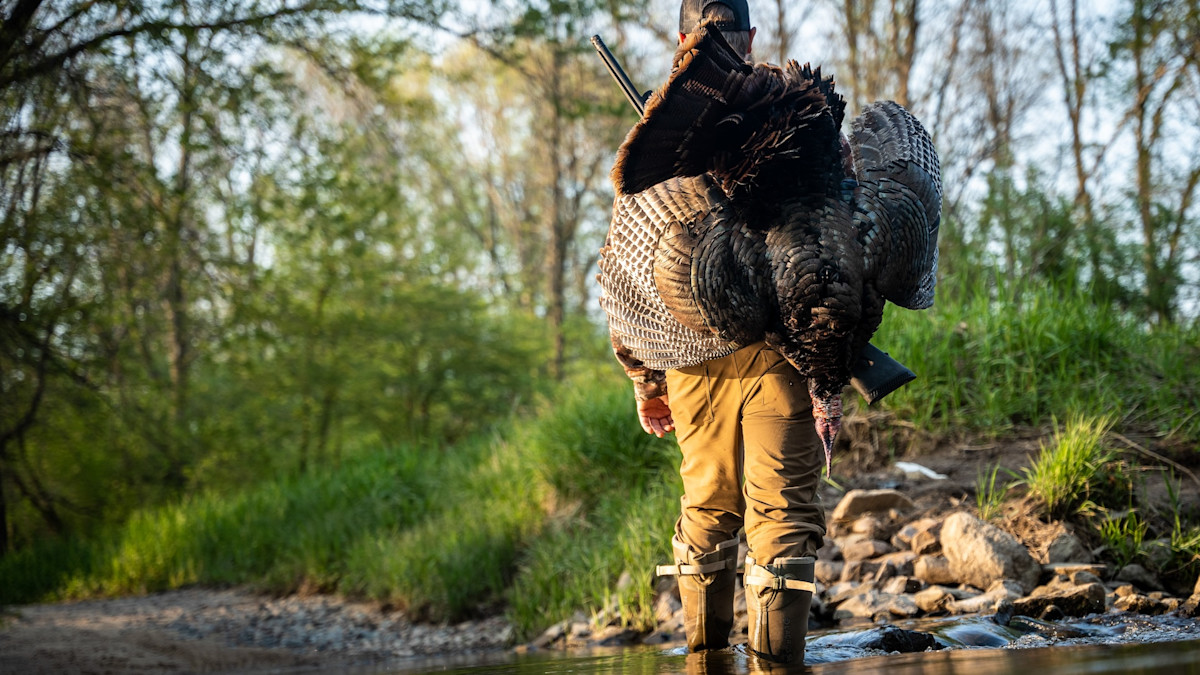

You don't have to be a scent-control junkie to appreciate a good pair of rubber hunting boots. They're perfect for those late-season whitetail hunts when you need to layer extra socks, run some toe warmers, and keep your scent to a minimum. But, they're also necessary if you spend a lot of time in warm, swampy conditions. Unlike application-specific boots, you can use a good uninsulated pair all year round.
However you use them, rubber boots should keep your feet dry above all. Over the past few decades I've had the opportunity to hunt with and test the best rubber hunting boots available. These are my top picks.
Jump to: The Boots We Tested and Reviewed
What to Look for In Rubber Hunting Boots
Depending on your distance from the equator, you might require a heavily insulated (1600g) boot or an uninsulated one for the majority of deer season. Regardless, make sure you opt for boots that you wouldn't mind wearing all day.
Insulation
Rubber hunting boots come in a variety of insulation options for certain tasks or hunting seasons. Uninsulated boots work great for turkey or early bow seasons around much of the country. In fact, most southern hunters can get away with an uninsulated boot for most of the year. Hunters above the Mason-Dixon require more insulation by the time winter rolls around.
Durability
Cheaper rubber boots are susceptible to tearing, especially in the uppers. If your boots can't keep you dry, you might as well go barefoot. Spend more on the front end and you'll have a solid pair of boots that should give you years of service.
Comfort
Whether you're chasing squirrel dogs through hardwood bottoms or sitting on stand all day, make sure your boots fit properly. If your boots are too big or small they'll create blisters, and nothing ruins a hunt faster than mangled feet.
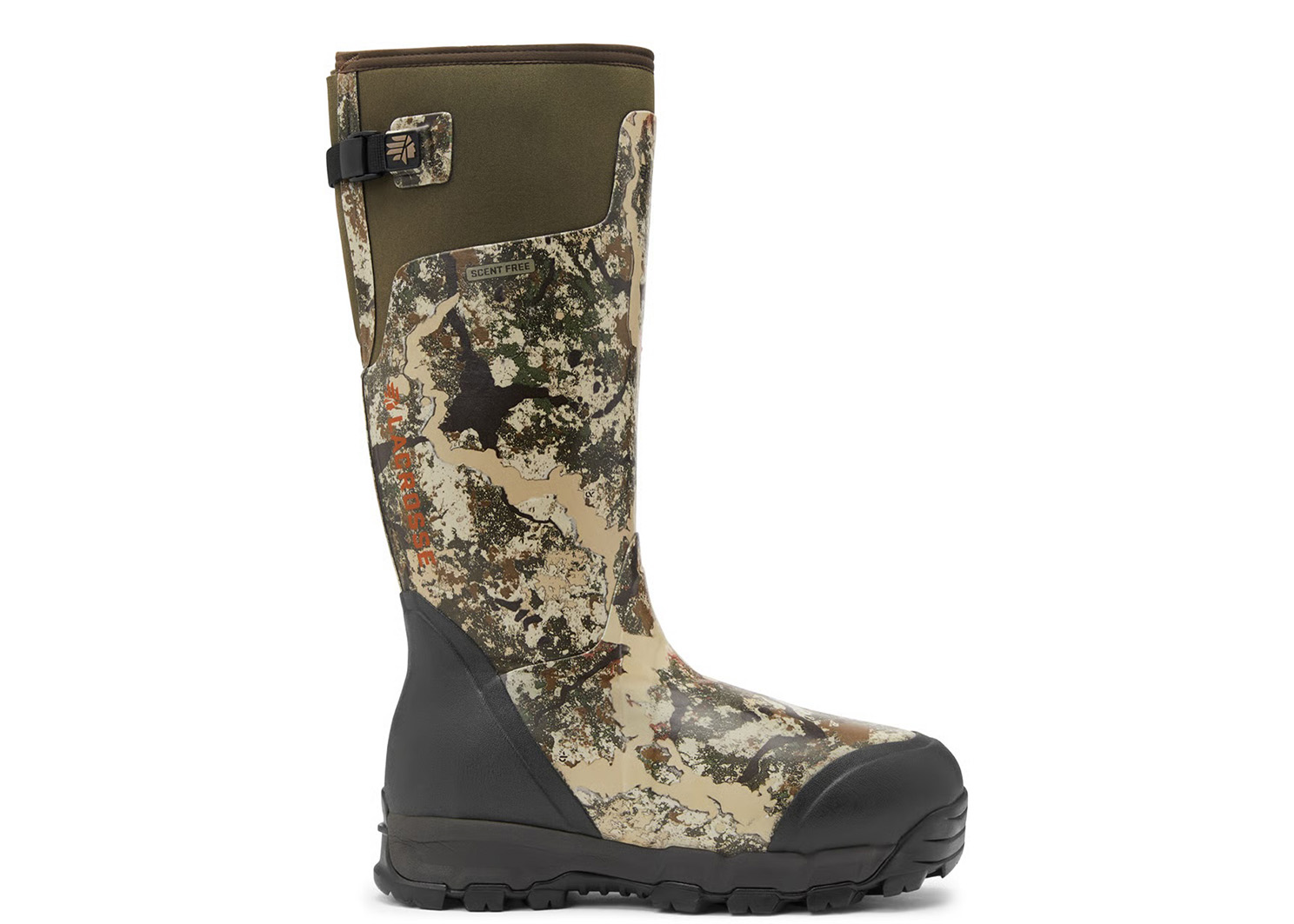 LaCrosse Alphaburly Pro | 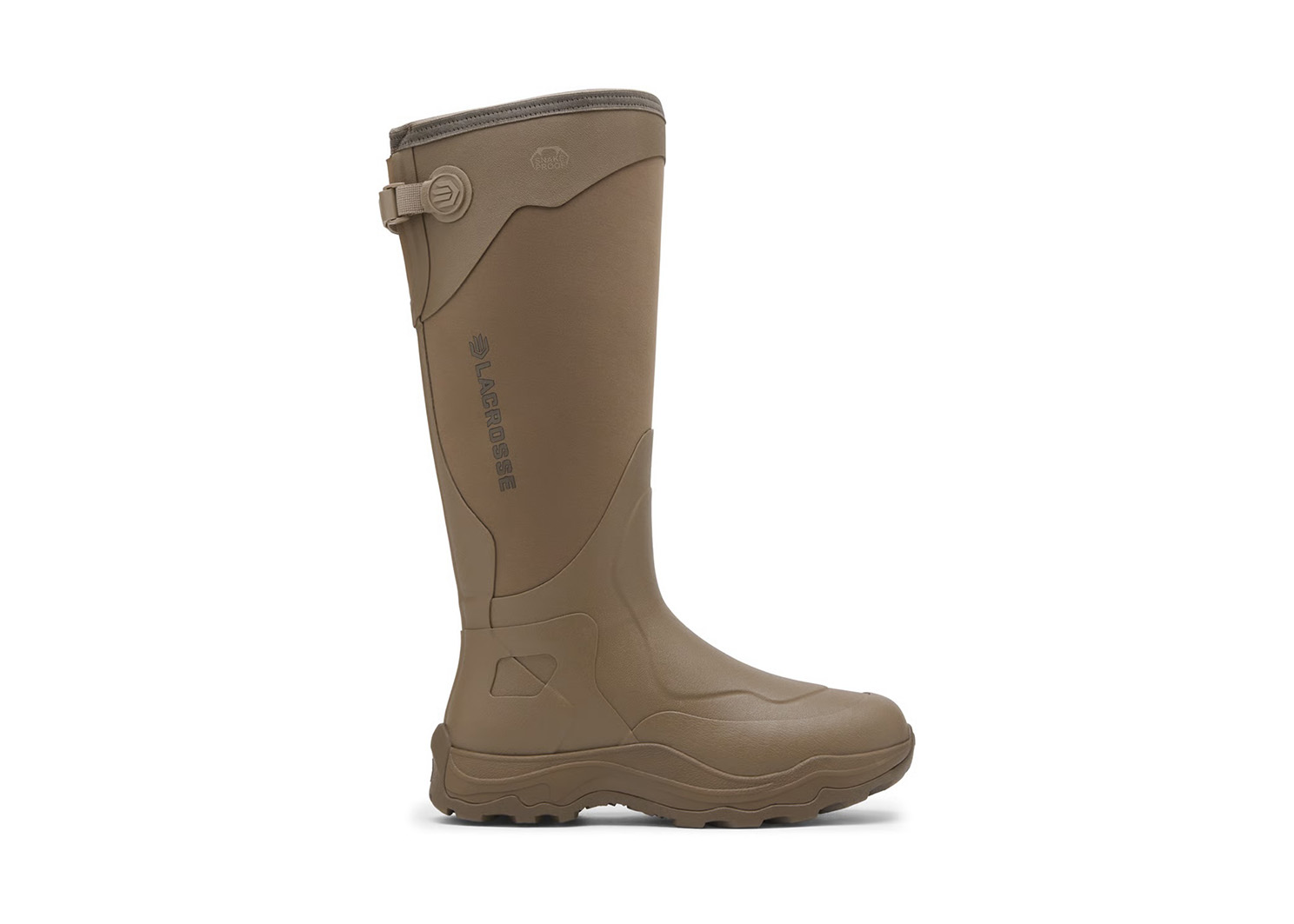 LaCrosse Alpha Agility Snake Boot | 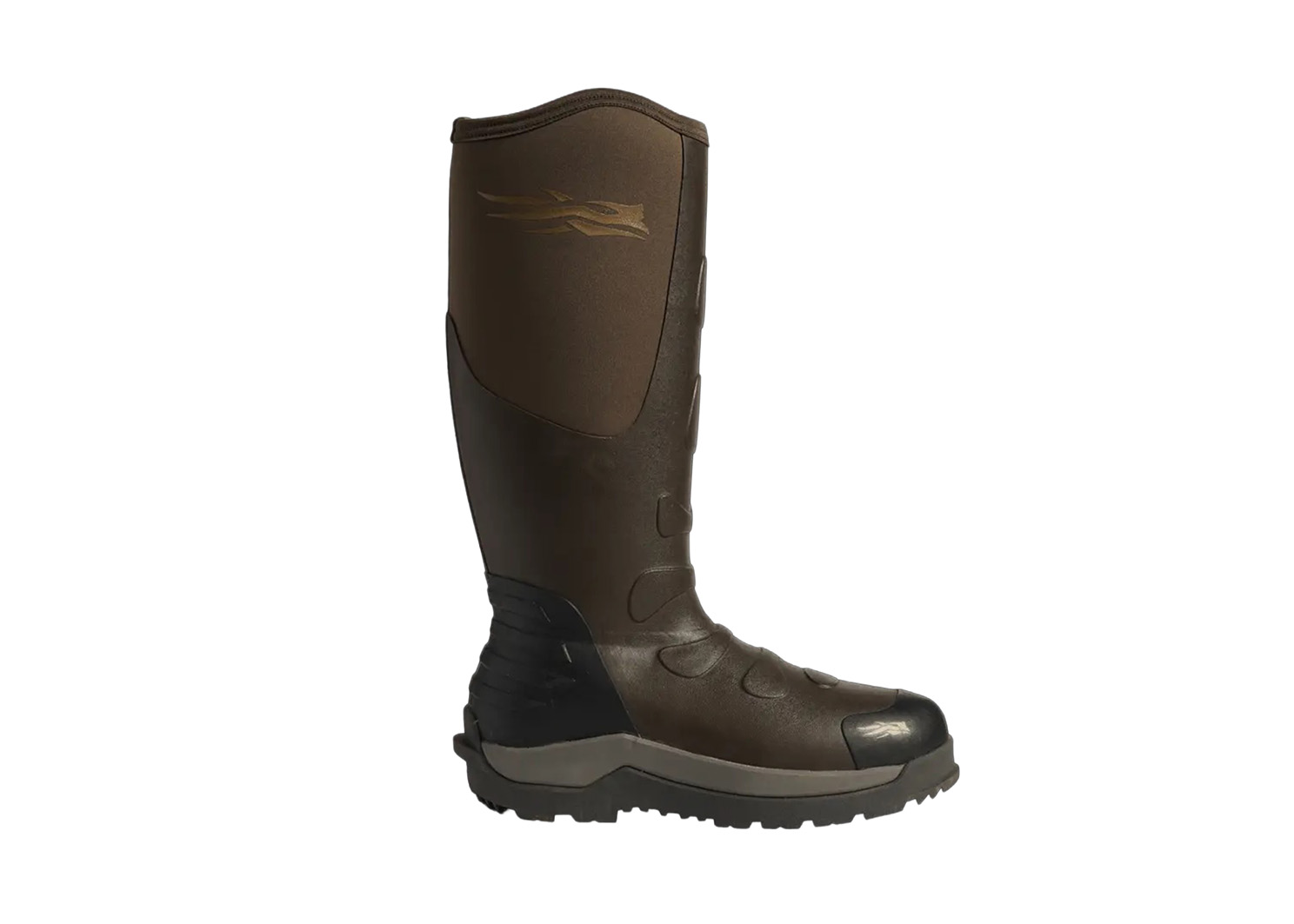 Sitka Back40 Boot | 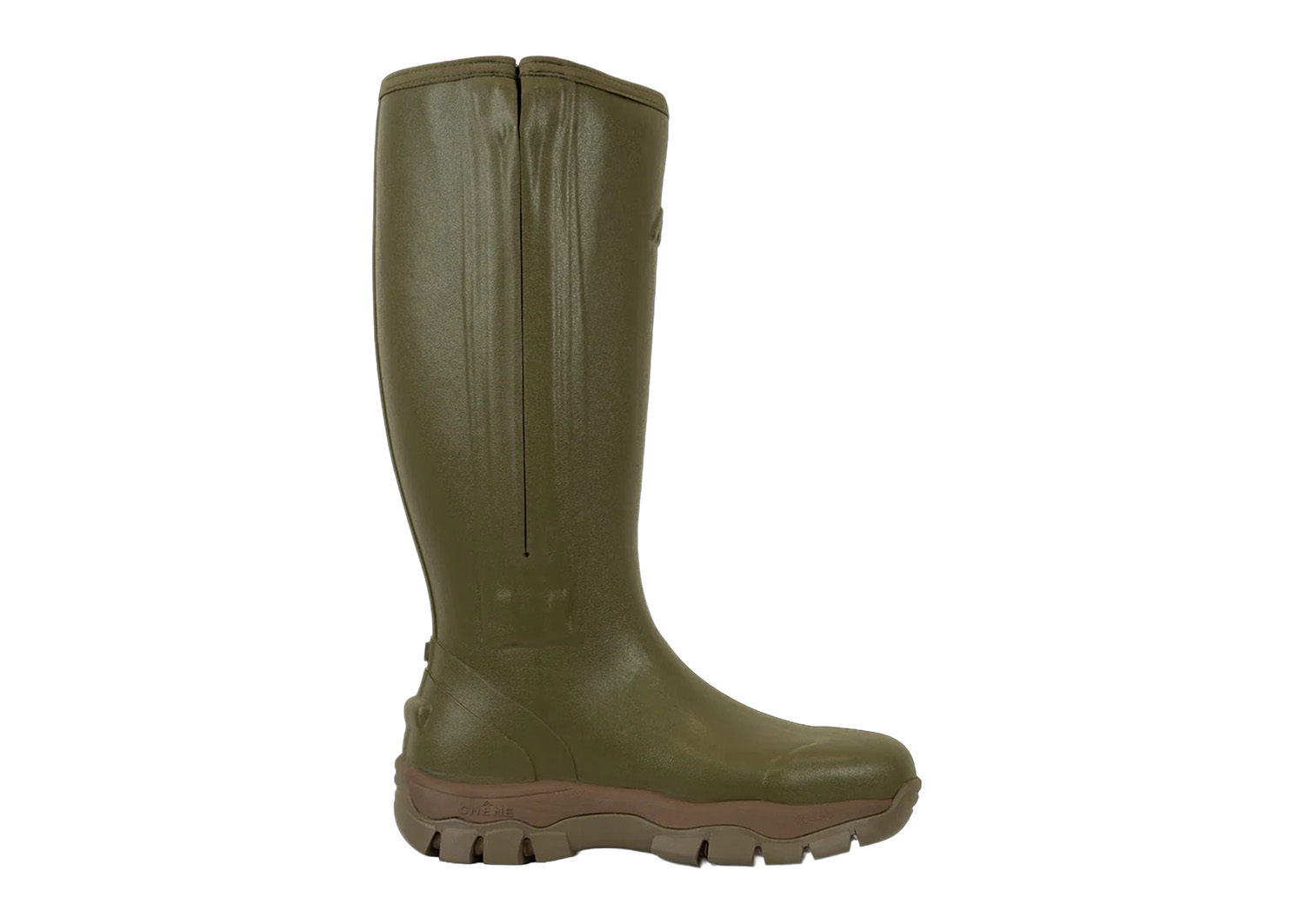 Chêne Floodline Velo Boot | 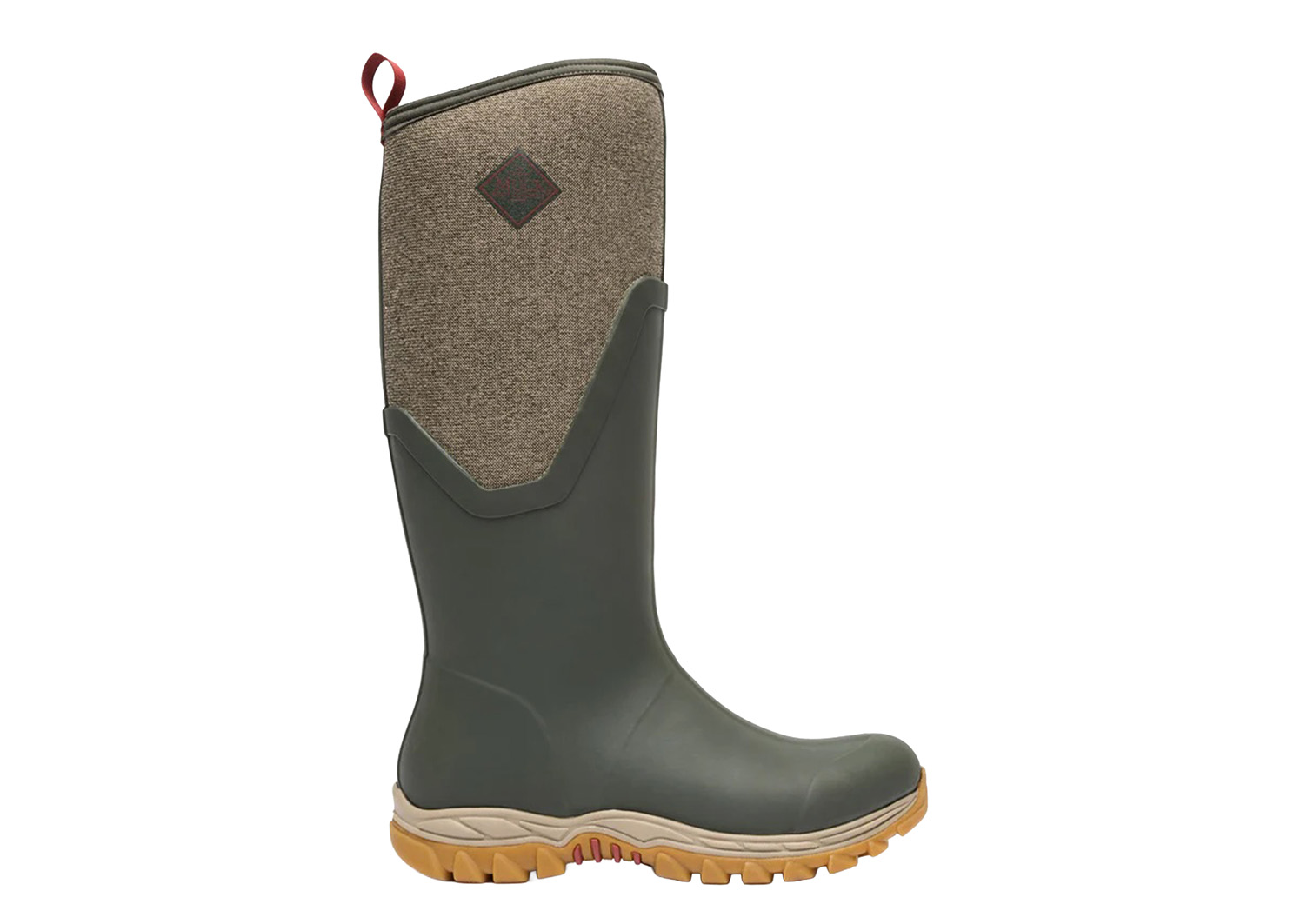 Muckboot Women's Arctic Sport II Tall Boot | |
|---|---|---|---|---|---|
| Height | 18 in. | 17 in. | 18 in. | 17 in. | 17 in. |
| Weight | 4.8 lbs./pair | 4.9 lbs./pair | 4.4 lbs./pair | 4.5 lbs./pair | 2 lbs./pair |
| Insulation | None, 400, 800, 1000, 1600g Thinsulate | No | 800g Thinsulate | No | Yes |
| Price | $210 | $210 | $229 | $180 | $155 |
Best Overall
LaCrosse Alphaburly Pro
- Height: 18 in.
- Weight: 4.8 lbs. per pair (uninsulated)
- Insulation: None, 400, 800, 1000, 1600g Thinsulate
LaCrosse Alphaburly Pros might as well be synonymous with rubber hunting boots. With uninsulated or 1600g Thinsulate options, you can find one for just about any hunting scenario. I've used some version of the Alphaburly Pro for the past several seasons, and they're my go-to hunting boot for most of whitetail season. They're snug but true-to-size, and I've had zero durability issues with them. I hunt in a lot of river bottom country that stays wet most of the year, so the durable uppers and traction on the Alpha Burly Pros make it easy to navigate sloppy terrain like sloughs, palmetto flats, and cypress swamps.
After a long hike out or during warmer temps, the Alpha Burly Pros can be a pain to remove. Hunters with larger feet might find them a tad bulky for small platforms and climbing sticks. Otherwise, their durability makes them some of the best rubber hunting boots around.
Pros
- Durable
- Comfortable
- Plenty of camo/color options
- Great traction
Cons
- Hard to remove with layers
Best Snake Boot
LaCrosse Alpha Agility Snake Boot
- Height: 17 in.
- Weight: 4.9 lbs. per pair
- Insulation: No
As someone who's spent their life chasing turkeys in the deep South, I'm a fan of snake boots. It's not that I think snakes actively try to bite humans, but when you've got a screaming gobbler on your mind, it can be easy to neglect your surroundings. I see plenty of copperheads and cottonmouths throughout turkey season, so a snake-proof upper provides a little more peace of mind.
I've been running the LaCrosse Alpha Agility Snake Boots for the past several seasons. There's nothing fancy about these uninsulated rubber boots. They're all business, exactly what you want from a snake boot. The streamlined lowers make them ideal for turkey season when you're trying to drift nimbly through the woods or cut and run when you strike a bird. They're not the most breathable, but that's a tradeoff I'll take if they keep fangs out of my feet.
Pros
- Streamlined lower
- Snake Guard
- Great for early-season hunting
Cons
- Non insulated
- Not the most breathable
Most Comfortable
Sitka Back40 Boot
- Height: 18 in.
- Weight: 4.4 lbs. per pair
- Insulation: 800g Thinsulate
Sitka recently made their entrance into the rubber boot game a few years ago, and I had the opportunity to test out their Back40 boot one deer season. While they might not look so different from their competitors, the Back40 boots are some of the most comfortable rubber hunting boots I've ever used. The wide toe box allows your toes to splay but adds to the boot's overall footprint.
Though light for a rubber hunting boot, the Back40 is bulky. In fact, I showed them to a hunting buddy who immediately described them as "moon boots," and I couldn't agree more. My Alpha Burly Pros already feel a tad large on a saddle platform or lightweight stand, and the Back40s nearly eclipse them.
One of my main gripes about rubber hunting boots has to do with the difficulty of removing them when you're layered up or sweaty. Unlike other boots I've used, the Back40s are extremely easy to remove right out of the box. You can even use the heel kick (hands-free) to remove them and save your obscenities for more pressing matters.
Pros
- Comfortable
- Easy on/off
- Durable heel/toe rubber overlays
Cons
- Bulky
- Bit warm for early-season temps
Best for Turkey Hunting
Chêne Floodline Velo Boot
- Height: 17 in.
- Weight: 4.5 lbs. per pair
- Insulation: No
Rubber hunting boots never fit as snug as I'd like, but the Chêne Floodline Velo boots come pretty close. Despite their snug fit, the Floodline Velo boots offer painless on/off. This factor alone makes them a top contender if you're in the market for the best rubber hunting boots.
The Floodline Velo boots required zero break-in. My first time in the boots, I logged just over six miles during a postseason scouting trip. I never had any hot spots, blisters, or rubbing, which is a lot to ask from a rubber boot. They're also the most flexible, yet durable rubber hunting boots I've ever used.
These uninsulated boots make an excellent option for turkey hunting or early-season whitetails, especially if you prefer to run-and-gun. I'd like to see grippier traction on the outer soles, especially for a boot that's tailored for turkey hunting and wet spring conditions. However, their lightweight and shoe-like fit makes them one of the best rubber hunting boots for multiple seasons.
Pros
- Lightweight
- Effortless removal
- Snug fit
Cons
- Not the best traction
Best for Women
Muckboot Women's Arctic Sport II Tall Boot
- Height: 17 in.
- Weight: 2 lbs. per pair
- Insulation: Yes
"I've worn Muck Boots for years. The Arctic Sport II Tall Boot is a warm, versatile boot that I wear for a good seven to eight months out of the year. Where I live, the winters are long and the snow sticks around, which means the mud seasons also last longer than desirable. This boot can handle both.
I often wear them during cold-month fishing and quick waterfowl jump-shoot outings. The calf cuff is tight enough that I don't worry about water getting in, but it isn't so tight that it's uncomfortable. The boot is tall and super waterproof, so it's perfect for shallow wading and loading/unloading boats.
They're what I slide on my feet almost every day for an after-work dog walk. They offer support so that my feet and legs don't get fatigued while providing enough warmth on those days when you'd rather just stay inside.
My only and biggest gripe with these boots is that I've found they need to be replaced every couple of years. The rubber starts to crack, and they lose their waterproofing. But at $155 with some pretty serious wear and tear, I have yet to find a better replacement." - Maggie Hudlow, MeatEater's Director of Web Content
Pros
- Lightweight
- Warm
- Snug fit
- Easy on/off
Cons
- Not the best traction
- Wear out after a couple years
Stay in the loop with The MeatEater Newsletter
Shop

Related
Gear
The Best Hunting Boots

Hunting Gear
Video: Jani’s Review of Schnee’s Boots