The Only 3 Fly Rods You Need
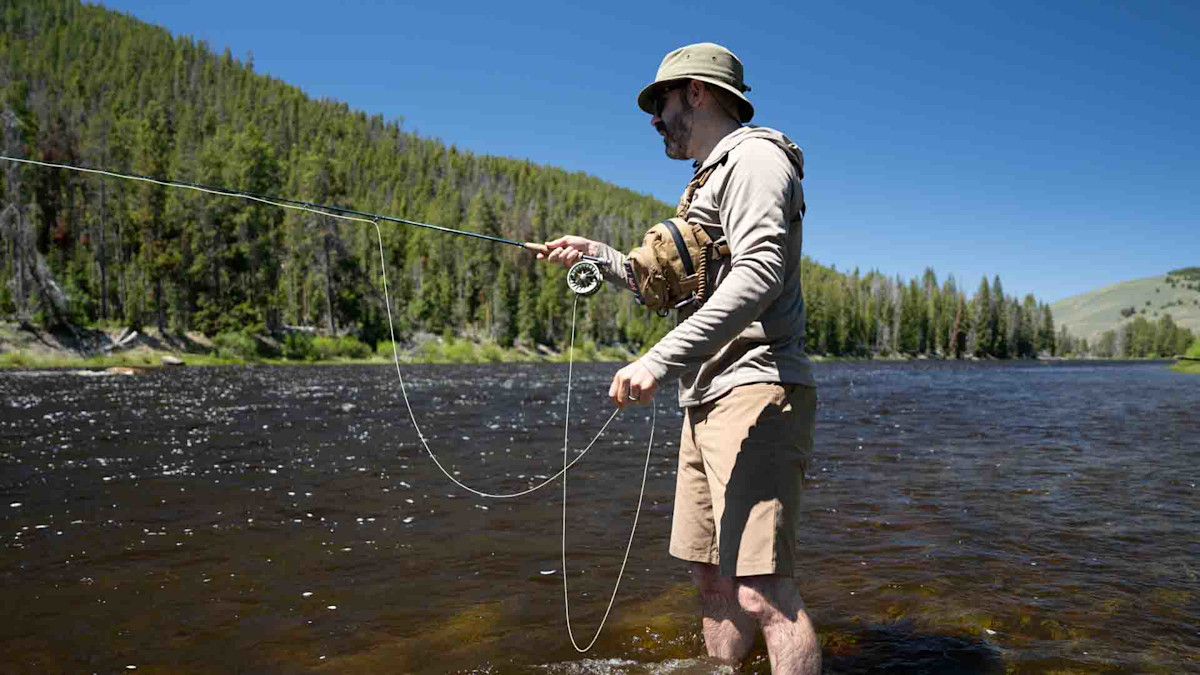

It sometimes feels like being a successful fly angler comes down to having “the right stuff.” From waders and boots to lines and reels to the endless multitude of gadgets, gizmos, and fly patterns, every angler has an opinion about the fly fishing equipment that’s “absolutely necessary” to catch fish. Without a doubt, the greatest point of contention comes down to how many fly rods you actually need.
Most fly anglers treat fly rods like golf clubs. They believe there’s a specific rod size, power, and flex designed for every fish species, and if you want to be successful—you need them all. I’m as guilty of this as anyone, and a pile of rod tubes in my garage will attest to this.
Truthfully, I know I only really need three of them. Sure, you might be slightly under- or over-gunned in different situations, but you can catch almost any fish species out there with just a 4-weight, 6-weight, and 8-weight fly rod.
4-Weight: The Multi-Tool
When it comes to traditional trout fishing, the 4-weight is the perfect tool. These mid-flex rods were designed for making long, graceful casts and drifting small dry flies over rising fish. They’re also the perfect rod for drifting small nymphs through the deep holes and meandering pools of small creeks and will even work for swinging soft hackles and traditional streamers through faster riffles and runs. But the 4-weight isn’t just for trout.
As lighter and more springy than the traditional 5-weight, a 4-weight is perfect for catching a multitude of small- to medium-sized species. They’re a great rod for chasing panfish, perch, and even smallmouth. In fact, the yielding action of a 4-weight is ideal for both delicate presentations and casting small terrestrials and even poppers on the surface. The 4-weight’s sensitive rod tip is perfect for winter fishing in colder water when fish are sluggish and strikes are subtle.
The downsides of the 4-weight are few. The rod may feel a bit stiff if you fish a lot of small streams or pursue a lot of small fish like brook trout, but it works fine. But, for windy days or larger fish, you’ll need a bit more backbone.
6-Weight: The Workhorse
I’ve always considered the 6-weight to be an underutilized and underappreciated rod. They’re a bit beefier than your standard 5-weight, and they provide more heft for casting bigger flies or stiff winds. Yet, you can still use a 6-weight to work dry flies for rising trout with the best of them. But what I like most about the 6-weight is that you can use it to catch pretty much any fish in freshwater.
A 6-weight rod can cast big creature dry flies on big rivers, flip weighted streamers beneath boat docks for bass and pickerel, and are perfect for fishing medium-sized streamers for anything from trout to walleye.
The stiffer tip-flex action on a 6-weight makes it perfect for nymphing with multi-fly setups and split shot in deeper water. You can even fish with long leaders and big flies in still water. It’s also an ideal rod for topwater bass fishing, mousing for big night-hunting trout, and makes a great carp rod since it has enough dexterity to deliver flies with pinpoint accuracy.
The only real problem that comes from using a 6-weight rod is its lack of subtly. The hard, punching action of a 6-weight doesn’t make it a great rod to take on a spring creek or for fishing in low-clear water when fish are spooky. And, while it does have a lot of power and backbone, it doesn’t quite give you the leverage you need to land those truly big fish, which is why you need at least one more rod for your collection.
8-Weight: The Big Stick
The 8-weight is a power rod, plain and simple. With more backbone than a honey badger staring down a lion, the 8-weight is great for punching big flies through blasting winds, ripping heavy streamers through weeds, brush, and sticks, and of course, big, hard-fighting fish.
I’ve used my 8-weight, my personal favorite, for targeting a multitude of species and have always found it more than capable. The stiffer, faster action of the rod makes it great for chucking monster streamers for big, meat-eating trout and for making long casts on big lakes and rivers when you’re hunting pike, muskie, or even striped bass. It’s also an ideal rod for swinging streamers or nymphing in heavy current when you’re searching for salmon and steelhead, and it can even take on most of the more popular saltwater species like bonefish, snook, permit, and redfish.
The only downsides to an 8-weight is its inability to cast small dry flies and its lack of accuracy. The stiff, two-by-four-like action of an 8-weight means that any sort of delicate, precise casting goes out the window. However, if you’re looking to slap down a big fly for a big fish, an 8-weight always provides.
Less Is More
There are, of course, other fly rod options that can better suit more specific needs and conditions. If you only like small streams and small trout, a 2-weight or a 3-weight may be your best option. If you’re a big water angler who loves big tarpon or monster muskie, a 10-weight or an 11-weight may be more in your wheelhouse.
However, part of the fun of only using three rods is that it forces you to improvise and adapt your presentations to manage new situations and fish species. Like a golfer trying to par a course with just a driver, an iron, and a putter, only using three fly rods gives you a chance to improve your skills on the fly, which in the end will help shape you into a better fly angler.
Stay in the loop with The MeatEater Newsletter
Shop
Shop AllRelated
Freshwater
The 6 Rods You Need to Catch Every American Fish


Fishing
The Only 3 Fly Rods You Need
Gear
The Best Ice Fishing Rods

The comments section requires Functionality cookies. Please enable Functionality cookies in Cookie Settings to view this content.