5 Tricks for Catching Fish When It's Hot
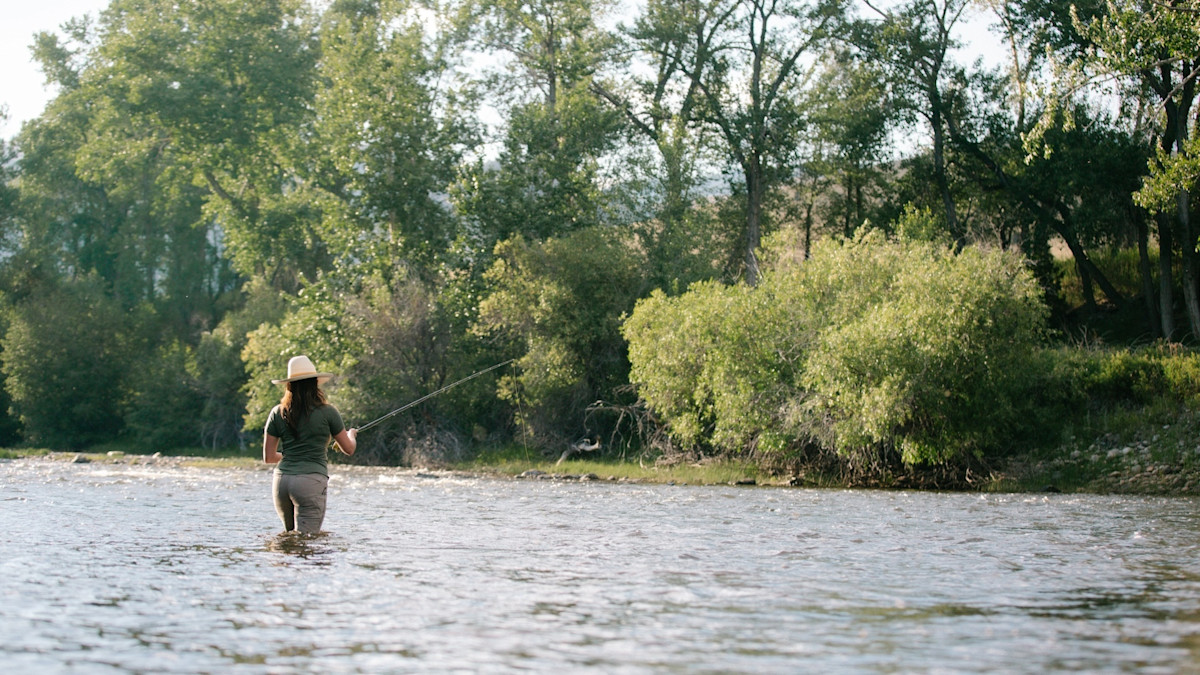

During the summer, anglers are completely unleashed. The long days and warm, comfortable nights allow for plenty of fishing time, and most of us practically sprint down to the water any chance we get. It can be a time of plenty. Nearly every fish species, from panfish and bass to trout and walleye, are active and hungry throughout the entire season—for the most part.
During the mid to late summer months, many anglers experience what’s referred to as “the summer doldrums.” It occurs when long periods of bright sun and warm water temperatures turn a hot summer bite downright cold. Fish become finicky and sluggish during the day and heavy pressure from anglers makes it seem like they won’t eat anything.
Thankfully, there are a few tricks and strategies you can use to avoid getting skunked during the summer
Fish Early and Late
While fishing during the afternoon may be effective during the winter, it’s not always the best strategy during the summer. This is especially true when you’re targeting cold and cool water species like trout and pike or crepuscular and nocturnal species like burbot and walleye. To make the most out of your summer fishing, you need to be out when the sun is off the water, and that means going fishing early and staying out late.
The half-hour before sunrise and the half-hour before sunset are absolute prime times. This is especially true if you’re targeting larger, more predatory species like bass, muskie, or stripers. These predators tend to be less active during the middle of the day and spend most of their time in deeper water, but in the early morning and early evening, they push into the shallows to hunt. This makes it a great time to fish larger lures and flies and even topwater lures, as these small feeding windows can make fish especially aggressive.
Night fishing can also be extremely productive during the summer, especially if you’re willing to go all night. When it’s extremely hot during the day, different species of fish will “turn on” to feed at different intervals throughout the night, giving you opportunities for sundown to sunup action as long as you’re willing to keep your lines wet through the entire night.
Generally, you’ll want to fish in shallower water along gravel and sand bars, wide bays, and off the points of islands and points that have significantly deeper water close by. Fish these shallows near drop-offs where both schools of fish like walleye or lone predatory species like catfish can move into and out of as they feed periodically throughout the night.
Tap the Brakes
Almost every angler out there fishes fast during the summer. We go out into the bright sun and stand hip-deep in the water where we cast, rip, and slash with big flashy lures or big gaudy flies. It’s often a better idea to take a page out of the tortoise’s book and remember that slow and steady wins the race.
During the summer heat, water temperatures rise significantly, causing the oxygen levels in the water to drop. These low oxygen levels in warm summer waters make fish sluggish. Take the same approach as the fish and go slow if you want to tempt them.
When you’re fishing with lures in hot water, instead of cranking jerkbaits and spoons, try fishing with small jigs and soft plastics that you have to float and flutter along the bottom.
If you’re fly fishing, try swinging streamers instead of stripping them or drifting nymphs instead of splashing and popping with dry flies, and it’s almost guaranteed you’ll get better warm-water results.
It should be noted that when fishing during these conditions, cold-water species like trout and salmon often won’t survive the experience of being caught. This can make catching and releasing these species extremely challenging and even illegal in many waterways. However, if you’re planning on harvesting these fish for the dinner table, mid-summer is an excellent time to do it.
Shrink It Down
Everyone believes that big baits catch big fish. But when everyone and their mother takes the same approach during summer, fish become hesitant to strike the big stuff. This makes midsummer an excellent time to downsize your presentations.
Not only do fish face heavy pressure during the middle of the summer, but they typically feed on smaller prey. Minnows, dace, and shiners, make small, mid-summer lures and flies doubly effective. You’re essentially “matching the hatch” when you use them.
If you’re a lure angler, put aside the big buzz baits and crankbaits you associate with catching bass and pike and try using smaller inline trout spinners like the Panther Martin and Rooster Tail.
Bait anglers can do the same thing by using small pinhead minnows and shiners when targeting larger fish like stripers, catfish, and even muskie. Like pigs inhaling acorns, these larger fish inhale dozens of smaller baits at a time. This makes them much more apt to take one rather than the usual live suckers and cut bait you might normally use.
Fly anglers should downsize their presentation too. You might associate smaller insects like midges and caddis with spring and fall trout fishing, but these smaller flies can be surprisingly effective for the fish during the summer. Fishing small streamers like the Black Nose Dace, Woolly Bugger, and Clouser Minnow can also be extremely effective for summer trout and even bass and panfish, since the larger streamers fish can spook pressured fish.
Find the Current
Whether it’s an inlet where stream water flows into a lake, a larger river, a rapid, or a fall in the middle of a slower-moving river, these faster currents can be real hotspots during the summer because they're more oxygen-saturated than stagnant areas.
You can fish these inlets and areas of fast current to target the fish that stack up around them. These are great places to drift presentations by nymphing, fishing baits under bobbers, or casting to with lures.
When casting lures, make sure you cast upstream and retrieve your lures downstream rather than retrieving them against the current. In the low-oxygenated water, fish will be less apt to chase a lure or fly that’s fighting against the current, because it looks unnatural and because they don’t want to work that hard. However, it’s hard for fish to resist a bait swimming or drifting with the current.
Cool It Down
The simplest way to find and catch fish in the summer is to find cooler water. Of course, this is easier said than done. You can hike to fish in high mountain streams or troll blindly in extremely deep water. However, there are cooler water spots that are easy to find and fish on almost every waterway on the planet.
Shade is the first and most obvious spot, especially if you’re targeting ambush predators like bass, crappie, and trout. Look for spots along banks with overhanging brush or rock edges, boat docks and piers, exposed and dense weed beds, and even lily pad patches. These are all ideal areas for summer fish, and they could be 10 degrees cooler than the surrounding water.
The second most likely areas to find cooler water are in and beneath thermoclines. These thin but distinct layers of cooler water can change rapidly with water depth and act as a boundary between warmer surface water and colder deeper water.
Thermoclines are fantastic gathering areas for schooling fish like walleye, yellow perch, and even lake trout during the summer and are ideal fishing spots so long as you can find them. This is a fairly easy task if you’re fishing from a boat equipped with electronics. Otherwise it can be extremely challenging.
Most thermoclines are found between eight and 40 feet depending on the clarity and size of the water body in question. Generally, cooler and highly oxygenated water will be within five to 10 feet of the thermocline. This is where most fish will gather. As long as you can get your lures or baits within the thermocline ballpark, you should find success.
Stay in the loop with The MeatEater Newsletter
Shop
Shop AllRelated

Fishing
5 Tricks for Catching Trophy Fish at Night
Fishing
5 Tricks for Catching Fish When It's Hot

Fishing
3 Tricks To Help You Catch More Fish in Deep Water
The comments section requires Functionality cookies. Please enable Functionality cookies in Cookie Settings to view this content.