How to Catch Bluegill
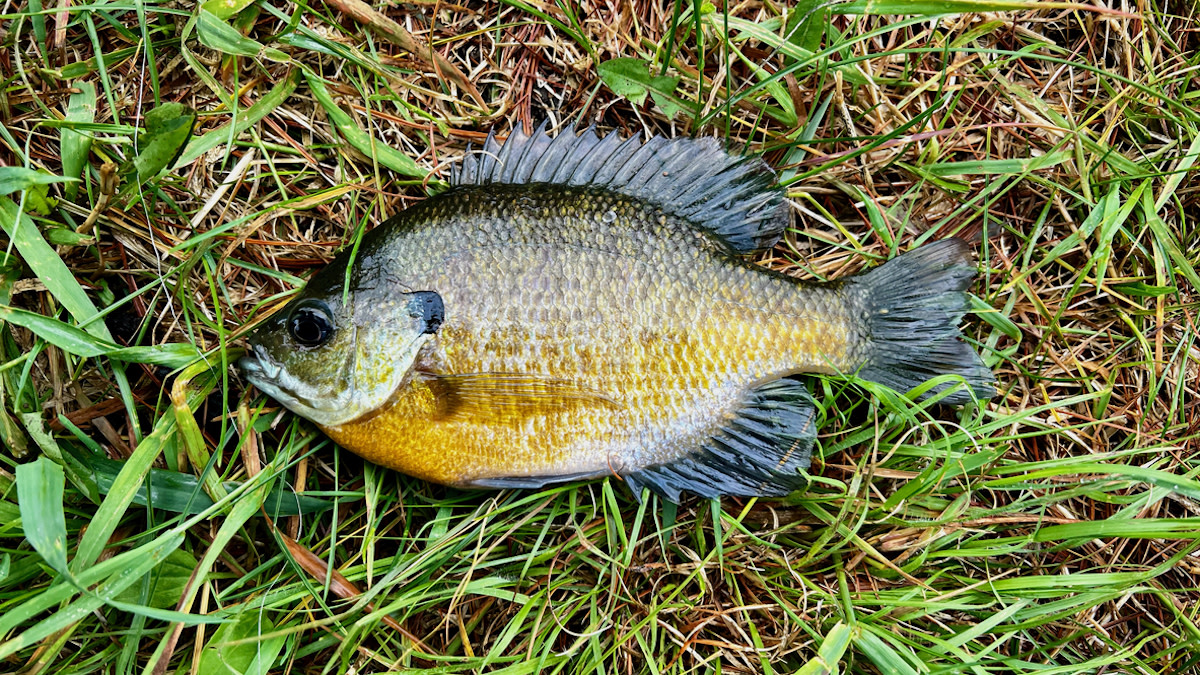

They say that we need to enjoy the simple things in life. Well in the angling world, there isn’t another fish that’s more simple than bluegill. These small panfish are easy to find, will eat almost anything, and are one of the most populous fish in North America with a range that extends from southern Canada to northern Mexico. While there are certainly many more popular gamefish species out there, bluegill are unique because I don’t think there’s an angler out there who didn’t cut their teeth pulling a few gills out of a farm pond or slow-moving creek as a kid.
Almost all of us have caught at least a few bluegills over the years, but many anglers only know one or two ways to fish for them. Additionally, when most of those anglers aren’t having any luck catching bluegill with their usual methods, they simply shrug it off and move on to another species of panfish. However, if you’re as big of a bluegill fan as I am, you’ll want to be able to catch them throughout the season. This is entirely possible, so long as you use the right baits at the right time of year.
Best Baits for Bluegill
When it comes to bluegill bait, there’s no question that the most popular and commonly used is the worm. During the summer, the quick stop at the gas station to pick up a pack of dillies or crawlers is almost synonymous with going out to the bluegill pond. These worms are rigged simply, with small earthworms being strung entirely onto the hook or with small chunks of larger nightcrawlers being pierced onto the hook point. Worm rigs for bluegill are usually hung a few feet under a bobber and then haphazardly cast into some fishy-looking water around weed beds and spawning areas.
While this is an effective method as a few fish can always be found in the shallows, many true bluegill aficionados know that the real slabs are found in deeper water. In the mid-summer when water temperatures have climbed, most of the largest bluegill to be had in any given body of water will move off the shallow sandbars and weedy shelves that they inhabit during the spring and early summer and gather in depths of 10 to 20 feet of water immediately adjacent to their spring haunts.
These fish are true meat eaters, and while they can be caught on worms and bobbers, you’ll be much better off using larger, more lively baits like leeches or minnows rigged on small jigs or a small size 8 or 10 bait hook weighted down with a couple of split shot. Using your electronics, locate the deep edges of weed lines or small sandbars where you have seen or caught bluegill early in the season and drop your baits down to the bottom. Reel them up so that they're a few inches from the bottom and then start jigging your baits with a small twitching motion using just the tip of your rod. You’ll have a cooler full of fat bluegills before you know it.
In addition to worms, leeches, and small baitfish, bluegill also have a special affinity for terrestrial insects such as grasshoppers and especially crickets. If you don’t have a lot of deep water or weed beds in your local bluegill spot, these can be a great option for increasing your bluegill catch. Crickets and grasshoppers can be bought in many bait shops, or you can easily catch them yourself. Rig the insects by pushing the point of a small baithook through their thorax and then add a bee-bee spit shot the line about 5 to 6 inches above the bait. Cast these rigs onto the edges of shallow structures such as docks or log jams on lakes and ponds or into swirling back eddies on rivers or creeks. Let them slowly sink to the bottom of the water, occasionally twitching them as they fall until they are slammed by a hungry bluegill.
Best Lures for Bluegill
Not a lot of anglers realize just how effective certain lures can be for bluegill. The small panfish are generally thought of as rather docile and opportunistic feeders that only eat live bait, but they have a serious predatory side as well when the mood strikes them.
The best time to use lures for bluegill is either when they are on or just moving off their spawning beds in early spring or in the late fall when the fish are aggressively feeding in preparation for winter. During these times a wide variety of lures can be effective so long as they are fished either near or on the surface of the water.
The hands-down best bluegill lure out there is a small rubber grub like a 1- to 2-inch Squirming Grub or a Mister Crappie paired with a 1/64- to a 1/4-ounce jig head. String the grub onto the hook so that the tail fully extends behind the rig and then cast it into a likely-looking spot. Let the grub sink a few inches beneath surface before reeling it in with a rapid jigging retrieve that keeps the rig only a few inches beneath the surface.
While the grub is most effective when you know where the fish are, when you’re covering water in search of bluegills, it’s hard to beat a small inline trout spinner like a Panther Martin or a Roostertail. These small flashy lures can be cast a long distance when using a light-action rod and light line and reeled in at a rapid pace just below the surface. Any cruising schools of gills that spot the spinner moving past will find it impossible to resist.
If you need some more intense bluegill action in your life, you need to be chasing them on topwater. Using small lures like the Micro Popper and the Tiny Torpedo is the ultimate way to chase bluegill, especially when the fish are gathered in large schools in the shallows. Smacking these lures down among the gathered fish and twitching and popping them across the surface can draw some truly explosive takes and make you look at the tiny docile bluegill in an entirely different light.
Best Flies for Bluegill
Fly anglers have a ton of options when it comes to chasing bluegill. The fish eat a wide variety of small nymphs and surface insects just like a trout and will even chase down and crush a small streamer like a Woolly Bugger if given the chance. Combine these flies with a 2- or 3-weight fly rod and some light tippet and fly fishing for bluegill can become one of your favorite pursuits.
My favorite personal favorite way to chase bluegill on a fly rod is with a tandem nymph rig. This is a fairly simple setup that consists of tying a bead head nymph like a Pheasant Tail or Hares Ear to the end of your leader and then adding a section of tippet to the shank of the hook. Tie a second non-weighted nymph such as a Prince Nymph or a Soft Hackle to the end of the tippet as a dropper and then cast it out into the water. Retrieve the two nymphs with short-sharp strips as you would do with a streamer and keep a tight hold on the line because it’s going to get absolutely slammed.
As previously mentioned, bluegill have a special affinity for topwater lures and terrestrial insects. Therefore, fly anglers looking to catch them on the surface will easily find success on small foam grasshopper and beetle patterns like the Foam Park Hopper and the Flash Beetle. These flies can be splashed down and left to float along bank edges of lakes and ponds or twitched across the surface of the water in the evening when the bluegill are more aggressive. Tiny poppers like the Mini Pop and Bett’s Bream can also be very effective at this time, especially if you’re after some seriously large bluegill fillets for the freezer. Smack one of these poppers down among lily pads or brush piles over a deep hole during the midsummer and try not to be too startled when a frying pan-sized bluegill comes rocketing up from the bottom to engulf it.
Keeping it Simple
There comes a point in every angler’s life when fishing gets pretty complicated. From buying the newest lure, to pursuing a new species, to taking up a whole new fishing method, it seems that the more advanced and involved we become with the sport of fishing, the more stressful it can become. I’ve spent much of my time swinging flies for winter steelhead, casting for hours in search of a muskie, or trying to fool a wily old trout into eating my dry fly, and getting pretty stressed out because of it. I’ve found going out and bluegill fishing every now and then to be a great relief.
There’s a simplicity and innocence to just casting a line for a couple bluegill that not many other fishing methods have. The willingness with which the fish take the bait and the strong fluttering pull that they give during the fight can be almost therapeutic. It reverts you back to a time in your angling life when your entire being was focused on a gently floating bobber, waiting for it to disappear. For at that time in your life, all the happiness in the world could be found by simply having a small struggling bluegill on the end of your line and every once and a while it’s good to remember that.
Stay in the loop with The MeatEater Newsletter
Shop
Shop AllRelated

Fishing
How to Catch More Bluegill Without A Bobber

Freshwater
King of Panfish: How to Catch Crappies

Fishing
How to Catch Fall Panfish
The comments section requires Functionality cookies. Please enable Functionality cookies in Cookie Settings to view this content.