Are Big Rubs Made by Big Bucks?
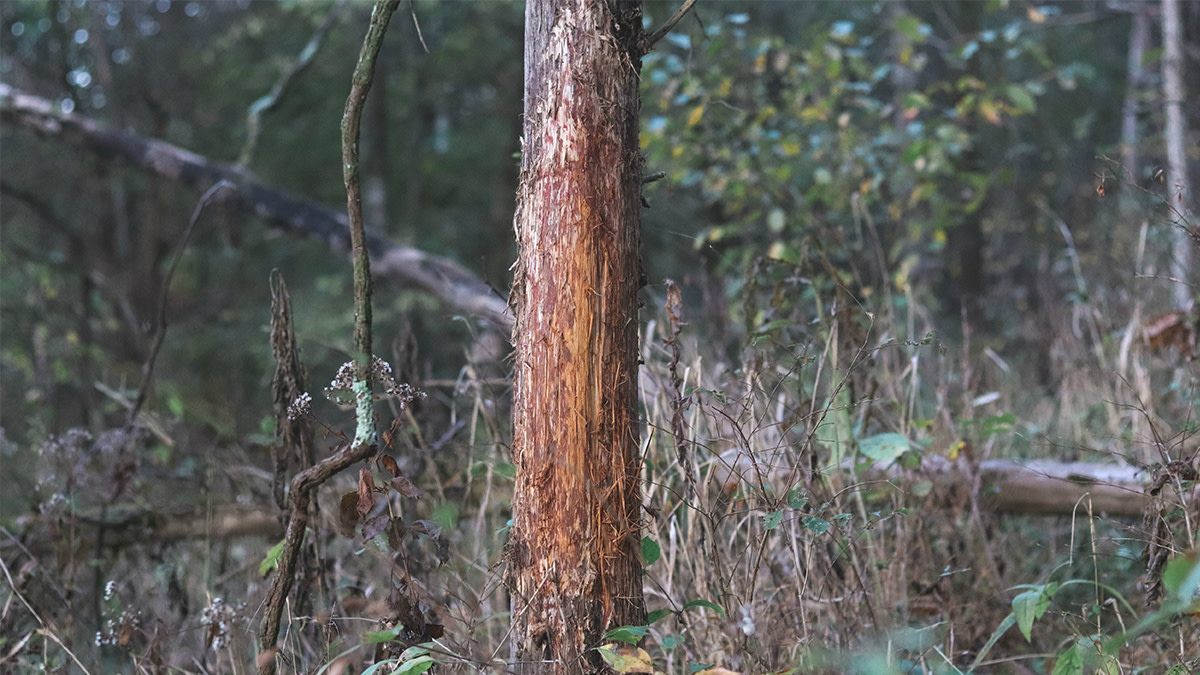

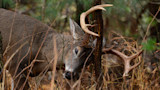
For archers seeking out deer sign, it doesn’t get much more obvious than rubs. In most cases, rubs start showing up in mid-September when bucks begin to feel a spike in testosterone. It’s a visual and chemical way for deer to communicate: shredding the bark off a tree while leaving behind scent from their forehead glands.
There’s a lot of lore when it comes to rubs, as they’ve been captivating outdoorsmen for centuries. You’ll often hear hunters speak to how bucks will destroy telephone poles, eat their velvet when rubbing it off, and tear up trees late season to get rid of uncomfortable antlers.
Another regular piece of old-timer wisdom is that big rubs mean big bucks are in the area. It seems practical enough to envision that there’s a booner responsible for messing up the biggest of trees, but I haven’t been able to confirm it myself. Instead, I consulted some big buck killers who I thought might have good insight, as well as checked with what science might have to say on the subject.
Mike Fitzgerald, of Bowhunting.com in Minnesota, had this input on rubs and bucks. “I think there is some credence to the theory that big bucks make big rubs, though I don’t believe that the inverse is true. If I find an area with a handful of rubs on larger trees, I get pretty excited and assume a big boy is around. But with smaller rubs, it’s harder to tell.”
Clinton Fawcett, of Bowhunt or Die in Illinois, has similar feelings about rubbed up trees. “In my opinion, big bucks are responsible for getting the big rubs started. After they have them established, I feel like any buck that’s in the mood and attracted to the sign will use it. Over the years, I’ve hunted some pretty big rub lines and have experienced a lot of different caliber bucks using them. I don’t think the little guys are able to start the biggest rubs, but once they are established it’s an open door.”
Lee Ellis, of Suburban Bowhunter in Georgia, believes that big rubs are more indicative of a deer’s personality. “From what I’ve seen, a big buck is just as likely to rub on a small tree as he is to rub on a big tree. I think rub size and rub quantity is more about how aggressive individual whitetails are. Some bucks are bullies, and will create all kinds of rubs that are big and small. Other bucks are timid, and won’t participate much in sign making. Giant rubs still get my attention, but I don’t put much stock into them.”
Science doesn’t seem to have as strong of feelings as hunters, as it turns out little research exists on rub size in correlation to antler size. However, there is some other info out there that I think might be relevant to answering the question.
One piece of notable research is from Dr. Karl V. Miller at the University of Georgia, where he investigated rubbing activity. He says that one mature buck can make 1,000 to 1,200 rubs per year. Over a three month period, that’s about a dozen rubs a day. Yearling bucks, on the other hand, only make about 400 to 500 rubs a year. So, hunters should realize that more times than not, rubs are being formed by deer older than 1.5 years old.
Another bit of useful info comes from Bryan Kinkel at the Quality Deer Management Association, who found that “edges” are the most likely places for deer to create rubs. These edges are considered the first 20 meters within a treed area, with the best edges for rubs being near food sources.
While science doesn’t have much to say about rub size, it will confirm that bigger deer are more likely to make them, and they’re most likely to show up near edges. Those pinch points and funnels along fields are the best place to find torn up trees, and maybe find a mature buck.
Feature image by Spencer Neuharth.
Stay in the loop with The Wired to Hunt Newsletter
Related
Scout
How to Kill a Buck Hunting Rubs

Scout
Are Big Rubs Made by Big Bucks?