3 Ways Mature Buck Hunters Sabotage Their Season Before It Starts

This is a weird time of year to be thinking about deer.
It’s turkey season,the fishing is getting really good across the country, and we are at about the exact midpoint between the deer season’s end and its beginning. The default setting right now, with a lot of us, is that there is more than enough time. Which is true, until it isn’t.
There are some ways in which a lot of us sabotage our upcoming season that we don’t even consider until it’s too late. That’s a shame, because a lot of the little things you could do now will pay dividends come fall. The first is actually really simple, and fun.
Lazy Practice Sessions
Due to the fact that I really like to arrow strutting longbeards, I’ve been shooting my bow quite a bit lately. My goal, of course, is to send anexpandablethrough the boiler rooms of as many toms as I can, while trying to avoid non-lethal hits that are so common in turkey bowhunting. My goal once the turkey season is wrapped up, is to keep shooting.
I have some buddies who just love to shoot, and it shows every fall. They are straight assassins when it counts (most of the time). They know what we all know, which is that we should practice year round (or at least more), but how many of us do?
One of the best ways you can ensure you don’t take a perfectly good deer season and turn it into a nightmare is to spend more time at the range. This obviously goes for bowhunters, but also firearm hunters, too. Practice doesn’t make perfect when it comes to deer hunting, but it’ll get you a hell of a lot closer than folks who wait until three days before the opener to fling some arrows orpunch paper for a few rounds.
Setup Burnout
I’m convinced that one of the biggest hurdles most whitetail hunters never clear is the option’s game with their setups. We all know themobile hunting advantages, but that is so biased in thepublic landbowhunters’ direction that it really doesn’t enter the conversation for a lot of folks. Whether you own ground, have a lease, or your grandma’s farm is still in the family, having more options is never a bad thing.
This is a hedge against human nature, especially given the current trend in hunting that involves making one spot a whitetail mecca and then setting up a box blind to hunt from season opener to season close, during every condition Mother Nature offers. When we have a good setup, we can’t help but hunt it.
That’s great, until you want tokill a mature buck. The higher the predator presence in one location, the lower the odds of a good one going there in daylight. It’s really that simple. Giving yourself a few more options for blinds and stands, even when you really just want to go doomscroll in a little house on stilts, is a good idea.
Think about wind direction, seasonal timing, and the likelihood of how and when you might burn out some of your go-to setups. Then, give yourself some ambush options to let the pressure of those locations when you really want to hunt but the conditions aren’t ideal for your mainstay haunts.
Much of this can be accomplished now, while there are still months left before the season.
Camera Traps
To a lot of folks, this would be the most pointless time of year to put some trail cameras out. The bucks’ heads are bare, the deer are not necessarily living where they’ll be this fall, and there’s just so much time to gather better intel later.
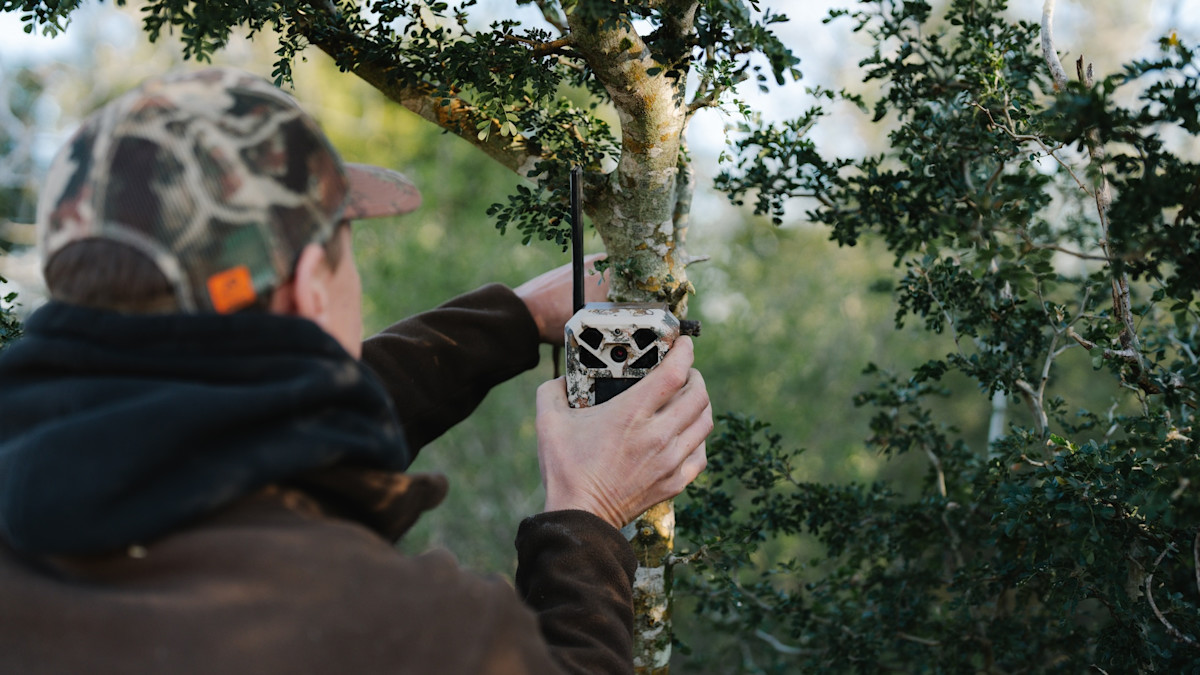
Over the last several years, I’ve started to believe differently about all of that. Where I can,I often run cameras year round. Even though the info I gather now isn’t going to be as beneficial as the info I can gather in October, it’s not without some value.
What I’ve found about monitoring spring and summer bucks is that they mostly do predictable stuff, but it’s when they don’t, that I find myself learning something. Naturally, they’ll hit the most obvious food sources and all of that, but what I like to try to figure out is where else they might travel.
A mature buck has a home range of around a square mile, which means very little to most of us. Suffice it to say, he knows his home and core range very well, and throughout the spring and summer he’ll walk trails, visit water, and do his thing wherever it is beneficial. While you might only get 10 deer pictures a week on a trail in the woods for the next few months, you might get five that really tell you something.
We think about mature bucks generally in the context of September to December or January, but they live out there all year. Understanding where they like to travel all year, and what conditions might get them towalk through a pinch pointin the spring, can play into your fall hunting strategy.
With today’s cell cameras and relatively cheap plans, you can do a lot of scouting and learning without really putting much effort in. And you should, if you can, because there’s really no downside to it.
Shop
Sign In or Create a Free Account
Related

Scout
Stop Believing You Live in a Mature Buck Black Hole
Scout
3 Ways Mature Buck Hunters Sabotage Their Season Before It Starts