3 Long-Range Glassing Mistakes Whitetail Hunters Make

Nothing beats actual observation when it comes to developing a pattern on a specific buck.Trail camera images and videosare a distant second, and definitely worth the effort. But, if you want to learn about what deer actually like to do, there’s nothing better than seeing it with your own two eyes.
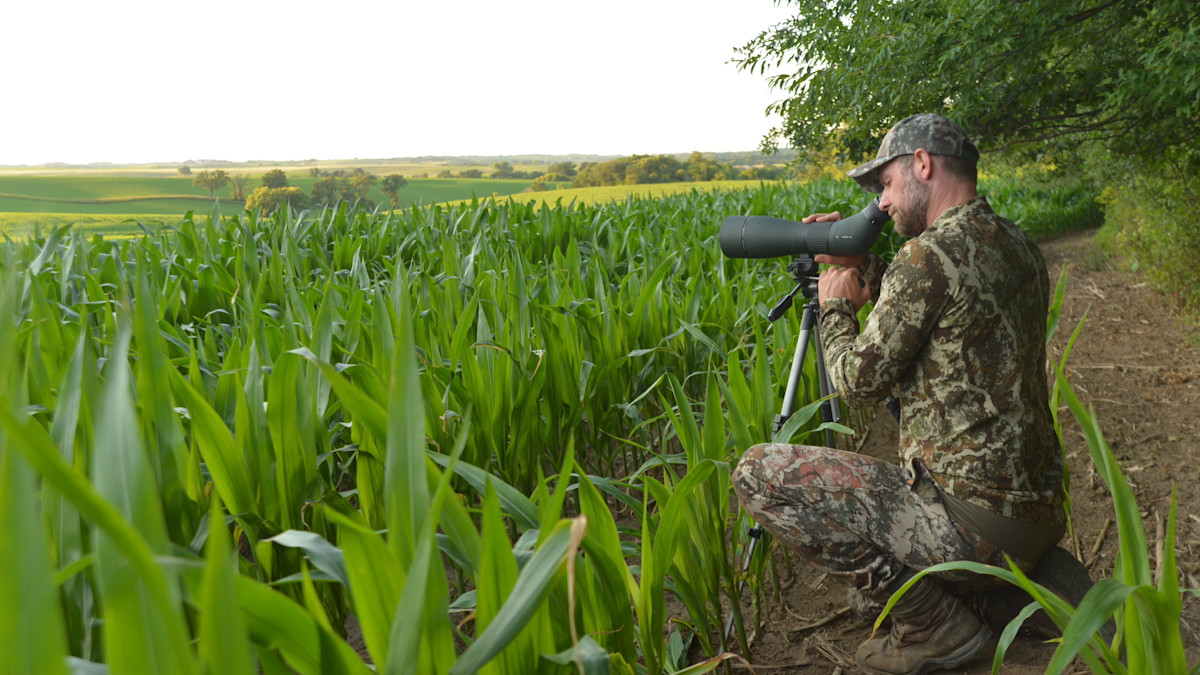
This is a task that seems easy enough. Just grab your spotting scope and yourbinoculars, post up on a field, and wait. The truth is, it can be that simple. Or, long-range glassing can involve a lot more strategy and nuance. In those cases, mistakes are easy to make.
Here’s how to avoid them.
One and Done
If you watch abuckstep out of the woods and into a soybean field on any given night, you have gleaned some intel. It’s a small, but nice gift. What that really means, however, is that one evening while you scouted, a deer did something you expected him to.
If you head back home after that glassing session and decide your game plan is to set up right there for opening day, you’re probably not going to fill your tag on that deer. Now, take that same buck and watch him do that multiple nights in August and earlySeptember, and you had better get a stand-up for him.
One-and-done observations are low-value propositions, just like getting a single trail camera image of a buck doing anything. It’s better than nothing, but just barely. If you want to put long-distance observation to good use, go as much as you can. Then, make note of the conditions on any given night, and what the deer do in response.
On low-pressure ground, you might be able to dial into a pattern with minimal observation. But if the deer you hunt know they get hunted plenty, they won’t be so quick to do the same thing over and over again. They’ll take different trails to the food when the wind switches, and they’ll feed in different spots depending on whether the sun is shining, or it’s cloudy.Rainand wind can affect patterns as well. The more you observe, the more you can build a full picture of deer activity in a given spot, with certain conditions. That directly translates to betterearly-seasonopportunities.
Where Exactly Is He Killable
It’s easy to scan the back of an alfalfa field and marvel at a group of velvet bucks. Knowing they are there is a good thing, but knowing exactly where you can kill them is better. A lot of bowhunters make the mistake of figuring out that some good bucks are usinga food source, and that’s that. But it’s not.
You don’t want to just be on the edge of a destination food source that bucks are going to enter on opening night, you want to be within 20 yards of that spot. Or set up somewhere in their route that will take them withinbow range, and not in a spot where they might wind you. Long-distance glassing provides the foundation for an early-season plan, but you have to drill down to the exact setups that will allow you to make the most of your observations.
Low Impact Looking
It’s easy to believe that whitetails are forgivable creatures when it’s summertime and several weeks out from the season.Spooking a buck in Octoberfrom a treestand is infinitely worse than blowing him out of the groceries in August. So, why worry?
Because pressure is pressure, and your presence is almost always a negative. Too many whitetail hunters treat summer glassing sessions as a no-risk, high-reward proposition. But there is risk. If you walk right out through an open field at last light and clear the whole thing out, you’ve changed the game for yourself.
If you slip in too close to get a really good look and thenget winded, you’ve changed the game for yourself. Treat glassing sessions as an effort to observe deer, but also to never be observed yourself.Camo up, plan your entrance and exit routes and make a real attempt at never letting them know you are watching them.
If you want more advice on how to maximize your summer scouting efforts, check out these articles:How To Summer Scout For Public Land Whitetails,3 Locations You Need To Put Trail Cameras This Summer, and5 Summer Lies Deer Hunters Tell Themselves.
Stay in the loop withThe Wired to Hunt Newsletter
Shop
Related

Hunt
3 Biggest Mistakes Whitetail Hunters Make in the Early Season


Scout
3 Long-Range Glassing Mistakes Whitetail Hunters Make