How to Scout and Hunt Southern Streams
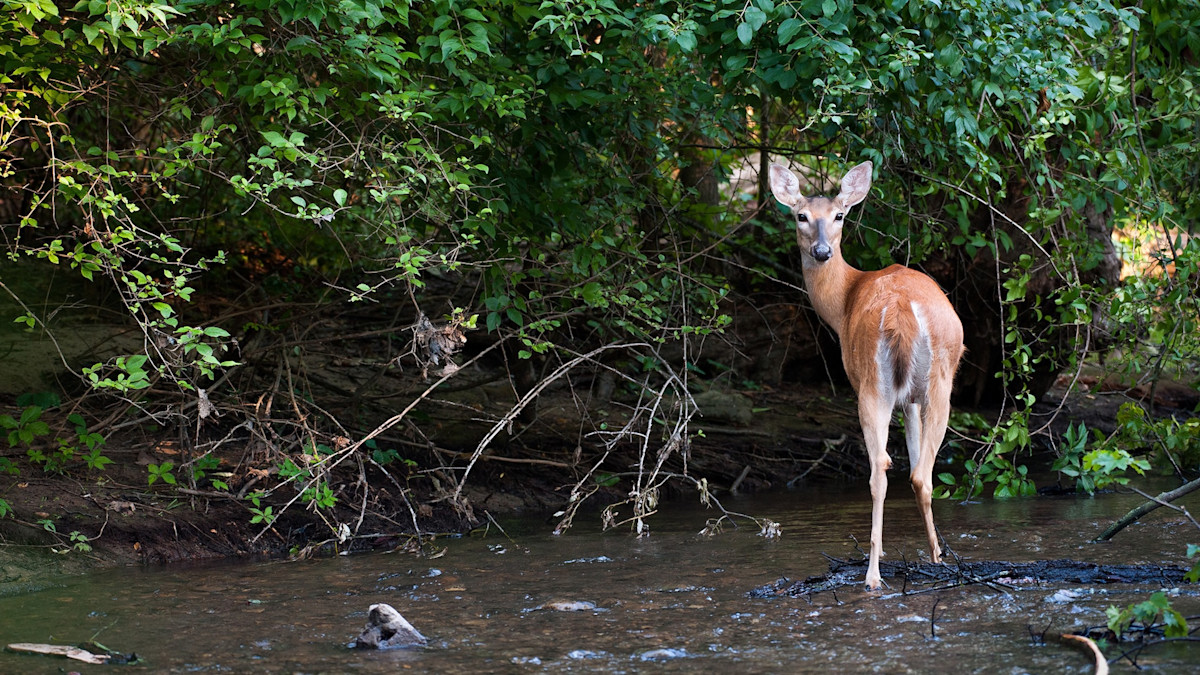

Deer hunting the South presents unique habitat challenges that differ from traditional deer country. The abundance of bedding and sheer deer numbers can make for a frustratingly good time. Whether you’re hunting public or privately leased land, the timber market and old-growth forests can be tough to hunt when it comes to picking the right tree during bow season. After all, in the gently rolling (or downright flat) and monotonous big woods of the South, deer travel can seem random and unpredictable. Yet, southern deer are still deer, which means they’ll still behave like their much huskier kinfolk of the North. They’ll still use edges, terrain features (even subtle ones), and anchors to navigate the landscape, but these travel routes might just prove a bit more challenging to locate.
Finding these travel routes and terrain features requires boots-on-the-ground scouting, as most of them won’t stand out on a map. However, locating SMZs can be done anywhere if you’ve got an e-map handy. These travel routes, staging areas, and rut hubs are versatile landscape features that can foster deer travel all year long, if you know what to look for.
What are SMZs
While you might not be familiar with the term, you’ve probably seen an SMZ, especially if you hunt in the South. Streamside Management Zones (SMZs) are the long strips of timber, typically hardwoods, along creeks, ditches, etc., that timber companies leave after clearcutting a timber stand.
SMZs are typically left to preserve the water quality of these streams or creeks, promote habitat diversity, and provide travel corridors for wildlife. While they can be as narrow as fifty feet, I’ve hunted SMZs that spanned nearly a hundred yards. The size of an SMZ is usually at the mercy of the timber company, but even small ones are easy to spot.
E-scouting
SMZs are easy to spot on digital maps like OnX, but this becomes a double-edged sword for obvious reasons. If you can quickly find a banging SMZ, you can bet other folks have it pinned, too. Still, like other terrain and habitat features, some are better than others.
There’s a general rule of thumb when it comes to scouting SMZs: the more diversity, the better. This might include habitat and/or terrain diversity. For instance, if you spot an SMZ that runs through a three- to six-year-old pine thicket, and the head of that SMZ opens to some type of soft edge, that’s a great place to start.
Similarly, you might find an SMZ running through that same type of landscape, except the head of that SMZ dumps into a thermal hub, where the base of multiple ridges meet. This can be a challenging yet dynamite spot to hunt.
E-scouting can only give you so much data. Once you map out a few SMZs, you’ll need to physically scout them to determine which ones deserve a few sits. While SMZs can provide year-round deer traffic, this doesn’t mean they’ll stay hot 24/7. Finding an SMZ isn’t the end goal. You’ll need to find fresh sign or pull a few observation sits to get the scoop.
The Early Season
If you’re scouting an SMZ during the early season, your game plan probably involves acorns, and rightly so. Food plots in the South are typically a non-factor during the month of October, especially on public lands. Natural browse and acorns dominate the common big woods landscape, and SMZs can provide both food and cover that deer, especially bucks, require. SMZs tend to open into large, open tracts of timber, which makes them great staging areas if they provide enough cover.
Because deer will stage or even bed in SMZs, you should try to locate one with a hot feed tree during the week leading to your season’s opener. You’ll have to walk into these areas to find the freshest sign. Look for water oaks (white oaks if they’re dropping) and fresh—not dry—scat. If the ground and leaves look turned over, but the droppings are dry, time to move on from that tree, at least. That doesn’t mean the deer won’t still stage there before heading into the open timber, but you’ll need to locate where they’re entering the SMZ from the surrounding cover.
The Rut
SMZs can provide excellent security cover for bucks traveling during the rut because they typically divide thick bedding areas. Bucks will travel through an SMZ on the downwind side of adjacent bedding. This makes it easy for them to scent-check bedding areas without having to wade through a sea of pines. Several years ago, I shot a buck doing just that. He came through the head of the SMZ into a larger stand of pines on the downwind side of a food plot. He was able to scent check both the bedding and food plot while traveling parallel to a creek until I shot him at thirty yards.
They’re also dynamite rut spots down South because they provide excellent doe bedding during the rut, which can fall anywhere from early December to late January, depending on your location. Leaves are gone this time of year, and the cover is sparse, so doe groups typically flock to young pine stands if they’re not already there. For this same reason, SMZs make great late-season options, too. If you’re planning a few all-day rut sits, a good SMZ with a community scrape and thick, young pine stand might pay off. Then again, SMZs can be a safe bet any time of year.
Feature image via Matt Hansen.
Stay in the loop with The Wired to Hunt Newsletter
Related

Scout
How to Scout and Hunt Flatland
Hunt
How to Hunt Pressured Deer Camps