How to Deer Hunt Edges in Pine Country
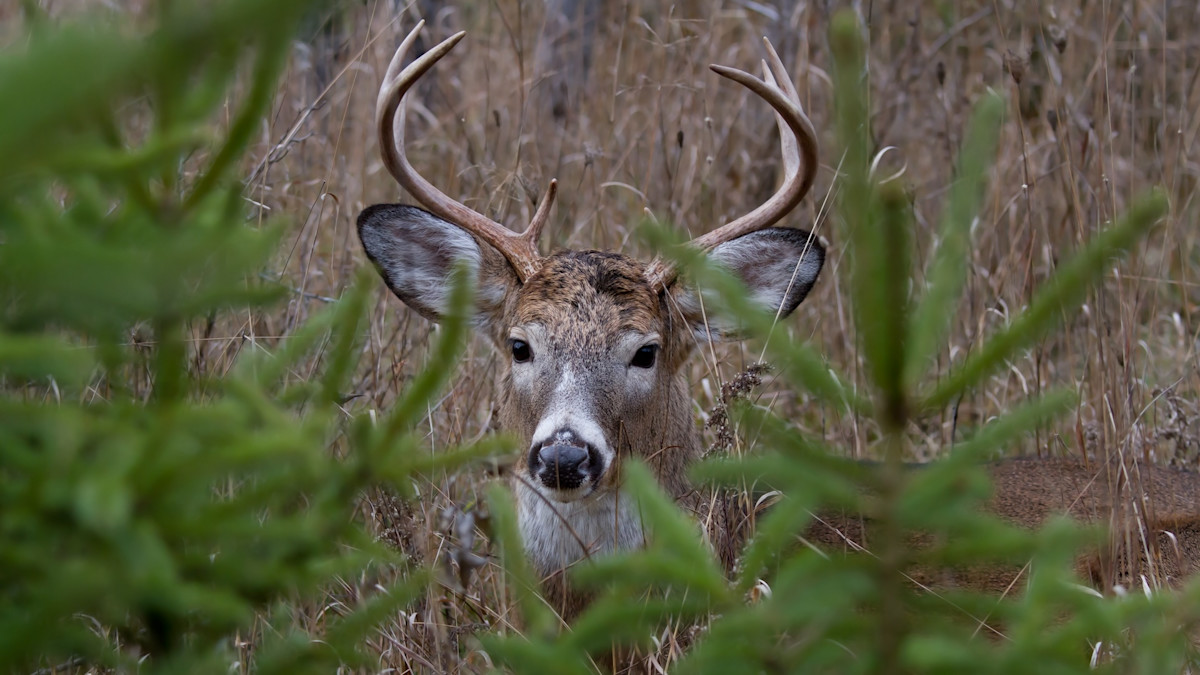

I live in a part of the South known as the Pine Belt. Most of the public lands in this part of Mississippi and Alabama consist almost entirely of old-growth or managed pine stands. There’s a running joke that the deer in this area survive on a diet of pine cones. If you’ve ever hunted in some of these places, you might actually start to believe it. Unlike the big bucks of Mississippi’s delta or Alabama’s Black Belt, a mature buck down here might tip the scales at 160 pounds while sporting 115 inches of headgear, save the exceptions.
Still, there’s good hunting (and good deer) to be found in the pines. And, no, it doesn’t just involve sitting on a food plot. Pine country might not look like typical deer woods, but deer live, feed, and travel in them just like any other landscape. Here are a few ways you can find success in the pines.
Hit the Maps
E-scouting pine country might seem daunting. Most of the woods look like a green blob on a screen, especially if you hunt flatland. Still, in that sea of green, there are edges within edges where deer travel.
I like to start with the obvious spots while e-scouting. Look for recent clear cuts or where two different pine stands meet. For instance, you might have an old-growth pine forest that meets a six or seven-year-old cut or a fifteen-acre block that was thinned in the past few years. These may not seem immediately apparent, but you can use recent satellite imagery to determine what current habitats look like before getting boots on the ground.
You’ll definitely have to scout these places in person. Start with the hard edges. From there, look for trails that parallel or run into younger pines where deer might bed. Depending on the size and age of the pine stand, you might be looking for a couple of specific trails or an area where deer are currently traveling/feeding. In young, thick pine stands (three to seven years old), there might only be one or two trails that deer use to access it for bedding. These trails usually look like highways or wide openings in the pines. If you find a community scrape on one of these travel routes, consider hanging a set or at least a camera.
Don’t Overlook Soft Edges
For older growth stands or thinned cuts, the trails might not seem as consistent or apparent. You might find a ton of trails going in or through them. These areas make for excellent gun hunting setups. Deer love to travel through screening cover, and these types of thinned stands make excellent travel corridors even if they don’t look like it.
They can also provide a ton of browse for deer, but it takes an observant eye to spot the fresh sign in these soft edges. Don’t just look for droppings or tracks. Pay attention to the vegetation. You might notice privet hedge, honeysuckle, green briar, or other plants that have been nipped off at knee or waist-high. Deer might not spend a ton of time in these places, but they’ll definitely travel through them.
Avoid Pine Deserts
Jokes aside, there are such things as pine deserts. They’re typically located on large, private leases where timber companies spray herbicides underneath the trees as they grow. This practice kills any competition and vegetation beneath the pines, giving them the most efficient growth potential and schedule. You can see why timber companies might be incentivized to do this.
Rather than natural browse or cover, you’ll find pine straw beneath these trees, and that’s about it. The deer have no reason to eat, sleep, or travel there. I’m not saying you’d never see a deer, but you probably wouldn’t with any regularity. If that’s what you’re working with, you might want to turn your attention to another area.
Locate an SMZ
One of my favorite features in pine country is an SMZ (streamside management zone). You can read more about it here, but it’s essentially a narrow stretch of hardwoods that snakes through a young pine stand or clear-cut. Timber companies leave these to promote habitat diversity and because they’re typically only cutting and selling pine. It’s both a water and a terrain feature.
An SMZ offers excellent cover, travel, and feeding for deer in the surrounding pine plantations. Essentially, it’s a pinch point, edge, feeding area, and a focal point on the landscape for deer anytime throughout the season. While an SMZ may or may not have a substantial stream or creek running through it, they typically stay wet, which is where you’ll find a lot of oaks. When you’re dealing with an overabundance of bedding, finding an SMZ can help you narrow down deer travel.
Stick with It
As the late season drags on, pines become increasingly important for deer hunters. After the leaf-off and most of the cover has been depleted, deer will hunker down in young pine plantations. These become easier to narrow down as January rolls around, and doe groups will gravitate to these areas.
That’s great news down South, as bucks are still looking for any remaining does in heat. I’ve killed some of my best deer during January, hunting the edges of pine thickets or road beds between plantations. You might have to hunt in places where your visibility is low, but that’s also where you’re likely to catch a buck slipping through the cover.
Stay in the loop with The Wired to Hunt Newsletter
Related

Hunt
How to Hunt Mature Bucks in Wolf Country

Hunt
Tips for Bowhunting Deer in Open Country
Manage
How to Improve Pine Stand Habitat for Whitetails

The comments section requires Functionality cookies. Please enable Functionality cookies in Cookie Settings to view this content.