This Country Life
Ep. 277: This Country Life - Knowing Where North Is
Play Episode
21m
Brent’s talking about how to find your way out in the woods and more importantly, how to find your way back. His navigation through life has been an interesting one to say the least, and he’s going to tell you about his struggles with and without a compass. Knowing where north is was a lesson he learned at an early age and one he still applies today. Grab a map and a compass, it’s time for MeatEater’s “This Country Life” podcast.
Hurricane Relief:https://www.redcross.org/donate/cm/onxmeateater-pub.html/
Subscribe to theMeatEater Podcast Network on YouTube
MeatEater onInstagram,Facebook,Twitter,Youtube, andYoutube Clips
00:00:05 Speaker 1: Welcome to This country Life. I'm your host, Brent Reeves from coon hunting to trot lining and just general country living. I want you to stay a while as I share my experiences and life lessons. This Country Life is presented by Case Knives on Meat Eaters Podcast Network, bringing you the best outdoor podcast the airways had off. All right, friends, grab a chair or drop that tailgate. I've got some stories to share. Knowing where north is finding your way around the woods can be a challenge, especially when you don't know what you're doing. Now, I want to talk to you about the importance of using the basics to get you where you want to go, and I will, But first I'm going to tell you a story. It was over twenty years ago. It was cold and a long walk back to the truck, and I was tired. It was the last split of duck season, and Tim and I had been guiding every day since thanksgiving up at three thirty am and getting to bed sometimes at midnight. It takes a toll after a while, and I was beat. We were hunting the public shooting grounds and the weather was getting cold and slowly locking up all the open water that didn't have any current. We had four or five hunters with us, and Tim took his ducks and left early to go back to the camp and start cooking a big, hot breakfast we'd all be wanting once we knocked out the last few remaining ducks to finish out our limits. That morning. There was no GPS's then I didn't tote the compass, and I also didn't want to tote all those decoys over the near mild trip we had in front of us back to the parking lot, over ice and waiters, and with three dozen decoys and weights, I decided I'd just hide them. We were coming right back to this spot the next morning, anyway, and it wasn't that big of a no. No. The law said you couldn't leave them out overnight, But did they really mean left overnight in the hole you were hunting, or would it be okay to leave them heading the sack next to the hole you were hunting. Well, I knew the answer, but I was willing to take the risk. If I had a sleeping bag with me and could have stayed warm, I'd have just laid down in it and slept until Tim showed up. The next morning we hunted the woods on clear days. That day had a few clouds, but not enough to hide the moon, which was how we navigated the last quarter of a mile after veering off the trail that headed into the only open water we could find, and we had it all to ourselves. It was during the middle of the week. The college kids were back at school and most folks were back at work, and believe it or not, there was four hundred acres of prime flooded Arkansas public timber that we might as well have just owned ourselves. We were the only folks hunting. Another reason I decided to leave the decoys now. I hit them beside a tree where I'd been standing, and I gathered up my charges and we lit a shuck for the truck as soon as the last duck was strapped into our limit. Once back at the camp, I told Tim I hit the decoys, and he looked at me like I'd seen him look at me almost every time I did something stupid. It's going to be cloudy in the morning, dummy, and it's my turn to go in early. What if I can't find them? I wanted to hit him with that iron skillet he was using to turn a dead hog's belly into savory strips of bypass surgery. Don't worry about it. I'll go early again. I know where I'm going, I know where I left him. Matter of fact, you ain't even got to go sleep in and have the groceries ready. We'll be back by ten. And that's how I left it, and I didn't think about it again until we got out of the truck The next morning. At the parking lot, Arkansas was dark as four foot up of bulls behind total cloud covered. Standing outside, you couldn't see your hand in front of your face. We had a half a mile of trail to walk, then we had to go overland through the woods and a couple of thickets. I'll find where we walked through the ice and trace our steps backwards the way we came out. That should work, but it didn't. Everything had refrozen during the night, and about four inches of water had fallen out, and nothing looked the same. Nothing. The small flashlight I had only kept me from walking into trees. I had no idea where I was or where I was going. After I left that trail, headed to where I thought my decoys and the whole we'd hunted the day before would be. The hunters behind me didn't have a clue. I was lost, mainly because I acted like I wasn't. They were paying me money to know what I was doing, so even if I didn't, I was going to act like we should be there. But now I thought that the waterfall out had changed everything so much, I wasn't sure what planet I was on, much less what unmarked location I was trying to find on a wildlife management area that I was currently wandering around then with a group of men who were following behind me like they were sold to my breeches. Finally one of them spoke up, how much further? Oh, it's right up here, We're not far. I shared the light up in front of me, trying to locate a gap in the timber big enough to look similar to a hole that we could maybe coke some ducks down into once it got light enough to see there, right there, about forty yards away, was the narrowest of holes in the timber. There was nothing closer. Daylight was only a few minutes away. As we finally begun to be able to see without the aid of the only light we had. None of them had brought one, but there was still one other hurdle to jump. All the water in the hole I had lucked up on was frozen almost solid. I placed my hunters around in a semicircle where they were going to be standing once the shooting started, if there was going to be any and I began to monkey stomp that ice until oblivia I broke through the to find the water below was only deep enough to cover the toe of my boot. With all the fallen leaves taking up the space and the water between the bottom of the ice and the top of the earth, I wanted to be someplace else. If I hadn't hid them decoys and brought them out like I was supposed to, I would be someplace else, and Tim would be dealing with this fiasco right now instead of laying in his warm bed sleeping the sleep of the guiltless. I quickly prayed he'd went the bed. Then I had the idea to kill all the wet leaves of mud up on the ice, making it resemble open, dark, muddy water in a sea of light colored iesed up muddy water. I was feeling good about what I'd managed to conjure up out of literally nothing, when one of those cats asked, are we not going to use the decoys? Now? With all the confidence I could muster, I told them, now, we don't need them. I'm gonna put them right in through that small hole in the trees, and by the time they figure out that that ain't water, they'll be close enough for us to shoot them in the lips. They seemed excited and couldn't wait to see what was about to happen. I couldn't either, but I knew one thing for sure. What I told them was fixing to happen was probably the furthest thing that was actually gonna happen. As it grew lighter, I glanced around for the decoy as I stood by my clients, I looked around for anything that might actually tell me where we were. The only thing I saw was my hunters. Though as inexperienced as they were, I could tell they weren't exactly smelling what I was stepping in. I heard a few whispers back and forth as I stomped and kicked more muddy leaves up on top of that thick ice. I couldn't tell what they were saying, but I knew they wasn't buying it. At least not yet. Ducks started flying and I started calling, and I was more surprised. The ducks looked like they were trying to find a spot to light in the woods that they knew better than I did was all frozen up, and yet there they were. I told them to be stealing and get ready, and I started calling at a group of ducks, and my glimpsed passing overhead, and three mallards pitched in through the top of the trees and hovered over the hole I'd stomped out in the ice covered with wet, muddy leaves. We got them all. Twenty minutes later we were high fiving and picking up our last green head for a full limit of big ducks over zero decoys with zero open water. I celebrated with him, but was trying to be like the great Chicago Bear Walter Payton. When he scored a touchdown, he just hand the ball back to the referee and trot off the field. He said, YOA, act like you've been there before. Well, in my mind I was moon walking back to the truck and doing backflips. Those cats thought I was the greatest duck guy in the world. Walking out from that whole about thirty yards was the sack of decoys I'd hit the day before. I didn't even break stride. I scooped him up and kept walking like I knew right where they was, straight back to the parking lot. My hunter's walking behind and reliving the hunt shot by shot and talking about how we did it without decoys and water. I wasn't the greatest duck guy in the world, not by a long shot. I wasn't even the greatest duck guy in our business. But I was no doubt the luckiest. And that's just how that happened. Getting lost, turned around, or temporarily disoriented is something we all take a chance on each time we leave the house and venture into parts of the unknown, and knowing how to navigate around and through our surroundings. It's something we've been doing since the first folks decided to see what was on the other side of the hill. Curiosity has done more than kill the cat, as the old saying goes, on the positive side, it's fuelled uncountable discoveries, territorial expansion beyond what was thought possible, And on the negative, unscheduled sight seeing tours of the back forty I figured there was a lot of that taking place back in the days of exploring the West. How can you know where you're going if there's no one there to tell you where to go, if no one you know's ever been there before. You can always mark a trail to where you've been. It's where you're intending to go that can cause the problems. And I've always been fascinated with reading maps and using them with a compass to get around in the woods. Knowing where I am in the wilderness and being able to point it out on the map has always been something that I take a lot of satisfaction in. Being able to read a map is important. In the days before GPS, it was the two Most folks that were from where I grew up had their toolbox, and it was learned in my case from a very early age. When I was a little boy, my dad and I would lay on the dog box in the back of his truck, staring at a cloudless sky while parked on a Timber company road, waiting on the dogs to strike. Total darkness surrounded us, and the stars were clear and bright. He pointed out the Big Dipper and the Little Dipper and then the north star, which is the last star in the little Dipper's handle. If you're looking at that star, you're looking north. East is to your right, West is to your left, and south is one about face away. Years later, when my dad got sick, he was admitted to the hospital and spending what would be his final forty two days on earth. The value and the importance to him of the lessons he taught me way back then became apparent. Night and day kind of blend into one when you're in and out of consciousness in a windowless room or one with the shades constantly closed. The nurses were always good about writing the day and the day and whether it was am or pm on a big board with colored markers next to a clock that faced his bed, and he could see it whenever he woke up and looked around. During one of his lucid moments, he looked around the room at me and my brother Tim, who were standing on each side of his bed. I saw him look at that board and then back at us, and he waved his right index finger back and forth as his hand rested on top of the covers, his eyes going back and forth from Tim to me and We could tell he wanted to know something, but he couldn't speak. We made suggestions, asking him what it was. He wanted, both of us trying to decipher what he was trying to say through. So finally Tim said North is that way and pointed out the window with his left hand. Dad nodded ever so slightly, closed his eyes and went back to sleep. And from then on, regardless of where he was in that hospital, the nurses or one of us always included the word north in an arrow pointed in that direction. Besides the date and the time, I would take those lessons he taught me as a kid, and expand on him throughout my life even today. There was one time in January of nineteen eighty eight when it was most important. I was in a land navigation course at Fort Sill, Oklahoma. At that time of my life, I'd never been as cold or seen the cold Oklahoma was beating me around the head and shoulders with There were ten of us in my group that started from the back of a deuce and a half truck that we'd been freshly thrown out of, with a compass and a map and a list of individual points that we all had to find on our own. There may have been ten of us in the group, but we all had different points to find and an unknown time in whish to complete the evolution. The map had them pre marked as a dot in a distance from where we stood. Here's how it worked. We all had that you are here mark on a map. This would be in the first of the field exercises. They at least gave us that as a starting point. Then from the maps they had us, we had to find markers scattered over acres of woods in the order that they were listed on the map. We all had a different number of points to find that zigzagged across the course that had followed correctly would have you end at the corresponding endpoint marked on your map. At each such reference point was a metal stob that had been drove in the ground with a brass tag on it that had an alpha numeric code stamped on it. You had to write those down before shooting an asthma to try and locate the next point. They were easy to miss if you deviated the slightest on your path from the previous point or miscalculated the distance, because they only poked up about six inches out of the ground. The terrain we were in went from open fields that were grown up with waist high grass and briars to dense woods, and compounding the problem was there wasn't only just the markers you were looking for out there, but other markers in close proximity that were marked differently. If you didn't walk exactly along the proper asthmas counting the paces from the previous spot to the next, you could write down the wrong code when you reached that next point in the series. You'd wind up back with everyone else eventually. But if you mark down the incorrect code, you failed course. If you failed the course, you had to recycle and do that phase of training all over again. If you failed the second time, I think that took you out back and shot you, or worse, made you join the Navy. I'm kidding, I'm kidding. I love the Navy. I'm kidding now. I loved every minute of it, and it was a great example of the difference between being close and being right on the money. And it's good to know where you are in relation to what you're asking other folks to shoot at, if you know what I mean. There's all kinds of GPS devices, apps and trackers that are as common today as that computer camera, television telephone A bunch of you are listening to me talk on right now, But that hasn't always been the case. I love the on X app on my phone. I use it literally every day for something. I depend on it to help me navigate. But there was a time, as my daughter Bailey calls it back then, when those things didn't exist. Those simple skills are not as common as they used to be because of the great convenience of technology. But we owe it to ourselves and our kids and the new outdoor folks that we should be entering to pass along the basic skills that will help you get around in the woods when your computer, camera, television telephone battery dies. Keep a compass in your pocket and no how it works and how to use it. In its most simplistic form, if you walk into an area you're unfamiliar with in a northerly direction to get back in the vicinity of where you left from, you know you're gonna have to walk in a southerly direction. You don't even need a compass to do that. If the sun is on your right when you leave, it needs to be on your left when you return if you're only gone for half the day. Now, don't be jamming up my email with what if you left at ten am and came back at two pm, Galileo, I know the sun would have to be on the right side. Again, I'm talking in very general terms here, so take it easy. Look at a map of the area you're in before you leave the truck, and orient it with a complaice to where you are and what direction you want to go. Better, yet, look at it at home and familiarize yourself with it before you ever leave the house. The degree of accuracy of maps online is extremely detailed and manipula to the point that you can just about see what you'll be seeing before you load up and go. A physical map of the area is good to tote in your pocket as well. It's not that you're gonna need it. It's all about if you suddenly find out you do you vetteran backcountry folks know what I'm talking about. Sometimes a day of hunting in the wilderness can turn into an overnight stay because of weather or packing out an animal, or maybe an injury, or, for heaven's sake, battery dies on your computer, camera, television, telephone. Being prepared, it is essential an extra pair of socks, a packable sleeping bag and warm clothes jamming until a day pack doesn't take up much room, and a compass hanging around your neck. For sure. Dog, I go overboard when packing for a trip and take way more than I'll ever need. But regardless of where I'm going to what I'm doing that requires me to take things into the field. I have a minimum a compass in every day pack, backpack and chest rig I on if I'm talking all three on a trip, I have them all Three is two, two is one, and one is none. I googled how to read a map and added me to either in the search bar. There were half a dozen great articles on the media to the website explaining in detail how to do it. The Bureau of Land Management has an entire free course on map reading on their website that goes into the weeds so deep you could plan a mission to Mars with it. And of course there's always the universe. Thank give you Tube for video instruction. The main thing is it's a great tool to have in your toolbox should you need it. It's also a skill that's being lost to the convenience of modern technology. And maybe best of all, it's an activity you can share with you young as it gets you both outside doing things that doesn't require electricity, batteries, bait, or even bullets, just a little time and a willingness to learn. Knowing where north is it's the first step, and knowing where to take your second. Thank y'all so much for listening to all of us here on the Bear Grease channel, as really is something for everyone here at Mediator, from how to and trivia and music documentary, kids and this calamity that drops every Friday morning until next week. This is Brent Reeves. Sign it off, y'all, be careful to be done. R.
Presented By
Featured Gear
While you're listening
Policy & Legislation
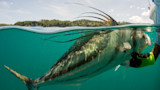
This Country Just Made Catch and Release Fishing Illegal

On May 2, the Colombia Congressional Court declared sportfishing unconstitutional with an 8-1 vote in favor of the ruling. “Although there is no consensus as to whether fish are sentient beings, the truth is that by virtue of the precautionary principle, even in the absence of scientific certainty...
Maggie HudlowMay 19, 2022
Read MorePlay Now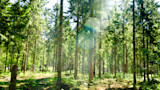
Public Lands & Waters
Find This Bar in the Forest, Win Free Beer for Life

Cancel your plans for this weekend: Busch is going to give someone a lifetime supply of beer for wandering around the forest. In a recent press release, the brand announced that they’re partnering with the National Forest Foundation to help conserve 200 million acres of National Forest land. The...
Spencer NeuharthJul 18, 2019
Read MorePlay Now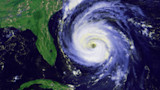
Shark
Real-Life Sharknados
There’s a difference between book smart and bar smart. You may not be book smart, but this series can make you seem educated and interesting from a barstool. So, belly up, pour yourself a glass of something good, and take mental notes as we examine some of the very real, and not at all real, impacts...
Spencer NeuharthSep 5, 2019
Read MorePlay NowConversation
Save this episode