This Country Life
Ep. 275: This Country Life - Four Bit Bobcats and Taxidermy
Play Episode
22m
From flea market fur to Alaskan moose, Brent's talking taxidermy this week. After visiting with his good friend and local taxidermist, Corey Eisenhower, Brent's offering up some tips on proper field care of your trophy. He's got a story from his childhood of how he got his first bobcat hide and later got skinned in a game of Blackjack. Lastly, you'll hear how a mediocre buck can be the most prized possession of all. It's all about taxidermy this week on MeatEater's "This Country Life" podcast.
Hurricane Relief:https://www.redcross.org/donate/cm/onxmeateater-pub.html/
Subscribe to theMeatEater Podcast Network on YouTube
MeatEater onInstagram,Facebook,Twitter,Youtube, andYoutube Clips
00:00:05 Speaker 1: Welcome to this country Life. I'm your host, Brent Reeves. From coon hunting to trot lining and just general country living. 00:00:12 Speaker 2: I want you to stay a. 00:00:13 Speaker 1: While as I share my experiences and life lessons. This country Life is presented by Case Knives on Meat Eaters Podcast Network, bringing you the best outdoor podcast. 00:00:25 Speaker 2: The airways had off. 00:00:27 Speaker 1: All right, friends, grab a chair or drop that tailgate. I've got some stories to share. Four Bit Bobcats and taxidermy. Taxidermy is something I've grown up with and is a part of my culture. It wasn't until I started seeing other parts of the world and comparing them to mine that I saw a stark contrast to my own. In several areas having dead animals in the house being one of them, going I'm gonna tell you all about it, but first I'm going to. 00:01:03 Speaker 2: Tell you a story. 00:01:11 Speaker 1: The first mounted animal I ever saw was a moose in a friend's house when I was in the first grade. That thing looked big as a dinosaur. It hung over the mantle of the fireplace, and I couldn't fathom how big the rest of that joker must have been. I think back now and I can see it clear as a bell. It reminds me more of Bullwinkle in the face, but the antlers seemed massive. And when my friend told me his dad killed it in Alaska, he might as well have said he killed it on Mars. How could anyone go to Alaska from Rise in Arkansas and come back with a moose? It made me want one of my own. And if not a moose, a deer or a squirrel or maybe even a coon. Now, the first time I actually bought something and possessed something in the taxidermy space, if you'll allow that stretch, was a bobcat hide that I bought at a flea market. It was in Pine Bluff and I couldn't have been more than six or seven. 00:02:10 Speaker 2: When we walked past. 00:02:11 Speaker 1: The table that had a bunch of stuff I wasn't interested in until I spied that hide hanging on the side of the booth. Dad, what is that? I said, Bobcat, I want it. You ain't got no money? How much is it? He said, wyon't you ask the man selling it? I did. The man looked at me. He asked me how much money I had. I told him I didn't have any, but my dad might have some. He said, well, I don't think your daddy is interested in buying it. That was the same feeling I was getting when I looked up at him and he wasn't making any attempt to dig in his pocket for the folding money. I said, well, how much is it? The man said, oh, I'd probably take four bits for it? 00:02:58 Speaker 2: Four bits? The world was a bit? And where was I going to find four of them? 00:03:03 Speaker 1: Before somebody else came along and recognized the beauty of this magnificent bobcat hide that I was now holding into my hands, feeling the soft fur on one side and the aluminum like texture of the other that had been dried to the tensil strength of a stretched piano wire. 00:03:21 Speaker 2: Needed to act fast. That you got any bits I can borrow? 00:03:25 Speaker 1: They they both busted out laughing, and then I learned that four bits was fifty cents. You might be interested to know that the term originated from the Spanish dollar that was divided into eight parts or bits. The slang term was then applied to the US dollar. Mildly interesting to me now, but at the time not even remotely. The only language I was interested in was hearing that man say in English soul to Brent ribs Celine river Fur, a fisicionado and spender of bits. Well, I handed him fifty cents that my dad gave me and walked away. I had that hide hanging on my wall for several years, and I'd look at it and tell my friends when they were over at the house, wild stories about how I had captured it after it attacked me and I'd killed it with my bare hands and I skinned it out. 00:04:25 Speaker 2: I had hung there until. 00:04:26 Speaker 1: I lost it in a game of blackjack to mine and Tim's middle brother Chuck, a game in which he was the dealer, and I'm quite sure was rigged from the start because we only played one hand. He always wanted that hide and asked for it, but I wouldn't let him have it. But that day he specifically wanted to play for that hide since I didn't have any money, and so I bet my Bobcat hide against two dollars, just knowing I was gonna win, and he drew a blackjack. What a coincidence. Tyewatch probably still got it. I was out a Bobcat hide, but I learned a lesson. If you gamble, be prepared to lose. If you gamble with your brother you're gonna lose every time, and that's just how that happened. Taxidermy has been around for a long long time. In fact, modern taxidermists can trace their history back twenty two hundred years before Mary surprised Joseph with the first Christmas present. Ancient Egyptians were the first known taxidermists, and they started developing methods of preserving animals. They used spices and ols ands and other embombing tools to preserve animals. They'd mummify the pets of Egyptian royalty and bury them in the tombs when they died. The Egyptians died, not the animals. The Egyptians preserved techniques were not intended to make the animals look natural or for exhibition. Instead, they were meant to satisfy the editions of the time, which I assume was to look like dead animals. I've seen pictures of their work from the tombs that have been opened mission accomplished. All those animals looked like was dead, nothing like what we have now or are supposed to have. Sometimes it turns out like that, but if you take your time and do your due diligence and scoping out the right taxidermists for what you want should be good to go. My buddy Corey Eisenhower, on top of being a Marine Corps veteran and a North Little Rock Fire Department captain, is an accomplished taxidermist in his own right and owns Ikes Taxidermy. Corey specializes in deer and ducks. We were sitting in the shop one day and I asked him for some pointers to relate to anyone out there that would like to decorate their homes with dead animals that, unlike his Egyptian counterparts, work, don't look dead. Corey was quick on the draw and said, the first thing you need to do now, This is important now, but you need to have a plan together before you pull the trigger, which is a little odd to me since I never planned for anything now. I used to train a lot for different events, most of them scary, but seldom have I ever planned for anything. 00:07:39 Speaker 2: It drives a lections, It's crazy. 00:07:41 Speaker 1: I'm a gold with the flow kind of fella, and as long as the bullet s ain't flying in my direction, I feel pretty good by what's taking place. His advice made sense to me last May when I called him from Dolphin Manitoba, Canada. 00:07:56 Speaker 2: Excited about the bear. 00:07:57 Speaker 1: I just poked a whole in while hunting with crad Can medal the McCarthy, I said, Corey, I just smashed a big, color faced black bear. You want to mount him for me? Cory said, man, that's awesome. Congratulations. No, I don't, huh. I'm surprised, he. 00:08:15 Speaker 2: Said, brother. I like deer and ducks. 00:08:19 Speaker 1: Now. I was fifty seven years old when I learned that not all taxidermists like mounting all games. Now, I knew there were folks who specialized in certain animals and amounts and have a knack or a particular skill set that sets their work apart from others. But but what I didn't think about was the familiarity that enhances the animals that they work on. I met Cour several years ago when I answered the ad that he had on hunting for him about bear hunting bait, and my brother Tim told me about it and I gave him a call. We hit it off immediately. We've been friends ever since. I've been to a shop countless times and we've hunted together. He helped me with some logistics from Clay Bow and I were filming the Mississippi River Expedition FIM. I helped him drag a deer out of the woods he shot with his bowl last week. He's my friend and he just told me no, and for good reason. He don't work on bears. Could he do it? Absolutely he could, but bears ain't his thing. He likes to hunt on him, but he don't like to work on them. I like to shoot guns, I don't like to work on them. My brother Tim likes to do both. It's the same thing. So I asked him to help me with this episode and shell out some advice for the folks that are looking to decorate their homes with dead stuff. Let's break down his first piece of advice. Have a plan why you can't always have a contingency plan for everything, Like when you're going to get the trophy you want now and you can contact the taxidermis prior to your trip and discuss when you're going, what you're going after, the style of the mouth that you're looking for, estimated cost to feel, care of the animal, which is head and shoulders more important than any other step. According to Corey, you can have a plan in place. You can have a deposit ready to put down for what you want mounted. Should you be successful, you can plan down to the most minute detail. But if you don't do proper field care in getting your animal from the kill site to the shop, you have done hold the wrong rope. Now, the creatures we pursue are gifts to us, and as their stewards, it is our responsibility to care form to the best of our ability. If we choose to have them immortalized by the artistry of taxidermy, we need to present to the artists the best items with which to work, and that starts when the last breath of air leaves that animal. Now, for deer in the South, for sure, time and temperature are not usually your friends. I was deer hunting yesterday morning and at a thirty it was sixty four degrees, not exactly good conditions to keep an animal from getting a little spicy if you don't act fast and using the proper techniques to delay decomposition. Our friend John Hayes at Hayes Taxidermy in Libby, Montana, who does a lot of our mounts, doesn't have a lot of issues with heat this time of year. I actually just checked the temperature there and if it drops one more degree. John can make ice cubes on his patio, but down here it matters. Speaking on large animals, Course says you need to get the guts out of them asap if the weather is the least bit warm, and if possible, get bags of ice placed in the cavity to speed up to cooling. Now we have severalized chests at Bear Camp every year packed with ice solely for the purpose of getting those rascles cooled off as fast as possible. We're hunting in September and they can get super hot some years, and we're usually only hunting in the afternoons. Last light is normally when we shoot one, so by the time you get that barry located and drug off the mountain, a significant amount of time can have transpired. Have an ice in camp has saved us more than once, especially when we're so far from any place to run to the store and buy some. Folks out west where there are hours and hours and miles and miles further away from the convenience of being close to a store already have a plan in place where they should, which is gut, skin and pack out. But temperature isn't the only thing that matters, how you get that animal from the kill side to your taxidermist is just as important. Big deer camps, especially the ones where I grew up, would have a walk in cooler. Deer be gutted and hung up before being processed. Now, obviously not everyone's going to have this luxury, but for the folks to do, Corey says it's absolutely his preferred way of receiving an animal that he's going to work on. I said, frozen. You'd rather have them frozen than fresh? He said absolutely. He also said that every taxiderms is different, but he likes them frozen, especially deer, mainly because of ticks. It's a separate issue that those folks have to deal with that I hadn't thought about. Now. I know, I've been skinning deer and coons and squirrels and whatever and seeing ticks and fleas crawling off of them, But to have a large number of them brought into my workspace has never been a problem. I get it, Corey. Now, even how you drag the animal out as an issue, Never go against the grain. Always drag the animal head first. If you can't carry it or use a card or in my he'll Billy Friend's case, am you as your conveyance. Using a sled or a drag tart will protect the side that's being drug from scar or losing hair. If none of that's available, pick out the side that's not going to be most prominent in the mouth you're supposed to have already chosen that, remember. 00:14:16 Speaker 2: And let that side sustain the damage. 00:14:19 Speaker 1: Dragging a high the wrong way will have the hair looking like the head of that singer from the band Flock of Seagulls. 00:14:24 Speaker 2: Trust me, you don't want him to look like that. Just google it see for yourself. 00:14:31 Speaker 1: There's a ton of how to videos on caping idea for the taxidermists available to watch at the University of YouTube. 00:14:38 Speaker 2: However, there's more than one way to scare a cat. 00:14:42 Speaker 1: That analogy has never been more fitting, So talk to your taxidermist first and let him. 00:14:48 Speaker 2: Tell you how he wants it done. 00:14:51 Speaker 1: Corey says you need to be wary of meat processors that offer caping your deer in addition to cutting up your meat. Some are good and others so much. It's really not on them, he said. They're in the meat. 00:15:03 Speaker 2: Processing business, not the taxi dermy business. 00:15:07 Speaker 1: Your local taxidermist can help you navigate that if you're not into processing, you know. On me. Most of the times I am, but sometimes, especially if I'm doing a lot of traveling, I'll drop it off and get back on the road. Just make sure they know how to properly kpe your animal before getting it done. Measure twice and cut once. 00:15:27 Speaker 2: It's never been more true. 00:15:34 Speaker 1: And as you may have heard, my brother and I used to be waterfowl guides. Now we had clients from all over the country coming to Arkansas every year hunting ducks and geese, and I guess probably twenty percent of them wound up want to take something back home to mount It was standard operating procedure for us to poke the ducks in the pantyholes, all for that specific purpose of my dad head tucked under one wing and wrapped the newspaper, then taped up and frozen. I had always been told that's the way to do it, and I told Corey that was what we did, and he goozle chopped me out of my chair. He didn't actually do that, but I think he really wanted to. He said, newspaper sucks all the moisture out of the skin and will freeze and burn a duck faster than a wren can poop. Now that's fast, he said. The only reason a newspaper should be close to a duck is if he wanted to read it. Pantyhose is good to keep the feathers in the line, but it's not necessary, and he said tucking the head under the wing deserved an additional goozle chop. Here's how Corey the Birdman Eisenhower says to do it. He touchs plastic bags he gets from the grocery store with him in his blind bag or his pocket. If he gets a duck or a goose that he wants to mount, he doesn't let the. 00:17:00 Speaker 2: Dog retrieve it. 00:17:01 Speaker 1: He doesn't let it hang on the neck from a lanyard, and he absolutely don't wring its neck if it hasn't quite flown over the rainbow bridge. There are several duck dispatcher tools, he said, that you can hang on your lanyard or keeping your pocket that won't damage the bird, and they're easy to use. But most importantly, it's a very quick and humane way to send them across the river. Of course, says to hang them upside down for the group picture, but be careful how they lay against other birds. Then once the pictures take and lay them head backwards on their back, place them in a couple of plastic bags and freeze them. 00:17:41 Speaker 2: Why not tuck their heads under the wings. 00:17:44 Speaker 1: He got the goosele chopping look in his eye again and said, most of the bleeding comes from the head, and it'll stain the lighter colored feathers normally found under the wings and on the fell is the birds. Well, all that would have been good information to have say about forty years ago. Fish are almost always replica made now, so if you're going to have one of those done, it's imperative that you discussed with the taxidermists what photos and measurements he needs to get you an accurate reproduction if you catch. People are quick to hate on folks that don't just catch and release fish. Now, I'm a strong advocate of catching release, especially when the release is into peanut ol it's about three hundred and fifty degrees. Here's a quick way to judge the talents of a taxi dermist. If you're not as fortunate to have one as a friend like my buddy Corey, or get acquainted with him through work like John Hayes's studio in Montana, or have the good fortune to have a strong reference for the ones like Authentic Taxidermy in Manitoba, where Patrick Forkollo and Kenton Wallman are working on my bear. I can't wait to see that rascal after the first of the year, when Craig and Melanie bring it down. When they come visit, ask your friends, do some legwork of your own, and go visit the shops and see for yourself. What they're turning out is what you want to hang on your wall. Now, good taxidermy ain't cheap, and it shouldn't be, but bad tax germy can be just as expensive. It pays to do your homework. It's an art form all its own, and the folks that I know that are in the business take a lot of pride in what they're turning out. I look over my right shoulder at the first deer I ever had mounted. It's a nine point that would have to turn in a book report for extra credit to be much more than one hundred inches. My son Hunter killed it with a bow when he was fourteen years old. I felmed it from start to finish, and it's a day that I'll never forget. I couldn't afford to have it mounted back then, so I traded out some video work for the for the mountain. I got a fifty percent discount. I should have gotten paid because the quality of the video work was far superior to what's hanging on the wall behind me. However, when I look at that mount I don't see the seams that weren't sown correctly, or the polls I specifically didn't ask for. I see the delight and the wonder of an aspiring bow hunter who practiced all summer from a tree in our backyard. I see us checking trail camera picks week after week, and him helping me decide. 00:20:25 Speaker 2: Which tree he wanted to use. 00:20:27 Speaker 1: I see all the times he jumped out of bed when the alarm went off to go hunting, the same bed that Alexis would have to drag him out of to go to school. I see his face the morning he forgot his safety harness and we turned around and went home because that was an unbreakable rule. I see the disappointment in his eyes when he went back that afternoon and checked the camera and there was the buck that we were after, Just like he dreamed he'd be. I see the look on his face he made the shot. A week later, when he turned to me looking for reassurance that he'd done just what he thought he'd done. I see the realization that all his efforts had come to fruition when he laid his hands on the antlers of his trophy. Mostly, I see my son and a million moments that we shared in relation to a white tail that most folks wouldn't give a second thought to. It's not taxidermy, it's treasure. 00:21:32 Speaker 2: Now. 00:21:32 Speaker 1: I hit the jackpot every time I look at it. Thanks so much for listening. Check out the second season of The Mediator Kids podcast. It's now on its own channel, so you'll go over and subscribe to it to hear it. It's really good and the young'uns seemed to really enjoy it. You'll hear some familiar voices there too. The Big Black Friday Sale is going on with the Meat Eater online store and all the Meat Eater brands, some of it as much as fifty percent off. 00:22:09 Speaker 2: It's going on until Peacember the second. 00:22:12 Speaker 1: I hope y'all had a wonderful Thanksgiving and until next week. 00:22:15 Speaker 2: This is Brett Reeves sign it off. Y'all be careful.
Presented By
Featured Gear
While you're listening
Policy & Legislation
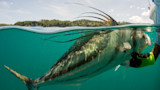
This Country Just Made Catch and Release Fishing Illegal

On May 2, the Colombia Congressional Court declared sportfishing unconstitutional with an 8-1 vote in favor of the ruling. “Although there is no consensus as to whether fish are sentient beings, the truth is that by virtue of the precautionary principle, even in the absence of scientific certainty...
Maggie HudlowMay 19, 2022
Read MorePlay Now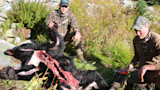
Big Game
How to Skin Big Game for Taxidermy and Tanning

Occasionally a hunter will be lucky enough to harvest an animal that inspires such strong emotion, they want it to live on through taxidermy. When the time comes for you there is a certain process that needs to be followed so that the taxidermist can do their job properly. It’s important to skin...
Steven RinellaNov 26, 2018
Read MorePlay Now
Fishing
Gyotaku: Edible Fish Taxidermy

As Americans and Europeans know, traditional fish taxidermy involves harsh chemicals to preserve the skins, which are later mounted on wood or plastic molds. And if you've ever spent time in a dusty barroom overlooking a lake or river, you know they don't age well. The modern version of fish...
Christopher BancroftJan 31, 2025
Read MorePlay NowConversation
Save this episode