Cal Of The Wild
Ep. 372: Bears, Great Whites, and Crime
Play Episode
22m
This week Cal talks about Grizzly bears, dog poo and penguins, the Slovakia method and so much more.
Check out the new"Cal of the Wild" T-Shirt
To learn more and get involved with any Cal to Action,click here.
MeatEater onInstagram,Facebook,Twitter,Youtube, andYoutube Clips
Subscribe toThe MeatEater Podcast Network on YouTube
00:00:10 Speaker 1: From Meat Eaters World News headquarters in Bozeman, Montana. This is Cow's Week in Review with Ryan cow Calahan. Here's cal bad news dog owners. A new study out of Australia has found that quote the environmental impact of owned dogs is far greater, more insidious, and more concerning than it is generally recognized. This study, first reported in The Guardian and sent in by listener Rachel A from Saint Louis, was commissioned by mister Bigglesworth. If you don't remember, that's Doctor Evil's hairless pet cat in the Austin Powers franchise. Look what you did to mister Bigolfworth? Just kidding. It was actually published in the journal Pacific Conservation Biology. It examined all the published research on dogs and determined that all that pooping world chasing isn't great for the environment. Dogs have contributed to the colony collapse of penguins in Tasmania. Dog attacks are the second most common reason animals end up in the Wildlife Hospital in the Australian Zoo, and studies have found that deer foxes and bobcats are less active in areas where dogs are allowed. Dog poop can impact plant growth, and the dry dog food industry is a big greenhouse gas emitter. You know, we're not shy about covering how god awful cats are, right, and we're nothing if not fair and balanced here on cows we can review, so I thought this study was worth covering. Of course, many of these negative impacts can be solved by keeping your dog on a leash or otherwise under control. Just like with cats, it's more of a people problem than a dog problem. I will also point out that in most coverage of how cats kill birds in native wildlife, I don't usually see anything about the benefits cats give to their owners. In this article from The Guardian, on the other hand, the reporter quotes a trauma therapist who says that for some people, dogs are quote literally the only reason to survive, to get up, to still keep going. I don't think anyone has ever said that about it can't so I think maybe we can tolerate a little negative environmental impact for a man's best friend. Tolerate doesn't mean we can't mitigate. Pick up after your dog if the darn creator chases animals, or let's say you find yourself on an uninhabited island full of penguins. You know, don't let your dog chase them a cround eat them all. It's common sense dog ownership. Gang. We'll get some no dog penguin encounter stickers made up for the cows. We can review audience anyway. This week we've got the crime desk, public lands, and bears. But first I'm gonna tell you about my week. And my week was. My weekend was great. The lady, the dogs and I headed west try and bag some turkeys for the first weekend of the season here in Montana. We arrived into a not so great camping spot at midnight, where I found the camper batteries were not charged, which isn't a big deal. Headlamps and camping go hand in hand for me. But it was the carbon monoxide detector intermittently screeching it's dying siren that put the girlfriend's Border Collie into high anxiety. That anxiety turned the four hours of sleep into maybe one and a half. Wet noses, heavy panting and pause on my forehead eventually made me fumble for the toolbox and the decision to render the detector non functional. Needless to say, I hit the woods on time with only snort at my side. We found turkeys firmly rooted to private land, but gobbles make a sleepless night worth the getting up. Later that day I retrieved the lady and we managed to call in a silent jake in the rain who screwted the ambush. And after that we did encounter another public land hunter who we exchanged general season updates with cordial exchange. The next morning, we woke up early and did it again. We snuck into a new corner at the forest service ground and eventually crept in between two roost spots in the dark, gobbled to our left and our right. The stage was set until early morning when the birds once again pitched down firmly onto private ground, which wasn't a big deal. I felt like we had a real shot at getting them back and then buying to our left and bam to our right. When we eventually gave up, Not overly enthused about the competition on the private side getting all the action, we found a note on the truck from the previous day's hunter said something along the lines of, hey, talk to the landowner. He has two guys hunting that spot in the morning, thought you should know or something along those lines persistence, kids. Not every weekend results in a bird, but it sure was fun. Moving on to the crime desk, three adults and three juveniles have been charged in in Pennsylvania for allegedly poaching seven deer in a racoon and attempting to poach six more deer. The adults are twenty three year old Christian Thomas, twenty one year old Alan Thomas, and fifty year old Timothy Arthur. They've been accused of dozens of violations of the Game Wildlife Code for spotlighting deer at night. They've also been charged with something called corruption of miners, which PA law defines as any kind act that corrupts or tends to corrupt the morals of any miner. That doesn't mean the kids involved there are getting off the hook. Their names haven't been released, but they've been accused of sixty five summary charges of the Pennsylvania Game Wildlife Code. In a similar vein a Louisiana, man named Chad Alston was recently cited for hunting turkeys over a bated area and contributing to the delinquency of a juvenile. Those of you who have taken youngsters hunting know where this is going game. Wardens found bird seed in the days prior to the opening day of the youth Turkey season. The bird seed was placed approximately ten yards from the box blind with two chairs inside. Wordens set up surveillance and sure enough they saw Alston and a juvenile entered the blind on opening morning. Doesn't sound like they shot anything. And I think we can all sympathize with wanting to make sure your kid has a good time in the Turkey woods. But you know what's more important than bringing home a gobbler setting a good example. Hopefully that young person sees the consequences of not following game laws and never ends up back on the crime desk. Here at Col's we can review. In addition, you've heard me say it here many times. I truly believe the last thing that we want to do for a brand spicketty new hunter is make it seem like something dies every time you go in the woods, because that is just not reality. Over in Colorado, new documents are throwing shade on an Aspen man's claim that he poached a bull moose without what a lawyer might call malice a forethought. Thirty six year old Ruben Sadowski admitted to poaching a young bull moose near Cunningham Creek in Pitkin County in September last year, but he insisted the Colorado Parks and Wildlife that he did so in the spur of the moment. He says he had an elk tag, but when he came across two moose, he just couldn't help himself. His lawyer had claimed that since Sadowski was a novice bowhunter, he had drawn his bowback on the moose quote, just to see what it would be like. His moment of curiosity turned deadly when he happened to release the arrow at the bull moose and kill it. He then claimed to have field dressed the moose, called friends to help, and packed out the meat. When discussing the kill, Sadowski told game wardens that he thought to himself, is this nature handing this to me? Is this moose ready to go? If it's not moving away from me? All of that kind of goes against the idea that his self described lapse in judgment was a snap decision brought on by quote exhaustion, as he publicly claimed. But wait, there's more. He also claimed in an interview with The Aspen Times that he decided to turn himself in due to a guilty conscict. But the newly released documents also contradict that state he did turn himself in, but it happened a day after CPW received anonymous tip. Twenty four hours later, Sadowski suddenly decided to get a lawyer and cop to his crime. I wonder why in the most Aspen part of this story, local media also reported that Sadowski was the co founder of the Bayole Retreatment or Bayule Retreatment buyul right in askcl which describes itself as a creative art retreat and a gathering place unlike any other. Sadowski has since stepped down from his responsibilities at the Nature and Wellness organization, almost like what he does is retreat from responsibility. The United States Department of Justice announced last week that it had secured a nine hundred thousand dollars sentence against two men for what it calls the largest ever bird mount trafficking case. I can't imagine that's a super long list, but good for them anyway. The press release the DOJ explained that doctor John Waldrip of Ktawala, Georgia, had amassed an astounding collection of one thousand, four hundred and one tax deermy bird mounts, and five hundred and ninety four eggs that would be impressive if not for the fact that Waldrup's collection included four eagles protected by the Bald and Golden Eagle Protection Act, one hundred and seventy nine bird and one hundred and ninety three egg species listed in the Migratory Bird Treaty Act, and two hundred and twelve bird and thirty two egg species covered by the International Union for the Conservation of Nature. Waldrup purchased many of these specimens from eBay and Etsy without the required declarations and permits. When several of his shipments were intercepted, he recruited an employee of his, Tony Jones, to accept the shipments on his behalf. Jones also deposited approximately five hundred and twenty five thousand dollars in a bank account that Waldrup then used to pay for the imports and hide his involvement. Waldrop was hit the nine hundred thousand dollars fine and three years of probation, which is one of the largest finds ever for Endangered Species Act violations, but I guarantee you that the seizure of his entire collection hurt more than any fine ever could. The forensic lab for the US Fish and Wildlife Service determined that it was the largest seizure of bird mounts in their thirty seven year history. The DOJ press release doesn't offer a full list of species, but they did release a few photographs. Along with the eagles, they see several kinds of vulture, various species of owls and shore birds, and a roseate spoonbill that was set up on what looks like a bathroom vanity, which is classy. Sticking with the feds, a Virginia man was just sentenced to thirty days in jail and a sixty two hundred dollars fine for illegally harvesting ginsying in the Cumberland Gap National Historic Park. The DOJ reported this week by Kobe Brummitt admitted to digging up over three hundred ginsing routes and selling them for profit. In case you're wondering, yes, ginseng roots are of available for sale on both Etsy and eBay. So I think we know how Kobe moved his ill it gotten goods to Mississip. Man traveled to Ohio recently and poached at least four antler deer, according to the Buckeye State Department of Natural Resources. Twenty five year old Dawson Brown pled guilty to seven charges of hunting deer from a vehicle at night with firearm during archery season. You'll also be unsurprised to learn that he did not have the required non resident hunting permits. Two of his antler sets were analyzed for trophy restitution and scored one sixty six and two eight and one fifty four and five eights. Because of this, Brown was ordered to pay thirteen thousand, one hundred and sixty nine dollars and thirty seven cents in restitution and eight hundred and sixty five dollars in fines and court costs, served three years of probation, and forfeit his hunting privileges in Ohio for three years. He's also got a thirty day trip book to the county jail. Brown's buddy, twenty four year old Jay Smith, will also serve thirty days in jail, but he'll only pay twenty six hundred dollars in fines and court costs. He pled guilty to a variety of charges including hunting without permission and possession of untagged deer parts. Those two bucks are beyond once in a lifetime deer for the vast majority of us. We started with the story about kids, and that's how we're going to end this week's crime desk. A high schooler in South Dakota made the news last week after he was arrested for bringing a gun to school, but that's not really the full story. Local media reported that the Dell Rapids High School was conducting a routine lockdown drill, which includes searching the parking lot. Officers found a shotgun and ammunition in the car of one of the students, and he was arrested on the spot. But further investigation revealed that the student had used the shotgun for hunting and had simply forgotten to take it out of his car. Believe it or not, this was pretty common in decades past. Certainly wasn't my high school, especially in more rural communities. It is illegal in South Dakota to have a gun in a parked car on school property, so the student has been charged with a misdemeanor. Fortunately, as listener Jim Lane pointed out, likely his South Dakota community will throw the book at this kid, though I do wonder what he'd been hunting. Waterfowl seasons ended weeks ago, but I guess it's possible he'd kept the gun in there that long, or he was just chasing some other critters. Moving on to the public land desk, listener Nathan Barth rode in with a huge public land victory that went down last month in his neck of the woods. After a nine year legal battle, a federal court has opened up access to fifty thousand acres of public land in Garfield County, Colorado. The dispute revolved around one simple question. Was a road that ran through a ranch public or private? Started back in twenty sixteen when Garfield County officials asked the owners of the High Loansome Ranch to remove a private gate blocking access to County Road two hundred, also known as Dry Fork Road. The road had been used for decades as an access point to tens of thousands of acres of BLM land, but ranch owners sued. They argued that the road is private and they therefore have a right to restrict acts. The case made its way through federal courts since it involved the Bureau of Land Management. I won't get into the ups and downs of the case or all that legal argumentation, because much of it involves information about very specific roads most people won't recognize. But here's the bottom line. Colorado law stipulates that roads over private lands that have been historically used continuously and without objection from landowners for at least twenty consecutive years are considered public highways. The courts determine that the law applies to part of the roadways in question, which protects access to PLM land. Much like the recent Corner crossing victory. It also sets a great precedent for future cases. A press release from Garfield County said, quote, going forward, this case sets a precedent for other counties facing similar legal battles over public land access. It is a testament to what can be achieved when local governments stand up for their communities and work to ensure that public lands remain open and accessible for future generations. I couldn't agree more. We have a great system of public lands in this country, but we also have robust laws protecting access to that land. As long as there are people willing to stand up for those lands and fund the legal rights to protect them. We'll always have a chance. Moving on to the shark fishing desk, Massachusetts has changed its shore fishing regulations in response to a viral video allegedly showing a group of anglers targeting great white sharks. The only problem is those anglers deny going after any kind of shark, and there's little evidence that they were. The Massachusetts Division of Marine Fisheries announced last week that it had made several significant changes to its regulations to try to discourage anglers from targeting sharks. Anglers are now prohibited from going after sharks on Cape Cod Bay, which is defined as fishing with a metal leader longer than eighteen inches and a hook with a gape greater than five eighths of an inch. Anglers are also prohibited from chumming from the shore or using bait deployment devices like drones to drop bait farther into the ocean. The goal is to limit what the agency says is a rising trend of shore based shark fishing that turns into social media content. This is allegedly what was happening last year when a group of anglers were reported for chumming the water for sharks. A group of surfers at count Hollow Beach and well Fleet called police after they say they saw a great white shark in the water and were forced to flee the shore. They said the shark was attracted to the area by three anglers who were trying to catch it, but when local police responded they found no violations. The anglers held valid fishing licenses and said they were targeting bass and sting rays. Whether that's true or not, it's hard to say. They were definitely using drones to cast their bait, which until now was legal if done from private property. What I can say is that these viral shark fishing incidents probably aren't doing most anglers any favor. While there are definitely some pros out there doing everything right and following the rigs, there are also plenty of yahoos just looking for views. I don't know whether these guys are in their former camp or the last, but whatever the case, this incident seems to have sparked more restrictions for everyone moving on. The old grizzer bear desk spring is springing in the Mountain West, which means his time for, among other things, grizzly bear attacks in Montana, the Fish, Wildlife and Parks Department announced that a shed hunter had shot and killed the grizz and what appears to be a self defense encounter. FWP says in a press release, the man was shed hunting in north central Montana near Depooyer, and, as the old saying in Montana goes, if you want to get scratched by a bear, go to Depouyer. He was searching for antlers on a brushy hillside when he first saw a bear. As he was leaving the area, the bear charged him at close range, and he shot and killed it. The man escaped totally unscathed and presumably reported the incident to law enforcement. The bear was an adult female in good condition, with no history of conflict, and was estimated to be thirteen years old, weighing about two hundred and fifty pounds. Human bear conflicts will continue to rise as long as the grizz population does the same, and it's unclear right now whether Congress and the Trump administration will push for a change in management. States like Montana have been asking for bears to be placed under state control, but that would still be a ways off. Whatever happens, I can tell you that won't be following Slovakia's lead there. The government has announced a plan to call a whopping three hundred and fifty bears after a man was mauled to death while walking in a forest in central Slovakia. The entire bear population numbers about thirteen hundred, which means they planned to kill about twenty five percent. After a cabinet meeting recently, Prime Minister Robert Faiko said quote, we can't live in a country where people are afraid to go into the woods. The killing that sparked the drastic decision wasn't the first, According to the BBC. In March of last year, a thirty one year old Belarusian woman fell into a ravine and died while being chased by a bear in northern Slovakia. Several weeks later, a large brown bear was captured to on video running through the center of a small town in broad daylight, bounding pass cars and lunging at people on the pavement. The leader of the party in opposition to Prime Minister Faiko lays the blame at the feet of the government. He says they should have done more to mitigate the conflicts, and now they're just trying to cover up their mistakes. I don't know how many bears the people of Slovakia should tolerate, but here's a little context for US Yankees. Slovakia's land mass is about nineteen thousand square miles. That's six thousand square miles smaller than West Virginia, which is the closest comparison at twenty four thousand square miles. I might be going out on a limb here, but if there were thirteen hundred grizzly bears walking around westva the mountaineers would also be calling for a significant reduction in that population. Montana is one hundred and forty seven thousand square miles, and some would say our eight hundred grizzly bear population is too big. I'd say the Slovakians are pretty tolerant for being willing to deal with a thousand. I'm a big fan of the old grizzly bear here in Montana, but boy, i'd chuer like to see some tags open up. Moving on to the mail bag listener Ryan Stephenson wrote in with a concern from his neck of the woods in Wisconsin. There in Saint Croix County, a company called Excel Energy is trying to secure fifty five hundred acres to build a large solar farm. The proposed build site is in a rural part of northwestern Wisconsin, but only about an hour east of downtown Minneapolis. Ryan writes, quote, there's limited benefit for the residents of Saint Croix County in the state of Wisconsin, as the power generated will be sent over to Minnesota to the Alan King Power Plant. As we know, the impact on the land of solar farms just kills the land, leaving it useless to nearly all plants and wildlife. I as well as many other county residents, do not favor this project as this only helps the Twin cities desire to use quote clean energy, he concludes, but this solar farm will be out of sight and out of mind for them. However, it's in our faces and backyards. It seems like, and this is just me spitballing here, if Minneapolis want to go green, that might consider putting solar panels on all their homes and businesses. That way, they're getting all the benefits of solar without all the negative impacts on habitat and wildlife. That's just a thought. There is a petition right now on change dot org for people to sign in opposition to this solar farm, and it currently has a little over five thousand signatures. I want to hear from the rest of you. Are their proposals to build solar farms in your neck of the woods? If there are, do you support or oppose them? Should we be willing to sacrifice for the sake of cleaner energy? Or do the harms of solar farms? I wait the benefits? Let me know. Send it an email askcl at the meat Eater dot com and go over to change dot org. Sign that petition sounds like good roughgrouse and woodcock habitat. That's all I got for you this week. Thank you so much for listening. Remember to write in to ask C. A. L. That's Ascal at the Meat Eater dot com. Let me know what's going on in your neck of the woods. You know I appreciate it. Thanks again. We'll talk to you next week. H
Presented By
Featured Gear
While you're listening
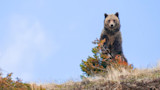
Endangered Species
Can the Great Bear Survive Today’s Great Plains?

Encountering a grizzly bear has long been a potential happenstance on Montana’s mountain trails. But an expanding population of grizzlies in the Big Sky prairies have created a new kind of encounter, such as “the Bear in the Barn.” This summer, 50-year-old farmer Shannun Rammell got word from a...
Ben LongAug 18, 2020
Read MorePlay Now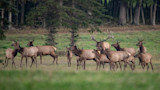
Wildlife Management
Elk Feedgrounds Could Help Bears and Wolves More Than Hunters

Winter-range elk feeding programs, like those near Jackson, Wyoming, are a double-edged sword for elk herds. On one hand, the hay and alfalfa handout stations can harbor and spread lethal diseases like CWD through the herds, but on the flip side, they’re also thought to prevent mass starvation and...
Eli FournierAug 28, 2025
Read MorePlay Now
Elk
MeatEater Season 7: Steve and Remi Navigate Afognak Brown Bears and Fog for Elk

On this hunt, Steve and Remi Warren travel to Alaska’s Afognak Island for a chance to hunt the largest Roosevelt elk in the world. It’s a hunt so challenging Remi swore he’d never return after his first trip to Afognak, but he’s back to help Steve find a bull. Here, they’re met with giant brown...
Steven RinellaOct 6, 2018
Read MorePlay NowConversation
Save this episode