MeatEater Conservation
Ep. 305: The Snake, Ted Williams and Fenway Park, and Bear Attacks
Play Episode
28m
On this weeks episode, Cal talks about hunting culture and Fenway, bear attacks, new mountain lion studies, the lower Snake River dams, and so much more.
MeatEater onInstagram,Facebook,Twitter,Youtube, andYoutube Clips
Subscribe toThe MeatEater Podcast Network on YouTube
00:00:10 Speaker 1: From Meat Eaters World News headquarters in Bozeman, Montana. This is Cow's Week in Review with Ryan cow Kalah. Here's cal Boston PD is searching for a man they say was hunting rabbits with a bow near Fenway Park. That's Fenway Park, as in, the home of the Red Sox and one of the most famous sports stadiums in the world. Police responded to the area around one forty five am last Friday to find a man wielding a bow and arrow. They say they saw him shoot a rabbit, pick it up, and then throw it in the bushes and run away. The police report says the rabbit also appeared to run away unharmed. Though I doubt Boston PD does much blood trailing. If you think this is crazy, there's actually some precedent here. Fenway is no stranger to hunting culture, largely in part to the famous slugger ted Wie Williams, who, on May twenty four, nineteen fifty seven, which for you baseball fans is an off day at Fenway Park Old Teddy ballgame quote was reported to have sat in a chair near the Boston bullpen and sharpened his hitting eye by shooting at every pigeon which cruised within range. The shotgun was a twenty gage and old Ted knocked down thirty to forty pigeons within Fenway Park. Previously, Ted had knocked the new off a twenty two caliber rifle this was the year before, by sighting it in on the lights somewhere out in Fenway's center field. For the record, and according to an old issue of Sports Illustrated, Ted's hand eye coordination did improve after his pigeon population control practice, as he went out big the last game against the Phillies with four singles, a double, and a homer to end the year with a four h six average. Now the guy with the bow has not been apprehended as of this recording. In is hitting us all pretty hard. You gotta get your groceries wherever you can. But I and I'm sure Ted would prefer you collect your game, even if it means getting a ticket. And just a reminder, Ted was getting paid eighteen thousand dollars a year with that four h six average, one million dollars. This week, we got a ton of cool stuff. But I'm gonna skip the usual intro because we got so much to do, and just tell you how cool my week has been up to this point. I got together with my buddy Eric Crawford aka Woods Boss, who is the Lower Snake director for Trout Unlimited, that's Snake River. I'm gonna get Eric on the show here shortly to get you through this stuff because it is incredibly complex and it's huge. But we're talking about breaching the lower four Snake River dams. Congressman Mike Simpson if your call, about three years ago, laid out a proposal to breach the dams. Breaching of the dams is largely understood to be the only way that we can fix our salmon and steelhead situation, which is bad, Okay, It's largely on life support due to the support of hatcheries, which some folks call synthetic fish. Hatchery fish are ston't fun to catch, they're there to eat. It's keeping people's interest in the fishery and taking the pressure off of wildfish. That's the whole reason for a hatchery. Wildfish populations are crazy below like we're at the bottom end, not even a blip on historical number levels, okay, And historical numbers is kind of what we want to get back to. That's what we would consider healthy. Now the proposal if you were to breach these four Snake River dams, there's a ton that would go into this because taking those dams away would affect a ton of people, some folks who don't give a rip about salmon and steelhead for sure. We generate power through the dams. Farmers pull water from reservoirs in the lower pool was created by the dams. Goods are shipped via barge all the way up the river through a system of locks into the port of Lewiston, Idaho, a crazy four hundred and sixty five miles from the ocean. That's a lot of moving parts and pieces and a ton of interest groups who need to align behind this idea in order to make it happen. So, in this day and age where nobody can agree on anything, why even try well. A huge driving force behind action to recover salmon is the Nez Perce tribe, who, in their treaty with the United States government negotiated a guarantee of not only salmon, but wild salmon in that river, which would mean, of course, not just salmon to look at, but sustainable harvestable amounts of salmon a natural run but we've seriously messed with nature. In order to mitigate some of that messing with nature, we've tried to help it along the way with fish ladders, rearing programs, hatcheries, pipes bypasses, literal trucking of fish from one place to another. We've implemented bounty programs on other native fish that pre date on salmon and steelhead smoke. We pay people to haze raptors by shooting shotgun shells at eagles and osprey who are trying to eat downriver migrating smoke. It's a huge story. I can't tell you all of it, so again i'll have Eric on shortly to tell you about all this. I'll just tell you one little snippet of what I saw. We stood in the Lower Granite Dam fish viewing window, which is on top of the portion of a fish ladder. A fish ladder is one of those things that we put in to try to help fish migrate around the dams. I think the best way to think of a fish ladder is like this. It's a long staircase, right, And if you remember back into your your college days, or if you got a bunch of messy kids in your house, and they're getting undressed going up that staircase, and they're dropping a piece of clothing on every other stair Each chunk of clothing would be like a chunk of concrete. That concrete a little eddy behind it, a resting spot for fish as they try to move from one step to the next step to the next step, all the way up that staircase. That's kind of what a fish ladder is. Okay. Anyway, we're looking through the window at the top of this fish ladder for fish that are migrating up through the dam, and I got this great picture of a big chinook salmon with two walleye underneath it. Okay, These dams create reservoirs still water with tons of food coming through, and folks have dumped in other fish that they like to fish for, like smallmouth bass and walleye, which are fun to catch, fun to fish for, fun to eat. But they're just smashing steelhead and salmon smoll as they try to get down to the ocean. And those fish are working their way up through these fish ladders into more and more sensitive habitat. So this is all our doing. We got a responsibility to fix it the best way we can Congressman Simpson's plan may be that best way. And there's a whole sovereign nation, in fact, four different sovereign nations that have a vested interest in healthy salmon and steelhead runs, and they struck a deal with the US government a long time ago that says we the people will guarantee that those fish will be there. So lots more happening on this crazy subject. Lots of ins, lots of outs, very eye opening, and we're gonna dig way more into it later. Big thanks to everyone around Lewis and Idaho for letting us chat and fish with them. Big thanks to the nez Perst tribe for letting us look at your operation. Big thanks to the folks Rafino who we chatted with lots of small business owners, really really interesting stuff, but thank you for inviting us in to check this situation out. We need to do a whole show on Pacific lamprey and celts, but for now we got to move onto the cougar desk. The Mountain Lion Hunting Band is officially on the ballot this November in Colorado, but two studies have been published recently that highlight just how bad of an idea that would be the idea to ban mount lion hunting. It's already on the ballot. We got to deal with that in November when it comes up. First study released earlier this month in the peer reviewed journal Ecology and Evolution has found that hunting mount lions with hounds discourages juvenile cats from entering human populated areas. The study compared two sites in California and Nevada. These sites are ecologically similar, but California has banned lion hunting, while Nevada still allows hunting with hounds. The researchers use GPS collar data to analyze the two populations of lions, and they looked specifically at where juvenile male lions go during dispersal. Dispersal is a scientific term that just means when a young lion leaves his mother and goes looking for mates and territories of his own. Mounta lions can travel great distances during these events, and these young cats are often the ones that get in trouble with humans. They may have never seen a human before or had a negative interaction, so they don't see what's wrong with wandering into a neighborhood and sniffing around for pets and dogs and you know, little kids and whatnot. Anyway, the researchers analyzed GPS color data and found that young lions in California and Nevada generally pick the same kinds of habitat in both states, with one notable exception. Mountain lions in Nevada tended to avoid something called anthropogenic covariates, or places where humans are. This includes developed land, hay and crop areas, and even four wheel drive roads. They found this effect on cats that had been run with dogs and on cats that had not been run with dogs. In these areas where cats had been chased with dogs, mountain lions tended to just avoid humans more frequently. We're obviously not talking about cats that have been shot, because you know that won't be much of a study. Dead cat can't get up and go see a person on its own. The researchers concluded quote our study found in increased avoidance of developed landscapes by animals exposed to non lethal hunting pressure, suggesting mount lions may select against landscape features correlated with high human activity, including areas with dogs. Because hunting and pursuing mount lions with hounds often occurs in these spaces. Pursuit with hounds could provide wildlife managers with a previously underutilized method for reducing human mount lion conflicts. The authors admit they can only speculate on how much chasing cougars with hounds might decrease the prevalence of cat human conflicts, but it stands to reason that if fewer lions are around humans, fewer negative interactions will occur. Kugar de terrence isn't the only thing Colorado stands to lose by outlying mountain lion hunting. A new report published this month by the Common Sense Institute estimates that the hunting ban would cost the state of Colorado over sixty one million dollars in lost economic revenue. The Parks and Wildlife Department would lose about four hundred thousand in just lion hunting license sales, but the total economic impact goes far beyond that. About four hundred and forty fewer mounta lions will be killed every year if this initiative passes. On average, mount lions kill one elk or mule deer per week, which means that four hundred and forty lions could reduce the elk and mule deer population by thousands. The study assumes that each lost elk and mule deer represents a lost opportunity to sell a tag, so banning mount lion hunting would also cut another three point six to five point eight million dollars from the Parks and Wildlife budget. Of course, hunters know that we spend money on more than just tags. Using economic data on the impact of elk and mule deer hunting in Colorado, the study further estimates that the total economic impact of the loss of cougar, elk and mule deer hunting would exceed sixty one million dollars. I'll admit the report makes some big assumptions, the biggest of which is that each lost elk or mule deer means the Wildlife Department will cut quotas by one license. I'm not sure that's true, but it is one hundred percent true that more mount lions mean fewer ungulates. Over time, and combined with the growing wolf packs, those predators will shrink the elkinder population, which will doubtless cost coloradoms a whole lot of money. Unfortunately, most of those Coloradoms will be the folks who won't be voting for this initiative. Outfitters and guides, hotel and restaurant owners, and rural communities and all the other businesses in towns with big hunting populations will be the hardest hit by this initiative and the trend that it sets. Now, if you live in Colorado, it's not that long until November, Okay, until the vote. What you can do is super effective, right, Engage your neighbors. Make sure that they know why you like to hunt. Make sure that they know that you love the outdoors. You have a great understanding of the natural world because of it. You have a great understanding of nature because of hunting. And you can cook a really good meal that you can share with these people and say, here, this is what hunting is all about. This is what we stand to lose. By the way, if you don't agree with hunting, that's just fine. But because you find it disagreeable, does that mean it should go away? After all, we can all look at our neighbors and find something that they do that we don't, that we don't necessarily like, but guess what, it's none of our business. Like, for instance, my next door neighbor has an outdoor cat. I know it's an outdoor cat because it walks around the field behind the houses, not in the guy's backyard. I don't like that. I got many ways to take care of that cat, but it's none of my business right now. Moving on to the policy desk, Idaho Fish and Game is seeking members for a new Hunting and Advanced Technology Working Group that will assess public perspectives on what technology is or is not considered fair chase in the pursuit of game. The group, which will go by the acronym HAT, will presumably consider things like drone technology, muzzle litter advancements, and game cameras to assess whether any changes need to be made to the hunting regulations. You have to read a bit between the lines, but this working group is a partial response to a different change Idaho Fishing Game made several decades ago. For many years, the agency has been working to increase opportunities for more resident and non resident hunters to get out in the field. This means selling more licenses and tags, which allows for more opportunity but negatively impacts the quality of hunts for some Idaho hunters now, especially post covid population booms and greater interest in Western hunting, combined with Idaho Fishing Game's focus on opportunity, has meant more folks out in the field. If you further combine that increase in hunter population with advances in technology, you have a recipe for some serious dissatisfaction. Here's the paragraph from the Idaho Fishing Game press release. Fishing Game has traditionally managed game species with a focus on providing greater hunter opportunity, including a higher number of available tags and longer seasons. Some members of Idaho's outdoor sporting community have begun to express concerns related to the advancement of hunting technology and the potential erosion of fairchase ethic. However, Fish and Game also acknowledges that other members of Idaho's outdoor sporting community do not share those same concerns. So there you go. If you'd like to participate in this working group and have a real voice in whether or not changes are made, you can fill out an application on the IDFG website. If you're thinking to yourself, boy, I'd love to, but I just don't have the time time to suck it up seriously from one volunteer to another. It's just what it takes. Right now, Moving on to the bear attack desk, I have a neopolitan of bear attacks for you this week involving all three major species of North American Brewin first, in Canada's None of Us territory, two polar bears attacked and killed an employee of a communications company, and officials are still trying to piece together what happened. That might be a bad choice of words. All the public knows at this point is that the bears attacked and killed someone working at a remote radar site operated by a company called Nasatuck Corporation. Nasatuck operates a string of radar sites in Canada's Arctic region known as the North Warning System. This system is designed to protect North American airspace by detecting aircraft and cruise missiles flying within its radar range. The bears killed the employee working at the site in Rebort Island, None of Us. After the incident, other employees of Nasatuck responded and killed one of the bears, according to a press release from the company. Neither the company nor government officials have released any additional information as of this recording. Polar bear attacks are extremely rare. The last one occurred last year, when a bear killed a woman and her year old son in a remote village in Alaska. One per year is actually higher than average. A twenty seventeen study found that from eighteen seventy to twenty fourteen, there were seventy three confirmed polar bear attacks in countries where the bears live that resulted in twenty fatalities. I don't know whether there has ever been an attack involving two bears, but I imagine that's even more rare. There's a little asterix here, and this is something that I picked up from talking with locals in remote areas. Big difference between confirmed and actual, as well as reported and actual. Now anecdotal reporting here, folks, But I do want to be sensitive to folks that live in very rural areas and feel that oftentimes what's actually happening gets overlooked because authorities who make the reports couldn't get there in time to find the evidence. Moving much closer to home, in Montana, black bear was euthanized after it attacked and injured as sleeping child in a tent. The three year old girl was taken to a medical facility. In billings and treated for injuries. I haven't seen any updates yet on her condition. The bear was a subadult female and she didn't have a history of conflicts with humans. However, FWP found unsecured attractants around and inside the tent where the attack occurred, including garbage, a cooler, and human food. FWP believes the bear had likely become food conditioned and human habituated after accessing unsecured attractants in the area. Wildlife officials evacuated the campsite and set traps for the bear, and they caught and killed it the following day. They said in a press release that evidence at the site matched the physical characteristics of the bear, so they believe it was the same one involved in the incident. Last one for you, a twenty four year old woman fought off a grizzly bear that attacked her while she was jogging near the town of Haines Junction, Yukon. The sun had just set when Vanessa chap Put rounded a corner and saw three bears in the path up ahead, But rather than asking to test out her chair, bed and porridge, these three bears just stood there looking serious. Chaput tried to back away slowly, but her German shepherd had other ideas took off after the two smaller bears, which left Chaput by herself staring down an adult grizzly. That bear charged her, took her to the ground and shook her like a rag doll. According to the woman, the bear had its mouth around her head, but she put things that let her go. After her hair clip exploded in a she cowered behind a tree and tried to make herself look non threatening, but the bear turned around and came back toward her. That's when the German shepherd redeemed itself by barking somewhere in the distance, which is why she put believes the bear turned and ran away from her and towards the dog. That gave the woman enough time to make her way to the road and call for help. She spent ten days in the hospital, where she received more than thirty stitches on her head, her back, her arm, and her ear. She had a broken arm, which is still in a cast, and says she lost blood but did not need a transfusion. As for the bears, the Yukon Conservation Officers Services say that one bear was killed in the exact spot of the attack, while two other bears were killed in the following hours. They also believe a fourth bear was on the scene, but they haven't been able to locate it. And because I know you're wondering, the German shepherd was fine. It made its way back through the woods while avoiding the grizzlies and met Chapputt as she was calling for help beside the road. Moving on to the citizen science desk, Attention, Minnesota upland bird hunters. The Minnesota Department of Natural Resources wants to read your diary, but it doesn't care about who likes who, which celebrity you're into on this week, or why Sharon is such a bee. Ha uh huh. That is so fetch, Gretchen. Stop trying to make fetch happen. It's not going to happen. Instead, they're asking upland hunters to keep a diary on when and where you hunt, and many birds you see along the way, and how many birds you beg Then they want you to submit that information to DNR biologists who will use it to better manage pheasants, grouse, and other upland species. The new hunter's diaries will allow upland hunters in Minnesota to provide more details into their experiences in the field, including sightings, flushes, hunt logistics, as well as number of birds in the bag during the season, said Bailey Peterson, a DNR wildlife biologist in Two Harbors. He explained that for most species, a single survey as all biologists have to work with, that's better than nothing, but Minnesota is a big state. They're hoping crowdsourcing survey data will give them better sense of how the upland populations are doing, which will let them make more effective management decisions. For example, a dn R biologist told the Duluth News Tribune that they've come to doubt their traditional survey methods for rough grouse. In the past, they've tried to estimate the population by counting how often the males are heard drumming along predetermined routes in the woods, but they've noticed that those survey numbers aren't a good predictor of how successful hunters will be in the field. They're hoping that hunters will be willing to make some time after their hunt to record their observations and provide better data than they currently have for those concerned. The DNR is assuring hunters that all information hunters submit will be kept private, so you don't have to worry that your favorite secret spot will end up in a DNR report. By offering these assurances, the agency is hoping hunters will provide all the specific information they're looking for, and they're looking for quite a bit of it. They want hunters to record where they park their vehicle, their distance to the nearest town, whether they're on public or private, whether they use a designated hunting trail, how many hours they hunted, along with all the information related to the birds scene while in the field. The DNR is asking participants to go online after each hunt while the information is still fresh in their memory and submit a diary for that day's efforts. If that's not possible, you can also download a diary form and fill it out manually, then submit the data online at the end of the season. There is no provision for hunters to mail in paper diaries. You can submit Upland Hunter Diaries reports on the one two to three survey app, which is free, or do it online. The Upland Hunter Diary was scheduled to be available to the public starting August fifteenth, at this link that we're going to put in the ASCAL section on the Mediator website. I'm sure you can also just google Minnesota upland Hunter Survey and it'll come up. To add a little bit of spice to this. Put a little snot on the ball for you. You know, I love love citizen science. Every hunter in the field is a citizen scientist. It just means you gotta record that data and submit it to somebody. So this is what I'm gonna do. You know, I love the bird vest that I use, which is a Final Rise upland vest. They're freaking great. I'm gonna give you a Final Rise vest and a couple of col pouches with your little shotgun shell organizers that old Paul Lewis and I made up on the FAHF side of things. Super awesome stuff. Okay, I'm gonna give you one of those things. Or we'll do it this way. Okay, if you use the DNR form, okay, fill it out, send it to me. We're gonna get a bunch of these, so I'm gonna randomly select them. Okay. The first person that I randomly select is going to get a Final Rise bird Hunting vest. The next two people are gonna get a set of col pouches from FHF. Okay, sound good, participate, show me that you participate and I'll pick some winners. Will incentivize you, even though I know you don't need to be incentivized. You're just in it for the science. Okay, that'll be an end to season deal. Let's say into October October thirty one. I'm gonna select our winners October thirty one. You got it good, We'll put that in the website too. Moving on to the Diversity, Equity and Inclusion Desk or DEI, a fox hunting group in the UK says they planned to file a lawsuit arguing that fox hunters qualify as a protected ethnic minority under the country's Equality Act of twenty ten. I'm not sure if this says more about how British hunters have been persecuted or how the Equality Act was written, but at least one pro hunting group thinks they have a chance. Ed Swales is the bloke leading this operation. He runs an outfit called Hunting Kind, and he says that UK fox hunters meet all five of the qualifications of an ethnic group laid out in the Equality Act. These are that they have a long shared history of culture which is distinct from wider society. They have distinct customs of their own, they share a common geographical origin, they share common ancestors, and they have a common language or literature. If you think of it that way, it does make sense if they qualify it as an ethnic group. They must also prove that they've suffered persecution. Swales points to how fox hunters have lately suffered discrimination such as losing work or contracts, or have been abused on social media. His argument past someone who sits on the Council of the European Court of Human Rights. That person says they have a solid legal argument that, if successful, would put UK fox hunters in the same category as the Roma community, which can learn more about by watching the Netflix documentary Peaky Blinders. Just kidding. Here's Swales speaking on a Field Sports Channel podcast. 00:25:51 Speaker 2: The attack on hunting and the anti hunting lobby, let's say, by the animal rights extremist movement has effectively been a person nonperson conflict using the excuse of animal welfare. It's something to do with animal welfare. It's just people against people and therefore the work we've been doing is in the legal space under the Equality Act twenty ten, and no work has been done to protect hunting or the minority group of people that partake in it like us, since that Act has been created. 00:26:22 Speaker 1: I hate to be the bearer of a bucket of cold water, but this sounds to me like a long shot. Still, it goes to show just how desperate UK hunters are to have their hunting rights back, and why it's not a bad idea to institute a right to hunt and fish, as many states here in the US have done, but we need everybody to do it. Moving on to the mailbag desk, we received tons of great emails from you folks about the EPANTS segment we ran last week. Technology in the woods is a big topic and I appreciate everyone's thoughtful responses. Listener Garrett Weaver wrote in to ask how the EPANT question is different from the quote atv UTV crowd that bring their entire home in the form of a camper. These comforts allow people to bring more gears, stay longer, and cover much more ground than ever before. Of course, you can't drive a side by side into true backcountry, but it has opened up deeper levels of hunting for a more sedentary population. Garrett goes even further down this road and wonders whether modern medicine will make some of these questions obsolete. Quote what happens when technology advances human health to the point of not needing mechanical assistance. We could legislate out fancy electric pants and weight reducing backpacks, only for those laws to become obsolete when medical advancements allow a seventy five year old to perform at the level of a forty year old. I know a lot of hardcore wolf trappers here in Idaho, and the most successful guys are in their forties and fifties. They've had the time to gain experience, making them more effective, and they are also at a fitness level where they can compete with the younger guys. Their only limit is age, and if that is it remedied with modern medicine, they will continue to be very effective into old age. How do you limit effectiveness when physical limitations are as severe? You tell me right in to a s k C A L. That's askcal at the meetater dot com. Answer that question and let us know what's going on in your neck of the Woods. Thank you so much for listening. We'll talk to you again next week.
Presented By
Featured Gear
While you're listening
Wildlife Management
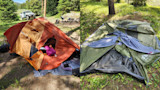
Black Bear Attacks Two Women in Tents

Maggie Bassett and Shonna Dehl were camping on Sunday, July 5, in the Big Horn Mountains of Wyoming when a black bear attacked their tent. "It wanted in the tents," Dehl told KTVQ News. "That's all it wanted. It didn't matter what we did." Bassett and Dehl yelled, screamed, and even fired gunshots...
Maggie HudlowJul 10, 2026
Read MorePlay Now
Wildlife Management
The Rare and Random Nature of Fatal Cougar Attacks

A recent fatal cougar attack in Oregon is the second such incident to occur in the Pacific Northwest in the past four months. The first attack took place in Washington in May when a mountain lion stalked and repeatedly attacked two mountain bikers, eventually killing one of them. In the more recent...
Brody HendersonSep 18, 2018
Read MorePlay Now
Wildlife Management
'Bad Bear' Attacks Hunter, Second Victim in Three Years
Three years ago, a female grizzly attacked and killed David Lertzman on May 4, near Waiparous Village, Alberta. This year, just one week after the elk bow hunting opener near Calgary, Carmelo Silvestro was attacked by the same bear—confirmed by DNA samples obtained by Fish and Wildlife officials...
Maggie HudlowSep 11, 2024
Read MorePlay NowConversation
Save this episode