Cal Of The Wild
Ep. 283: Landowner Tags and EPLUS Access with Jesse Deubel of the New Mexico Wildlife Federation

Play Episode
55m
For this week's interview,Caltalks with Jesse Deubel about elk tag distribution and the EPLUS system in New Mexico, why draw odds are slim for non-residents and residents alike, "Take Back Your Elk," and the new game commissioner.
00:00:09 Speaker 1: From Mediators World News headquarters in Bozeman, Montana. This is Col's We Can Review with Ryan cal Calahan. Now here's cal. 00:00:20 Speaker 2: All right, hello, friends and neighbors. On this week's special drop, we've got Jesse Dubell of New Mexico Wildlife Federation and we're going to talk about big game tag distribution and allocation in the land of Enchantment. Specifically, we're going to be discussing New Mexico's E plus program, in which a willing landowner who meets criteria established by New Mexico Department of Fishing Game can be allocated ELK tags, which can then be sold on the open market, just like a prized pig at the four h sale to the highest bidder. Landowners have the choice of selling tags that are only good for their proper commonly called ranch only orro tags, or as unit wide tags. Both function just as they sound. The market has dictated that unit wide tags are much more valuable than the ranch only tags. You can imagine why. But in order for a landowner to get these higher tag prices, they also have to provide access to all unit wide tag holders for the season, which, for those of you thinking boy I hate this auction tag stuff. That last little bit of additional access may sweeten the deal. It may not. But if you can imagine if you were to beat the especially long odds of a New Mexico draw and you're able to purchase a tag, we'll call it below market value. Because you just drew the tag, you may think that all that additional access is pretty special. That's our topic for this week. But first we're gonna learn about New Mexico Wildlife Federation and Jesse Dubll. Just so everybody's aware, Jesse and I have known each other for a long time. Jordan Silliers, who's with me as always, is also somebody who chats up Jesse quite a bit. Jordan, what do you what do you pester Jesse with the most? 00:02:31 Speaker 3: Would you say, Oh, I get him to share fishing spots when I go to New Mexico. That's what we've talked about in the past. And he's very he's very gracious. He's even asked other people, and so I've I've really benefited from Yeah, my interactions with Jesse. 00:02:51 Speaker 2: Oh yeah, the man has always been a he'd be like if New Mexico or a VRBO, he'd be a super host. 00:03:01 Speaker 1: Thanks for the kind wordscount. 00:03:03 Speaker 2: Uh so you had. Jesse and I met in New Mexico. We were standing on the edge of a landlocked wilderness area called the Sabinoso Wilderness Area, which was, as I said, completely land locked. There was no public access to this public ground, and we were part of a coalition to speak with then Department of the Interior Secretary Zinki, who is a state center to your mind, and to talk with him about why the BLM should be able to acquire a ranch called the rim Rock Rose Ranch and gain access to this super cool wilderness area. At the time, Jesse was a custom home builder. And were you an officer of what New Mexico bow Hunters at that time? 00:04:10 Speaker 1: Cal I was the president of the United bow Hunters of New Mexico, which was an organization I'd founded some number of years before. 00:04:18 Speaker 2: And how'd you get around to founding that? 00:04:21 Speaker 1: Oh, it's an interesting story. But I was working in real estate and I was a contractor, and I got a call from a guy out of Wisconsin who wanted me to help him find a commercial retail space and perhaps build him a custom home. He flew into New Mexico as we were traveling around. He started asking about our state's bow hunting organization. I described to him who the organization I was a member of, which was the San Dia Crest Bowhunters Association, and he asked me all about the organization. And as I described our activities, the three d shoots, the barbecues, all the things, he said, what you're describing to me is a rod and gun club. I'm talking about an advocacy organization, an organization that gets involved in politics and is working at the state legislature and working with a state Game commission. And I responded by saying, well, we don't have anything like that here. And he was astonished to learn that New Mexico, a destination state for bow hunters, didn't have a state bow hunting organization representing the interests of that community in the state. And he essentially mandated that I started an organization if I was interested in earning his business. And so that's how the United bow Hunters of New Mexico was born. 00:05:30 Speaker 2: And you've got to been at it ever since, right, So you went from a successful builder to a guy who really fights for a paycheck as executive director. Is that or is it Director of New Mexico Wildlife Federation. 00:05:50 Speaker 1: Yeah, I now serve. As of December twenty eighteen, I serve as the executive director of the New Mexico Wildlife Federation. So after the present in the United Bow Hunters of New Mexico for nearly a decade, I developed a close relationship with our state's largest and oldest sporting organization, which is the New Mexico Wildlife Federation, founded in nineteen fourteen by Aldo Leopold. Here we are just a couple of days after the one hundredth anniversary of the designation of the Helo Wilderness and the seventy fifth anniversary of the publishing of the San County Almanac. I'm proud to say that I actually have the same job that Aldo Leopold first held when the New Mexico Wildlife Federation was formed. At that time it was called the New Mexico Game Protective Association, although Leopold was the very first executive director. Years later, the organization decided it was important to work on behalf of all wildlife in the state, not just those species that we hunt and fish for, so the name was changed in the New Mexico Wildlife Federation and here we are well over one hundred years after that, and I'm honored to be leading the organization and walking in the footsteps of Aldo Leopold. 00:06:58 Speaker 2: And what type of worked does New Mexico Wildlife Federation do. 00:07:02 Speaker 1: Well kell our work ranges. It's a wide variety of things we operate in. One of them is policy. So we're very very active at the state legislature, very active with the State Game Commission, and very active with our federal delegation working on the federal laws that move through Congress that have an effect on hunting and fishing and public land access in the state of New Mexico. In addition to the advocacy and policy work we do on the ground habitat projects across the state, we're continually working to grow our public land assets by doing things like the recent addition to the sabiinos So Wilderness, the place that you mentioned you and I first met not too long ago. We added an additional nine eight and fifty five acres to that wilderness area with the purchase of another private ranch that was for sale on the open market. Is willing seller, willing buyer. We raise the money and purchased the property and then donate it to our federal Land Management agency in that case, the BLM for addition to the Sabino So Wilderness. Just two years ago, we created a new state Wildlife Management Area that's over fifty five thousand acres of additional public land. That again was a private ranch that went up for sale on the market. We raised the money to purchase the ranch and helped ranch become owned by the New Mexico State Game Commission as a state Wildlife Management Area. And we also do a ton of outreach work with youth, our three type activities, introducing kids to the outdoors, taking kids on hunting and fishing trips. So the range of work that we do is pretty broad, but it's all centered on protecting our public lands, waters and wildlife for all. 00:08:39 Speaker 2: Heck yeah, well I know because E plus and you know, landowner tags in general have been a real hot topic in New Mexico. You know, ranging from who qualifies for landowner tags would be a contentious issue. You what, what the distribution of tags are in New Mexico has been a huge topic over the years, as in, you have a pool of tags, let's say one hundred, what percent go to resident, what go to non resident, what go to outfitters, what go to landowners? How is that broken out and distributed? That's a big topic. And then this idea, it's not it's it's a it's a program right of allowing landowners to sell tags to the highest bidder, right sell sell the opportunity to public wildlife to whoever wants to pay the most for it. And how did you think I did on that E plus breakdown at the beginning? 00:09:53 Speaker 1: So I think that was all good, Cail, Yeah, that was all good. 00:09:59 Speaker 2: Okay, So where are we at right now in this E plus conversation? 00:10:06 Speaker 1: Well, I'm going to start with I'm going to start with a couple of things, and I'll be concise here because I recognize your time is valuable and the time of your listeners is very valuable as well. But I'd like to start by explaining that what we're going to be talking about here is the privatization of wildlife, which the Public Trust Doctrine makes clear is a public trust resource. And the reason I want to preface it with that is because this conversation is relevant to every single listener in the United States of America who's listening to your show right now. So though I'm from New Mexico and e plus's New Mexico specific program, if you live in the United States and you care about hunting big game, this issue matters to you, and I encourage you to stay tuned in and listen. So what we have with e plus is a program called the ELK Private Land Use System, and I'm going to get into that in just a minute, but before I do that, I'm going to talk about the broad overview of how elk tags are distributed in the state of New Mexico. First of all, it should be known that elk tags, all public ELK tags, are in the public draw, so there are no over the counter opportunities like you would find in some Western states. So the way it works is, if you're a hunter who wants to hunt elk in New Mexico, you can apply for a tag in the public draw. The way that draw works, eighty four percent of all of the tags in the draw go to New Mexico residents. Okay, ten percent of the tags in the public draw are exclusively available to people who have a legally binding contract with an outfitter. So whether a resident or non resident, the only way to access that ten percent pool of tags is to have a legally binding contract with an outfitter, and that leaves only six percent of tags available to non residents of New Mexico who are applying in the public draw. Only six percent of the draw tags are available, so that all sounds fairly reasonable minus the outfit or set aside. That's a difficult thing to justify, and I think that flies in the face of the state's anti donation clause. But that's a conversation for another day. What's important to realize is just over half of the total ELK tags issued in the state of New Mexico actually go into the draw, and that's something a lot of New Mexico resident hunters didn't realize until recently, when the New Mexico Wildlife Federation filed an Inspection of Public Records Act request to retrieve all of this data, and then published a report called take Back Your Elk. Anyone can find that at takebackyorelk dot com. But what we learned is that thirty eight percent of all ELK tags in the state of New Mexico are issued to private landowners and not ever included in the public draw. Thirty eight percent of every ELK tag in New Mexico issued through the private landowner system, this eplus system. So when you factor in that thirty eight percent and E plus, the vast majority of which cal are sold to non residents. And I say that not because I have anything against non residents, that's for sure, But in the HeLa, for example, it's not uncommon to see an ELK tag sell for twenty five thousand or thirty thousand dollars and New Mexico and New Mexicans quite frankly can't afford to compete with the millions of hunters across the country who have the financial ability to pay those kind of rates. So nearly eighty percent of the E plus tags are sold to non residents of New Mexico. But because of this system, this complicated system of tag distribution, one number that I think is important for your listeners to understand is that in the state of New Mexico, only fifty five percent of every single ELK tag issued in the state. You take every single tag for ELK in the state, only fifty five percent end up in the hands of a New Mexico resident. In Montana, it's eighty nine percent. In Utah it's ninety two percent. In Arizona it's ninety two percent. So when you compare New Mexico to other Western states, you see how far out of line we are when it comes to the way tags are distributed and how that affects resident hunting opportunity. Another statistic cal that I think is important for your listeners to understand is that in the inter Mountain West, you take all the inter Mountain West states, New Mexico only contributes five percent of the total elk tags that are issued in the entire inter Mountain West. But if you look at all of the privatized tags in the inter Mountain West, seventy two percent of those come out of the state of New Mexico. So even though we only contribute five percent of the total elk tags, seventy two percent of the total privatized elk tags are coming from New Mexico, and that is taking them out of the running to be issued to New Mexico residents essentially through the public draw system. And this is a good opportunity to remind your listeners that the North American model of wildlife cons servation specifically states that opportunity for hunting our public game should be democratically allocated, and I think it's clear that this violates that. Now, jumping into the E plus specifics, it's important to recognize there's no acreage requirements. There are places getting elk and I've said elk tags, and I'm gonna have to take just a quick step back because this is where it gets a little complicated, and I don't want to lose folks. But this is an important thing to distinguish. When the Department issues these opportunities to private landowners to sell to the highest bidder, they're not actually issuing them a tag. What they're issuing them is a unique five digit code that they refer to as an authorization. So let's say that you want to come down to New Mexico, cal and you want to hunt elk in the Hila, but you don't draw a tag because again, only six percent of the tags are six percent of forty percent, I mean six percent of sixty percent. I'm sorry, So forty percent of the tags don't get in the draw. That leaves sixty percent of the tags in the draw. Of those that are in the draw. As a non resident who applies without an outfitter, you're only able to access six percent of those, So you can see that your odds of drawing a tag are dismal. But if you've got the financial ability, you can purchase one of these five digit codes from a landowner who has a five acre ranch in the HeLa. For example, you might pay twenty five or thirty thousand dollars for that tag. But then when you purchase for that authorization, I'm sorry, but when you purchase it, you go on the department's website and you enter that five digit code, and that gives you the exclusive ability to purchase your tag. So as a non resident, you're going to spend about eight hundred dollars on the tag. That's what the New Mexico Department a game and fish gets out of the deal that eight hundred dollars fee seven hundred and eighty seven dollars, And what the landowner gets out of the deal is whatever they sold you that five digit code for five thirty thousand, whatever you were willing to pay. Okay, but now they own the five acres. You as the hunter. Okay, if that's a unit wide tag, and I'll differentiate the two. You've already kind of alluded to it in the introduction. But in that unit wide tag you've just purchased, you have the ability to use that tag on all six hundred thousand acres of say Game Management Unit sixteen B. That's a that's Ahila Wilderness Unit. We're just celebrating one hundredth anniversary, so we'll stay on that theme. You bought a tag for sixteen B. You bought a unit wide landowner tag. The landowner has five acres, but you bought a tag that's good on six hundred thousand acres. But because that landowner opted for the unit wide option, all of the other people who drew that tag, you know, let's say there were twenty five tags issued or sixty five tags issued, well, they now have the ability to hunt that landowner's five acres. And so the landowner opens up five acres in exchange for selling access to hunt elk on six hundred thousand acres of public ground. So you can see how disproportionate the benefit is to the public compared to the benefit to the landowner. Now, if a landowner had chose a ranch only option, in other words, the tag is not good unit wide, then that tag is only valid on the private land only on the private deeded acres. So what's interesting is the landowner gets to make that choice. Department of Game and Fish has no influence whether the landowner chooses ranch only or unit wide. And so what you find is if a landowner has property that hold elk, where there are elk to be hunted during elk season, the landowner almost always chooses ranch only because they don't have to allow any of the public on the private tags they sell. They have full control over who's coming to their property to access them. They control the price of the tag, they control who they sell the tag to, therefore control full access to their private land. So when you see the unit wide option chosen, what you can almost always automatically assume is that there are no elk on the private land that's being opened up for hunting during hunting season. That's essentially a given. I don't know any hunter who's buying a unit wide landowner tag and is hunting on the private land. Conversely, I don't know any hunter who draws a public land tag who's saying, man, I'm going to go hunt that private piece that's opened because he sold a unit wide tag. The fact that he sold it as unit y tells you it's not worth hunting those deeded acres anyway. 00:19:38 Speaker 2: Or those elk. You couldn't just count on them being there. 00:19:43 Speaker 1: If it's a unit wide tag, they are almost never there. You can almost count on them not being there. Now, that's not to say that they're not ever there in order for a landowner to qualify for tags. And this gets a little complicated because New Mexico's divided into three types of management zones for elk. The first one is called the secondary management zone. A secondary management zone is where the department doesn't really manage those areas for elk. In other words, they're likely elk there. There's probably some elk. It might be kind of fringe habitat into the grasslands. It's starting to become pronghorn habitat. But there are elk periodically in the area. Things like that. If a landowner owns property in a second management zone, they don't even have to worry about it. They don't even have to worry about qualifying for anything because they can sell unlimited ELK tags to be used on their private property. There's absolutely no limit to how many they can sell. Okay, that's in the secondary management zone. Then you have something called the section. 00:20:44 Speaker 2: Is that elk in general or is that cow only? 00:20:48 Speaker 1: Or they could sell cow bull Either sex makes no difference. They could sell authorizations to hunt elk rifle, bow, doesn't make a difference, unlimited as many as they want, period for anybody to buy and can hunt exclusively on the deeded acreage. They're not hunting unit wide, they're not hunting public land with those authorizations, but they can hunt on the deeded acres and the landowners can sell unlimited amount. Okay, And this is also interesting to know in New Mexico and the entire state. This is kind of an aside, but the entire state, any landowner can sell unlimited tags for deer and pronghorn on their deeded land. There's absolutely zero limit to the number of deer, prong horned tags any landowner can sell to harvest those species on their private land. Which is hard to comprehend. 00:21:39 Speaker 2: Those are native native species, correct. 00:21:42 Speaker 1: Those are definitely native species. 00:21:47 Speaker 2: Let's just stick with this aside for one second, because it is very strange, and I question I question it every time I hear it, Jesse, because it strikes me as so on after all, your adjacent to Texas. You're not Texas, right, So what where did this come from? Was this like back in the cattle days where folks were like, we don't want anything competing with the grazing opportunity our cattle have. Where's it? Where's it come from? 00:22:18 Speaker 1: Uh? That's I think that's part of it. But we used to have a system similar to E plus that was called A plus. It was the antelope system, and in that system there was actually a public benefit. So the way it worked is landowners who had pronghorn would get X number of tags to sell to whoever they wanted to sell, but in exchange for that, they had to allow some percentage of public hunters onto their private needed property. And that's not uncommon. You see that in some states across the West. Utah does a particularly good job of instilling a program like that in their state with some of their private landowners. But the A plus system also felt very disproportionate. That the amount of benefit that the private landowners got seemed like it was far too large when compared to the public benefit. So the sportsman of the state really rose up and protested the program, and the department said, fine, we're going to do away with it. Then here's how we'll do it. Everything on public land will be a draw only. You have to apply and draw a tag for public land prong horn. Everything on private's going to be one hundred percent up to the private landowner. They can do whatever they want with their herds on private land. The result of this CAW, just for the sake of comparison, is that only thirty seven percent of every single prong horn issued in the state of New Mexico ends up in the hands of a New Mexico resident. You imagine living in a state where out of all of the tags for a particular native species issued, only thirty seven percent go to the residents of that state. I mean, it's really a frustrating system to live with, and that's why we're trying so hard to change it. But it's an uphill. 00:23:58 Speaker 2: Bat Yeah, it is. It is. You know, we're like the ten percent holdover, which you know, we can talk about it a later time as to how true that is in states like Montana and Idaho is kind of like the Golden rule, right, It's it's pretty interesting and again, right, we're dealing with public wildlife. But let's get back to the elk side of things, and I want to hit you with a couple of things here. 00:24:31 Speaker 1: So well, so what I could do kel and I apologize, but I was getting into I wanted to go through the three management zones. Oh yeah, yeah, first if you just finished that thought. So we talked about the secondary management zone. They sell unlimited tags for elk that if a landowner's property is in a secondary management zone, there's no limit to how many elk they can sell to be harvested on their private needed land. But then you have something called the primary management zone. And this is kind of interesting because these are zones that are almost ranch specific. So if you have a large landowner with a huge ranch, they'll make that ranch. They'll just call that particular property a special management zone. So now that ranch is the zone. And basically what a special management zone is is where the Department of Game in Fish says, you know that landowner has a huge habitat most of the elk that live on that ranch live there year round. They're not going from public to private. It's such an expansive ranch. Let's just let them manage it like they can do whatever they want. So the department still issues them these authorizations to be converted to tags, but the department kind of regulates how many they get, but in my experience it's kind of like not really. A landowner tells the department how many they want, and the department essentially gives them how many they request, and the landowners generally just control one hundred percent of the population management of the game in their special management zone. Then you have what's called the primary manage zone and the primary management zone or smaller ranches. Again, there's no acreage requirements, so it could be one acre, five acres, one hundred acres, one thousand acres, but they're not big enough ranches to be their own zone. They're not big enough ranches to be considered special management zone ranches. In the primary management zone, that's primal cabitat and that's elk populations that are living part of their life on public and part of their life on private land most often, and that's where landowners are issued these authorizations and making the determination if they're going to keep them ranch only or if they're going to make them unit wide. So that's how the three management zones work. 00:26:37 Speaker 2: Boy, that's not the program I grew up with. So it's very very interesting, very very confusing as well too. But so you know, it's fair to say that you, Jesse, don't seem to be overly thrilled with neither the tag allocation nor the management plan right now. 00:27:05 Speaker 1: Yeah, that's very fair to say. Cal. It's the most egregious system imaginable, and it violates the North American model on many different levels. The amount of privatization and commercialization that's at play here is huge. It's incredibly difficult to change. E plus exists as a game commission rule, a rule created by our state Game Commission. But the chair of our New Mexico State Game Commission is a guy who's the hunt manager for a property called the Trout Stalkers Ranch, which you might remember from some of our stream access discussions. So his hunt manager, who distributes the E plus tags for that ranch, is in charge of handing those out selling those auctioning those off, doing whatever he will with them. He's the chair of our state Game Commission. So this rule exists at the state Game Commission. So naturally to change it, you'd want to go lobby the commission. But when the chair of the Commission is the recipient of this extremely lucrative financial program for private landowners. He's a manager of that program for a specific ranch. You can see why this is a frustrating and difficult issue to be involved with currently in the state of New Mexico. 00:28:16 Speaker 2: Yeah, definitely, and I think we should get into that more. But I want to ask you about, like, this is what I would hear when I'm when I'm talking about these proposals when they come up in Montana, right because you know, as you know, like we have these big we have this massive influx of big, big dollars, just flat out retirees coming in grabbing what you know, used to be real ranch property is now recreational ranch property. And they folks come in, have an idea of what they want to do with their dreams with their big Montana ranch and and and then realize that our state hunting and angling regulations, our access laws don't really match up with what they thought, and they want to start changing this stuff. And so we're we're dealing with that here in Montana as far as like transferable tags, landowner tags, all all this stuff. And when I have these discussions, I'm always hit with a couple of things, is, well, what is the incentive for a landowner to have good habitat, Like why why would they they harbor these animals when it clearly isn't good for growing crops or maintaining you know, healthy pastures for for cattle. And then the other part of this is that you got to you got to give somewhere in ordered to see some benefits on the access side. And so like on the E plus argument in New Mexico, you know, we we've had plenty of folks right in and say, well, this is how I use E plus. And because you have that if you draw that tag, you can access through ranches that are offering the unit wide tags and get to chunks of ground like Sabi no so used to be, Like it's a landlocked chunk of public out there. So that unit wide ranch that borders it may not be the best elk habitat, or it may not be holding elk after the first week of the season, but I can walk through it and get to a place that does. It opens up a lot more of that checkerboard. And if E plus were to go away, all that access would go away. 00:30:56 Speaker 1: See that's a really great question to callen one that I'm glad you brought up because there's a couple truths here. Where the truth is that wildlife depend on habitat on both public and private land. It's true that wildlife doesn't recognize the boundaries that separate private land from public land. Those things are true, but that's the case in every single state in the West. That's not unique to New Mexico. And so when we talk about eplus, we talk about reforming E PLUS, we talk about changing E PLUS. The argument from the recipients of the tags or these authorizations tends to be, well, without us, there would be no elk. If E PLUS went away, your elk populations are going to be an absolute decline. But when you look at the West and not already, given some comparisons of how other states, the level of privatization we've seen in other states, when you look across the West, elk populations overwhelmingly are over objective, okay, And those states do not have E plus, they don't have a gregious privatization to the level that we do. I absolutely agree with you though that incentivizing habitat stewardship is imported, and I think private landowners should absolutely be able to leverage quality habitat that harbors wildlife for increased incentive. And that's one of the biggest problems with unit wide authorizations. They do the absolute opposite. A landowner is not incentivized to have wildlife on their land. If they had elk on their land, they would choose ranch only. If they had elk on their land, they wouldn't choose unit wide because they don't want all of the general public on their private ground. They choose unit wide because there are no elk on their property. So they're selling these authorizations that are going to be used on public land, which in no way benefits the landowner to be proper stewards of habitat on their private needed ground. So the unit wide portion of E plus is actually, if anything, it distance. I mean, it provides the opposite of incentive for stewardship of habitat. Now for the ranch only, though, I would say that these tags certainly provide incentive for landowners to really take great care of their habitat. Okay, there's no question about that. But the fact remains that the landowner is selling access to something that they don't own. They're selling access to a publicly owned resource, they're selling private access for individual profit to a publicly owned resource. So I'm not saying it's not a good cause to incentivize habitat. But if I walked into our Statehouse and took a painting off the wall and decided I was going to auction it off and give the proceeds to the local cancer society, well, sure, that's a good cause. But I just took a painting that belongs to all of the people of the state, public property and auctioned it off because I decided it was a good cause. That's not appropriate. What needs to happen is something more similar to what happens in Montana with block management. Let's provide an incentive program for landowners, but let's incentivize them based on what they own, which is the land. The thing we could we could have a draw that would include all kinds of tags that are only available on private deeded land. But you still have to dry draw those tags through a democratic process, a public draw, a lottery essentially, but when you acquired that tag, you would have to pay a trespass fee to access the private property on which to hunt. I'm completely supportive of a system like that because absolutely a landowner should be able to sell access to the land. The issue I have is a landowner selling access to public wildlife. You know, sell what you own, not what I own. 00:34:40 Speaker 2: Where is this now? I imagine like you're not the only person who thinks this way, right, Like, what's happening in the state of New Mexico. To address this? How many eyeballs were on the report that you mentioned? It was a take back r elk. 00:34:59 Speaker 1: Yeah, take back, let's take back your elk dot com. We've now done two versions and the momentum is growing rapidly. But here's what happened. For a long time, people didn't realize how bad this was because the data was never available. This has never been published by the Department of Game and Fitch. They always talked about how the draw works. Residents GID eighty four percent of the tags. Residents GID eighty four percent of the tags, what are you complaining about? But they would never provide the information as to how many tags are carved out and not included in the public draw. So the Mexico Wildlife Federation filed an inspection of public records at request. The department refused to give us the information, so we had to get the Attorney General involved. They refused to give us public information. After we filed the paperwork requesting it, we had to get the Attorney General involved. They still refused, they resisted, they didn't want to give us the information. We had to finally recruit support from the Foundation for Open Government. It took us nine more scal to get the data to create the very first take Back Your ELK report. So once we got that data and built this report, there was a groundswell of movement from the public to start demanding change. And that's grown and grown and grown, and I was starting to feel like the Game Commission was about to take action. And that's when just last month the governor put the new chair of the Commission in place, who's a direct E plus recipient. So to think that we're going to fix this at the Game Commission under the current governor, I don't think is realistic. I think likely this is going to take legislation or perhaps it's going to have to get figured out in the courtroom, similar to the way stream access was dealt with. That's that's my fear. And here's why that's the case, cal Because it's the new Mexico Council of Outfitters and Guides published recently that E plus tags. They're trying to say that eplus is necessary for our states economy. I disagree. I think hunting provides tremendous economic benefit, and there's no question non resident hunters provide tremendous economic benefit to rural New Mexico communities. That's the case in every state across the West. If your listeners haven't seen the new film that was just released I worked on called Shyris. It's about a non resident moushunt in Montana. Was produced by Driftwood Outdoors. I was a part of that process. Look up the film. So I recognize the economic benefit, but the E plus tags. According to the Mexico Council of Outfits and Guides, in twenty twenty one, the authorizations the unique five digit codes sold for almost eighty four million dollars. Eighty four million dollars went into the pockets of private landowners as a result of selling those authorizations. Cal The annual operating budget of our New Mexico Department of Game and Fish is fifty million per year, so these authorizations are selling for eighty four million dollars in twenty and our annual budget for the entire state Wildlife Agency is fifty million dollars. So, once you've created this program and people have become dependent upon it, and their personal budgets and their ranch budgets and their business plans have incorporated the annual income from the sale of these authorizations, taking that away is extremely difficult. It's very, very hard, and there's no question that it impacts people. It impacts families, it impacts ranches, it impacts ranchers, it impacts farmers. There's an impact after you've created this dependence, you know, the subsidy essentially. And the reason I say this is because Montana. There are forces in Montana. I don't have to convince you that would like to see Montana start down a similar path as New Mexico. I went to Montana just a couple of years ago to participate in the National Assembly of Sportsman Caucus Summit. I was there to speak on this topic. I was there to provide a cautionary tale and Warren Montana residents, do not allow your state to go down this path. Don't allow fish wildlife in parks to start experimenting in this privatization scheme. Because It's like a little snowball rolling down a really really steep hill, and it grows and it grows, and it gets so forceful and powerful and big and destructive that it can't be stopped. So I'm really am urging listeners of this to recognize that you do not want to start down this path at privatization. It's very, very dangerous for the future of hunting. 00:39:32 Speaker 2: And it's you know, it's not like New Mexico is the only place growing big elk these days, right, right, So it's not like the from a herd management standpoint, it's not the thing that's holding up New Mexico el cunting. 00:39:48 Speaker 1: Right, We're over objective on our elk curds. In almost every unit, our elk herds are doing just fine. You know. The issue with this is this is a social issue. This is not a biological issue. Right. The elf doesn't care who kills it or how much they paid to do that. But this has really broad ramifications for the future of hunting. And one of those cala is that when hunting becomes a rich person's sport, which it's quickly becoming in New Mexico. And I mean, you could see the advertisements all over social media this time of year, everybody's selling New Mexico ELK cunting opportunities. If you buy these t shirts, you get entered into a drawing. You want to raise money for the state of Arizona. They're raffling off New Mexico ELK tags. It's incredible what's happened here, But it's all tied to money. And when we're trying to protect and preserve and promote the future of this activity, it makes it difficult when it's an activity that the wealthier participating in. Because we know cal through poll after poll after poll, that the general public supports hunting for food. The general public generally supports the tradition and the heritage and the culture that surrounds obtaining your protein from wild, sustainable sources. What people don't like is someone spending thirty thousand dollars so they could get some giant, magnificent, four hundred inch set of antlers to hang above their executive desk back at, you know, in their office. And the perception of hunting is being affected by the system that's currently in place in New Mexico, and that really scares me. 00:41:26 Speaker 2: Well, you know, you know, being in camp with some past New Mexico Game Commission folks, they would argue that, you know, those those landowner tags are also available to New Mexico residents. So pricing wise, if a New Mexico resident were to purchase a landowner tag, do they pay a reduced fee to the state. At least do they pay a resident fee to the state. 00:41:56 Speaker 1: If a resident buys a five digit authorization that five code, instead of paying you know, eight hundred dollars, they would pay ninety dollars or whatever the resident fee is for that tag. So yeah, they would pay the state the reduced mount So the state actually benefits more when non residents purchased the codes. But the reason non residents purchased the codes is because New Mexicans just can't compete with the rest of the world when it comes to an open market for the sale of these tags. It's just not feasible or realistic. At our Game Commission meeting recently in Silver City, one of the ranchers stood up and made that point during the public comment period. He said, anybody could buy these tags, you know, residents could buy these two And he was a HeLa rancher who sells HeLa elk tags for very very high dollar, and the very next public commenter stood up and said, yeah, anybody could buy these tags, just like anybody can buy a leer jet. I mean, that's the reality of it. Yeah, anybody can buy them if you have those resources, and New Mexicans just can't compete in that arena. 00:42:57 Speaker 2: Yeah. New Mexico is typically, you know, top four or five highest poverty rates in the US. 00:43:06 Speaker 1: That's right, and as such, we need that high quality protein in the freezers of our New Mexico families, and we need democratic process to allocate these opportunities. The fact that it goes to the highest bid, of the fact that our New Mexico residents will sit out five, six, seven, eight years trying to draw elk tags, studying draw odds, not applying for the best units, not applying for just trophy animals. I mean, I applied for cow elk tags this year, cal I didn't draw a tag. Same thing I did last year. Applied for cow elk tags, didn't draw a tag. Meanwhile, though, I've got the same people coming to hunt my elk in this state year after year after year after year because they can afford to buy their way around the system, and that's what I take issue with. 00:43:51 Speaker 2: Yeah, yeah, it does get a little frustrating. And in a place where you can't buy ELK tags, and non residents for general ELK in the State of Montana typically purchase or are typically guaranteed a tag every three years, if not two years. I still bump into a lot of people and airports and trade shows and things that are are not residents of the state of Montana, but they have an ELK or deer tag here every single year somehow. So even if it's not on the books, it still still does happen. But so I guess what what are next steps? I know you said it's it's a daunting process with the Game Commission, or or it appears as such. The chair the Commissioner has only been in place a month now, But where are the all the orgs at in regard words to trying to change this E plus process. 00:45:06 Speaker 1: Well, that's a really good question, Calum. So the chair was actually appointed back in March to the Commission and then made Chair of the Commission just last month in May. But a lot of organizations have signed on to take back your ELK that are very supportive their partners, including Backcountry Hunters and Anglers in New Mexico. Chapter has been with us since the very beginning on this and I appreciate in their partnership. I commend them for their hard work on this issue. Hispanics and joined Camping Hunting in the Outdoors has been a great partner on this issue. You know, we've got some we've got some support, we've got some help. Hunters of colors with us on this thing. But some of the organizations are on the other side of the issue. And part of the reason for that is landowners who received these authorizations will will donate those to organizations so that they can sell them at their fundraising banquets. You know, if I, if I get a hope, especially if I have a special management zone, I can give tags. If I own ver Mayho Ranch, Vermeyho Park Ranch, you're familiar with that, I'm sure sure I can hand five tags to this nonprofit organization to auction off at their annual fundraising banquet. And when an organization is using that as a primary fundraising strategy, where do you think they're going to fall when it comes time to fix that system. It's really divided. Much of the conservation community, and many organizations that should be pulling in the same direction across the board are kind of fragmented. And I've had offers. I'll just say this right here. I've had plenty of offers from landowners saying, hey, I'm you know what, I know you don't like E plus. How about if I how about if I help support your organization by providing you with some of this incentive here. And obviously I'm opposed to the core about this E plus program and I'm not going to participate in accepting any of those type of offerings. But other organizations have been taking them for a long time. And I'll say that this didn't just happen overnight. This system started over forty years ago and it's just grown bigger and bigger and bigger. And that's why I used that snowball analogy earlier. You know, it starts small and then gets out of control. 00:47:19 Speaker 2: To your point, there used to be a minimum requirement for landowners. Landowners had to meet a certain it was a certain amount of acreage or had to demonstrate the fact that elk used their property for a certain amount of time throughout the year. And that was the only way to be a part of this landowner tag program. And then you know, it wasn't all that long ago that that changed, right, It wasn't that way from the inception. 00:47:52 Speaker 1: Correct, Well, it actually changed for the better in twenty eighteen is where they really before that, there was really no rules, and then in twenty eighteen the department made some adjustments that created some criteria to determine whether or not landowners would receive authorizations. So it got a little bit better. But the criteria doesn't involve eight well, it does involve acreage, but it doesn't have a minimum requirement. So if I had five acres, I'm graded at a higher level than if I had one acre. If I have one hundred acres, I'm graded at a higher level than I have five acres. But it's a point system, and a landowner has to achieve a minimum of seven points. And the way you get those points is do you have forage on your property? Okay, there's some points for that. Do you have a water source, you know, maybe natural or human installed, Then there's some points for that. Do you have elk on the property, and can we prove that they don't have to be there during hunting season's That's one thing that's interesting. A lot of these lands do have elk at some part of the year, but mostly on the unit wide ranchets. The elk are not there during hunting season. They might be there during calving season and again, so there's there's obviously a benefit for a landowner providing habitat for elk regardless of the time of year, and there should be incentive programs for those landowners. But to incentivize landowners with public wildlife is I think where the issue gets, in my mind inappropriate. 00:49:23 Speaker 2: So if folks want to learn more about this and try to get involved, where's the best like one two three process, Well. 00:49:31 Speaker 1: The best thing to do is go to www. Dot take Back your Elk, dot org or dot com I'm sorry dot com and you can sign up right there and then we keep people updated on what's happening, what's changing, you know, anything that affects this issue goes out on there. There's also social media sites. You can just go on Facebook or Instagram take Back your Elk you'll find those pages there. You can sign up with the New Mexico Wildlife Federation. It's free to sign up. You can join our newsletter you'll a monthly newsletter where we provide relevant updates about all things hunting, fishing, conservation and public lands in New Mexico. Our website is www dot Nmwildlife dot org again NM, like New Mexico Wildlife dot org. People can sign up there. So those are the best things to do, and we can from from that point we can provide additional education and help guide folks as to how they can make the biggest impact on the issues that matter most of them. 00:50:28 Speaker 2: Tarn, right, that's that's awesome. So yeah, you know, I've probably applied to New Mexico probably seventeen eighteen different times, not all in a row, and was there real early in my guiding career and learning about some of these tags for sale, and you know, quite honestly, they were really reasonable, Like you could you could see how it would make more sense to buy a tag than to even deal with the draw, especially if you're gonna go do it yourself, right, And then yeah, all these little changes the outfitter preference, and you know, I've never drawn a single tag in the state of New Mexico over you know, probably somewhere in that we'll say, fifteen to eighteen different chances. I've I've thrown my hat in there, and I've got to run around New Mexico quite a bit. And yeah, I actually I have had two different landowner tags in my pocket, one just a couple of years ago, hunting with Jason Phelps. 00:51:46 Speaker 1: You guys on that on didn't you count? 00:51:49 Speaker 2: Oh dude? I yeah, yeah, New Mexico got the best part of me by far and away, by far and away, And I packed those those bites around for about three months, you know. But it's an amazing place to be. It's an amazing place to hunt. But you know, despite all these difficulties, Jesse, would you tell people to apply, You're still applying, obviously. 00:52:12 Speaker 1: Absolutely. I apply for every signal species our state offers. I encourage non residents to apply, apply for everything you can afford to apply for. It's a phenomenal state. I absolutely love it. One things I love most to do is actually take people who don't live here out on the land and take them out on hunts and help them enjoy this state that I love so much. So I welcome folks to be here. I just want it to be a more fair process as to who gets to come and enjoy these wonderful experiences. Another thing that's great is we don't have a point system, so unfortunately, as a non resident, if you're not contracted with an outfitter, you're applying for six percent of sixty percent of the ELK tag. So your odds are not great, that's for sure. But again, no point system, so there's someone's gonna draw and it might as well be you. So absolutely continue to apply. And we have some you know, other opportunities for small game and waterfowl and different things that are over the counter to and if anybody wants to reach out to me for advice or talk to me about this wonderful state, places to go and things to do, like Jordan was talking about earlier, with you know, sharing some fishing spots and things. I'm not anti non resident by any means whatsoever. I just wanted to be a fair process. I don't like people with the most money having the opportunity to buy away opportunity from those who don't have the same resources. And I'm not anti outfitter. I've hired outfitters in my life. I've hunted with outfitters, and I have many friends who were outfitters. But I don't think people who can afford the contract with outfitters should get better draw odds. I just think you should draw the tag, then hire the outfitter if that's the experience you're looking for. And so and I welcome. I welcome people to this wonderful state. And I'm so privileged Cal to have had the opportunity to spend time with you here in the state and hanging out. I think last time you were well maybe not last time. Time you're in town running around the mountains chasing rabbits with my recurve. 00:54:03 Speaker 2: I think, yeah, darn right, rab Yeah, it's a trophy squirrel state too, I'll tell you. But Jesse, thank you so much for being on. It's New Mexico Wildlife Federation and Jesse Dubella is the executive director over there. We were talking about e plus today. Please write into a sk C a L that's Askcal at themeeater dot com and let me know what's going on in your neck of the woods. And please let us know about your thoughts on e plus and I will collect Jordan and I will collect all of the questions and we can bounce them off Jesse and have him back on or whatever. Fuels your fire in the conservation world. So Jesse, thank you so much. 00:54:47 Speaker 1: Hey Cal, thank you Ben. I really appreciate you. Thanks for the show and keep up the great work. 00:54:52 Speaker 2: My friend appreciate you too. 00:55:00 Speaker 1: It have been an u
Presented By
Featured Gear
While you're listening
Wildlife Management
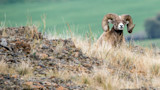
Annals of Wildlife Management: The Problem with Auction Tags

When auctioneer John Bair finally stomped his cowboy boot on the stage of the 2016 Western Hunting and Conservation Expo and yelled “Sold!” there was a moment of stunned silence in the Salt Lake City ballroom. Then pandemonium as the crowd of hunters cheered, whistled, hooted and high-fived. They...
Andrew McKeanMar 18, 2019
Read MorePlay Now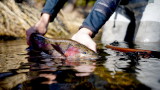
Public Lands & Waters
New Mexico Supreme Court Restores Public Stream Access Law

On March 1, the New Mexico Supreme Court unanimously ruled that regulations allowing landowners to restrict public access to rivers and creeks is unconstitutional. “Today is an exciting day in New Mexico history. Our state Supreme Court reaffirmed the constitutional rights of New Mexicans to their...
Maggie HudlowMar 7, 2022
Read MorePlay Now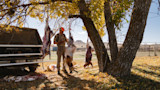
Public Lands & Waters
Hunter-Landowner Access Agreements Struggle in the West

The huntable acreage enrolled in public-private access agreements continues to slip in some western states, new numbers show. As hunters see increased crowding on public lands, they’re turning to alternative avenues for access, including private rangeland and agricultural lands enrolled in state...
Eli FournierNov 20, 2025
Read MorePlay NowConversation
Save this episode