Hunter-Landowner Access Agreements Struggle in the West
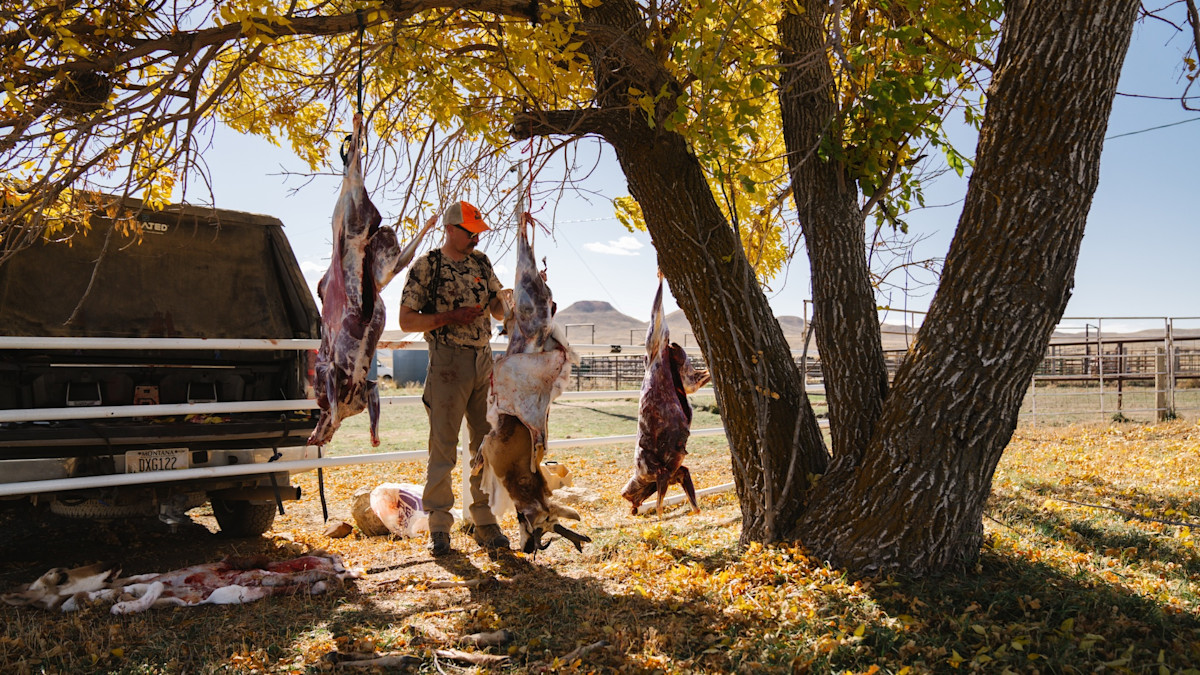

The huntable acreage enrolled in public-private access agreements continues to slip in some western states, new numbers show. As hunters see increased crowding on public lands, they’re turning to alternative avenues for access, including private rangeland and agricultural lands enrolled in state-administered programs like Access Yes in Wyoming or Block Management in Montana. However, there could be fewer of these lands to go around in years to come.
To understand the headwinds facing these access programs, MeatEater spoke with coordinators in Wyoming and Montana—just two of the many states nationwide with access programs in place. Despite operating in different states and under different structures, the land managers’ insights were nearly identical, and painted a picture of a landscape that might continue to pinch down huntable lands for the foreseeable future.
“As a lot of old-time ranches are changing hands, access areas are going away,” said Troy Tobiasson, Sheridan Access Coordinator with the Wyoming Game and Fish Department. “Sometimes the new owners just don’t seem to want to keep the land enrolled. They want to administer it themselves, or they have an outfitter, or they bought it for the wildlife. Some of that is the new folks just don’t like dealing with the public; then other times it’s purely financial.”
In Montana, the primary issue is the same. “We’ve had a lot of ranches sell,” said Travis Muscha, the Region 7 Access Coordinator for Montana Fish, Wildlife & Parks (the region with the largest acreage change in recent years). “And then another big contributor is the generational changes—ranches being turned over or given down to the next generation, and they just have a different idea about access and how they want to manage it.”
Long term, the total enrolled acreage in both Montana and Wyoming is down from historical highs. In Montana, the peak was 8.8 million acres in 2002. This year, the total is 6.8 million. Numbers aren’t yet available for Wyoming this year, but Tobiasson expects them to be on par with last year’s at just over 1.7 million deeded acres, providing hunting access to 2.5 million total acres, including otherwise inaccessible private lands. (Wyoming’s peak acreage is unknown, since multiple different programs have merged to become “Access Yes,” but the last decade generally saw higher enrollment.)
The numbers, however, can be deceiving. In Wyoming, a driver of the long-term “decline” is that some properties have been converted into long-term access easements and subsequently removed from the Access Yes acreage totals. Similarly, in Montana, the state has been working recently to refine its maps by removing public parcels from their Block Management accounting (for instance, a state section buried in an enrolled ranch).
Also hidden in the data is the fact that net landowner patriation is relatively steady in both states. On an annual basis, properties are both added and lost; however, large properties are being lost faster than they can be replenished, resulting in a net acreage loss. This year alone, for instance, Muscha reports losing 20,000 and 10,000-acre properties in his region alone.
Regardless of the numerical swings, both Tobiasson and Muscha are in the field daily, chatting with landowners and resolving problems. Together, they report seeing an overall change of the tide with regard to public access in recent years, especially as lands change hands. When previously enrolled properties in Wyoming sell, for instance, Tobiasson reports that about 50% of them relinquish public access.
In those circumstances, the state doesn’t hold much in the way of bargaining chips to retain access. In Wyoming, the payment cap is $13,000 per area, per year for a landowner enrolled in Access Yes. In Montana, Block Management pays a $1,000 sign-on rate plus $17 per hunter-day, with a cap of $50,000. In both states, most landowners are only making several hundred to several thousand dollars per year from the programs. On the scale of ranch finances, that’s not much money—at least, not enough to incentivize participation.
Rather, most ranchers enroll to support the western hunting traditions. “A lot of these folks just believe in hunting heritage, and they want people to come out and hunt and keep the lifestyle alive. They like to see people out and being successful, and so they’re just doing it because to their core it’s just part of life for them,” Tobiasson said.
Muscha echoed the sentiment. “Money is a factor, but it isn’t the make-or-break decision-maker for enrollment. Most of the landowners in our region want to open their land and have it available so the public has a place to go. Access is getting harder, as you know, and they feel that if they can provide a place, that’s what they want to do.”
In terms of reversing the downward trends, there’s no clear path forward. Legislatively, it’s unlikely that payment caps in Montana and Wyoming will ever increase to a rate that’s competitive with outfitter leases or other private leases, of varying forms. That means hunters will be ever more reliant on hunting heritage traditions and willing ranchers to keep access agreements alive in the coming years.
“The best thing the public can do is be respectful to landowners,” Tobiasson concluded. “Choose to do the right thing, work a little harder at times, treat these people with respect, and just be courteous.” With any hope, word-of-mouth referrals from satisfied ranchers can help grow the access programs in years to come.
Stay in the loop with The MeatEater Newsletter
Shop
Related
Public Lands & Waters
If You’re Buying Montana Tags, Check the ‘BMP’ Box

Public Lands & Waters
Here's Your Chance to Win Rifles, Shotguns, and More