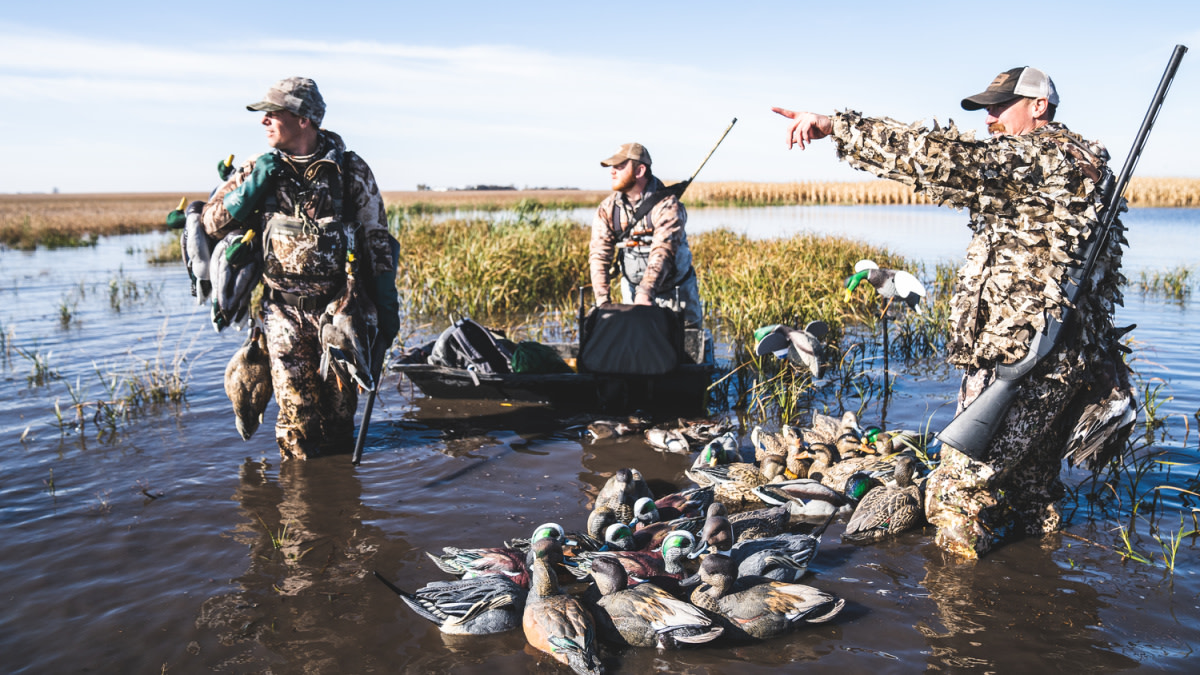

One of the biggest taboos in all of waterfowl hunting is busting the roost. It’s a guaranteed way to ruin any field hunting around, it scatters the birds, pushes them out of the area, and educates masses of waterfowl in short order. Most of the time you should avoid hunting the roost. If you don't want to just help out your fellow hunters, then at the very least you should add some longevity to your own hunting spots. But there are specific ways to hunt the roost without ruining it for everyone.
A Disclaimer Against Hunting The Roost One of the biggest objections to hunting the roost is the effect it often has on field hunting. If you’re not from an area that offers field hunting opportunities, here’s the idea: In places with a lot of agriculture, especially wheat, corn, or rice, ducks will fly from their roost in the mornings to an agricultural field to eat. In some states these are wet fields that allow the ducks to swim in the field, and in others they’re dry fields.
Burning the roost is especially bad for field hunters and I encourage people to avoid it at all costs in these situations. Essentially you push birds off their natural pattern, which takes them from their place of rest to their feed. If they have to find a new roost early in the morning maybe several miles away, there’s a good chance the ducks won’t go back to the same feeding spot and they’ll find new feed closer to their new roost. If your fellow hunter was hunting the feed that morning, their hunt is probably ruined.
The second reason it negatively affects field hunting is because field hunting creates space for more hunters to take advantage of a single roost. In college, we had access to a small lake that was a perfect hemi-marsh (half cattails and half open water) and it was usually filled to the brim with mallards. There was a mutual understanding among the hunters for quite awhile that nobody should hunt the water and we should all stick to the fields nearby. There were over a dozen groups of hunters in the fields around the marsh on some days, at least 30 or 40 hunters all getting some opportunities at birds. One day though, a group of four in canoes and jon boats decided to hunt the water and the party was over. While those hunters had every right to hunt that spot, I would have preferred they'd joined us in the field.
When to Hunt the Roost Like with most things, there are nuances that can justify a roost hunt. Here are some prerequisites I try to review before hunting a roost.
-
Try to get permission on the feed first. If you get permission on the field, great. If another group of hunters has permission to hunt the feed, don't hunt the roost and burn their hunt. If the landowner doesn’t allow hunting and owns significant land in the area, that’s a good case for hunting a roost. Keep in mind though, you’re still willingly pushing birds out of an area.
-
Be aware of how much hunting season is left. If it’s the last few days of duck season, chances are the birds are stale or nocturnal and there’s no way to effectively field hunt. In that scenario, a roost hunt might not be screwing it up for anyone else. Like above, though, you’re willingly pushing birds out of an area. Use your best judgement.
-
In the point above, I mention nocturnal birds. This is the most nuanced issue and I don’t know if there's a right or wrong way to approach it. Sometimes with warm spells and full moons, ducks will switch to a nocturnal feeding pattern and it makes for some rough hunting. The birds will congregate in one big roost and rest all day, then finally head out to feed after legal sunset. In Nebraska I’ve seen these spells go on for a month. Ultimately, sometimes hunting the roost during these spells is necessary to have any hunting at all. But again you’re pushing birds out of an area that might see a change of pattern when some weather finally comes, and you might be hurting yourself down the line.
How to Hunt a Roost Effectively and Respectfully I’ve hunted the roost a variety of ways. There’s no one-size-fits-all approach, but I have learned a few things.
If you’re hunting the roost and the birds are on a morning feeding pattern, take advantage of that natural return. Rather than going in there in the dark and screwing up their routine, wait until they’ve gone out to feed. Once they’ve headed out, hurry in and set up. Ideally you’ll catch them coming back from their feed without ever tipping them off.
On bigger lakes and reservoirs, you often can hunt the same body of water the birds are living on without hunting their roosting spot. I’ve had success getting between the roost and the feed, then using big decoys spreads and loud calling to get flocks to come down and take a look.
An old man I know loved hunting water and had a wooden duck blind built on an annual roost. Most of the time he’d hunt the fields, but late in the season or when birds were nocturnal he’d head for that blind. His rule when he finally hunted it was to never take more than two people. The goal was to hit a quick limit and leave the marsh to let the birds get comfortable again. Sometimes it worked, sometimes it didn’t—but if he’d brought eight guys in there, it certainly would have burned the roost.
Ultimately, hunting the roost isn’t all bad, as long as everyone tries to keep their fellow hunters in mind.
Stay in the loop with The MeatEater Newsletter
Shop
Related
Waterfowl
How to Duck Hunt in Unseasonably Warm Temperatures
Waterfowl
How and When to Hunt a Duck Roost
Waterfowl
How to Hunt Ducks Without Calling

The comments section requires Functionality cookies. Please enable Functionality cookies in Cookie Settings to view this content.