Building A Complete Hunting Clothing System
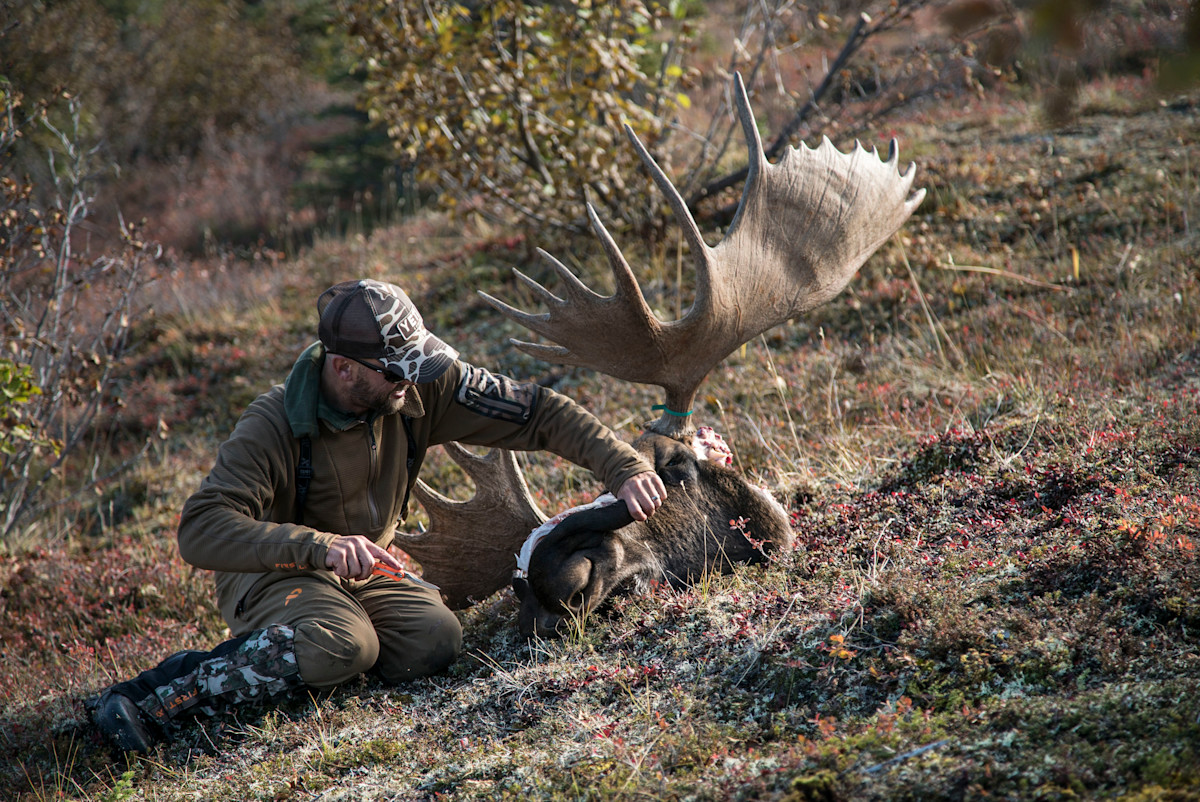

Hunting clothing has come a long ways in the last decade or so. With technical advances in synthetic and natural materials, hunters no longer have to suffer the drawbacks of wet cotton, heavy wool, or loud polyester clothing. It’s now possible to build a complete clothing system that will get you comfortably through most hunts in a wide range of environments, climates, and weather.
Before developing your own clothing system, you’ll need to consider where, when and how you’ll be doing most of your hunting. Always factor in whether you’ll be predominantly sitting or moving and what the prevailing weather patterns will be. If, like a lot of hunters, you hunt in different environments with a mixture of weather, terrain, and activity levels, then your clothing should incorporate a layering system that’s versatile enough to do it all. You’ll need clothing that will breathe and wick moisture when it’s hot or when you’re building up steam on a steep, uphill hike. You’ll also need apparel that will keep you warm during periods of cold weather and low activity, like glassing or stand hunting. Finally, you’ll need to include rain gear in your hunting clothing system. Staying dry not only means staying warm in cold, wet weather, it can also mean staying alive.
Some hunters might balk at throwing down for a complete, do-it-all clothing set-up, but it’s worth every penny. Using a coordinated layering system, you’ll be covered for ninety percent of the environments and weather that you’ll encounter while hunting in North America. Only for extremely hot, cold, or wet places will you need to specialize your clothing kit. In the worst cases, you might need to use rubber rain gear on a maritime hunt for coastal black bears or a heavy down parka and pants during an arctic musk oxen hunt but those situations are rare. I use the same basic clothing system for hunts throughout the year. On any given hunting day, it might be windy and raining, cold and snowing or eighty degrees and sunny. With minor adjustments, I’m covered for spring turkey hunts in Nebraska, late summer blacktail deer hunts in Southeast Alaska, fall antelope hunts in the high desert of Wyoming, and on to winter elk hunts in the Colorado Rockies.
The professionals at First Lite understand how to build complete hunting clothing systems for all conditions. The MeatEater crew hunts all year long, in all types of terrain and weather, in First Lite gear. It has stood up to every test we’ve put it through and we’d recommend it to any hunter. But, no matter what hunting clothing brand you buy, you’re going to want to base your choices on the following system.
Essential gear by First Lite, down from the mountain.
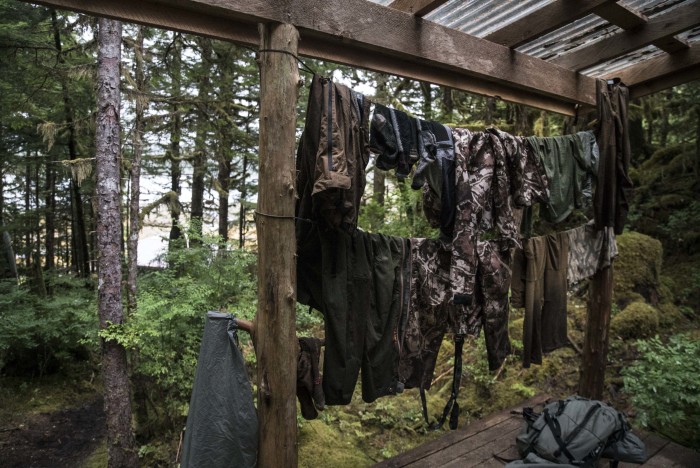
Base Layers
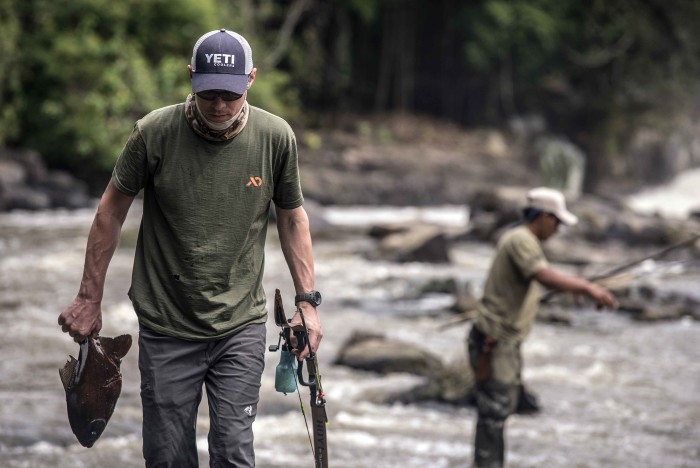
Modern merino base layers outperform synthetics. No other material regulates body temperature better. Merino is warm on cold days and breathes and wicks moisture when it’s hot. And, even after days of continuous wear, it doesn’t stink like synthetics do after just a couple hours of wear. Wool also insulates even if it gets wet. For fall hunts and variable weather, start with a mid-weight merino like the Wick Quarter Zip top or Kiln Zip Off Long Johns next to your skin. If you’re on an early season hunt in hot weather you can go with Wick boxer briefs instead of long johns or, in very cold weather, upgrade to a heavyweight top and bottom baselayer.
Steven Rinella keeps cool in the Llano Merino First Lite top in the hot jungles of Guyana.
Mid-Layers
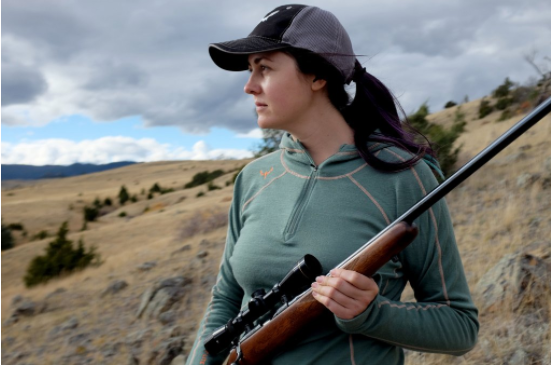
The next level in your layering system should be lighter insulating pieces you can put on or take off according to the temperature and your level of activity. Synthetic fleece pieces like the Klamath Quarter Zip or merino options like the Kiln Hoody are both good choices. In fact, I regularly wear them in tandem.They’re warm and quiet and, by using both, I can precisely manage my core temperature.
Proving great gear isn’t just for the boys, First Lite has produced functional, high-performance women’s hunting gear worn by Brittany Brothers.
Outer Layers
When the temperature drops, especially if you’ll be sitting for long glassing or calling sessions, you’ll need packable insulating outer layers. Down or synthetic insulated outer layers are critical for cold weather hunts. Down works great unless it gets wet. First Lite’s Uncompahgre 2.0 Puffy jacket and pants use synthetic insulation that insulates even when wet. When I need some extra core warmth, I wear the Brooks Down Vest under the jacket. Soft shell pieces with fleece-lined insulation like the Catalyst Soft Shell Jacket and pants are also good outer layer choices. They’re durable enough to bust through brush and do a great job of blocking cold winds.
Pants
Look for a versatile pant that is built for a range of temperatures, which you can hike comfortably in, and that allow you to move through the brush without making a lot of noise. Some pants with a synthetic shell are very noisy but First Lite’s synthetic Corrugate Guide Pants and women’s Alturas pants are light, tough and quiet.First Lite’s Catalyst Softshell Pants uses a 2-layer construction to stay warm and breathable while also being lightweight and completely silent.
Rain Gear
Even the best hunting clothing is rendered worthless if you get soaked in cold weather. When it rains or snows, you want packable rain gear that’s completely waterproof without being too heavy. First Lite's Omen Stormshelter and Vapor Stormlight jackets will get you through the shittiest, wettest weather Mother Nature can serve up. They offer bulletproof weather barriers, and when worn in conjunction with Omen Stormshelter and Boundary Stormtight pants, you’ll be able to stay dry, warm, and keep hunting in nasty conditions.
Hat
I always hunt with two hats. A brimmed hat like the Lo Pro keeps the sun out of my eyes and I carry another like the Merino Beanie to stay warm.
Gaiters
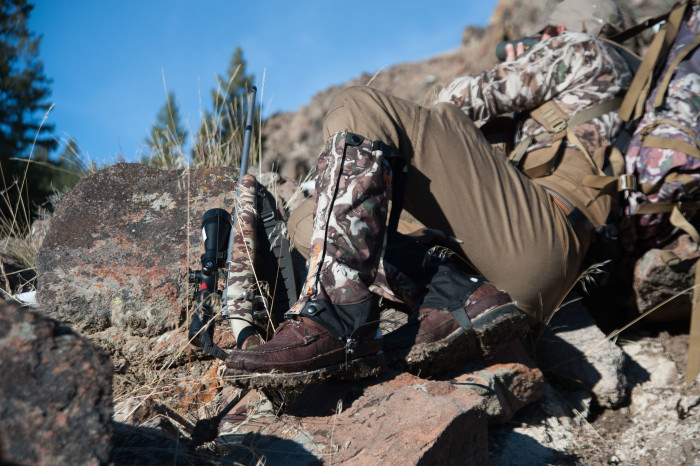
This is one accessory that I feel naked without. The Brambler Gaiters keep moisture out of your boots and socks when you’re crossing a creek or walking through snow. They also block insects, seeds, burrs and dirt during dry weather.
Gloves
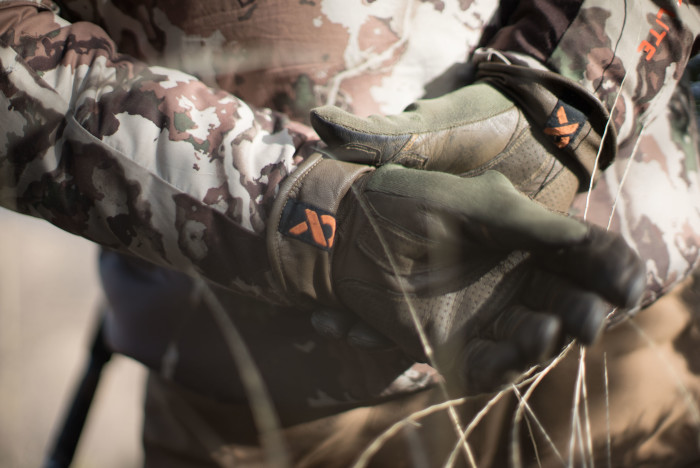
Like hats, I hunt with two pairs of gloves. I love the dexterity of the merino Talus Fingerless Gloves. They keep my hands plenty warm on most hunts but I break out the Grizzly Cold Weather Gloves during late season, winter conditions.
Neck Gaiter
This is another accessory that I can’t live without. The Aerowool Neck Gaiter keeps the sun off my face and neck when it’s hot, adds a layer of warmth when a cold wind picks up, and conceals my face on turkey or waterfowl hunts.
Socks
Like base layers, merino wool socks are vastly superior to synthetics. Merino keeps your feet warm and dry without becoming swampy and I don’t get hotspots like I did with synthetic socks. For most of the year, I use the Triad Socks but the Cold Weather Socks have the insulation needed on especially cold days. I usually carry an extra pair in my pack in case my feet get wet.
A Note on Camo Patterns
We get a lot of questions asking what is the best camo pattern for hunting clothing. Whether you’re bowhunting from a treestand for whitetails, sitting in a natural blind for waterfowl, or stalking antelope in the wide open, you need a camo pattern that breaks up your outline and doesn’t stand out against the background. For instance, a predominantly dark brown camo pattern might work well during the late fall deer season in Illinois but it’ll stick out like a sore thumb if you’re turkey hunting the same area in May when everything is green.
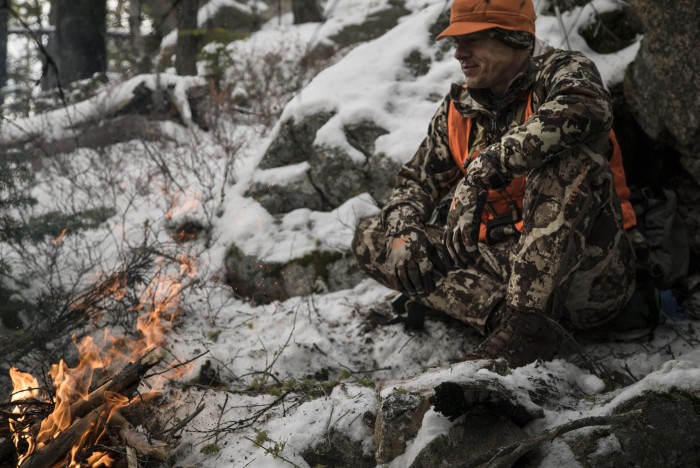
For this reason, we prefer camo that utilizes more general patterns and color schemes that disrupt your silhouette rather than patterns that exactly mimic a specific environment. This is why we like First Lite’s lineup of camo patterns. These patterns work have worked well everywhere from turkey hunting in eastern woodlands to caribou hunts on the Alaskan tundra. And remember, no camouflage pattern will overcome poor woodsmanship skills. Most game animals are prey species that are programmed to flee as soon as they detect movement. A stealthy hunter wearing solid, drab earth tones is more likely to be successful than one who is moving in full view of their quarry-even if they’re covered in ultra-realistic camo from head to toe.
Consider your hunting clothing an important part of your entire gear lineup. Use a system you can rely on no matter what, where, or when you’re hunting. Fortunately, it’s possible to build a complete hunting clothing system that that is versatile enough to use whether you’ll be chasing quail all day in a hot desert environment or sitting on a stand from dawn until dusk in a mix of freezing rain and snow. And, a complete hunting clothing system will ultimately keep you out in the field longer, allowing you to put more meat in the freezer.
Stay in the loop with The MeatEater Newsletter
Shop
Related
Hunting
Building A Complete Hunting Clothing System
Hunting Gear
MeatEater Pro Tips: Pants Layering Systems

Butchering & Processing
Field Butchering Tips Part 2: Quartering vs Deboning
The comments section requires Functionality cookies. Please enable Functionality cookies in Cookie Settings to view this content.