
Nine millimeter semi-automatic handguns are the most popular type of firearm in the United States. You might not hunt deer with a Glock, but if you own a handgun for self-defense–as most gun owners do–it probably uses a detachable magazine and is chambered in 9mm Luger. Many hunters carry these firearms into the woods for protection in case things go sideways with another human, and you can make a solid case for their use against charging bears, too.
The popularity of 9mm handguns has incentivized gun companies to offer scores of models with a wide range of features, capacities, and capabilities. These days, it seems like every gunmaker (even those you wouldn’t expect) offer an all-black semi-auto. If you’ve been scrolling through sporting goods websites wondering how to narrow the field, you’ve come to the right place.
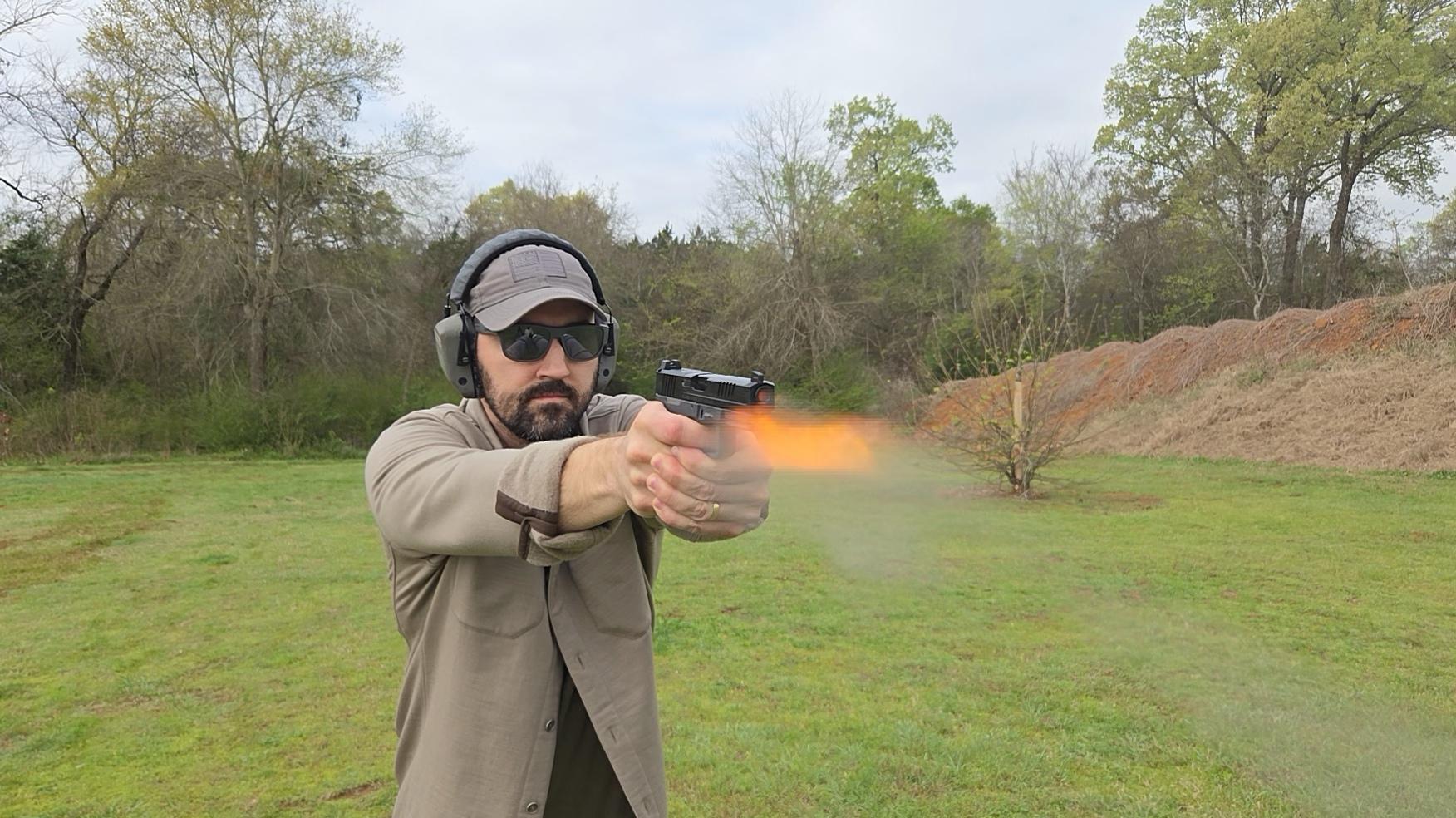
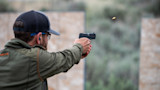
As I did with this article on 10mm handguns, I asked Scheels to send me some of their newest, most sought-after 9mm models, and I ran them through a gauntlet of testing to see how they stack up against each other. You might not agree with my assessment, but I hope the info below is helpful as you choose your first–or next–9mm.

Jump to: The Ultimate 9mm Showdown
The Contest and Contestants
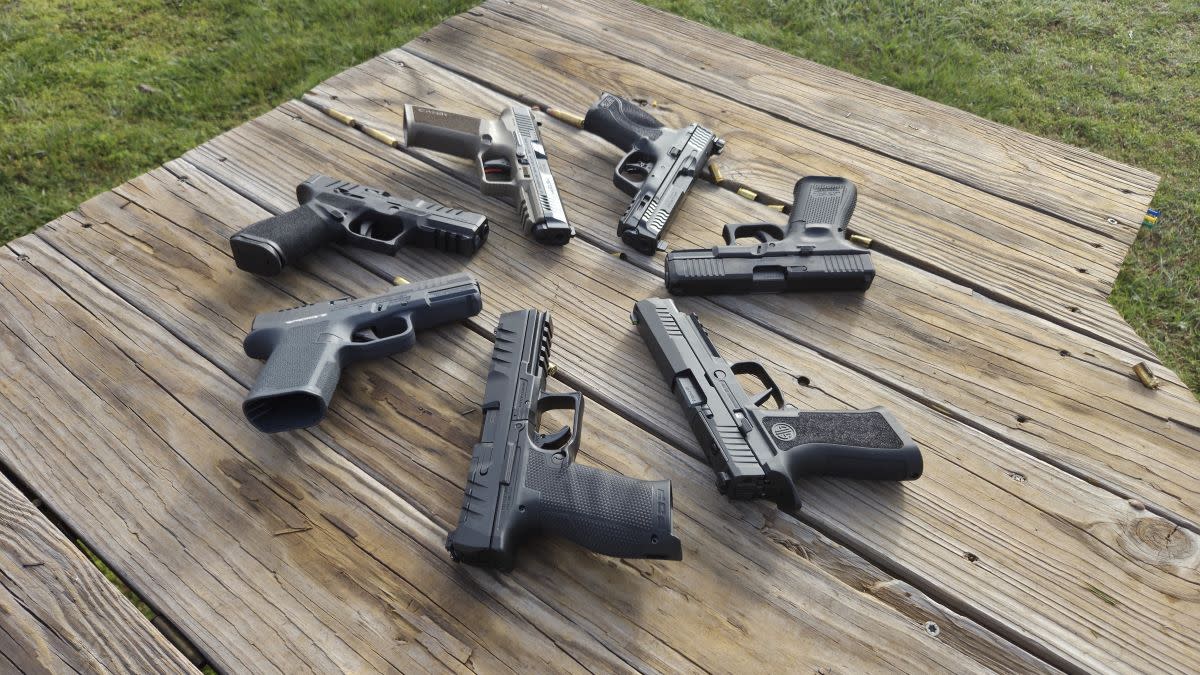
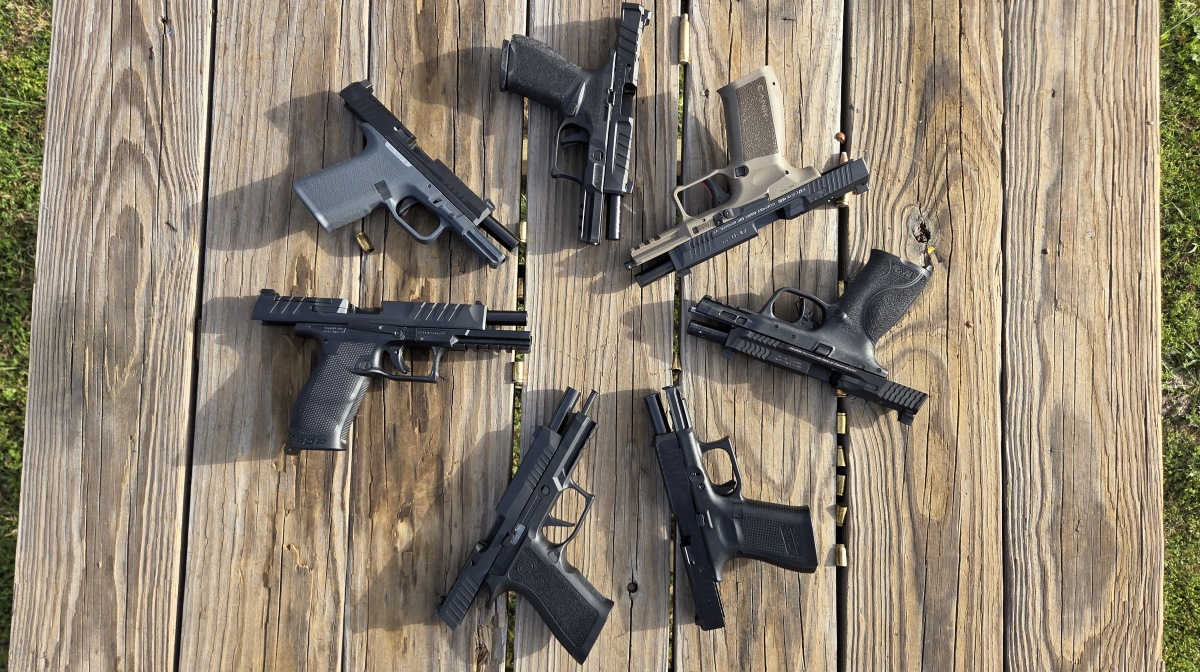
There are so many 9mm handguns on the market, it’s nearly impossible to select a group to test without leaving out someone’s favorite (I myself am partial to the HK VP9). But I think this list offers a good mix of brand-new models and time-tested favorites: the Ruger RXM, Glock G19 Gen 5, Sig Sauer P320, Walther PDP, Canik Mete SFT, Springfield Echelon and the Smith & Wesson M&P 2.0.
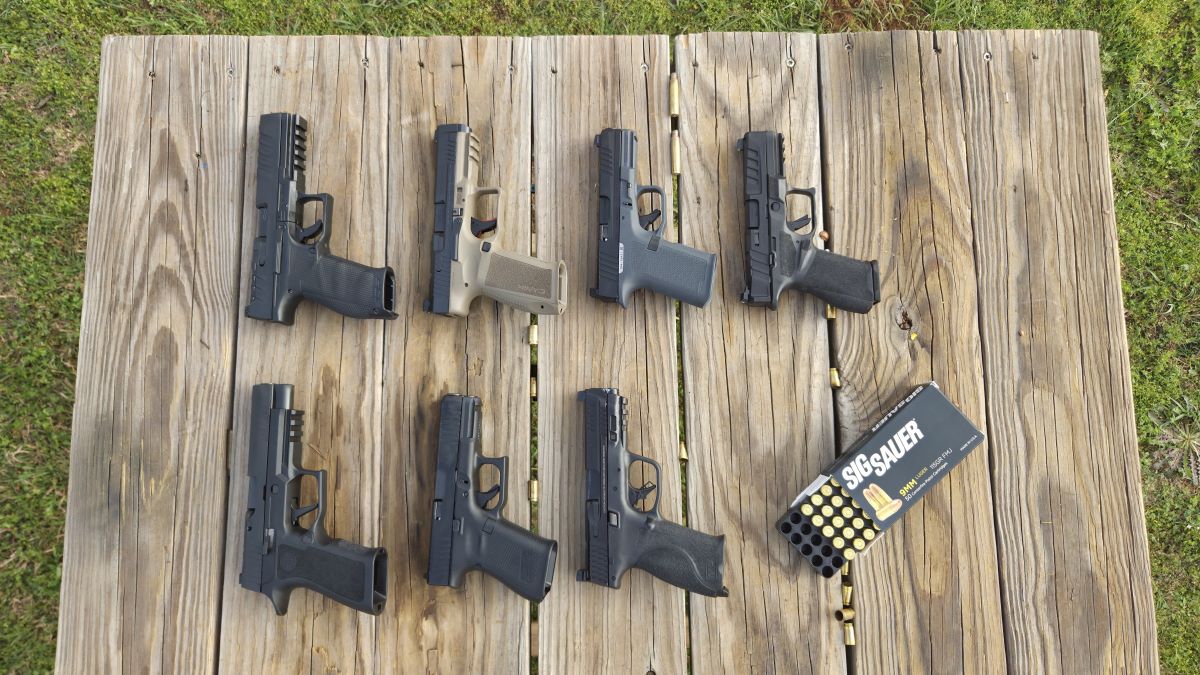
As you can see, I left out sub-compact models designed specifically for concealed carry. You generally don’t need to conceal a handgun when you’re out in the field, so you might as well go for the higher capacity and easier shootability of a larger model. All of these guns land in the $500-$700 range, they all offer capacities between 15 and 18 rounds, and they’re all optics-ready (more on that below).
To choose a winner, I pitted these handguns head-to-head across eight categories:
1. Ergonomics
2. Controls
3. Iron Sights
5. Trigger
6. Value
7. Accuracy
8. Reliability
Each pistol received a score from 1-7 based on their ranking, and their total scores are tallied at the end. If two guns tied, their scores were averaged.
But before we get to that, here are the major specs for each handgun.
The Ultimate 9mm Showdown
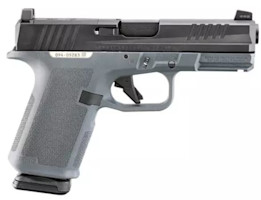 Ruger RXM | 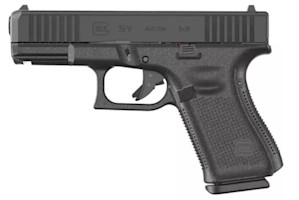 Glock 19 Gen 5 | 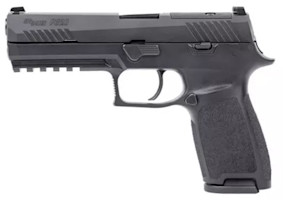 Sig Sauer P320 | 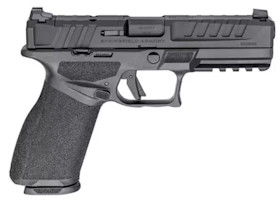 Springfield Echelon | 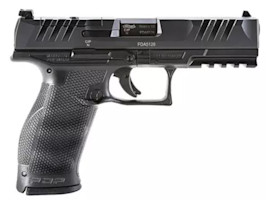 Walther PDP | 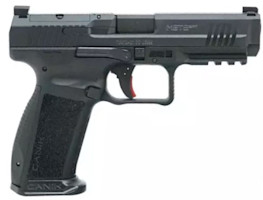 Canik Mete SFT | 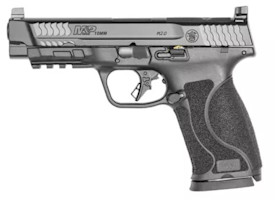 Smith and Wesson M&P 2.0 | |
|---|---|---|---|---|---|---|---|
| Slide Length | 7" | 7" | 7.5" | 7" | 8" | 7.5" | 7" |
| Overall Height | 5" | 5" | 5.5" | 5" | 5.5" | 5.5" | 5.5" |
| Weight | 23 oz | 22.5 oz | 28.5 oz | 24.5 oz | 26 oz | 28 oz | 27 oz |
| Optics Ready? | Yes | Yes | Yes | Yes | Yes | Yes | Yes |
| Trigger Weight | 5.5 lbs | 5.5 lbs | 5.5 lbs | 5 lbs | 5 lbs | 4.5 lbs | 5,5 lbs |
| Barrel Length | 4" | 4" | 4.7" | 4" | 5" | 4.5" | 4.25" |
| Capacity | 15+1 | 15+1 | 17+1 | 15+1 | 18+1 | 18+1 | 17+1 |
| Price | $430* | $540* | $500* | $650* | $700* | $475* | $670* |
Ergonomics
Ergonomics describes how comfortable a gun is to hold and shoot. This changes from person to person depending on the size and shape of your hands, your personal preferences, and what you’re accustomed to.
I have medium-sized hands (I could never palm a basketball, despite my best efforts), so I tend to prefer handguns with a slimmer, less bulky grip. That meant the Springfield Echelon, Sig P320, and Walther PDP were the most comfortable. I could wrap my fingers around the grip without straining, and the shape felt like it was meant for human hands. The Echelon was particularly pleasant to shoot. The combination of grip shape, size, and texture facilitated a firm purchase on the firearm and allowed for easy recoil control as compared to the other guns with four-inch barrels.
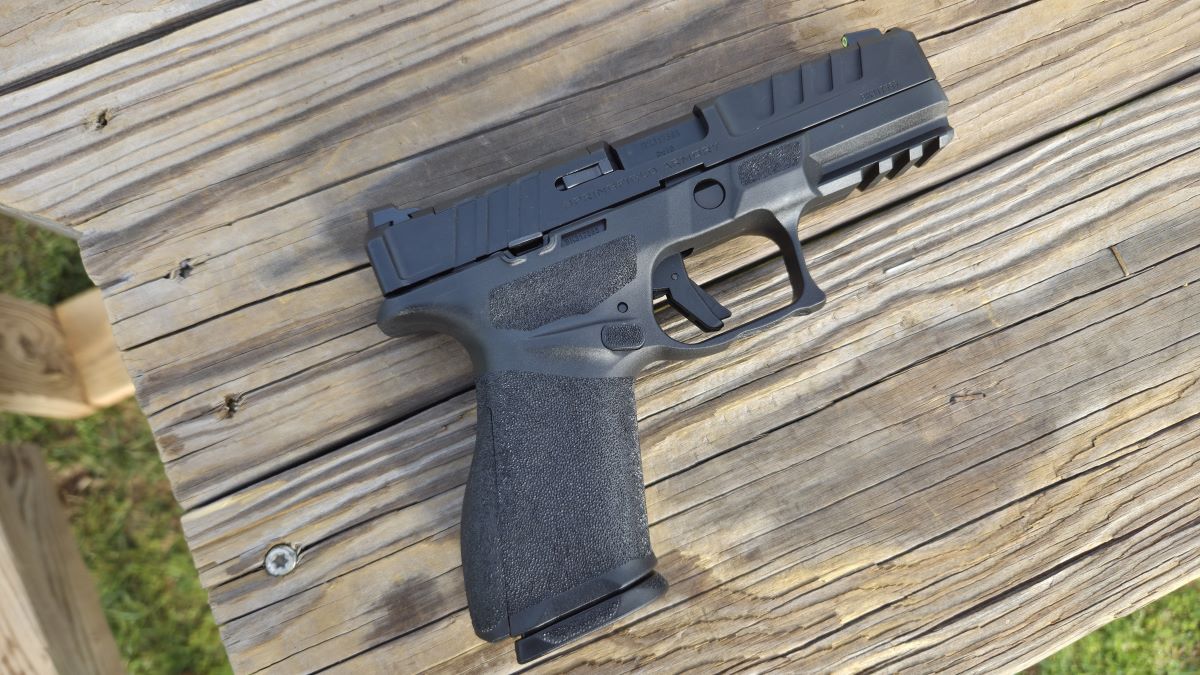
And I don’t think my assessment is solely subjective. It’s clear that Springfield’s designers spent a lot of time on the grip shape. It will facilitate good shooting for almost anyone, and I think you’ll agree if you get a chance to hold it.
The M&P and Mete were slightly less comfortable, though neither was unpleasant to shoot. I preferred the Canik’s grip texture over the skateboard tape on the Smith & Wesson, though I’ve always been partial to how an M&P feels in the hand.
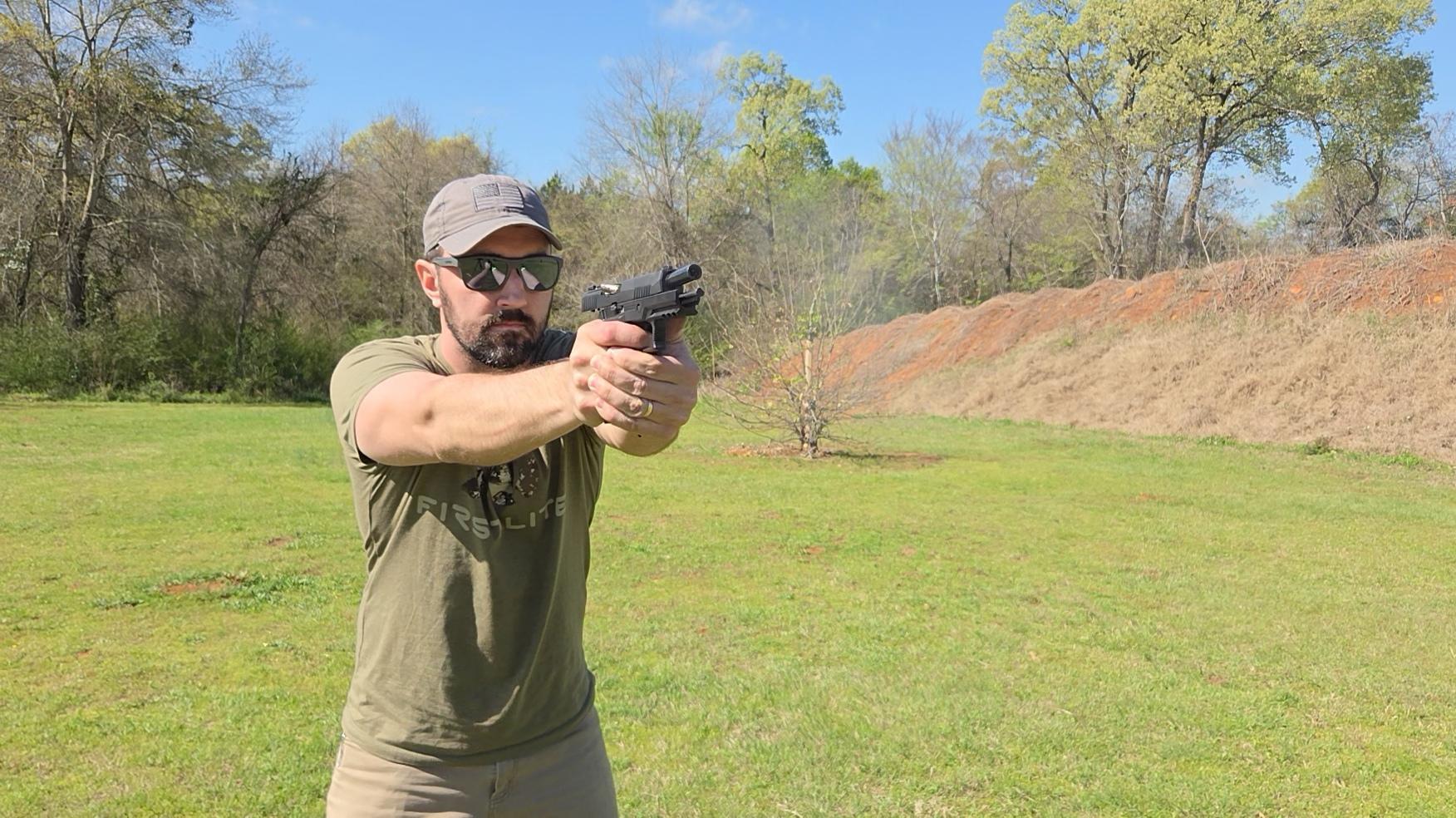
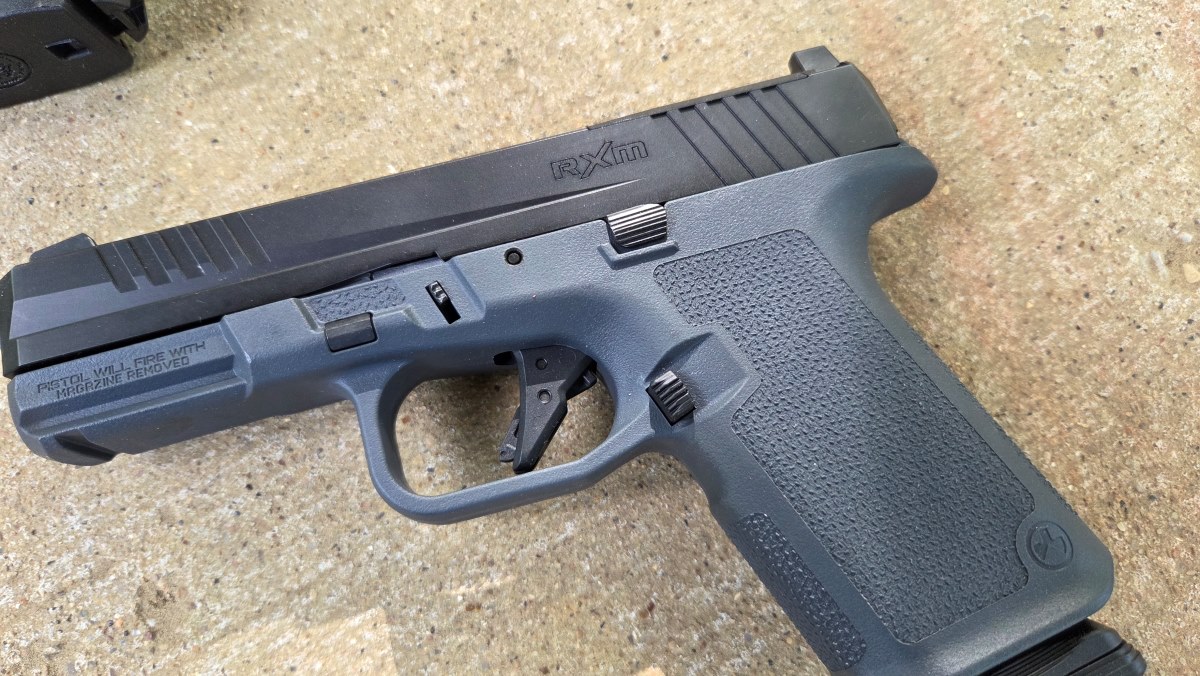
The Glock was a Glock, and the RXM is a Gen 3 Glock 19 clone, so it was also a Glock. I’m not a fan of the large, boxy shape. While I know many would disagree, I just can’t seem to get a good purchase. However, I did like what Magpul did with the texturing on the RXM. It’s rough enough to get a firm grip if the gun is wet or muddy but not so rough that it becomes painful after shooting without gloves on.
Score
- Springfield: 7 points
- Walther: 6 points
- Sig Sauer: 5 points
- Canik: 4 points
- Smith & Wesson: 5 points
- Ruger: 2 points
- Glock: 1 point
Controls
All of these handguns incorporate two primary control buttons: the mag release and the slide release. A mag release should be easy to reach and press, and the magazine should be ejected with force. A slide release should be similarly easy to reach and shouldn't require too much force to operate.
I preferred the Canik and Walther. Both guns feature large, easy-to-reach magazine release buttons with good tactile feedback. They also have slide release paddles (as opposed to smaller buttons) that offer plenty of room for your thumb without protruding from the firearm.
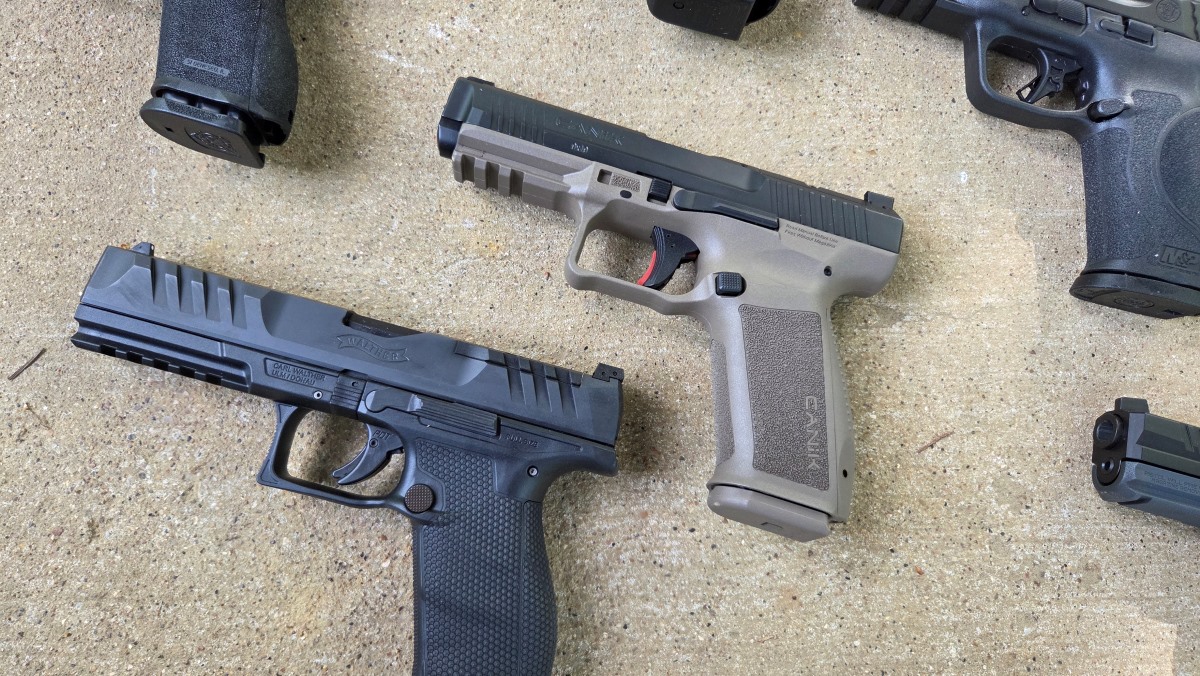
The Sig, Springfield, and Smith & Wesson are also fitted with large, tactile mag release buttons, but the slide releases are more difficult to operate. The Springfield’s is especially tough. The button is tiny and requires a fair amount of force to release the slide. This might resolve as the handgun is broken in, but it stood out compared to the other handguns.
The mag release buttons on both the Ruger and Glock were mushy, and the mag seemed to fall out rather than be ejected with force. The slide release buttons are small, though not especially difficult to use.
Score
- Canik: 7 points
- Walther: 6 points
- Sig: 5 points
- Smith & Wesson: 4 points
- Springfield: 3 points
- Glock: 2 points
- Ruger: 1 point
Iron Sights
Red-dot optics have taken the world by storm, but many still prefer to use iron sights on their self-defense firearms. You don’t have to worry about irons running out of battery, and they can be dropped, knocked, and otherwise abused without losing zero.
All seven handguns come with a slightly different iron sight setup:
- Ruger: Front tritium ringed by white, rear all-black square cutout
- Glock: Front white dot, rear white box
- Sig: Front tritium, rear tritium dot
- Springfield: Front tritium, rear white u-shape
- Walther: Front white dot, rear white dot
- Canik: Front white dot, rear white dot
- Smith & Wesson: Front white dot, rear white dot
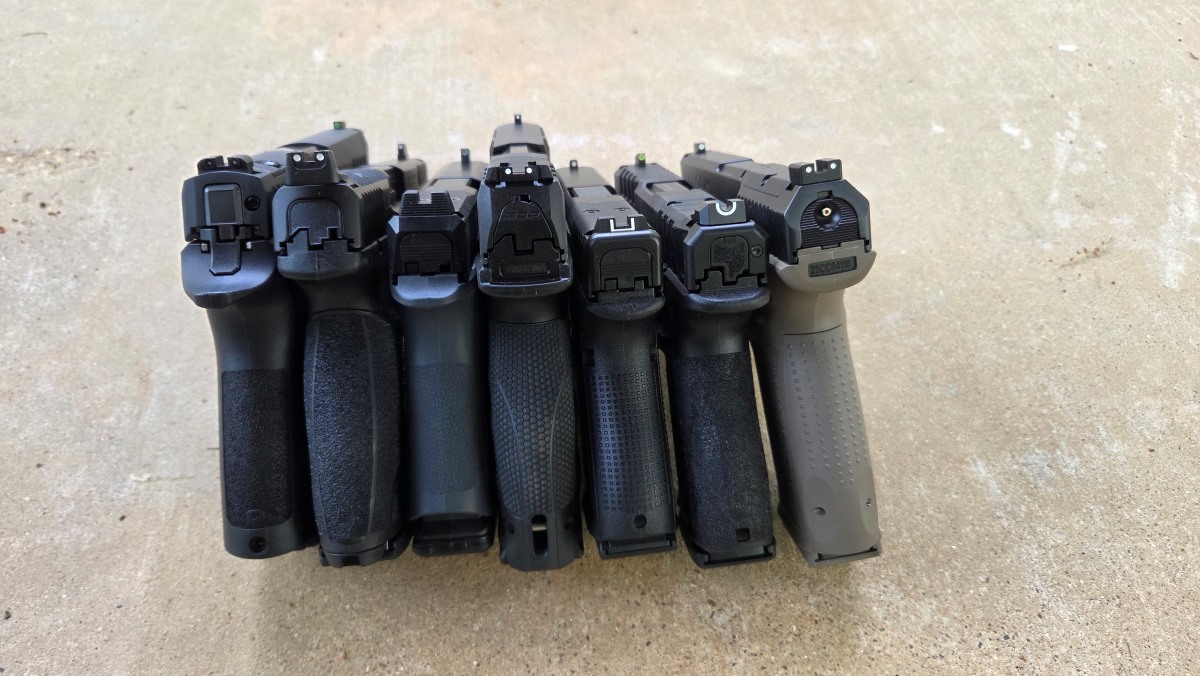
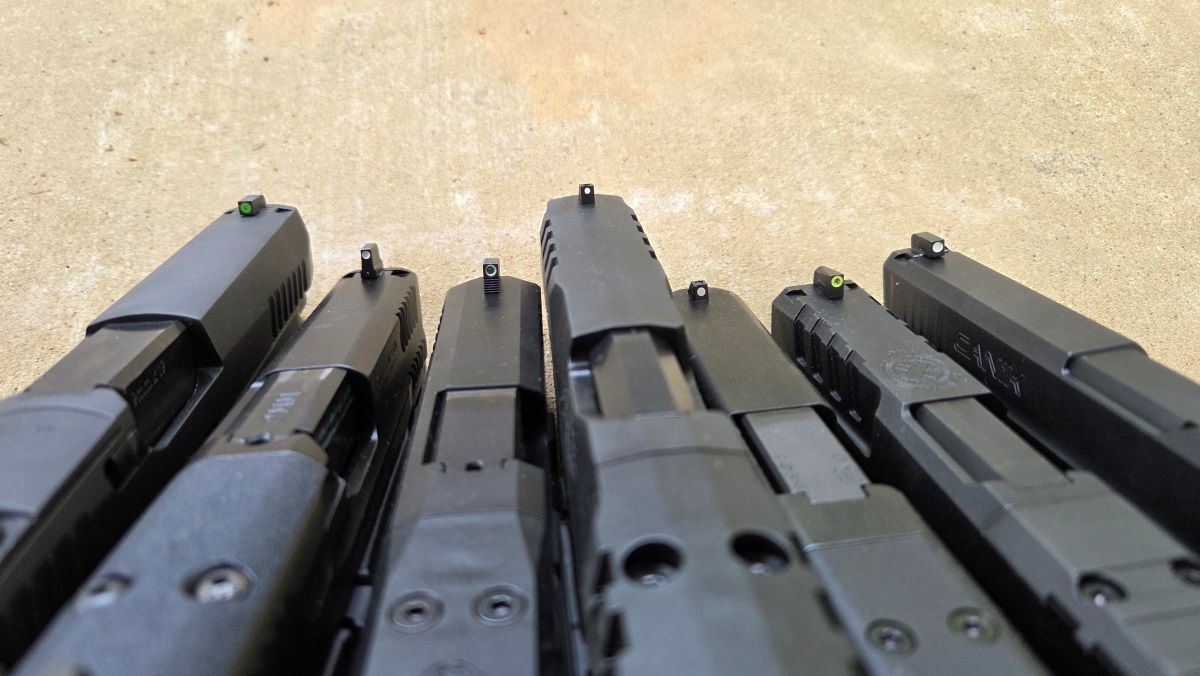
If you learned to shoot with the classic three-dot design, the Canik, Walther, and Smith & Wesson are your jam. The Walther is the only handgun with an adjustable rear sight, which is nice if you want to dial in your irons.
The Glock also provides contrast between the front white dot and the rear white box, which can make sight alignment faster.
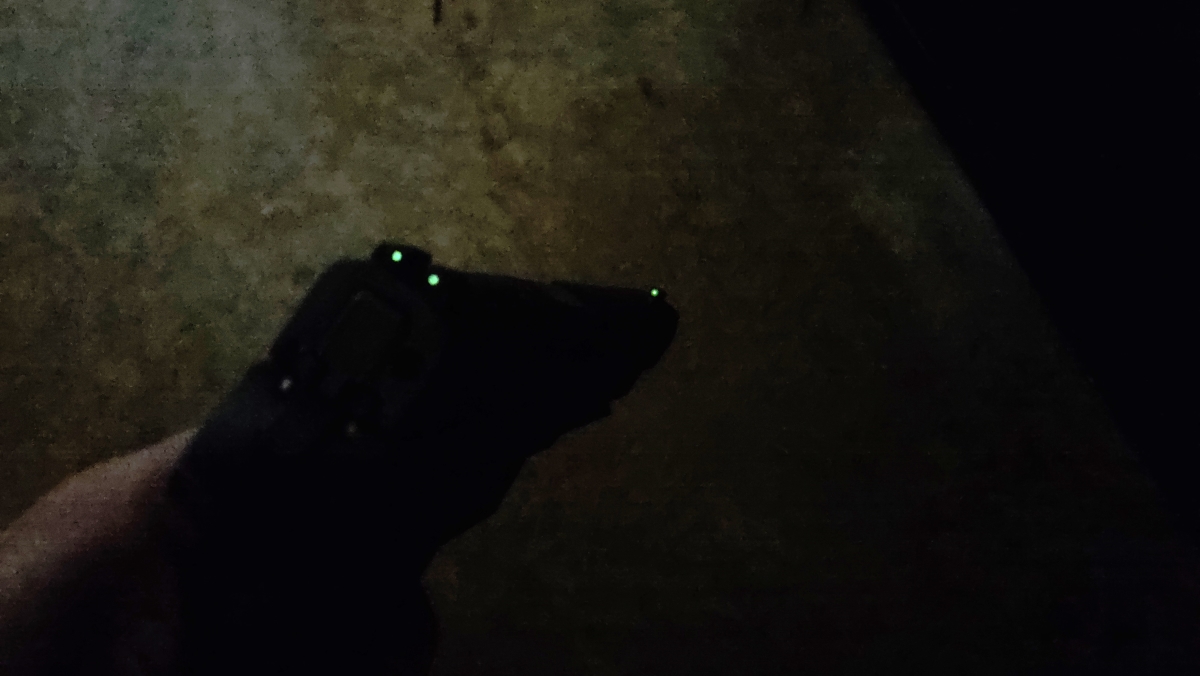
But with all four of these pistols, you’re SOL if the lights go out. The Sig, Ruger, and Springfield take their front irons to the next level by offering a glow-in-the-dark tritium center ringed by some kind of easy-to-see circle. But while the Ruger’s outer circle is just painted white, the Sig’s and Springfield’s appear to be fiber-optic. This makes the sights stand out better in the light while the tritium is visible in the dark.
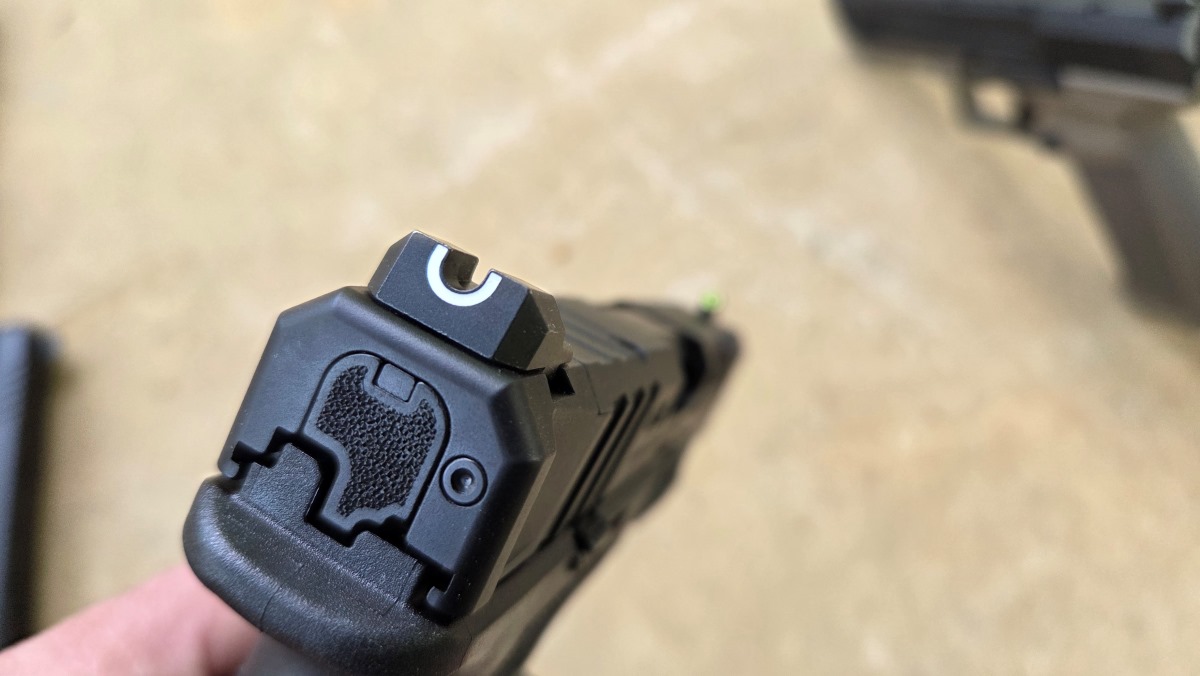
The Sig, Ruger, and Springfield also offer a high-contrast rear sight, though they do it in different ways. Springfield’s “U” is less common, but with some practice, might make for the quickest sight alignment. Unfortunately, the sights on this particular firearm threw rounds high and to the right. This happened with multiple kinds of ammunition and while being careful to achieve perfect sight alignment. This isn’t an inherent flaw of the system, but I wanted to mention it in case others experienced the same issue.
The Sig and Ruger feature more traditional, square-cut designs, though the Sig includes two small white dots ringed by black that also glow in the dark. This maintains a contrast between the front and rear sights while also allowing the user to line up all three dots for more precise shooting. I found that the Sig’s front sight is most visible in both daylight and lowlight, which earned it the top spot.
Score
- Sig Sauer: 7 points
- Springfield: 6 points
- Ruger: 5 points
- Walther: 4 points
- Glock: 3 points
- Smith & Wesson: 2 points
- Canik: 1 point
Red Dot Compatibility
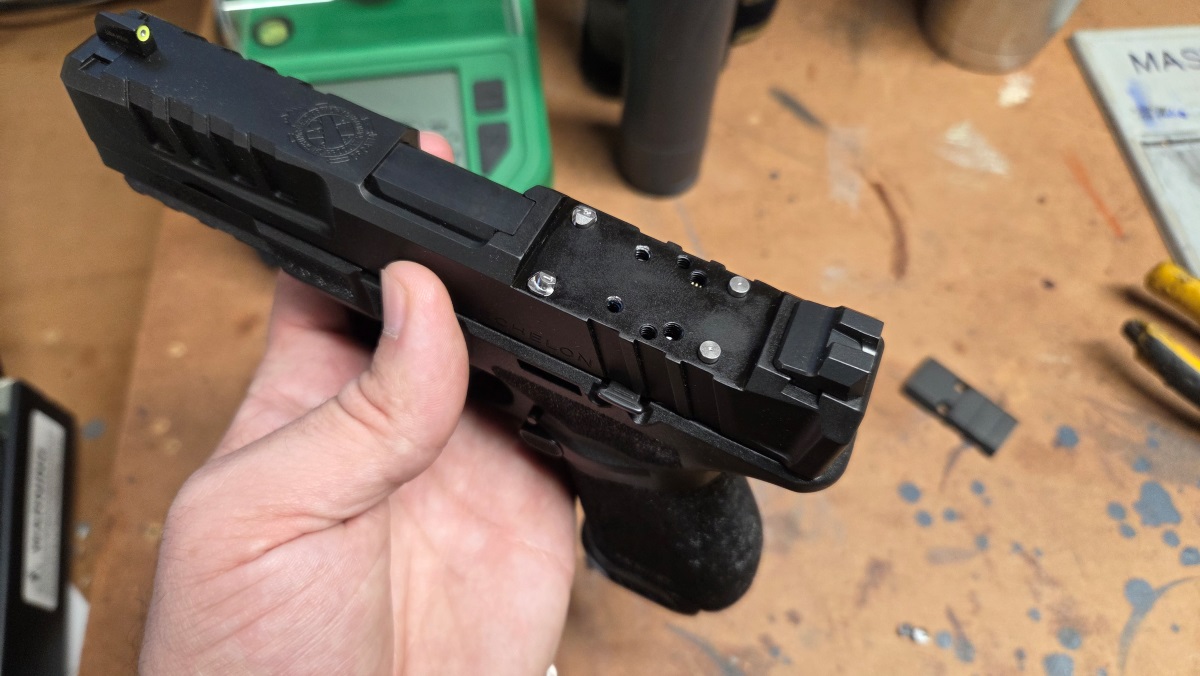
In my mind, a good pistol optics mounting system combines two things that are sometimes at odds. It should allow for a wide variety of brands and models to be mounted to the gun, and it should be durable. Obviously, the best setup is to use the optic that fits in the slide cutout without using any plates or pins. But since that's not always possible, each of these seven handguns uses a slightly different system to mount various red dots.
- Ruger RXM: Allows for direct optic mounting of RMR, DeltaPoint Pro, and RMSc pattern optics using an innovative set of locator pins and pre-drilled holes.
- Glock: Included metal adapter plate compatible with Trijicon, Ameriglo, and Holosun (except 509); additional plates available for purchase.
- Sig: Sig has changed their mounting system over the years, but they've provided a helpful guide here. Using that guide, I found that this P320 uses the SIG-LOC PRO footprint, which is directly compatible with these ROMEO red dots. Any red dots cross-compatible with those ROMEO dots (C-More RTS/STS and DeltaPoint Pro) should also be able to mount directly to the slide with the included recoil pins. The gun does not have an option to use plates.
- Springfield: Allows for direct optic mounting of RMR, DeltaPoint Pro and the Springfield Micro/Shield RMS/SMS via a patent-pending pin system. The pins are helpfully bagged and labeled, so you know which ones to use. Plates can be purchased separately to mount additional optic footprints.
- Walther: Plates can be purchased separately and are available for most pistol red dots. Gun owners can request free plates, but they estimate a 4-6 week delivery time. There is no way to mount a red dot with what's included in the box.
- Canik: Included polymer plates allow mounting of Shield RMS/SMS-footprint optics. If you want to mount other optics, you need to find a third-party adapter plate.
- Smith & Wesson: Included set of polymer adapter plates allow most common footprints to be mounted, including Trijicon RMR, DeltaPoint Pro, Doctor, and C-more.
If you're looking for out-of-the-box compatibility, it's hard to beat the Smith & Wesson. But I don't love the polymer plates from a durability perspective--they're known for allowing the optic to shift after extended use. Canik's system would have the same problem, and you aren't even getting the wide range of mounting options.
If you're looking for durability, Sig's LOC system is the way to go. It uses five points of contact--including a cutout in the slide that locks the front of the optic--to hold the red dot firmly in place. The optic is secured via screws that are installed underneath the slide, which further protects against movement. Of course, you'll need to purchase a compatible Sig ROMEO red dot to take advantage of this system. You can mount other optics, but the LOC system is really made for other Sig products.
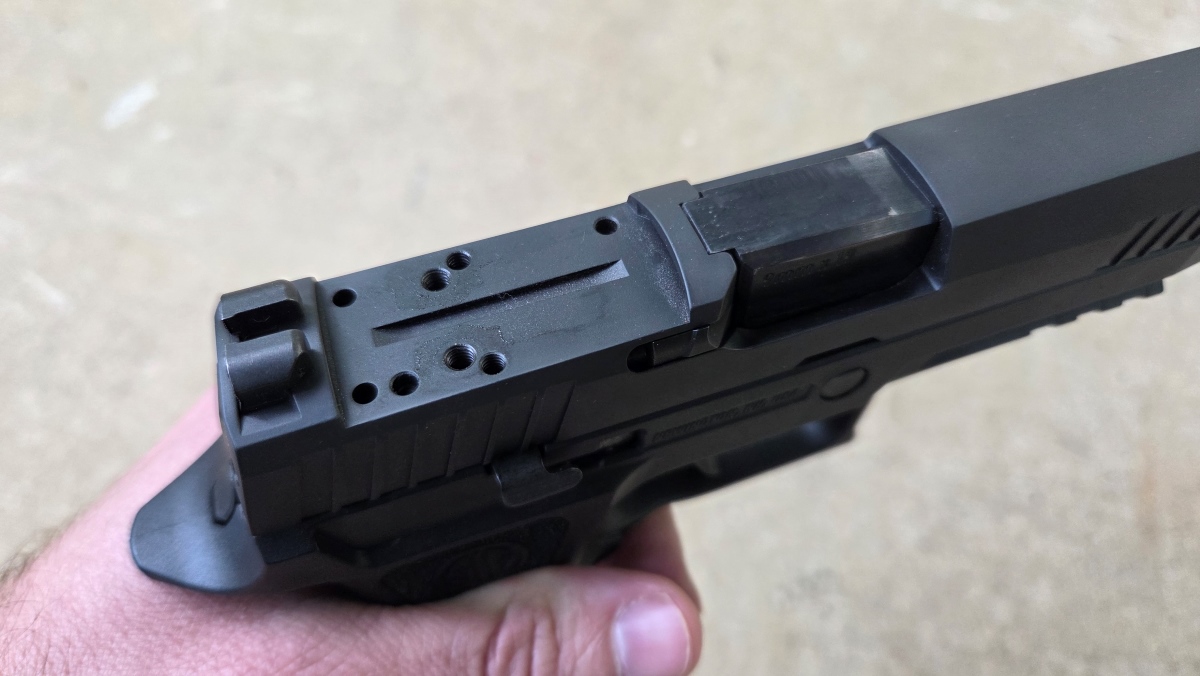
For my money, the Ruger and the Springfield do the best job balancing durability and compatibility. Neither system uses mounting plates (though both can accept them), which removes a major point of failure in most mounting systems. But they also accept some of the most popular footprints, so there's a good chance you already own an optic that will work. The downside is that both systems are new. I haven't seen many reports of failures, but it might take hundreds or thousands of rounds for those issues to arise. Both companies have solid, decades-long reputations, and the pin system appears durable. But only time will tell.
Score
- Springfield: 7 points
- Ruger: 6 points
- Sig: 5 points
- Glock: 4 points
- Smith & Wesson: 3 points
- Walther: 2 points
- Canik: 1 point
Trigger
A good pistol trigger has a reasonable weight (not too heavy, not too light), but it should also be crisp (no creep or grittiness) and consistent. It shouldn't continue to move back once it hits the wall, and it shouldn't break at five pounds on one pull and six pounds the next.
I evaluated each trigger using the criteria above, and here were the results.
Trigger | Weight (lbs) | Creep | Break | Reset |
|---|---|---|---|---|
| Ruger | 5.5 | Significant | Average | Long |
| Glock | 5.5 | Significant | Average | Long |
| Springfield | 5.5 | Slight | Good | Medium |
| Sig Sauer | 5 | Slight | Good | Medium |
| Walther | 5 | Slight | Excellent | Short |
| Canik | 4.5 | None | Excellent | Short |
| Smith & Wesson | 5.5 | Significant | Average | Long |
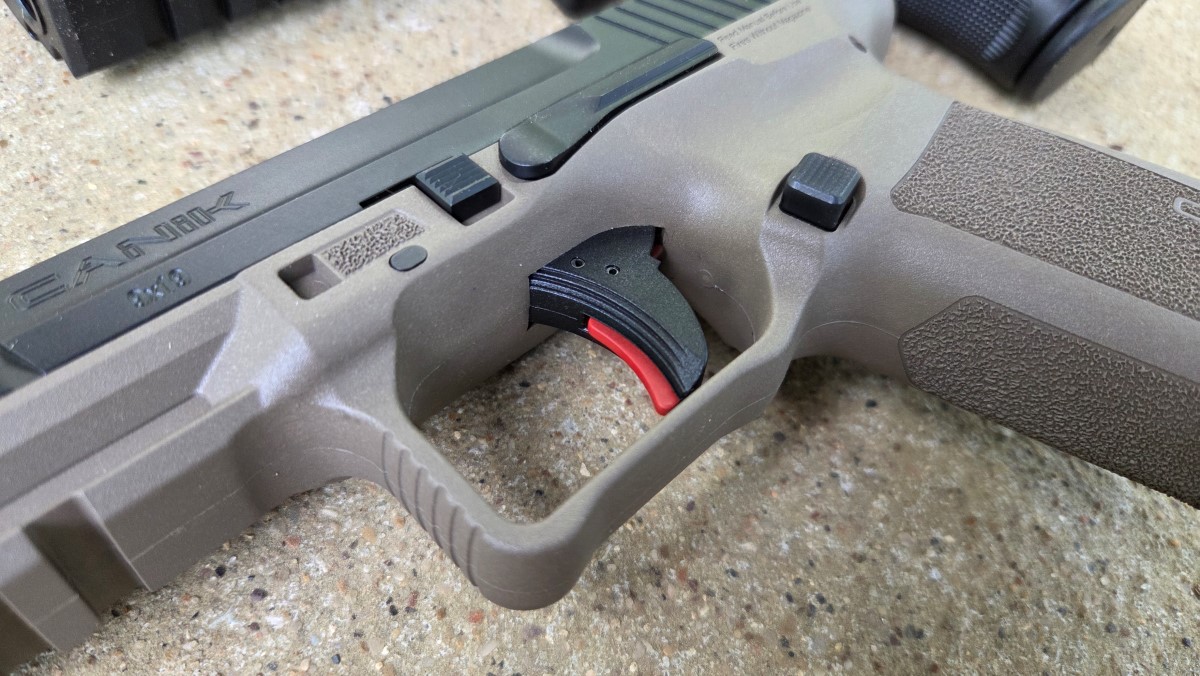
The Canik's trigger stood out among these seven handguns. The takeup was lengthy, but there was no movement once it hit the wall. The break was crisp, and the reset was extremely short while also being audible and tactile. The Springfield's wasn't far behind, though it lost points for having a small amount of creep.
The Sig stood out for not having a trigger safety and for its flat face. I realize there are differing opinions on both of those features, but they earn points in my book.
Score
- Canik: 7 points
- Springfield: 6 points
- Walther: 5 points
- Sig: 4 points
- Smith & Wesson: 3 points
- Ruger: 2 points
- Glock: 1 point
Value
This category was called "price" in the 10mm showdown, but I thought that was too simplistic. You can see which handgun is the cheapest and which is the most expensive, but that's not the only consideration (if it was, I would've included a Hi-Point on this list). You're looking for the most bang for your buck, and while that's always going to be a subjective decision, I think I can make a case for the order I chose.
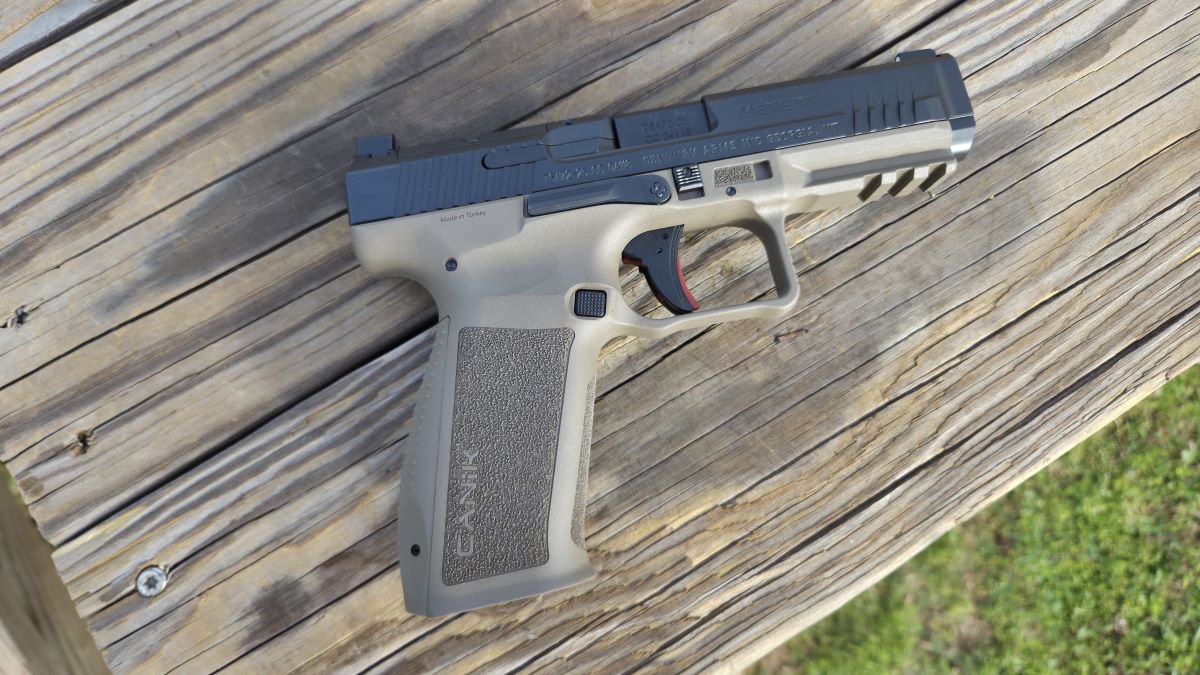
The Canik is a full-size, 18+1 capacity handgun with a great trigger and excellent accuracy. The fact that it comes in under $500 makes it a steal (especially considering all the accessories--including a holster--that come in the box). The Ruger wasn't my favorite gun to shoot, but I can appreciate the innovative optic mounting system, the good iron sights, and the decent trigger. The Sig rounds out my top three for many of the same reasons the Canik is #1. It's a full-size 9mm with a fantastic trigger and excellent accuracy--all for $500.
Score
- Canik: 7 points
- Ruger: 6 points
- Sig: 5 points
- Glock: 4 points
- Springfield: 3 points
- Walther: 2 points
- Smith & Wesson: 1 point
Accuracy
Whether you put shots on target with a 9mm handgun has more to do with your skill than the inherent accuracy of the firearm. But a more accurate pistol will give you more room for error, which is why I think accuracy testing is still important.
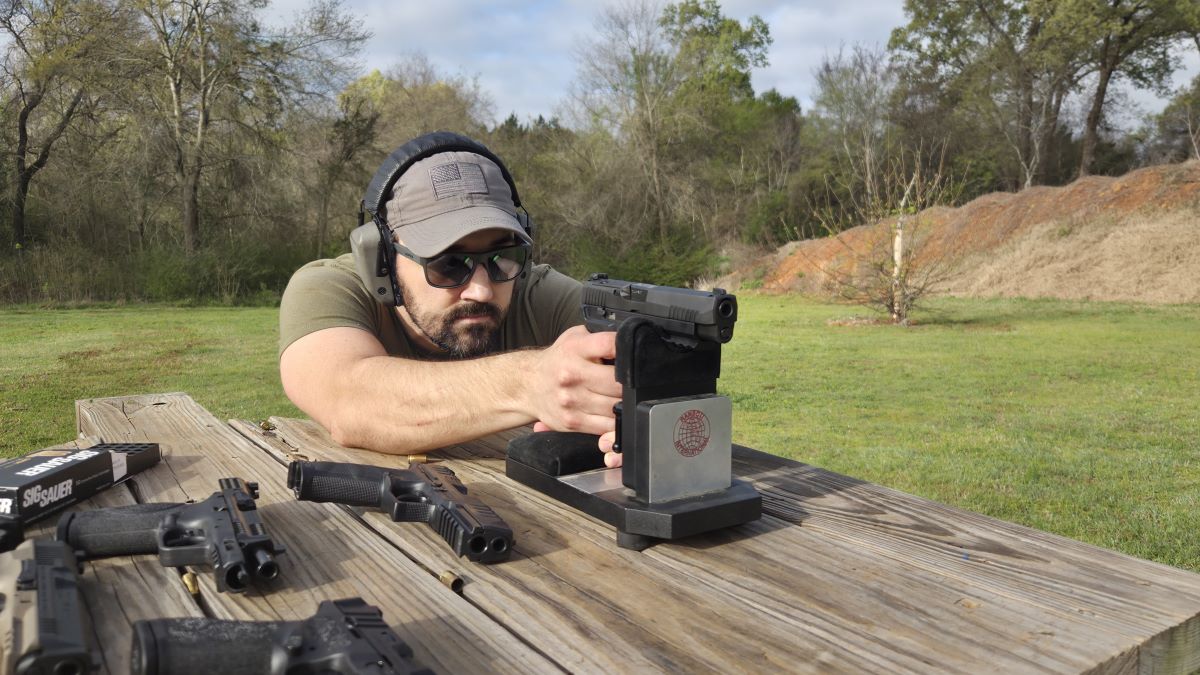
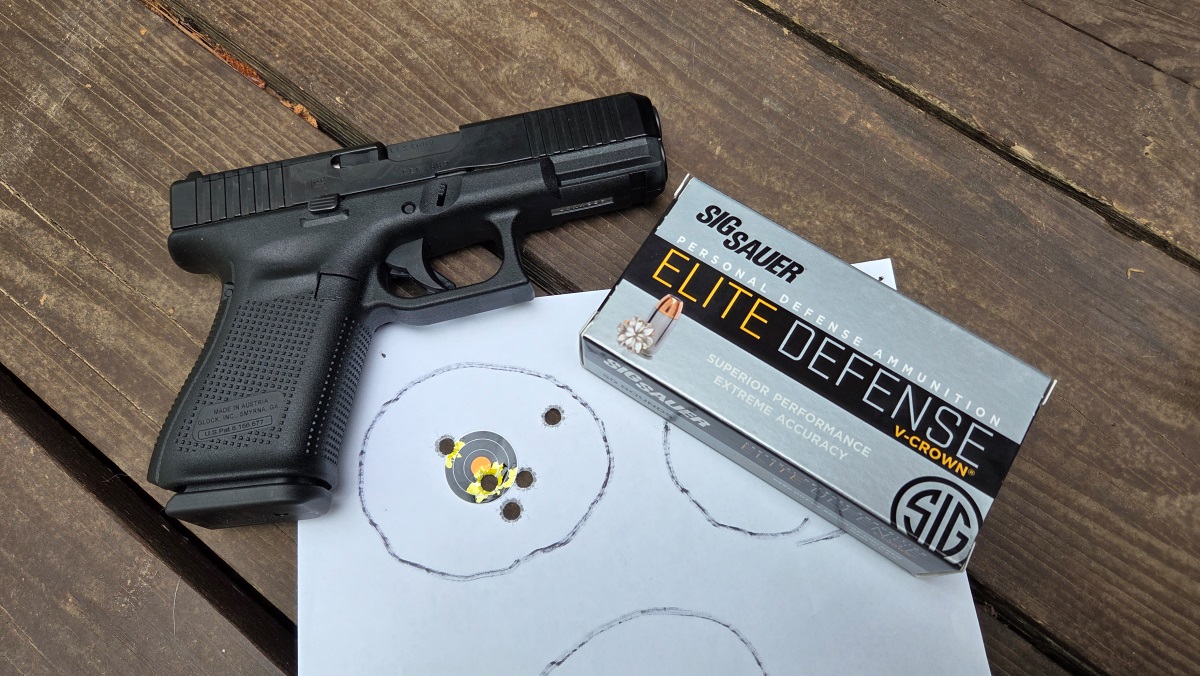
All handguns were shot from a Ransom rest positioned 15 yards from the target. Five, five-shot groups were fired with Sig Sauer's full metal jacket loads as well as their Elite V-Crown hollow point loads.
Gun | Average Group FMJ (in) | Average Group Hollow Point (in) | Combined Average (in) | Average Velocity (fps) |
|---|---|---|---|---|
| Canik | 1.1 | 1.2 | 1.15 | 1201 |
| Sig Sauer | 1.4 | 1.3 | 1.35 | 1208 |
| Glock | 1.5 | 1.3 | 1.4 | 1159 |
| Walther | 1.5 | 1.5 | 1.5 | 1238 |
| Springfield | 1.6 | 1.5 | 1.55 | 1180 |
| Ruger | 1.7 | 1.7 | 1.7 | 1159 |
| Smith & Wesson | 1.9 | 1.5 | 1.7 | 1168 |
Even with a Ransom rest, the Canik's excellent trigger helps keep rounds on target. The same is true of the Sig's trigger and easy-to-see sights. But the fact that the Glock came away with the bronze in this category speaks to how much the rest removes the shooter from the equation. There's a reason Glock has earned a diehard following of serious gun owners: if you can get used to the grip and the trigger, these guns can shoot.
Score
- Canik: 7 points
- Sig: 6 points
- Glock: 5 points
- Walther: 4 points
- Springfield: 3 points
- Ruger: 2 points
- Smith & Wesson: 1 point
Reliability
This category counts as double. Your gun can have a crappy trigger and terrible ergonomics, but it can still get you out of a jam if it goes bang when you need it.
I shot hundreds of rounds with these handguns, and they all ran flawlessly during my trips to the range--with one exception. When shooting hollowpoint ammunition, the Ruger frequently failed to load the final round. The cartridge would get stuck on its way up the feed ramp. A firm smack to the bottom of the pistol grip resolved the jam, and swapping mags seemed to resolve the issue, but the problem was consistent enough to warrant a mention.
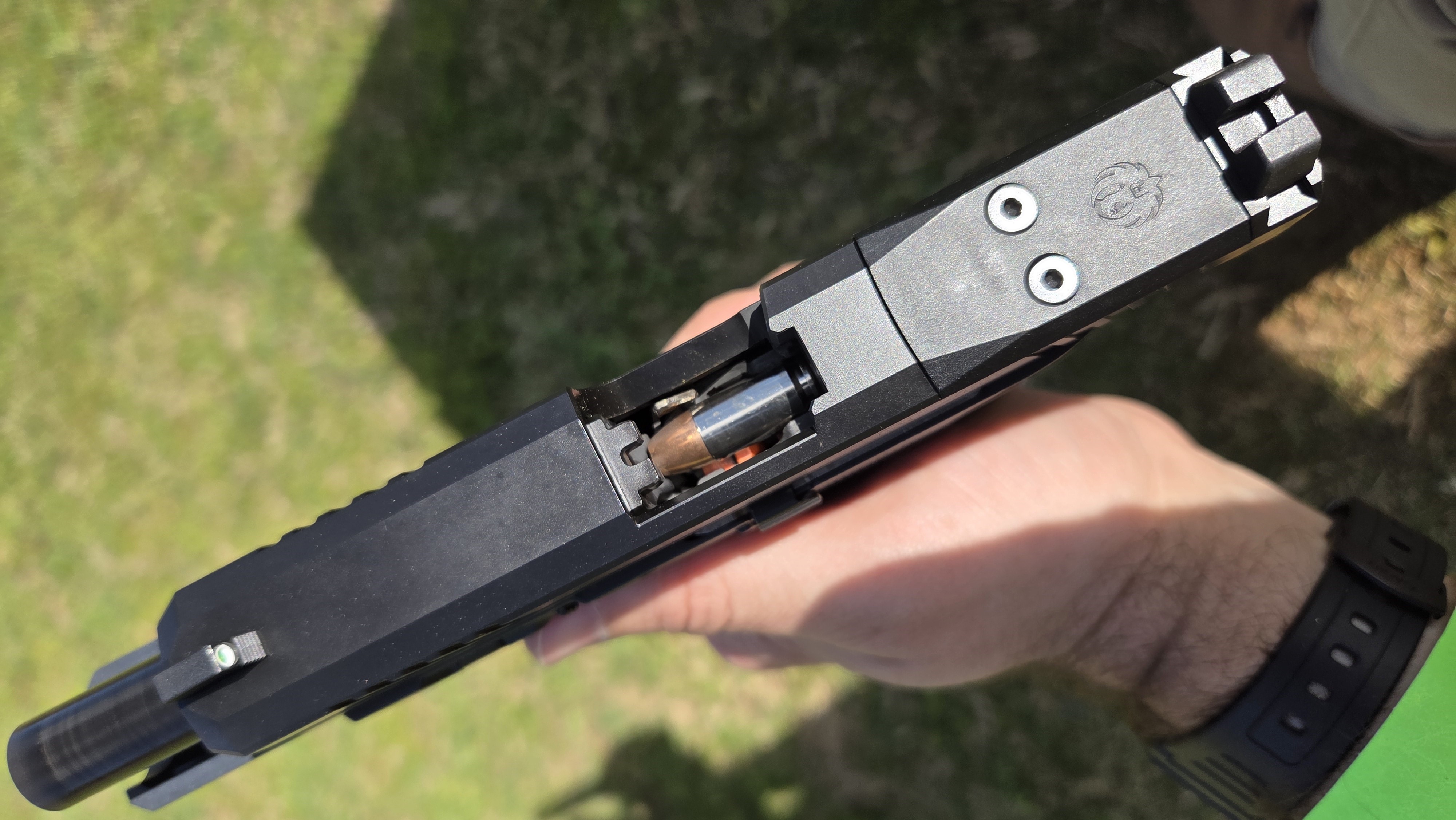
That was the only failure I experienced during the course of my range testing. Every gun locked back on the last round, and I couldn't produce any jams during rapid-fire shot strings. That performance provided a good baseline for what to expect from a more rigorous kind of test.
I love watching firearm torture test videos, but in reality, you're probably not going to throw your pistol in a pond or drag it behind a car for a quarter-mile. But it might get muddy, especially if you take a sidearm on a backcountry hunt.
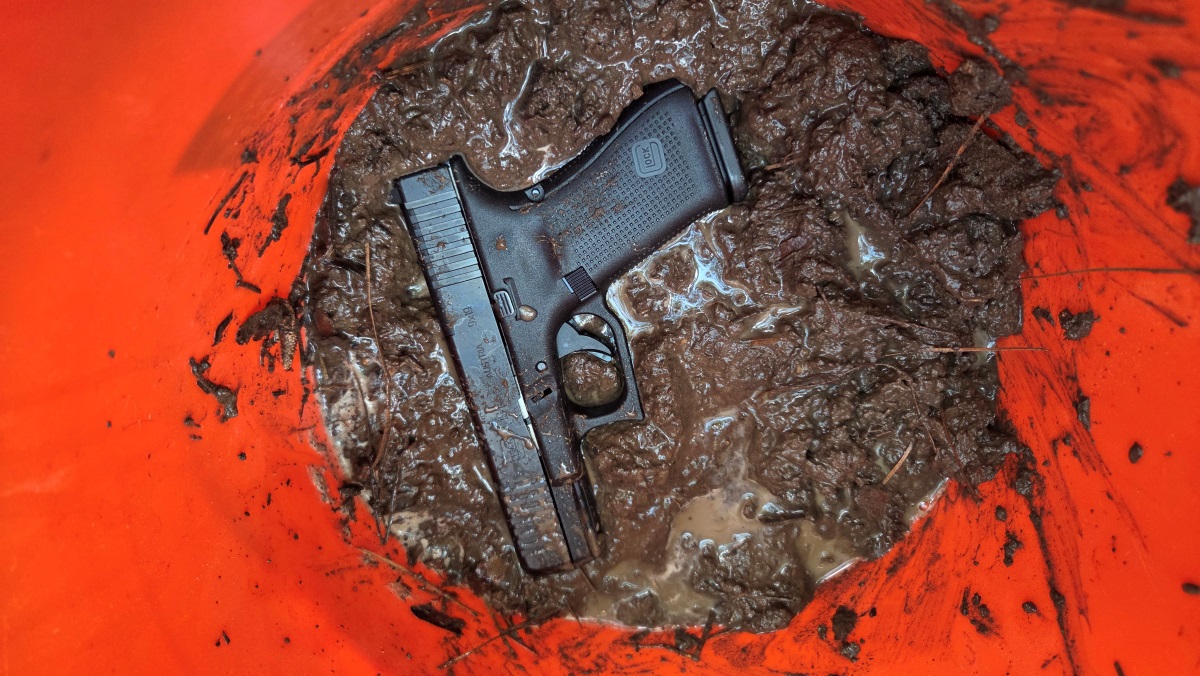
To test the limits of that scenario, I placed each handgun in a muddy bucket so that both sides were nicely covered. Each gun was loaded with two rounds in the magazine and a round in the chamber. I opted to do this test with a round in the chamber to mimic carrying one of these guns for self-defense. It might not be the most likely scenario, but a gun might slip out of a holster while climbing a ridge or get muddy in the holster after a tumble.
All seven guns struggled, but some struggled more than others. At the bottom of the pile were the Ruger and the Springfield. Both fired the first round, but the slide did not return to battery on the next two. The Ruger nearly returned to battery on the second round, but it failed to strip the final round from the magazine. Just as it did under normal testing conditions, the final cartridge stuck on its way up the feed ramp, and it took some force to drive it into the chamber. The Springfield locked all the way back, and I had to manually unlock it and push it forward to load the next two cartridges.
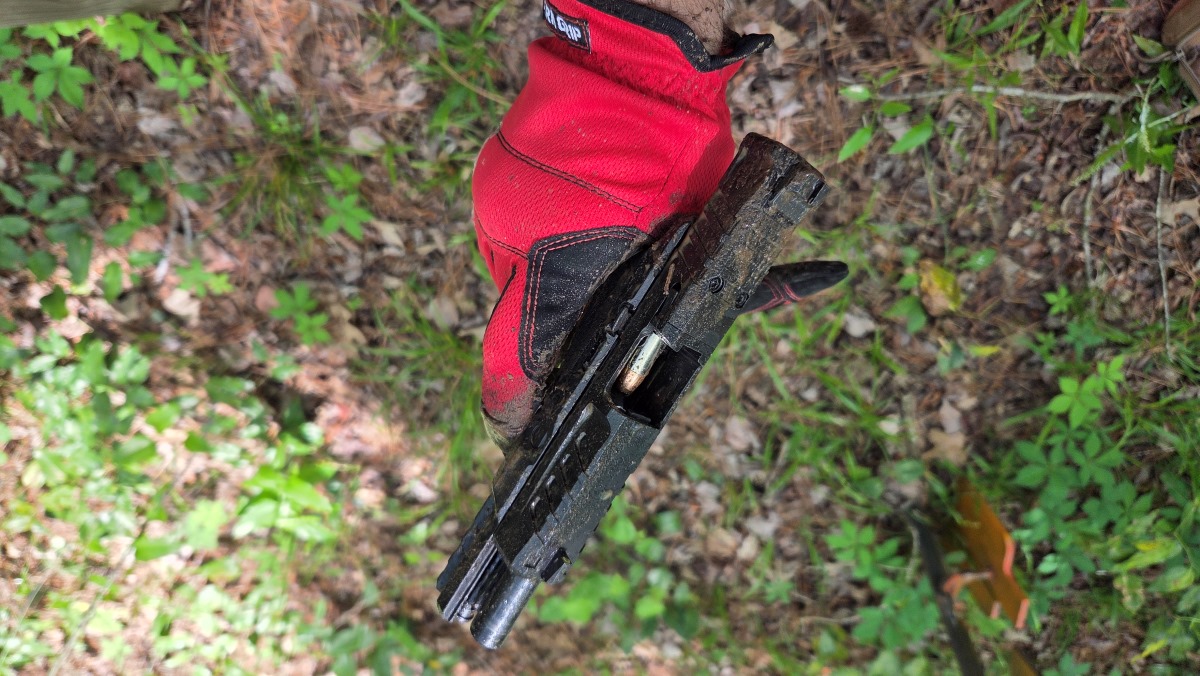
The next group of guns--the Glock, the Sig, and the Canik--failed to return to battery after firing the first round but then fired the next two normally. None locked back on the last shot.
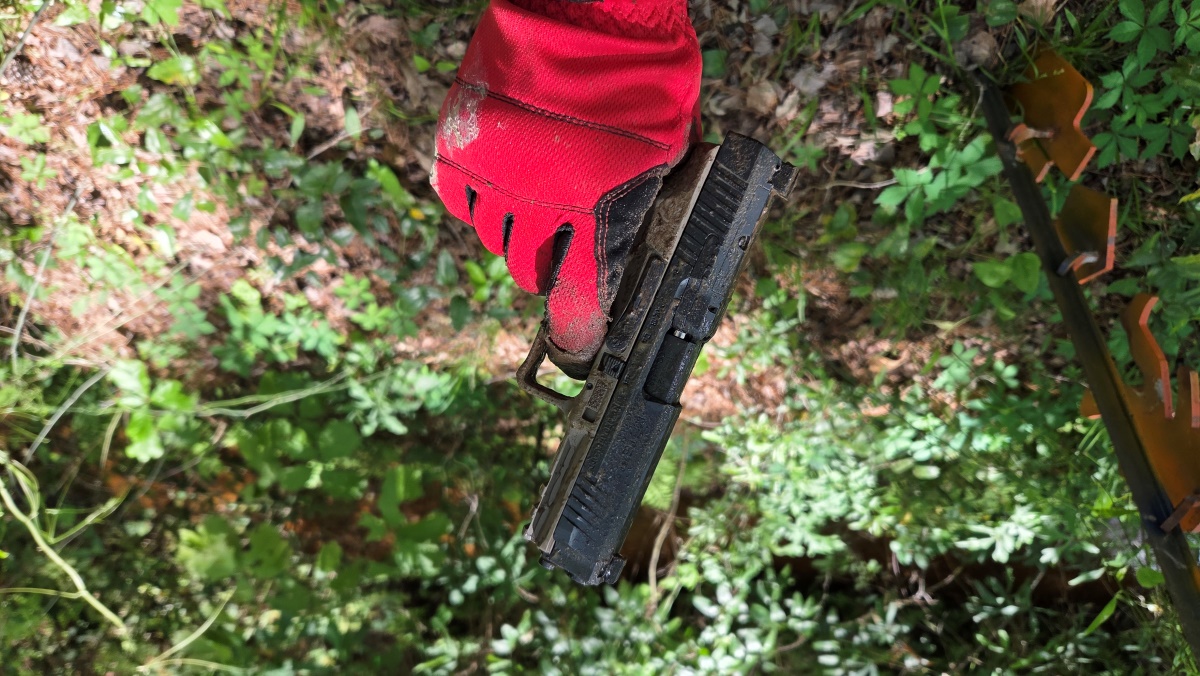
The only two guns to operate almost flawlessly were the Smith & Wesson and the Walther. These guns did not lock back on the final round, but they fired all three rounds without issue.
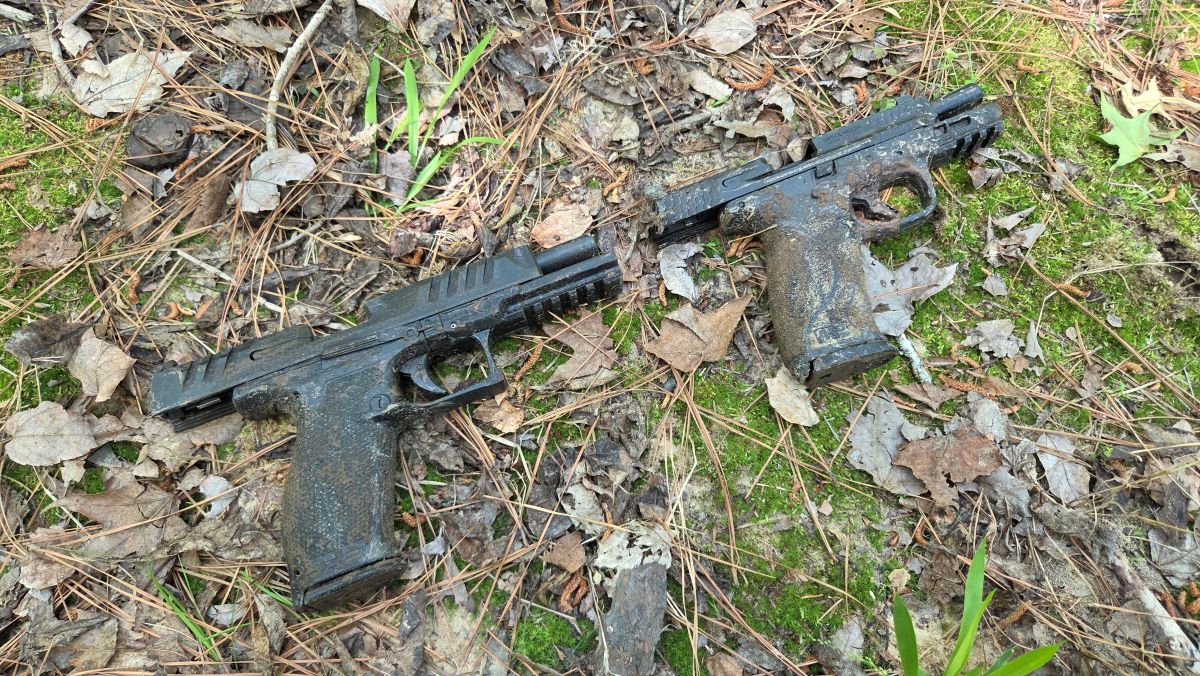
I should point out that there is some amount of luck involved in this test. I tried to bathe each gun in the same amount of mud, but I'm sure some got a little dirtier than others. This mud test doesn't count as much towards the final ranking as reliability under normal conditions, but when you take a gun into the field, it's going to get dirty. It may not get quite this dirty, but a good semi-automatic handgun is designed to operate with some grit in the slide and the inner mechanisms. Some of these guns clearly performed better than others, and that performance gap is reflected in the rankings.
Score
- Smith & Wesson: 13 points
- Walther: 13 points
- Canik: 8 points
- Sig: 8 points
- Glock: 8 points
- Springfield: 4 points
- Ruger: 2 point
And the Winner Is…
The Sig scored the top spot--but not by much. The Canik and Walther tied for second, the Springfield came in a close fourth, and the Smith & Wesson, Glock, and Ruger brought up the rear.
- Sig Sauer: 45 points
- Canik: 42 points
- Walther: 42 points
- Springfield: 39 points
- Smith & Wesson: 32 points
- Glock: 28
- Ruger: 26
The only category the Sig won outright was iron sights, but it never dropped below fourth place in any other contest. That consistent performance earned it the victory, but only by a couple points. The Canik and Walther struggled initially but came through where it really counted--trigger, accuracy, and reliability. The Springfield struggled at the end, but it's packed with features, so it earned first- or second-place finishes in ergonomics, red dot compatibility, iron sights, and trigger. The Smith & Wesson was at the bottom of the pack until reliability, when it took advantage of the double points to leap over the Glock and Ruger.
The Glock and Ruger had a tough time outranking the other handguns in many of these categories, but they are nonetheless well-designed firearms with long track records of success (the Ruger is new, but it takes its design from a Gen 3 Glock). What's more, many of the areas where they ranked poorly (ergonomics, trigger, controls) can be improved by a wide selection of aftermarket parts. If you like tinkering on your handguns, Glocks have more aftermarket support than virtually any other model.
Last Shot
As I mentioned at the top, this isn't the be-all end-all of 9mm handgun rankings. You might disagree with some of the categories, results, or testing protocols. Maybe you think Glocks have great ergonomics or you question why iron sights is a category. That's totally reasonable, and I'd encourage you to re-rank the guns with your priorities in mind. But I hope this 9mm handgun showdown has given you some food for thought. There are many factors to consider when choosing a 9mm handgun, and I think these are some of the most important.
Stay in the loop with The MeatEater Newsletter
Shop
Related
Gear
The Ultimate 10mm Showdown
Firearms
Caliber Battle: 9mm Luger vs. .45 ACP