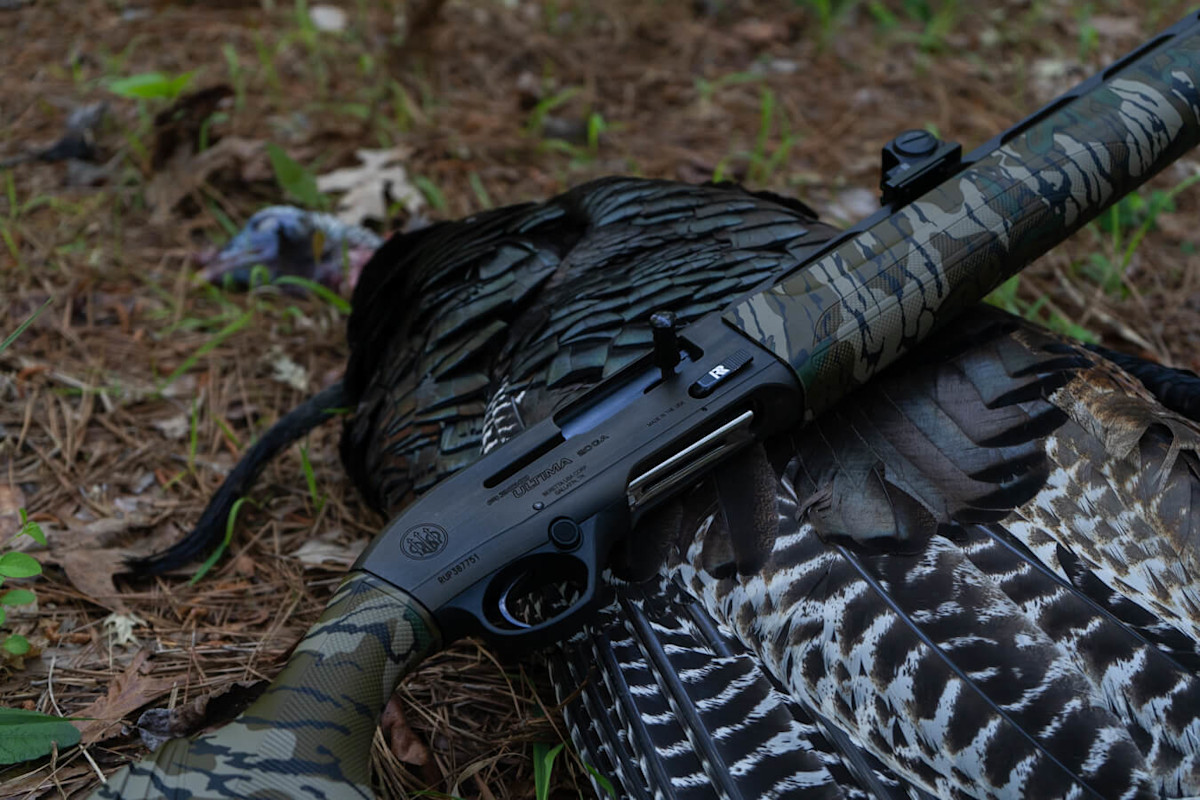

The best turkey hunting shotguns shoot consistently tight patterns with the right choke and ammo. Aside from that, there are other details that make them more desirable in the turkey woods. For instance, lightweight, shorter guns make it easy to maneuver when you're run-and-gunning or need to pivot when that gobbler makes an unexpected loop. Red dots allow you to see more of your target as it bobs and weaves through the timber. And camo? Cool but not necessary.
This isn't a comprehensive list. Your favorite one might not be part of the test I conducted, but that doesn't mean it's not an excellent turkey gun. For instance, I didn't include the Mossberg 500 or 835, both of which are fine, certified turkey guns. Instead, I chose to test and review shotguns that reflect current turkey hunting trends, like auto-loaders, 20 gauges, and a couple Remington 870s that I already own. I also didn't include the increasingly popular .410 and 28 gauges in the actual testing, but I do offer a few recommendations based on previous experience. While there are plenty of excellent options out there, these are some of the best turkey hunting shotguns you can find.

How I Tested the Best Turkey Guns
This spring, I've spent time in the field and at the range with these shotguns. I even used a few of them to bag three longbeards during my state's turkey season. Above all criteria, I prized each gun's patterning the most. I then considered ergonomics and affordability.
I scored each gun from 1 to 5 (5 being the highest) in each category and then gave the guns an average score. Because there are a mix of 12 and 20 gauges, I don't provide an exact head-to-head comparison. The test provides parameters for evaluating each gun so that they can serve as reference points. My goal isn't ultimately to crown a champion. Instead, the test is meant to reveal what you can expect from some of the best turkey guns available.
Patterning
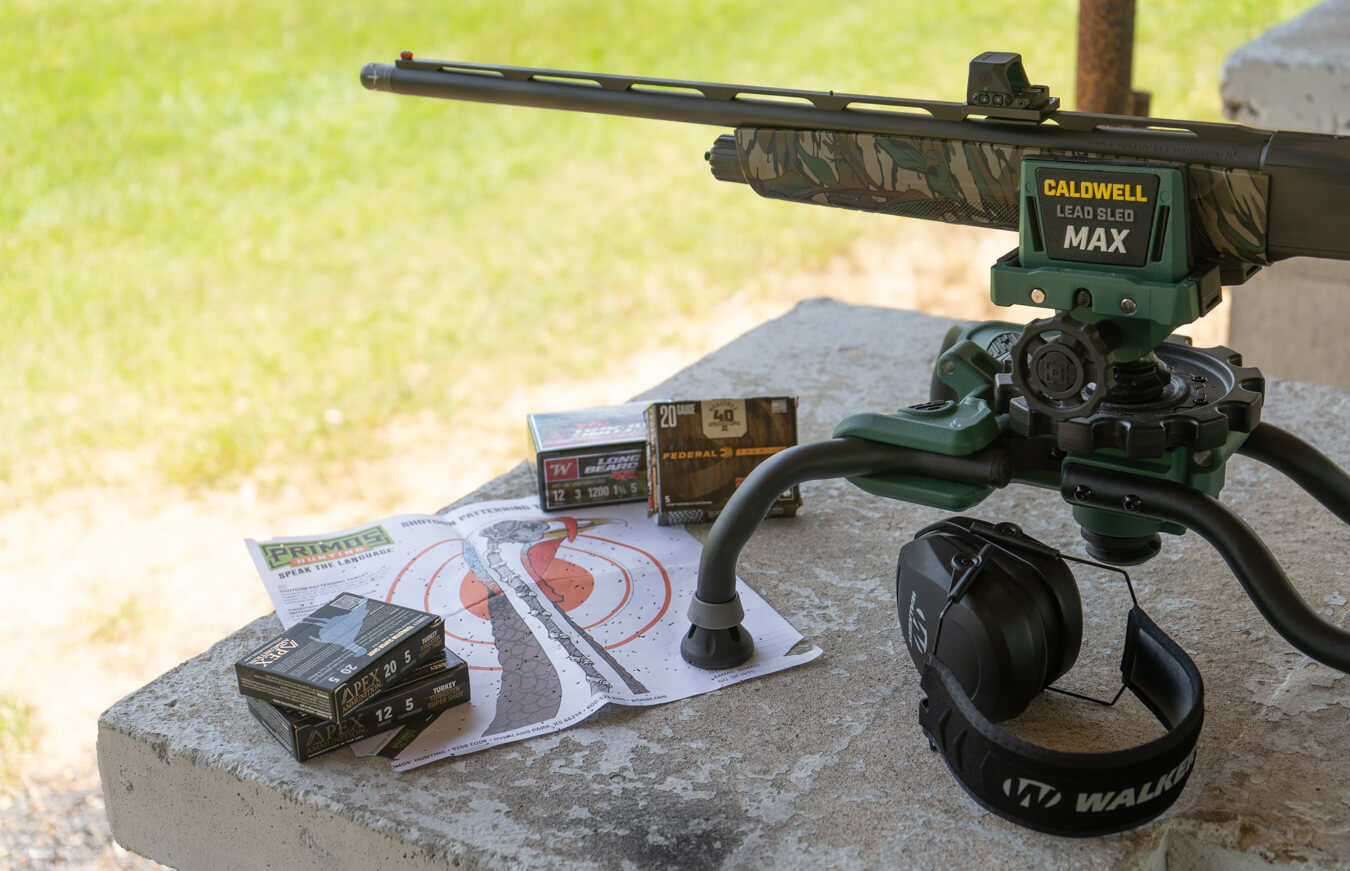
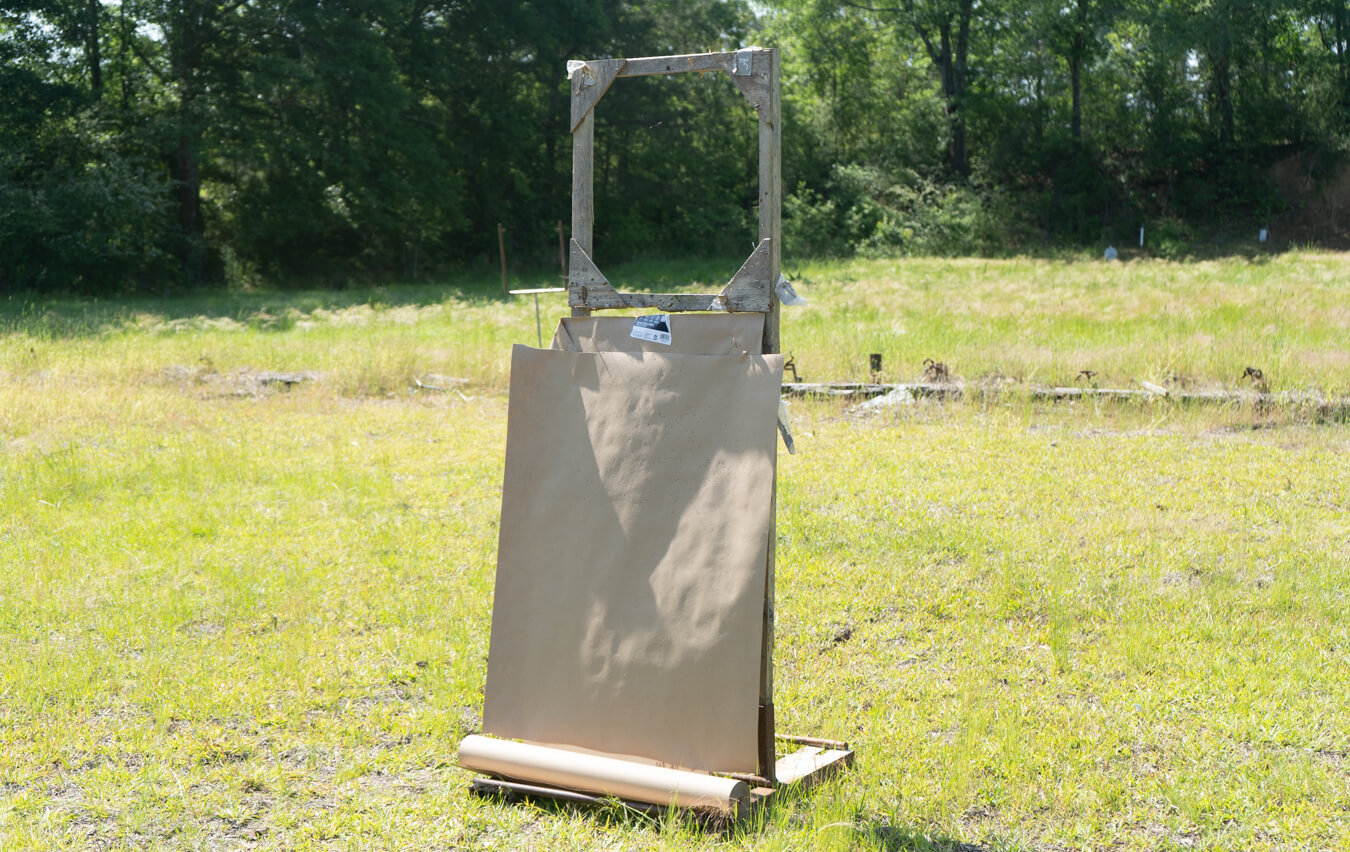
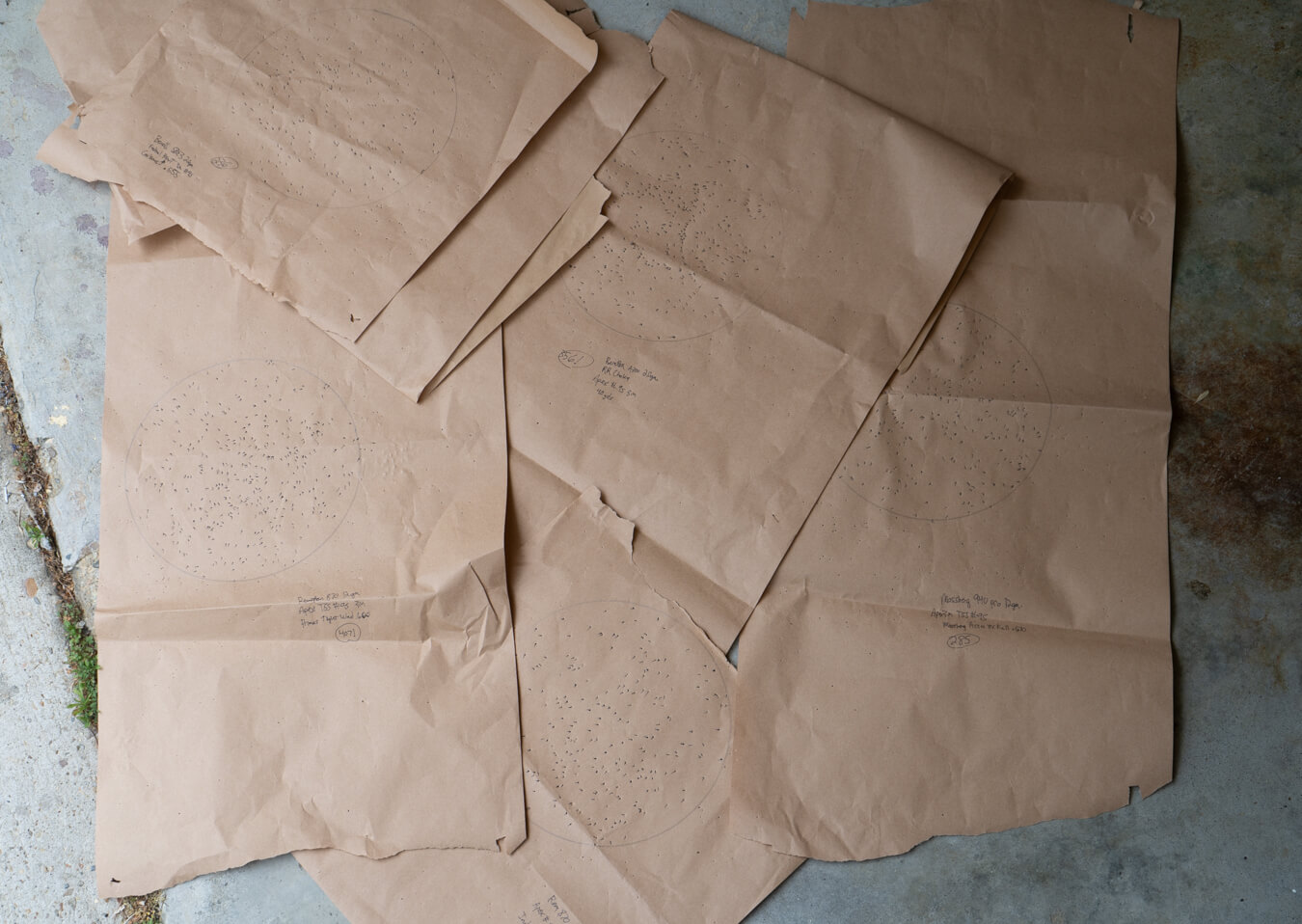
I patterned each shotgun at 40 yards with multiple choke tubes and some of the most popular turkey hunting ammo available (Winchester Long Beard XR, Federal Heavyweight TSS, and Apex GT3 and GT20 TSS). Instead of shooting a small turkey target, I shot sheets of butcher paper, found the center of impact, and then counted the pellets within a 10-inch circle from the center. I shot each gun three times with each choke/load combo to get an average pellet count (see table at the end for reference).
It's worth noting that some guns pattern differently depending on the choke and load combo. Some combinations might perform better in different constrictions and barrel lengths. With this in mind, and the availability (and feasibility) of patterning endless load/choke combinations, I made sure not to compare apples to oranges. Just because a gun doesn't perform as well with the combinations I had available doesn't mean it won't produce better results with other options.
Ergonomics
Turkey hunting often requires you to sit in the same position for a long period of time with your gun at the ready. Sometimes you have to take shots from weird angles or different positions. A shotgun's comb height, forend or receiver width, palm swell, and weight all play a role in its overall ergonomics. For this category, I graded shotguns based on their handling in realistic turkey hunting scenarios.
Affordability
Specialized turkey guns include all the bells and whistles that add up and reflect their prices. While you can certainly use a turkey-specific gun for other game species, you'll still have to make adjustments to it that might cost even more money and outweigh the hefty price tag. I considered each shotgun's patterning and ergonomics related to its respective price to determine its affordability.
The Best Turkey Shotguns
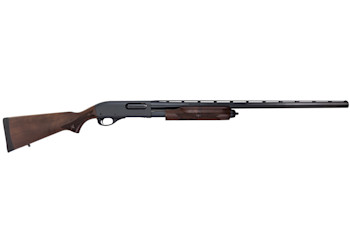 Remington 870 12 Gauge | 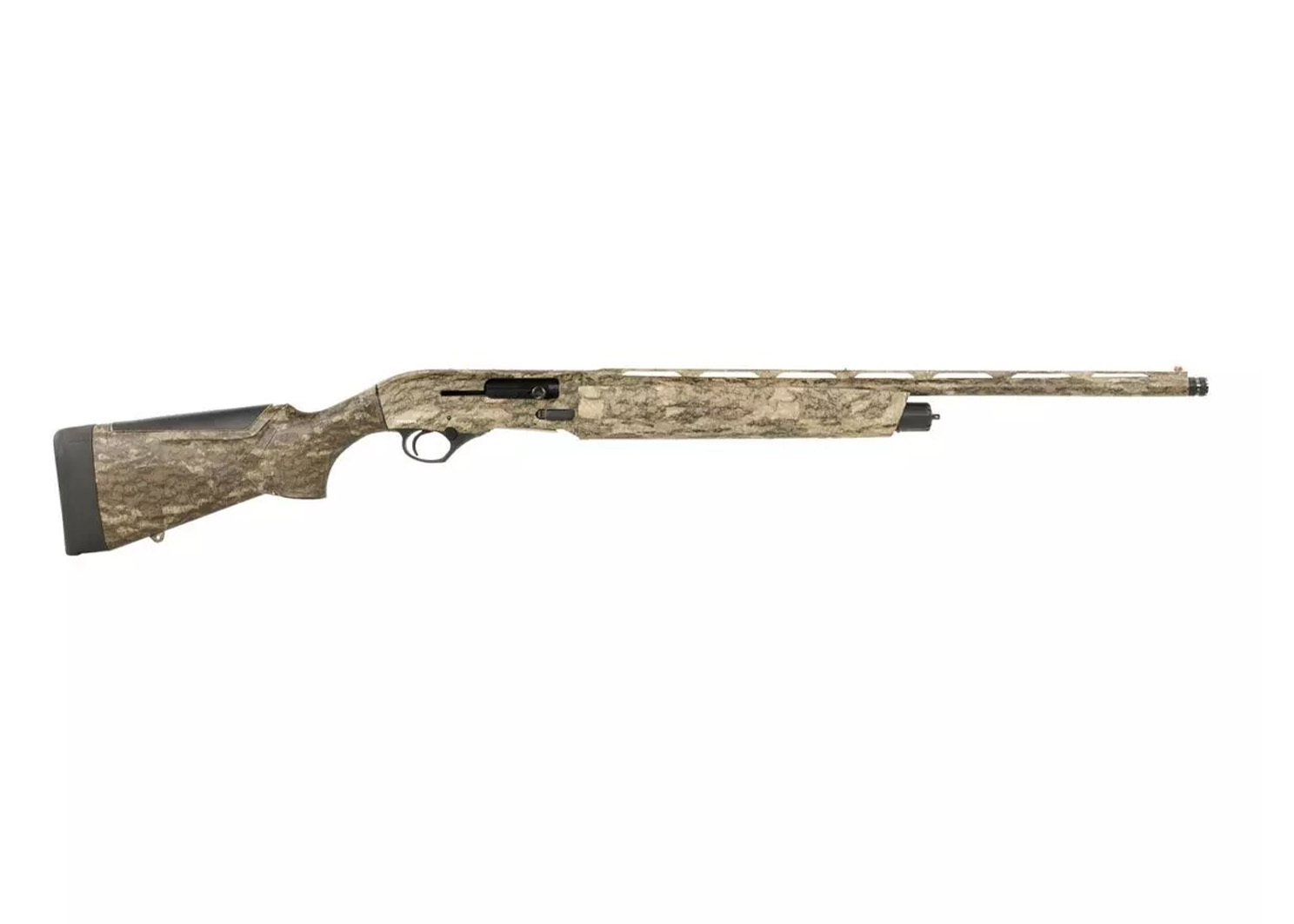 Beretta A300 Ultima Turkey | 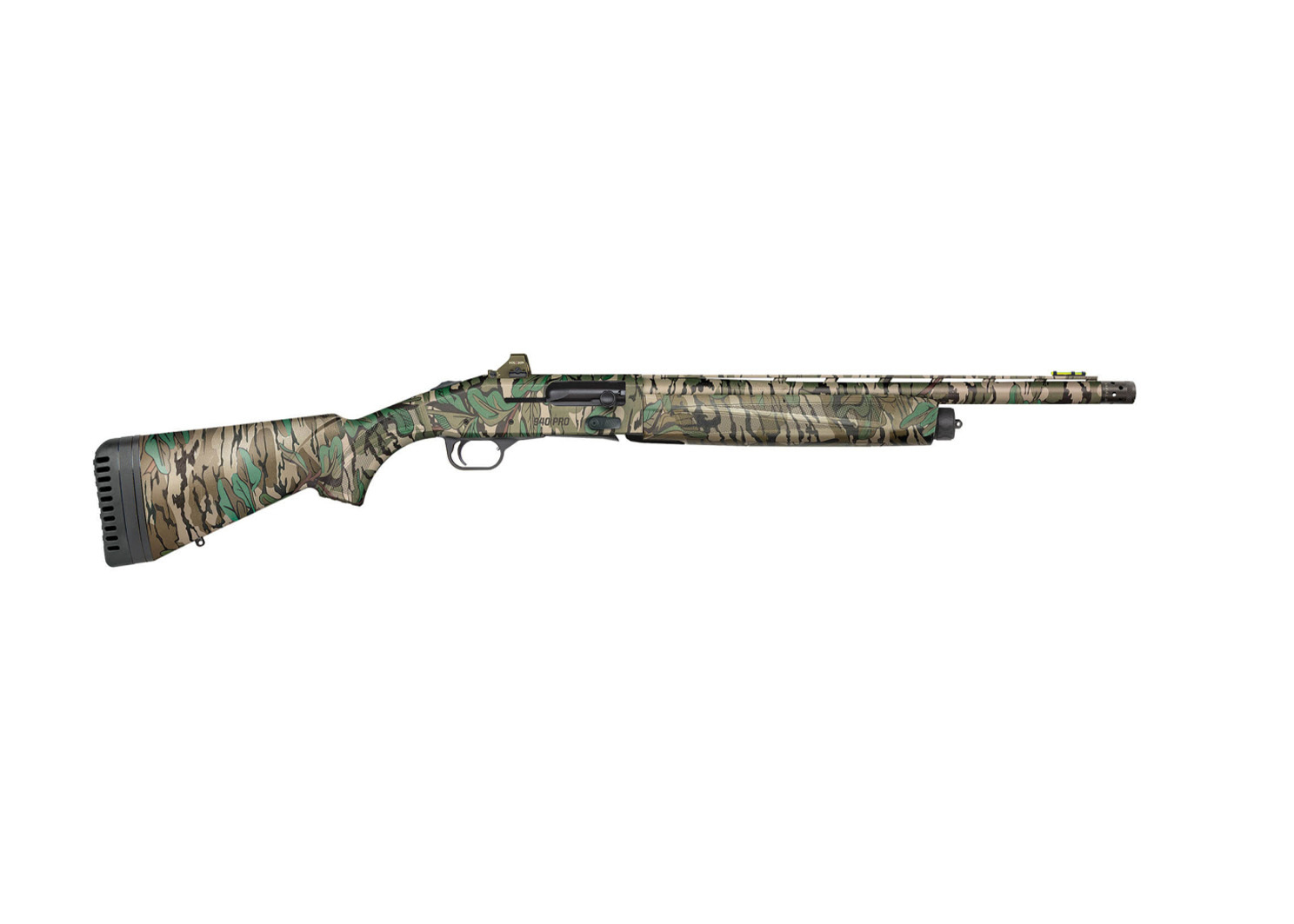 Mossberg 940 Pro Turkey | Remington 870 20 Gauge | 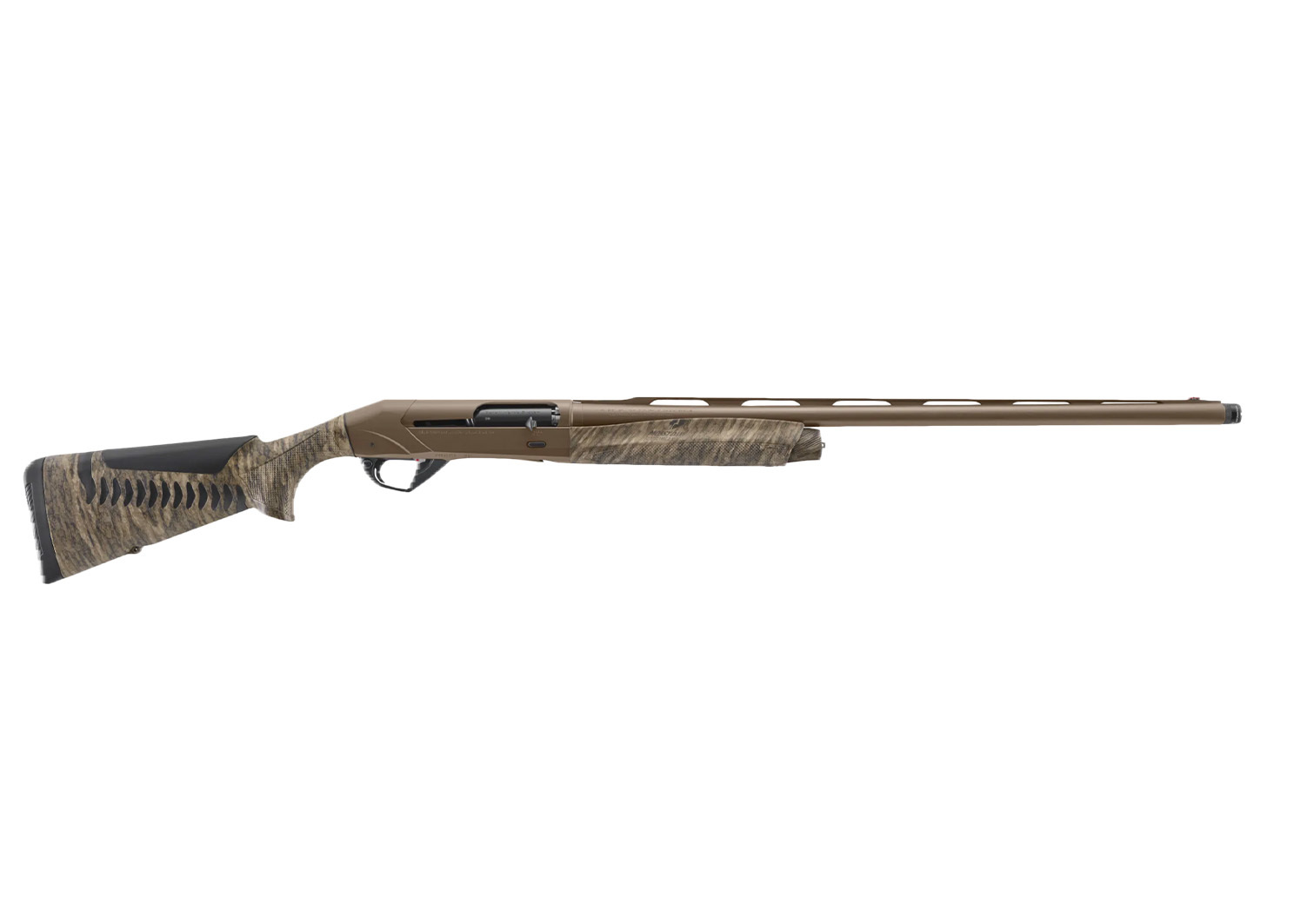 Benelli Super Black Eagle 3 | |
|---|---|---|---|---|---|
| Gauge | 12 | 20 | 12 | 20 | 20 |
| Action | Pump | Semi-auto | Semi-auto | Pump | Semi-auto |
| Weight | 7.5 lbs | 7.2 lbs | 7.25 lbs | 6.5 lbs | 5.9 lbs |
| Barrel Length | 26 in. | 24 in. | 18.5 in. | 26 in. | 28 in. |
| Overall Length | 46.5 in. | 43.9 in. | 39.25 in. | 46.5 in. | 49.5 in. |
| Price | Starts at $529.99 | Starts at $999.99 | $1,209.99 | Starts at $529 | Some start at $1,799.99 |
Best All Around
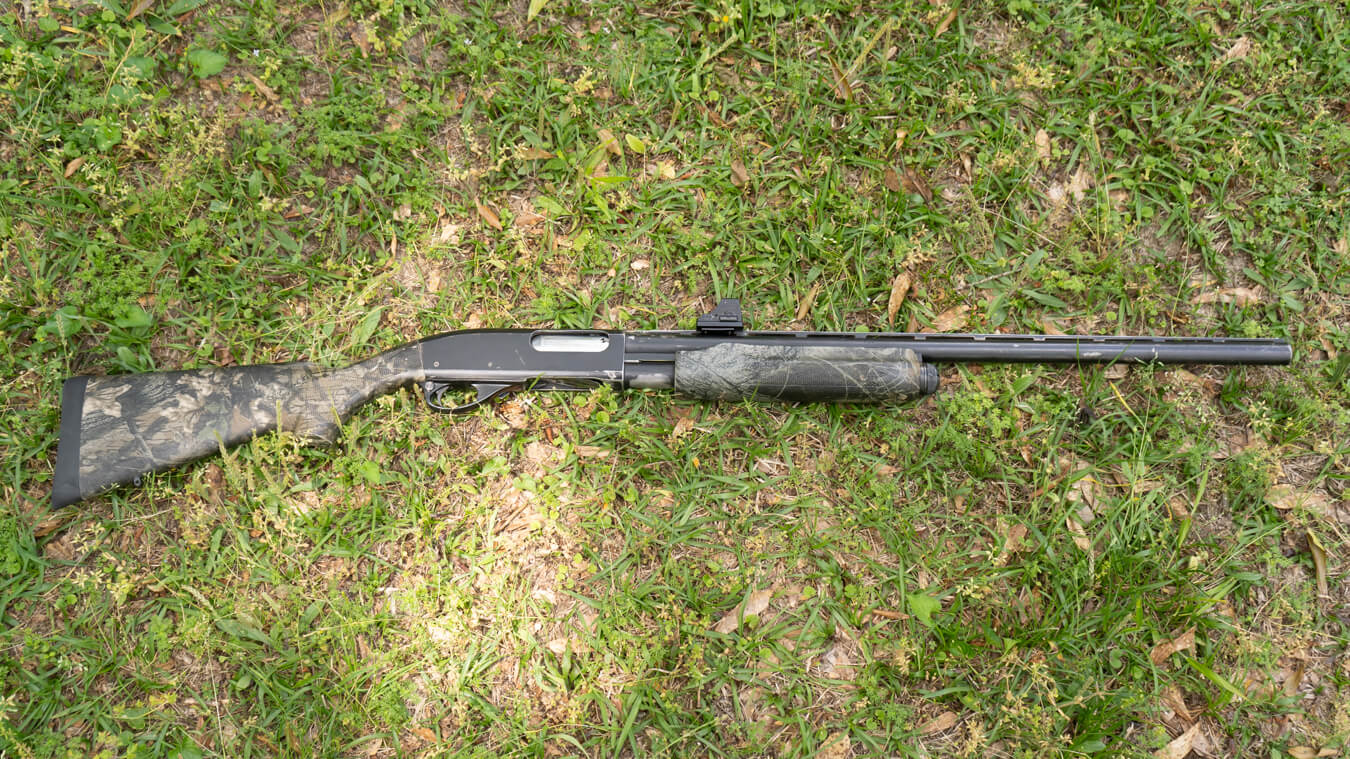
Remington 870 12 Gauge
The Remington 870 is probably the best turkey gun ever made. It's rugged, reliable, historically affordable, and it patterns just as good—if not better—than the most expensive turkey guns money can buy. This isn't hyperbole either. I've done multiple shotgun/turkey ammo tests, and the 870, even basic models, usually outperforms most shotguns.
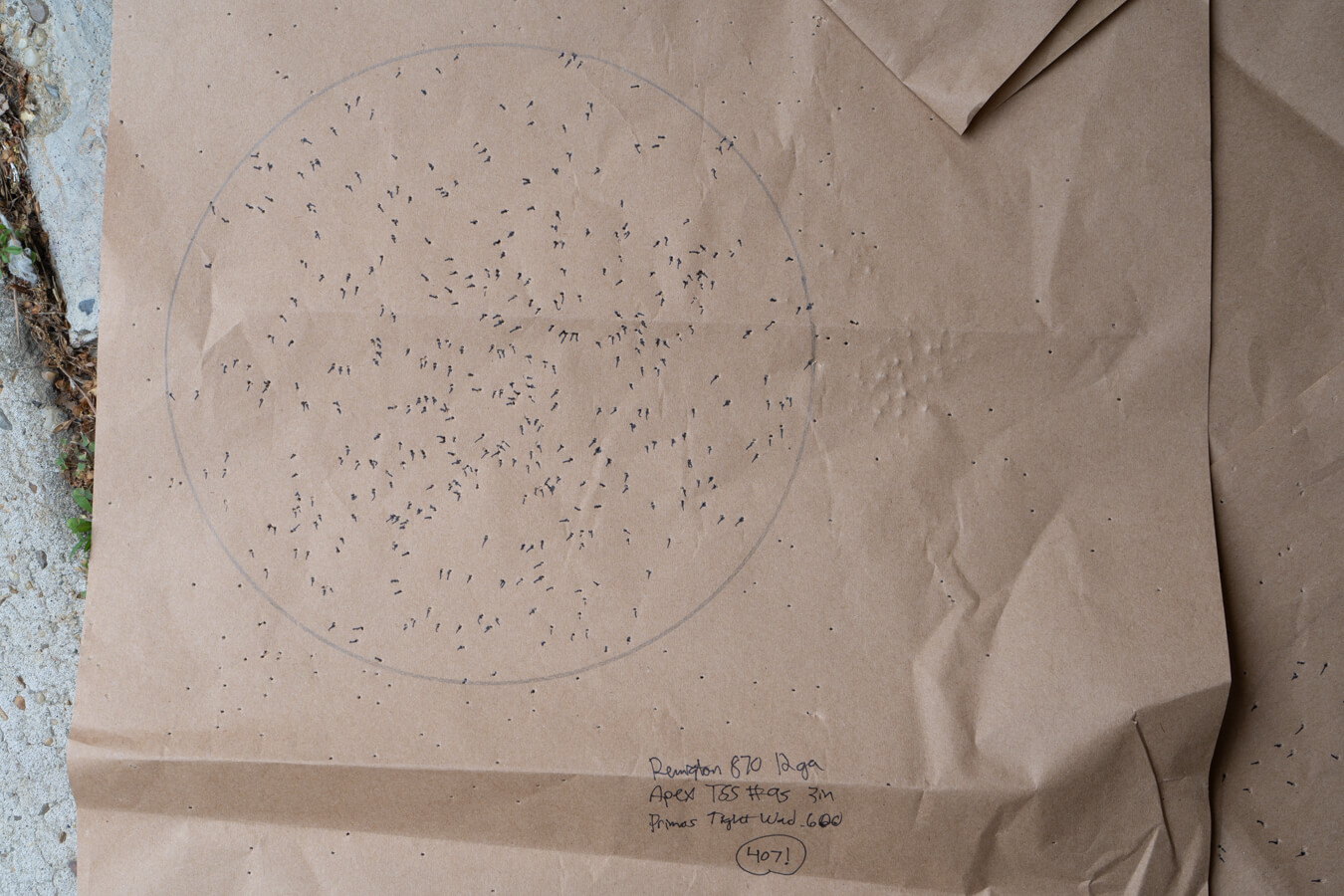
For the patterning portion of the test, the Remington 870 produced the best pattern with the least expensive choke (Primos Tight Wad). At 40 yards, it put 407 pellets (Apex 3-inch #9s) in a 10-inch circle. That's 42 more pellets than the next best pattern in the test, and it averaged 396 pellets in a three-shot group.
It also averaged 217 pellet strikes in a 10-inch circle at 40 yards with a Carlson's Long Beard XR Choke and Winchester Long Beard XR 3-inch #6s. It did not like the Federal Heavyweight TSS/Carlsons Heavyweight TSS choke combo as much. Though, it still averaged plenty (176) of pellet strikes at 40 yards. However, it averaged 253 pellet strikes with the Federal Heavyweight TSS/Tight Wad. In fact, one of the turkeys I killed this year with this 870 occurred with that combo, and he absolutely folded. The Remington 870's patterning tallied 5 points.
| Choke | Constriction | Ammo | Avg. 40 yd Pellet Count |
|---|---|---|---|
| Primos Tight Wad | .660 | Apex GT3 TSS 3in #9 | 396 |
| Federal Heavyweight TSS | 253 | ||
| Carlson's Long Beard XR | .660 | Winchester Long Beard XR 3in #6s | 217 |
| Carlson's Federal Heavyweight TSS | .640 | Federal Heavyweight TSS 3in | 176 |
Those are excellent numbers for any turkey gun, let alone a setup that would run you less than $600 brand new. Yes, Remington's availability is spotty, but you can find used ones for a few hundred dollars less. For this reason, the Remington 870 scores a 5 in affordability.
Ergonomics wise, the 870, specifically the 12 gauge, could score higher. It's by far the heaviest gun in the test. The weight certainly helps mitigate recoil, but it gets heavy if you don't run a sling or when you have to sit still in an awkward position with turkeys in range. I do love the safety position, which requires minimal movement to engage. For these reasons it scored 3.
Best 20 Gauge
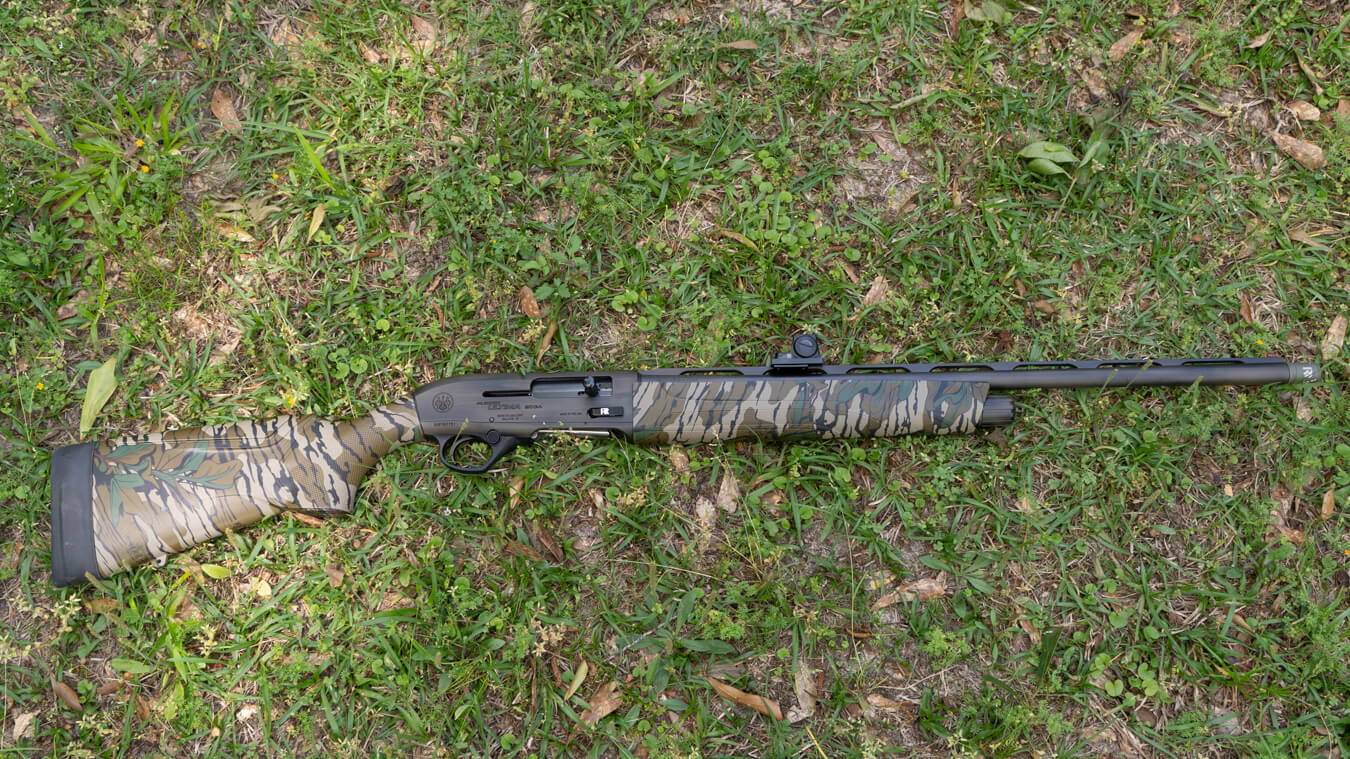
Beretta A300 Ultima
After patterning and hunting with the Beretta A300 Ultima, this might be my new favorite turkey gun. It produced the second-best single pattern with 363 pellet strikes at 40 yards within a 10-inch circle (avg. 359) with a Rob Roberts RRaptor choke and Apex GT-20 3-inch no. 9. Those are stellar numbers and wildly consistent. No other 20 gauge in the test came close to those numbers.
With Federal Heavyweight TSS, the A300's numbers dropped to 233 average pellet strikes, but that's more than double what you would need to kill a turkey. Those numbers halved when it came to lead shot (Longbeard XR 3-inch no. 5) paired with Carlson's Long Beard XR choke tube. That's understandable though—you have significantly fewer pellets in that shot size compared to no. 9 of the TSS. Still, the average 104 pellet strikes at 40 yards will kill a turkey all day long. Compared to the other 20 gauges in this test, the A300 produced the best patterns by far, and it easily earned a 5 in this category.
| Choke | Constriction | Ammo | Avg. 40 yd Pellet Count |
|---|---|---|---|
| Carlson's Long Beard XR | .568 | Winchester Long Beard XR 3in #5s | 104 |
| Rob Roberts RRaptor | .562 | Apex GT20 TSS 3in #9 | 359 |
| Federal Heavyweight TSS | 233 |
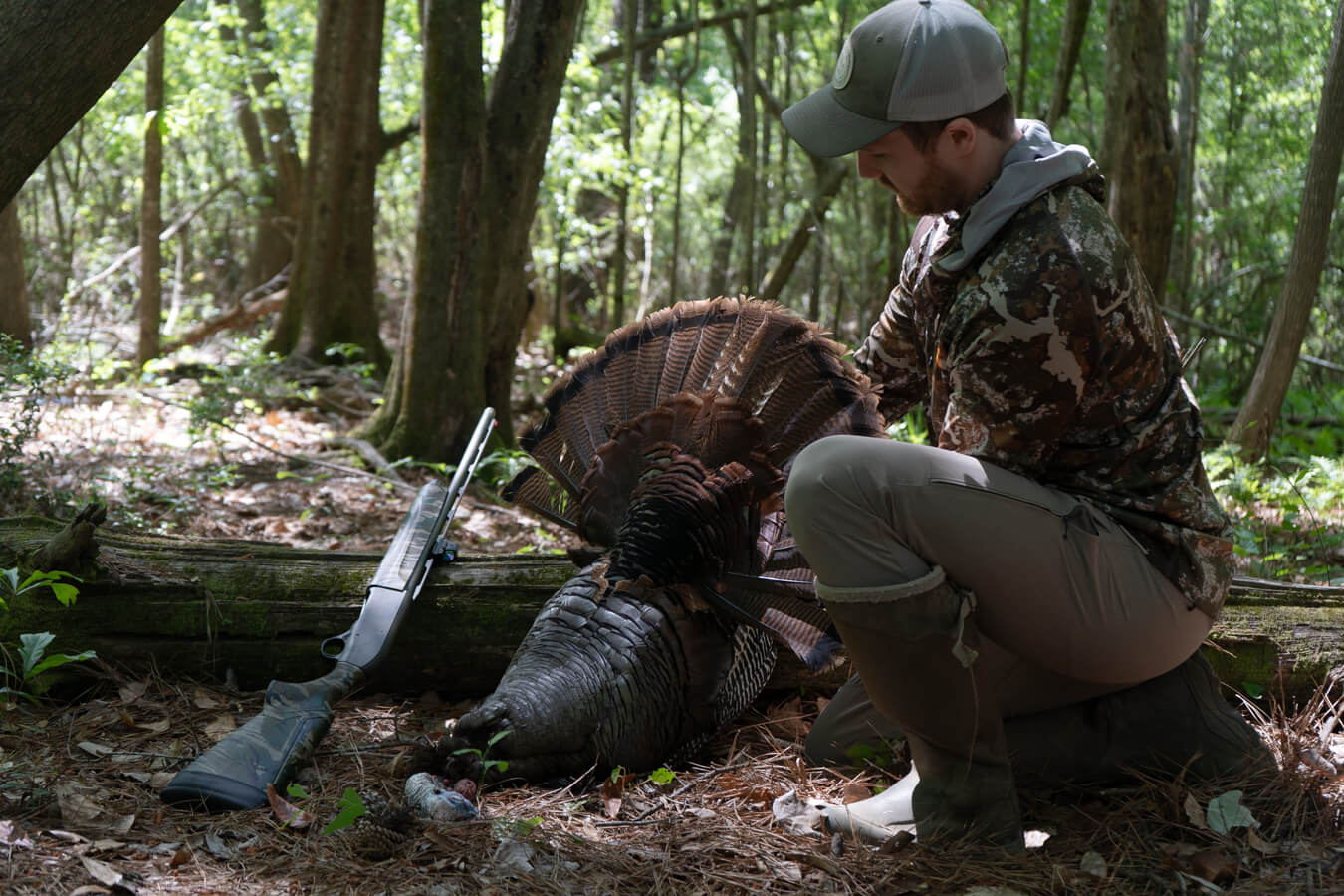
The A300 might just be the best 20-gauge turkey gun available.
Ergonomically, the A300 scored a 5. It's not the lightest gun, but it's also not a brick. I found the comb height to be just right (for me). Part of this is because I ran aMeadowcreek Mountfor my Sig Romeo-X Compact, which allows you to mount your red dot directly to the rail and cuts down on the overall height. The safety position on the triggerguard is also easy to disengage without making a ton of movement, and the medium-sized palm swell should feel just right for most hunters. I had no problem balancing it on my knee while I had a gobbler in range and waited for him to cross my shooting lane.
I also appreciate the oversized handle on the bolt carrier, should you ever need to use it.
For just under $1,000, the Beretta A300 offers a great price-to-performance ratio. Considering that most semi-auto shotguns will run you well over a grand, the A300 represents an excellent value in this category, one that earned it 4 points.
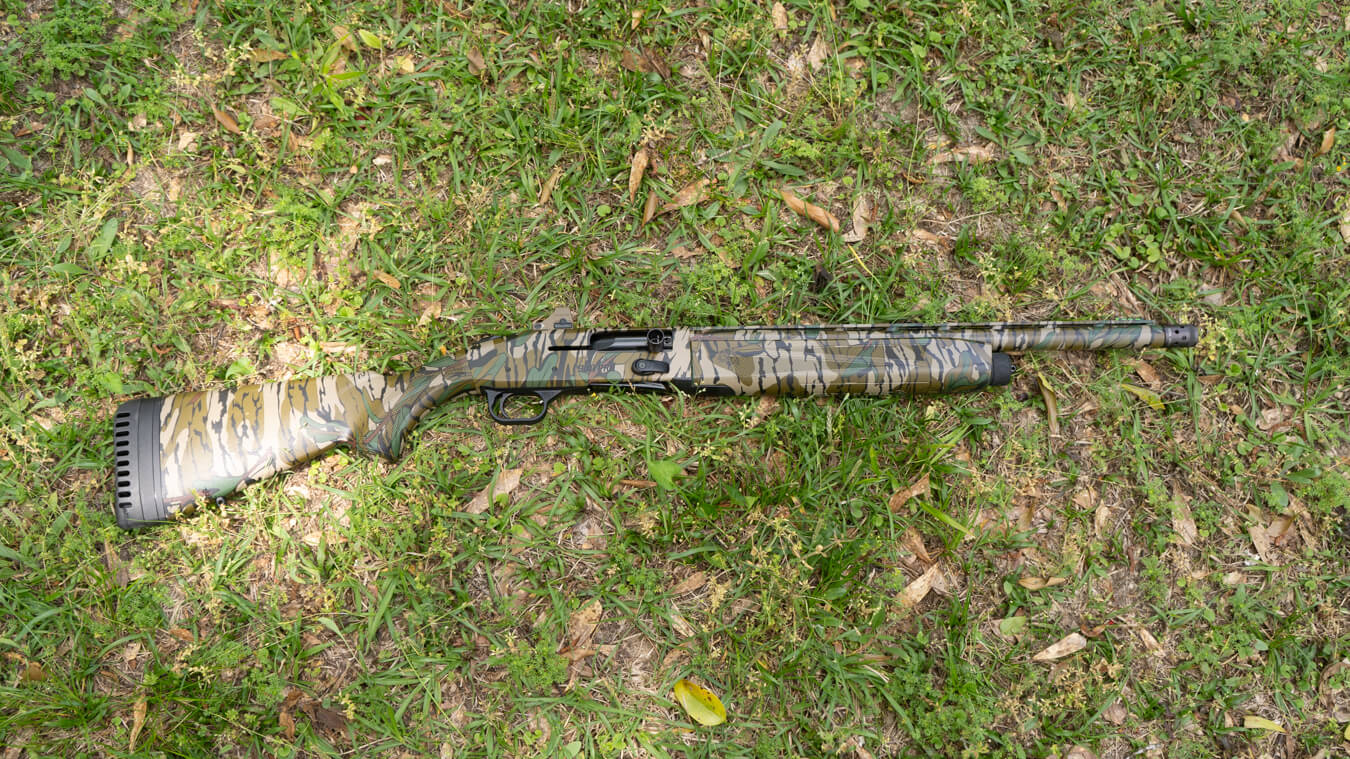
Mossberg 940 Pro Turkey Holosun Micro Dot Combo
The Mossberg 940 Pro Turkey performed middle-of-the-pack during the pattern portion of the test. It averaged 293 pellet strikes with Apex 3-inch no. 9 and 212 pellet strikes with Federal Heavyweight TSS no. 9 through the turkey choke that Mossberg includes in the box. I would expect an upgraded choke like a JEBS Head Hunter, Indian Creek, etc. to increase the pellet strikes or opt for the 24-inch barrel option (I tested the 18.5-inch). Still, those numbers are solid and more than enough to kill a turkey at 40 yards.
It also averaged 209 pellet strikes with the Carlson's Long Beard XR/Winchester Longbeard XR 3-inch no. 6 combo. The good news is that you can drop different chokes/ammo in the 940 Pro and expect similar results. Overall, the Mossberg's patterns earned it a 4.
| Choke | Constriction | Ammo | Avg. 40 yd Pellet Count |
|---|---|---|---|
| Carlson's Long Beard XR | .660 | Winchester Long Beard XR 3in #6s | 209 |
| ACCU XX Full | .670 | Apex GT3 TSS 3in #9 | 293 |
| Federal Heavyweight TSS | 212 |
While the overall length makes it easier to maneuver the gun around saplings or brush, it still felt top-heavy despite the shortened barrel. Its weight distribution also made it feel heavier than all the other guns, despite it weighing the same as the Beretta and less than the 870 12 gauge.
Most "turkey" guns are labeled such simply because they sport bottomland camo. The 940 Turkey has thoughtful features that make it optimal for the turkey woods. For starters, the cutout on the receiver for the included Holosun allows you to get a tight cheek weld on the stock, and you can still use the front sight should your red dot malfunction.
Mossberg has a reputation for bad recoil. Compared to Mossberg's 500 and 835, the 940 Pro does a great job of limiting recoil, thanks to its gas system. The comb height is a bit low, which you could easily remedy by rigging your own cheek pad, but if you're spending $1,200, it would be nice not to worry about that. Overall, the Mossberg's ergonomics scored a 3.
Considering that it includes a red dot, the Mossberg's price runs par with the competition, even if it underwhelmed with patterning out of the box. When it comes to price, the 940 Pro gets a 3.
Best Pump 20 Gauge
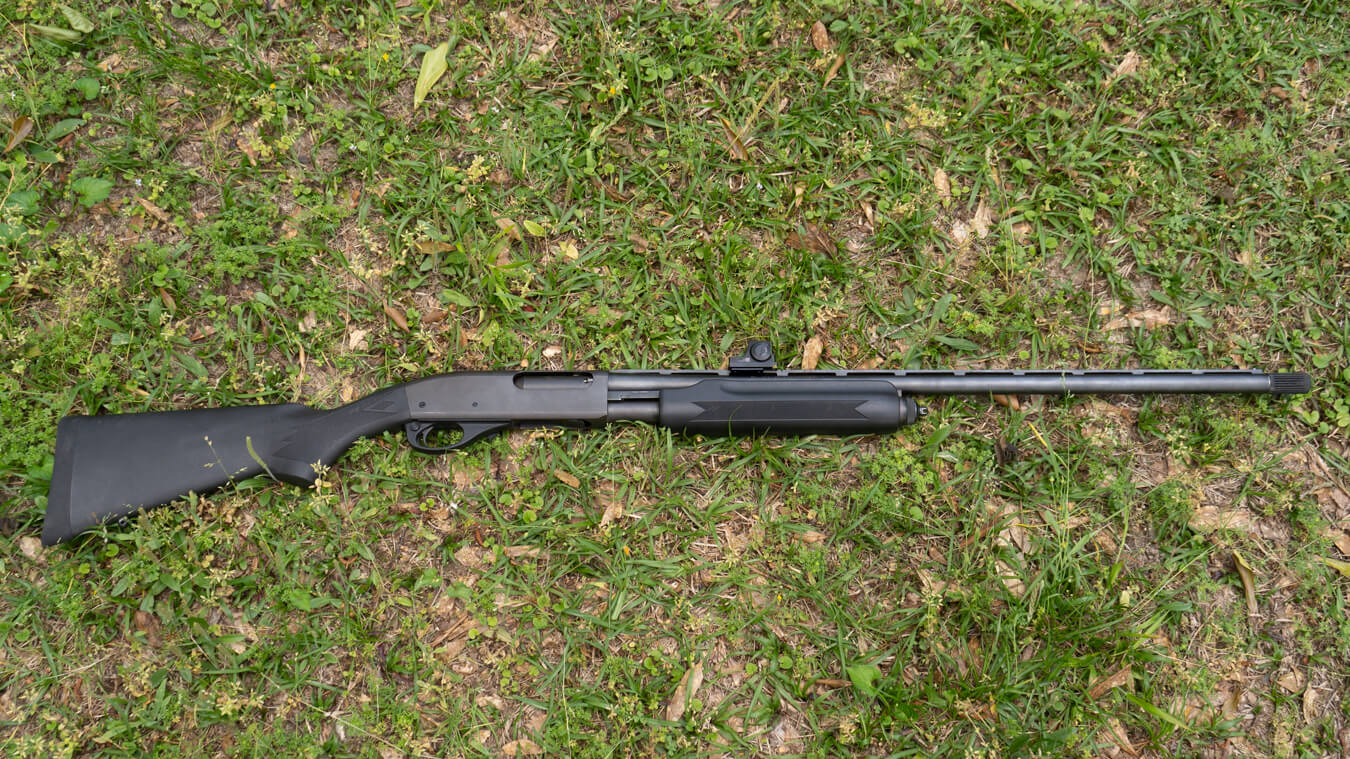
Remington 870 20 Gauge
Like its older brother, the Remington 870 20 gauge shares a lot of the same features that make the 12 gauge one of the best turkey guns ever made. Even though the pattern densities don't rival that of the 12 (understandably), it averaged 283 pellet strikes with a Carlson's Federal Heavyweight TSS choke and Federal Heavyweight TSS 3-inch no. 9 load. Those are excellent numbers for a 20 gauge at 40 yards, which ultimately earned the 870 20 gauge a 4.
It also averaged 259 pellet strikes with an Indian Creek Black Diamond Strike choke tube and Apex GT-20 3-inch no. 9 at 40 yards. In fact, this was the combo I ran when I killed my second turkey this spring.
| Choke | Constriction | Ammo | Avg. 40 yd Pellet Count |
|---|---|---|---|
| Carlson's Long Beard XR | .568 | Winchester Long Beard XR 3in #5s | 101 |
| Carlson's Federal Heavyweight TSS | .555 | Federal Heavyweight TSS 3in | 283 |
| Indian Creek Black Diamond | .562 | Apex GT20 TSS 3in #9 | 259 |
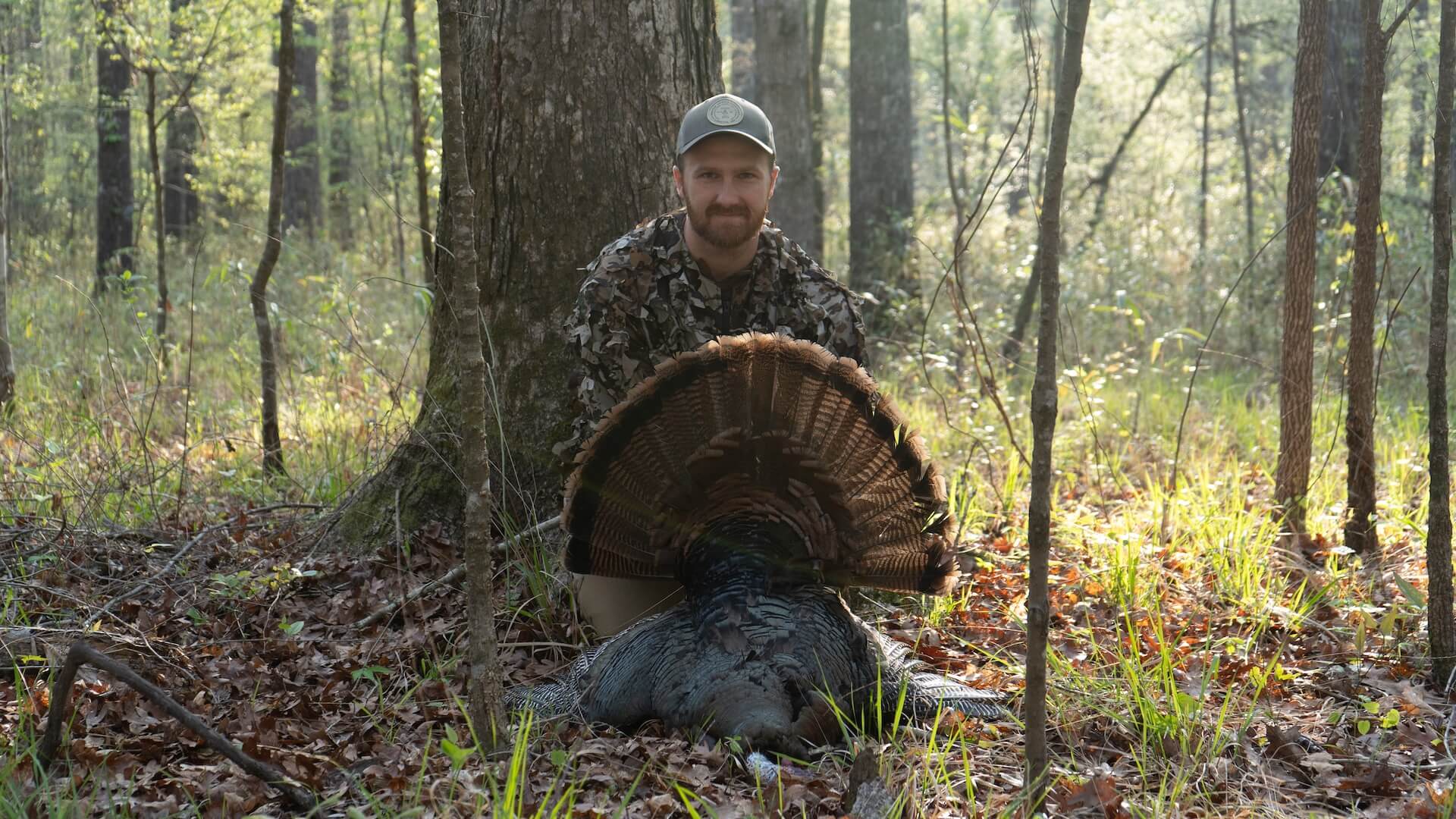
The author took this longbeard with the 870 20 gauge. Adam Moore.
If the 12 gauge owns the pattern category, the 20 gauge 870 sports better ergonomics. No, there's not a drastic difference, but the slimmer receiver and stock/forend make the 870 20 gauge easier to carry and maneuver without cutting too much weight for recoil purposes, which are a non-factor with this gun anyway. There's nothing flashy about this gun, and you are limited on red dot mounting options, but I, again, went with a vent rib mount, which gives you a lot of freedom. When it comes to ergonomics, the 870 20 gauge scored a 4.
The 870 is one of the most affordable turkey shotguns you can buy…when you can find them new. Or, you can just find a used one for a lot cheaper, which is what I did. There are plenty lining the shelves of old gun and pawn shops out there. Even after you buy a Meadowcreek mount and a red dot, you'll spend less than most other options available. This budget-friendly gun with excellent patterns for a 20 gauge earned it a 4.
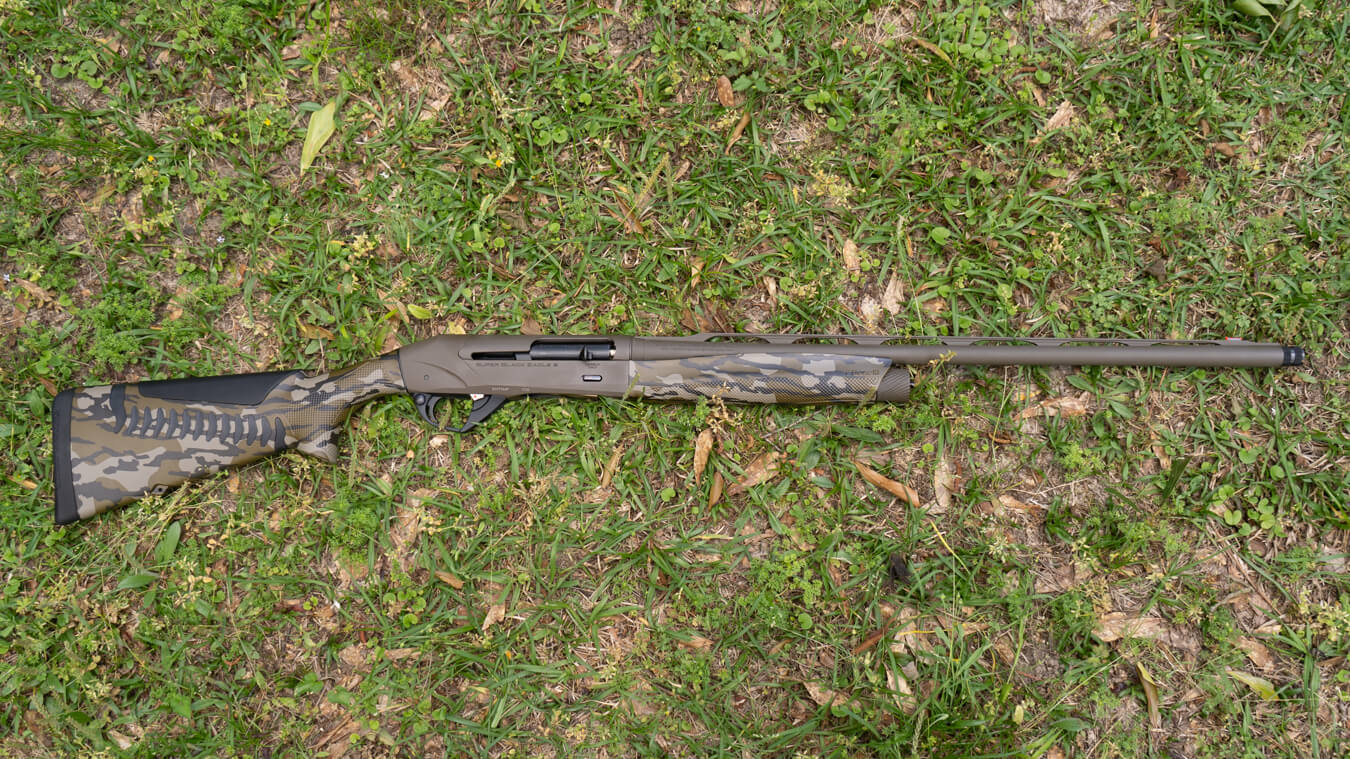
Benelli Super Black Eagle 3
The SBE3 underwhelmed during the patterning portion of the test. It produced solid numbers with a Trulock Pinhoti choke and Apex 12 gauge 3-inch no. 9 (253) and a Carlson's Federal Heavyweight TSS choke with Federal Heavyweight TSS 3-inch no. 9 (234). However, it only averaged 83 pellet strikes with Winchester Long Beard XR 3-inch no.5s through the Trucklock Pinhoti choke at 40 yards. Perhaps a different choke/load combination would have produced better numbers, but I'd still expect more from a $2000 shotgun. Still, it produced more than enough pellets at 40 yards (with TSS) to kill a turkey, so it scored a 3 in the patterning category.
| Choke | Constriction | Ammo | Avg. 40 yd Pellet Count |
|---|---|---|---|
| Carlson's Federal Heavyweight TSS | .555 | Federal Heavyweight TSS 3in | 234 |
| Trulock Pinhoti | .585 | Winchester Long Beard XR 3in #5s | 83 |
| Apex GT20 TSS 3in #9 | 253 | ||
| Federal Heavyweight TSS | 155 |
While the patterning might not provide a good indicator of the SBE3's price, the ergonomics certainly do. It handles and points deftly. I don't make a habit of swinging on turkeys, but I'd feel confident doing it with the SBE3. Even with a 28-inch barrel, the SBE3 felt more nimble than the rest of the guns in this test, probably because it weighs less than six pounds. The palm swell also runs a tad small, so you can form a firm grip on it. Turkey guns typically have a ruggedness about them. The SBE3 brings an elegance to the turkey woods that's often reserved for upland shotguns. It easily earned a 5 in this category.
Not many hunters can afford to drop $2,000 (or more) on a turkey hunting shotgun. Considering that the Beretta patterned better than the Benelli at half the cost, it makes it hard to justify the hefty price tag. Again, I'm not saying it isn't a fine shotgun or that a different choke/load combo would have performed better, I'd just expect more from a shotgun in this price range. With these factors in mind, I gave the Benelli a 2 in affordability.
Other Recommendations
I didn't include these shotguns in the test, but I do have previous hunting/testing experience with them, and they make fine turkey guns.
Final Thoughts
Any shotgun can be a turkey gun, given that it throws a tight pattern out to 30 or 40 yards. It doesn't need camo, a red dot, or a fancy pistol grip.
I have a list of takeaways from this test that you canread here, but my biggest is that any of these options would make a fine turkey gun. If your goal is to call a gobbler close and watch him flop, you could blindly pick any of these guns to do that.
However, shotguns like the Remington 870 and Beretta A300 delivered stellar results that separate them from the rest of the pack. Notably, both outperformed their respective price tags, which is what you hope from any gun, especially the best turkey hunting shotguns.
Stay in the loop withThe MeatEater Newsletter
Shop
Related
Firearms
The 6 Best Pump-Action Shotguns of All Time


Firearms
The Best Semi-Auto Shotguns