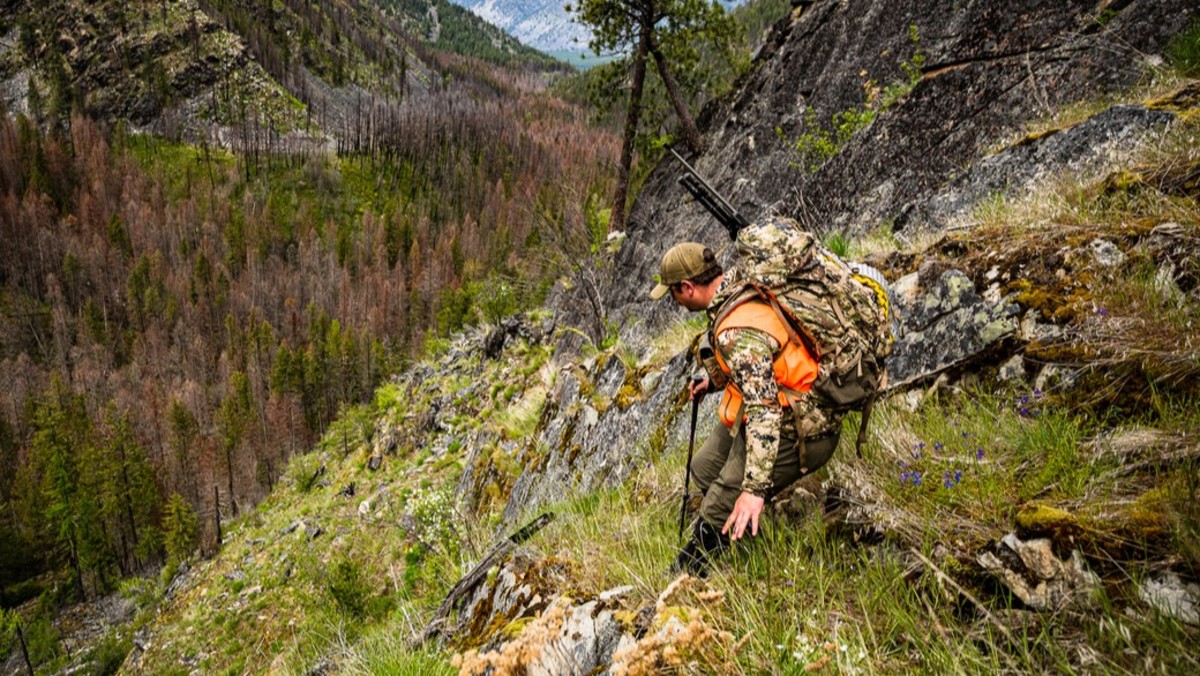

Elk are the largest animals most American hunters will ever have a chance to harvest. For that reason, once a hunter is ready to step up from whitetail deer to elk, the first question they ask is: do I have enough gun to get the job done?
We’re here to help you answer that question. The MeatEater crew has harvested their fair share of elk, and our recommendations are derived from years of in-the-field experience. If you go with one of the cartridges below, you’ll have plenty of power on tap to take down an elk–as long as you put the bullet where it needs to go.
Jump to: The Elk Cartridges We Use
What We Look for in a Good Elk Cartridge
It's worth noting at the outset that, as MeatEater's Janis Putelis told me, "there are no 'best calibers' for elk or any game for that matter."
"There are too many variables and too many situations to ever say that," he explained. "I'm a true believer that the caliber you shoot best, paired with a quality bullet, is the best caliber for you."
That’s solid advice, but if you’re in the market for a new elk gun (or a first elk gun), you should give yourself as much of an advantage as you can. Even if you don’t agree with the selections we’ve made, you can still select an effective cartridge by keeping a few criteria in mind:
- Large Caliber
- Long-Range Power
- Accurate
- Widely Available at a Reasonable Cost
Jump to: What Makes a Good Elk Cartridge
Elk Cartridges We Use
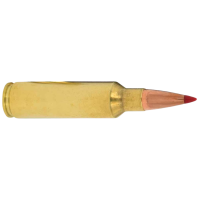 .300 WSM Jani's Pick |  .300 Win. Mag. Cal's Pick |  .30-06 Sprg. Brody's Pick | 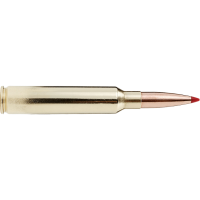 .300 PRC Garrett’s's Pick | |
|---|---|---|---|---|
| Bullet Weight (gr.) | 200 | 165 | 180 | 212 |
| Muzzle Velocity (fps) | 2820 | 3110 | 2750 | 2860 |
| Energy at 400 Yards (ft.-lbs.) | 2222 | 1910 | 1725 | 2565 |
| Cost/Round | $3.15* | $2.75* | $3.00* | $2.65* |
| Field Notes | Field Notes | Field Notes | Field Notes |
What Makes a Good Elk Cartridge
1. Large Caliber
You know you need a large, centerfire rifle cartridge to go after elk, but how large, exactly? That’s the million-dollar question, and you’ll get different answers from even the most experienced elk hunters. Some say nothing less than .30 caliber; others acknowledge that a .270 Win. has plenty of juice; and there are always forum warriors who will argue for the .223 Rem.
As you’ll see from the recommendations below, we tend to agree with the .30-caliber-or-bust camp. That’s not because smaller cartridges can’t take down an elk. Several of the crew also mentioned using other cartridges like the 7mm Rem. Mag., 6.5x55 Swede, and the 6.5 Weatherby RPM (also see “Honorable Mentions” for a few additional recommendations).
But depending on where you live, you may have a chance to harvest only a handful of bulls in your life. As Janis explains in his “Field Notes,” you need the flexibility to take a shot on that trophy bull at any angle. The .243 Win. can take down an elk with a solid broadside shot, but you’ll be glad you brought something larger if you’re forced to take a quartering shot, especially at distance.
2. Long-Range Power
Of course, the .30-30 Win. has a .30-caliber bullet diameter, but no one would argue that it’s the world’s best elk cartridge. Because many elk live on open western landscapes, it’s important to choose a cartridge that’s still moving with enough force at 300 or 400 yards to get through a shoulder or a rib and make it to the vitals. This depends on a variety of factors that can change within the same cartridge, and we don’t have space to cover all of them here. But here are a few rules of thumb to keep in mind.
Look for something that will hit an elk with at least 1,500 ft.-lbs. of energy at the range you hope to hunt. This isn’t a hard and fast rule, but it’s a good benchmark. You can determine this with a ballistics calculator once you know your bullet’s velocity.
On that note, don’t forget that bullet speed depends in part on barrel length. Don’t assume a cartridge’s velocity based on what’s printed on the box. Do your own velocity testing.
Finally, bullet construction is crucial. Know how fast your bullet needs to be traveling to expand and penetrate. We’ve found that a bonded bullet often performs the best at ranges beyond 300 yards.
3. Accurate
Accuracy isn’t always inherent to a specific cartridge. Some supposedly inaccurate cartridges can be accurate in a well-made gun. But it is true that bottleneck cartridges tend to be more accurate than straight-walled cartridges, so we stick with bottlenecks here.
Long-range practical accuracy is also worth considering. A flat-shooting cartridge available with high-BC bullets is more forgiving in windy conditions and can be sighted in to eliminate holdover out to 300 yards or so.
4. Widely Available at a Reasonable Cost
A bull won’t care if you kill it with a $10 cartridge you had to order from a boutique ammo dealer in Kalamazoo, but your significant other will. Act accordingly.
Field Notes from the MeatEater Crew
Jani's Pick
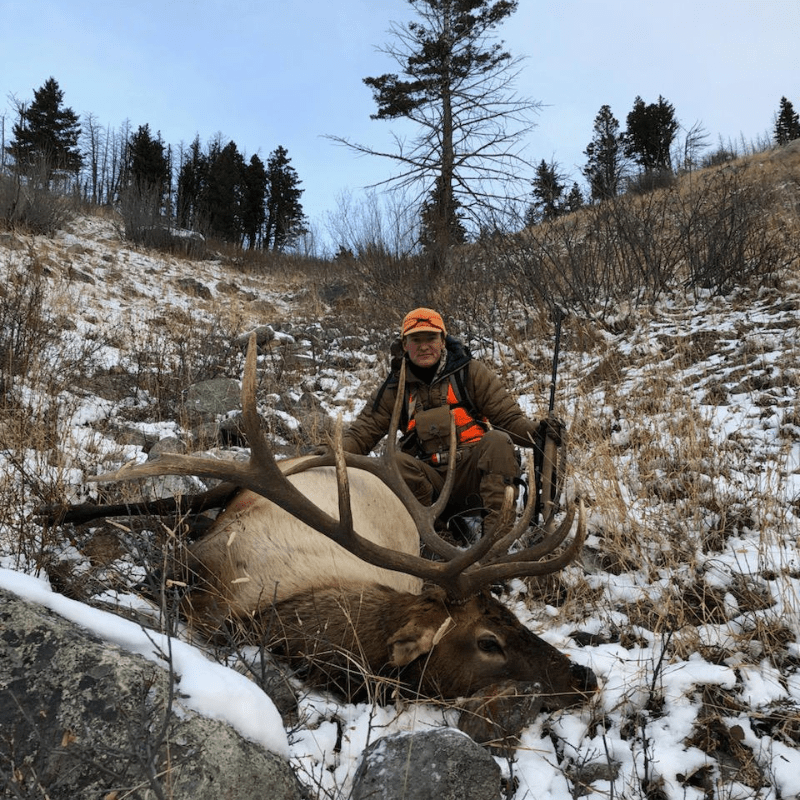
.300 Winchester Short Magnum
MeatEater’s Janis Putelis offered a specific cartridge range when I asked him for his favorite elk round. He wouldn’t shoot an elk with anything less than a 140-grain 6.5mm, but he thinks anything over 220-grains in a .30-caliber cartridge is "probably overkill."
While he’s killed three cows with a 6.5x55 Swede loaded with 127gr Barnes TTSX and "never lost sight of them," he prefers the .300 WSM for bulls.
"I'm OK with favoring lighter calibers for cows and heavier ones for bulls, but it's not because one tends to be bigger than the other," he explained. "It's because I'm OK letting a cow walk in hopes of getting a better shot, where I can place my bullet right through the lungs. In the case of hunting bulls, I don't want to have to wait for the perfect shot. I want to let the lead fly at almost any angle, and I want to know that the bullet will penetrate and do the job. I trust a .300 Magnum to do that better than a 6.5mm."
Specifications
- Bullet Weight (gr.): 200
- Muzzle Velocity (fps): 2820
- Energy at 400 Yards (ft.-lbs.): 2222
- Cost/Round: $3.15
Cal’s's Pick

.300 Winchester Magnum
The .300 Win. Mag. is surely one of America’s most popular elk cartridges, and it’s served MeatEater’s Ryan Callaghan well.
".300 Win. Mag. is still the best in my opinion. I like having some weight out there," he said.
The Win. Mag. has plenty of power to get the job done, and unlike some of the other cartridges on our list, it’s available in a huge range of bullet weights and styles. The 165-grain copper bullets linked above leave the muzzle at well over 3,100 fps, which helps maintain a flat trajectory. But 180-grain varieties are even more popular, and the cartridge is widely available and reasonably priced.
If Cal ever wants to switch things up (variety is the spice of life, after all), he told me he picks up a .280 Ackley Improved or a 6.5 Weatherby RPM.
Specifications
- Bullet Weight (gr.): 165
- Muzzle Velocity (fps): 3110
- Energy at 400 Yards (ft.-lbs.): 1910
- Cost/Round: $2.75
Brody's Pick
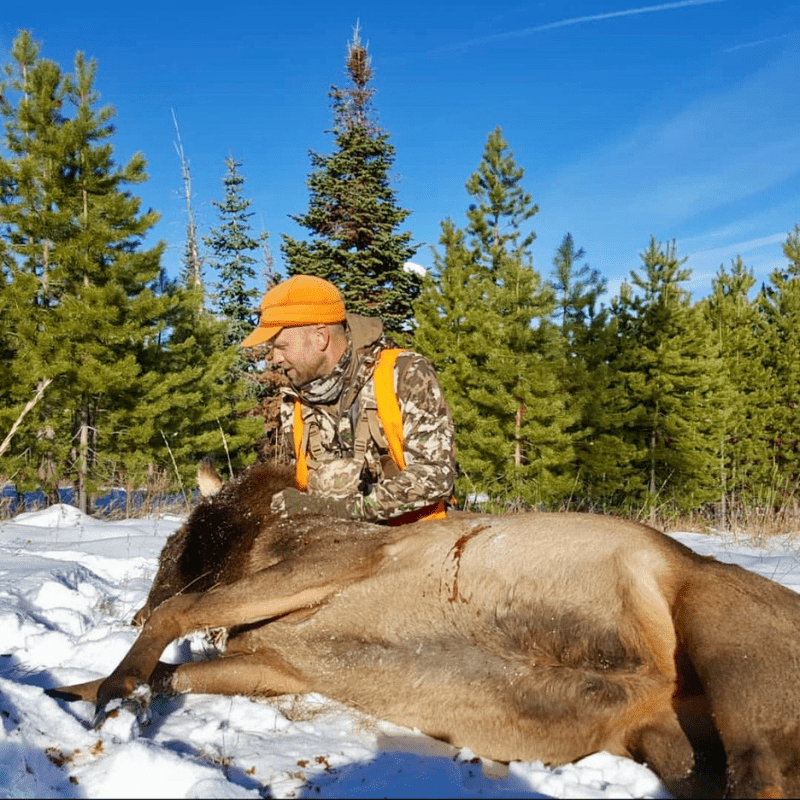
.30-06 Springfield
If there’s one elk cartridge that might compete with the .300 Win. Mag. in the nostalgia category, it’s probably the .30-06 Springfield. But there’s a reason it’s remained so popular even after nearly 120 years of existence.
"I’ve killed a pile of elk going back to my very first one twenty years ago and if I’ve learned anything it’s this: A bull elk shot at 300 yards through the ribs or shoulder with a tough bullet out of a .30-06 rifle will be just as dead as he would be if the rifle was a .338 Win. Mag.," said MeatEater’s Brody Henderson. "You can sweat the ballistic charts for all kinds of expensive hot rod magnum cartridges all day long but the plain old .30-06 is an elk killer and it always has been."
Brody appreciates that the recoil is manageable, the ammo is affordable and easy to find, and with today’s optics systems and some range practice, you can stretch your shots way out there if that’s your jam. Brody prefers a .30-06 loaded with 180-grain bullets like Federal Trophy Copper, Nosler Accubond, or his personal favorite, Swift Scirocco,
"They won’t let you down," he said.
Specifications
- Bullet Weight (gr.): 180
- Muzzle Velocity (fps): 2750
- Energy at 400 Yards (ft.-lbs.): 1725
- Cost/Round: $3.00
Garrett’s Pick

.300 PRC
If you know MeatEater’s Garrett Long, you know he usually prefers lighter-caliber guns. He can spend more time at the range with them, which increases his proficiency and confidence. If you have to choose between proficiency and a large caliber, the former will usually serve you better in the field.
Still, if he’s recommending a top-tier elk gun, Garrett’s been impressed with the .300 PRC: "If I had to have an elk-specific rifle, the modern design and ability to shoot high-BC projectiles out of a .300 PRC cannot be ignored. That thing was made for elk hunting."
The proof is in the pudding. The PRC can push a heavier bullet faster than the .300 WSM, and it maintains that energy better at 400 yards. It’s a pile-driver no matter the distance, and it’s hard to imagine any elk getting very far after being hit with a PRC round.
Specifications
- Bullet Weight (gr.): 212
- Muzzle Velocity (fps): 2860
- Energy at 400 Yards (ft.-lbs.): 2565
- Cost/Round: $2.65
Honorable Mentions
Polling the MeatEater crew will get you field-proven recommendations, but it won’t cover the full spectrum of effective elk cartridges. To fill those gaps, here are a few more common, reasonably priced cartridges that are certified elk killers. I've listed a popular bullet weight for each cartridge, but, of course, each can be found with a variety of loadings.
| 6.5 Creedmoor | 6.5 PRC | .308 Winchester | .270 Winchester | 7mm Remington Magnum | .338 Winchester Magnum | |
|---|---|---|---|---|---|---|
| Bullet Weight (gr.) | 143 | 143 | 165 | 145 | 160 | 230 |
| Muzzle Velocity (fps) | 2700 | 2960 | 2840 | 2970 | 2950 | 2810 |
| Energy at 400 Yards (ft.-lbs.) | 1470 | 1800 | 1637 | 1714 | 1846 | 2576 |
Stay in the loop with The MeatEater Newsletter
Shop


Related

Firearms
The Best Calibers for Bear Hunting
Firearms
5 Best Coyote Hunting Cartridges
Firearms
5 Best Rifle Calibers for Youth Hunters
The comments section requires Functionality cookies. Please enable Functionality cookies in Cookie Settings to view this content.