The Fur Hat Ice Tour How-To Series is brought to you by ESKIMO.
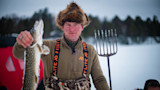
Before you call bratwurst, pretzel buns, and hot toddies ice fishing “traditions,” you really should take a look at ice spearing. Archeological evidence suggests that indigenous tribes have been cutting holes in hardwater in order to spear fish for more than 2,000 years. It was effective then, enjoyable now, and if you haven’t yet felt your heart stopped by a big northern pike swimming into view to check out your decoy, you really don’t know what you’re missing.
The preparations for ice spearing are more labor intensive than your standard hole-hopping and jig jigging, but it’s not too complicated—and totally worth it. To learn how, we reached out to our buddy and life-long ice spearer, Mark Norquist, founder of Modern Carnivore.
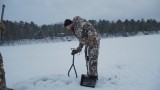
Mark grew up using a chisel and a chainsaw to cut his spearing holes. But, with the advent of efficient, reliable gas- and battery-powered augers, he’s found a more elegant solution. While some folks do drill entire spear holes with just an auger, Mark says that method creates jagged edges and a lot of unnecessary slush. Instead, he prefers to drill six holes to create the perimeter, then cut out blocks using a long-handled ice saw. This also makes it simple to replace your divot when you’re done.
Start by reading your state’s fishing regulations because many specify maximum legal dimensions for ice spearing holes. Once you’ve decided on your size and location, drill four holes to create a rectangle, then two more halfway on the long sides. Then, take your saw and cut between the two halfway holes and around the perimeter of the rectangle.
Next, you’ll need a good set of ice tongs to fish out the big chunks of ice you cut loose with the saw. You’ll also want a extra-large ice scoop to remove all the remaining slush and chips. When the hole is clear, set up your shelter or dark house over the hole, seal the windows, prepare your spear and decoy, and get ready for some action.
When your ice spearing adventure is coming to an end, Mark says it’s good practice from a etiquette and safety perspective to replace your ice blocks in the hole, then jab some tree branches in there. This will make your hole visible so someone doesn’t accidentally step in it—or sink a snow machine through the ice.
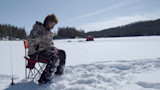
Make sure to watch the latest episode of The Fur Hat Ice Tour as Janis Putelis and Mark Norquist spear pike and whitefish in Minnesota.
Stay in the loop with The MeatEater Newsletter
Related
Ice Fishing
Video: How to Cut an Ice Spearing Hole
Ice Fishing
Spearfishing through Ice: Modern Adherents to an Ancient Tradition