Dead or Alive: How to Catch More Fish With Live and Dead Baits Through The Ice

Ice fishing has always made me feel nostalgic. As a guide, I spend most of my time rigging equipment and finding fish for clients. It can be hard to simply enjoy time on the water when you’re focused on giving your clients a successful fishing trip. But when I go ice fishing, all of that goes away.
On the ice, I’m reminded of simpler fishing days. Back then, I didn’t use complicated electronics or fancy equipment; just me, the hole, and some sort of bait.
I still keep it simple on the ice. My biggest dilemma is deciding whether to use live or dead bait. I’ve caught a lot of fish through the ice with this bare bones mentality. In fact, there are plenty of easy methods for fishing live and dead baits that can almost guarantee you to catch more fish.
It’s All About The Hook Up
Rigging both live and dead baits can be as simple or as complicated as you want it to be. Most anglers prefer to keep things simple by sticking a live minnow or a chunk of cut bait on the hook and then lowering it into the water. However, a few baiting techniques can increase your catch rates for certain species.
When you’re targeting meat-eating panfish like crappie or yellow or white perch, the gold standard is to hook a small minnow through its lip so it can swim freely. Instead of doing this, hook that same minnow through the base of its tail so that it hangs head down in the water, and you’ll often get more strikes.
When you hook a minnow through its tail, it will naturally try to escape. This tension causes the minnow to surge forward and struggle harder, which creates more action. Fish like crappie, perch, and even pickerel prefer to eat bait headfirst, so there’s less chance of a fish dropping the bait before you set the hook.
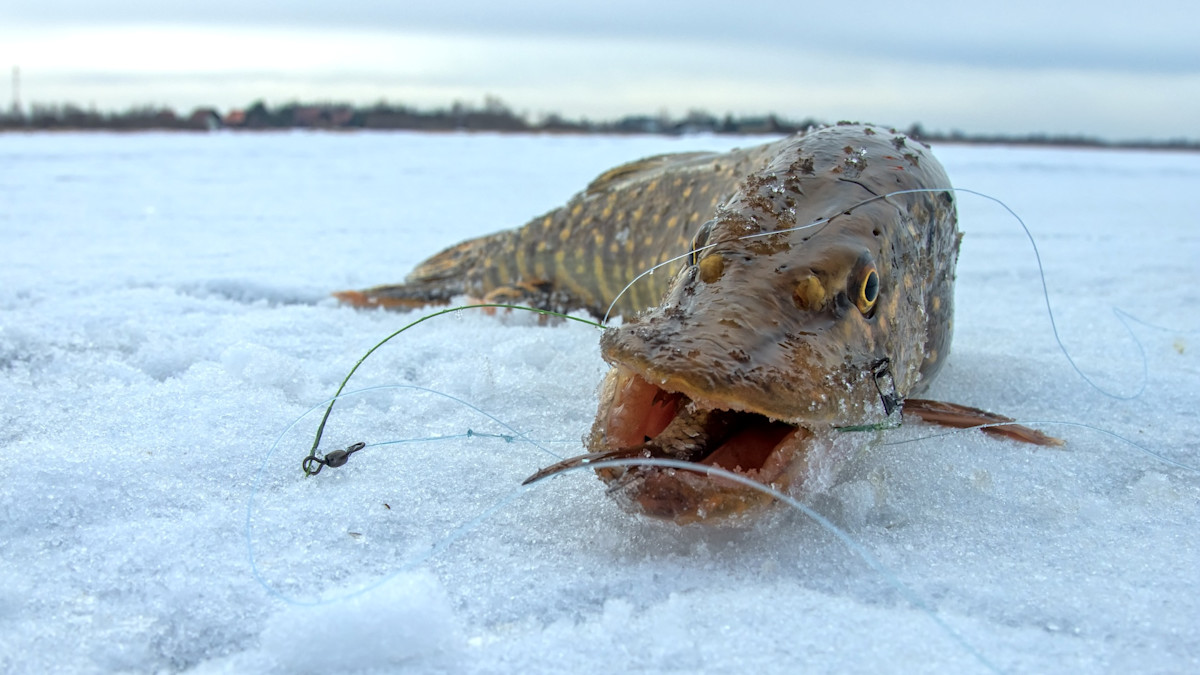
If you’re targeting predatory fish like northern pike, lake trout, or muskie, use large live or dead baits, such as whole suckers or gold shiners. Anglers usually attach these big baits to their tip-ups or jigging rods with a single hook through the back, but you’ll often have more hook-ups on these big baits using a quick strike rig.
Quick strike rigs are double treble hook bait rigs that you can purchase online or make yourself. Simply tie a large snap swivel to the end of your tip-up line or leader. Then, attach two 12- to 18-inch wire leaders to the swivel and add a pair of large 2/0 to 4/0 treble hooks to each wire leader. Then, hook the quick strike rig to your bait by passing one treble hook through the bait's nostril and the other hook to the base of its tail, just behind its dorsal fin.
With a hook on either end of the bait, you’ll increase your chances of setting the hook. Even if the fish T-bones the bait in the middle and runs with it, the quick strike rig will hook the fish in the mouth as soon as it turns the bait to swallow it.
Suspended Soak
Most anglers who fish dead baits or cut chunks allow them to sink and rest on the bottom. This is an excellent way to catch bottom-hunting fish such as burbot, catfish, and even sturgeon, but I’ve had more luck catching these species, as well as other fish like pike, walleye, and lake trout, by suspending my dead baits just above the bottom.
Scent from dead bait on the bottom only emanates upwards, but suspended dead bait can distribute 360 degrees around the bait. This allows the scent to travel further in underwater currents and attract more fish. Suspended bait can also visually appeal to more fish, rather than just bottom feeders. As you keep the bait at the right height, bottom feeders will take a suspended bait.
To ensure your dead or cut bait is suspended properly, lower it until the line goes completely slack so you know it’s on the bottom. Then, slowly wind the excess slack back onto your tip-up spool or wind the line onto your reel until the slack is gone and you feel the bait lift off the bottom. Add a few more turns to make sure your bait sits at least 3 to 5 inches above the bottom. Now, set your rig on the ice and wait for a strike.
A Live Tip
Most ice anglers will use jigs and spoons and even tip their lures with a chunk of worm, maggot, or cut-up minnow. These are good tactics, but you can also tip your lures with whole live baits if you want to increase your odds. It’s the best of both worlds.
The lure provides all of the action and noise, while the live bait adds natural movement and scent. Tipping your lures with live bait is a fantastic ice fishing tactic for perch, walleye, panfish, bass, and trout, and will even work for larger predators like lake trout, pike, and pickerel if you rig it right.
You’ll want to tip your lure with a bait roughly half the size of the lure. This ensures your bait is the right size for your target species and also controls the action. For smaller jigs and spoons used to target panfish and perch, I prefer small fathead minnows or emerald shiners that are less than two inches long. For larger fish like walleye, bass, or pike, I’ll use bigger lures like the Jigging Rap and Rattle Spoon, tipped with a 3- to 4-inch emerald shiner or even a larger 5- to 6-inch gold shiner when targeting big ones.
When you tip a lure with a live bait, hook it through the strongest part of the bait's lips. This will allow it to create natural movement and prevent it from falling off while you work the lure. With smaller minnows, push the hook through the center of the bait's bottom jaw and then up and out through its top lip just in front of its nostrils. With larger shiners, you’ll get better results by opening their mouth and threading the hook through their nostril. This way will hold the bait in place with the bone rather than its softer lips.
Double It Up
Where legal, fishing with multiple live and dead baits or a combination can be incredibly effective. This tactic allows you to offer two types of bait in two different areas of the water column when targeting schooling or suspending fish like walleye and white perch. It also allows you to target two different species simultaneously.
To double up, tie a barrel swivel to the end of your jigging rod or tip-up line. Next, tie 18 to 24 inches of additional line to the bottom of the swivel and leave a long 6- to 10-inch tag end off the knot. Finally, tie on two hooks to the rig; one to the end of the additional line and one to the tag end of the knot.
You can bait this double hook rig any way you want, but my favorite way is to add a chunk of cut bait or a smallish dead bait to the bottom hook and then a live minnow hooked through the lips to the tag end. This allows the dead bait to act as both an attractant and a weight that suspends just above the bottom, while the live minnow swims and circles above it. The live minnow will draw attention from its movement to your rig.
Frozen In Time
Ice fishing can be as simple as baiting your rig and waiting for a bite. It’s the type of angling that reminds you that anything can happen. That kind of suspense is what makes fishing so thrilling, and a good reminder that fishing doesn’t have to be complicated to be effective.
Stay in the loop with The MeatEater Newsletter
Shop
Shop AllRelated
Ice Fishing
3 Tip-Up Setups to Catch More Fish Through the Ice
Ice Fishing
The 3 Best Ice Fishing Baits for Panfish

Ice Fishing
How to Target Multiple Species Through the Ice
The comments section requires Functionality cookies. Please enable Functionality cookies in Cookie Settings to view this content.