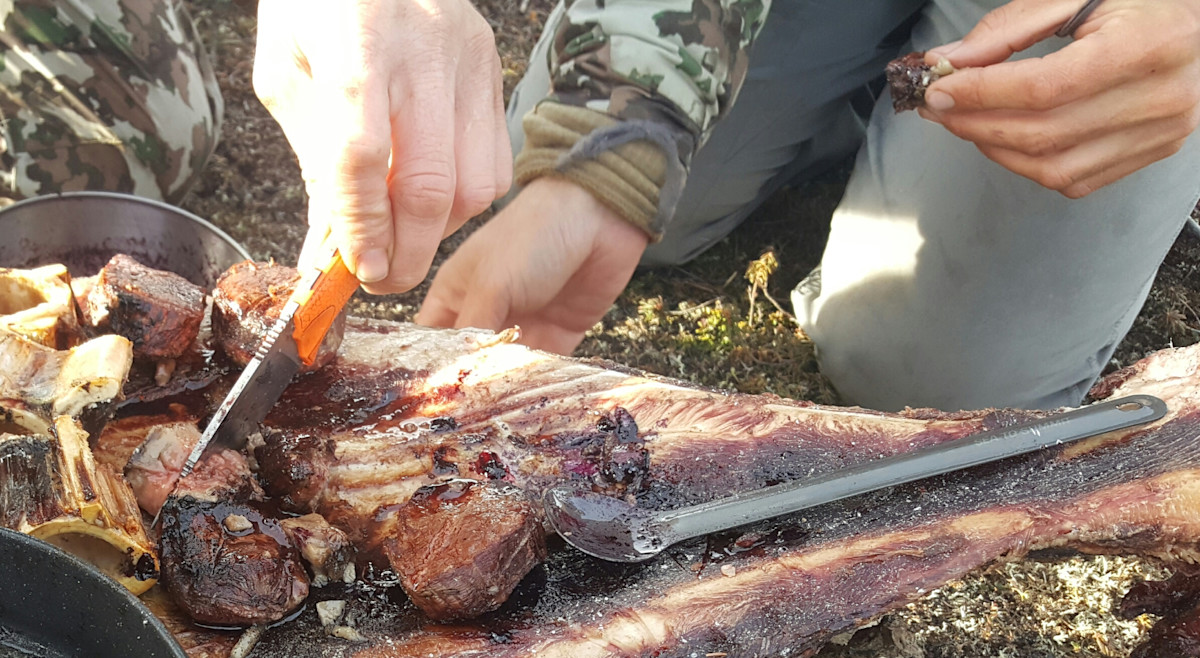

A meal I’ll never forget is blacktail deer heart and liver that was cooked high above treeline on Prince of Wales Island just as the sun was setting. We finished eating just as the northern lights began glowing on the horizon. What I loved about that meal is it was the culmination of a bunch of completely new experiences. It was my first trip to Alaska, my first blacktail deer hunt, and my first time seeing the northern lights. That field meal was the perfect way to celebrate the entire adventure and is the foundation of all my memories of that hunt.
Whether you’re after small game a few miles outside of town or searching for big game deep in the backcountry, the meals you’ll remember most fondly are often prepared and eaten in the same places where the animals you hunted lived. Cooking and eating outdoors, with the hunt still fresh in your mind, adds something to a wild game meal that can’t be duplicated at home.
Preparedness is key even for basic field meals. Your field cooking gear can be as simple as a lighter to make a small cooking fire and a knife to cut a green skewering stick. But, if you want to take things a step further than simple caveman fare, it’s better to carry a few things in your backpack that will help to make a meal worth remembering.
You can create a simple field cooking kit for backpack hunts in a few minutes. Pack a small backpacking pot with cooking oil, salt, pepper, a small jar of hot sauce and whatever other seasonings you might like. You can find small plastic containers suitable for storing and carrying oil and seasonings wherever you buy camping gear. Ideally, your cooking gear and basic ingredients can all fit inside of your backpacking pot that has a lid that can be latched down to keep everything secure. You can cook over an open fire or use a small cook stove. If you have space, you can add a small cooking grate to your kit, which makes open-fire cooking a hell of a lot easier. In addition to your knife, a fork or spork is handy for flipping meat and eating.
If you’ve got the motivation, pack along some extras to make good side dishes. You can bring potatoes to fry or else some apples and hard cheese to pair with your meat. Whenever possible, try to source other wild foods like ramps, mushrooms, berries or nuts. If you want to go all out, bring some wine in a one-quart Nalgene bottle.
Here are some of our favorite MeatEater field meals. Every hunter owes it to themselves to enjoy a couple of these during hunting season.
Ingredients
- Big Game Tenderloins
- Whole Small Game
- Hearts & Livers
- Whole Waterfowl
Preparation
Grilled Tenderloins
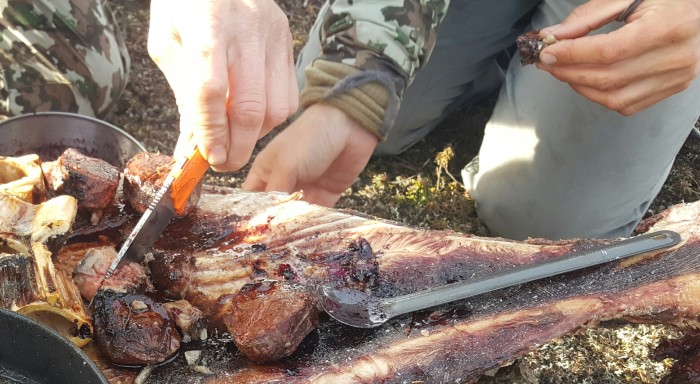
Eating an animal’s tenderloins first goes against the notion of saving the best for last, but when you’re in camp after a successful big game hunt this is a quick and failsafe way to celebrate. Sprinkle some cajun seasoning (or whatever you’ve got, including just salt and pepper) on the meat and then rub it with oil or melted butter. On a grate over the fire, grill the whole tenderloin over embers without going much past rare. Larger tenderloins from elk or moose can be sliced into smaller steaks before cooking in order to save time. Tenderloins cook extremely fast, so keep an eye on them.
Small Game Braised in White Wine

This is an easy one for small game or upland birds. First, cut small game like cottontails or squirrels into leg and saddle pieces. Smaller sized upland birds like quail can be plucked and split in half; larger birds like pheasant can be parted out just like a chicken. Season the pieces liberally and brown them in oil or butter.Then add a mixture of water and white wine for a braising liquid. Use enough to almost cover the meat. Add some sprigs of rosemary and thyme. Over coals or on a cook stove, braise over low heat until the meat can be easily pulled from the bones. Pair with the leftover wine.
Fried Heart and LiverHearts and livers are another good choice for field cooking. In fact, it was that first heart and liver field meal in Alaska that convinced me they are worth saving. Pack a small container of seasoned flour and lightly coat thinly sliced pieces of heart and liver. Fry in an oiled pan over your camp stove or a bed of embers. Don’t overcook. Heart and liver have a mild, woodsy flavor when eaten medium rare to medium. But, they’ll quickly develop a strong, undesirable flavor if overcooked.
Fire-roasted Duck
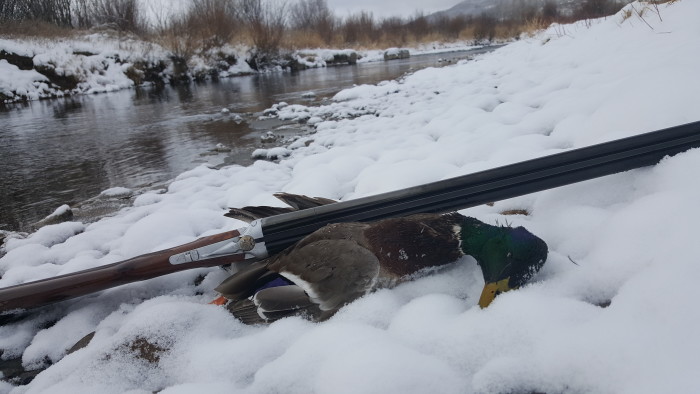
Start out by spatchcocking a plucked duck. (This is done by splitting the bird down the backbone so it can be laid flat.) A wire grilling grate works well for cooking this meal, but you can get by using green skewers pierced through the meat to support the bird while it cooks. Either way, the key is to keep the duck well above the flames or embers of your cooking fire. The skin will drip fat as it cooks, and if the bird is too close to the heat you’ll have problems with grease fires. But you still need to keep the duck close enough that the skin gets nice and crispy. A distance of around eighteen inches above the coals is about right. It may take as long as thirty or forty minutes to cook, but don’t rush it. It’s a touch and go process, requiring a lot of attention on the part of the cook, but it’s well worth it. Pull the duck from the flames when it’s medium rare in the center of the breast.
Sign In or Create a Free Account
Related

Recipes
Making Memorable Meals in the Field
(0)
Recipes
Wild Game Chorizo
(2)

Reviews
Making Memorable Meals in the Field
A meal I’ll never forget is blacktail deer heart and liver that was cooked high above treeline on Prince of Wales Island just as the sun was setting. We finished eating just as the northern lights began glowing on the horizon. What I loved about that meal is it was the culmination of a bunch of completely new experiences. It was my first trip to Alaska, my first blacktail deer hunt, and my first time seeing the northern lights. That field meal was the perfect way to celebrate the entire adventure and is the foundation of all my memories of that hunt.
Whether you’re after small game a few miles outside of town or searching for big game deep in the backcountry, the meals you’ll remember most fondly are often prepared and eaten in the same places where the animals you hunted lived. Cooking and eating outdoors, with the hunt still fresh in your mind, adds something to a wild game meal that can’t be duplicated at home.
Preparedness is key even for basic field meals. Your field cooking gear can be as simple as a lighter to make a small cooking fire and a knife to cut a green skewering stick. But, if you want to take things a step further than simple caveman fare, it’s better to carry a few things in your backpack that will help to make a meal worth remembering.
You can create a simple field cooking kit for backpack hunts in a few minutes. Pack a small backpacking pot with cooking oil, salt, pepper, a small jar of hot sauce and whatever other seasonings you might like. You can find small plastic containers suitable for storing and carrying oil and seasonings wherever you buy camping gear. Ideally, your cooking gear and basic ingredients can all fit inside of your backpacking pot that has a lid that can be latched down to keep everything secure. You can cook over an open fire or use a small cook stove. If you have space, you can add a small cooking grate to your kit, which makes open-fire cooking a hell of a lot easier. In addition to your knife, a fork or spork is handy for flipping meat and eating.
If you’ve got the motivation, pack along some extras to make good side dishes. You can bring potatoes to fry or else some apples and hard cheese to pair with your meat. Whenever possible, try to source other wild foods like ramps, mushrooms, berries or nuts. If you want to go all out, bring some wine in a one-quart Nalgene bottle.
Here are some of our favorite MeatEater field meals. Every hunter owes it to themselves to enjoy a couple of these during hunting season.
Ingredients
- Big Game Tenderloins
- Whole Small Game
- Hearts & Livers
- Whole Waterfowl
Preparation
Grilled Tenderloins
Eating an animal’s tenderloins first goes against the notion of saving the best for last, but when you’re in camp after a successful big game hunt this is a quick and failsafe way to celebrate. Sprinkle some cajun seasoning (or whatever you’ve got, including just salt and pepper) on the meat and then rub it with oil or melted butter. On a grate over the fire, grill the whole tenderloin over embers without going much past rare. Larger tenderloins from elk or moose can be sliced into smaller steaks before cooking in order to save time. Tenderloins cook extremely fast, so keep an eye on them.
Small Game Braised in White Wine
This is an easy one for small game or upland birds. First, cut small game like cottontails or squirrels into leg and saddle pieces. Smaller sized upland birds like quail can be plucked and split in half; larger birds like pheasant can be parted out just like a chicken. Season the pieces liberally and brown them in oil or butter.Then add a mixture of water and white wine for a braising liquid. Use enough to almost cover the meat. Add some sprigs of rosemary and thyme. Over coals or on a cook stove, braise over low heat until the meat can be easily pulled from the bones. Pair with the leftover wine.
Fried Heart and LiverHearts and livers are another good choice for field cooking. In fact, it was that first heart and liver field meal in Alaska that convinced me they are worth saving. Pack a small container of seasoned flour and lightly coat thinly sliced pieces of heart and liver. Fry in an oiled pan over your camp stove or a bed of embers. Don’t overcook. Heart and liver have a mild, woodsy flavor when eaten medium rare to medium. But, they’ll quickly develop a strong, undesirable flavor if overcooked.
Fire-roasted Duck
Start out by spatchcocking a plucked duck. (This is done by splitting the bird down the backbone so it can be laid flat.) A wire grilling grate works well for cooking this meal, but you can get by using green skewers pierced through the meat to support the bird while it cooks. Either way, the key is to keep the duck well above the flames or embers of your cooking fire. The skin will drip fat as it cooks, and if the bird is too close to the heat you’ll have problems with grease fires. But you still need to keep the duck close enough that the skin gets nice and crispy. A distance of around eighteen inches above the coals is about right. It may take as long as thirty or forty minutes to cook, but don’t rush it. It’s a touch and go process, requiring a lot of attention on the part of the cook, but it’s well worth it. Pull the duck from the flames when it’s medium rare in the center of the breast.