Could Too Many Bucks Explain the West’s Mule Deer Population Decline?
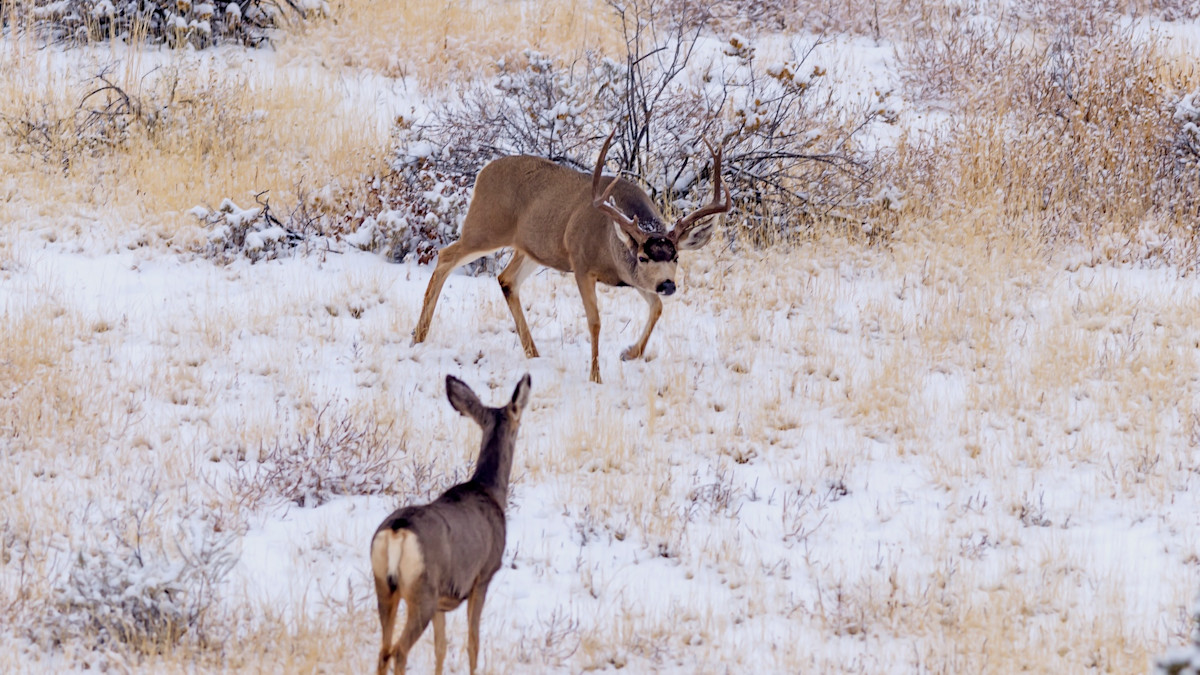

Mule deer populations in the American West have steadily declined over the past couple of decades. New research shows a potential reason why—and it could upend wildlife management tactics in the West. According to a study led by Brigham Young University researchers, there might be too many mule deer bucks.
The researchers used data on productivity and reproductivity on muley herds in Utah spanning from 2007 to 2022. Brock McMillan, one of the authors, told KSL that they were analyzing “everything that might be affecting population dynamics.”
What they found goes against recent common management tactics, which often prioritize limiting the harvest of male mule deer to foster hunting opportunities for mature bucks. However, researchers observed that female body condition and population growth rates worsened in direct relation to the proportion of mature male mule deer, though other factors, such as climate conditions and forage availability, also contributed significantly to population-level impacts.
"I'm not sure that the public's going to accept it, and I bet that a lot of the managers are hesitant to believe it, but what it suggests is that as management agencies have continued to increase the proportion of the populations that are comprised of males, they have been driving population growth down,” said McMillan. "And it could partially explain the population decline of mule deer over the last 30 or 40 years throughout the West."
Researchers offered several reasons that a high proportion of male mule deer negatively impacted does, including competition for forage, aggressive mating behavior, and social group formation.
The study’s results could significantly impact mule deer management tactics going forward. “Management strategies should consider the potential demographic costs of maintaining high adult male abundance alongside the recreational benefits of increased hunter satisfaction,” wrote the study’s authors. “This perspective is particularly relevant given the ongoing interest in mule deer populations across western North America.
What It Means for Hunters
The study’s results could significantly impact mule deer management tactics going forward. The study’s implications are that managing for more mature mule deer bucks on the landscape by limiting buck harvest could be negatively affecting mule deer populations. In the future, hunting opportunities for muley bucks could be increased in some units, and things like antler point restrictions could be scrapped in favor of encouraging hunters to take more younger bucks.
That said, those objectives would need to be balanced with the preferences of hunters in the West. “Management strategies should consider the potential demographic costs of maintaining high adult male abundance alongside the recreational benefits of increased hunter satisfaction,” wrote the study’s authors. “This perspective is particularly relevant given the ongoing interest in mule deer populations across western North America.”