How to Scout Big Woods Bucks in Early Summer
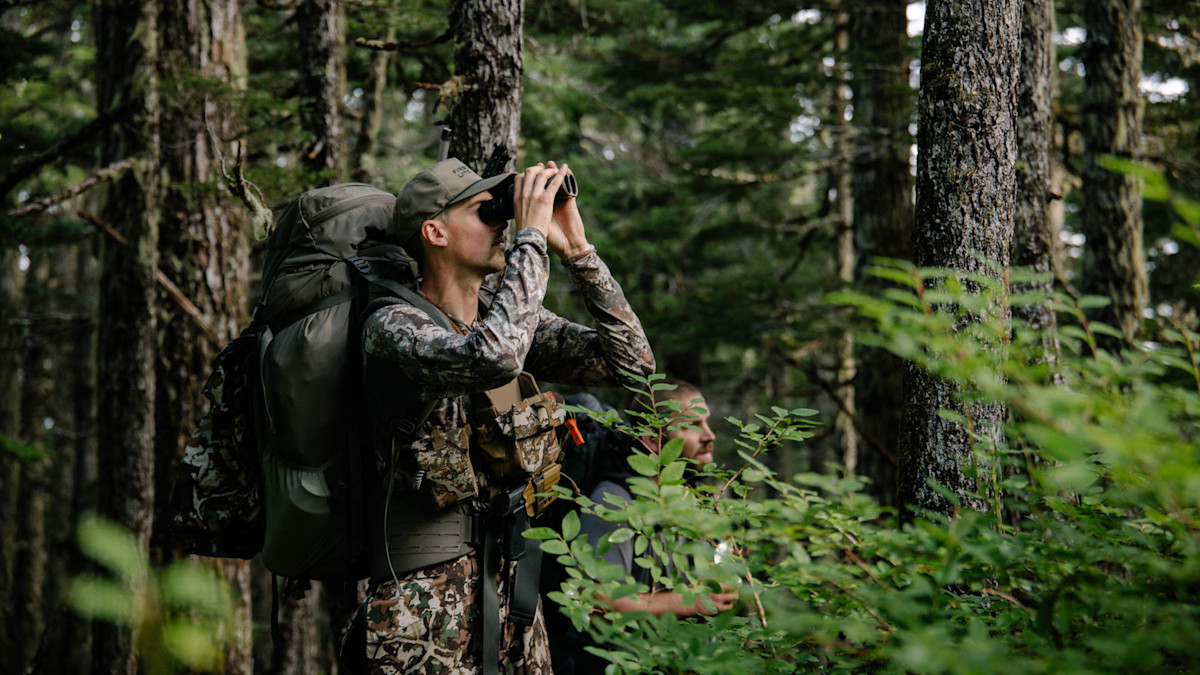

If finding a deer in the big woods is like finding a needle in a haystack, finding a mature buck is like looking for that needle in an entire hay field. Unlike ag country, the big woods might only boast two bucks per square mile in some areas. Finding big bucks in such places requires a ton of legwork in and out of season. And that starts with summer scouting. It’s a low pressure/high reward activity that can pay off once deer season rolls around. Here’s where you can start.
Start with Edges
One of the hardest things about hunting in the big woods is well, they’re big. When you look at a chunk of territory from the road or on a mapping app, it can be hard to know where to start. Edges are a great place.
During the early summer, leaves on hardwood trees are either just starting to bud or green up. That new growth makes it easy to spot transitions to darker evergreens scattered throughout the woods.
Edges are incredibly important in low-deer-density areas like the big woods, as they provide both cover and feed. During the fall, bucks will also use these edges as travel corridors so that they can stay under cover while feeding and/or looking for does.
Pay especially close attention to these timber edges that run through a low saddle or other funnels. You can almost guarantee to find buck sign there.
Historical Sign
Once you locate several edges, look for food sources. Look for mast-producing trees, like oak or beech or even wild apple trees. Pay attention to woody browse and shrubs, like young maple and dogwood trees that are only a few feet off the ground, or shrubs like witch hazel and greenbrier and patches of ferns and moss, which deer will utilize once the mast is gone.
During the fall, big woods deer live on a food-to-bed travel pattern. Look for obvious travel routes and deer trails between these food sources and thick cover and start combing around for buck sign.
Though they won’t be as obvious as they are in the fall, both rubs and scrapes from the previous year are still valuable, especially signpost rubs that bucks hit every year. This old sign can give you a great idea of what type of bucks are in the area and how they like to travel. If you find a lot of old scrapes and rubs along rivers and creeks or at high-altitude spots along the peaks of a ridgeline, those bucks will probably utilize those same types of areas again.
Don’t Overlook Tracks
Finding deer tracks during the early summer can quickly tell you if there’s a big buck in the area. You can also tell how many different big bucks are around if you know how to identify their tracks. Though there are some exceptions, heavier (more mature) bucks tend to leave dew claw marks in the dirt. You can also look for longer, splayed tracks and investigate them further. Take a photo just in case you come across a similar track in that general area for comparison or to hone in your setup.
Like fingerprints, a buck’s tracks can be distinctive. Some are short, long, or have distinct chips or irregularities in the hoof that give those bucks away. It can take a bit of practice, but once you learn how to pick out all these little anomalies, you’ll be able to spot that particular buck’s track in a pile of others.
Don’t just stop there. Since bucks typically bachelor up during the summer, you should be able to spot others and get a sense of how many bucks are using that area.
Prepare Now
It’s never too early to get a jump on deer season. The more intel you gather now, the more options you’ll have when October 1 rolls around, and that’s never a bad thing in the big woods.
Stay in the loop with The Wired to Hunt Newsletter
Related

Scout
Ask Wired to Hunt: Patterning Deer in the Big Woods

Scout
How to Winter Scout for Big Woods Whitetails

Scout
Why You Should Summer Scout for Whitetails in Bad Weather
The comments section requires Functionality cookies. Please enable Functionality cookies in Cookie Settings to view this content.