Wired To Hunt
Ep. 340: Land Management Wisdom and the Coronavirus with Doug Duren
Play Episode
1h58m
Today I’m joined by the wise man of southwestern Wisconsin, Doug Duren, to discuss land management philosophies, achieving balance, improving the Back 40, and the impacts of the novel coronavirus on future conservation efforts.
Topics discussed:
- How Doug and I are dealing with the impacts of the Covid-19 crisis
- Weird parallels between the public's reaction to the coronavirus and CWD
- How the pandemic, and resulting economic and attention crises, might impact future conservation efforts
- How Doug Duren came to his current conservation ethic
- How Doug would describe his conservation philosophy
- Balancing wilderness preservation VS land management
- Understanding why managing invasives or non-native species is important
- Why managing for balance in an ecosystem makes sense
- Doug's thoughts on the Back 40
- Ideas for getting more trees on the landscape
Connect withMark KenyonandMeatEater
ShopMeatEater Merch
Seeomnystudio.com/listenerfor privacy information.
00:00:02 Speaker 1: Welcome to the wire to Hunt podcast, your home for deer hunting news, stories and strategies, and now your host, Mark Kenyon. All right, welcome to the wire ton Podcast, brought to you by on X. Today on the show, I'm joined by my buddy Doug During he's a frequent contributor to various Mediator podcasts and television episodes as well as wildlife inhabitant management consultant out of the Driftless region of Wisconsin, and he's also one of the experts we brought out to the Back forty last fault to review what we had there and to talk through different ideas and to hunt the farm with me. So in our conversation today, I want to cover a lot of topics on those lines we're gonna discuss with Doug. You know, how he came to his current conservation ethic, how he attempts to balance hunting and ecosystem goals on any property he works with, how to think about native and invasive species management, is for improving the Back forty and a bunch more like that. So so fascinating stuff. But we also do spend some time in the beginning talking about just just the current event of the moment, the global COVID nineteen pandemic that's just sucked the oxygen out of every room. Uh, it's all encompassing right now. None of you guys listening are surprised by this, I know, because it's it's everywhere. It's changed everything about our daily lives right now. UM, I just didn't. I don't think there's any way we could have the podcast this week without at least addressing the elephant in the room a little bit. So we're gonna touch on that. Uh, just kind of share our thoughts and feelings right now, look at some of the weird parallels between this situation and that surrounding c w d Um. We even go into a little bit about how all of this right now might impact future conservation efforts. UH. So it's interesting stuff, but rest assured, the majority of the show we're gonna talk about conservation and wildlife management and habitat improvements and in philosophies around working with the land. It's great stuff. I think you'll enjoy it. I should take your mind off of some of the negativity out there right now. And uh, and I'm looking forward to you guys all giving me a listen so that's the plan for today. No intro session with Dan yet. I think he'll be with us next week though, so tune in for that. So without further Ado, let's get into it and get Dug During on the line. All right, I got Doug During back with me on the show. Doug, thanks for making the time to do this. Well, this is uh great social distancing here and getting to talk to you and both from the the the privacy and safety of our own offices. I know it's becoming the new normal for people all over the country right now, is video conferences and skype chats and and all that. But I was talking to Ben O'Brien yesterday that I've been doing this. I've been self quarantine for six years, sitting in my home office every day by myself. So this isn't too different for me. Well, right, and the same you know, I as you as you know, I'm I'm self employed and and uh so I have I work from home, UM and most of my work is um around the state in the Midwest, UM that I traveled to. And then of course I have the farm nearby, which you know, it's easy to self quarantine out there. I'm just dealing with some Herford's and their calves, and having seasons coming up, and living here in Casanovia, you know, population three or five, it's pretty easy to social socially distanced yourself. I got to tell you, Um, I was contemplating what I wanted to do this week in the podcast, and I had an original plan that I threw out the window just because of current events. And I selfishly I wanted to I wanted to have someone I could talk to about what's going on right now, a little bit that that had a little bit more wisdom than me, And I jumped to you, I, so I want to talk about the fun stuff. I want to talk about the back forty and the time we spent together. I want to talk about what's going on in the Durn farm and spring habitat projects and conservation ideas and and and news and all that kind of good stuff. But I guess I don't think we can ignore, you know, what's happening around us right now. As you said, social distancing, coronavirus, the pandemic. I mean, life has changed over the last week dramatically. Um. It's it's hard to escape, and part of me wants this to be an escape, Like the part of me wants the podcast to be an escape, but I also kind of feel like it also, maybe just selfishly for me, is a place to to to release a little bit of the tension around it too and talk about it. I don't know, how how are you processing what's going on around us right now? How are you feeling about things? UM? What's the doug during wisdom that I need to hear right now? UM? Well, not certainly not the panic, But to take this very seriously, is is UM isn't the number one message I guess if I've learned anything in UM sixty one years and then working with with people like Brian Richards at the U s g S Wildlife Health Center. UM, as I think I told you, Mark, my daughter is completing her master's in public health at Paul University and UM she's studying UM Emergency Emergency Preparedness UM and that's her area of that's her master's thesis, and it's it's kind of stunning to me that that's going on. So as you can imagine talking with her. I was on the phone with her last night about what she's doing, and UM, you know the biggest thing is that as you you, being a relatively a new parent and now parents of the second one, you realize that your life isn't as um. Your individual life takes on a whole different meaning when you start caring for you know, someone else. And I can never describe what it has been like to be a father to me, but it, um, it extends to the whole idea of you know, it's not ours, it's just our turn and caring for um the you know, honoring the past and caring for the future. And if there's anything that that points that out, it's this this kind of situation. UM. I'm hearing from friends, UM, some of them are you know, really frightened and um and some of my siblings who my sister actually has a master's in public health. And also so you know, I'm hearing all parts of this, and I tend to, UM, I want to I want to remember the kinds of things like my friend Mitch Baker has said, and that is I'd rather we did more than we I'd rather we did everything that we could and find out we did more than we had to than to find out we didn't do enough. And so, you know, taking this stuff seriously, is is you know it's really important at the same time, um Man, I've been doing taking some walks on the farm and I'm spending some time out there, and my wife and I have been hiking together, and um you know, it really does help you count the most important things in life, I think a little more, um carefully and um so I would say, you know, there's a lesson there that you know what's important in life and and and and those are the things that I'm counting on these days. Is you know who's important and what's important to me? Yeah, that's that's a great point. And another thing that you just made me think of two is just how how much we take for granted here in this country, all the opportunities we have and the things we can do, and the freedoms of of of all sorts that we have as privileges here and and now all of a sudden that's changing because of this a lot of ways. And you very quickly realize, oh wow, look what life's like when you don't have these abilities, are these opportunities, or look how quickly things can change. I mean it is I it's eye opening, I think for a lot of folks, and it just makes you that much more thankful for the things that we do have, like you said, time with family. But but the crazy thing is, I mean if we place like France where they're banning family get togethers and they're banning social gatherings of any kind, it's a little bit concerning where this can go when you don't even when you can't even connect with your support family groups or friend groups to to deal with some of this stuff. Um, I don't know. I mean, like you said, you don't want to panic, you don't want to worry too much. You just want to follow the guidelines and do what's best for the greater good. Uh. But it's certainly is something we have take series, like you said. And and then as as you are doing, I think the thing I'm trying to do is is stay as positive as you can and get outside, like that's one of those places where you can still get out there and enjoy mother nature, do some good work. Um, get your mind off things. Probably the worst thing right now, and I am bad right now. I'm I'm guilty of looking at my phone a lot the last week. There's this constant stream of news. It's probably the worst thing to do. I've been trying to take my phone and like put it in another room and leave it and say, right from from five o'clock till nine o'clock, I'm not going to look at the phone at all. It's because you can get addicted to well, what's happening now? What's happening now? Um, I don't know. I don't know if that's something you ever have struggled with my wife. My wife would love if she was listening in in this which she will want it air. Um, she would say, yeah, when you put that darn phone down, and uh, I am, I'm I'm a slave to the darn thing and um, and I need to change that because it it it'll bring you down. Um. But then it goes back to that balance of well, how do you be serious about this if you don't know what's going on? Well, the truth is you don't need to know what's going on every minute or even every hour. Um, especially I mean, you know, I've been to your home and you know I know where you're at out there. It's not like you've got you know, like me, you don't have a ton of people going by your house and you're not out interacting as a normal part of your day. Um, so you really don't have to have, you know, up to up to the minute information, but there really is a uh it draws you to it. And and I mean I'm just too much with the phone anyway, but uh, and I do try to set it aside, especially when I'm out at the farm. I mean, I'll take some photos and stuff like that just to share what's going on out there. But um, yeah, I I getting outside is a big one, man, because I mean, is there a safer place, Um, at least if you're outside and you're not in the middle of a crowd. It's it's fantastic being out and about. I mean, I had a great time yesterday morning, Um, when I checked on the cattle and just you know, and I was just it's the farm is only a couple of miles here from from where we live, and and I noticed some turkeys over across the road. So I got out and walked over across the road and I sat in the field for a while and watched three toms strut or two toms strut, and then the third one tried to join them, and man, there was a butt kicking contest went off field and I just felt it was one of those moments of wow, spring is here, things are happening, it's their time. Um. And then you know, I sat there for I don't know, twenty minutes, half an hour or something. I watched the whole thing go on, and then all of a sudden I kind of snapped back to reality, like, oh, you've got stuff to do, and you know, I went in and grabbed my phone and there I am, like back into it again. So, UM, perspective is awfully important and UM, but I go back to you know, at the same time, there's there's been nothing like this in in our lifetime and hopefully there won't be again. Um. In terms of its effect on us as humans, obviously there's some parallels that I could draw to chronic wasting disease, and and yeah, that's a that's a different area. But man, I I don't know. One of the things I've liked about you since I met you, and like when we were up in Alaska together, is that I thought you and I sort of connected on like the wow factor and and and just the appreciation of where we were and what was going on. And then as I've been reading your book, UM, I just felt that that much more that well, this is a guy who who gets it and you know at your tender age. Um, I think yea, that's very admirable that you've you've already made all those connections. A lot of that stuff took me a while. Man. Uh, definitely been blessed. Get to spend time in these places that can have that kind of impact. Done you, that's for sure. You mentioned something that I want to pry into a little bit more though, um, not my tender age. We all know I've got the baby face and the young the whole thing going. But but you said that there's some strange parallels to c w D and and I've thought the same thing, just with a little bit of the social side of what we're seeing with the coronavirus, as as the news about it continue to spread and more and people, more and more people were talking about and we were starting to get guidelines of what what you should do and what the government was um recommending or or mandating because of this, and you're seeing new regulations coming out, etcetera, etcetera. And then you started seeing the conspiracy theories and you started seeing people saying, oh, this government overreach or this is just one political party trying to destroy the other political party, or this is just the crooked media trying to cause a hysteria. UM. It was like if you just swapped out Corona for c w D, you could have never known. We're talking about a different thing here. I mean, very similar ways that some people are reacting to this. Um. It sounds like you've noticed the same thing. Yeah, really very much so, man I. One of the one of the first things that struck me was looking at the UH graphs that showed the growth in different UM different countries and UH and the countries that did a better job I want to say Singapore and then um Or City and then Hong Kong countries and cities anyway that they how they flattened out that curve by taking some decisive action. And in like Italy. UM, I don't have it right in front of me, but Italy is one that really sticks in my head. Uh, my mind. And China, how these curves you know, just sky rocketed, UM just almost you know, a vertical growth and some of it was and mostly it's because of a lack of action and a lack of preparedness. UM. And yeah, and I agree there's a certain level of UH denial or or you know, let's not call it denial at this point. It's called skepticism. And I think it's fine to be skeptical of things that you're being told by UM, certainly by politicians UM. But I'm not so sure that it's it's real healthy or smart to be skeptical of of things that scientists who who are who have good reputations, UM, you know, like the Center for Disease Control or the World Health Organization. And in both cases, um W h O and CDC both have made comments about both about both c w D and UM and coronavirus or COVID nineteen and UH and and they're very similar, right, so that that's one of the things. And yes, UM, I understand that there are some economic issues with with this current crisis that we have, and I understand that there are some economic concerns with c w D, But I don't know that that should be driving our short or long term look at UM and reaction to either one of them. But it seems like it has. I keep wondering, quite honestly, when somebody's going to go in there might be somebody from Michigan. Um, let everybody figure this out on their own. Gonna are gonna go in front of Congress and say, you know, human beings, uh want to naturally gather, so it really doesn't make any sense to try to prevent them. Um, because yeah, I mean, it's just it's come on, you know, we can we can do things about unnatural gathering, both in dear and human beings. We're doing it with human beings right now. And obviously dear don't think the same way that humans do, but we can take actions, and um, it's just a real interesting Uh, the parallels are interesting, and you know what kind of frightening. The other thing I would say about that is, um, you know, I'm not the sharpest knife in the drawer, but I'm not the dullest one either, you know. Um, one of the solidly in the middle. Maybe maybe slightly above average is what i'd really you know. I mean, if I've got an ego, it's it's that it's gonna be I'm gonna be at least slightly above average, but you're cutting more than butter. Yeah. A long time ago, Um, one of the smartest people I've ever met. He was a professor of mine in college. And he was just this really brilliant guy who could break stuff down in a way that, um that anybody could understand it. And that was a part of his brilliance, right. And I was a return eLearning student. I was like twenty three when I went back to finish my degree. And uh uh, I was very very serious student at that point, not nearly as much more serious than I was the first two years of school. But anyway, Um, I was really frustrated with myself for sort of having missed out on a bunch of things and a lack of knowledge about this or that. And I was just like voraciously reading things and really trying to become a wealth of knowledge. And Jeff Peril, Dr. Jeff Peril was his name, and he said, Uh, Doug, don't be so hard on yourself. You don't have to know everything. You don't have to be an expert at all these different things. What you do, I want to think about, is how you interact with people who are experts in a particular field. Learn how to find that information, Learn how to seek those people out and pay attention to what it is that they say, um, and be skeptical about it and ask questions. So you know that idea that you don't have to be the to know everything. Just knowing how to find things out is extremely important. And it's a lesson that man. Yeah, I learned it at age twenty three, and I think I've done pretty well with that. So when I get into a situation like this, or something like this happens, be it chronic wasting disease COVID nineteen, UM, I don't know. There's some other things in life too. Um I it's like, okay, who's an expert? Who are experts in this these fields? And what? You know? Who should I be listening to here? Should I be listening to the guy at the bar or should I be listening to the research scientists? Should I be listening to um? Uh? Should I be listening to someone who has an economic concern in it? Or someone who has a long term concern about the resource or about humanity? Um someone who's worried about being, you know, about an election, or someone who's most you know, concerns. So you have to learn how to sort of sort through those kinds of things. And I guess if I have one um skill that I've developed over time, it's the ability to be able to to to you know, look at you know, what the what the what the research shows and what the smart people are saying, and then decide who the smart people are and put my stuff aside. Yes, it's so. So it's an increasingly important skill to have what you just described there in today's world, just because I feel like the the word or the idea of truth has become i'd say sadly so, it's become subjective. People are are are claiming their own truths, and they're creating alternate truth or alternate facts or fake news. Is all this stuff. Nobody knows what to trust or who to trust anymore. Nobody knows what's real um or it's hard to discern um. Everyone is pointing fingers that this thing or that thing is biased or whatever it might be. So it's it's really something I think that people need to take seriously these days, whether it's with this or c w D or or whatever. You need to do exactly what you described. You need to go to the experts. You need to be able to discern who has this real expertise, making sure you understand the incentives of the various people you see talking about these things and understanding. Okay, is this someone who's biased or incentivized to to kind of skew this thing one way or another, or is this coming from, like you said, a resource or truth perspective or an expert perspective. Um. Yeah, I mean that's why, like you just said, I'm not getting my information about COVID nineteen from Facebook or Twitter or from politicians Twitter accounts or anything that I'm gonna see what the CDC says. Let's see what the who says. Um. When you when you have the top doctors and scientists in the world standing up there telling you at prime time, Hey, this is something you have to take seriously. Now you know, I'm gonna listen. So yeah, yeah. Agenda is one of those you know, what is this person's you know, what what is their agenda or what is there possible agenda? And the other thing the same dude that I was telling you about, Dr Peril um uh said to me, Uh, we were talking about some part of history and you know, in class or whatever. Because by the way, I have taught high school history for a number of years and one of the things that I hope that my students, former students would remember is that One of the things I talked about at the beginning of every semester was this is everyone has a perspective, even if we're talking about there are very few things in life, even if we're talking about a fact two plus two equals for okay, but we can you know, mess with that from a perspective. Also, but people teach history from a perspective. Everybody has a perspective. So what I was hoping that they were learning from that that conversation was to be a skeptical of what I say too, um or at least be able to think for themselves about it. Um by taking in all this information, you know what is so what is that person's agenda? What is their perspective? You know, our our mutual friend, uh Steve Ronella and I were talking about deer one time and like too many deer and I was like, you know what, we have too many deer? And he goes, well, from whose perspective? It's like, huh yeah, well from my perspective, based on you know, animal health. But also that I was um and continue to try to regenerate oaks and I'm trying to um, you don't have a balanced ecosystem. I mean, our property isn't just about deer, it's about all of these other things. So you know, I don't want to be overrun with them and all those sort of things. He goes, yeah, man, but what about someone who buys a property or who's that's what all they're interested in? Um, you know, that's their perspective. My response to that, which wasn't very well thought out at the time, but you know, over time it's it's one of those conversations that I revisit in my in my mind and um, it's like, well, okay, yeah, I get that people have that perspective. But if we're doing our job as you know, conservationists or thinking people, whatever the subject might be, you know, we're gonna have hopefully be able to have a conversation with them to help them sort of see a bigger picture. It's still their picture, right, it's still their perspective, but maybe we can help widen their perspective a little bit. I mean, I don't want people to necessarily think like me. I've always been fairly confident about, even when I was a teacher, that if I if I encourage people to think and look at evidence and facts that they're gonna come around to. UM at least a thought process that's gonna be interested. You know, it's gonna at least line up with these well reason and insightful ideas. But but you know that that idea that UM and then and then having the ability to change your mind. Another mutual friend of ours, Pat Durkin, UM and I were just talking the other day and he said that, UM, I hope that more people will change their mind about management and chronic wasting disease. And UM, I was like, I don't see this that hard. He goes, but it is hard, it is very hard, and you've I don't. He says, I'm not quite sure how you switched your mind, how you changed your mind so quickly. And I just because I went from you know, sombrero and buck management and let him go, let him grow. And we were doing all those sort of things, and then the science was staring me in the face and c w D was knocking on our door. And I wrote an article but it was on the mediator dot com, UM about if I'm calling myself a conservationist and where I am in this geographic spread of this disease, And UM, philosophically, I need to make this change. And I kind of made that change overnight. Um, you know, sort of made it overnight over the course of a couple of years, but I could see that that was, you know, like letting nubbucks go and and you know, having these restrictions on people and what they could shoot and what they couldn't and all that on our farm. I'm just like, this doesn't make sense from a science standpoint. And quite honestly, with a number of people I have hunting on the farm, I just, um, I just got tired of managing people too. So anyway, all those things, you know, enter into those kinds of thought processes. Wow, there was a strain of stream of consciousness. I think you you made a lot of good points so and I especially like the one of these ideas that you brought up is something I've always thought about. I think a really good quality for someone to have, an important quality that I try to foster myself, is the ability to admit that I don't know at all and that I might be wrong, and that I try to remain open to those possibilities as much as possible and seek out and be curious and and and and looking for ways to plug those gaps in my knowledge or to convinced me that I might be wrong with something. I want to read something or hear from someone who has a different perspective, UM, because I'd like to try to shore up those shortcomings as much as possible. That's it's something I'm trying to always get better at. And I feel like you spoke to a lot of that there. When it comes to understanding, everyone's got a different perspective. But also that can mean that your perspective. You know, sometimes we are looking through a tiny straw instead of through the great, big wide uh telescope that we maybe should be or the microscope that we should be. So I gotta remember that we've got these different lenses that we're peering at the world at. Um. I want to shift. I want to shift. I want to make a shift to something you're just talking about. But before that, I've got one last question on the current event topic. With the novel coronavirus going on, do you see any implications of this whole thing on hunting or conservation in the short or long term. Um, there's probably not direct, uh you know, implications, but I'm imagining some possible things that could happen. I'm curious if you thought about that at all. Well, I can tell you one impact on Monday today is a Tuesday, right. Um, that's the other thing that happens to use the track of days when stuff like this is going on. Um, yesterday, Uh, some folks from Vortex were supposed to come out, Vortex Optics were supposed to come out and uh for the express purpose of, UM, we're gonna do uh I learned to hunt turkey hunt um project on our on the fire. Um, there's five people at Vortex who were going to come out and take out new hunters. And a couple of them are going to come out, and you know they and they were gonna come out and we're just gonna start like getting it together. You know. It's gonna help them kind of understand how to turkey ount the farm. And since they're taking new hunters, they would just take them to a spot right and not run and gun, which is kind of my favorite way of turkey hunting. After the first couple of hours in the morning, anyway, UM saw we're down there, got ahold of me and and said, hey man, we're we're not gonna be able to come up and I was like, oh, well, you know, I get it, and we don't even know, um, how this is all going to work out, because all of a sudden, when they're gathering, there's ten of them, right and then me, and you know, it's sort of now you've got a group of people together who are coming from a bunch of different places. So that's gonna you know, in the short term, we're we're just decided, okay, let's give it a couple of days and think about how we might best proceed. Um. Also coming up, our our County Deer Advisory Council meetings, which are scheduled to happen between now and in the middle of April, have been um postponed. And uh, I don't know if you know what our seed decks are, but um, it's sorta of unique and it is actually something that really positive came out of some of the political stuff that was a part of our whole c w D thing, and that is that we have these advisory councils in each county and I happen to be on the rich Old County where our farm is located, advisory council and to the the stakeholder meeting, and we work with the biologists for the area and um you know who provides us with information. We take input from the hunting community and and and the community at large about goals and objectives for deer hunting. And that's how we set quotas and some other limited tools and use some other limited tools that we have for for hunting. Well those have been called off UM And thankfully a lot of that information is online and people actually put a lot of their input in online. So if you're in Wisconsin and you're wondering what's happening with the seed AC meetings, you can go to Wisconsin dnrum search seed AC and you can UH input into each county where you hunt. At least you should just where you hunt, um you know, what your thoughts are on last season and that sort of thing. Then the other one is we also have a fairly unique um UH process here in Wisconsin called the Wisconsin Conservation Congress, which, if I'm not mistaken, was started by Leopold um And that is a yearly meeting that anyone can attend. All happens on the same day and it's in April. Um and and I have not heard whether those are canceled yet, but I'm sure there's there being postponed because they can be really big gatherings and there's a number of questions about conservation in the state, and they're generally advisory questions, and it's everything from you know, uh, fish limits in particular lakes to um length of season for various things, and and then just sort of some general statements as well, and and uh things. There's I mean, there's usually sixty five or seventy questions um and but that's a live meeting that everyone goes to and as far as I know, those have been postponed as well. And if they haven't been, you know, I'm sure they haven't seen it. I'm not on an email list for that necessarily, so I haven't seen. But those are short term implications that stuff is. You know, those are three examples of how this is affecting us. Yeah. Yeah, I feel like there's just gonna be this is just one of those events that's going to impact everything. I think everything is impacted. But on this front, I was, as I was thinking about this this morning, I gotta believe there's a lot of little archery shops or little fly fishing shops or outdoors stores that are gonna be suffering significantly as more and more places are getting shut down. People aren't traveling, people aren't going on hunting and fishing trips. Maybe people maybe are worried about taking in their bow and having someone working on their stuff. I gotta believe those things could impact folks. I know that a lot of conservation groups are canceling their banquets and their various get togethers and meetings that are really important for funding. So like places like Rocky Mountain Elk Foundation or Ducks Unlimited or Quality Deer Management Association, I bet they're gonna take a big financial hit because of those things having to be canceled. Um. I'm worried about some good legislation out there that's good for conservation in public lands, like this Great American Outdoors Act that just got introduced a little over a week ago, and there's all this excitement and energy around it and all this bipartisan support, and now all of a sudden, like there's gonna be zero attention paid to that for who knows how long, and will we be able to have the funding that was promised. Like there's this idea of dedicating something nine million dollars a year to the Land and Water Conservation Fund, that's what's proposed, would be amazing. Um. But after all these massive stimulus packages that are being put out to deal with COVID nineteen, which seems like we have to do, are we going to have the stomach and the funds to to sign off on these conservation measures? Um? I sure hope so, but I'm I'm a little more nervous now about what what we're gonna be able to do on that front when all this clears up. Um. Oh yeah, I mean, so there's that that one. The first thing that happens is the focus changes, right. Um. So the focus goes from sort of the day to day workings of government and the momentum that you know, folks like B. H. A and and and and everyone else has been working on that on that bill, um, you know, pushing that through and you know people are paying attention to it. Well, man, it just gets the blinders go on. And so one something like that loses momentum, which is really hard things sometimes to pick back up again. But then the secondary one, which you um you rightly point out, was all of a sudden if we're spending billions, which is I mean billions and billions on this hundreds of billions really nine million. Uh, you know, the money's got to come from somewhere. Um. Uh. You know, the deficit spending stuff can only go on for so long at least that's the way it seems. So you know, is is that funding for conservation gonna be seen as um, not as important? Well, um, yeah, that's a huge concern. Mark. I didn't, Thanks man, you just kind of brought me down a little bit. I didn't. I haven't even thought about that. But that's just it, right. That's there's an example. Stuff just keeps coming up. It's like, oh, I was, Oh no, I'm not. I was supposed to speak in Door County, Um the third week of April at Earth Day event, and Door County is a thumba Wisconsin goes up into the lake and uh. Um. I haven't heard back from him, but um, I'm guessing that. And it was gonna be a great event because um there were a couple of politicians were gonna be there. I was gonna be on a panel with them, and then I was gonna do a talk about um similar to the one that I did at Pheasant Fest on on uh my perspective and experience with chronic waste duties, and that I would assume is at least on hold. I've not heard from them. I'm sure they're trying to figure that out, um, as you and I uh both already know, and most of the listeners here to the couple of the Meat Eater live events have already been postponed. Um. I'm supposed to be a part of a couple of them in June, and they haven't said anything about that yet, but um, you know, we'll we'll see. So it's just like every day there's another thing that it's like, oh, yeah, that's gonna be affected by this too. So it's, uh, it's unprecedented. That's that. It's just I feel like we just constantly are shocked by oh now this, now, this, Um, I don't even know. You know, we've already had to cancel some of our shoot dates for back forty, and who knows when it gets to May. Um, I don't know if we'll be able to do our shoot with you, dub. I don't know if we're gonna be able to have camera crews flying and stuff at that point. Um, So everything's kind of up in the air right now. It's it's kind of crazy times. Um, but I think we should I think we should pivot so that we don't go to doom and gloom for the sake of our listeners. We need a little escape, right But it's important. But yeah, I mean, and I'm with you, but it's you know, it's I'm glad that you uh one called and asked me if I do this, and when that we spend some time talking about it, and um, because it is important. It is a backdrop to everything and I'm ready to h you know, talk about other things too. So and I do think the last thing I will add to what we just talked about there. I do think that when this all clears up, which which hopefully it will clear up sooner than later, and eventually we'll be able to get back to normal and hopefully we will have been able to minimize the damage of this as much as possible. Hopefully when we get to that point. Um, I think it's going to be on us in this community to pick up that momentum again because said it's gonna be hard, it's gonna be easy to lose that momentum for things like the Great American Outdoors Act, or for the funding for your local conservation organization or whatever it is. I think we're gonna have to pick it up double time when we get back on our feet to to get the ball rolling again to make sure those things don't get lost in the rubble of of everything else. So I just kind of encourage people to keep that in the back of your mind, um that we're gonna have some real work to do on that front once we get through this crisis of sorts. So yeah, and I would like to hope that, um, something like this will give us you know, we were talking about the parallels with with c w D that will help us maybe have a little better perspective um on on you know, controlling disease and the things that we should be looking out for, because man, we've been lucky for a long time, right, and we really have, and you know, the good old days have been happening, and and uh, this is a it's just an extremely rude awakening, but hopefully it'll help us, you know, maintain some some some real perspective on all of it as well. Yeah, learned some lessons, Okay, So now that we've got that out of the way, Doug, I want to talk about conservation and habitat management and improvement and and the Durham Farm and the Back forty farm and all sorts of stuff like that. And I think to do that, at least the way I was thinking through this all. We gotta start at the beginning. And I don't really know this story. UM. I probably know little bits and pieces of it, but I kind of want to. I need to understand how this began for you. UM. I know that you have this family farm that you've had this long life experience with, but I'm willing to bet you haven't always approached it the way you do now. You talked earlier about you try to approach things with a sense of balance. UM. And I've heard you talk a lot about the influence that Elder Leopold has had on you. UM. Where did this all begin? How did you get to where you are with your philosophy of of wildlife and ecosystem management? Well? How long you got? Um? I'll try to I'll try to keep it short, you know, um, starting with the farm, um, and ending with the farm. I guess you know it's been in my family for a hundred and seventeen years. I was just looking at some aerial um photographs and uh area photographs from the thirties, but then also a Plat book from n three and there it is Joseph Duran on the on the biggest wooded part of our property. And and when you're a little kid, you don't you don't like get this stuff that much. And you know, I grew up in here in town in Casinovia. I didn't grow up. We didn't grow up in the household at the at the farm. It was a it was a property that my great grandfather bought because of the timber on it. So it was this place that we went out to, going out to the farm. Um. And uh, from the time I was a little kid, we were doing that. I mean from the time I could uh hold out of the steering wheel of one of the old farm all tractors. Um, you know, you were doing something, you know, picking rock. You know. I remember by the time I was a you know, ten or twelve years old, if you know, we ran out of stuff to do. Dad had always said, well, you can always go out and cut prickly ash, which is you know, what's something that you don't necessarily want the pastures and then you'd find something else to do because that was like the worst job, but at least at that time. But um, my grandfather obviously, well I shouldn'tay obviously, but my great grandfather was gone by the time I was born. My grandfather was around all the way until the year that I graduated from high school. And he was a lumberman and had a m a sawmill and um that um, timber from that farm went to and um he was he was done with that by the time I'm um, I had a memory, but uh, but he was always interested in what was going on in the farm. And my parents bought the farm from my grandparents and my grandfather bought it from my great grandparents. So um, so that was just a part of it, right, and so you're always kind of around that and what the But the the timber part of it was, I guess was where sort of that conservation idea began. It became ingrained. Um and uh, you know all through high school that's where I worked and and uh, you know, hunting started with with my dad taking a squirrel hunting and and it was like a big deal that around September fifteenth, that we got to go squirrel hunting on on the first, you know, on the Saturday close in the September. And and so, you know, some of my favorite memories of my father are those times spent in the woods with him. Um. I still have this one memory burned in my my head of sitting on a side hill with him. We were waiting for some squirrels to come out. And I wasn't old enough to be carrying a gun, so you know, I wasn't twelve anyway, and this buck walked around this side hill in the sunshine, and he just came around right on you, and I would know as a buck trail now you know it was it was Um wasn't on the main trail, but he was still following that contour, and it just burned into my memory. And what a wonderful thing that was, um, And sitting there with my dad and in our woods. And this has been a part of the family. And of course some of this has grown in my mind over time, but obviously that had being impacted me at that time. There was active logging on our farm during my uh, you know, during my formative years to the time I was you know, eighteen or twenty, Um, there were two or three timber harvests, so how that was done was kind of important and to you know, to to be around and seeing I remember cutting logs and are accounting logs with Dad walking across them, and I mean, he knew how to he knew how to keep us busy. Man. You know, it was just like he was counting them. But he was like, okay, the ones with this on, count how many there were? And then you know, my brother and I be counting them. And then we'd come back and of course our numbers weren't the same as but but nonetheless we wropped there and around it. And I saw him using the stick, um, the measuring stick which you figure out how many board feet are in a lot, and uh, you know those sort of things. And then, um, when I was I went to school a couple of years out of out of high school, went to college, and then I went worked for a reforestation company. And uh, it was more of a life adventure as much as anything. Actually, some of them was because of my wife, Tricia, who uh had been dating. We didn't stay together that at that point, but we dated for a while and she'd worked. She'd introduced me to these hippie tree planners, right, and she was a hippie tree planner too, And back in the day, this was like a thing it did sometimes, and there's a group of people did in the winter, and you went off and did these reforestation trips and um, you get paid pretty well to slam trees in the ground. And I planted hundreds of thousands of trees um as a part of an adventure, you know, right. I didn't go because oh this is gonna be I'm gonna be changing in the world through conservation and planting trees. I went because, hey, there's a bunch of hippies going tree plant and I'm gonna go with him. And you know what I mean. And so that kind of thing sort of becomes a formative thing. When I came back, I planted trees out on the farm mark that are now giants, big white pine and red pine stuff that we've been cutting. Um. I planted trees on this thirty acres at what my wife and I now own trees and I know now own Um. I planted those trees. My god, it's almost forty years and thirty five years ago and so um closer to forty, I guess, but um and and so that kind of thing. You know, it has a pretty big impact on you that you you did that and then you see it. And I'll say this to you because of you know, with your with Everton and Colton. Um, plant trees with your kids. Man, plant trees with your kids. Their memories that grow they really are um and uh I did that and those memories. My daughter's planted trees with me out at the farm. We cut um, we cut Christmas tree out of some of the white pines that we we planted. If just a few years ago this year is where a Christmas tree came from. Anyway, um uh I remember my father kind of explaining to me what what a good tree wasn't you know, and what a not good tree was in terms of what had a lot of wood in it. And you know, look how tall and straight they are. And this is red oak and this is really great stuff. And this is white oak and this is hard maple. And and you know those big old wolf trees you'd column which are great for wildlife, but they're not. They're not They're in the hell. They're in a stepping wood in them. Um and Grandpa would say the same thing. So that kind of perspective had And well, so then I come back from from the tree planting gig and I milk how's on the farm a little bit more? And there's you know, it's a small dairy farm. And we had a small dairy herd and uh. And then I went off and um finished college. I had a degree in earth science at the time. I went and got a history degree in teaching degree, and I moved out to uh, New England where my uh, well, you know, you make a long move from the Midwest, New England is probably a woman involved and uh. I got a job with the landscape company out there in the in the first summer I went out there, and um, man, it just sparked this interest in horticulture. And I worked on the south shore of Boston, um in the Weymouth brain Tree all the way down to Cape Cod area, and it was just really interesting to see a different part of the world like that, in a different part of the country. And then I learned a lot and then started to get interested in horticulture, and of course they just sort of followed along and then taught high school in Glorham, New Hampshire for the rest of the nineteen eighties. For five years was there, you know, a summer on either end of it too, and a couple of summers up there. I worked on the for the Randolph Mountain Club, which was the which is the oldest mountain club in North America. They were always quick to point out it may not be the biggest, but it was the oldest. And uh did trail work, um, and so in the Appalachian and the Presidential Range of the White Mountains, and it intersected with the Appalachian Trail and the Appalachian Mountain Club and all those folks and seeing um, you know, the White Mountain National Forest that was a part of that. And you know, it's funny because we were having a conversation, you and I were having a conversation when we were in Alaska about our public lands experience and I and I remember saying something like, well, you know, maybe Steve was asking us about it, and I said, yeah, I've really not had that many. I mean, most of what I've done is on private land. And it has gone to me later like duh. You spent all those years right there in the middle of the White Mountain National Forest and you did that trail work and um and learned a bunch of stuff and and so uh but you know, you get to be old and your mind starts to slip and you maybe forget some of that stuff. But uh, that had a profound impact on me as well. And one of the things was is I was interested in the that that a lot of my students were living in the middle of this and they didn't like, you know about it, Like what do you mean You've not been up to you know, Dome Rock, or you've not been over into into Evans Notch or you've not been I mean, you know it's I mean they kind of into the ski hills and you know, I didn't have the rest of that perspective. So then as a history teacher, is one of the things that I tried to and and a social studies teacher taught a class about New Hampshire also, UM tried to help them understand that perspective a little bit. And it was or what they had around them, and uh, it's pretty cool too to hear from uh, you know, some of the outdoorsy types there and what they were interested in. And UM, so that UM had a profound impact on me. UM. It's interesting because I was just you know, the cool thing about the the interweb here and and uh uh Instagram uh, which is like where I spend most of my social media times on Instagram. UM, conversing off people that I've met, well one, students that I've kept in touch with, but then people I've met who know people that I knew out there. And then places Gillya, Maine, Evans Notch, the Androskogan River and you know, looking at like Google Earth and realizing and it's checked that I at this place I used to live just across the New Hampshire border in Maine is now gone and there's a sand pit there as I wait a minute, what happened there? And conversing with this guy about it on on on social media and UM and him reassuring that me that most of that area is as much as it was. UM, but that being in northern New Hampshire, you know, and doing things like the Guaranteed Moose Cruise where you could go, um it's like a twenty mile drive north and you damn sure see a new moose, you know. UM, those sort of things had a big you know, had that sort of impact on me. UM moved back. UM eventually ended up in Door County, where I had a landscape business. UM took horticulture classes, got it really involved with with conservation at that point, had a landscape business that was mostly focused on UM naturalization and restoration and did some was really lucky to do some really cool work and meet some really interesting people up there and people who really care about that area. And Door County, Wisconsin is a free can gem and don't go there anybody, because there's plenty of folks there now, but there's a lot of a lot of natural areas there and just these these gems of of of state parks and and that sort of thing, and you know, so I worked with that environment. UM eventually ended up back in Madison about twenty Madison, Wisconsin, twenty five years ago, and m life change and I end up with working with a landscape is staying in the landscape and the horticulture business. Worked for a major regional landscape firm as a branch manager and then eventually got picked off by engineering firm to go to work for them as a project manager and build and manage athletic fields. UM and uh, you know all the time, especially the last twenty five years, staying connected to the to the to the farm. Oh. I was gonna say when I was Indoor County, had a little farm up there, and UM met one of the guys from the Land Conservation Department who was really interested in pheasant hunting, and since I had pheasants on my property, was particularly interested in me. UM and we He was one of the people who really introduced me to UH the Land Conservation Department in the county and our Natural Resource Conservation Service pheasants forever UM you know, working with f s A, the Farm Services Association, and I started at that point getting involved with conservation programs for private landowners on my own land. UH, Indoor County. We really didn't have the I didn't have the opportunity to do that with many other clients or many of our clients, but with one I did. UM. But it really made me realize, Wow, here's a whole you know, opportunity. And I remember thinking, man, I wish I would have known this when I was a kid. I probably would have been a wildlife ecologist or a forester some thing like that. UM. I didn't have that kind of focus at the time. UM eventually moved to Madison. As I said, uh, five years ago, my my youngest brother was killed in the car accident and he was living on the farm at the time, and so everything kind of was up in an upheaval in our family, and UM I was the one who was closest, and UM ended up in Madison and sort of taking care of the farm. And because of these perspectives that I have from these different parts of the country, in different experiences and worked with various agencies. UM my dad UM, UM, you know he was well, he died a couple of years ago, but you know I was getting older at the time. UM. We really needed help with things on the farm, and eventually turned over the whole management of it to me because the farm, uh we quit farming, you know, dairy farming. And my brother was the last one to dairy farm in and and and he left the area. And the farm didn't really owe us anything, right, I mean, it had been paid for and thank goodness, my parents, UM had done some smart things in their lives and the farm paid for itself and they didn't need to sell it to UM finance their retirement. So now all these years later that in fact, just this past year if after my mother passed away, my generation, my four brothers and sisters and I are now all owners of the property. So um, and we've we've kept it. We're keeping it in a way to honor my my younger brother's memory. UM. In fact, our LLC is called Matt's Last Tree Stand um l C. And and everything we're doing is sort of for for for two things. One is for it has to be financially viableity financially viable, it can't you know, it's got to pay for itself. It's at least got to pay its own expense. Is And then um, we're trying to do the quote unquote right thing. And you know that's changes and it adapts and all that for conservation management so um. And because now in my business that I've been back out on my own for about um twelve years now, UM, I provide UM site and land management, consulting and contracting services. UM. The farm is sort of approving ground for a lot of things. I mean, I've had an awful lot of folks out you know, through the farm and sort of showing them what we've done, what we're doing what's going well, what's not going well? I mean, that's how those lessons as important as any of them, And those are the kinds of things that, um, that I feel so fortunate to have had the opportunity to you know, to to go next. Um, you know, and then interestingly enough or serendipitous, serendipitously off twelve years ago was the first time I heard of a skinny little guy named Steve Rinella. And a little over ten years or ago he and I became friends. And you know, that's how I got here, markin here we are now. So you talked about, you know, trying to do the right thing on your guys farm. How how would you describe the Durn philosophy where you are now after all those experiences just you described and trying all these different things and seeing all these different philosophies and ways to go about managing whether the public lands or private lands, how would you describe the Durn philosophy to wildlife or habitat management, um and doing the right thing where you at now? Well, um, it's a simple phrase. It's not ours, it's just our turn. And so that philosophy that actually came about walking out of the woods with a forester um where we had been marking big giant trees um for for harvests, and they were happening to be big red oaks and a few white oaks that um, it was their time. And I remember my dad saying to me, He He says, I know it needs to be dug done, Doug, but I don't want to be the one to do it. And I realized at that point that these five year old trees were little tiny trees when my dad was born, and over his ninety two years, he grew up with those trees and that forest developed over that time. Anyway, I was working with the forester putting it together, and it's happened to be a d NR forester who was in Wisconsin. We have a forestry h every county has a DNR forester and and and they come out and you know, give you perspective um for free, um no charge, I should say, on um, you know what sort of give you the perspective of your property in your woods. Anyway, we're walking out and we've been marking some trees for t s I timber stand improvement, and we stopped at the top of the hill and we're just sort of chit chatting there for a minute, and he goes, you know, I really applaud that you and your family are are willing to do this, because a lot of people just want to hold that kind of timber in place, and you know, eventually it starts to fall and and you know there are reasons to do this, you know too, it's time to start the woods over, it's time to harvest the you know, the economic benefit of all that. And I said, well, you know, I feel like we're standing on the shoulders of my great grandfather, my grandfather, my father, and I mean parents, but you know, male dominated um the farm stuff grandparents and uh. And I said, I guess I just feel like it's it's not our it's just our turn. And Mike Finley was the forest Journey. He looked at me and goes, yeah, I write that down, and so I did. And that really is the philosophy. So it's sort of that attitude of what are we going to do now and what does it have to do with the future. Mike said to me one time when we were talking about some timber harvest. He goes, one perspective to keep in a timber harvest is not so much what you're taking, but what you're leaving and what's going to happen after you do that harvest. And it was a really important thing. So the right thing is can be you know, the right thing can be fleeting, right, I mean, but a plan, our management plan and any management plan that I worked on for a landowner is one that has to be adaptive. Right. It's not like, okay, this is the way we're this is this is what our plan says, so we have to stick to it. Well, you know, boy, and nature things change, you know, in a great example of that is chronic wasting disease. Um, things change, so we changed our our hunting philosophy a little bit. Um. In forestry, we have this thing now called the Emerald ashboard. So the Emerald dashboarder is killing ash trees like crazy. I know you've got Michigan too, And so if you're in doing a harvest, probably how to take the ash too for two reasons, One to catch that economic value that you can before they are dead, and then to to hopefully you know, have form a little bit of a buffer there so that the disease doesn't continue to advance. So um, it kind of goes back to what we were talking earlier, right, that it's important to um draw on your experience, uh, to be willing to be adaptive, but most importantly to talk to experts in a particular field. UM. Some of my best friends are foresters and um and and wildlife ecologists or or habitat e collegists. You know a lot of friends with with pheasants forever and and man, those are the people that I talked to about this stuff. It's still up to me. It's still my decision and or us, my my family and I. But it's it's all of that information. What's the quote unquote best thing, and um ours tends to be from a conservation perspective. We could make more money on our crop land right now, um, even though commodities are down a little bit. If I was still if I still was just renting it to um one of the local farmers for corn and beans, corn and beans, you know, uh, road cropping. But five years ago, well six years ago, we just finished our fifth year. We went back into the conservation reserve program, put it all back in. We're not making as much money, but financially it works. And then we saw my siblings and I, UM, so that um that that will. We're achieving multiple benefits from one action. And when I talk with politicians about things like the conservation reserve program, there are multiple benefits from one action, and that action is allowing more acres or paying for acreage to be in the conservation reserved plan. So first, we've taken some highly roadable, marginal farmland out of out of production. And quite honestly, our entire farm is considered highly erotable land because of the slopes and everything. Um, you've created wildlife habitat, You've created by by the seating that you do. Um, You've we're sequestering carbon or improving water quality. Um. And you know, aesthetically, it's pretty darned cool too. Um. Now philosophically, there's other people out there. I can tell you. One farmer said to me what looks to me like just a bunch of damn weeds. Uh. So, I mean from his perspective, it is because he's a farmer, right, um, and he wants to grow corny beans, corner beans, corn beans, and maybe hey once in a while. So um, you know, again, from whose perspective and from ours, it's like, well, what what is the what the financial viability is important? Um concept We've made a commitment to conservation UM. But we don't have money that we can just throw at it. I will say that we did our big timber harvest over the last several years UM. That money all went into a fund UM or almost all of it went into a fund that UM secures the financial security of the farm for the next hundred over a hundred years. And when we were doing a this timber harvest, what we're doing this oak oak harvest that we're doing, we're trying to regenerate oaks up there. That's a hundred year commitment UM. And we because of the experts came out and said, you have a good spot where you should be able to regenerate oak here this this area over here, not so much but over here, yes, you should be able to regenerate oaks. And without getting into oak regeneration too deep. UM. So when I have an expert telling me that this is a spot where you can do it, not so much over there, let's let's take a look at that and what is that going to require? So UM, that's what our that's what the right thing is. And well that was kind of the overall view of what you asked me, Right, Yeah, it was, And I gotta I want to get a better sense of the why for a lot of that. Um. There's a lot of people that buy land for hunting is their topical right, at least a lot of folks listening to this podcast there, if they're gonna buy some kind of land purchase, if they're gonna land purchase, it is probably gonna be for some kind of recreational UM, thing like deer hunting. And so most of folks that are managing land have that in mind as a top um, as a top of reason they're doing any kind of work on the farm. UM. And so someone listening to this now when they're thinking about the changes they're gonna make to their property, the improvements they're gonna make to their property, the projects, and the money they're gonna invest into it, usually deer or whatever species they're hunting, or whatever the activity is, UM, that's gonna be top of mind. So when when someone hears about properly managing a forest, regenerating oaks, UM, you didn't mention it here, but I know something you think about is is dealing with invasive species, or trying to prioritize native species, um balancing deer herds or the habitat all that kind of stuff. Someone might say, well, that's just sounds like distractions from more dear or bigger deer or something like that. Ah, why do all those things matter to you? I guess? And and then maybe why might it matter for other people? This kind at this, this this balanced approach that you seem to be taking. Yeah, man, that's you just said the word balanced approach. All right. So, first of all, if you were to be in Wisconsin and and um I would, I'm gonna put a plug in for this. It's called the Deer Management Assistant Program that is also through the Department of Natural Resources. So a landowner can contact Bob Knack at the at the Department Natural Resources or any of the biologists and they'll help them get involved. Landowners get involved with a thing called the d MAP program Deer Management Assistant Program. And uh, because of course that's the gateway drug, right. I mean that you're exactly right, that's the that's the a lot of the reasons people by people from away, because as we fondly call them, um by property is for for hunting and recreation specifically um white tailed deer. And it's been a blessing and a curse. And man, we can go down that that rabbit hole long ways, what the why of it is. Here's one of the smart things that Mike Finley also said to me. Good forest management is good. Wildlife habitat management is good, Dear, Dear, habitat management. My biggest challenge on that place, on that part of the farm where we are um harvest, where we harvested those big oaks and are regenerating oak is keeping a balanced balance with everything right that we want. From a financial standpoint, we want those oaks to come back from a from a long term environmental standpoint and ecosystem standpoint, we want those oaks. We want oaks to come back here because it's something we're losing in the driftless area. The problem is, Dear, as you know, dear love white oak acorns, and they really love to eat white oak acorns, and they really loved to browse on red oak uh brows. So I've had experiences where the deer just wiped down uh the oaks. Album we planted them in rows um a small out, but with this natural regeneration. There's you know, there's a lot more of it. Um that work is I mean, it's like, dear Changrila up there. Um, I know I sent you and I posted a picture of the nice bluck that I shot up there this year. Uh. It's it's a tough place to hunt, but it makes you think about, Okay, well how am I gonna hunt this? So I'm up there deer hunting mark and I'm looking at it like, okay, well we've got good regent. It looks like, yeah, we've got a lot of underbrush. Who I've got some invasives over there. Um. I'm not solely focused on on on deer hunting, but I know you have these thoughts too when you're up in the stand, especially now in the back. For you, in the property that you're you're developing, it's like you're I mean you're sitting in the stand and you're you're not just like, oh, win's of deer gonna appear, wins and you're gonna appear. You're thinking about a lot of different things, and so you're looking at that property from that perspective, Um, what else can I do with this property? Because you know, quite honestly, you know, dear, dear, you know it's fun, and I know you're you think it's uh well, I mean, you and I both have an obsession with deer, but you spend a hell of a lot more time at it than I do. I mean, because you know that whole bow hunting thing, Um, it is a thing man. You know, as a farm kid growing up, you know, you know what I always say, we I thought that bo hunt was for people who didn't have enough to do, and um, it's that is sort of the case if you're a farmer. I know plenty of farmers who do a little bit of gun hunting, but they don't do any bow hunting at all, and because they just they don't have time for it. Um and uh, I find that to be you know, I find that to be a really interesting thing since bow hunting has become such a big part of our white tail pursuit. Nobody both hunted around here when I was a kid. Nobody did. Um it was gun hunting for nine days, and of course we didn't have that many deer. But you know, so that's a that's a whole that's a whole another discussion. But the turkeys you know if you want. I mean we're about to about to have turkey season here and and turkey hunting here. Good management is you know, a good good forest management, good habitat management is good for those animals as well. Um. And then as you start to think about all of that, you know, songbirds benefit from it. Um if you're doing um, I've kind of gotten away from food plats, which you know is a different discussion, but I've done pollinator habitat. And what I found about pollinator habitat it's good deer cover and um uh it's also great for you know, for for honey bees and hummingbirds and our other pollinators and and it's aesthetically pleasing. Um. So if you're just taking a walk, um, which my wife likes to do. She's not much of a hunter, but she loves to take a walk. And and so it's you know, it's just it's a beautiful thing. A water feature, you know, like keeping your stream um uh, you know, keeping your stream banks up, and you know, working through programs like that, Well that's a lot more aesthetically pleasing and attractive to someone who may not be um a hunter, um, but who is interested in going for a walk, and you know, and and a recreational user. Um. To me, it just makes sense. I mean, and and balancing all of those things is important. UM. And you know, you and I might disagree a little bit about this part of white tailed You the damn things will live anywhere. You know, maybe a big giant buck isn't gonna live just anywhere. But um, there they, along with coyotes, are some of the most adaptable creatures out there. UM. I it's a it's an odd position to be in, man, but I'm in a position where I'm trying to discourage dear more than i am trying to encourage them. UM. And I think that especially in our down here in southwest Wisconsin that um that because we have so much deer habitat um and we have so many deer um, and we have a you know, we have a kind of the opposite problem. Now. UM. Part of this d MAP program management assistance program is to understand you know, dear biology, um, uh, ecosystem, balance all of those sort of things. So UM, that's the why. I mean, there's a lot, there's a lot to it. UM. I'm working with a client with well he's not even client anymore. He's just become a friend because I'd like told him to grow his wings, you know. Um, he's a really smart guy, hey, Chip. And he's a big Mark Kenyon guy by the way. Yeah, well yeah, he'll be listening for sure. Um And I mean had dinner with him the other night and afterwards sent him a whole list of context. He's he's someone who wants to learn and understand and develop his property, you know, with that wide view. And I kind of just sent him on his way the other night in terms of, you know, going to transition from being a client somebody who paid me to come out and spend some time with him on his property and talk about things in general. Um uh, I think that's way more interesting than for a landowner than um, I just I just want to do this for deer. I think you're finding that out, um that it's way more interesting and um it sort of hearkens back to um, you know, to the to the idea of it's just not about what you want right now. It's it's very much about what what has come before you and then what's going to be after you as well. Um. So that's a big part of the why so something you didn't really mention within there specifically, but that I know is another one of these pieces of this balanced approach that that I think there's a decent bit of debate about within the hunting community at least. Is this whole invasive versus native species um quandary when it comes to managing habitat. There's again, if if we're going from just I want more dear, bigger deer, and we're going to now thinking, Okay, I want to have a balanced approach to the ecosystem. I want to try to be a good steward for everything that's going on here on my forty acres or two acres or ten acres, whatever it is. UM. I think inevitably you'll eventually start thinking about this invasive versus native um topic. Some people I've talked to are saying, Hey, some of these invasive quote unquote invasive species UM. They'll say, are actually good dear habitat, or they're actually good bird habitat. They're actually doing good stuff. So why are you wasting your time taking them out when you're just reducing the quality of habitat for to stuff? UM? What what do you say to that? How do you go about prioritizing this kind of stuff. Is it is it should be a top priority, should it be? Well, if you have some extra time, nip away at some of this stuff. How do you how do you think about this? How should other people think about this? Well? Um, yeah, that's that actually really is a great question, because the first thing I would say is non native versus native versus uh. Using the phrase invasive and invasive is obviously a detriment on the landscape or sounds like a detriment on the landscape. And when I when you say invasive to me, I think of um, garlic mustard, which is a herbaceous plant that we have growing like crazy in in um in our area. UM that chokes off you know, native herbaceous plans um Um multiplor a rose is another one. Um. Interestingly to flora rose was um. I don't remember whether you had that over there? You know you have buck thorn um and honeysuckle um. And and you're right, I mean multi floor let me use multi floor roses. Example was actually introduced by well, I understand it was introduced by the d n R. At least that's the the tail. It may have been. Um, you know farm agency folks UM as the quote unquote living fence. And if you've ever tried to walk through multi floor rose, you know why it was living fence. It's just nuts um and it provides UM a lot of UM, a lot of wildlife uh feed. The problem when it is is that it doesn't know how to stay in the fence row UM. You know, bird will it just spreads through the wild life and the birds spreading it. You know how many things get spread that way, right, UM, So you know that's one. Another is autumotive, which autumnlive is. It's a great food for birds UM. But again it doesn't it doesn't really UM mind its manners. You know, it'll spread anywhere, like in an open area. UM. And then UM have a detrimental effect on grass and and grasslands and and uh some of our other woody uh plants and outcompete some of our fringe plants, a lot of our our natives, you know, like Viburnum is a good one um uh, service berry, choke cherry, those things are all native fringe plants, but they don't they don't always compete dogwood. Dogwood always competes pretty well, but or generally competes pretty well, but they don't compete as well with these things like autum alive, which you know is one of the first things to green up and one of the last ones to lose its leaves, and that's what those invasives tend to do. UM. But you're right, there is benefit to them, UM yet to find other than the occasional salad that um. Um what garlic mustard is do one for us. But so invasive versus h non native um. Yeah, you know plant ample trees. I mean you think about all the things that are quote unquote non natives. UM. So I think we need to differentiate between between those things. And then the other part of it is when you do have an invasive species like you've got glossy buck tharn honeysuckle. I got my notes here, which are yeah, automotive um and and yeah, I mean great bood food and all that. In fact that used to be automotive used to be a part of the UM. I think it was called the quail package wildlife package. It was something that was planted. I had a managed a property where the stuff was just it was in rows along the edges of other planted areas. UM. And so control right management that I mean, it's the heavy hand of man. I mean, one thing that Michigan and Wisconsin and most of the Midwest has in common is we start talking about things like natural um age structure of deer and you know, trying to achieve that kind of things like come on, I mean, we're to a degree, what is natural? Um, there's this is an unnatural uh, unnatural landscape. We've we've we've um. You know, everything is so heavily manipulated. The reason we have so many deer in southwest Wisconsin is because it's a heavily manipulated landscape of our Um County is considered deer habitat and a lot of that is agricultural land UM. And you know, so you've got this sort of perfect storm of all of these these things and UM, you know it's it's we have habitat, we have we have agriculture. UM. There is that browse and all of that. But it's important to find a balance in there that you know, you said that word right at the beginning when you're asking this question. To find a balance of all of it. You don't want to have just multi floor rose or autumn olive or glassy buckthorn or honey suckle, all those things. You're not going to eradicate them. Eradication once these things are established, even like I had to go back to chronic wasting disease right now. But um, you know, eighteen years ago when they started talking about eradication of the disease in Wisconsin, that was the thing that kind of got the hair back, the hair on the back of hunters. What do you mean we're gonna eradicate the disease in order? How do you do that? Well, you're gonna have to eradicate the deer And that was what people got concerned about. So um in the business, I'm generally and we talked about something called integrated pest management. So you try to do as much as you can without it be to control something without it becoming sort of an obsession to get rid of all of it unless there is something that you can You know, there are times when there are things that you can you you may be able to eliminate. The problem with most of the Midwest is you may eliminate it on your property, but if your neighbor didn't, you're gonna get it back anyway. So then it becomes a control measure, and that's really what land management. That's a big part of land management. And I would say, you know, some people might say, well, that's unfortunate, and I'm like, not necessarily, because as you're you pointed out, and as other people have pointed out, there's some positive benefit to this, to this stuff, um canary reed grass, which is another one it seemed like you had over there in that bottom. I mean, yeah, it's an invasive species and it's eliminating, you know, it's excluding some of our other things. But oh my gosh, is that great deer cover? Huh so? And then it kind of goes back to that word again. Balance. You you talked about something that this is going to be a little bit of a sidetrack, but I gotta pick your brain on something that I personally battle with a little bit. Or I hear other folks talking about this, and I I get a little bit frustrated because I think this topic of balance is needed, or at least from my perspective. Um, you've got two ideals or ideas around managing land, and let's let's take a step back and talk more around the public land debate or the public land, because this debate seems to be more focused on public land, where there's some folks that want to protect for or managed for wilderness. You talked about trying to go back to a natural state and how Um, there's this idea that let's just leave it. Let's let's stop messing around with it. Let's just step back and let nature do what nature does. Let's preserve some part of our landscape as wilderness. Quote unquote. UM. So there's that idea, and then there's the other group, another idea that says, no, we have to manage. Everything is already manipulated. We got to manage. We have to go and we have to cut down the trees because you know, we need to get more sun light on the ground and that's better for food, for wildlife and whatnot. And then the other group will say, well, no, we need to leave some of this timber alone because we need old growth timber. And when we cut down all these things were ruining habitat for other animals, and we're destroying certain types of habitats now that are so rare. Um, can't we just let stuff go? Sometimes? So there's these competing philosophies within UM habitat management on our public lands, and and you can look at someone who I know who has influenced you a lot, like Elder Leopold, and see a dichotomy even within him where he was one of the He was one of the very first people that ever advocated for actual wilderness protection within the within the United States public land system. Back in the twenties. He was writing articles saying, Hey, you know what, I understand. We want to do all these different things, but there's some places we should leave untrammeled. We shouldn't put roads there, we shouldn't log, we shouldn't do this stuff. You need to have some of this wild, untouched, primitive space. Still he said that, but then he also, decades later it was also advocating for all sorts of heavy I don't want to say heavy handed, but involved human management of wildlife populations and landscapes. So he kind of embodied these two different approaches to managing an area of landscape a habitat. Um I personally, when I like struggle with this or look at this, I see a place and a need for both. Um I really am strongly impacted. Or I don't say this, but I see a real need for wilderness. Um, I'm drawn to it. I find some kind of solace in that we still have some places that are at least less manipulated and relatively more primitive than other places. I see that need. I also see the need for management and a lot of landscapes too. I My hope is thoughts that we should have both in in the right places and in the right ways. But I constantly find myself going back and forth and debating how and why and when and where. Um, I'm rambling now, Doug, that's a bunch of my thoughts. What where's your head at on this whole issue? Well? I like everything you just said, and uh you address some of that in the book too, man, and uh, which is really you know again, I was like, there's just like this part of you that's like this old soul that I just really dig. Um. Yeah, I mean that's you know, philosophically, I like I like that that a lot. And I agree with everything you said. Leopold exactly is is I mean, he's sort of is. We can just look Leopold right, what would Eldo do? Um? You know, at the same time that he was advocating for um, Uh, you know, wilderness and and and wildlife management and you know all of these things. He was also buying his own land and doing work on that, and he had developed a relationship with a landowner named Ruben Paulson and had this thing started called the Riley Game Cooperative that I'd like to talk about more in a little bit, but it is all of those things. Um, let me get let me give you a four acre view of that. So when I was talking about our property, are are my family's farm, right, We've got four hundred acres two acres of its woods. We um did this shelterwood harvest, which is essentially a clear cut done in stages, and the ideas that you're regenerating oak and there's reasons for for that, no regeneration and that's a whole day lecture. We can go up there and hang out and take a look at it, and uh, it's really interesting. But at the same time, UM, we've got some what we're calling the legacy area on our farm where we're not gonna cut those trees. You know, if they fall over, they fall over. Um. And you know, if that tree was worth X amount of dollars, Yeah, well it's worth an x amount of legacy and wildlife habitat. And you know, because a big hollow you know, uh, big hollow tree is wildlife. And so when that's one of the cool things. Even in balancing and forest trees, you go through a timber harvest that I've been involved with at least a numby trees that has a big w on them, and every logger knows what that means. That's a wildlife tree. And yeah, that might be something that you you know, you just get out of the way to let more more young, straight trees that are gonna be boards and cords and we're gonna make good timber out of that. There's a place for all of it. Um. I think that on public land. So to take that on from a small perspective on private land and take to go to the private public land which you were talking about, um, you know, having spent time in in the uh some of the National Forest, Shawamigan National Forest and the Boundary Waters and um and then of course that fabulous trip that you and I got to go on for the river area of Alaska. Um. Um. If I guess this is where I'm at with that, the idea that there's wilderness out there, and maybe Steve has talked about this and maybe if I'm stealing his ideas or somebody else's, you know, Um, that's because I That's the most sincere form of flattery, right, UM, is that even if I can't ever get there, the idea that it's there is really important to me. Um. I was. I was talking with a guy who's selling these e bikes the other day and he's like, well, just think about the access that it's provide provides. And I'm just like, yeah, I get it. I understand what you're saying. And boy, that would be cool as hell for me to be able because I can't hike like I used to be able to hike. Um, Like, I won't. I won't. I won't hike back to the top of Mount Adams and Jefferson, Washington and the White mount If I go to the top of Mount Washington out and uh in the White Mountains again. If I go to the top of Mount Washington and driving down car up there, because you can do that maybe train, yeah, or the train and run across the ridges. You can do that, but there's nothing like climbing up there yourself. And I did that when I was a younger man, and um, um, I think I could probably get up there again. I don't have to stop a little more often, but I take a road trip. We didn't do that someday you go. Um, And those are things that I got to do because people like Leopold and Roosevelt and and uh, you know whoever else you want. The list is the great conservations of our of our country. Um, preserve them. And and that kind of goes back to that I got to do it, somebody else should get to And then even if I never make it back to the forty mile River area again, um, just knowing that that is still there. Um, you know, it is really important. So I think they're room for all of it. Um. It's okay to have old growth trees and let some of them just go and and and have areas preserve. Preservation is a tough word sometimes, right, but let it go and see what nature does well. You also monitor it, like in these areas on the farm where we're letting the Legacy series. We're letting. It doesn't mean I'm letting invasive species go nuts in there. Um, that's the kind of work that I'm I'm doing that. But we're leaving there. You know, we're leaving them big old oaks in there and as big maples and um and just letting them have their you know, let them go into their natural end. So there again it kind of goes back to that balance. Um, it's easier with bigger acreage. UM. Uh, you know, thousands and tens of thousands of hundreds of thousands of acres of public land. And then some of it is so why hasn't it been developed? Well, I mean they think about like that forty mile river area. Um, how how the hell would you get there to do it? To to to quote unquote development. And I realized, well, wait a minute, we were landing that short flight that we I don't know whether you took that one or not, or if you remember, we flew in on those in those super cubs. It seemed like it took forever to get up there. But then when we were flying out, they flew us down to that little strip that was only twenty five minutes away or twenty minutes away, and that was a had been a mining area there. Um. I never did get to see that. I always I took the direct flight in and out. Oh you did, man? Yeah, Well weren't you lucky? Actually? I mean I I would have done that, although it was an interesting experience getting to fly in the cessma back out of there because you were much higher up and that was a whole Yeah. Man, I mean I just still dream about that. But but I think that that that when I speak with um. So this is sort of and then there's the in between, right, So how could you remember? Had a landowner who was looking at doing some oak work, oak regeneration work on their property, and I took them up into what we call the big woods on our property. I was like, and we're gonna cut the rest of these trees next year. And they're like, how can you do that? It's like all you with the chainsaw, you know, and they're like no, no, no no, no. What I mean is how could you do this to this? These are magnificent trees, and and um, I would just want to hold them, and so that I took them a little bit and keep them, you know. So I took him a little further down to show them where some trees had fallen over. I mean, eventually they are all going to die. An oak red oak tree can live to be I don't know. Somebody will correct me if I'm wrong two hundred years old. Um, but they aren't all going to live to be that old, and the economic peak for them is somewhere between a hundred and hundred five. So we left some and we took a bunch and we're regenerating. So a hundred years from now, hopefully they'll be those trees there again on a heavily manipulated landscape. You know, it's already a manipulated landscape by man kind. And you know, you look at a small property and it's like, well, we don't want to do any of that here, totally understand, because you've only got ten acres of that kind of woods or fifteen acres of that kind of woods. So what's the best thing that you can do for that property based on all of the or that little chunk of woods, based on all of these thoughts that might be in your head? Um? Uh. One of the interesting things that at least it was interesting to me that when we did our first level of the shelter wood, which is you take out and take out about six of the oaks that are in there, and then we took out the other species that we didn't we didn't want to regenerate, and we held them back through herbicide applications and some other things. Redheaded woodpeckers moved in there, and it was for the five years before we did the second it was like this haven for redheaded woodpeckers. And it was just remarkable to see these giant, tall oaks that had grown tall and straight because there had been so many of them. They all went to the sunlight, and these red headed woodpeckers flying amongst. Well, what happened to those woodpeckers after we cut those, Well, they moved on. They happen to move on to another part of our A lot of them moved down to another part of our farm and still are there as part of our woodline. But then that was replaced by habitat for ground nesting birds and and and other songbirds and and um and and other wildlife. So you know, that's why we end up with sort of these you know, this balance and all of it. And yeah, I agree with you, Mark, there's room for all of it. It's interesting. A lot of these, a lot of stuff we're talking about the idea of management versus leaving some things to nature to see where it takes it some of these ideas around balance balancing hunting goals with your obligation to the land and trying to figure out what the right thing to do. And then the idea of like taking in all these different people's perspectives to write all these different goals, these different perspectives, trying to layer all these front parts getting you to some kind of plan of like what the hell do I do that this whole thing kind of it was like an individual listening. That's what each one of us is kind of trying to figure out. We're looking at all these layers and ideas and perspectives and competing interests and then figuring out what do I do? And I personally have been kind of living that experience myself over the last you know, six months or whatever is that we've been working through the back forty project, trying to you know, last year was learning about it, and then over the winter it's okay, now what are we gonna do? And now over the coming months, um, you know, assuming we can get through all this current events stuff, hopefully you know, executing on all these ideas. And so I've had to you know, here from a whole bunch of different people take all their ideas, and then I'm trying to filter these ideas through, Okay, through what our unique goals are, through what our unique circumstances are, through what our unique you know, resource levels are and abilities are, and then choosing Okay, I think of all these things we could do A, B, C, D, and and and now I'm trying to you know, do some of that. And you are a huge help in helping us come up with some of these ideas and helping me think through some of the things we can prioritize and how we might be able to do that. Um So I'm planning on executing on a number of the things you talked about, but um I want to pivot to that now. I want to kind of maybe it's the right place to end. As we've talked a lot of high level stuff. Now we can kind of talk some of like the concrete, small actual projects or or ideas or thoughts you came out and saw the back forty last year. We haven't really got to talk in any kind of public way about what you thought about it, because you know, we were a whole lot of stuff was filmed for the TV show. Very little actually makes it into the end episodes. You know. UM, so kind of curious. You've had a few months now to stew on your experience in the back forty. Um, you took a lot of time to put together some great recommendations, which we appreciate. I'm kind of just curious looking back on it now, what are your thoughts on the place? Uh, what are your thoughts on I don't know how it fits into these bigger issues we've talked about. I'm just kind of curious where you're at with the bag, for your thoughts on it, your thoughts on the future, thoughts and the potential anything like that. And then maybe I'd like to dive into a few specific things we're going to try to do. Um, but let's start high level. Yeah. Well, um, the first thing I would say is that you spent I mean, I know, I'm kissing your butt here a little bit, but this is a real compliment. You found a hell of a nice piece of property. I mean, if I was out looking for a property for a land or you know, for someone who's interested in buying land, I mean, and I didn't look around in that area, but it was clear to me that you did. In our conversation. I was like, Wow, this is a really nice mixed property. Not as much woods as some people would like, but when you look at it from five thousand feet in that area that it's not like there's huge d wooded areas. Um. And so you've got a really nice mix of things there on that property. Um. And so that's the first compliment that The next one is you have been thinking about this a lot in the last few months. I mean, I don't know. I was over there and went in October and um. Yeah, I mean I I don't have it right here in front of me because my other my other laptop crash and I didn't have I forgot to um to print it out. But I do have my notes here. But I think I gave you seven pages of thoughts and ideas and questions and all of that. And it wasn't like you should do this, it's here's something to think about, right. And that was because I looked at this when you guys had me come over there, um and and let's see what we spent. Um. What was that over there? For three days? Yeah? Well, you know, two full days and our parts of three days whatever, A couple of days over a couple of days there. Um, I drove over. Then we got here that first afternoon and we had that lovely weather, which I actually was a little disappointed, I'll be honest, I a a little disappointment that there wasn't more of us sitting in the rain got cut. That was actually a fun I'm glad it happened though, because we got to just sit and talk for a while. Yeah. Just nice. Well, and um, you proved to me this guy knows how to figure out how dear travel. I mean I was like every spot I looked at like, okay, well you've got to stand out, You've gotta stand over there. Okay, you gotta stay. I mean it's just like I was. I would put it over there. There wasn't I really didn't have any of that. I was like, Wow, Mark Kenny really does know deer hunting. So um that was really interesting to me. And uh, you know, to sort of hear the thought process that you're going through now. Um. Um, you know, I'm glad that I was able to give you, you know, some things to think about. I just think that that that connectivity feature you're going through there where the power lane goes through, and and that that stream or swamp or whatever you want to call it. I mean it seemed like there was water moves through there fairly regularly. Wow, water is important. Um, you have that nice great bog down in there over there and the uh whatever you were calling it, your honey hooleer or whatever. You know. So I didn't really get over but get the chance to get over by very much. But you know, I'm the same way I sell other parts of the farm to other people. You know, it would be a great place to stand over there, and then I'm over here. But you know, fair enough, it was really fun to be a guest, because I spent a lot of time having guests, you know, in my property or on our property. UM. I really liked that it had the egg fields on it that were fallow, um, because that's sort of a blank canvas for you, right, And I think I encouraged you to consider, um, maybe putting some of that back into agriculture, because you know what's wrong with a little farming, um, And that you know those are, um, you know, sort of a neighborhood thing. This guy's already farms over in that area. And then some stuff towards the back and man. You know, if nothing else it will give you, it will be a two or three years before that, um, before you really start developing things there, because there's a lot. I mean, I gave you a lot. And I know with the other folks that you had out there, it was you know, it was important. I really liked that at the entrance to the property. UM. I think you and Steve had talked about pollinator habitat out there and he has out there from n rcs. Um. Uh, there were some areas that need to be buffered a little bit um just and not mean to um close off people, but to screen, you know, from an aesthetic standpoint and from a wildlife standpoint, to create some screening of know, maybe the road the one neighbor and his um, well I was junk and then not be able to necessarily see his you know, his house and all that kind of thing. Um And uh, you know I thought that was I think that's one of the big one of the first opportunities and I know I talked about that during the winter is the opportunity to plant some trees. Um. And then it really becomes a question of well, um, you know, where do you plant those trees? Uh, you do have invasive invasive species control, invasive management. You're not going to get rid of them all, um, but I'd love to see you get rid of some of the autumn olive. It wasn't buck thorn. What did I not say? I think that buck thorn is the worst, But there are some autumnile of especially in that Honey Hoole area. Yeah. And so the big thing there is when you take something like that out, is you're gonna leave a hole, um and keep that and keep that invasive out or non native you know, sort of one man's invasive might be another man's non native, right, But I mean and then and then that would be you know, sort of a spot where you might, let's think about introducing some some native in there, um that that maybe have gotten shoved out by by all those invasives or not. Um. Uh. You know the other thing that I don't know if I mentioned this one. We were talking, and I'm pretty sure I put it into into the report that I sent you. But it was like all the other possibilities and stuff that I honestly don't know that much about what I'm learning about all the time. And that is like from the perspective of some of these gatherer uh and forager types. Um. There's a woman out in Maine named General Rose l who I follow her on Instagram and UH have kind of, you know, catted with her a bunch, and I'd love to get her perspective on this, because I mean she's she's living off the land, and yeah, she hunts and everything too, but it's all of these other things that um, you and I might just look at from the standpoint of you know, it's just what is that? And I mean she sees the benefit of it, and where our perspective might be, well that's a problem. Um. I think she says something like, you know, and the war on weeds. Um. And then there's this this cat here in uh in Wisconsin, mushroom Mike, and um, you know, he's a guy who's actually built a business around he's actually growing mushrooms. And I think Stephen contacted me a while ago, and when was that he had talked about? Was hey, man, what were those mushrooms that you grow? And shintaki mushrooms? You know, just kind of a cool thing that somebody can do on their property and it's something that's edible on all of that, and so Mike has sort of taken that, um perspective of stuff that you can forage and mushrooms you can find in the woods, and I've learned a bunch from him. I gotta get that dude out here too, um because I don't know my wild mushrooms as as well as I as I could, and I know stuff is going to quote unquote waste right um uh, but those kinds of opportunities are are there too? Um, So you know what to do first? I guess is the is the what you're really getting at, right? Well, there's yeah, that's that's the trick, is what to do first and what to fit into the small time we have. Um. But I before I forget, I got to dig in a little bit more in the mushroom thing, because because that is something we want to try. Um. It's kind of a fun little thing. Steve was mentioning this to me. Maybe maybe you're the one who told them about it. Is it true that we can actually spread mushroom spores proactively where we want them and get more mushrooms to grow in our place, almost like we're planting a crop, but in a mushroom spore inoculation kind of way or whatever whatever the right verbages. UM maybe UM, I don't have UM when I when I started talking about hittackey mushrooms or lions main, which is another one. UM that's actually taking a UM, like a four foot stick of wood and in your case would be okay, I've used iron wood and oak too, and then um, you actually inoculate those specific logs um, And I just have to be frank, I don't. I don't have enough knowledge about spreading sports. I've read and seeing people who have said they've done it with morales um, and uh, boy, there's there's a whole lot of people who know way more about that than than I do. And that is something that um that this guy Mike would be Uh, it's something we kind of want to just give a shot as a a fun, little different way to get some different types of food from the place you know well, right, And and then the other ones that I had mentioned to Steve, he he texts me when must have been talking about or been at that time, because you know, it's like random, He's just like randomly texts me question and it's never how you're doing it. Yeah, Yeah, I need something from you. Um, but I love those. I love those. Uh. I love it when he reaches out to me like that. But I was talking about also, you know, like they're near your entry. You know, sort of traditional um farmstead kind of stuff, like starting an asparagus patch, um uh, which doesn't take much. You know, it's a little bit of a little bit of jimmy dicking around, but it's it's it's not that much. Or planting um um, very varieties that are still going to provide you know, cover and all those sort of things. But you know, um um planning some berry bushes because you've got all that edge, right, Um, there's so much edge between the property in within the property, those those wind or the field rows and uh rocks rocks and all the trees and stuff, and you've got stands in them and all that. Um but though and and so those are the kinds of things too that could be a part of that. Right. So you're planting, you're planting stuff that is forageible you know over time. Our rhubarbus I mean it sounds crazy, but rubarb is another one we plant. We have a rubarb patch out at the farm and it's just sort of what there wasn't any you know, for a long time. And it's just sort of one of those things that you put it in the ground. It kind of takes care of itself. And if you don't, um, you don't harvest it all or whatever, it doesn't matter. I mean, it just does what it does. And asparagus, wild asparagus, you know, grows in the ditches and stuff. Why not why not you know, have some there near the entry that you know you pull in because you've got that just that cool little spot where you pull in. And I know we talked about a building and you know a bunch of other things too, um, and stuff that be handy right there, so um, you know that would be one the spoor thing. I'll have to uh, I'll make a note of that and and and see if I can hook you up with somebody that um. Um, Well, I've kept you longer than I expected, Doug, um, so sorry about that. I know you've got stuff to do. Could you give us just a real little bit of insight into the tree planning thing though, because that's one of the first things that I want to do and especially use your help to do it. Um. I feel like there's this idea that you have to plant that you can only plant these little itty bitty seedlings and that's gonna take ten years before you get anything out of it. But you shared with me the fact that you know there are some kinds of ways you can get park grade trees and with some equipment you can actually get some bigger, some bigger plants out on the landscape to to do some things you talked about, creating structure, creating screening cover. Can you give me like the really quick overview on that, because that's something that when you get out here, hopefully, um, we're gonna dive a lot into. So I kind of want to set the stage. Yeah. So one of the things that you property was lacking, if that's the right word, is a is a you know, is evergreen cover. And man, um that I think it's vital for all kinds of wild wildlife because um, that evergreen cover gives deer a place to bed. You know, it's thermal cover and and all that's that sort of thing. I'll say a couple of things, Um, you can buy generally, um, and of course I've been in this business for a long time. You can buy what are called part gray trees, which are not ones that anybody's gonna plant in the front yard and go, you know, that's a specimen, right, that's the perfect specimen of that UM. But when trees get planted in these plantations, they um, you know, some of them getting misformed, and and uh they just aren't you know, aren't necessarily the specimen tree. UM. You can generally buy those at a discounted rate. UM. I know you had talked about our vida northern white cedar, which I think I sent you some notes about what might consume with is with them, I mean, they're they're great cover, they grow quick, they're you know, they're they're going to ground. But the deer also really like to eat them, and you can really see that as a problem. UM. But that you know that that would be one UM I liked to tend towards the natives. You know, white pine um is a great one. And I was telling you earlier about those trees that I planted with my daughter. That was just she's getting her master's degree five years and so it was a she was a senior in high school and we planted eighteen inch seedlings and we cut six and a half seven foot white pines UM this year for um for our Christmas trees. UM. So they do grow fast, but a mix, so a mix of that would be a great opportunity. Um. And so those trees will be bald and burlapped. And we were you and I had kind of identified a couple of spots where um, you know you've got like an exposure. You can almost open it up that there would be like a southwest exposure and those evergreen trees would create this this wind break and uh, thermal cover for for deer and other animals to go in there in bed. And I'll tell you man, um, that's also a great place to find sheds because that's where they go and hole up in the winters. So if I know you were working on that, um uh that and I hope that we get the chance to plant trees because uh um you know, both big and small. I mean that might be a good way of looking at that, right is let's get some five and six ft um uh part grade uh you know, pine spruce UM and arbovitas or cedars and uh and then eastern cedars the other one to which there might be some people cringing out there right now because they are. It's a native, but they tend to invade. They tend to spread pretty quickly. Um, but they don't get like. White cedar is soft and deer like to eat them. Red cedar and not so soft, and deer don't like the them quite as much. They I'll beat them at all actually, um, and then maybe get some smaller ones too, you know, so that um, you know, five years from now that there will be these You know, you're impacting a bigger area, and I know the idea is that this property is going to be given away, but um, in the short and long term, you know, short, we have a short term impact and a longer term impact as well. Term exactly what we want to do is to attend to both of those time time rangers. So well, hopefully things that cleared up here soon and later with the virus and travel begins again, and uh, you and I can spend some time digging holes and planting trees. So yeah, right on, man, I mean it's easy for me to you know, I don't have to fly to come over there through well and figure that all out. And um, the captured creative guys if they want to, um, you know, come down and ride over together something like that. I'll keep can't keep six you can put you can put Jordan in the bed of the truck. About that, well, Doug, thank you, thank you, thank you for taking so much time to talk through all this stuff. Um. It was just what I personally needed, was a palate cleanser. But then also a little bit of the therapy session at the beginning to kind of air out some of the thoughts on everything going on. UM, Hey, I know you've got some cool stuff going on with your own Um, with your own stuff. Is there anyone Is there anywhere you want to point folks to keep up on new products you're working on, or to connect with you or anything else like that you want to share with folks. I appreciate that. UM, yeah you can, um, folks, you can find me on Instagram at Doug Durham. Simple enough. UM. I have a new web website that is under development, and along with that there will be some merchandise that I have been promising um for a while with the it's not ours, it's just our turn um theme. UM. So you keep an eye on me on Instagram. I mean that will be coming up, but we hope to have that all launched in the next couple of weeks. Um actually looking at some kind of cool refrigerator magnance we're sent to me. Um, but we'll have um um, we'll have that up real soon. And and uh yeah, the Instagram is the best place to keep tracking me right now. And then the website will be up soon and and I will have some merchandise, and and that may show up in another The merchandise, uh will likely be showing up in another location as well. So well, I guess we'll leave it at that. Very cool. Well, I've seen the shirts and hats. They look pretty awesome, dougs. So I'm digging what you're doing and appreciate your continued, uh your continued efforts to educate people, to inspire people, sharing your experiences in your knowledge. It's it's making a difference, and it's it's helped me all out too, So so thank you for all that, Doug. Yeah man. And in the same you, uh, I just I like looking at things from your perspective, hearing your perspective on things as well, and uh um it keeps things fresh for me and and and you know, remembering that perspectives are important, and I look forward to it again. A bunch of stuff we didn't get to and I asked people on AM if there was anything they want us to talk about. We touched on some of them. That sounds good. Well here late in May, let's let's hopefully still get together. We'll plant some trees, we'll do another podcast and uh, well, a good time. All right, Thanks again, Doug stays safe, good bye, take care buddy, And that's a wrap. So thank you for listening, and until next time, I just hope all of you can stay safe, stay healthy, wash your hands, follow the guidelines, be smart, but also stay positive, get outside, enjoy the great outdoors. Things. Things are gonna be okay if we can work through this together and be smart about things. So I'm gonna be crossed all my fingers and toes and keep it after it here with the Wire Dump podcast and all the content over at meat Eat, we're gonna be pumping out as much as we possibly can to uh, to keep you guys excited, to keep you informed and educated and entertained and uh and smiling too. So thank you for being here with us, and until next time, stay wired to hunt
Presented By

While you're listening
Hunt
Whitetail Hunting by Doug Duren

Words by Doug Durren Mooching is a term that my friends and family use to describe a form of deer hunting that combines the best of 3 different deer hunting techniques, stand hunting, deer drives, and still hunting. The basic idea of a mooch is to take advantage of the terrain, wind direction, and...
Doug DurenJan 20, 2018
Read MorePlay Now
Hunt
How to Mooch Deer Like Doug Duren

Overnight winds had swept the oaks below, blowing fresh snow into drifts higher than a whitetail’s brisket. I knew the snow’s depth because a doe crossing the woods below me was plowing a furrow in the fluffy blanket as she approached. The doe paused occasionally in her midmorning stroll to browse...
Patrick DurkinJan 3, 2022
Read MorePlay Now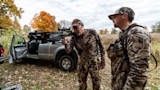
Hunt
Back 40 Episode 5: Doug Duren Shows Up for Pre-Rut

Fall has settled across the Back 40, and deer season is in full swing. With a few target bucks identified, I’ve invited Doug Duren to hunt the late October pre-rut. Both of us are disciples of conservation writer Aldo Leopold, who famously advocated for Americans to develop a new land ethic. Leopold...
Mark KenyonNov 26, 2019
Read MorePlay NowConversation
Save this episode