Popular searches
Articles
Series
Topics
Shop
Recipes
The MeatEater Podcast
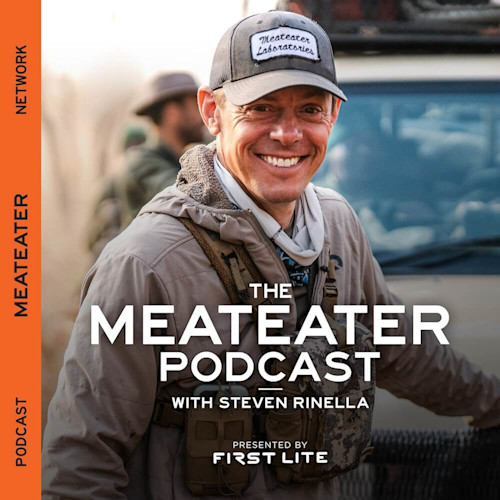
Ep. 075: Cloning Mammoths
Play Episode
1h35m
Steven Rinella talks with paleogeneticist Dr. Beth Shapiro, along with Janis Putelis of the MeatEater crew.
Subjects Discussed: U.C. Santa Cruz and the Ewok forest; ancient DNA and the assumptions it has added to our world; black footed ferrets; the romance versus the reality of de-extinction; the volatile speed of DNA decay; mammoth tusks and sheep piss; horn-core morphology; 400 pound kiwis and 9-foot Haast's eagles; volcanoes; big-assed bison with 6-foot horn spreads; biological species concept; the persnickety sage grouse; and more.
Shop MeatEater Merch
00:00:08
Speaker 1: This is me eat your podcast coming at you shirtless, severely, bug bitten and in my case, underwear listening podcast. You can't predict anything. Okay, we're recording in the you see Santa Cruz, which is which I found I've been. I've been in a lot of campuses in my life. I guess I was gonna say I haven't been on many, but I've been on a ton of them. This is the most gorgeous campus I've ever been to. It's pretty amazing. Did you happen to see any e walks on your way out? No, but I was. It was like, It's funny because driving in here, I was thinking I was about to form the sentence to Janice that this is like a Star Wars set, and then yeah, like interrupted my thought to comment about a Star Wars set quality. My youngest child calls it the e walk for us. We come up and he goes, it's the book forest. Yeah, it's like it's got to be good for your brain to be around these trees. I feel like I could be hopeful about that. Yeah, all right, No, I think it is. Next time students come up here saying if this is a good place for them to come to school, and I'll try to give him that line. These trees are good for your brain. And you're hearing the voice of Dr Beth Shapiro. Who is who deal? Okay, I don't let her tell you what she is who. I know her from the fact that she deals with what's called ancient d n A. And if you follow wildlife conservation and wildlife politics, I think that you will in your lifetime here a lot you'll hear that term ancient d n A, And in surrounding conversations around it, you'll hear that progressively more and more, to the point where when you grow old and die, it might just be like a fact of life that it may be transformed our understanding of That's really great. I'm really intrigued to hear you say that you know ancient DNA isn't isn't something that most people have heard of. And while my motivation for doing this is to be able to learn something that's useful for conservation by a diversity conservation, I think a lot of times people think of it as a way to learn about history, particularly human history. I'm most interested in animals, but I'm pleased to hear you say that you think there's a place for this, and yeah, well maybe let me let me let me all to that. Because let's say that that you have a technology, and you have a technology like the internal combustion engine. Now no one talks about the internal combustion engine, but they most definitely talk about the creations built around that, right, Okay, So um, instead of building it all up and talking about how important it's going to wind up being, we should talk about what it is and can you you're probably good at this by now, can you like sketch out what ancient DNA is the fields where it's being applied, okay, particular to wildlife, and what are some things that's taught us, What are some things, what are some areas where the work done around ancient DNA has has challenged or added to our assumptions about our world? All right, there's a there's a lot there, and even me a lot of room. But I think what I'll start with is probably something that we can come back to later on. So I'm going to start with a teaser about what I hope ancient DNA can do for wildlife conservations, and then we can turn back around and go to the beginning and talk more about ancient DNA and the origins of the field and how it came about and what else has been applied to. So imagine that you are trying to protect the last of a particular species um and this species is not doing well because the habitat that it lives in is disappearing. The climate is changing. Maybe it's a bit too warm for it, or maybe it's getting a bit cold. Maybe there's just something different about today's climate that is affecting this animal and the animals in particular trouble because its population has been small for a long time, and because it's been small for a long time, it's lost a lot of genetic diversity. A good example of this right now is the black footed ferret. So, the black footed ferret is a species that we thought was extinct, but then a population, the surviving population was discovered. It turned up on a rancher's doorstep and Matit Wyoming, Wyoming. Good. You know more about this than I do I know about the DNA. A guy, Yeah, guy in in Martz. A guy in Matitz, Wyoming. Um, As I understand it. One day, his dog is standing there with a black footed ferret that's amazing, and he went out to try to find what the animal was and it turned out that um, they were not in fact gone, They were not gone, so but they are in trouble. And this is a problem with black footed farets. So they were very small population for quite a long time, and they have almost no genetic diversity, and they're threatened in the wild today because while they can breathe them, there are nice captive breeding facilities that can produce lots of black footed farets. As soon as they've released them into the wild, they get sick and they die. Can can you just a whole because when you hear I think people often say, like no genetic diversity, But is there a way to put it? Is there a way to put it in human terms where you imagine is it as bad as if you only had one family? Yes, like you had a mother, father, two daughters, two sons, and they needed to recolonize and that was it. And then the daughters had to breed with their brothers or with their fathers literally like literally literally siblings breeding with siblings or extreme inbreeding, extreme inbreeding, and it's bad for the population. And and you know this population is doing okay, and that it can survive in captive environments where it's not exposed to any sort of allunges. But as soon as they're released into the wild, this inbreeding shows up as something that causes them to not be able to survive. It shows up behaviorally, it shows up behaviorally probably, but in the case of the blackfooted ferrets, it shows up because they have no resistance to the diseases that are actually circulating in a wild, so they're they're not able to survive as they get infected. So one of the most diverse parts of our genome of any species genome, is what's called the major histamine complex NHC. It creates the proteins and enzymes in our body that allow us to fight diseases. And we're very different. Everybody is very different. We have lots of different circulating alleles or variants in our population, and this is so that you know, the more diversity we have, the more um diversity of diseases that we are potentially able to fight off. And so it's good for a population and for an individual to have lots of diversity at these alleles, and these black footed ferrets and other species that go through these what's called population bottle X, where you have a very small population size for a long time and you lose a lot of your diversity, become um completely lacking in diversity at this really important part of the genome. So here's where I'm going with ancient DNA. Imagine that you could find a bone or some tissue from blackfooted ferrets that lived before they went through this population bottleneck. So these would have been individuals that are no longer alive. Maybe they lived a hundred years ago, maybe they lived thousands of years ago, but they have diversity in their genome that used to be there, that used to be able to help this population to fight disease. If we could get that information sequence their DNA, grind up a bit of that bone and extract the DNA sequences that are preserved in that bone, or in the case of blackfooted ferrets, that are actually preserved tissue specimens from individuals that lived a couple of decades ago that are in what's called the frozen Zoo in San Diego. So we can a couple of decades. A couple of decades ago in this case is enough. In other species, it depend some when your bottleneck was So for blackfooted ferrets, the bottleneck was relatively recently. For American buffalo the bottleneck was thirteen thousand years ago. So you would need older individuals to be able to see what the diversity in the past look like, because that's that's surprising to hear. But I know you're interested in bison. But so we can go back and we can sequence the DNA from these older individuals that have this diversity, learn what that diversity used to look like, and then use genome engineering technologies to cut and paste the no diversity region of individuals genomes today living individuals and paste in its place, uh synthetic version of the sequences that used to exist in that population. And in doing so, you have modified the genomes of a living organism in a way that gives them a fighting chance to survive. Today. You haven't brought back the extinct thing. You have used gene sequences that are extinct from the same species to bolster the immunity or potentially help this species to survive. And this this is one example, but this is where I really see the power and the potential of this sort of technology. The idea that we can look at DNA sequences in the past. Let's say we want to create an animal that's more able to survive somewhere cold or somewhere hot if we can identify an extinct species or a close relative that used to be alive, that has a gene sequence that might be able to cause, for example, the idea of bringing mammoths back to life. And you and you, I'll point out, you have a book how to Clone a Mammoth. Yes, so this is something that I've been thinking about a lot, and a sub doesn't A subtitle could be how to clone a mammoth? Um all the reasons why you might want to and might might not want to. I think the subtitle is actually this science of de extinction or something. But I have been suggested several several better subtitles. I think my favorite was, um, why cloning a mammoth? Or why how cloning a mammoth? Might be? No, I'm trying to think of what the best one was that was suggested with my friend of mine. It was like, if you have limited ethics, a billion dollars and a mammoth, that that opens it up. That always what I was trying to what I was trying to suggest about it. But but anyway, they I mean, we can talk about this later, but I'm going to use it as an example because I mean, it's very easy to think through. So if you have an elephant, this is something that's adapted to living in the tropics. Um. The tropics is not a place that's really conducive to elephants living right now. Let's say we wanted to create an elephant that is able to survive somewhere colder, not conducive for human reasons, for human reasons, because of because of rampant poaching development, yeah, influx of a like pastoral agriculturalists. Right. And and I should say right up front that I am not advocating creating mammoths that can live in the cold as an alternative to trying to fix the terrible situation that Asian elephants and African elephants are in right now. I think that this is just an alternate pathway that potentially should be followed at the same time as existing conservation efforts. UM, But it is something that I think we should consider. It's not possible to do it yet, but there's no reason to turn to say no to a technology before we know what's actually feasible because we're a little bit scared about the ecological and ethical consequences of of doing it. These are things that we need to think through very clearly. However, stepping away from the ethics and of and morality of this right now, and we will come back to this, but I'm just trying to explain the technology here. Let's say we can go and sequence the genome of a mammoth. Mammoths and Asian elephants are very closely related to each other. They shared a common ancestors sometime in the last five million years, so that really closely related to each other. You pointed out that there's, uh, there's a the difference between an Asian elephant in a wooly man ammoth is about are similar to the difference between humans and chimps. That's right, About one percent of the genome sequence is different. I told that to your friend and he said, uh, yeah, but that's the that's the percent that gave us Mozart. It's probably true, and that's the one percent that we're thinking about the difference between mammoths and elephants. If what we want to do is figure out what it is that made mammoths which is an elephant able to survive in the cold, and we want to be able to create an elephant that that is able to survive in a colder environment. If we could identify those important parts of mammoth that are different and then cut and paste those into an elephant genome, could we create not a mammoth, but an elephant that can live somewhere that's colder, that can eat this same diet, that can somehow protect itself from these cold winters, so that we can potentially find a place to put elephants while we are trying to solve the problems that are that are ongoing in there exists environment. Can I pause you there to have you explained a couple of things real quick. Um, you're saying, though, like just based on even with some future projecting, you're saying, we will not no matter how journalist frame news that comes from your world, we will not make a mammoth. We will not bring back a living, breathing mammoth. Is just a continuation of the mammoths that we're there. I think that this is something that is really important for people to understand, is that once a species is extinct, it is gone. This is not a solution to the extinction crisis. De extinction this is the term that people are using too to refer to bringing something that's extinct back to life. Is it's an idea that is shaped more by imagination than by reality. It's very romantic to think of the I think that you might be able to bring something back that's been gone for a long time. But there are people who the scientific reality is there are ones that try to do it, who kick around ideas it's gone, the ideas. If you dig into these ideas though, it's it's not. It's not that. It's not that you're going to bring something back that is identical to something that's gone. It's that you're going to be able to recreate components of those organisms. You could bring back traits. You could move genes from a mammoth into an elephant. Potentially, we don't know how to do that yet. We can move genes from mammoth sequences that we generate from bones into cells of elephants that are growing in petrie dishes and labs, but we can't then turn those cells into some hybrid between a mammoth and an elephant. So what would you need if you were going to create an exact replica of a species that's extinct, you would need it's a DNA sequence. We can do that. For for a mammoth, there are incredibly well preserved bones. You mean that map its entire genome. Yeah. So the way we do that in angel DNA kind of getting back to this, is we collect these bones. The best preserved bones are frozen in the Arctic soil called parmafrost, and mostly they've been de fleshed, probably by something like a lion or a big bear, and so the bone doesn't have any tissue on it. It It gets buried in the soil and rapidly frozen. And you spend time including this that you spend some you spend field seasons up actually like physically look at like actually looking for bones sticking out of the ground. Yep, I do. It's good fun too. I recommend it. Yeah. Um. But you can take these bones and you can take a chunk out of them with a drum will drill or something like that, and you grind it up into a fine powder and then you can dissolve away all the components that aren't the DNA, so the tissue and the actual bone. You dissolve it away, and then you can chemically and somatically pull out the DNA. So the DNA that we get out of those bones is not in good shape. This is one of the important things to remember. If I were to take a swab Q tip in the inside of my cheek or spit in the tube like you do when you send something off to one of these companies that sends you your DNA sequence, you can get really long fragments of DNA. Our genomes have about three billion nucleotides bases, these A, C, S, G S, and T s that make up the the sequence that has the genes that make the proteins that make us look and act the way we do. And we can get millions of them, strings of millions in a row from a living person, of living piece of tissue. But the bones that we get out of the Arctic, the DNA in them is chopped up into tiny fragments. And this happens first because once an organism dies, there are enzymes in their own body that chop up DNA. These exist because if you eat a piece of meat, where you eat a leaf of a plant, you don't want that DNA to stay really big and long and powerful. In your body, you've get enzymes that chew that up and make it go away, and that happens to your own tissue when cells burst, When cells die, and life chops up your DNA so that you can get rid of it. That happens post mortem as well. And then there are things like bacteria and fung gui that will get into these bones and the tissue remains when they're decaying, and they will also chop up that DNA. They consume all this kind of carbon material for food. And then the sun. You know, you go outside and you're supposed to wear sun block, and that's because the ultra violet radiation will hit your cells and break your DNA. Now, when you're alive, you have proof reading enzymes that will go along and fix those those bits of damage that the UVY radiation causes so that you don't get skin cancer every time you walk outside. But once you're dead, those proofitting enzymes are not doing their job anymore, and the UV radiation and other sorts of radiation will continue to hit the cells and break down the DNA, so that the end result there is that pretty soon after death, the DNA is no longer in long strands. It's in really short, chopped up strands, and after time they just getting get smaller and smaller and smaller and small. And you say pretty soon after death, the first pretty soon means like within years. First pretty soon means within minutes, and the second pretty soon we're talking tens of thousands of years there. It depends on environment. So if something were to die and sit in the sun in Arizona today it's supposed to be hunter twenty degrees in Arizona, probably we would get no good recoverable DNA tomorrow, right, Um, but I don't all that because stuff decase. Also, you'll have really rapid microbial activity when it's things are rotting in the sun like that. So maybe you could get DNA tomorrow is probably an exaggeration, but certainly within a couple of days. It would be very hard to get recover good quality DNA from these things. If something dies, it's that volatile. Yeah, Well, it depends on microbial activity, so and also the sun and temperature. So things decay faster when it's hot, and when the temperature fluctuates, a lot of things decay. If you think about ideal temperatures for stuff to break stuff down. I mean when you want to when you're cooking something, you want to get it above a particular temperature, and that's not the temperature of like your normal ambient temperature and Phoenix, Arizona today, right, it's so you don't the all the microbes will just multiply at some point, can cause a lot of microbial life forms, and you get sick when you eat stuff. So you eat I wanted to stay cold and frozen, or you wanted to be really hot, like cooked. And if it's really hot and cooked, you're destroying all the DNA, all the living material. But if it's cold and frozen, then you're slowing down the decay, just like sticking your steak in the freezer so that it lasts for an extra couple of In those cases, like when you when you find a well preserved mammoth coming out of the permafrost, it probably so that thing probably died in sub freezing conditions. Yes, yes, uh maybe, I mean when when these animals died during the summer. In the summer in the Arctic, it can be you know, sixty seventy degrees during the day, but those ones and those ones could still potentially be preserved. Could be because the the sediment, the dirt in the ground is very cold, and if it gets buried right away in volcanic dust or whatever, then these the remains of these animals will will preserve for a long time. The oldest DNA that we've ever recovered was from a bone that we found in permafrost in the Yukon territory, and it was associated with a volcanic ash layer that we think is around seven hundred thousand years old. So we're estimating that that is the age of this horse bone. It's also the oldest frozen dirt that anyone has ever known. So that horse bone, that horse lived around seven hundred thousand years ago. It died, its bones were immediately buried and frozen, and we're kept in that freezer, that dirt freezer, for the last seven hundred thousand years, and that's the only reason we were able to recover DNA from that bone. And the DNA was in terrible condition. The longest fragments were thirty or forty letters long. Remember I said, so that's where you're going saying, we have them that are a million, millions, millions or millions or million long millions. Yes, we can do millions, but because you said three billion total. Yeah, so it depends you can get very large fragments of DNA. How large this depends on how good you are at extracting what's called high molecular weight DNA, and there are hits that you can purchase in different approaches you can use to get larger and larger fragments. Were limited by technology in living things rather than by the actual size of the DNA, whereas an ancient DNA you're limited by the actual size of the surviving fragments of DNA. Our technology would allow us to get larger fragments if they existed, they just don't. And why is this important? Why are we having such a long conversation about this. It's important because an elephant genome, a mammoth genome is about four billion letters long, and if we have thirty letter fragments, we it's kind of like having a trillion zillion piece puzzle and we don't know what a mammoth genome actually looks like. So we're taking these tiny little puzzle pieces and we're trying to figure out where in the elephant genome they go. So you've got your massive trillion piece puzzle, and the box top is actually not the picture of the puzzle that you're trying to put together. Some close but not exactly the right picture. And there's another problem, and that is that, remember I said that there were all these bacteria and fungui and things that were eating up the DNA. Their DNA is also in that bone. So when you extract DNA from these mammoth bones, you get loads of tiny pieces of mammoth DNA. Maybe about one to four percent of what you get is tiny pieces of mammoth DNA. The rest of it is tiny pieces of other types of DNA, and you don't know which is which. So you've got chillion piece puzzle that actually includes the pieces for about a hundred different puzzles, and you've got the wrong box top, right. Can you can you? Can you? When you talk about contaminants, can you include the anecdote about sheep contaminants in MOA bones? So yeah, so this wasn't MOA bones I think that you're talking about. This was from we were trying to get DNA directly from dirt in New Zealand. And so it is true that DNA is preserved in sentiment columns. This is really cool and it's something that people are just starting to focus on. I think that it's going to be really neat way of trying to figure out where stuff lives. You know, we there are species that are rare or whose ranges we don't know. It turns out you can just go out and you can get a bit of soil and you can extract DNA from that soil and you can ask, is this incredibly rare small mammal ever found in this location? And if their DNA is there? The answer is yes. So we wanted to know how far back in time we could do this, So we went to different caves in New Zealand where there are sandy environments and DNA will actually percolate through sands depending on what the sources of DNA is. And we knew that there should not be moa and sheep together, right because the moa went extinct before sheep were introduced, And means it like four pound birds that used to live in New Zealand and we're extrapated by humans, right or not not extra but driven to extinction by human Yes, like big enormous kisy. Yes, they were impressive birds, and they were preyed upon by an even more impressive bird. I digress here, but because this is an opportunity to talk about one of my favorite extinct species, Harper gourns the hosts eagle, the giant eagle that would swoop down and pick up these massive moa. So how big was the eagle? I can't say. I was top of my head. But somebody who has a computer in front of them can look this up on and figure it out right now, because it's you have to give me the here. I'll turn my phone here, I'll turn my phone A A st you need a connection, I can do it. H A s T alright, so continue, we'll get out of that. We'll find it. Yeah, anyway, so this is an amazing, amazing animal. Anyway, both of these things went extinct because you know, if you're a giant eagle and you thrive on eating these giant birds, and the the giant birds go extinct, and you're probably going to go extinct too. They went extinct several hundred years past, and sheep were introduced into New Zealand. So our idea was, if DNA is not moving up and down in these caves, we should find MOA DNA and then a layer where there's nothing, and then a layer where there's sheep dna. But in act, what we found was that there was sheep DNA intermingled with the MOA DNA. And this is probably because there were so many sheep that were wandering around and urinating, and of course the urine is a nice source of DNA and this was percolating through this sandy soil that the sheep DNA was getting down into the MOA DNA. And all this tells us is that in some soil environments you don't have this nice layering effect, and you have to really archaeologists always talk about and it exists in some places, for example in and the Arctic, where I said, you know, we found this horse bone and it associated with this volcanic eruption. You can see these volcanic ash layers, they call them tephra, and they go cleanly across this permafrost dirt. And you might not know anything about whether the layering is good below it or the layering is good above it, but if you can see this nice clean layer of thick ash, you know that there's not stuff moving above and below that ash and if we find a bone below it, we know it must be older. The bone must be older than that eruption. And if we find a bone above it, we know that it must be younger. So the bone doesn't migrate through the line. The bone won't move. You're saying that that's all stuff that ash was coming in from, like eruptions in the illusions. Uh, there are a couple of different volcanic um mountain chains that are up there that cause like the logo, there are a couple of different mountain chains up there that will erupt at different time points. And you can actually tell by the chemical composition of the ash which mountain it came from, and you can link eruptions together that you see the ash from in different places, and you can kind of learn something about the geologic history by studying these ash. So that's other cool thing that you can do when you're out there working in the tundra. Yeah, it's fascinating, like like little time stamps. Right, So where were we? We were talking about piecing together the mammoth genome real quick though, just everybody knows that how do you pronounce it? Host? Twenty six pounds. That's an average between the male and the female and uh ten ft to twelve foot wingspan. That's a big eagle. Yeah, twelve fan and its closest living relative, I believe, at least it was a while ago when we studied this UM when I was a grad student. Is something called the booted eagle from Australia, which is a tiny little thing. I think whenever we figure out that there these these enormous phenotypic differences between things that are really closely related to each other, it just astounds me. The power of evolution and genetic variation, and it has a lot to do right with um. Certain groups get to islands and they seem to get huge islands, they seem to get teeny And there's another And I like to talk about bison. So do you know about bison ladder frons um. This is an enormous bison, much bigger than the other bison that lived in North America at the time. We just were able to get DNA from a bison ladder frons that was found in snowmass Colorado, at this site that was found recently and it's about a hundred and twenty thousand years old. This particular remain based on the geological setting, and we were also able to get DNA from a step bison. This is the bison that lived at the same time in Alaska that was much smaller, about half the size, if not smaller, from bison ladder fronds, and they are the same yoetically are you familiar with Do you ever read the work of Valarious Geistes? Are you with his idea about it? Was that him that came up with the founding effect. The founder effect, we're like one of species colonized as a new era area, okay, and they have like unfettered like like they're in a non competitive environment that they will invest for a while. They invest a lot of energy into elaborate sexual display and have an experience like periods of very high fecundity and kind of have a good old days, and then things kind of catch up with themselves and they shrink. I think that he wrote about ladder Franz as being that it was colonizing areas in the wake of glaciers. Yeah, and got huge. That idea. Is that idea sound? You know? With bison, there's so many competing ideas about the history of these guys. You know, at one point there were more than fifty different name species of bison that supposedly lived in North America during the late licens scene, and I think probably there there was actually only one. It was just changing all the time depending on where it was, and there was a competition between paleontologists to name new species. This is a time where people would find these partial horn cores and they would turn them in different directions and they would measure the width and the length of the horn cores, which is a terrible marker because these things are they're manipulated by depending on what fights you get into, or how much you eat when you're growing up, et cetera. This is not a paleontologically equivocal trade. This is not something that you can say, ah, that definitely means this species or that species. And so people were naming new species right and left based on not very much information, but the genetic data that we've started to get from these bison bones. Um. We think the oldest bison in North America are around hundred and sixty years old. And that's when they showed up. That's when they showed up, came across the bearing strait um. And this is a paper that was published really recently that I worked on with a colleague collaborative of mine from University of Alberda, and it was kicked up in the New York Times. Yeah, and I wrote you an email, so I want to like, see we got We're actually having two discussions right now both. I want to come back to these animals. Okay, I want to come back to bison because just remember this because you hear people talk about and this, because we're gonna talk about extinction. You hear people say, like, an extinct form, Okay, the bison ladd of France, which had a six ft horn tips tip, huge horns, so six ft from tip to tip. People be like, it's an extinct one, but it's not. Nope, there's still bison around. It's just like it just as different than what we have now. But people used to dig this stuff up. And there's a there's one on display in in North Dakota that came out of the Missouri River that wants to look at a really nice skull and um, people would dig it up and they'd be like, well that's all kind that's not here anymore. Yeah, you know it's you know, this is a this is a tough thing. Right, I mean, and this is a I think it's an important question to people who care about wildlife. It's an important questions people who care about conservation is how do we define the thing that is worth protecting, the thing that we don't want to go extinct? Do we define it as a species, do we define it as a population? Do we find it as something that looks different from other things? Because a lot of fronts looked decidedly different from the step bison that lived in Alaska, which also looked different than the bison bison. The forms that exist today, Um, they're a continuum. They certainly are closely related to each other, but they aren't. They don't exist anymore. But the same thing could be said for you know, you look at wolf populations that are alive to day, and they are sometimes phenotypically or behaviorally different from each other, but they're all wolves. So where do you draw the line? Where do you decide what is the thing that you want to protect? And and traditionally people think about species, but the name species is something that is kind of arbitrary. Is something that we decided on and who is well, it depends on who's thinking about it and who's asking the question, and what the point of asking the question is. Um. There's a concept called the biological species concept, which says that species are defined as reproductively isolated units. So two things that can't make or if they do, they don't produce offspring, or if they do produce offspring, those offspring are not viable or also can't produce offering themselves. So donkeys and mules are distinct species. They can produce. Sorry, sorry, donkeys and horses are distinct species. They can produce offspring, but that offspring can't reproduce, So the biological species concept says they're different. But meanwhile, that definition would mean that all of are like mountain cariboo, woodland caribou, bar and ground caribou reindeer from Eurasia are just one species, and it would get rid of our discussions about the Mexican gray wolf and the gray wolf proper. But something I think a little bit closer to heart, right, it would say that humans and Neanderthals are the same species, because we were clearly different, behaviorally, physically different from each other. But after our ancestors moved out of Africa, they met with Neanderthals and they hybridized with them. And because of that, most of us have some component of Neanderthal DNA in our genomes. So the biological species concept would call humans and Neanderthals the same species. They would also call brown bears and polar bears the same species, despite that these two animals are behaviorally and physically and ecologically quite different from each other. Yeah, because you can see people would be like very resistant to the idea because of like, hold on right, and it only eats seals, and it swims, and it has different dentition and it doesn't hibernate, whereas the other one is incredibly different. But they mate and they produce offspring, and they do so in zoos, and they do so in nature viable viable offspring. All the bears on Alaska's Abc Islands are hybrids, all of them. They have up to eight percent polar bear ancestry. And that's because after the last ice Age, we believe that the ABC Islands were actually colonized, were actually just a home for polar bears, and then as the climate warmed up, brown bear boys because boys leave, and brown bears moved from the Alaska mainland onto the Abc Islands, where they met this population of polar bears and hybridized with them, and gradually this population was converted back to being brown bear like, more brown bear like, because brown bears kept coming over and mating with these these bears that lived there, but mitochondrially, which is only inherited from your mom. This is part of DNA and everyone of yourselves that only comes from your mom. They are polar bears. They are all polar bears with their mitochondrial DNA really and their X chromosomes, which come more from mom because Dad only has one copy of the X. The X chromosome has more polar bear DNA on it than the rest of their genome, which again is evidence that their mom's mom's mom's mom's mom, at some point in the past, probably twelve to fifteen thousand years ago, was a polar bear. And and that then jives what you said earlier that it was like colonizing males, which kind of fits in with just general brown bear behavior like well, like a lot of those, like a lot of big predators where when they turn up in weird places, not always, but so often it's a male turning up in a weird place. Yeah, well, many in many animals, like I mean mountain lions which we have out here, do this to The males are the ones that disperse. They're the ones that go out to try to find new territory. And so that that's what's going on in brown bears, is that juvenile, juvenile males move outside, whereas the females tend to stay with their mom. Is called maternal philopatrie. But you know that. But uh um, that's common in a lot of especially I think large predatory species. But okay, now I'm gonna back you way up to where you are. I don't even remember that you're finding little instead of the millions long DNA strands, you're finding little thirties and forties. And a problem with those little thirties and forties is that there in shitty condition, and their and finding them, figuring out where they go, how to line them, and they're corrupted because of part of the trickery of finding them is that they're corrupted with so much other stuff, right, And also they're corrupted themselves because all of these things like UVY radiation beating down on the DNA will actually cause the molecules to change, to become damaged in their own way. So ancient DNA has its own kind of damage. It's broken into tiny fragments, and it's mixed up with all sorts of other contaminants. And your job as an ancient DNA scientist is to take that little thirty and figure out where on that big four bill in genome that isn't actually the same genome it goes, and then to gradually piece this puzzle together. And we do that using computers. Um, you know, lots of DNA sequencing and lots of computers. Gradually pieces together and come up with what we believe the mammoth genome looked like. And you can only move it relative to other pieces you found. Yeah, so if you find one isolated piece, if you picture on a number line like one to a hundred, you have no idea where to place it until you find some other thing. Right, Well, what you have is a number line. Let's say you have a number line that's one to one, and you have a little thirty piece, and your thirty piece says so you can kind of scan along that one to one hundred to figure out where it goes, and you'll find the matching sequence. So let's say that number line is your elephant genome, and then you've got your little thirty to four, your little thirty base pair piece. You can figure out where it goes. Now, mammoths and elephants are kind of different from each other, so there'll be some places where it doesn't match up exactly. But if it's long enough, you can figure out the best ice in that number line where your tiny little thing goes, because there'll be some common ground. So there are lots of computer algorithms that people used to do that, and heuristic searching approaches that people used to do that, and and this is this is possible? And how apparent is it? What that piece? What function that things served for the organism function? Now this is something you're getting into another whole realm of issue here. We hadn't quite gotten there yet, but we can totally get there. So this is this is a great question. Um, we have very little idea what parts of genomes do. We have algorithms that help us to find genes. Genes are not the only thing that are in our genomes. There's also lots of noncoding stuff. There's positional stuff. There's lots of viruses that have gotten in there and made copies of themselves and moved around. There are repeat elements. There are all these kind of things called like allue elements and stuff like that. There's just our genomes are chock full of other stuff that's not genes, and that other stuff might be portant and it might not. Write. This is true for every animal, every organism that's out there. So today we have people are saying we have complete genome sequences, we have genome sequences available for lots of different species. Um, it's true, we have genome sequences available for lots of different species, but there are very few species that we know very much about, and those that we do know a lot about tend to be the ones that we study a lot. So things like humans because we care a lot about humans, and lab organisms like mice and rats and Drosophila fruit flies, things that people use to manipulate experimentally in the lab, other things. Any wildlife. You pick a wildlife that isn't a domestic, agriculturally important species we know very little about, and we guess, we guess the function. So we find a gene that we believe is the same gene as something that we know that if you turn off in a mouse changes the color of their eyes. I'm just making that up right, And then we can say, ah ha, that gene in the mammoth was probably associated with something like that. We have no idea, right really, but we have some idea. That's kind of unfair. We have some we've educated guesses about the functions of genes based on learning something about functions of genes in a very different animal that was living in a lab. That makes sense, okay. So for example, if we want to know what genes are associated with cold tolerance in an elephant, we might look at what people have written published about um cold tolerance or subcutaneous fat or hair development or things like that in mice or in humans, and then say, hmm, what's the same gene that we found in this mammoth genomesequence. That's probably the function of that gene. So we have an educated guess, but we don't know for sure. Did when when did elephants? Were they like they were in equatorial areas like pre mammoth and the mammoth was like a north word. Yes, it wasn't the other way around, right, So another the thing that we can do to figure out so he was like, they were figuring, like Asian elephants existed, No, No, as mammoths for figuring out how to deal with the cold. Yes, so they had a common ancestor that's probably tropically adapted, right, and then they dive. That common ancestor diverged into elephants and mammoths Asian elephants in mammos. Yeah, it's kind of like you know, um, we didn't evolve from chimpanzees, and chimpanzees didn't evolve from us. The two species evolved from a common ancestor that was neither a chimpanzee nor a human. Right. The same thing is true for Asian elephants in mammoth when people say we had come from monkeys, and I was like, I don't know if anybody is saying you came from a monkey, well, great ape, some sort of great ape. Yes, and prior to that monkeys or maybe they diverged. Anyway, I digress into parts of human evolutionary history that I'm not confident. Yeah, well, yeah, don't do that. There's enough you are confident with. We don't need to do what you're not confident with. I'm not saying I'm not confident that we came from great apes. We certainly evolved from great apes. Anyway, Um, where was I function mammoths? Yeah, you were talking about finding things that would um allow cold tolerance and understanding where those things are, and I interrupt you to make sure that that, uh, mammoths moved northwards. That's right. So another way that we can try to identify things that are potentially important to making a mammoth looking at like a mammoth instead of like the common ancestor of the Asian elephant is to use evolution to know what to learn to to use what we know about evolution. So we have um African elephant genome sequence, which we know diverged prior to the divergence between Asian elephants and mammoths, and so we kind of know what that ancestor of Asian elephants and mammoths looked like. And then we can use the genome sequences and what we know about how evolution works to identify the mutations that happened just along the mammoth lineage, and we can think, maybe those are some of the things that are really important to making a mammoth looking act like a mammoth. You'ring to the finding the cold tolerance stuff, right, Well, how we how we find it? Yeah? I mean you just think about the way you can look along these lineages, these evolutionary lineages, and ask what things are fixed, what things are all the same in mammoth. So we know that there are a lot of places in our genomes where you and I will differ, and those are probably not fundamentally important to making us human. If they were, we wouldn't differ. We would be the same as each other, but different from our closest living relative, chimpanzee. So that's similar to what we're doing with mammoths. If we sequence a whole bunch of mammoths, we can look and see where there's variation in mammoths and say that's probably not that important to making a mammoth look and act like a mammoth. But we can also find places where mammoths are all the same as each other, but also all different from all elephants, and we can say, ah ha, there is likely to be some evolutionary difference, some change that happened along that lineage to making mammoths look and act like mammoths rather than like the ancestral elephant that they were, and we can then target those as something that we might need to change if we were going to turn an elephant into a mammoth. That section of the that one one letter. Oh, that's a one letter part, one letter, one letter. Yeah, so that's the thing you know, or you're talking about. You know, you have four billion bases that are different between asian elephant and a wooly mammoth and they're four it, no, sorry, four billion basis total in a wooly mammoth genome and about one and a half million differences, right, and they're going to be spread randomly throughout the genome because mutations happen randomly, and only some of them are going to be really important to making a mammoth mammoth and an elephant an elephant. Right, So the goal is to use what we know about where genes are and the way evolution works to try to figure out which of those million and a half differences really are fundamentally important. And if we're only interested in in creating specific traits or moving specific mammoth like traits into elephants, we got to figure out somehow which of those differences that we've decided are important differences making mammoths different are actually important differences in making them different in that very specific way that we're interested in them being different, you know, in the case of cold tolerance, which would further limit the number of changes that you would have to make if you were going to make an elephant that had that particular trait. But this is hard. This is something that you know, we we we kind of have some idea about how to do, but we don't know enough about the way genomes function, or the way mammoth genome in particular functions, to to know exactly what the right what the right decision would be. So what what year was it when there was the announcement that they had mapped the human genome? That was two thousand and one, And the person who led that the public effort for the Human Genome Consortium is in that building right there behind you through the treats. What what percent of the mamoth genome is complete? Uh? Well, can I answer the question about the human genome? First? Two thousand and one we said we had mapped the human genome? About the human genome is known? Now? Oh yeah, Now sixteen years later, we still don't have the whole thing. Oh well, why was it? Well, you know, to be fair, well, no, there, I mean there are The genome is a big and complicated place, right and there are parts of our genome towards the centromeres the middle of the genome, and toward the end of the telomeres that are just made up of these really um tightly wrapped repeat sequences that there is no existing sequencing technology that we can get through. Um. There's no way to sequence through these things right now. There's no way to do it. And in fact, a big challenge that genome scientists are often thinking about it's who is going to actually finish the complete human genome? This would be a really cool thing to be able to do. To be fair, we know most of the genome that actually has genes in it that's doing stuff, and the parts that we don't know are is very small compared to that. But we don't know all of it yet, and we certainly don't know the entire genome sequence for something that is not human, where we haven't spent billions and billions and billions to tell me that you're almost there on the mammoth. No, and a harder thing about something like a mammoth. There's something that's something that's extinct. Is that, Remember I said, we don't we don't have long sequences. So the only way to get through these repeat fragments for these regions of the genome that are just the same thing, repeated over and over and over and over again is to be able to sequence these long strands of DNA. We're never going to have that for something that's extinct, and so we're always going to have to take these broken fragments and map them to an existing genome sequence. We can't do what's called a DiNovo genome assembly, where you don't have anything, which is what impressively these teams managed to do for the human genome. We had no map, we had no puzzle, top right. They just did it. They took these long fragments and used sophisticated computer algorithms to piece these these long fragments together. And the more data they get, so the more they have to realize they got some parts wrong. They can rearrange it and and and try to figure out what the real sequence is. It's very hard to put together these denovo genomes where all you have is just good quality tissue and you don't want to use any map. The reason you don't want to use any map is that the map might be wrong, and this is particularly important when something is extinct and doesn't have any close relatives. Um think, for example, of the moa, where the closest living relative is the tinamou, and they diverged. I can't remember exactly how many, but more than thirty million years of between these two lineages, so there's a lot of opportunity for parts of the genome to move around, for chromosomes to break and move around. Probably doesn't happen so much in birds, but in in mammals we know that chromosomes rearrange all the time. And if your map your living thing, the tinamou is really different from the ancient sequence ancient genome you're trying to map, where you only have your thirties and forties, there might be big chunks the genome that you just never get. They'll never recover, no matter how many bones are because you don't have those long fragments, which is what you would need to be able to extend off the ends of these sequences. So this is a hard thing for ancient genomics and for many species. We might be forever restricted to just being able to use this stuff that doesn't change so quickly, and maybe this is a bad thing, right right, And this goes back to um whether you can bring back a species that's extinct If the most important parts are the most divergent parts, and therefore the parts that you actually can't sequence or put together, how are you ever going to know what they are? So if if a fellow wanted to go make a mammoth, right, okay, all right, like and there are some of those fellas, right, Well, that's the thing you talked about is there was someone who was hopeful. I don't want to dwell on things that just aren't going to happen, But just as an example, there was someone who is hopeful, um that you talked about, who would find semen. Right, So, there are two teams that are out there that are looking either for semen or for cells, just frozen cells that are in good condition, and they want to clone a mammoth. This is most common word that you hear when you think about Jurassic Park type clone of mammoth. Yeah. Clone. Well, you see, even bringing up Jurassic Park kind of calls all this into questions because then you got to talk about how many journalists have asked you to explain why amber it's not actually good for DNA. How many journalists are there. It's a good question, though, I mean to be fair. This is this is what people think about ancient DNA is is, Oh, look we can find things preserved and amber. We're gonna able to bring dinosaurs back to life. Medium It makes sense. It does. It does. When you see a piece of amber, you see a fly in it, you're like, well of And it was inspired by reality. So Michael Crichton, when he wrote his book actually wrote in the acknowledgments UM that he was grateful to the Extinct Species Working Group at you see Berkeley Allen Will because they were talking about ancient DNA and that was what inspired him. And then his movie book inspired people to see if they could actually recover DNA from insights in amber, and people published papers saying that they had um Fortunately or unfortunately, depending on who you are and how you feel about these things. There is this ubiquitous, uh source of DNA that's everywhere, that gets into everything, and I could extract DNA from anything and get some DNA. That doesn't mean that it's DNA from that thing. Amber is very porous, it's formed a very hot environment. It turns out that it is a terrible, terrible preserver for DNA, which is very sad that there's these beautiful skeletons or exo skeletons of things that you see in amber, but there isn't any DNA that is from those animals that's in there. There was a a group of scientists in in London at the Natural Museum in London in the late nineties who tried to replicate some of these experiments by going into their collection, and they were They recovered pieces of amber and copal. Copal is the recent precursor to amble. Amber. First it's copeal and then it hardens and becomes amber. And these were only decades old. We know we can recover decade old DNA. And some of these things had bugs in them and some of them didn't. They extracted DNA from all of these different pieces of amber, saying, if it doesn't have an insect, we shouldn't be able to get DNA. If it does, we should be able to get DNA. And therefore this is some sort of test of the hypothesis of whether amber preserves DNA, and they were able to recover DNA from their pieces of copal and amber, but there was no correlation between their ability to recover DNA and whether there were insects there. And it turns out they were just recovering insect DNA because there's insect DNA everywhere. I mean, I could take a swab off this tabletop here and get insect DNA off of it, and probably your DNA as well, because you've been sitting here and breathing on the table for a while. That doesn't mean it's already there. Yes, yes, So I could go to the toy store and get a dinosaur and extract DNA and show that I have recovered dinosaur DNA, but really it's just going to be chopped up pieces of human and cockroach DNA, right, you know. So the early days of ancient DNA were filled with some of these spectacular claims, none of which have been able to be shown to be true. The oldest DNA that we've recovered as reliable is that seven hundred thousand year old horse bone from the Arctic because it was frozen, right, and that's why it was recovered. Um Dinosaurs went extinct sixty five million years ago. There is no frozen dirt that's sixty five million years old. There is no DNA and dinosaurs and talk about the um. You don't need to dwell on it. But the sperm path to a mammoth cloning. Uh, let's do cells and then sperm. Right, So the idea with sperm, I guess I'll start with sperm, would be that you could find frozen sperm and then you could you could get an elephant egg cell and you could use it to fertilize the elephant egg cell, so you would have something that's half mammoth half elephant. Um like you surrogate, surrogate, you'd like impregnate a female Asian elephant with this frozen sperm and get a half mammoth, and then do it again and get a three quarter mammoth's And they're fired up about that because I think you should explained that. And you get in your book that they found that old frozen sperm is still viable. That gives him whole We're not old old right, right, but just the term you guys use old old, it's like alternative old. Yeah. Uh no, So when an animal dies and I think I've already said this. The DNA and IT cell starts to degrade immediately, and the cells started to grade immediately. So this requires that you were able to be fine, you would able you would be able to find frozen viable cells or frozen viables. Oh, I got you, So the same problem. I hadn't really put that together, right, Yeah, the sperm has Yeah, I got you. It's destroyed everywhere, and so it had to be that sperm was It's like sperms that some special holders, so that makes it a special holder. Actually probably would be the testicles, right, And this is what I read when I was doing my research for this, is that because the testicles were outside of the body, they would get frozen faster and that would protect the sperm. It turns out they're not outside of the body in a mammoth, which is probably you know, for good reason, right if you think about the environment where they lived, So yeah, they're not then no, it's not a viable pathway. That was the interesting thing I heard about mammoth um. You talk about the cold tolerance for but a thing that Asian and African elephants have big ears, and mammoths had small ears because imagine that thin flat Yeah, what would happen to it in cold temperatures? Right? And the elephants have big ears for heat this patient, right, so um, yeah, you don't want to dissipate your heat if you're living at forty below. Okay, So now that I understand the sperm thing that it is, it's it's just like the cell thing. Yeah. And and so when when people say cloning cloning, what what you really mean? And we say this cloning dinosaurs and dinosaur bar you say cloning mammoths, What you really mean when you say cloning is an actual scientific process where you take a cell and that's already a particular type of cell, like a skin cell or Okay, so here we go. Who's the most famous clone? Dolly, Dolly the sheep. That's so, Dolly was a clone and she was a clone of a mammary cell from another female sheep. Right, So what you do in cloning is you take an egg cell that is viable, ripe egg cell, and you suck out the nucleus, the stuff that has the nuclear DNA, the all the stuff that is going to code for the genes that make the animal look and act like it does that normally, in an egg cell would be fertilized by sperm that would make everything diploid ut of Mom's DNA and Dad's DNA, and then that would um cause this process of differentiation. Because that fertilized cell is is a stem cell. It has the it's called tote potent. It has the capacity to become every type of cell that's necessary to create an organism. Um it doesn't yet have any instructions that say, be heart cell, be a memory cell, be a lung cell, but it will begin to divide and differentiate, and as it does, those cells will gradually get the instructions that are necessary to be different types of cells. You don't need the same genes turned on to be a heart cell as you do to be a liver cell, for example. So this process of differentiation just turns genes on and off as necessary to create different functions. So the idea of cloning is that you have a cell that's already way down that path. It already has exactly the genes turned on and off to be that particular type of cell. In Golly's case, it was a mamory cell. And you have to somehow trick it into forgetting those instructions and resetting itself into one of those types of cells that can begin this process of dividing and differentiation. This reprogramming is really important in cloning. So you take that egg cell and there's some magic in that egg cell, and that is that the proteins that are in that egg cell can cause that reprogramming to happen. So you take the excel, suck out of the nucleus, and then you you take this tissue cell that you want to clone, and you stress it out. You starve it if nutrients and put it in a state where super stressed, right, and then you can suck the nucleus out of that cell, injected into the egg cell, zap it with a bit of electricity. Some magic happens that causes the proteins in that egg cell to reset that cell, causing it to forget all the instructions to be a memory cell and start that process of dividing and differentiating. That, it turns out, is really hard and still is really inefficient. This if the cell is not entirely reprogrammed, reset it completely to scratch, then it won't work. It won't divide correctly. It'll go wrong at some point, and that's why cloning of animals remains um really inefficient. It's gotten better than than it was in Dolly's time, but it still isn't you know. It's not like every time you do it it works. You need, though, is for that cell, that tissue cell to be alive. There can't be anything wrong with it. If there's anything wrong with it, miracle of life alive, like is able to divide in a in a dish, it has to be, you know. It can't be broken, It can't be turned off. The DNA can't be chopped up. It has to be capable of resetting itself. And as we've already established, once an animal dies, all of its cells start to break up and die, the enzymes chop up the DNA, it can't replicate itself anymore. And because that is true, one will never find a living mammoth cell. The most recently live mammoths were live years ago. They have no living cells remaining, and end of story, one will never be able to clone a mammoth, really sorry, or dinosaur. And that's that's a particular particularly bold statement comes from someone in your position. It it's a statement I've been making for very but just but okay, I've seen the deal, the operating You live and operate in the world of the impossible, do I? Yes? Because things that things that would have been regarded things that a decade ago or two decades ago would have been regarded as No, that won't happen, right, Okay, how do you know that you're not? But I don't. I don't doubt that you are. But you're not worried about becoming the laughing stock. You know what, if somebody finds a living mammoth cell, it will be so freaking exciting that I won't mind being a laughing stock. The chances that'll outweigh your embarrassment. Exactly is that the likelihood of this happening is very, very very close to zero, so close to zero that I'm willing to say it's never going to happen. And is that is that? Um? I don't want dwell, But is that like sort of like the consensus among your peers. Yes, So if that's the case, let's move on to what might work. Well, this is why we get to moving genes, so we know that we can come up with these DNA sequences if we can identify using a computer which parts of those genomes are important to making something look an act like mammoth. Then we can take an elephant cell that is alive, right, that's living in a dish, that's able to replicate itself and turn into two cells whatever from an Asian elephant, and we can then cut and paste using geno mediting technologies, the elephant DNA sequences can be cut out and paste into their place the parts of the mammoth genome sequence that are there. So then you have a living cell as an elephant cell that has some mammoth DNA sequences in it, right, Yeah, but that is not the same thing as having a mammoth cell. No, yeah, I'm with you, right, And what are the things that you would be Let's just make let's assume for a menthy that this is already and you could do it. Can we can we finish why that cell is not ever going to be the exact same thing as a mamothy, because this was the question you asked me at the very beginning, and we kind of gone down a lot of different rabbit holes here. But let's see. So let's say you somehow managed to identify all the places where mamoths and elephants are different. And you managed to make all of those changes, cut and paste one and a half million different letters in that cell that's growing in additional lab So now you have a genome sequence that looks, as far as you can tell, like a mammoth genome sequence. Right, Why wouldn't that turn into a mammoth? Well, the main reason is that we are more. Every organism is more than the sequence of the A, C, S, G S, and T s that make up our d N A. That um. There are things that happened during development that change the way our genes expressed. Our mom's diet, whether she gets sick, what she's exposed to, how stressed she is, et cetera. All those things will change the way our genes are expressing. Some of the developmental things that happen in utero are caused by hormonal changes in mom, which are coded for by her genome, which is an elephant at this point, right. And then the animal is born and it consumes an elephants diet, and it's taught how to behave like an elephant, and it has a gut microbes that are like an elephant, and we're just beginning to learn how important the things that live in our gut are to a lot of animals I know do this, but they'll eat like fegal matter of the mother to colonize their guts what it needs. That's right. And so those organisms living in its gut are going to be expressing different chemicals and etcetera, and those are going to affect the way the genes are expressed. And so this thing that is born might have mammoth DNA, but it's not going to be a identical to a mammoth that used to be alive, and that's because mammoths aren't here anymore. You would need a family of mammoths and a mammoth habitat and and mammoth gut microbes and etcetera if you were going to make something that's identical to a mammoth, which is why it can't happen. But I think the people who are proponents of using this sort of technology as a way of preserving by a diversity or or replacing parts of ecosystems that are missing because of an extinction don't really care that you're not creating something that's identical to something that's there What they really want is to create an ecological proxy, to create something that can fill the components of that niche that are missing and therefore somehow threatening either the stability of the ecosystem in the given in the existing climate or or phenomena or threatening other species from going extinct. Now, I'm not sure that this is necessarily true for mammoths. I think that there are people who are interested in bringing mammoths back because it's phenomenal, Like, how cool would it be to have a mammoth that's back? Can you can you hold that thought like touch on why why mammoth? Is it because the person they're crazy enough, but RecA they're crazy enough to have attention, but recent enough to be in the realm of supposed possibility. I think kind of boils down to that. My personal opinion about why people have focused on mammoth's and my book is about mammoth's as well, even though I don't personally work on mammoths in my lab, but it is the thing that people talk about. I think people think of mammoths as soon as they realize that they can bring back dinosaurs. I just think it's like the second most spectacular things t rex is out but right right, it's also but it is because it's like saber tooth cats, let's bring them back. Or arc Todus giant short faced bear that we made extinct because it would stand up and would be fourteen feet tall and we didn't like that when we were trying to let our kids run around outside. You know, that was um. So mammoth they seem well, they're huge, they're spectacular, they're definitely gone. Um, but they probably wouldn't kill us. You know, there's some like kind of snuggly about them. But it's nothing else in that. It's nothing, it's it's nothing other than just those like sort of issues of charisma. And maybe it's in the realm of possibility because they're coming up out of the ice. And I think this is the reason that we see a lot of popular attention to it. Now. There are people who make ecological arguments for bringing mammoths back to life. Um. There's a father son team that live in northeastern Siberia, the Zimov Sergey Zimov and his son Nikita. They have this this place called Pleistocene park Um where they're trying to bring enough big herbivores back that they can re establish this rich grassland that used to be in the Siberian tundra during the ice age. And they have um imported bison from Canada, and they have a couple different species of deer, and they have horses, etcetera. And they have been able to show that having these animals on the landscape sort of increases the production of this grassland. So they move things around, the recycling nutrients, they're chewing stuff up. And they've even made the argument um that because these animals are there and they're feeding during the winter, they're pulling away the snow and creating these exposed bits of soil. And this would have happened during the ice age, where the snow would have been removed and the soil was exposed. And in doing so, they're actually causing the sediment that is in the area to warm up less quickly than it does when the snow is on top of this is a little bit counterintuitive. So if you think about it, if the average temperature of the soil, if the sorry, if the soil temperature is really the average annual ambient temperature, right then um, during the summer, it's you know, up there during the winter it's forty below So the soil temperature can be very cold as long as there's not snow sitting on top of it, because snow is a really efficient insulator. And what the snow sitting on top of this the soil does is it keeps that summer heat in the soil and actually causes the soil to warm up faster. Whereas if you can pull that snow away, the bare earth is exposed to the really cold Siberian winter and cools down that that sediment. And so they have made the argument that if we could get rid of a lot of the snow, which we could do by having really big herbivores like mammoth's wandering around, we could slow the rate of permafrost warming and slow the relate rate of release of carbon into the atmosphere that's coming from parmafrost warming. So they are making an ecological argument for why we should have these animals back on the landscape. That's something I hadn't heard of, because I know that um the the area like the Arctic and what was the Bearing land Bridge at the time when people talk about with their horses up there, there was like an American lion. Everything lots of cool things. There was a grassland, there was like step grasslands, and now it's tassi, it's tundra. I'd never heard the idea that that train. I had always heard that transition explained as a climate issue. I never heard it explained as perhaps related to grazing habits. Yeah, um, I do you know. Things don't have been in isolation. Obviously, ecosystems change. Ecosystems are dynamic. But if you remove grazing herbivores from a landscape, the landscape changes. You can see that in the desert southwest. There's this little thing called the kangaroo rat and it's kind of makes these little tons. They're pretty cool, huh. And but once they disappear, and they are disappearing, it takes you half a year, and the entire landscape has changed because that animal was doing a lot to maintain this different type of habitat. It changes, other species move in, some other species will disappear. But having that little guy there really maintained that habitat. And there's little doubt to my mind that having these herbivores on the landscape in the High Arctic will have had an impact on the the grasslands. I mean they were consuming things. They were favoring some plants over others. They were moving nutrients around all over the place. They were churning the soil by walking over things. Um, they were We know that when mammoths and other large mammals disappeared from the southern part of North America and California, for example, they would have actually kept the trees at bay, these mammoths, and so there would have been an enormous change to the ecosystem that happened with the extinction of mammoths. And it's probably the change that caused Native Americans who lived there to start using fire instead of these large animals to try to keep the trees at bay so that they other things would grow there. So yeah, I mean, the animals that live in a habitat definitely have some feedback into the what habitat is there? Now you know that you have the chicken and egg problem. What happened first? Did the landscape change so much that it couldn't support the animals, or did the animals disappears that the landscape disappeared. Probably these things happened together. So the a biotic changes, the climate changes associated with warming probably fed into the disappearances some of these animals that then fed into more changes that were being to the landscape. So remember that, you know, when you think about the ecology of a system, you're not thinking about one animal or just the vegetation. You really have to think about how everything interacts with each other, which is one of the arguments for UM potentially thinking about using this genome engineering technology to try to preserve some components of ecosystems, because as components disappear, ecosystems change. However, proximate, however proximate. Are you ready now? Can I now prompt you along to what the uh what might the mammoth? In quotes, I'm making quotes what might the mammoth be? And look like I have no idea. It would depend on what genes were changed, you know, it would really depend on what what sciencests were interested in doing this. We're trying to select. Probably if it was something that wanted to live in the high Arctic, it would be something that was harriier than an elephant, because it needs to be able to protect itself from the cold. Um, so our ears probably smaller ears, but you know it's a these are it's fluid. You know, there has to be so that you thought about a great deal. I haven't. I you know, I if I had to pick species that I think we should use this technology on, I don't think the mammoth would be high up on my list. Yeah, is it your Your lab has the greatest connection of collection of passenger pigeon also not high up on my list for a species we should bring back to life, but a species that I think is fascinating, which is why we have this collection. I am so you're you're not gonning for to bring back a billion passenger pigeons. I don't think that's a good idea. I think that. You know, when you think about bringing a species back to life, there are there are technical hurdles, there are ethical hurdles, and there are ecological hurdles to doing this. In this case for passenger pigeon, there are technical hurdles. One can't clone birds. So the point where you have a living cell that you edited that you then clone using regular cloning technologies. We can do that with birds because we can't get to the egg cells at the time in their reproductive cycle where they're actually um ripe. They're ready to ready to have that little magical thing that happens that reprograms the cells. We can't do that. So in order to clone or genetically modify birds, we need entirely new technology. And there are some technologies that are under development, but they're really not as far advanced as I think. So there's technical hurdle. Um. Ethically, uh, now with mammoths, there are many ethical hurdles. I mean, I elephants in captivity don't do well. We need to know a lot more about how to you know, keep them psychologically and physically healthy if they're going to be in captivity. Obviously this would be a captive breading experiment. Um. I think elephants should be allowed to make more elephants rather than to be used in experiments to do this. I think there are a lot of sort of moral ethical questions involved with and also they're very highly social creatures. Why would you bring one back? You'd need to do this over the course of you know, many many generations. Elephants have fourteen to eighteen year um eighteen years generate times in the wild. Generation times that's how old they are when they first have their first babies. This is a long and I have a two year gestation, And to your gestation, yeah, so there there are technical and to my mind a lot of ethical problems with mammoths. So has your feeling about this matured over time? I think as I've learned more about the technical hurdles, I think I've thought more about Um. I don't know. I guess obviously your feelings about anything that you're learning a lot about mature as you learn more about them. But I don't think I've ever really been in favor of mammoths for for these ethical reasons. UM. What I try to do when I think about what species might be good for this is I try to think through these questions. First, what are the technical hurdles, what are the ethical hurdles, what are the ecological implications? And if we get to passenger pigeons, I mean, where would they live? But this is a species that flocked in the billions, one big flock of billions of individuals that would move through forests, just destroying forests in their way. We don't even have those forests anymore, so where would they go? Maybe they didn't need to live in such big flocks. We have some genomic evidence now that suggests that they might have been genetically adapted to living in large flock, So maybe they did that. Yeah, that's that's been explained to me that with some things like passenger pigeons, it would be that you might have to have many to have any because those mass groupings of birds trigger Yeah. Well, this is actually fascination with passenger pigeons and why we've been interested in studying their their d n A. It is amazing to me that a bird could be that abundant, and even with the amount of hunting and you know, human use of these birds that went on, how did they actually disappear? How is it that no tiny little pockets of these birds survived. There's no long autumn, right. There must have been something about them that made them adapted to living in these large flocks, and that's why we've been studying them. I'm I'm fascinated to one standard, why how something could evolve to be adapted to living in such big populations, and why that extinction would have happened. And you say you have not found small pockets. No, no one ever found small pockets of passenger pigeons surviving. They in forty years, they went from millions to billions of individuals to extinct, So what are what are if those two are out? Like, what is a good candidate? Spees? I mean, I know that you like you professionally, like I I you don't separate plausibility with the ethics, right like you have the conversations at the same time, and there's no sense in doing this big ethical exploration of something that just isn't going to happen. So you're doing these in tandem. As you do them in tandem, considering the technology and the ethics, where would be a place that maybe not even in your generation, but in the next generation of people in your field, where would be a place where you might picture if you were able to make an edict? Now, I think this is going to disappoint you, but I think that this technology has its most I'm already disappointed because you're not You're not shooting for You're not shooting for the stars here. I think this technology has the most potential as a tool for conserving species, preserving species that are still alive today. I think that we should think about this technology, and obviously people like this sort of spectacular nature of thinking about bringing things that are extinct back to life. But we should think about how we might use DNA sequences from individuals from the same or related species that used to be alive to increase the diversity decrease vulnerability of species that are in danger of going extinct today. And whether that means wooly rhinos or kangaroo rats or blackfooted ferrets, I don't care, right but I I what I worry about is that the kind of spectacular nature of thinking about bringing extinct species back might make people less likely to think about some of the real benefits of this technology. Could have two species that are still alive. There's you know this, this thoughts among conservation groups that um, this excitement about the extinction is taking away resources that would otherwise go to protecting species that are alive. And and I don't think that's true. Um. I don't think that people who care about preserving polar bears or care about preserving woodpeckers are all of a sudden going to stop caring about that because some far off possibility of bringing mammoths back to life might be there. The money thing seems real unless you feel that no money would really was headed in one direction and goes off in a different direction. I think that where the extinction is right now, which is in this let's see how the mammoth genome looks, or let's see that Any money that goes into that is going to be new money. It's gonna be it. There wasn't going to the Eastern Bluebird Society now, but you know later if if you actually have an animal, you would need to figure out how to regulate it, how to rear it, where it goes, and that I think would come into conflict with some of the money that's going into conservation UM, which is why I think that we need to have more realistic conversations about where this technology can go and bring people together to think about how we might develop this technology as a new weapon in what I really feel should be a growing arsenal in ways that we are thinking about combating UM the extinctions that are happening today, the crises that of biodiversity loss that are real UM where wildlife is disappearing, and what can we do what what? How can we think about modern technologies in a way that is conducive to collaboration with people who are interested in conservation rather than conflict. I think some of the more spectacle also there's this this fear that there's a lot of money going to the extinction, which is not true. I know it's not true. I know that there are some people who care very much about particular species who have been who have been generous in thinking about so there are people who care about prairie chickens, for example, and are very interested in helping to UM to think about ways that we can use this technology to increase diversity and the robustness of prairie chickens. UM including maybe thinking about what is the heathen, which is a prairie chicken that used to live on Martha's vineyard, and can we find out the differences between heath hens and other species and maybe think about using this as a technology to bring heathens back. And there have been some people who have been generous and donating small amounts of money to do sequencing of heathen remains and then some analyzes to figure out what we might do there UM the mammoth funding stuff. UM. You know, George Church is doing a lot of that work at his lab and Harvard. He might have some UM specific donors who have been given him money to do that. I'm not sure there's zero public funding going to this zero. So that's a checkable big number. Yes. Um. In fact, I think when I assume my book, I actually looked at places like World Wildlife Fund and conservation organizations and to figure out exactly how much money had gone into de extinction projects, and the number when I was writing this book was it was zero. So so let me throw two hypotheticals that you if you don't, and you can pick which one you like, but I'm talk in what you're talking about with that you would prevent the technology would be applicable in preventing extinctions, what might be imminent extinctions. And I'll throw two cases at you, so one you have. We spent a long time having a conversation with someone about Mexican the Mexican gray wolf. Now they were down to seven all in captivity. They've got them up to around a hundred living in the wild. They're the barrier to recovery is that they're inconvenient to have around. Okay, that's it's like, it's not a habitat issue, it's not an animal issue. It's just people don't like predators that they're inconvenient. Right, I don't know how to quite break it. Out, But fifty of that fifty of the inconvenience argument comes from hunters who want more dear and out, particularly out on the ground that they can hunt and eat and enjoy. And again I'm not sure on the percentage is livestock producers who don't these wolves are affecting their ability to make a living. Let's say, like, would it be the kind of thing you're talking about, could you ever imagine that you would make a gray wolf that doesn't eat? No, no, let's rule that out manipulated gray wolf that you would find in them? Like what is it about lives cattle? That's you can pick from that one or you can pick from this one. Why are why is the greater sage grouse? So per snickitty about where it lives? Which of those is better? If you're gonna look at some way to explore like what you're talking about with helping species, because we have two species sage grouse and the reason, well, just because behavior. Trying to to understand the behavior of a predator that's not going to be one gene or ten genes or hunter genes. This is going to be a gene environment, heredity interaction thing that's going to be extremely difficult to understand, so you're never going to suss out like why do these things? But you might be able to do experiments with sage grouse that we're able to identify individuals that were capable of living in different habitats um, and and then you could hone in on whatever genes are associated with the why is this? Why is this one? Okay? With being with breeding, with nesting next to an oil rig, Yeah, and just as happy and productive. So that would be It's not easy, right because you're still talking about behavior and you're still talking, but there are other things about stage grouse. They have shorter generation times, it's an easier thing to think about. Um, you're talking about nesting habitat preference, which is something that you could select for. You could do artificial selection for individuals that want to nest in particular places. Whereas trying to teach a wolf not to be a wolf. That's a tough one, right. So is there a one like I gave you two? Is there one that you really love, like a scenario that you think is like right for exploration? I you know, I would like a low hanging fruit um, like the black footed ferret, so is there Yeah, so something where there's a particular trait that you can hone in on that's not caused by too many different genes that is missing in a population, or that one population has but another one doesn't, and that would be like that would be the disease resistance. Yeah. So, well this isn't a wildlife question, but it's kind of easier to get your get your wrap your head around. Um, there are we know that oceans are becoming more cidic, and if you could identify populations of fish and there there was a paper recently where they identified a picular population of particular species of fish that was capable of surviving and producing more offspring in an environment of higher acidity than other populations. If you could figure out what genes cause that, you could move those genes into other fish, then maybe we would have a way of of safeguarding fish against some of the acidity increases happening in the oceans while we try to figure out a way to stop that as well. I'm not saying we should do this instead. This is important, but you know these changes, some of these anthrogenic changes to our our climate are happening too quickly for evolution to sort it out on its own, and if there are these scenarios where we could find genes and move them around. Another thing is heat tolerance and corals. So if you could find corals that are able to survive and higher temperature environments, and you could figure out what genes are associated with that, could you then move those genes into different species of corals so we could stop all the corals from dying. These are hard, like probably really hard, maybe impossible questions to answer, but there are things where you can imagine targeting coming up with a way of figuring it out. Now, you know, there's, as I said, there's little, very little money going into this because you know, public funding these days, we only like to fund things that we know are going to work, which mostly means you have to already have done the experiments using your own money in order to do it, or it has to have immediate impact on human health. And there has as yet to be a recognition enough of a recognition of how important healthy, diverse habitats are to maintaining healthy humans. Um but this is something that I think is going to become more and more apparent. Hopefully, hold on, you're saying that we're like connected to the natural world. Um. Yeah, don't don't tell Congress, but tell them. Actually A questions. Two questions. Question number one, Um, you're sensitive about Uh, you're sensitive about the idea that people would accuse people in your field of promoting this idea that we could just say screw it, will fix it later. Yeah, because we can't. We cannot fix it. Once something is gone, it is gone. Even if we create proxies of that thing so that we can try to have other things not disappear, it's not the same thing as say, eavning it in the first place. And you know that I don't think that you know, people have made that argument to me before. I tend to be more of an optimist than that. I think that it thinks that assumes two things about people that are both kind of awful. Um. Actually one of them maybe I'm not being too optimistic about I think the first thing is it assumes is that people in general care about extinction. Um. And I think maybe they don't. I think maybe most people, inasmuch as it doesn't actually affect them personally, don't care. And maybe by talking about things that are extinct and what we're missing we can get more people to actually care about things going extinct in the first place. Will it make these people feel more comfortable about stuff going extinct? Maybe, And that is something we have to work against by not letting this report that mommoths are going to be cloned in two years continue to go through the news cycle because they're not. We can never bring a mammoth back, and it's really important that we don't falsely say that we can, because this or what I could see happening, is that someone creates a hairy elephant and he's in a part and then all of a sudden there's a story about how you know, however they want to pitch at that time, and we'll go, oh, yes, that might be the thing that happens. First, we're a very far away away from from creating any sort of manipulated elephants. We can't we can't actually do any of that reproductive technology for elephants yet. So there's you know, there's a lot of technical stuff that we didn't talk about that's in the in between you know, today and having edited Mammoth's Mammoth's Back. But the other thing that it assumes is that people who do care about extinction, people like me and hopefully people like you and people listening to this podcast, are all of a sudden not going to do so because some far off crazy thing happens and a mammoth like thing comes back. I think people are still going to care about losing the animals that are in their backyard that they care about having there, and that like some idea that maybe someday in the future someone might be able to bring them back, won't stop them from worrying that they're not going to be there next week or in ten years or when their kids want to go out and and hunt or play with these animals that are in the backyard. I think people who care will continue to care. I hope that people who don't care will care even less. And that's that's the fear well sort of the argument. Like someone with a big trust fund right doesn't develop a sort of aggressiveness in an opportunistic sense because they always know that no matter what they do, they're going to be okay down the road. But here's my here's my second last question. Do you feel like the that the people in I don't know how to put it, like your peers, what do you call your community. That's like, it's not your community. Who are the you know, my peers, my colleague, Yeah, your colleagues who who deal in this world? How much are you guys? Sort of um, like a jockey looking for a horse. Okay. So obviously it was like a love of the technology that drew many of many of your peers into this field. Have you had to try to become a little bit elastic in how you apply it or talk about applying it in order to make it palatable like this to sort of steer the conversation about, you know, playing god. As you pointed out a criticism in your book that that you found that it's advantageous to like turn the technology towards a discussion about de extinction or saving nearly extinct species, because it just is a good way to sell it. I think that, um, it's a it's a big group of people and were actually a UM, we have a big community and a list serve and it's very active and people are talking about people have different motivations for being interested in this, and there are some people who really want to bring a particular species back, Like there's the group in the Netherlands that want the ROCs, which is the ancestor of domestic cattle. They want to bring this back and are trying to do this by breeding together different breeds of all that have different characteristics of the ancestor to eventually come up with some new breed that has, you know, a cluster of characteristics. Their work was initiated by the desire to see like by the desire to make the orcs, because they want to be able to have this ORACX in these habitats that they're trying to rewild. And so they think that in order to bring um wildlife back to these parts of Europe that where all all the trees were cut down and went to pasture, it said, they need to have some of these animals back because they want to re establish it. And so their desire is to see wildlife in its natural state and they think in order to do that, they need to bring back something that is like an orox. And so that's what's motivating that there's a group in Australia that there's there's like the wildlife to biochem path Yeah, yeah, yeah, there's you know, there are people who are interested in gastric brooding frogs that people who are interested in MOA's for the sake of MOA's there are you know, George is interested in using this technology to come up with ways to cure um. I think it's her peace in elephants and and you know other things. And also then there's the Zimovs who really want to to re establish tundra in Siberia. So I would say that the motivations for this range from conservation to ecological to just really being astounded and impressed by the technology, to really wanting to bring a particular species back. And obviously people are flexible in the way that they talk about this, and as people learn more about different motivations and different opportunities and different technical and ethical ecological challenges, we change the way we are thinking about these things. We grow, we learn and adapt, and that's that's not a bad thing. No, And it's not like you're and as you pointed out, it's not like you're like chasing the money because right now there isn't any money change. It's not like you're trying to like like human longevity. I imagine there's a budget there. In fact, if anyone would like to donate, Yeah, no, if we were studying aging or you know, human diseases. Then there's there's pockets and money out there for that. But as people who are involved with conservation, no, there's there's not enough money going around in conservation. I don't want to compete with people who are trying to conserve species um that are alive today. What I'd like to do is collaborate with them. I'd like to create opportunities for us to work together so that our motivations, my desire to see this technology developed so that it can be a useful tool for conservation, happens along with someone who's really trying to conserve a particular species. And in that way, I guess I am kind of a jockey looking for a horse. I want to find people who have a question, a problem that they're trying to solve that this technology might help to solve, and I want to work with them, not against them, because I do see that there's tremendous potential in this technology as long as we're not too scared of it to try it real quick. Um. So your own book, uh, Beth Shapiro, How to Clone a Mammoth The Science of de Extinction. Um? Where else might people go if they want to if they're curious about this, are there's some good There's lots of videos on YouTube. There is UM. There was an event that's our Community de Extinction community held at National Geographic several years ago that you can find a ted x D extinction. So there's lots of different talks from ethicists and conservation biologists, both for and against UM some of the technology, and there is a bit out at a date now, but it's a nice place to start, a good resource for finding out about the way that people are thinking about this. Now is your book current? Yeah, yep. The technology moves slowly. All right, Well, thanks so much for talking to this man. This is great stuff. And yeah, I want I want to schedule another talk for one decade from now. Okay, I'll put it on my calendar. Yeah, and then and we'll we'll send up come up with the funding to have you for a whole day. I feel like we could have talked a lot longer. Thank you, Thank you very much. Thank you asssssssssssssssssssssss
Presented By
Featured Gear
Save this episode