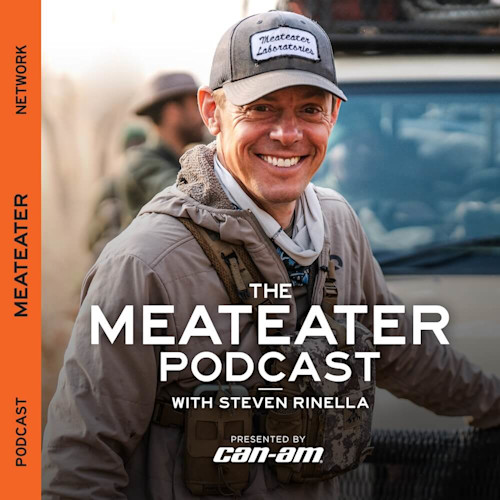
The MeatEater Podcast
Ep. 015
Play Episode
1h43m
Bozeman, Montana.Steven Rinellatalks with guests Casey Lavere and Eric Chesser of Hushin, along with Dan Doty andJanis Putelisfrom the MeatEater crew. Subjects discussed: writing about a hunt vs. filming a hunt; exploiting your children through social media; breakdown of how an episode of MeatEater gets made; the nicest trailer park in the world; the Fire Bull; the basics of filming a hunt for television; jake brakes on big rigs; visually contextualizing the hunter with the quarry; B-roll; making a living filming hunts for youtube; the best way to learn how to make better hunting videos; prehistoric cave art and the earliest recordings of hunts; Dan Doty's giant chickens. Guests: Casey Lavere Hushin Eric Chesser
ShopMeatEater Merch
00:00:00 Speaker 1: Thanks for tuning into the Meat Eater podcast. We're recording right now out of Bozeman, Montana, specifically out of the spacious placial rental home of Dan Doughty. Dan has a lookout tower. We're in his basement. Many floors blow his lookout power, which looks out over irrigated pasture, chickens, ducks, ducks, foul um. In the kitchen right now, he's prepping up some of his homegrown chickens. He uh to everyone who comes in. He marvels about their size and robustness. Chickens, huge chickens. This is like a homecoming for me because years ago I lived at Montana for a long time, about a decade, and for a short spell I lived here in Bozeman and we rented. My brother and I were living in a trailer park. In that trailer park like inspires certain images in a person's mind. But this guy own his trailer park. You know, r Have you guys heard of Rock Creek. He put trailers on his trailer park at about the same spacing that they put golf greens on a golf course. I mean, it was like paradise and it came with private access well to Rocky Creek. Dude, there was like it was a giant place. And yeah, I think there's like thirteen trailers on it. What is it now? Is it still there? I have no idea. Always want to go. Look the nicest guy. He drove around on a golf cart. All this dude did was mole grass and had this creek. We uh picked ferry ring mushrooms off the property. We would shoot our bowl in our own little area. He's like, oh, if you boys really want to have a good place to shooting, like, we had a little shooting area and we'd explore that creek with fly rods. But if you really wanted to get an accurate idea what was going on there, you'd run a leaf for him through that thing and turn up a whole other class of fish out of there. No, it's a great trailer park. It didn't make any I don't know. I never got into this guy's books. It made no sense that he was running it as a trailer park. Where from town is that? Where is that creek? You know it's at that, it's right by it's out by the um. What's that good breakfast place out by the slaughter yard or the sail yard, Stockyard. Yeah, Rocky Creek. But you know what it was the way it was, truck's ripping down out of Bozeman Pass, hit the Jake breaks. They basically not to hit the Jake breaks at me and Matt's trailer, you know, just like you got used to it after a while. Um, living there, I found out why they call him Jake breaks. It's a compression break made by Jacob Industries in Pennsylvania. Do you guys already know that? Yeah? Really as dum dump truck for a number of years when I was a kid. So you're throwing a Jake breaking past my trailer with the Jake drove down that hill and I saw your trailer, I would hit the Jake break like that's ronella. He gets to Jake. Um, all right, we're not gonna be talking about trailer parks. Well, we are talking about is uh the science and lower and bullshit involved with filming art. The science art, lower and bullshit of filming hunts. And this is something like I hear about. I hear about in different ways from from people who ask questions all the time. They'll ask how do you get into that line of work? Right? So people will see like there's a lot of guys out there who are like, man, you know, I like the film hunts. Why can't Why don't I film hunts for living? Or is it different hunting? Like do you miss hunting without cameras? Or people just having technical questions about film and hunts or um, I feel like there's other ores. Well, there's a lot. I mean there's a million questions, and then there's just when you watch and see that people could do if you're so inclined to film your hunt for memory's sake or for whatever things that one should be doing to do a better job. You know, you see and those articles about how to take good grip and grins and magazines you don't see much about like just sort of like capturing film on hunts, like how to be roll footage no one talks about. No one ever wrote an article about that. I think it's interesting. Now, I'd let me introduce you. Um, I'm here with Media your producer yea honest you tell us also director and producer Dan Doherty. These guys are both based here out of Bozeman at z PC West um Casey Lvier from Hush Hushing or Hush because he used to be Hushing your your cap hushes the merch line. Hushing is the the YouTube page which is hunt slash Fishing Hushing. So be like New Balance and New Belle a lot like that. So explain it again. Hushing is the Hushing is your your humongous YouTube channel. Yeah, I wouldn't say it's humongous, but it's hard. But just lay lay a couple of credentials out We've got. It's a big YouTube like you do, like a big I mean, we do a big, brisk YouTube business. Yeah, the hunting channel. I run a couple of different YouTube channels. I have a personal family channel we run that's very successful. We've got over five hundred thousand subscribers, almost to hit a hundred million views, and then the hunting channel is doing really well and it's got what five hunting and fishing, outdoor cooking, Hushing Hushing subscribers, and then we're almost gonna hit ten million views, which I mean when I started this four years ago, my brother was the one that convinced me to do this because he was doing YouTube full time back then and he's like, why don't you make a hunting channel on YouTube? I'm like that is not the audience that's on YouTube or on the internet really, So it was a hard game at first, but now there's it's opening up and other people are starting to put con hint on there and and I think more and more hunters and fishermen are knowing that they can watch stuff on there. So it's done well. So, I mean, compared to some of the giant YouTube channels, it doesn't seem like a lot, but for what we're trying to do, it it's done really well. And uh yeah, we're excited. Then Chester the Blaster yea, he really drives a van. I wish I had a van Eric Eric Ester, Eric Chester, not Chester, not Chester. But everyone wants to make it. Everyone wants they want to do what I just did. I could spell it out for him with two s's and now somehow put a T in there and how do you what's your affiliation? Well, it's pretty cool. How Casey and I met. We actually met at the Big Western and uh Western Hunting and Conservation Expo in Salt Lake and I was making films and DVDs and some YouTube films before I met Casey, and he introduced himself to me, and uh, hunting, films, hunting, DVDs, shed hunting, Um, yeah, anything we can get there in film. And uh, he introduced himself to me as a YouTuber and it just blew me away that he did YouTube videos. I really didn't understand it. Um. Since then, we've just kind of pardoned up and did some collaborative hunts together and now we're working together. Are you still doing DVDs? No, No more DVDs right now, We're just gonna We're committed to YouTube. And then that's the direction we're going. It's hard to sell it DVD these days, and it is. I think DVD sales are going down. I mean we're still whatever the out Yeah on the high dude, you want to know something like like like this sort of apocryphal? Is that? What was that a word? An apocryphal story? I ever like to date myself, not to go on dates myself with to date like my era. When I was born. I remember being in a class in college at Lake State University and it would have been nine and I was in his communications class, okay, and it was like one of the things you have to do is you have to make a persuasion speech. Okay. I remember dude getting up there and saying, man, you should be getting rid of your tapes because CDs or where it's at, it's like they don't have the tape, don't break yeah, and being there man like I don't know, man, there was a potent argument in favorite CDs, I'm switching. It seemed like such a risk back then to give up those those cassettes for this new thing. Right, are you guys old enough to have had cassettes? Dude? I remember my I would say I was in fifth grade, but it might have been like six or seventh. I had a yellow walkman, and these were like really popular, I feel like, and you could like put them under the Yeah, and I had this and yeah it was a cassette and that I listened to that thing for like three years like New Kids on the Block, criss Cross. You guys remember these guys. Yeah, So I'll tell the first tape I ever own, this is way off such the first tape everyone was a Ghostbusters soundtrack. Really yeah, Mine was Aky Breaky Heart. I think I own that same canseet at one point I might still have it. So you you self identify as a YouTuber, I do, I mean so you're like, but when I think of the YouTube, right, people who do unboxing videos, which I discovered to my kids, watch a video of someone taking the toy out of a box, and they'll have millions of you. The biggest niche in YouTube right now. And there's a channel out there. I can't remember what it's called, but it's basically a lady to unboxes Disney toys, plays with him for a second, never shows her face. It's like an over the shoulder shot. Plays with these toys. Videos done twenty million views. My kid man, you like you caught him loose on YouTube, which I don't like to do because all of a sudden he's talking about stuff he ran into. But you caught him loose on YouTube. Would be like, he likes monster trucks. Yeah, so you play them anster truck video and the next thing he's watching is someone unboxing monster truck toys and he just like mouth opened, drool coming out. It's like that he just is transfixed. And how they do it where you don't see the person, you just see the person's hands. Yeah, I'm gonna do unboxing videos of critters. Yeah, how what's in there? It's five? Yeah? The thing is with why they're so popular is because what does a five year old too? He rewatches that thing a hundred times. Yeah, it's like going back to the Ghostbusters. I just showed my youngest boy or my oldest boy the Ghostbusters. We watched the video. He's watched it ten times since. So they watched this unboxing video and I'm just gonna watch it one time and move on. That's how you rack up hits on YouTube. You have it, so they watch and then it gets into that category of unboxing. So every video it suggested videos and unboxing video and they just it's the same channel and just clicking over and over and over, like wrapped in paper like a birthday or it's just how it comes to the store. You'd be like, yeah, but you could go go you could go watch unboxing videos of a fishing reel. Going to like going to YouTube and type in unboxing Chamano stratic and there will be a guy being like, so I just got the Shamano stratic um. He'll kind of like show yeah, cost it's open up, will open it up and okay, so it's in a little cell phone bag, Um, I get that open it comes to the extra spool. I kind of I'm liking the quality of this spool. Let's take a look, or here's the handle. Yeah, and that's why I like, Yeah, you're like your mind, You're just like you can't. It's just amazing. Man. And there's they get manicures, nice manicures. That's that's a big secret. I think of an unboxing video, I couldn't do it. I don't have pretty hands. So it's you and the unboxers and you. When did you start making hunting videos? I think we up. I uploaded the very first hunting video like four years ago, like four years ago, January. What was it it was? I don't talk about those first videos, Steve, No, it was. It was the very first video I ever put up. Was a UH reel of that season that I was getting ready to upload. So it was like the thirty second highlight of the five hunts I filmed. So the first film I put up was I think my brother's elk hunt um and Uh. It was a good film. No, it was terrible, but it was like thirty minutes long and it was mostly me and my brother sitting in our little UH studio office in California talking about this Hunt, showing some clips of The Hunt basically, and uh it, I mean it still gets views. It's probably been viewed two thousand times. But I watched. But it's good. Like I tell people that those first couple of films are kind of embarrassing because I'm just like, what was I doing? But it's good to watch because then I can see how far we've came. So but totally stilf taught. Oh yeah, I mean, if you want to talk about like going blast blast from the past. I learned how to film and edit videos when I was in high school because I was trying to become a professional snowboard I was writing for a company in Salt Lake, and I was trying to get the bigger sponsors on and so I'd go out with my mom's VHS, I mean five pounds camera, shoot video of me snowboarding, go, and I'd cut from VCR to VCR and I spent hours doing this for like this three minute clip. And then I'd send all these v vhs is out to these snowboard companies like hey, sponsor me, you know. So that was my like initial approach into filming myself. But um, then I started filming hunting and stuff later. But yeah, like self taught pretty much like on all the new edending software and all the new HD cameras and all that stuff. I think it's worth mentioning. I think that's when we aired Mediator the first time four years ago in January, right, the same length of life here. Yeah, I can't turn a camera on. I honestly, I'll see camera like beeping and I'll be like, oh, you know, almost to running out of battery. I just come find someone. I'm like, hey, man, there's needs to be a problem out there with one of the campus that sounds wrong. I can't figure it out. It's making noise. Yeah, so we Yeah, so we started doing hunts. Like the first hunt I ever filmed was two that pow. Yeah, I started doing I think it was in two thousand two nine. But it was like a whole different deal because it wasn't like the self taught thing was rolling in with like some professional mugs. But I wasn't filming see, like, I don't comfort perspective. That's why I'm glad Dan and the host are here, because like talking about film and hunts, I don't really know, you know what I mean. I can't even speak to it. But I have a lot of things about I have a lot of feelings that I'd be curious to get your take on it. The way the way filming it um. In some way, I want to say it bad asteridizes it, but in some ways that kind of glory like makes it better. You know, no, just to be capturing it, because I often get hung up on sort of the big idea of why, like why film it? Like what's wrong? Stuff is being in your head? No, I agree, do different wonder about it? Yeah? Like then, but but I'm almost shamed to admit I have a ton of fun, Like in some ways it's more fun to go out and film it. Yeah, I mean there's I guess there's two ways to look at it, Like I do the hunting thing. But we also, like I was talking about earlier, we have this family channel wher I vlog is like a video log diary of our daily life. And I don't VIEO tape every day, but five to six days a week I uploading video to YouTube of me and my wife and our kids hanging out doing living our life. It sounds crazy, I know, but and I love having those moments I love going back and being like, look at when you were three. You know, because we've been doing it for four and a half five years. But there are certain times and certain things and moments that happened that I go to take out the camera, said no, this, this just needs to be in my head. It doesn't need to be shared with anybody else. You did, like upload your children passing through the birth canal? No, but pretty close. I mean my wife wouldn't allow that, obviously, but she had a c section the last baby, and that's the only one I really filmed, and like upload, dude, my wife like, we got to a point now, Dan, your couche has falling apart. Oh no, we got two points now. My wife won't even let me put pictures of my kids online. I was gonna ask you about that. Yeah, we decided that no filming kids. I don't even want kids on my show. Yeah, no filming kids. I don't put my kids anywhere. And I'll put pictures of my kids up. I can put pictures in the back of their heads up. But in my mind, I just gotten to be where it's like that's something that they need to decide for themselves. Yeah, it's a big thing. It's not just private, right, So it's like, later on, are you gonna be glad that someone exploited is a strong word. And I can say this because I did it, Like I put my kid on tv UM later on and be like, are you gonna be glad that someone took the liberty of broadcasting your life for public consumption before the age of consent? Yeah? I mean, so it's like it's in a little way, I just feel like it started to feel to me like very exploited him and not just that dangerous dangerous and exploited him. I thought, you know, i'd be curious to hear your take on it. Now I I have. That's like the one of the biggest concerns people always ask us is like, do you really want your kids out there? Like or do they do they later want to be out there? Yeah, I mean, who knows what they're gonna want to do, you know, ten years from now, Like maybe they're gonna come back and be like dad, like why did you do that? But it's always very clear with with me and my wife that if they don't want to be on film, they will not be on film. But they too little to know are you ask my kids what do you want to eat? What do you tell you wants to eat? Mac and cheese? So that's what he wants to eat. Yeah, So I mean, and that's my My last name is actually Butler, but when we started the channel, I didn't want my information out there, so I used my middle name. And now all the information about me is out there. Yeah, but I don't know, like I get there. I've heard some weird stories I've had, like, uh, big bloggers tell me crazy stories about their kids and pictures and stuff end up in the wrong places, and I mean, yeah, it frightens me. But I mean you really can't get on any social media platform Facebook, Twitter or anything and post any pictures then really nobody can. It's not like I don't feel like they target us because what we do they just find whoever. And I don't understand it all. And uh, but here's another way to look at it, because I've had this conversation with my brother. He has five kids. I have three kids. We talked about this all the time, like we all like me, my brother, my two brothers, my sister, my wife, his wife, like we all make YouTube videos for a living. It's like the family business now, and it is this is a little bit out there, far fetched. But if you grew up on a dairy farm and you didn't want to be a dairy farmer, is your dad doing to still make you go out and milk cows? It's a family business, like it's kind of way I look at it, but it kind of not because it is. Maybe later on in life my kids are gonna be like dad, I didn't want you to record my first trade, you know, graduation. Yeah, But I mean that's a good point. Family business, that's what we do for a living. If I didn't see all if I didn't see all sides of I would have brought it up. If I was just like I knew I was right and I was super confident in being right. I have never brought it up. I don't know the answer to it. Don't either. But the thing about this isn't why I brought up. I'm gonna do a seamless segue. I feel the same way. Sometimes part of me feels the same way about hunting that I do about kids. Is it like the exploitation of something so beautiful filming it? And sometimes I feel like um, like it's a deal with the devil. I don't understand why I deal with the devil because I just feel like this happened. No farther, let's say a quick break they hear from our sponsors will be right back. I'll just talk about that. Filming hunts sometimes feels as though, um that that at the risk of sounding spiritual, No not, let me no, not not at the risk of sounding spiritual. That there's sort of this thing like in the natural world, you're sort of being gifted glimpses into some things, you know, and it's yields private or it feels like, um, like you paid some level of dudes to be there and see these things happen, and then to see it and then to capture or to interrupt that moment in order to make an accounting of it. Starts to feel like, well, why, like, is it not just good enough that it just happened? Does it really have to happen that way? And I've gotten to the point where something amazing will happen, what's the first thing out of my mouth? Did you get that? It's like it wasn't you know what I mean. It's like it makes you sort of reset expectations in some way. But also I think good things come of it, you know what I mean. I think that you're like to introduce people to certain worlds. You're like inspiring people and you just have to make a record. You know. The oldest representational art we know about is dudes doing depictions of their hunt on cave walls. People for a long time have been saying, like I did, and I will now record. You know, does it feel different to you than writing about Hunt? Yeah? For some reason. Yeah, it's more intrusive, more more intrusive. I agree with that, Like there are some things I think that should be experienced and should just be uploaded into your brain. And that's it. We were talking about one on the way here, like the cell count we did last year. He filmed it. I shot this really nice bowl and he got it all on on film. But there's this one moment, like the very first time I saw the bowl coming through the trees, and we had got none of it captured. But that's something that's it feels like it is captured because I I replay that all the time and that's like my moment, you know, like that was like my thing that only I experienced, And that's pretty pretty rat but like what you were going after, like with it does good things. And you've said it before, like the you feel like your shows the hr of of hunting right, Like it really shows a lot of people that other world words wouldn't have watched hunting what it really happens. And that's probably the coolest thing that we see on on our YouTube channels because we have such a big audience that aren't necessarily hunters. There were anti hunters, they were vegetarians or vegans, you know, they're the people against it, and then they really watch what what a hunt really requires and what it takes. It's not just a bunch of deers jumping in the truck with the case of beer, driving out, killing everything you see and going home. But we respect these animals and we consume these animals and and so yeah, it is tough sometimes thinking that you exploit those animals for what you do. But I think in the long run, uh, what the meat Eater shows done, um, I feel like we've done the same on YouTube. It really opens the eyes to the people that might not have understood what we did before. And I think that's the biggest problem with people that don't agree with what we do is they're just not educated on it or got or do in fact know about something that happened, but they know about an anomalous thing that happens, you know, like that one day, like they live in a suburban one day a deer comes a rounding their yard with the arrow hanging out of it, arrow stuck in its like kind they're like, oh, so that's what that's all about. Yeah, you know, no one ever shows up those moments though, when when you think may should you know, should only be for yourself? When we do film them and say I'm shooting you and I you know, capture you experiencing that, Like there's there's an I think there's like a next level of I don't know, just I guess context, but possibly beauty too, to see someone having an emotional or experiential thing happened. Like remember when we shot Joe Rogan shoot his first year, there's that moment that that MO captured there that is you know, not that it's greater than his experience, of course it's not, but there's something really powerful there and you know we're looking for that. I mean, that's what Johannis and I are looking for as much as possible. Is that real experience. But you know it's interesting because you know, you're not the writer in that case. In that case, the producer of the shooter is the writer and you're the subject. And um, yeah, I mean that's what we go for. So it's it's I mean, I don't think it is exploitative necessarily animal. I think it's also can be incredibly respectful specifically towards that situation for sure. Man Like yeah, just to render it and I think that, you know, I guess it's it's some little thing where wildlife art, wildlife photography always feels celebratory of the animal, you know what I mean? And I think you can get to that as well. I don't want to just talk about this because I want to talk aboutther stuff. When you guys just like from a technical standpoint, capturing a hunt on film, now that we've gotten into like why do guy want to? Right? Or should you want to or whatever? What do you think like from your guy's perspective, all having had tons of experience doing this, Dan, you don't know, produce sixty episodes of meter been on, so that many hunts film that many hunts are more more actually Um, when you guys watch let's just say you're on YouTube and you're watching hunt videos the guys have made what's the what do you feel is that could be technical content whatever? What do you feel is like the thing that guys most often do wrong? Or like what are some things that you're gonna offer up answer this question anyway? See fit? But like what do they do wrong? What could people do different? They would improve their stuff everything. It's very easy to watch somebody else's content and and critique it right, Like you can say I was right to me. For me, I like like those moments you're talking about. I like the realness of the hunt and like capturing, uh, the emotion behind it, and like I caught one of his moments when he killed that his very first like big bowl on rifle and the emotion. It was twenty seconds of you know, of his raw emotion and it made the whole film like it made the for the three days we filmed. Like, um, I think the biggest thing that I see in like YouTube or TV is anything that's not real. It's staged and you can see right through it. And there's so much content out there just staged hunts where they go and kill something and then they'll go back and reshoot whatever. Yeah, the responses. Yeah, another thing you see a lot of that makes um that that it is difficult to watch. It's just the standard way of setting it up of be like, Hi, I'm here with Bob and we're on Bob's beautiful place and we're gonna that's a difficult thing to get around. You know, it's difficult. There's an economy, like staging stuff is economical. I mean it's like easy and quick. When we started out when we used to do like we're just particularly doing while then as you'd always do these like you have two people have to meet, right, you're going to meet someone, but you don't film the meeting right because it's chaotic, So later you gotta do like so you walk up and shake their hands. And I still see that TV now we're like it'll be a really like one of those real estate shows and there'll be a shot where a guy's walking up to a door and there's a shot on the inside of the person hearing the knock, and then they opened the door and meet, and they don't meet like how people meet. You know, they're meeting in the way they meet on TV, which isn't how that interaction goes down. We used to do those all the time, Yeah, because like, how is she gonna get into it? Yeah? The key we realized is to get into it with v O and b rolled. I hooked up with Doug right dog like doing some Doug type activity and just take for granted. People realize there must have been that moment when you shook hands that we're not when the door opened from the Yeah, but they were not seeing and it's like to see it. It's like a relief to me to not have those anguished so in I always like, if you're doing stuff, if something makes you feel so awkward and self conscious, try to find another way of doing it, because everyone's gonna feel awkward and self conscious. There's probably people out there who could knock on the door and do like a meat and it just feels great. Dan used to be into a fishing show, which one Oh yeah, he was good at it. He was amazing. What was that calling him? All man? Do you know what I'm talking? He's a wrestler. Anybody's seen this. He's a Canadian wrestlers redhead. He would extreme fishing and he'd like It was a great showman. He was entertaining. He was so easy in his own skin though that he could do those because he's a professional. I mean he was a performer, you know, he was an actor. He was a performer. He knew how to do that. But no, I mean he could walk into a bar and do like a fake meat in the bar and it was fun, Like he hit a whole fresh joke. Was it just like his name? It was like Billie Damn was the only guy watched it. I thought I thought it would have beat the Super Bowl for in ratings. It was on It was not Discovery or something for a while or Natio. It was on Nato. I'm really interested though that dude to carry your program. Man, I'll look it up sometimes during this and bring it back up. But I want to say that, like, I think the two main things people can do, and they're huge, and I don't know that people can do them easily. But number one has learned how to tell a story in a basic sense, and that means that there's a beginning, of middle, and end and that it shows an arc of what happens. And I don't think that hunting videos do that very well. Uh, historically they don't do that. And you know, it's been our focus since the very beginning, you know, ZPZ. We've had a you know, a crack team of storytellers being very very specific about how to craft are our stories from beginning to middle and end and how they work. And we put a lot of time. Now Janice puts, you know, weeks into episodes before we go going, before we go out there with a plan, and then uh, monitoring that story while it's happening, and then and they edit process afterwards. It is a massive amount of work, a massive amount of people and energy that goes into really defining that story and making it entertaining, keep you moving all the way through it. And uh, that's huge. I mean, I think that's probably number one. And the second major thing for for making hunting videos better would be too just learn the basics of framing, the basics of your gear, and the basics of of shooting, um like blocking, so you know, a combination knowing how to cut from a close up of Casey's face to a wide shot that shows what he's doing with the context of where he's going. And there's there's a million things to consider, but probably the best way to learn it is to be in the edit room and actually put something together, because then once you go out there, you know what the heck you're looking for to start with. Pieces together, you realized stuff you wish you had totally and how to shoot that. Yeah, he's specifically know how to shoot that exact thing. You'll know what you need. Like Nick Brigden's the creative director ZPC, and he gave me a lot of my starting moded. But that's what makes his particular magic and everybody talks about it because he shoots what he addits, you know, and so when he's when he's out on the field or if we're in the field of somebody who knows how to shoot for the edit, it's all up in their head, you know. They just they know what they're gonna get. When they get it, they get that feeling it's done, and then you just move on and it's just like, uh, you know, checking off boxes all the I want to speak to the story thing real quick, because um, it's hard to even define what story is. But one way you might get into a story is in the most basic element a story is something changes, you know what I mean, Like something changes. Um, we work like at media, we were with a lot of people who a lot of people, the majority people did not come out of hunting. They came out of storytelling, right, They came out of film writing various things. So they're they're their first and foremost love is telling stories. It's just this is a variety of story. But that's what it is. It wasn't like they love the film hunts, but they wanted to learn how to make that in the story, so they already got that part down. Another thing is I think that what we found is maintaining a certain amount of flexibility about what the story is. Because Dan alluded to the pre production process for yas might spend a much time on like a story. Oftentimes you'll be mid stream and realize that it's just not there and or something different is going on, and you're sort of making these game time decisions, Um, do we follow the story? Sometimes the story is hard because, like I always make a joke about what's production and what's content. Sometimes you're in a story that feels very production. You know what it feels like the story Like let's say you're going on a hunt and all of sudden you can't go where you want to go. I'll be like, man, this is like a what I would call a production issue. This is like in the way of us doing this. But you realize that sometimes out of that comes a sort of you know, another story or an actual story that would be a narrative that you would tell. A different example, be like you can't film at night. Okay, so you can't sider or it's hard to film at night. Let's say you're feeling under your spear fishing underwater at night. Let's just say that it would be very difficult to light that and do that. That's a production thing, right, It's like, it's hard to film at night. So oftentimes I find the main thing you're thinking about is you get lost in what it requires to make a story and you start missing sort of the story that you would be experiencing in the absence of filming. No. No, it's like that's going to Bolivia to film our shows and realizing that it rained for dirty days and then you couldn't catch any fish, which is so you have this production but it was But you're right, there's this interesting moment when you know you deviate from what you want the story to be to to having to reckon with what's actually happening. And I think hunting is an incredible stage to learn storytelling in that dynamic way because you can't predict anything. Yeah, you can't to an extent. You're always having to shift your your focus at every point. I mean, whether it's just the light or the weather, or the animals aren't doing whatever. You know, you're sort of you're intending for something to happen, and then it's not gonna happen most likely, Yeah, it's I think I think it would be tough to try to set up a story before you actually go out on the hunt. I mean, typically you go out, you meet the landowner with that really awkward handshake, go hunt, kill an animal, buttri it you're done right. But so many times in Honey, it just goes wherever it wants to, Like your adventure leads you somewhere different. And I don't know, like going back to what you're talking about like cutting, editing and video, you know, shooting, I don't think you can be a good cameraman until you actually start editing that footage and then you learn what you made, where you made your mistakes. It certain yeah, Like my wife just started. She has a big craft show on YouTube, and she just started cutting her own videos where and she started shooting her own videos and she was craft like making crafts, hair tutorials, recipes, mom show basically. Um, but you guys really are deep. We are. Yeah, we're drowning in YouTube. But it's it's been great. I mean, what's hugely successful. Yeah, it does well, and it's allowed us to be with our kids. Like before we before this YouTube world, I was like, blue collar, does it come? I worked at the steel mills, she cut hair, like we were working fifty sixty hours a week and now and that this is going back when we were talking about earlier. But now we do YouTube and it allows us to do everything with our kids. And so it's like I tell my kids like sometimes like I'm trying to cut the next hushing video at seven o'clock at night to get it ready for the next day, and they're like, yeah, let's go to this. I'm like, I'm sorry, I'm working right now, and you know, they get bummed out. I'm like, remember before when I worked at the steel mill and I was gone sixty hours a week, Like this is like our like this is me at the office here for two hours and later when they claim when they come to complain about what you wouldn't even have been there. Yeah, if it wasn't for YouTube. Yeah, so I than gone, yeah, cutting my fingers off and burning my own yeah. But um yeah. So she's starting to shoot her own videos and stuff at home so she doesn't have to fly out to l A as much. And she's like, I don't know if the lightnings right, I don't know if I'm talking. I'm like, just shoot something for twenty minutes, shooting for like how you want it, and go and cut it and then you'll know. So now she loves it. She cuts her videos and now she knows how to shoot them, and like that's the thing with us, is we shooting at it all of our own stuff, and so like beforehand, like while I'm shooting him hunting, I'm thinking about how I'm gonna cut that video, like, oh, this is gonna be here. Oh first rule podcast was off. Thank you very much for libration, but yeah that extra vibration. So yeah, we I mean, when I'm shooting a video for for YouTube, I'm thinking about while I'm shooting, like how I'm gonna cut it and how I'm gonna tell that story. But and you tell the stories pretty efficiently, because you don't. We work in a twenty like a half hour show, twenty two minutes. We were in a twenty two minute world. And now not only that, but we think about it. Um, we tend to think about an AX yeah, segment or like first act and there's the there they're they're they're different lengths. So we we talked about cold open, act one, act two x three x four, right, and um, but it's a twenty two minute product. You're dealing with something like what have you found to be the sweet spot? I don't know. We're just talking about this earlier. Yeah, it's kind of funny. Some take off and some don't. But like, I have a video up there right now that's twenty three twenty four minutes, which I would consider to be a long YouTube. That's all long YouTube video. But it has great retention and almost a quarter of a million views right now. So but can you ever, I'm sure you can. What quarter million views is how many people clicked it? How many people have seen it all the way through. Um, it's hard to say how many people have seen it all the way through, but it gives you a retention rating, and that one's so that one just keeps the people like certain videos. Yeah, like just like any show, you want to keep their attention there so they continue to keep watching. And something with that video, just the storyline of it and the way it just in one sentence synopsis, what is it? The hunt? I shot the bull that's named the fire Bowl, and it's just kind of gone like internet famous. I guess. I don't know, is this a really big bull? But the story is so cool and so rare and lucky enough I was able to capture it on film, So I don't know. There's a lot of anticipation for the video to come out because it was floating around social media for so long. When the killed this giant that I killed this bull? What happened with the fire The cool thing about this bull is, you know, Eric is a shed hunter, and if you guys know shed hunters are crazy people, they will they like, Eric has history with this bull. He's watched this bull for years, Like he's watched this bull grow up, and he collected its horns and stuff. Like Eric wasn't just out to kill any walking down the mountain like he went out to kill this one specific animal and he did. I documented everything, the scouting and everything leading up to it, and the fire bull was this, This was the bull I was. I wanted to hunt and you had you had hiss from over a period some friends of mine had collected UM a couple of sets off him, and uh, a young kid and his dad had found two sets off him as well, So we just knew he was on the mountain because give you to give me the antlers after you killed it. I do have one set from a friend who I had a set off a bull he killed, so we I had the set off like swap now, and he was super nice about it. His name's Jared, and he was, uh, yeah, it was like no questions asked. He's like, this is your bull. So we traded um. But what was neat or what was interesting about the hunt and why that hunt has kind of gone viral is I actually shot him twice, but twelve days apart. So I shot him the opening week and it just with the bow. This is an archery hunt and I'm I'm hunting out of a ground blind and opening Thursday. So the hunt started on Saturday and Opening Thursday. A good friend of mine, Kobe, he came to help me with my hunt and I said, well, I this bull has been seen right in this meadow. I'm just kind of been sitting there and haven't seen him yet. So he was kind of getting bummed out because he had taken off a lot of work to come help me, But he had been wishing that he would have waited tell the rut because in Utah we get that early season and the bow hunters start to get into mid September, which the ruts starts to get going. And I just remember telling him like, Hey, this is gonna be an awesome hunt. Like there's bulls you know in this area. We're gonna hunt the fireball. I mean that's what I was doing. I was hunting the fireball. So it was the opening Thursday and him and I were sitting in the ground blind and this is just a ground blind built out of pine needles and tree lambs and anything we can build up this, uh like makeshift ground blind. And uh, the fireball came out into the meadow and I remember my friend he's I was like, get the camera ready, the fireballs coming, and he's like you're you're lying, you know. He kept saying, you're yeah, all right, And I said, get the camera ready, and he can just tell by my you know, the way I said that that he got the camera ready and and sure enough the fireball fed out and I waited and it was this is so funny, going back to like being in those moments where we're filming and when we're not and things we can we should see, and just having our minds for me at that moment, like you can see in the film, like my heart is racing when I first spotted him, but it took him a quite a while just to feed up to us and to get to where I can like clear all the branches and shoot at him. But in that moment, like I was not hunting in my mind, Like I had the bowl in my hand, and here's this bowl that I've been, you know, waiting for all summer to hunt, and I've got the tag and I've got my chance, and I'm like spaced out, I'm zoned out, and I'm not even hunting like my instincts. I was just enjoying the visual of like, wow, there he is, Like it was the first time I had seen him that year with my eyes other than trail camp pictures. So it was my friend that was like, dude, right now, shoot and I'm I'm like, oh yeah, yeah, like yeah, you're right, you know. So I had waited for his head to be down, I had waited for that French shoulder to go forward, and I just put it right where I wanted it and let go and we heard the smack and the bull round off and my buddy just you got him, You nailed him and everything, and we're so happy. And the cameraman was like, he's not, he's not, He's not he was supposed to be. This guy gets so excited. I mean, this guy loves to hunt, and him and I have had some great experiences on the mountain together and he just can't hold it in. Bottom line, he gets too excited. So's you got him. So we're excited. And we watched replayed the footage and it just uh, he kind of jumped the string and I hit hit him in the shoulder blade. I mean that you can see in the film that the arrow just rides up the shoulder instead of going, you know, penetrating in and uh, it rained all night and we didn't find him. The next day, luckily, a friend did see himbedded in the thick timber, and I thought I was going to have a second chance right then to go and shoot him, but unfortunately he got up and walked off. So the crazy thing about the hunt is I sat that blind. I kept sitting in that blind, and a lot of people doubted me, and a lot of people said I was wasting my time. And twelve days later, in the same blind, hunting by myself, filming myself with you know, just a little hand held camera on a tripod in my head camera, he came out twelve days later. Oh he looked, Oh, he looks so healthy yet. I mean, the first time I shot him, he kind of had some velvet hanging off his antlers, and he kind of had that a really thin summer coat. This is twelve days later, and his antlers are now just polished up, really dark timbered antlers, and his cape was just even. He was getting more into that rut phase, and he just looks so pretty. And he didn't even have a limp drilled in the shoulder blade. And twelve days later he's just walking as majestic as he was out there. I mean, it was crazy. You're causing me to enter into that fantasy of all the stuff I ever crippled is just fine. Yeah, oh like and that's that. Going back to that how we talked about how filming we can learn so much and it does some great things, Like we learned a lot from this hunt. You know, a lot of people told me he'll never be back. He's going nocturnal. Um, he knows that meadow is dangerous now, and I just said, look, these animals live in ang their habitual I think he's going to be back. So I kept sitting that blind and when it finally happened, oh, right in the money, Like it was a little bit low, but right behind the shoulder and uh, same side, same side. When people would ask me, well, what tell me the story, I remember Kobe was the first one I called on my cell phone to tell him the story. He said, well, what happened? I said, well, Kobe, remember how it happened when you were there? He says, yeah, I said that's what happened. So what do you mean, like, same same area, same everything. I was like, yeah, same exact spot, almost the same time of night when I hit him. He ran in the same exact path out of this meadow, and so I was like, you're giving way too much away right now, we're supposed to spark their interests. So they go and watch the video just right now, just say like, and that's when the bowling happened. Yeah, the bears and the coyotes met. It's it is a crazy story because not only wound an animal and he comes back to the exact same spot, like step for step, it's a bowl that's supposed to be the smartest creature on the planet or in the woods, does the exact same thing after Well, you know what, I think. I think that bull was thinking there's no way that guy is gonna come back because he's not there, Like, but what if that dude does come back, Like, why would he come back? He shot me there, he thinks I'll never come back. Yeah, that's the only place I am going to. Yeah, but it was wild. But going back to your question, like some of our videos like we run five to seven minutes, but videos like that that it's hard to tell that story in less than that twenty three minutes. Like I have actually been working on a an edit to shorten it up for a um. The full draw film tour. But it's been hard because it's hard to take away from the story, you know, all the preparation, the scouting and everything that happened, because it's just the way it was edited. Twenty four minutes was just the way it was. I didn't think like, Okay, I have to edit this at or twenty two or whatever. I just edited the way I felt I liked it, and then that's what works. Is that on the Hushing channel to Yeah, that's on the Hushing channel. So if you just search the fire Bowl ELK Hunt, it's the beauty two. The beautiful thing about YouTube were so free to do, you know. I remember being on the New Mexico Hunt. You remember camping out and you're asking me how long The day after I show me how long we're going to make the film, and I was like trying to make it under ten? What was it? What did end up being eight? Fine? I mean nine minutes told the story and I didn't need to put anything else in there, you know, so go ahead. I was just gonna say that. I kind of like the time constraints. I like sort of it makes you creatively dig for things when when you need to dig for things It also makes you not be precious about a lot of things too. Cutting down is a really cool process, and like the collaborator nature working with editors and when you guys do your own stuff, but we have it, you know, we're working in teams and sort of having a bunch of people craft this stuff. And you know, being precious about stuff is for me, could be an issue if I didn't have other people just to like the thing that like I went to a writing school, you know, um, and the thing that writers just pound and pound and pound in you, and like every writer says, it's like you gotta kill your babies. You gotta kill your babies, you know, um, meaning don't let like these moments that you that you think are so greater, these things that you're you that are so precious to you, like getting the way of the greater good, you know. I remember, like when I wrote my Buffalo book, Um, I wrote it one d pages too long, you know, And I'm telling you, man, I like fought over every word right and I got it all done. It was just ridiculously long. I went through an acts a hundred pages out of there, painful. But now I'm like, I can't believe i' had that garbage in area like later when you look at it's like like I would take a whole chapter to just grab a paragraph out of it, you know, but you go like, well no, because I have like it's special because I did it. Yeah, that's what it is. What you get into your head like its special because I did it, and and and I already got my time r now, so now it's out there. And I think that like having that discipline to go shorter we used to get like we still get inquiries but be like, oh, you guys should be an hour long, and I just think like, oh yeah, it should be an hour long, like me long show. Now I'm like I kind of over time. I've just sort of like, I like twenty two minutes because I feel like in twenty two minutes you can when it's right, it could be just so tight and fast. I watched the show without the ads though, right, so I watched like the way it's meant to be, and I sometimes remind myself, oh yeah, but it's broken up my hands. But it's somehow science so fast and has such a roller coaster quality to it. That's the best. I said. It's like it's just like wham and people be like, dude, I could watch that for an hour. I'm like, I'm that makes me glad it was twenty two minutes. I think a good way to gauge it is if you watch it like a twenty two minute video on YouTube. Does it feel like it's twenty two minutes? Did you at the end of the video or you're like, well, that was twenty two minutes. Were you like at the time, you like, I mean TV, you guys are under restraint. For you guys are twenty two minutes every episode, right, Like, how much after you guys go out and film and you guys turn the media into the editors, how much do you sit down with the editors dan and and go through with him and try to tell the story or so, yeah, the whole process. I think that would be interesting. So in the current form, so you honest is the producer. So he will create, he will run the pre production, he will plan things. He will create a document called the treatment, which is the hope or plan for the story to happen in the field. He'll be there and will be in charge of capturing the story both on camera and then in his head. And in notes too later going to the post production process. So that's um, yeah, but post producing the episode would be working hand in hand with the editor every step of the way. So basically we turn in a what we call producer notes, which is so the treatments a document at the beginning, and then after the shoot the documents called the producer notes basically is an act by act breakdown with possible vo already written, with really just a script or writing out the show. But that changes a lot, and it rarely is you know, actually the product because how many hours are you deal with? How many hours afore it's you know what people askid I don't even know it? And it depends. I mean, we shoot up to how many hours are on one ratio and oftentimes documentary style filming, which is what we do and which by the most hunters do you know when they're shooting their hunts, is you can get upwards of like fifty to sixty two one ratio. You can shoot almost an hour for one minute. Man, I'd say we should especially have multiple cameras going, which we often do. It's a lot more. I'd say it's a higher ratio than that, even especially counted Timelafs. I mean we come back, what say, eight full cards at a hundred twenty minutes each, and if you have two shooters, double that. You know you're talking about thousands of minutes of footage, maybe between one and three thousand minutes of footage. Um, so at that point could go up to a hundred of one. Sure. Yeah, but so and we have, you know, editors that we have been working with for a long time, and there's there's a couple of editors that specifically, Um, you can be a little less hands on, but you know, I Post I produced, in Post produced probably I don't know, fifty episodes of mediat And it just depends on who you were working with, whether or not you had to be really really directed. Yeah, you can editor to cut a few and they kind of know how you guys like them. I can just say being on that. You know, we were in the same camp a few years ago in New Mexico. I was blown away at the at the work you guys put in to capture an episode, like there was what they were? You were there did he was thearn. You guys had two other cameramen right, one assistant audio guy who's up there with this. Peter was out there with this. But there's four guys and then Steve and you guys were packing the long lens the DSLRs, and you guys packed back in for what a couple of nights there we carey a bunch of John Yeah, I mean, I can't imagine the excess amount of batteries you pack in on a hunt like that. And then SD cards and wild batteries are the limiting factor oftentimes, and and we'll have to either pack back to to recharge batteries or bring a that that becomes a limiting factor both for weight. Well, actually for a while we only had some manner batteries. Now we have like hundred and fifty of those big batteries now, so they each one pound. That's wild. It was wild to see though, Like you guys put a lot of time and effort into capturing. We finish out how it goes. So you didn't get it to the end though, though we're gonna take a quick break. Yeah, So finish out though, because you didn't get to the end of it gets made, okay, Yeah, So while the editor, the editor cuts it, and he cuts what we call a rough cut, which is about to time, so you know, maybe it's within a minute of the ending end running time hopefully, And then he sends we do around notes, so Steve gets it, I get it, yeah, and gets it. Um. Usually that's just about it, maybe one other person, and then we do around a very very specific critical notes on that cut goes back to the editor. There's a couple more days to get out of fine cut. We do the same process and other round of notes goes back to the editor. He works those notes out, and there's a lot of conversation always goes on in between that. Finally we get to what we call prelock cut, and we all kind of sign off on it. Record and sorry, there's other stuff in they're recording v O getting all that cut in doing rewrites for v O UM. But then finally, after you know, three to four week edit process and and a whole process, it's a heck of a lot longer than that than we have a so we finally finally craft these shows. You know, there's a there's a lot of people with a lot of brains and creativity working their butts off too to make these things the way they are. In the end, it feels natural. It does the product like you wouldn't guess. Yeah, you know, if you had to sit and watch those hundreds of hours of footage would be mind boggling. I can't even imagine trying to scrub through all that video. What what you guys, shoot race, you're doing YouTube video? When you say like fifty one, like we might get like fifty fifty minutes for every video. I don't know, Like I would say a couple of hours, a couple hours of of of like yeah, different point of views, go pro angles. But I bet like that New Mexico Hunt for example, I think it's eight nine minutes long. I bet I you cut through like three hours of footage and I'm like by the time I'm done, I'm just like, all right, just put it up, Like I'm so tired of watch myself talk and walk around the hills. But do you guys have any interest in the TV length type thing? I mean, that's something to interest you or you're you're just your YouTube all the way. I'm a YouTuber YouTuber, Like you have to get a new business cards. Yeah, I don't have business cards. I'm a YouTuber YouTuber have business cards? No. I I love the platform of YouTube. I love the possibilities on YouTube, and uh, that's just I mean every day Monday through Friday, one billion people log into that that that website, And so I mean it's just been cool. And I don't I don't really see see ourselves doing anything different. I love the freedom we have to do whatever we want, upload videos when we want. Um makes seven minute videos for twenty three minute videos like, So we're happy doing what we do. But I mean, yeah, what do you think. I'm I'm committed to YouTube. I've done a lot of research, and I've been so intrigued by the platform for the last three or four years that I just feel like it's a good opportunity for me if it's what I want to do really well and what I enjoyed doing really well. The same conversation would happen about cassettes and CDs. You know, one day they're going to be talking about TV shows in the same way, Like remember when TV shows I didn't want to like trouble with you guys, But I yeah, I don't know. We spent a ton of time talking about digital. Let's talk about what's what's happened? Yeah, I think, I mean, I don't TV will ever be obsolete. But at the same time, like I would love to know the ratio of Americans, like people in America that have TV and have the Internet, and who has both, because I know I haven't had TV in five years. Like I can consume all my entertainment from Tina Neet and everyone has the Internet now everyone has access to the internet basically an iPhone, tablet, watch whatever. Well, we know for a fact that meat eater fans or meat eater watchers over are not watching it on the channel at the time edit airs, They're they're watching it through other means. We did, Yeah, we talked about tapes and c d s earlier. It's like, right at the time that that guy did that persuasion speech in communication one on one. Okay, an album that was out at that time was Counting Crows August and everything after. Now the guy that the you know, whoever that guy is in that band, I don't think he was sitting around being like, but are they gonna listen to it on CD or cassette. It's like at a point it's like, if you have confidence in what you're making, you know what I mean, I don't spend too much time thinking about it being this show or that show. You know, like I'll spend the time I'm thinking about how people are going to consume it. I mean, I don't want to get caught in a weird thing where we haven't thought our stuff out. But I feel like, you know, the basic format, the premise, you know, I mean, I know we'll find homes yeah for the stuff. I agree. I feel like if you're making I mean, content is king right. That's the old saying, like you make good content, it can live anywhere. Um, I feel like you guys could transform what you do now you're twenty two minutes onto two wherever, whatever digital platformat would do great. But you're you don't have to think about that right now. Just make good content. I get a little jealous of those TV shows on HBO or Netflix that like you get once twenty two minutes maybe good episodes to six. You kind of have that. That's that's pretty cool. You know what, here's one thing I want to do. How long we've been, how long we've been talking about There's one thing I want to do, and I'm gonna do. I'm gonna do the first one. Um, because people have such an interest in recording, capturing, hunts, fishing out of doors, whatever. I want to just go around the room for a while and very quickly say things. You give your findings, Okay, things you think. Um. One thing that I've found that that's become a personal thing for me is I really like and we go to great ends to establish hunting big game, okay, or any kind of hunting, to contextualize visually the hunter with the quarry. Because I'll point out right now I'm watching it's been out for Whi've been watching Planet Earth right, and Planet Earth you know, like tells the stories about Earth, but they tied in with the real bread and butter of that as predator prey interactions. Right, It's like they just punctuated. Well, they don't go four minutes about showing something eat something. Oftentimes they got great footage, right a snow leopard grabs the mark or and the mark or gets away. All the times they don't. So they'll show like Ethiopian wolf walking, then they'll show a baboon looking nervous. Then they'll show the wolf, and they'll show the baboon, and they'll show the wolf, and they'll show the baboon and the baboon runs away and you go, you know what, never saw the damn babboon and the wolf in the same shot, And it's like like a weird kind of fuckery going on, you know, And I hate that kind of thing to where I always feel like when we have a seque, it's where you've got like long lens foote, your footage of an ant one guy is filming an animal, a turkey coming in, and one guy is filming you, and later you're like bouncing like turkey, you, Turkey you. I always feel like the viewer's mind is open to the facts chains being jerked, and I breathed such a sigh of relief when there's that shot where there's like you or the hunter and the thing to get brought together. It's like the technical term is tying it in, Like a shot that ties it together, solidifies, it solidifies that action because when that happens that back and forth, everyone thinks, is this rail is just really going on? And it just solidifies that when it shows like an over the shoulder shot of you with your gun and there's the turkey and the the guy that like gave me eater, its visual look to to a huge degree is a guy named Mo found who shot Men the first ones and Mo, I don't know if you ever articulated it this way or not, but Mo had this sort of idea that was like that the viewer is your buddy. You'r the viewers your buddy with you, you know, and and if you watch the show, you like you start to kind of feel that where like the camera is often right where if you were with your buddy and your buddies hunting. It's like the cameras where you'd be where you'd want to be to be a participant in this. And that's sort of like over the shoulder shot when all of a sudden something comes into view and you got the person, and your person could be just blurry right. It's completely like out of the depth field, but it just feels so good. I remember that first season it was substantiated. I think, you know, we maybe after the second episode or something, we gotta Facebook comment that said, you know, I can't believe how you shot this and felt like I was right there with you, and that was you know, that is the point. It's those moments. It's like those moments where everything comes together in a way and we've even finding. Sometimes you're talking about something so far away. So we do a lot like open country hunting and your glass and stuff. We'll just go do an overshot. You know, someone will get back. I'll be talking about something I'm pointing and they just kind of zoom over. You're never in a million years gonna pick it up, but you zoom over and you start to make out the landscape and then you can go to that tighter shot that shows it. But you do feel like you've been delivered to that point. It doesn't have this like arbitrary feel to it that makes it feel like TV, you know, because oftentimes when I'm watching stuff, I don't like to have any moment where I'm pulled out to question what's going on. And like, like I thought about watching the Planet Earth series. They show these they're showing like these polar bears making their first emergence, but the snow is covered in tracks like they've clearly been out a whole bunch of times. They keep going back in the den their first emergence. It's like we's tracks throw over the place, like the entrance of the hold. I'll mud it up, you know, I'm like, why tell me that because now I'm sadden, you're thinking about why you said that when it's not the way it is. So just have it be that he's coming up is then and I'll enjoy it. I won't be like distracted, you know. And so I'm always like when I'm watching our stuff, I'm always like, what are the things that's gonna catch someone and pull him out of the reality I want him to experience and make him enter into the reality of his head as a skeptical viewer. Yeah, you know. Another example of that, to take it even further is like if you are cooking a piece of meat over a fire, there's something magical and beautiful about a shot that actually without cutting away pans from that piece of meat up to your face. Rather than having two shots where you just have a shot of that meat on the fire, you have a shot of the face. Like that's fine, that's great TV. That's you know, you can do that well. But there's something specific about that uninterrupted either having both objects in the frame and exactly the same time, or being able to swing and move without actually cutting the shot. There's it's something seamless and um important that happens in being a place gives it more realness. Like its exactly like with a kill shot, right, like you know, like you can either do that over the shoulder kill shot where you're in the frame, the animals in the frame focused, your shoulder might be out of focus. And I remember, like you guys first season there was a lot of that. I love that shot. But like if you are zoomed in on the animal after the kill shot and then that swing to the yeah, just gives it that realness, you know. So we'll deal it like dealing cards. So that makes Dan's up. They are just finding just one tip, just like a thing, man like, like like like an example of what I'd escaped for for people who want to like people, um, people who want to capture their stuff, because so many people now want to capture their stuff. Man. Yeah, when I go out fishing, even when fishing on Lake Washington, the guy out there fishing without without all right, So I'll say very basic one that's that's not very sexy but super important is just learn what the heck you're doing with your equipment. No how practice enough, read enough, have somebody show you how to use your camera and you actually use it and audio. Actually let me make that my point. If you have crappy audio and it's it's not like your quality will never rise. I mean you still might have a successful video I don't know. But have an actual microphone mike deup, know how to manage it, have good levels so people can hear what you're doing, and uh learn how to make a shot with cameras, and and learn how to be steady. Don't don't be wobbly, I don't just practice. Can you do audio without getting into like audio equipment? Do you mean just give I mean, yeah, a lot of cameras have onboard um mikes that that may be okay in most situations, but you get in some wind, or you get in in some other type of scenario and it's no longer going to be good. Get a cheap lava mike. Get a cheap mike to put on your on your shirt. Lava mics now the road makes them, and you can download the app that you can plug it directly into your phone and it gets great audio and it's not a lot of money. It's like honor bucks for the law and a zoom recorder. Just spend a little time and uh yeah, learn what you're doing with your stuff. I had to learn that all myself. Like I started shooting before I knew how to operate a camera, and it was tough, you know. But my finding and we get told, I mean, we could ask a lot about how we got into filming and stuff. And I feel like now we're talking to not people that are trying to create TV shows necessarily people were trying to capture the capture stuff. My my finding is just do it. I mean, the way. And this was going back to like me talking about cutting from VCR to VCR with that big giant VHS when I was trying to record me snowboarding is technology is crazy, man. There's some great cameras out there that somebody can pick up for three four bucks and you can record some amazing stuff. And I think for most beginners is they think they have to have all the nicest equipment and they have to go through film school. I don't know, It's just get a good camera and go out and capture moments, because that's what it's all about, is you're trying to relive those moments one day. You know, if you're not trying to put out a TV show or YouTube channel, you just want to capture your your hunts. Just do it and figure it out. Go out and shoot wildlife, and shoot your buddies shooting it, deer and shoot, try to film yourself and just learn and do it. Because even after we started hunting, sometimes and I'm sure you get this way, sometimes we're on a hunt for ten days and it's like, all right, leave the camera at home. I don't care if we get the kill shot. I want to end this thing. And then I've done it a few times, I'm ountain shot something and I thought, how stupid was that for me not to have the camera going. It's easy to set up a camera, it's easy to have your buddy hold a camera. It might not be the most professional footage, but it's a memory that you can relive, and it goes back to like talking about, uh, you know, exploiting animals. One of the coolest things I think about hunting is seeing old school pictures from like my grandpa's time and my great grandpa's time and going through those and seeing what hunting was like back then. You know, they everyone had a twenty bock, you know, in the back of the truck. But it's so cool to relive that through these pictures, and I feel that way with what we're filming. One day, my great great grandkids are gonna go be able to go and watch My adventures on if it's YouTuber wherever. But it's just capturing those moments one time. Yeah, so I my, my, my. I would just say, if you want to just go out and capture, you know, some footage of you hunting, just do it. Get a good camera. You can use your damn phone almost like the phone to take amazing footage, but go out and buy you a four camera and just start doing it. I gotta get started something. Well, yeah, that's what I was gonna say, is just get out there and get art it. So I have to think of something else. Um. But one of the things that come to me when a lot of people approached me and say, hey, I got this awesome you know hunt on film. Do you want to use it for your next project, your next DVD, YouTube, whatever it is. And sometimes I've been like, yeah, like cool, let's let's check it out. And yeah, I got the kill shot and that's it. I'm like, this is a great kill shot, and and the kill shot can be very important in the hunting film or hunting TV show or something that we do on YouTube. But there it is. It is, It is that sliver of you know, that second or two seconds, and that's it. The rest of the hunt and the story is like you said earlier, is that fifty hours of b roll footage and all the other cool stuff. So my advice would be to film everything, Like, pack a lot of memory cards. The worst thing is running out of memory cards when you're out there and you're trying to delete all your other things so you can film the next thing. Yeah, you're doing having your last one on accident, film the next one. So yeah, be prepared with memory cards, um, and just film a lot of cool stuff and and think outside the box. Think what's a cool point of view? Can I stand behind this tree or get these you know, these flowers in the shot and just trying to different things in experiment. And then when you get into the room to cut it, I find that it's the most random clips that I'm like, that is so cool, Like the sun just hit just right on this one clip, and I didn't think it was that cool because I was filming was your feet. So just film a lot of be real stuff because when it comes to editing a story, you can't You can't add a hunt with just a kill shot. So get a lot of other b real footage and you have a lot more to work with. I think I think the things weird because I think that some people kind of tend to fetishize the kill shot in that if we're talking about like if you want to capture the reality but hunt, you're trying in some way capture the experience of it. When you're hunting, the kill shot is like you don't even really log it in your own mind. I mean, it's just like a damn, it's done, it's gone, or you don't even know what happened. I oftentimes want to look at the footage to find out what the hell I just saw happen. And so I've tend to be like I tend not to react, like I try not to one. I try not to take in a lot of media that is just like what I'm trying to make, because I'm always afraid of what my influences will be, or that I'll wind up responding not from an honest place. I won't like create ideas or perspectives from an honest place, but it will always be like I'll be reacting to whatever happened to me last or whatever I saw last, So going against that. I have noticed this like kill shot thing right steady, like playing it again and again and again, you know, and it's just to me as in some ways felt a little bit ugly and so in a way that I have reacted to what I saw in him way, maybe it's just to go against and not make such a big deal out of that. I kind of like it when we don't even have it, or you don't even know what happened, Like you just see something that happened and it's like, that's like what it seems like. Though, yeah, it's like it's one of those moments in life that happens so fast that it's kind of a blur. You may be like I feel like I saw a puff of hair, but I could be wrong. I swear I saw a puff of hair, or I don't know. It seemed to do this when I shot and you're trying to replay the figure of if you had a good hit or not, you know, and you realize the minute you get uh to me you hit something and that runs off. You realize how frail your recollection of what just happened is because you often can't put it together. You're like, I feel this, I feel that, you know, or you might get lucky and you noticed it, like the belly lifted, the back arched up right, and that probably logged in your head just from past experiences that when you see that, you know it's dead or he slouches the wrong way, and for past experiences like that didn't look good. You don't, you know, so that might stick in your head because it triggered some memory. But often you have no idea, and so I like stuff that usn't just sort of like glorify this, this blood splattered moment, not out of any deference to people's sensitivities, but just because I feel like that's what it is. That's what it's like. I agree in going back to like talking about you know, being you know, the hr for for hunting and showing people that you know, are outside of of what we do looking in is it is it's such a small just a sliver of the experience and the story, right, Like that's not the ending, right, I still think it's important. One thing I always want to see we're out in the field, everybody does we all want to see it. It is important, but like like Steve is saying, like you watch some of these shows and they glorify it so much, like they play it like they hang their hat on it ten times, slow motion reverse upside down. It's like, Okay, I got that you killed that animal, and it's cool. Like as hunters, we know how hard you have to work to get to that point to pull the trigger. And so that's kind of like the the I did it, you know, But I agree, like in my eyes, like I hate seeing stuff over like overplayed, and that's to kill a shot, like yeah, put it in there, you need it. It's like kind of like the button. Almost. I was at an awards. I was at an awards ceremony one time, Like I said, what it was, but I was at an awards ceremony and they had a what most of the band it felt like ten minutes. Maybe it wasn't ten minutes a kill shot, real, dude, it just got to be a bit much. But like I said, me not wanting me not wanting to fetishize kill shots isn't out of sensitivit or difference. Because I used to say, if you look at like old guidelines for outdoor TV. It would be like, oh, you can't, She'll look, she'll the kill shot more than seven times in a row, really know, And in the next sentence, no bloody hands, no raw meat. Really you couldn't have raw flesh, right, It was a guideline. It was a guy like show a kill shot seven times, not more and sometimes but you cannot have a host have blood on his hands. So like our shows like an Avatar, I mean our shows like a like a like a butcher show sometimes like sometimes we'll have five minutes of butchering. So it's not like that. I'm sort of it's something I'm going like, oh no, I don't want to show anything unsanitary here. It's just a personal thing to me that I just think it's not it's just not that cool. And there's also like, sure, there's people that want to see it. But if I was in a business to just give viewers what I thought they wanted, I'd be like, I don't know, I would have gone into making like, uh, lucky charms, breakfast cereal, you know. I mean, it's like I'm not here to like make lucky charms, do you know what I mean? It's like, sure, kids want seal lots of sugar. Let's just put more sugar in there and see if they like it better. It's like and somebody, I'm like, sure, you probably want to see a bunch of kill shot stuff. You're not gonna find it here. It's like, I'm sorry, you know, I'm not gonna like bow to your base in things. And in some way, but again there's a level of hypocrisy because when we're out, that's the only thing I ever make the guys play for me, that's the only thing you want to want to see. I'm like, what do you replay it? Seven times? Not especially We're sitting there doing the old forty minute wait for track something and I'm like, dying, let me see again, let me see again, let me see the again. Then we analyze, well, what happened? As a hunter, I I do the same thing because there's something that happens when you take a shot at an animal, and it's like, almost instantly, unless that animal just takes a nose dive, almost instantly, you start second guessing yourself, You start doubting yourself, you start thinking of everything bad that could have possibly just happened. Too. So when you rewatch it because we do the same thing. I'm like, did I hit him? Where to hit him? Where where was it at? And did I miss something in there? And so it like gives you that reassurance I did make a good shot or you didn't. You know, have you ever own a doll sheet? No? So it's all the stuff, like what's the legal ram? Yeah, you know, you shoot a ram that like most Alaska. You can shoot a ram that's eight years old, which you determined by growth rings, which you're very hard to see. You can shoot it RM it's a double broom which means he's broken off his lamb tips on each side, which is sometimes very obvious, sometimes like not at all obvious. Or you can shoot ram it's full curl mean degree, it's horn, which is sometimes very obvious, sometimes not obvious. You shoot a ram and he falls down. It is the worst moments of your life, the time it takes to walk over to that ram or moose with the tip tip, the worst minutes of life. With a camera rolling, it's even worse because you might entertain the idea of everyone just keep him quiet with a camera and stuff. It's like, yeah, yeah, what's at the end of the trail, because it's weird you do. That's I don't know if it's human nature or what, but like before you pull the trigger, you were you're enough to shoot? Yeah, you were sure enough to shoot. But as soon as you do, it's like, alright, was that legal? Was that really what I thought? I saw? Oh, man's got too many tips? I think, just a quick thought on the kill shot thing, because we do strive to get it, but I'm glad that it's we don't have to hang our hat on it. We can make a show without a kill shot, no problem. Um. But for me personally, it's like so anticlimactic. I love to hunt. I love the chase, and it's like it's soon even if that animal just fault dirt naps, you know, which is like a kind of a nasty way of saying, like you just made a great shot and it just fell over, you know, dead right there in his tracks. But at that point, my hunt's over. You know. It's like now the work starts and like I'm not out chasing anymore. I'm not gonna go tomorrow morning. I'm not gonna even if I go hike the same ridge line. I'm not out hunting anymore. Let's have more tags in my pocket. But you know what I mean, it's like, even though you're you're just trying to get to that moment so hard it anti climax. Even as a producer, don't you just feel complete and utter relaxation after it happened as a producer. It's different as a producer. But that was just my personal thought tip. And this isn't just for someone trying to capture their hunt, but I think four people that are trying to maybe do a little bit more than just capture a hunt, whether it's full draw film to or you know, something like that is we see a lot of like people are putting too much effort into the beauty shots I think, as opposed to like the basics that you were talking about. And that would be my tip, Like don't worry about the sliders and the jibs and the cameras flying through trees and stuff like. Just work on documenting what's going on, I think would be my tip. You know, and trying to be the skinnerd Um. One of the guys, Leonard skinnerd once said, learn how to play a guitar, then get sexy. It's a good point. But I think you're honest. You're referring to all a heck of a lot of hunting videos that are beautifully shot, and then it's all vi O just kind of they all kind of sound the same, sappy, like oh, it's so beautiful to be in the woods in the fall, and like, you know, that's what comes in with going in without a story in mind. You're just going in logging. It's like people get in a situation where it is like log and log and log and log footage and literally sit down and go like, Okay, now I'm gonna impose some logic upon this, and it winds up being Yeah, and it requires on camera interaction. I think, I think what you're you know, not to just shoot the beauty stuff, but it requires like hosting in a sense or something, or interaction between people, you know, capturing the actual people in the action, not just them walking a path and not them checking in, you know, because that's almost at that point it's it's it's a certain script because the person's been thinking about what they're gonna, you know, check in with at that moment. Can't get away from checking in, you can't, But you need to be getting that, and you know, just always be ready for when someone just starts talking and you're going, man, this is pretty cool, Like I should be captured this. Yeah, I agree, And i'd say if you're a camera guy, don't be you're a camera guy who says I don't believe you there's there's no outcoming through. Yeah, but I feel like we can get away with a lot more or or certain things that you really can on TV, you know what I mean. Like I think a lot of times I watch YouTube videos and you know, as serious as some of them try to be, and there's this interaction with the camera guy and the guy hunting, but that comes out of that. It's great hunting TV thing. Yeah, you think it happens, you know. I think in Hunting DV there's a great amount of there's like a tremendous amount of traditionally, a tremendous amount of interaction between the film the filmer, the cameraman and the hunter. Yeah. I think that there was a show for a while. The premise of the show was a dude filming his wife hunting. Really that was the that was the plot, you know. I don't know. I've often wondered, like why is that why that world? Like is it because it's is it just a manifestation of it being so difficult to capture the kind of stuff we're talking about, and these uncontrolled environments where you don't know what's gonna happen, and like there's a tremendous amount of uncertainty that you feel the tension of trying to capture it. And so as a way to buckle to that tension, you open it up and have it be a dialogue. You'll see stuff, I mean, like great shows you see like you here the guy, did you get that? And they gotta be all excited and I don't know why they That intrusion is so welcome. The term I learned this term just the production. They call it like breaking the fourth wall. So imagine like if you were filming this room right here, right, we got the three walls, but then this wall is where the camera set up to break the fourth walls to turn and see what's here and um, and we try to do it uh very carefully, not very often. Yanni might have been before he was even doing what he was doing, like yeah, he was just a gear pack, or you might have been the first wall break spotting the grizzly in camp really and all of a sudden it was like it's kind of like Mayber were talking about being adaptive to the story, Like the camp is way more tense than there are people on camera, Like it's like we're filming out of this camp, but it was a grizzly coming up into camp and we're like, did it? And um, I think some people like it. There's a sense of camaraderie there, you know, But for me personally, UM, I tend to not welcome that. And I don't know why. It's you know, like they do it in morning shows now and then they're like like the camera guys, you know, will be his birthday and you know, but it's like it doesn't happen in most forms of media. Have you seen that new show in NBC The Island. Have you heard about this where the camera guys were our buddy from town here is on it Smith, But totally in that whole concept, you know, now, the camera guys are the talent and the right to character. He's a character and one of the shooters. But is he actually shooting a scripted in character? No actual shooting, so he's actually shooting so you didn't just go cast people to act like camera guys. The level of cynicism in some television that's we're running out to doesn't know they want to talk about. It's just like um grappling with Uh, you're grappling with your own relationship to the facts, Like what is your obligation And it's a it's a personal thing. Everyone has a side for themselves. What is your obligation with reality? What is your obligation to reality in what you present happening? And it's a tricky subject because we're talking earlier. We filmed hundreds of hours, okay, in twenty two minutes come out. You know, Um, you're already making a huge judgment about what the trip was. You're saying, the trip was this twenty two minutes. Um, So you're already in some way like if you were like absolutely loyal, faithful to reality, even the editing process would be you wouldn't be able to you wouldn't do because you're already, like you already putting a spin on it, you know, and inevitably because of issues of time, because of issues of what's of interested people, of what's palpable people of just making a quality product. You end up fudging things such as what days something happened on. We try to we try hard to never to not mess with the sort of integrity of of of something that happened, but we do like Monday, nothing might happen, but some moments from Monday might wind it's into Tuesday. Yeah, because it's not like toying with the it's not you're not like messing with you know, the pristinity of the thing or you know, you just sort of making a product. That's been our number one argument back. I'd say, since the beginning is time and how we manage time on the show, and and how it's hard to make an eight day hunt where not much happened stay compelling the storyline the entire time, when you could you know, fudge a bid and and just show four days. So and I mean you're going to like nod and like trying to nod to the passage of time. Yeah, because it's like we have a thing too. It's like if it didn't happen on film, it didn't happen. If it didn't have en on film, forget it. We're not gonna talk about it. It just didn't happen. So yeah, it winds up being and I always walked that line when we're doing while within on travel Channel, there was tremendous pressure coming from all directions to just b s bullshit, really tremendous pressure. And um, now you're talking about freedom, like now we have freedom from the pressure to bullshit. But at the end of the day, it's also it's like you're trying to like do something and to capture the essence of it. Maybe to capture the essence of it, you do at times mess with chronology. Yeah, you know, we don't borrow dead animals from people. I hope you know what I'm saying, but I don't know. I guess everything we bat That's one of the primary things we've battle about. It's that's a good question. I guess there's a fine line, like you know, you want to tell I always tell people like the realest stuff is the best to me, that's what it excites me. And and uh, you can see through the BS I think. And so we've always, like we were talking earlier, like we never go back and reshoot shots or anything like that. Yeah, that's it's a hard decision. I mean, and we could make a lot better quality content. If we could go back and redo this kill shot or whatever, you know, you could make a better, higher quality video. But for us, it's about the reality of it. Like if I was to do that, I would go back and watch that video in a year from now and and I would hate it. I would hate that video because I knew it. And but like what you're saying about, maybe Monday bleeds into Tuesday and Wednesday, you know, I think maybe, yeah, we fall we fall into that, Like, yeah, yeah, I could like, for example, the bear hunt we just put out. You know, we sat in the same stand for four nights, So say I needed a clip on that third night of you know, Casey climbing the tree stand that I didn't necessarily film on the third night, but he did the exact same thing on the second night. I can pull you know, three or four seconds to him climbing up the tree stand, just to tie in that story a little bit better. But we do try to keep it as real and as raws as possible. But yeah, like piecing together the story, if you have that clip you need from two days before, I still think that's okay. Yeah, even like what you're saying that with the bear thing, Like let's say you hunted four nights. You go, let's just make it all one night. But every bear we saw came that night. Yeah, oh yeah, it looks like an amazing yeah, which is yeah, we could have done That's that's a little bit, you know, well not not in our case. We saw the same five bears every night. It would have been the same thing, the same five bears with just different lighting. Different, but not. We try to keep it real. But like things like that, I don't think it takes away from the realness, but it like, you know, it's like b roll footage is you can kind of use that anywhere. It's just like what you're talking about meeting somebody and it's so awkward. But now you guys go into b roll with the v O and it's not so awkward. It looks good. But but like when you're shaking the hand Dot, he's not really out there, you know, shooting b roll of the scenery or Bob or whoever. So I don't think it takes away the realness of it. But but you know, what you get into is like this, we we have a thing of get a concluding thought that's gonna be by concluting thoughts for dragon on. Um, you know you're watching wildly coyote, road running, wildly coyote. Right, you're accepting all this stuff, you know, but then you see something that you don't. It's just like outlandish. It's like, Okay, you're already accepting that, like coyotes and roadrunners have you know that they have communication and mail order from ACMEE. It's like the suspension disbelief. You know. I think that anyone who sits down to watch TV in this day and age, um knows they're watching product. You know, you're you're watching, but yes, you're watching product. You're watching something edited generally, like if a guy's out alone in the woods, I think that most viewers are savvy enough to be like, he's not out alone in the woods. I had a guy times say me, I can't believe the places you go alone. It's like, well, you just I mean, you're referring to a show you watch, and clearly some dudes are shooting that show, you know, So there's like that like we're filming you know. Um, but within that, within that subtenion suspension, just believe. I do think that you do have some obligation. There's still obligations to the viewer. Some people live free of that, and those people are going to reality television. Some people, um, don't live free of that and have that that guilt or that problem or whatever's going on in their head, or they feel some fidelity to reality. Um. I struggle with it every day and I've tended to over time, had to to feel that fidelity grow, you know, the interest in the truth to increase rather than diminish. Um. That's Michael Cluton thought. Yeah. By concluding thought is a challenge to the greater hunting community to step up the collective game of the quality of their video and storytelling ability, because I think it says a lot to the wider world. Um, you know what the hunting story is if it if it's told really terribly with bad camera working bad stories. I I challenge everybody to learn the craft and get real good and make hunting something that doesn't look like a bunch of dorks in the woods that don't know what they're doing. That it's as beautiful as it is. Right. Yeah, I guess I'll chime in with with what Tody's saying is not only uh, you know, good quality you know, tells a good story, but honesty, like we've been talking about, and I really feel like a huge uh um supporter of people filming things that open the eyes of maybe non hunters and people that maybe don't know exactly what we do and capture those moments and share them because the reason most people don't enjoy what we do and don't believe in in hunting is because they're uneducated and they just don't understand. And by us filming what we do and telling the on its true story, it's open. It's really opened their eyes. And those are the comments I love reading more than anything. Is the people that we're anti hunters were vegetarians that they hated hunting before and they watched our first video on their hooked and they might not ever become hunters, but they understand what we do know and that's through good storytelling. And I want to say good quality content, which you know, we we can get away with not everything being perfect on YouTube, but I mean we do a really good job telling telling an honest story, I think yeah, And I think that's why a lot of people like watching the channel, just because of the realness and just showing people how much passion we have for we do I mean, how much respect we have for the animals and the land they live in, and kind of sending that message through our videos is one thing that we like to do is just showing that we're out there having fun. This is something that we love and uh yeah, I don't know, it's just fun to share it with people. I want to change my concluding thought that to be that everyone should needs to go buy one of Yanni's Hunt to Eat T shirts. No, he's something I get to change mind because I was gonna finally have to plug my own ship. But you guys want to Hunt to Eat T shirt? I don't. But honestly, you know, hey, by the way, I don't know. We don't know when this episode will air. But today we have Montana Hunt Eat shirts live. You can go buy them, which is apropos to the fact that we're here in Montana. Is not a paid sponsor, not at all. I buy a shirt today, it will be a paid sponsor. No, I'm staying. It's like I'm not being bought and sold here. Okay, I get I want to get squat making sure that Hearts is a thriving T shirt business. And that Yanni becomes a T shirt magnate that you children will read about, that your children will watch videos about on YouTube. There you go. I've seen that shirt floating around social media. I love that shirt doing on you should do an unboxing video your shirt. Yeah, it comes in plastic wrap. Let's open the bag. Yet you got to change it up so you're not like every other unboxed like unboxed with your feet, and then it will be a little bit different than the rest of Oh my gosh with a double rainbow unboxing shirt. That's a viral YouTube video. Now I want you to you get too concluding thoughts because I want to hear the plug you're going to give this game it? Man, I got Montana hunting really gonna use your concluding thoughts and plug T shirt business? Of course not. Oh no, I didn't get to talk about the difference between hunting alone and hunting you know, with the camera crew. So I was just gonna touch on that because it never got around to me earlier. Either way, he wears a hunts Eat T shirt, especially during podcasts. It's a good reminder. Um, I relish the quiet. We still get it because we do a good job. I think of remembering too. That's why we're out there, you know, hunting and to get those quiet moments. And I think when everybody sees our upcoming Cusier episode, that's going to really come through because we just like hung out in the quiet for four days and enjoyed that. But I always look forward to going out on my own hunts without you know, the crew, just because I like just sitting there and just not not talking to anybody, just listening to the birds and then wind. And you've sacrificed a lot of that being in the line of work that we're talking about here, what you guided a lot, and so guiding is probably not that quiet. But you've sacrificed a lot of your what would be alone time in the woods in order to get in a way to get more time in the woods. But it's a different time, you know. It's been a good, good sacrifice. So that count is my concluding thought. Look at a concluding thought. That doesn't count. Oh that's good, I missed my quiet haunts. Well that's all right, buy one of Johnnie shirts he misses his quiet haunts. Um casey do a final like give get everybody run down? How to find go to YouTube dot com slush hushing with Lavie or just type in get hushing um and it will come up. And this goes to YouTube types of hushing. What happens. It will come up spell hushing, h U s h I n hushing. Yeah. Go just type in hushing in the YouTube browser. Come up. Go watch some more our videos. They're good. What's the best? Like if you could have people watch one, what would you have watched? Um, I shot a video, not the fireball. No, I would say is like this is I'm not trying to plug our channel. I'm trying to plug Eric here. Like it's one of the most amazing honeymoon I've ever seen. Like, um, he captured the whole whole story, and it's an amazing story. You told about it. Go watch the fireball hunt. There's a couple of videos I'm really passionate about. I did my It took my son on his first hunt. Not he wasn't hunting. He was with me on an analyt punt last year and it worked. It just was an awesome hunt. And uh, there's a couple of them. Go go watch all of them. I think there's a hundred now close to so Yeah, type in hush and you get the whole sportus board. If you got twenty two minutes to kill and you've watched every meet or that it was ever made, first, type in the firebowl. I have one request. If you click on the video, you gotta watch the whole thing, though, No no skipping. Once you click you're committed, don't don't skip the pre the pre roll ads. That's how we make her. I'm just kidding. So there's all your stuff. All your stuff lives on hushing. Yeah, the most for the most part, most of my videos as of recent all of my videos recently are on the hush and channel. And these boys get this make a living making hunting videos on YouTube. Yeah, I just said at the top of the damn Yeah. I think we kind of covered that, but that would not be what we talked about earlier, right, do you want Do you want people to know that a fellow can just go out and make hunting videos and make a living. Yeah? I do. People think like it's like this hidden secret I'm trying to hide from. I want everyone to do it. I want I want you to go and make videos on YouTube. I want everyone to go to YouTube, make hunting videos because it just makes it powerful, more powerful, brings more eyeballs. But uh yeah, and I don't have TV, so it's hard for me to watch your TV show. We'll start stream start putting that stuff on the on YouTube. Listen, tell me the best way to string your your show me eater dot vh X, dot TV perfect. And we're gonna put a whole bunch of more videos on YouTube in the near future. We're cutting a whole hundred or so episode series of how to tips. It's going to go on the meat Eater how to with the whole meat Eater like a ton of people, like loosely affiliated people you've seen on episode, just like a ton of people doing it cool. Yeah, I love that stuff. I mean I've watched all all of them, most everything on that channel, behind the scenes stuff. It's fun. Alright, guys, thanks for tuning in. Bows in Montana. Um watch them Hushing watch the fire bowl he gets he kills in the end. Alright, guys, thanks for joining
Presented By
Featured Gear
Conversation
Save this episode