MeatEater Conservation
Ep. 503: Trapped Moose, Texas Duck Poaching, and Alpha Gal Cannibals
Play Episode
17m
This week Cal covers big game tag allocation in New Mexico, Saskatchewan calling it quits on CWD testing, how to sign up for harvesting roadkill, and so much more.
Call to Action:
Make Sure New Mexico's Wildlife Is Managed as a Public Trust: https://takeaction.io/bha/make-sure-new-mexico-s-wildlife-is-managed-as-a-public-trust/
Presented by First Lite
To learn more and get involved with any Cal to Action, click here.
MeatEater on Instagram, Facebook, Twitter, Youtube, and Youtube Clips
Subscribe to The MeatEater Podcast Network on YouTube
00:00:09 Speaker 1: From Meat Eaters World Headquarters in Bozeman, Montana, this is Cal's Week in Review with Ryan Cal Callahan, presented by First Light. Here's Cal. A moose found itself in a sticky spot, but a team of rescuers managed to save it. This one comes to us from the great state of Maine, which has the largest moose population in the lower 48th. and I guess this kind of thing happens when you have so many meese running around. Earlier this month, a bull moose estimated to weigh 600 to 700 pounds was found trapped in a well near the town of Sugarloaf. The well was just the right, well, I guess wrong size. Quote, the well was like a little cinder block box, a perfectly sized moose box in the ground, if you think about it that way, said Sarah Boyden, a regional wildlife biologist from the Maine Department of Inland Fisheries and Wildlife. Main game wardens responded to the scene, as did two local men, Connor and Lance Dolan, who owned a landscaping and excavation company and had the heavy equipment needed to free the moose. The rescue team aimed to free the moose without sedating it, which is normally done in these situations because it happened near Busy Route 27, and wildlife experts worried a groggy post-sedation moose would wander into traffic. The Dolan brothers used an excavator to dig out a ramp and remove the well wall. allowing the big moose to climb out on its own power with some encouragement. Surprisingly, this isn't the first time a well has trapped a moose in Maine. Just last fall, a bull moose was found trapped in a concealed well in Washington County. In that instance, the moose was sedated and lifted out of the well using an excavator. Apparently, it might be time for folks up in Maine to start moose-proofing their wells. This week, we've got poachers, we've got ducks, we've got silencers, a.k.a. suppressors. Cannibalism! The alpha gal sort. And a New Mexico outfitter's ruling. But first, I'm going to tell you about my week. And my week, well, I finally took some days off. First since, you know, about a week of paternity leave since January 1. And spending that time out with my lovely partner Sam and the boy. And the three pack of dogs. Just breaking stuff in the camper. Burning expensive diesel fuel. Looking for antelope out in eastern Montana. One of my all-time favorite things. And man, hats off to you parents. It's just harder. It is. And it's just not great either having a tiny kid bounce around in the car seat on BLM roads all day. Gotten some good hikes in. Kind of set up on some promontories where you could kind of look for antelope and not really be in the truck. Spread a blanket on the ground. Let the kid get his tummy time and exercise in and you know, mentally challenge him. But I can't tell you the last time I've gone four days without a dead antelope on the ground. But, you know, it's worth it keeping the fam together here. It's been very difficult passing up the upland bird opportunities because I would also like get these dogs some exercise. All in due time, I suppose they say. All right, on with the news. And we're going to start off at the crime desk. A Texas man by the name of Richard Lee Bowers has pled guilty to violating the Lacey Act. Bowers was busted when investigators found an illegal duck hunting operation in Walker County at a place called Pole 2 Ranch. The issue was that Bowers was scattering corn into ponds. When confronted, he claimed the corn was for wild hogs, but the investigation conclusively revealed otherwise. Baiting waterfowl is illegal under the Migratory Bird Treaty Act, or MBTA, which protects how migratory birds can legally be hunted. The reason this case also rose to a violation of the Lacey Act, which has more serious penalties, is that Bowers actually acted as an outfitter and charged hunters to shoot ducks over the illegally baited ponds. One hunter even had a photograph of him carrying bags of corn to the pond, while another witness told investigators that several hunters confronted Bowers about the practice, to which he replied, That's how we get all the ducks. I'm sure he was right. Now, though, that's how he gets a potential prison sentence. Bowers faces up to five years in federal prison and a $ 250, 000 fine. He'll be sentenced on November 9. This is yet another case on the crime desk where so-called outfitters have used illegal practices, and it's a reminder of the importance of doing your due diligence before spending your hard-earned cash to book a hunt. And, more importantly, that even when you go on these hunts, you are responsible for making sure you follow regulations to the T, and if you see corn scattered in your duck hole, well, You should not hunt it. Sticking with the waterfowl desk, Minnesota is scrapping a proposed regulation change. This summer, the Minnesota DNR opened a comment period about whether to offer a new optional daily duck limit. That limit would have been an alternative three-bird, any species, any sex option, in addition to the standard six-duck limit with species and sex restrictions. This is what some other states such as South Dakota and Nebraska have recently implemented with the hope of increasing new hunter recruitment by reducing the barrier of correctly identifying different duck species on the wing. The benefit of typical limits, of course, is that officials are able to manage species with a level of precision that isn't always possible. Also, while I'm all for increasing participation in hunting and fishing, identifying birds is an important skill that every hunter needs to learn in that heart. This mindset was largely supported by hunters in the North Star State. Our assessment suggested this evaluation would not negatively impact duck populations, said Nate Huck, DNR Migratory Game Bird Consultant. However, we heard from many hunters who believed the existing six-bird structure supports a culture of responsibility, mentorship, and tradition. Isn't that something? Good on ya, Minnesotans. Jumping over to some good news when it comes to suppressors, the Bureau of Alcohol, Tobacco, and Firearms and Explosives has announced that it will no longer enforce requirements for individuals to apply and receive ATF approval before making or transferring short-barreled rifles, short-barreled shotguns, suppressors, and certain other concealable firearms. The agency will also not enforce the tax stamp or registration fees for the above items. For hunters, of course, the big takeaway here is suppressors, which can offer hearing protection, improve awareness and accuracy, and more. If you haven't been around a suppressed rifle, now's the perfect time to do so. These are fantastic tools. I made sure my unused rifle here that has been bouncing around in the truck was zeroed about, you know, 100 yards from mom and baby yesterday, and everything was just fine. The regulation change comes after several months after a district court judge in Texas deregulated suppressor purchases for some gun owners after ruling it as a violation of the National Firearms Act. Now the ATF is applying the ruling to all Americans who are qualified to transfer a normal firearm, which is how suppressors will now be treated. Meaning, you can transfer them the same way you do a firearm at a gun shop and buy them over the counter. That said, the ruling doesn't supersede state or municipal law, and 15 states still have laws on the books requiring a National Firearms Act registration to purchase a suppressor. Because of this, the ATF will continue processing NFA applications for the time being. just to make sure people are understanding what's going on. So when we talk about firearm transfers, that means you can go to gunbroker.com, buy a suppressor, and have that suppressor shipped not to your house, but to your local firearms dealer that possesses a federal firearms license. That's how you ship from shop to shop, essentially. All right, moving on. In the spirit of Halloween, we bring you the tick desk. We've been monitoring the progress of treatment measures for tick-borne diseases like Lyme and alpha-gal syndrome, and we uncovered a troubling fact. First, the good news. Pfizer and Belneva have been advancing a Lyme disease vaccine that targets the so-called outer protein surface A, or OSBA, structure on the bacterium that causes the disease Borrelia burgdorferi. After receiving the vaccine, your body makes antibodies specifically against OSBA. Once the tick bites you, Those antibodies travel into the tick, latch onto those protein structures, and block the Borrelia bacteria from entering your body. Sounds pretty slick. Pfizer recently announced the results of a Phase 3 trial, which showed 70% effectiveness, and the company plans to submit the vaccine to the FDA for approval soon. Another company, named Tarsus, is trying for a more general fix and has developed a chewable tablet that is essentially a human version of the flea and tick pills you give to your dog. That drug is called TP05, and it disrupts the nervous system of the ticks and kills them soon after they bite their host. Whether it's a quick enough death to prevent transmission of all the nasties in the tick's saliva is another question, but it sure wouldn't hurt. The Tarsus pill is currently in Phase 2 trials, with results expected next year. But when it comes to alpha-gal syndrome, we're still in the data-gathering phase. Several states are expanding their programs to collect infection information and educate doctors on diagnosing the disorder. but we don't have any good treatment options. However, in researching all these efforts, the Cal's Week in Review team noticed one key fact that we'd overlooked before now. The alpha-gal protein that causes people to get sick when they eat red meat is present in the meat of nearly all mammals, but notably is not present in the meat of primates, including humans, which means if people suffering from alpha-gal syndrome get hungry enough for meat, they may ultimately resort to cannibalism. It's their last resort. People talk about the zombie apocalypse a lot, but this Halloween, the full human flesh-eating crisis might finally be upon us. The best defense against alpha-gal cannibals might be smearing yourself head-to-toe on something made from another mammal that they can't eat, like burger. Sure, it might not make you the most popular trick-or-treater, but you'll have one heck of a story. Heading down to the land of enchantment. Call to action in New Mexico, where Attorney General Raul Torres has recently issued an opinion calling states' big-game tag allocation system unconstitutional. Torres is arguing that the system violates the so-called anti-donation clause of the New Mexico Constitution, which prevents the state from, quote, giving public resources to private parties without real value in return, unquote. The state's big-game tag allocation statute currently mandates that 10% of tags in the public draw be reserved for hunters who hire a licensed New Mexico outfitter, which applies to both residents and non-residents. Those tags are most definitely a public resource, estimated to be worth around $ 15 million. But to access them, outfitters must only pay a $ 500 registration fee, which adds up to only about $ 150, 000 in revenue for New Mexico. These extremely favorable terms were originally negotiated by requiring outfitters to invest in New Mexico and employ New Mexicans, but a 2012 federal injunction removed those rules. So now we're just giving those tags away for pennies on the dollar, and the land of enchantment isn't getting a fair return on that investment. This 10% clause isn't working for another reason. Over 90% of those reserve tags go to out-of-staters. Combine this with New Mexico's Elk Private Land Use System, or E +, and you end up with a whopping 35% of elk tags in the state going to non-resident hunters compared with 13% in Idaho and less than 10% next door in Arizona. This isn't to demonize the outfitting industry. As Katie DiLorenzo, Western Field Director for BHA, said in a statement, Now, this recent opinion was issued by the state attorney general, not the state Supreme Court, so no laws have been struck down or changed. The New Mexico chapter of BHA has been doing great work on this issue for years, and BHA has a great explainer on this topic, as well as a take action page. You'll see that in the Calda Action show notes. There's a delicate balance out there of recognizing, you know, certainly in my opinion, the good work, stewardship work of the responsible guide and outfitter community. And as somebody who has participated in those businesses, The tricky part is they operate their services around a public resource, which is the wildlife. And the drive of business, any business, is to capture more dollars. And through that exercise, you very quickly can get into this realm of monetization of wildlife, which is the privatization of a public resource. And that's not good for anybody. It's not good for anybody because, as I've said many times, right, like so many examples out there in the world of once hunting gun ownership becomes marginalized, it is just a thing that is reserved for the wealthy or the privileged or, you know, however you want to spin it. It's just one vote away from not being there for anybody. You got a hell of a system here in America. You got to show that we're vested in it. Up in Saskatchewan. The provincial government has ended its testing program for CWD, thanks to Nick K and Bob T who sent this one in. The threat of CWD has definitely not gone away in the province. The disease has been identified in 63 of Saskatchewan's 83 wildlife zones, and until the recent announcement, reporting was required of hunters in 20 of those zones. As justification for the change, the Ministry of the Environment said in a statement, quote, Government is always looking at efficiencies, and since uptake across our hunters has been low, We see this as an opportunity for efficiency. The statement also said that the ministry would continue to monitor CWD by, quote, testing clinically suspect animals, unquote. This has caught a lot of local hunters by surprise, and University of Saskatchewan biologist Ryan Brooke told the CBC, quote, Hunters are shocked. They are saying none of the hunting groups were consulted. This decision fell out of the sky right in the middle of the deer hunting season. Community groups have commented that although the program wasn't perfect, especially because test results could take a long time to come back, improving the tests themselves would have been a better course than just ending the testing altogether. Eric Crabb, executive director of the Saskatchewan Wildlife Federation, said that several hunters he's talked to are considering quitting hunting altogether because they won't risk consuming infected deer, possibly compromising ongoing conservation revenue. Crabb said, quote, at the end of the day, the financial loss will be much, much greater than the small investment that we're putting in for chronic wasting disease. He also pointed to the elephant in the room. Baiting deer is legal in Saskatchewan on private and provincial land. Crabb called for a ban of the practice, which is a main driver of the spread of CWD. Removing a source of scientific data and peace of mind for hunters while perpetuating a transmission method for incurable disease, it's not hard to see how this one could keep going in the wrong direction. in saskatchewan jumping over to indiana where the sheriff's office in brown county and stark county are collecting names and numbers for people who want to get on their deer processing call list thanks to jim lane for sending us this one it works this way some unlucky deer and some unlucky driver meet suddenly and then there's a perfectly good deer lying on the side of the road that is one tragedy but a further tragedy would be letting all that venison go to waste When you sign up with one of these county registers, call center dispatchers will contact you in the event of a roadkill incident or other untimely deer death. You then proceed to the scene and use your processing skills to recover that venison. This is an extremely cool program and one that more counties and states nationwide could copy. Here in Montana, you don't need a license or a tag to collect a roadkill, but most other places you do. So call your state DNR to find out the regs where you live, even if you end up eating tag soup after sitting in the tree stand. you might still be able to fill the freezer from the roadside. Okay, that's the boy talking back there, if you can hear that. We are recording to you live from inside the truck on the side of the road this fine October morning, our last day of antelope season. Wish us luck. Write in. A-S-K-C-A-L. That's askhowatthemeateater.com. Let us know what's going on in your neck of the woods. We appreciate it. Until next week, that's all I got for you. Have fun. Be safe out there.
Presented By
Featured Gear
While you're listening

Wildlife Management
Texas Man Faces 74 Charges for Poaching, Meth, and More

A suspected poacher in Texas is facing a whopping 74 charges after being accused of a slew of wildlife infractions. According to the Texas Parks & Wildlife Department (TPWD), the investigation into Darrell Maguire, a 55-year-old from New Braunfels, began in June 2025, after whitetail buck carcasses...
Sage Marshall May 28, 2026
Read More Play Now 
Waterfowl
Duck Lore Breakdown: Episode 1, Texas Teal

Welcome to the Duck Lore Breakdown, an article series that corresponds to each episode of Duck Lore, airing every Tuesday on YouTube for the next six weeks. In these articles, we’re going to dive a little deeper into what's going on during the show. We’ll go through the weather and hunt conditions...
Sean Weaver Feb 15, 2022
Read More Play Now 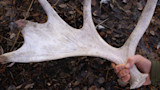
Wildlife Management
Cal’s Poaching Desk: Murder with a Moose Paddle

Poachers, smugglers, and other fish and game felons steal our shared natural resources, and “Cal’s Poaching Desk” is here with all the sordid details. For more stories of wildlife wrongdoing, be sure to tune in to “Cal’s Week in Review.” New episodes drop every Sunday. Moose Paddle Murder A...
Ryan Callaghan Mar 31, 2023
Read More Play Now The comments section requires Functionality cookies. Please enable Functionality cookies in Cookie Settings to view this content.
Save this episode