MeatEater Conservation
Ep. 28: Sturgeon in the 9th Circuit, the 1872 Mining Act, and One Big Rainbow
Play Episode
24m
00:00:09 Speaker 1: From Mediators World News headquarters in Bozeman, Montana. This is Kel's we Can Review with Ryan kel Kell and now here's Kel. What do a good moose hunting spot, the United States Supreme Court, sturgeon, and a hovercraft have in common. Well, if you've been paying attention, a man by the name of John Sturgeon took a case questioning the legality of driving his hovercraft up a river to his favorite moose hunting spot, all the way up to the United States Supreme Court and one the ruling was handed down this past March. I'm not sure why this story is popped up and the news recently, but I got several emails on the subject just this week. Here are the facts as I know them. Sturgeon's route to his moose spot takes him through the Yukon Charlie Rivers National Preserve, and he uses a small hovercraft to navigate shallow rivers. This type of access is not provided for under the rules that govern the Yukon Charlie Preserve, but is legal according to the State of Alaska. Very simply and specifically to this issue. You have the State of Alaska on one side, the federally managed Yukon Charlie Preserve on the other, and John Sturgeon in the middle. Now, all some folks need to hear is federal versus anything or anyone, and they get deeply triggered. Federal designations such as wilderness, national parks, and monuments don't actually mean the exact same thing in every place. They're all individuals. For instance, the Frank Church Wilderness, which I should be in right now, was implemented in such a way that the air strips and a few roads even were maintained. This is not the case for the most part, however, in the Bob Marshall Wilderness, President Jimmy Carter created the Yukon Charlie Rivers National Monument December one night by exercising presidential authority under the Antiquities Act. In the monument was converted into a national preserve. Many Alaskans argue that the sheer size and remoteness of their state makes the use of planes, jetboats, snow machines, and yes, even hovercrafts necessary, and those means of travel are much more common than they are just about anywhere else. They contend that context matters, and that travel within Alaska's federal lands should not be regulated as they would be in a preserve run by the National Park Service somewhere in the lower forty eight apparently, though, the Park Service never got this memo, and that's caused a lot of friction over the years, culminating with John Sturgeon taking his case all the way to the Supreme Court. It took twelve years and ultimately one point five million dollars to get the nine oh Supreme Court decision that Congress intended Alaska to be treated differently, and John Sturgeon can once again drave his hovercraft up to Moose Meadows. How we access our lands is a big deal. I have covered it before and I will cover it again as I tend to get a lot of feedback here at ask cal at the Mediator dot com, from corner crossings to electronic motorcycles to ease months. We're not all going to agree on how we are or are not allowed to travel in public land. But as John Sturgeon proved last March, you can change it. You just have to be serious and ultimately selfless. Twelve years of stress and fundraising one point five million in legal fees and giving up of one apparently fantastic moose spot. This week we're covering sulfide or habituated animals and so much more. But first I'm gonna tell you about my week. We as in all of us folks hammering with at our keyboards here in the Meat Eator editorial office, are planning a big end of the year trip to hopefully add some white tail to the freezer. Meal planning is crucial, as everyone knows an army runs on its stomach, and the editorial crew is no different. So a few of us headed east just a bit, as my mother had let me know that we had geese in the field the home place. It's just a few wing beats from the Yellowstone River outside of Billings, Montana. The hope was to get enough geese to build up a stockpile of dark red meat to turn into pastram or corned meat. I omit the goose associated with corn meat, as in my experience it matters not what protein you put into a corning Brian, it comes out as corned and renders the further classification of its origin unnecessary anyway. Badly, hail damage corn fields make a pretty darned good goose magnet, and we had plenty of action, as happens from time to time, though we had a number of factors working against us and our meat procurement operation. We only walked away from the field with two super fat geese. Uh not enough future sandwich meat for the crew. But it's a start and the geese aren't done flying, so we'll just have to go out again. One good takeaway. If you're out looking to decoy a field with a bunch of broken corn stocks, and you're looking to collect a pile of those corn stocks to make some cover for you and your friends to hide under, get a set of long handled loppers like for trim and tree branches. I have a set of steel oppers that mowed through a bunch of corn in short order, and the crew could just walk behind me and pick up the stocks after me. Good time to remind you that this podcast is brought to you by steel Power Equipment. If you like me, enjoy living in a tent hunting deer and elk this time of year. It makes life so nice to have a warm fire to fall asleep next to. So go to steel cow dot com and pick up a pulse off for the back country or a super quiet non stinky, super pacable electric chainsaw for the front country. You will love it. I will confidently pack in two batteries for a weekend worth the saw work, and won't hardly put a dent in the charge on the second next order. Business Mark Kenyon, contributor at large here at Meat Eater, is working his hind end off on a big little land project in Michigan. He just got a really nice buck on that ground we call the back forty. After months of work, he finally got it done. Congrats Mark, and congrats on your new book, Buddy, That Wild Country, an epic journey through the past, present, and future of America's public lands. One Amazon reviewer has this to say about Mark's book That Wild Country under the heading trigger warnings, there is an unpleasant ode to hunting. He goes on an unsuccessful bear hunt. Overall, nothing that terribly offended my vegetarian nearly vegan sensibilities, until he murdered a caribou. Also on page seven, a photo near the back depicts the obligatory holding of the dead fish. If that last one offends you, we have confirmed that the fish was not dead. In fact, it was alive and returned safely to a stream. This Amazon reviewer somes things up very nicely in capitalized letters. Bottom line, the author's love affair with the great outdoors is evident throughout. Not only well written, but an exceptionally good book to find in First Reads. Highly recommend. I love this review. These public lands belong to all of us, regardless of who we are, how we feel about hunting, fishing, skiing, motorbiking, hiking, or anything else folks like to do out there. We need more opportunities to bring like minded folks who disagree together. Good on you, Mark Kenya for tackling the subject. Alright, we're gonna dig right into the meat and potatoes this week, or more accurately, the beans and bacon, because we're going way back to the eighteen seventy two Mining Act by way of some proposed sulfide minds. But first I need to give a little context. Mining is important. Remember those steel battery power chainsaws I was talking about. None of that came off a tree. That all came out of the ground. The device you're listening to this amazing podcast on requires mind ores and minerals. The same goes for your vehicle, your house, and the symbol of your marriage if you're into that kind of thing. But not all mining is created equal. Sulfide mining is, at a very basic level, the process of removing trace valuable minerals from large quantities of rock. The tailings, or the rock left over after the valuable minerals have been taken out, can release sulfuric acid when exposed to just air and water. When you hear about mind storing waste, this is usually what they're talking about. That acid is dangerous to ecosystems in its own right, but it has the added drawback of leaching heavy metals like mercury, arsenic, and cadmium, but are commonly trapped in many types of rock. This kind of mining also generally requires depleting groundwater because miners need to dig well below the water table and continually pump out the water that would fill up the giant holes otherwise point in. Sulfide minds, though necessary, do have a long and well earned history of degradation and pollution. Not all mind sites, however, present equal environmental threat. Ask any real estate developer, for instance, even our president in his past job location matters. Sulfide minds near sensitive waterways are particularly problematic because all that nastiness can and often does get into those waters. We have plenty of historic examples to show us what that looks like, and it isn't pretty. What we don't have are many examples of sulfide minds that haven't ended up significantly polluting adjacent waterways. Modern mining companies like to talk about how fool proof their containment strategies are, but so far we don't have much evidence to support those promises. This reasoning explains why the Yellowstone Gateway Protection Act, the bill that removed lands adjacent to Yellowstone National Park, past with bipartisan support earlier this year. Fact is, there are just some places too valuable and sensitive for the risks associated with sulfide mining. Let's talk briefly about a few other proposed sulfide mines and some pretty spectacular parts of our country. First, there's the Black Butte copper mine right here in the great state of Montana. That mine site just happens to be located right next to Sheep Creek, one of the primary tributaries for the Smith River. The Smith is one of Montana's most beloved and it's only permitted river, and every year thousands of people flocked to this waterway to enjoy that fifty nine mile permitted float. Fishing on the Smith generates ten million dollars a year from Montana's economy and supports over one hundred jobs. Those are sustainable, long term jobs that will continue in perpetuity so long as we have a healthy fishery. The mine, on the other hand, is owned by Sandfire, an Australian company who would walk walk away with the lions share the profits dug out of American dirt. The repercussions, however, would be ours to deal with. The proposal calls for building an eighty acre tailings facility to store the roughly thirteen million tons of sulfide tailings they anticipate, creating leakage would cause significant damage to the ecosystem, But even if everything went perfectly to plan, the mine would still likely harm the river. Construction of roads and other infrastructure necessary to run a massive mining operation would increase erosion and soil deposits into the system, which isn't all that good for trout habitat. But more importantly, mining requires a lot of water, and this mine could significantly de water Sheep Creek and therefore the Smith, a river that already suffers from a lack of flow during Montana's long dry summers. In fact, the only time that I have ever had permits, the water has been too darn hot to fish, so I've never floated the dank thing. Next, there's the Twin Metals mine in Minnesota that would go in on the border of the Boundary Waters Cane Area Wilderness, the most popular and widely used wilderness area in the country. This proposed mine has a very long and complicated history, so all I can provide here is a very brief overview, but I encourage you to do some research on this yourself if you're interested. The two mining leases at the center of this debate actually expired near the end of two thousand sixteen, and a month later, the Forest Service filed paperwork to prohibit mining on all of the National forest lands that flow into the Boundary Waters. During the public comment period about this, of the hundred and eighty thousand comments favored protections for this area from mining. Despite that overwhelming public sentiment and using a whole lot of back channel legal and legislative force, that application was denied. The expired mining permits were reinstated and new prospecting and lease permits are moving forward. Once again a foreign come penn he owns these leases and would also own the mine in this case and Tofagasta, a massive Chilean mining conglomerate responsible for a lot of environmental degradation in northern Chile. In an eyebrow raising twist, the Chilean billionaires who own and to Fagasta also happened to be Ivanka Trump and Jared Kushner's d C landlords. That's their second of two US property holdings. Potential issues with this mine are very similar to those on the Smith The mine sites are located just upstream of the boundary waters, and any accidental pollution would flow down through much of that area. Additionally, setting the precedent for mining this area could result in a whole lot more sulfide mines in the Great Lakes area, which contains of the world's fresh water. Seems to me keeping that store of freshwater clean and drinkable has more long term value than pulling a few copper deposits out of the ground for the benefit of a Chilean mining company. According to an economic stud conducted by Harvard University, the long term recreational economy of the boundary waters far exceed that of mining development and is estimated to generate hundred forty six hundred more jobs as well as one hundred to nine hundred million more in total income. Third on my list for today is the proposed twin Pines mine near the southeastern edge of the Okefinoki Swamp. Truth be told, there are a number of other projects like this that I could mention here, like the old pebble mine, But I just wanted an excuse to say Okifinoki a bunch of times because it's a fun word. So here we go. Try it okay Finoki anyway. Last July, a mining company submitted a proposal to the Army Corps of Engineers to mine on a twelve thousand acre tract near the Okifinoki National Wildlife Refuge. While the first phase of this mining project would happen four miles away from the edge of the Okifinoki, this one seems especially problematic since the min rules thereafter would require excavating fifty feet underground below the average depth of the water table for that area. That means the mind itself could alter the hydrology of the whole region, even if there are no issues with tailings or other waste products. Even the e p A express their concerns about the potential fallout from this project. A letter sent to the Core of Engineers read in part, the e PA believes that there is potential for this project as proposed to cause adverse effects to water quality and the life stages of aquatic life or other wildlife, depending on aquatic ecosystems. The Oki Finoki National Wildlife Refuge gets an average of six hundred thousand visitors each year and brings in an average of eighty eight million dollars annually, Whereas the MIND promises to bring a hundred and fifty new jobs to a county where of households bring in less than ten thousand dollars a year. In each of these cases, it's easy to understand the short term argument for bringing economic development to areas that could use a boost. I get that people need jobs, and that mining operations in general offer better pay, better benefits, and more stability than recreation economy jobs. But the fact remains that heavy metal minds have a very clear history of pollution and degradation, and once it's out, you can't put that toothpaste back in the tube, so to speak. In my opinion, it's time that we revisit the federal regulations that dictate what mining can and cannot do. Those regulations were written a hundred and forty seven years ago, and the reality of mining in the century is, no surprise, far different than it was in eighteen seventy two. If we had laws that better protected sensitive areas and held mining companies accountable to clean up any messages they leave behind, we'd have fewer brawls between local residents who feel they have to fight with their neighbors about either sighting with jobs or the health of their lands. Struggling communities shouldn't be the ones pitted against each other to decide where minds go and how they operate. And if we had rules that actually ensured that minds would be responsible and accountable, those communities wouldn't have to be in that position. Currently, US Representative Raoul Grialva out of New Mexico has an update to the seventy two mining law called the Hard Rock Leasing and Reclamation Act. This update will likely not pass, but at least it brings up the conversation, which again I seriously think we need to have to bring you back from all that seriousness. Here's a story out of Idaho about a little girl in a big fish. Eight year old Sophie A Jeezy landed the Idaho state record catch and release rainbow trout early last month. The fish taped out at thirty six and a half inches and she caught it trolling flies on Lake Ponderre. Now all of us hardcore anglers know that it's all downhill for Sophie for the rest of her life. She'll likely be chasing the dragon of that tug for as long as she holds a rod in her hands, which we hope will be a very long time to come. Way to go, Sophie, sticking with our aquatics desk, but jumping over to grown man chasing juvenile fish. Young tarpan recently appeared in Ocean City, Maryland. Tarpan are famous in Florida and throughout the Gulf, and the full grown adults have long been known to wander, sometimes showing up as far as North Virginia. This particular fish is noteworthy because it's still years away from reaching sexual maturity, and this is the first documented case of a young fish traveling so far. We can thank new technology for this find, as the tarpan was affixed with an acoustic tag which allowed researchers to pinpoint its location. The Bone Fish and Tarpin Trust, an organization that funds much of the conservation work around tarpan, points out that despite the immense popularity of these fish, little is known about much of their life cycle. Finding out how far young tarpan travel is hopefully just the first of many discoveries that these new acoustic tags will provide to help us ensure the long term health of these very cool and ancient fish. Moving on to the wyoming bat Jackson Hole Wildlife Refuge is finally looking to end its elk feeding program. The hundred and seven years of feeding have conditioned elk and mule deer to unnaturally congregate every year in this area, which has created a heck of a tourist attraction, but also a heck of a recipe for disease transmission. Well done, this program will not be phased out entirely, but will reduce the overall amount of feed and the duration of feeding and average winners. The elk and mule deer may even have to behave like other elk and deer do elsewhere by fending for themselves. This part of the equation causes concern for some Wyoming landowners and the folks of Wyoming fishing game who have to deal with the landowners. Elk will be traveling more, re establishing their old migration routes and possibly causing more headaches for landowners in the form of fence mending and detecting haystacks. Wyoming is a prime case study for migration corridors. Well documented antelope, elk, and mule deer migrations showcase just how far these animals will travel during a season, sometimes a hundred and fifty miles or more. Many people, including neighboring states like Montana and Idaho, want the animals to migrate, as that is what healthy herds do in these areas, but they don't want them carrying diseases as they do it. Oddly enough, the state of Michigan seems totally fine with disease, despite the widespread prevalence of diseases like chronic wasting disease and white tail herds in much of that state. The Michigan House just approved a measure to lift a ban on baiting deer that measure moves to the Senate. If I lived in Michigan, or if I recreated in Michigan and cared about healthy, sustainable wildlife, I would certainly be making some senators phones ring on that. One representative hoitnga of Manton chorus. This is uh Michigan, so it's probably pronounced mam. Tone says the current baiting band is quote silly and is hurting hunters. Uh. You know what I think is silly getting up real early in the morning to hunt over a pile of corn for deer that either don't exist because they're dead or disease to the point where you can't eat them. That seems like a silly thing that would hurt deer hunters to me. Oh, and I am hunting in Michigan and think that the minten has a lot to offer, so I will be calling. I'll let you know how that goes. Last but not least, a bunch of folks wrote in to tell me about a deer attack, So we'll finish up there at our too close for Comfort wildlife desk. Uh Tennessee woman is recovering after being attacked by a small white tail buck while getting your mail. The deer was kept as a semi wild pet, which, by the way, is illegal in the state of Tennessee. The buck reportedly had painted antlers and the quote owners three year old daughter used to paint its stone nails. Long story short, the deer is headed to a zoo, the neighbor lady is in the hospital, and children are crying over a lost pet. Don't feed wildlife. It never turns out well for them, you or your neighbors. You'll remember poor Sweet Elliott the elk. Sweet as in the town of Sweet, Idaho. Elliott as in someone who has yet to come forward named the elk after habituating it, or as folks like to say, making it a pet, well in fear of turning out like our friend in Tennessee. This wild animal habituator called Idaho Fishing Game and demanded that they take care of the young bull along and ultimately expensive saga ensued, costing the sportsmen and women of Idaho far too much money, but not a dime for the citizen who caused this problem. You can listen to the background on this story and Cal's Weeken Review episode twenty one. Here is your update. After six weeks at a fishing Game facility. The elk is bound for Texas A and M University, where it will be part of the wildlife management and veterinary programs. The elk will join a number of native and exotic wildlife species that roam the university's animal paddock, including white tailed deer, fallow dear zebra, add as antelope and ostrich. Of the alternatives available, and M was the best place for this elk to land fishing game wildlife veteran arean Dr. Mark Drew noted he will be well cared for and enjoy a good life at this world class facility. Doesn't that sound way better than living free in the mountains Idaho? Thank god for this animals Facebook page and the concerned citizens that help provide this luxurious experience. As a reminder, Idaho Fishing Game and Agency, with the monumental task of keeping just about everyone who goes outside happy, an agency that receives zero funding from the state fund and survives only on the sale of hunting and fishing licenses, paid for all of Elliott's relocation. So if you're looking to slowly bleed the hunting and fishing public, start habituating elk and deer. They can apparently go live happily at a veterinary facilit pity in Texas. That's all I've got for you this week. Believe me when I say thank you. I've got so much more to tell you. Tell a friend about the weekend review, write a review yourself, Shoot me an email and tell me what's interesting you in your neck of the woods, or sent me straight at ask cal that's a s k C a L at the Meat Eater dot com and I'll talk to you next week.
Presented By
Featured Gear
While you're listening
Fly
‘Shock and Awe:’ Suppressing Rainbow Trout on the South Fork of the Snake River

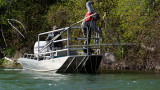
Fisheries technician Glenn Mabey, 21, leans hard against the railing on the jetboat’s bow. His hands grip a 12-foot-long net; his eyes scan the heavy water below. Mabey flinches as fish flash gold and yellow toward the giant anode suspended off the bow, but he holds steady. A flash of red and green...
Sam LungrenJun 14, 2019
Read MorePlay Now
Wildlife Management
CWD Discovered in Four New States and One Canadian Province

Chronic wasting disease (CWD) is a debilitating neurological malady affecting deer, elk, moose, and caribou. When an animal is infected with the misfolded proteins, or prions, that give rise to CWD, it often takes years for symptoms to manifest. These include a stooped posture, excessive salivation...
Travis HallApr 13, 2022
Read MorePlay Now
Public Lands & Waters
Public Land Sales are Back on the ‘One Big, Beautiful Budget Bill’

It’s deja vu all over again. A mere three weeks after hunters, anglers, and conservationists successfully defeated a provision in the U.S. House that would have sold 500,000 acres of public land, an even worse amendment was added to the Senate version of the “one, big, beautiful budget bill...
Jordan SillarsJun 12, 2025
Read MorePlay NowConversation
Save this episode